
TCM Lab · Health reading
severe hip pain after a fall, sudden severe hip pain without injury, or hip pain not improving after two weeks: when to seek care
Published Updated
A painful hip can make every step uncertain, but the next step depends on the pattern rather than a home diagnosis. Severe hip pain after a fall, inability to walk or bear weight, or tingling or loss of feeling after injury needs emergency assessment. Sudden severe hip pain without injury, particularly with a hot or swollen hip, colour change, fever, chills or feeling unwell, needs urgent same-day help. If hip pain is not improving after two weeks, recurs, worsens, disrupts sleep or limits ordinary tasks, arrange a clinical appointment. [1]
Appointments are confirmed through WhatsApp. If you have language requirements, please mention them in your enquiry.
The short answer
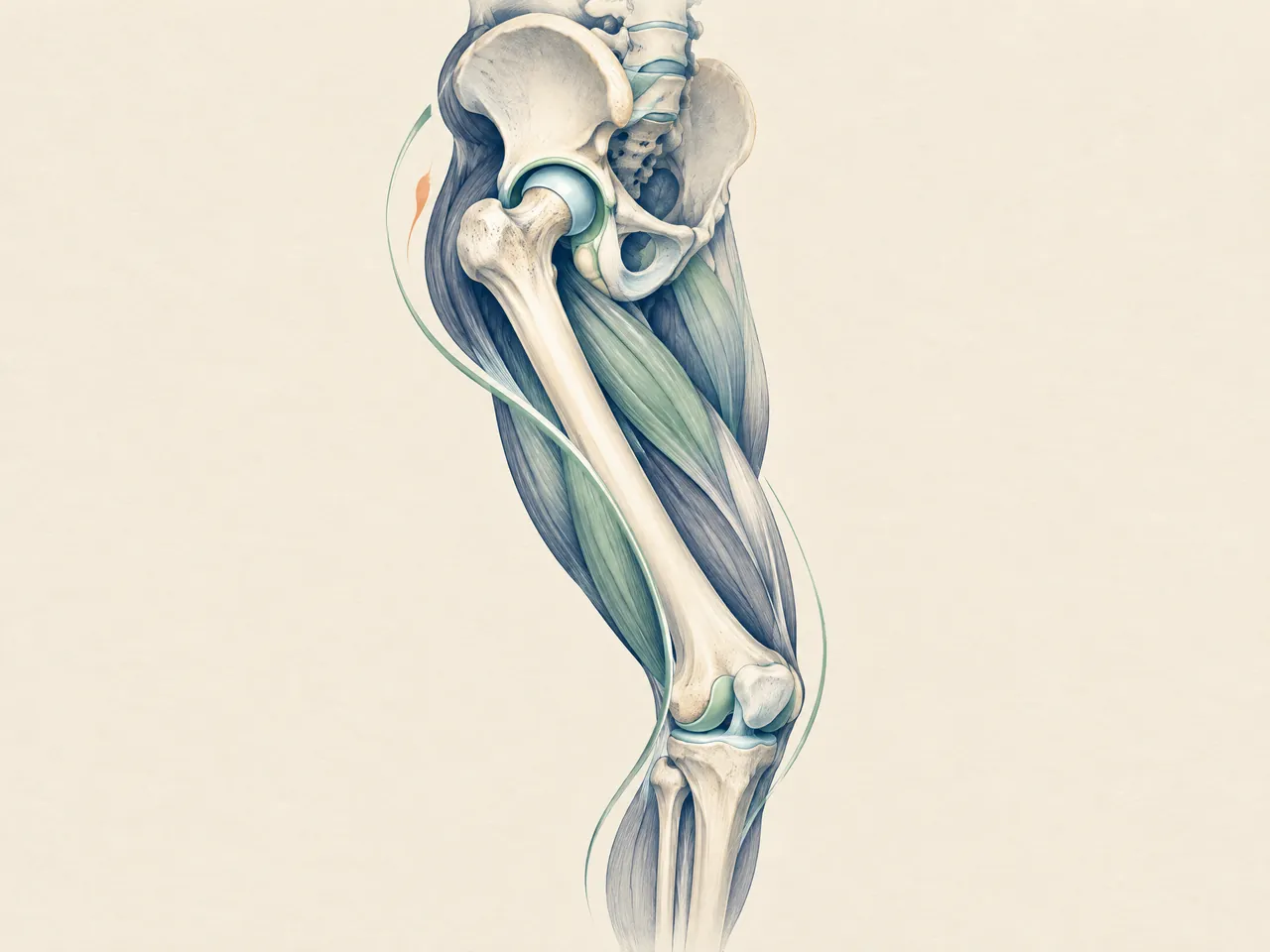
Seek emergency care for severe hip pain after a fall if you cannot walk, cannot put weight through the leg, or have tingling or loss of feeling after the injury. Seek urgent same-day assessment for sudden severe hip pain without injury, or a hot, swollen or discoloured hip with fever or feeling unwell. Book a clinical appointment for hip pain not improving after two weeks, sooner if it worsens, returns, affects sleep or limits everyday activity. [1]
Transparent pricing
See the fees.
Choose your care.
Explore our complete official price list, including first-trial prices, regular prices, packages and branch-specific options.
Opening WhatsApp prepares an enquiry; it does not send a message, take payment or confirm an appointment. Suitability and individual arrangements are confirmed during consultation.
Pain care
All prices in HKDExtracorporeal shockwave treatment
Shockwave treatment for deep-tissue and fascial care. The Kwun Tong clinic offers the multi-area options shown below.
Priced by branch
Branch-specific pricing
Prince Edward: HK$250 per area
Kwun Tong: HK$250 for 1 area / HK$450 for 2 areas / HK$600 for 3 areas
Pain care (manual therapy)
Includes Chinese medicine musculoskeletal assessment, manual joint techniques and tui na.
HK$580 (single session)
Chinese medicine musculoskeletal assessment
Pain care (acupuncture and manual therapy)
Combines acupuncture and manual therapy.
HK$680 (single session)
Combined care
Hair and scalp
All prices in HKDScalp health and hair-loss management
Includes AI scalp analysis, deep scalp and follicle cleansing, and scalp oil-control care.
HK$380 (first trial)
Regular price: HK$680
- 6 sessions: HK$3,480 (HK$580 per session)
- 12 sessions: HK$5,760 (HK$480 per session)
- 20 sessions: HK$8,600 (HK$430 per session)
- 30 sessions: HK$11,400 (HK$380 per session)
Hair acupuncture and Chinese herbal medicine package
Includes scalp acupuncture and 3 days of Chinese herbal medicine that does not require decoction.
HK$580 (single session)
Registered Chinese Medicine Practitioner consultation
- 6 sessions: HK$3,180 (HK$530 per session)
- 12 sessions: HK$5,760 (HK$480 per session)
- 20 sessions: HK$8,600 (HK$430 per session)
- 30 sessions: HK$11,400 (HK$380 per session)
Combined hair and scalp treatment
Combines acupuncture and Chinese herbal medicine with salon-level scalp and follicle care. Packages include complimentary hair-care shampoo and serum.
HK$1,260 (single session)
Combined treatment
- 8 sessions: HK$8,640 (HK$1,080 per session)
- 16 sessions: HK$15,680 (HK$980 per session)
- 20 sessions: HK$18,600 (HK$930 per session)
- 30 sessions: HK$26,400 (HK$880 per session)
Weight management
All prices in HKDFull-body acupoint embedding for weight management
Includes full-body acupoint embedding. Packages include complimentary Chinese herbal medicine for weight management, with the number of included days scaled to the package. Embedding material and the individual treatment arrangement are confirmed during consultation; this is not a cosmetic thread lift.
HK$980 (single session)
No trial session
- 10 sessions: HK$7,800 (HK$780 per session)
- 20 sessions: HK$14,600 (HK$730 per session)
- 30 sessions: HK$20,400 (HK$680 per session)
Facial acupuncture
All prices in HKDFacial acupuncture (basic)
Includes facial acupuncture and meridian-based facial care, including care for facial puffiness.
HK$480 (first trial)
Regular price: HK$680
- 10 sessions: HK$5,200 (HK$520 per session)
- 20 sessions: HK$9,600 (HK$480 per session)
- 30 sessions: HK$13,500 (HK$450 per session)
Facial acupuncture (advanced)
Includes enhanced facial acupuncture with a specially formulated moisturising mask and serum.
HK$780 (first trial)
Regular price: HK$1,180
- 10 sessions: HK$9,000 (HK$900 per session)
- 20 sessions: HK$16,600 (HK$830 per session)
- 30 sessions: HK$23,400 (HK$780 per session)
Chinese medicine
All prices in HKDAcupuncture and Chinese herbal medicine package
Includes a Chinese medicine consultation with pulse assessment, body acupuncture and 3 days of Chinese herbal granules that do not require decoction.
HK$580 (single session)
Chinese medicine consultation with pulse assessment
severe hip pain after a fall, sudden severe hip pain without injury, and hip pain not improving after two weeks: recognise the urgency
Start with safety rather than a home diagnosis. Severe hip pain after a fall with an inability to walk or put weight through the leg is an emergency pattern. Tingling or loss of feeling in the hip or leg after an injury is another emergency sign. Go to an emergency department or use local emergency services; do not drive yourself if doing so is unsafe. Do not attempt deep squats, repeated leg lifts, a long walk or a forceful stretch to prove that the hip is not seriously injured. The NHS lists these symptoms for immediate emergency care and notes that severe pain with inability to walk after a fall or injury can occur with hip fracture. [1]
The absence of a fall does not make severe pain safe to watch. Sudden severe hip pain without injury merits urgent same-day assessment. The urgency is higher when the hip is hot or swollen, surrounding skin has changed colour, or pain occurs with a high temperature, feeling hot, cold or shivery, or feeling unwell. These features do not identify the cause; they are reasons for prompt assessment. If the person becomes very unwell or cannot access timely urgent care, use emergency services. See hip pain warning signs for a compact reminder. [1]

severe hip pain after a fall, sudden severe hip pain without injury, and hip pain not improving after two weeks: urgent warning signs
Think in terms of what the hip lets you do now. Can you stand from a chair, take supported steps, or put weight through the leg? Is there new numbness, a visibly unusual position, marked colour change, or pain so strong that even small movement is difficult? These questions are not a self-test for a fracture or another condition. They help describe the situation accurately. A sudden change from normal walking to being unable to move or bear weight is more concerning than a familiar mild ache after activity. Hospital for Special Surgery also identifies inability to move or bear weight, sudden onset, discoloration and a deformed-looking joint as reasons to seek care straight away. [2]
A hot, swollen hip plus fever, chills or feeling ill should not be managed as ordinary muscle tightness. Do not treat the response to ice, heat, massage or an over-the-counter medicine as proof of the cause. Those measures may ease mild discomfort but do not rule out a condition needing assessment. State that there is hip pain plus warmth, swelling, colour change, fever, chills or malaise when contacting a service. Read about hot swollen hip and fever, but seek urgent medical help rather than waiting for an online article. [1]
severe hip pain after a fall, sudden severe hip pain without injury, and hip pain not improving after two weeks: arranging assessment
When no emergency or urgent warning sign is present, arrange a clinical appointment if hip pain stops normal activities, affects sleep, worsens or repeatedly returns. Do the same when home measures have not improved it after two weeks. Morning stiffness lasting over 30 minutes after waking is another point to raise, although it is not a diagnosis. These are review thresholds, not a rule to wait exactly two weeks. Escalate immediately if pain sharply increases, warmth and fever develop, or you lose the ability to bear weight. [1]
Until the appointment, avoid activities that aggravate pain and reduce unnecessary load, such as carrying heavy shopping or repeatedly using a low chair. If you can move safely, gentle movement may be preferable to complete stillness, but do not use exercise to override sharp or escalating pain. The NHS suggests avoiding excessive strain while keeping mobile if possible, and using a wrapped ice pack for short periods; this applies only when urgent features are absent. If walking is harder, walking with hip pain can help you frame what to report. [1]
Compare your options
| Pattern to notice | Examples to report | Next step |
|---|---|---|
| Emergency pattern after injury | Severe hip pain after a fall; unable to walk or bear weight; tingling or loss of feeling after injury | Go to an emergency department or use local emergency services; do not force movement. [1] |
| Urgent same-day pattern without a fall | Sudden severe hip pain without injury; hot or swollen hip; skin colour change; fever, chills or feeling unwell | Seek urgent same-day medical assessment. [1] |
| Timely clinical appointment | Pain affects sleep or normal activity, is worsening or recurring, persists despite home care for two weeks, or morning stiffness lasts over 30 minutes | Arrange a clinical appointment; do not wait if warning signs appear. [1] |
| Mild, stable symptoms without warning signs | Safe to move, no fever or marked swelling, and no sudden loss of function | Reduce aggravating load, keep safely mobile if possible, observe changes, and seek review if the pattern fails to improve or worsens. [1] |
On smaller screens, scroll the table sideways to compare all columns.
severe hip pain after a fall, sudden severe hip pain without injury, and hip pain not improving after two weeks: warning signs to check
Pain location and timing can make a consultation more useful, but neither replaces assessment. Hip-related pain may be felt at the groin, outer hip, buttock, thigh or lower back. Notice whether it began at the moment of a fall, appeared during a new activity, developed gradually, or woke you at night. Record whether stairs, getting in or out of a car, standing from a chair, or lying on one side changes it. Limping, reduced range of motion, warmth, swelling and tenderness may accompany different hip problems. A clinician combines history with examination and, when appropriate, tests; a symptom pattern alone cannot reliably name the cause. [3]
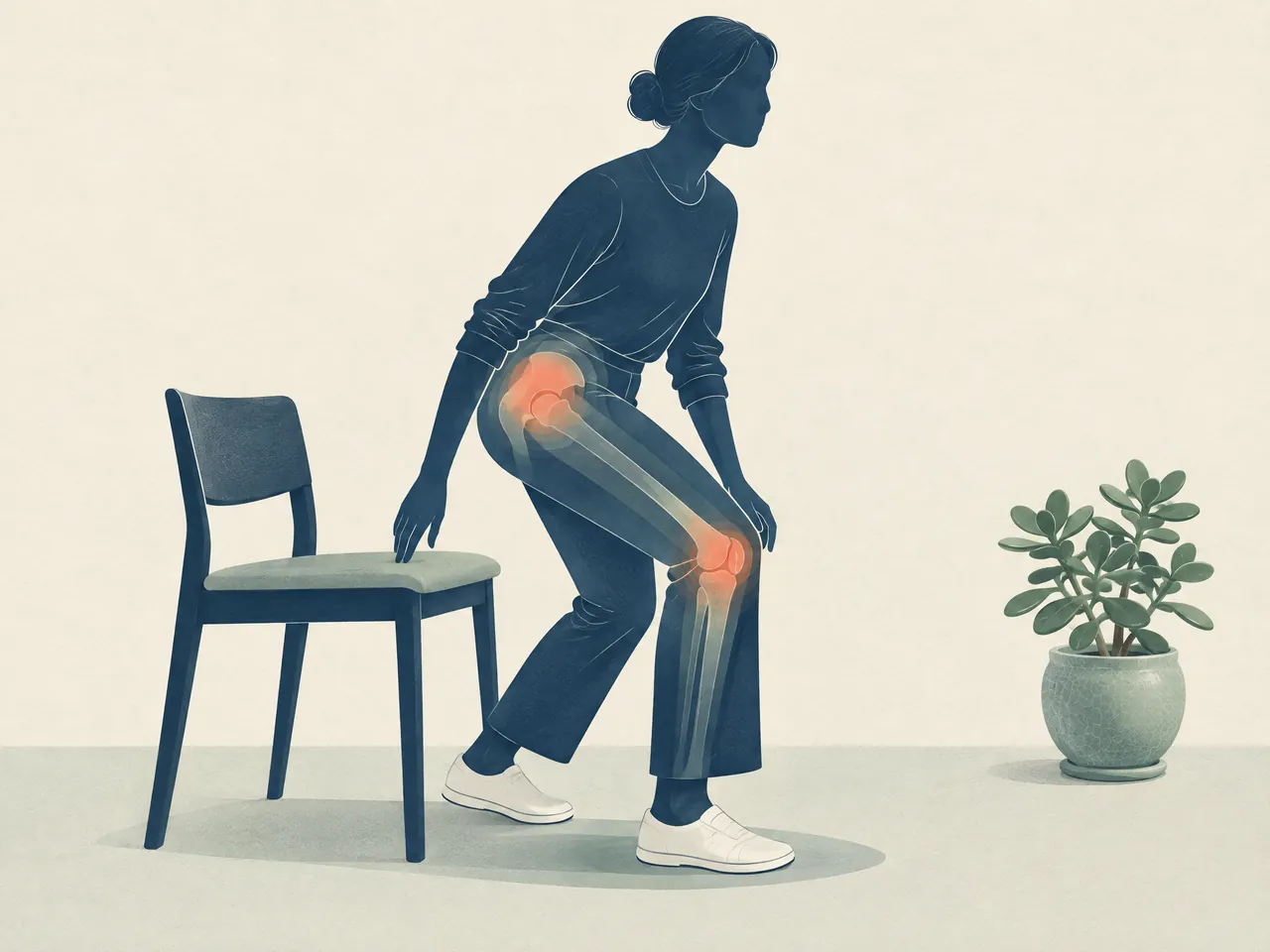
It is tempting to label every outer-hip ache as a strain or every groin pain as arthritis. Hip pain has many possible causes. The NHS links different patterns with broad possibilities including strain, tendon problems, osteoarthritis, bursitis, fracture and joint infection, but these associations are not a diagnosis tool. At home, distinguish emergency, urgent and routine patterns rather than named conditions. Our page on when to see a doctor for hip pain expands on that decision without replacing examination. [1]
What severe hip pain after a fall, sudden severe hip pain without injury, and hip pain not improving after two weeks can mean
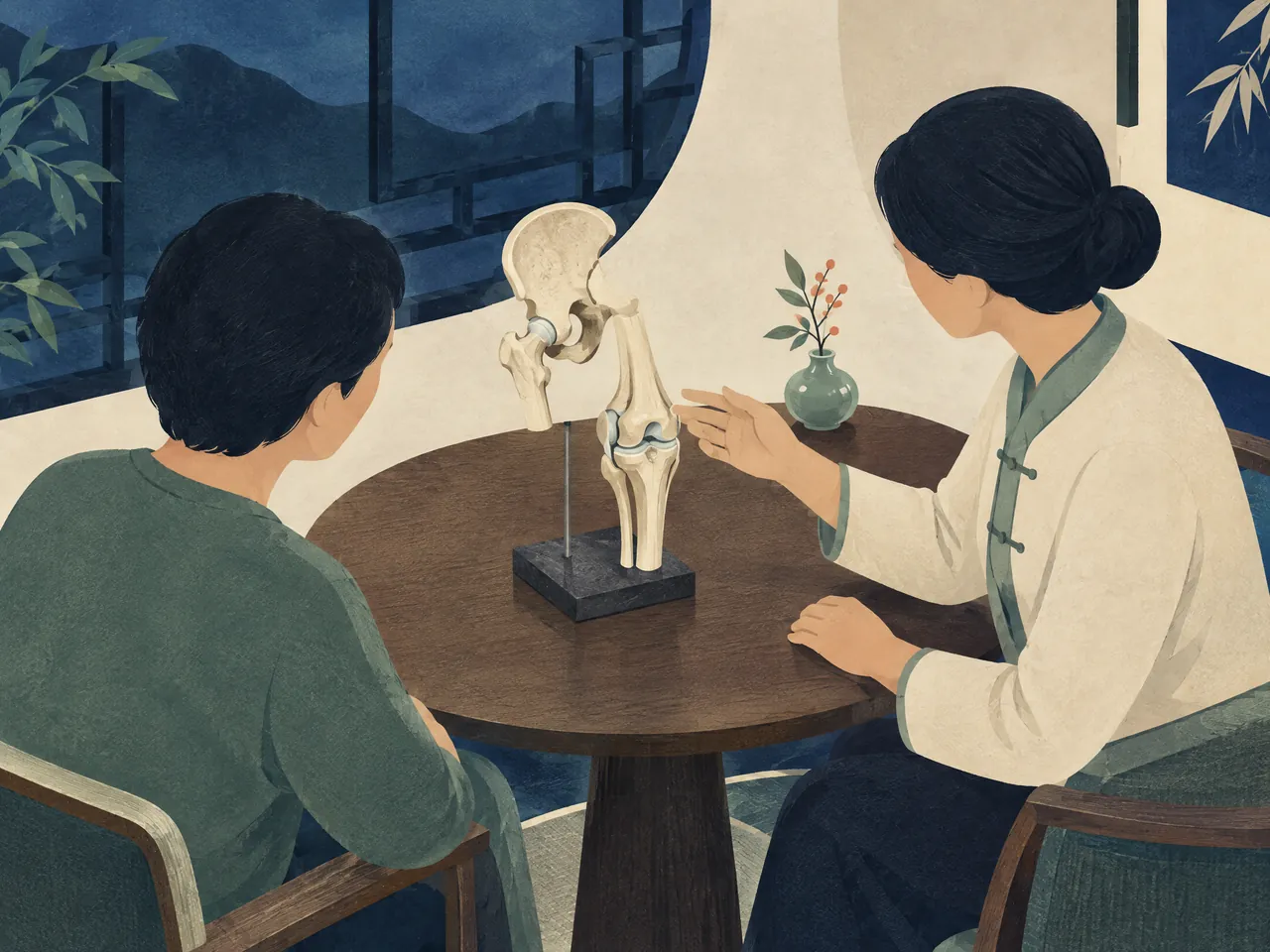
After a fall, severe pain can involve bone, joint, muscle, tendon or surrounding tissue, and the amount of visible bruising does not settle the question. In older adults and people with bone-weakening conditions, falls are particularly important to report; Mount Elizabeth Hospital notes that fractures are more common in those groups. Being active before the fall is not reassurance if severe pain or loss of weight-bearing follows. Likewise, sudden pain at rest is not automatically harmless because there was no sports injury. The first assessment identifies what needs attention; it does not select a treatment from a search term. [3]
For milder, stable pain without red flags, the two-week point creates a useful checkpoint. Ask whether daily function has improved, stayed the same or become more restricted. Is pain disrupting sleep, returning after short improvement, or spreading with new symptoms? A diary turns vague memories into a useful timeline and can prevent weeks of the same activity modification despite no change. If walking to transport, standing to cook or rising from bed is progressively harder, arrange assessment instead of waiting for the next flare to settle. [1]
Fever, warmth and swelling with severe hip pain after a fall, sudden severe hip pain without injury, and hip pain not improving after two weeks
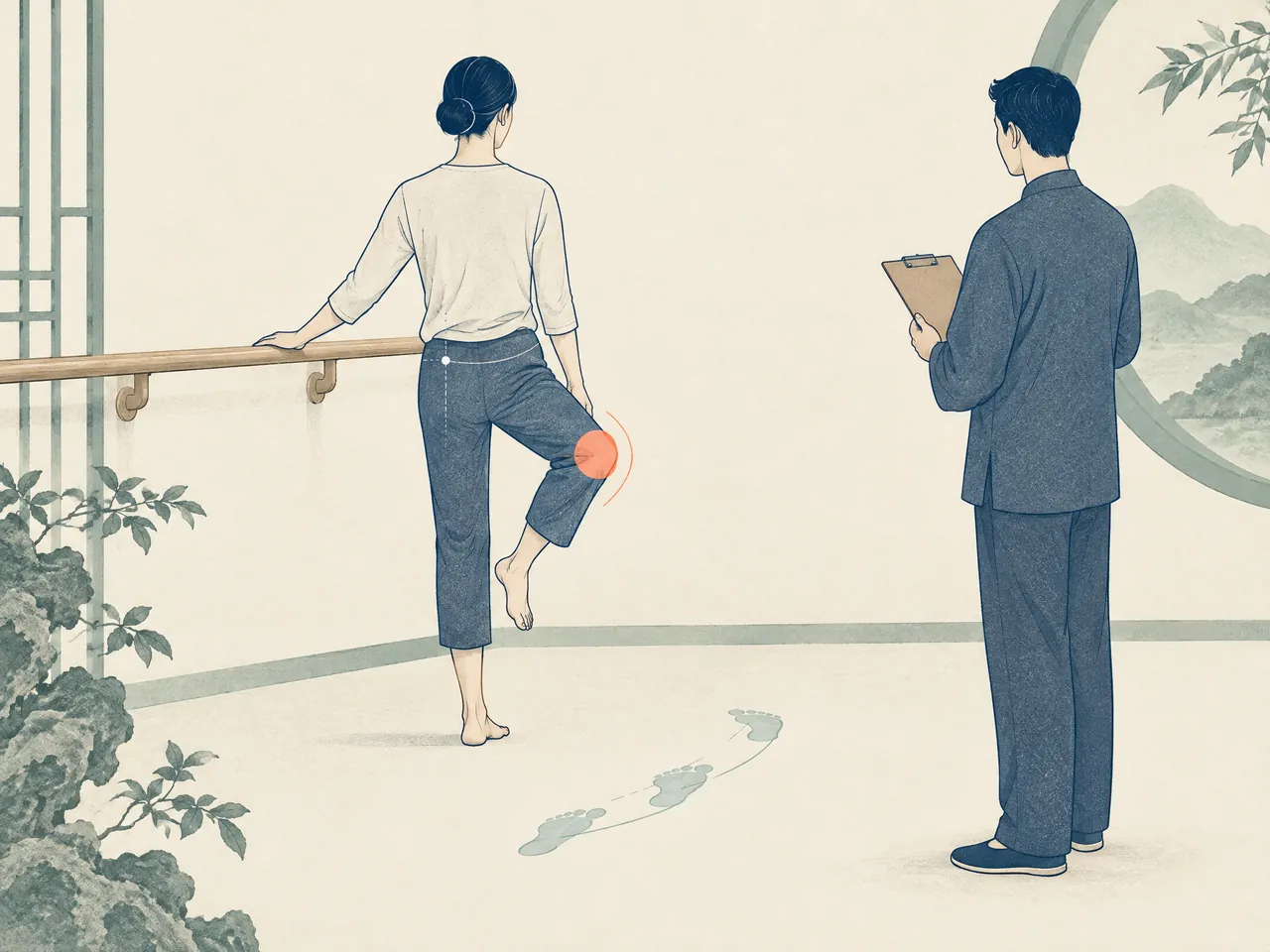
Fever or feeling generally unwell changes the decision. The NHS places a hot, swollen hip, colour change and hip pain with high temperature or a hot, cold or shivery feeling in its urgent-care advice. Do not judge seriousness by how red the skin looks, whether swelling is one-sided, or whether pain eases after resting. Note a measured temperature if available, but do not delay urgent help to keep checking it. State plainly that hip pain comes with warmth, swelling, colour change, fever, chills or malaise. [1]
Night pain also deserves attention in context. A single uncomfortable night after an unusual amount of activity is different from pain that repeatedly wakes someone or occurs alongside fever, sudden onset or loss of function. HSS includes nighttime pain and pain with any movement in its list of signs for prompt medical attention. Be equally specific about recent injections, operations, infections elsewhere, new medicines, a recent fall, or a change in mobility aids if any apply. These details do not diagnose the issue, but they help the receiving clinician decide what assessment is needed and how quickly. [2]
severe hip pain after a fall, sudden severe hip pain without injury, and hip pain not improving after two weeks: preparing for care
Preparing for care is not about arriving with a diagnosis. Note the date and approximate time symptoms began, the mechanics of any fall or twist, and whether pain was immediate or later. Describe the most painful area: groin, outside of the hip, buttock, upper thigh or lower back. Say whether pain travels down the leg and whether there is numbness, pins and needles, weakness, swelling, heat, colour change, fever or a break in the skin. If someone is helping you, ask them to bring the information rather than asking the injured person to repeat painful movements for demonstration.
Bring or have ready a list of regular medicines, allergies, previous hip or back operations, and relevant scans or reports. Hospital guidance notes that a medical history and physical examination are central to assessment, and imaging or laboratory tests may be considered according to the situation. Do not assume an old scan explains a new symptom, or that an image alone explains every painful movement. The clinician decides whether imaging, blood tests, referral, rehabilitation advice or another step is appropriate. A photograph of visible colour change or swelling may help only if it does not delay care and can be shared privately with the clinician. [3]

What to record for severe hip pain after a fall, sudden severe hip pain without injury, and hip pain not improving after two weeks
A concise record can be more helpful than a long explanation. Write down your best estimate of walking distance before pain stops you, whether you can manage stairs, whether you need to hold furniture to stand, and whether the pain is present at rest or only with loading. For a fall, include the surface, direction of impact, whether you landed on the hip, and whether you hit your head or had another injury. For sudden pain without injury, include what you were doing at onset and whether there were any systemic symptoms. Avoid testing range of motion repeatedly just to collect more details; the record should describe ordinary movements, not provoke pain.
Also record what you have already tried and the result: reducing activity, changing footwear, a cold pack, warmth, or a pain medicine. Include the name and dose of any medicine only if you know it, and mention if it caused a problem. This is more useful than saying nothing works. If a routine appointment is appropriate and you are considering gradual return to activity, the page on hip pain exercises discusses questions to take into that conversation. Do not begin an exercise plan for an acute red-flag presentation; get the urgent assessment first. [1]

How a traditional Chinese medicine consultation relates to severe hip pain after a fall, sudden severe hip pain without injury, and hip pain not improving after two weeks
A traditional Chinese medicine consultation is not the first stop for emergency or urgent warning signs. Severe pain after a fall with inability to bear weight, post-injury numbness, or sudden severe pain with a hot or swollen hip and fever needs conventional emergency or urgent medical assessment first. Once urgent conditions have been assessed or excluded, a Registered Chinese Medicine Practitioner can take a detailed symptom history and discuss supportive care within a traditional Chinese medicine approach. That traditional approach is not the same as a biomedical diagnosis, and it should not be used to override a clinician's advice, post-operative instructions, imaging plan or prescribed medicines.
For a non-urgent enquiry after appropriate assessment, TCM Lab can discuss an appointment at a Kwun Tong Chinese medicine clinic or the Chinese medicine clinic Prince Edward. Tell the team if there has been a recent fall, surgery, fever, new numbness, anticoagulant use, a fracture diagnosis, or a specialist's restriction, so the enquiry can be directed safely. Bring any medical report and medication list to the visit. The immediate aim remains clear: obtain the right level of medical assessment for warning signs first, then make decisions about further care with the relevant practitioners.
Care and health guide
Pain-care information
This directory brings together services, reading, and visit information related to pain care, to help you prepare questions for a consultation.
When pain care affects your day, noting when it occurs, its relation to activity, and what you have already tried can help prepare a consultation; Chinese medicine pain management Hong Kong is a relevant service or reading entry point.
Individual circumstances differ, and acupuncture Hong Kong offers related information to help you understand options and prepare questions.


Your questions, answered
Frequently asked questions
What should I do about severe hip pain after a fall?
Go to an emergency department or use local emergency services if the pain is severe after a fall or injury. This is especially important if you cannot walk or put weight through the leg, or have tingling or loss of feeling in the hip or leg. Do not test the hip with deep squats, long walks or forceful stretching. [1]
Does sudden severe hip pain without injury need urgent assessment?
Yes. Sudden severe hip pain without injury should have urgent same-day assessment. Seek help promptly if the hip is hot, swollen or discoloured, or if pain comes with fever, chills or feeling generally unwell. Symptoms alone cannot confirm the cause. [1]
When should I seek help for hip pain not improving after two weeks?
Arrange a clinical appointment if hip pain has not improved after two weeks of home care, or sooner if it affects sleep or daily activity, worsens, or keeps returning. You do not need to wait two weeks when emergency or urgent warning signs occur. [1]
Can I use ice, heat or gentle exercise while I wait?
Only consider simple self-care for mild, stable pain without warning signs. The NHS suggests avoiding excessive strain, keeping moving if safe, and using a wrapped ice pack for short periods. Do not rely on temporary relief to rule out a serious problem, and do not exercise through severe, sudden or worsening pain. [1]
Sources and further information
- [1] [1] NHS — Hip pain in adults
Referenced for: Emergency, urgent and routine adult hip-pain triage; self-care boundaries and appointment indicators.
- [2] [2] Hospital for Special Surgery — Should You See a Doctor for That Hip Pain?
Referenced for: Additional hospital guidance on sudden pain, inability to bear weight, nighttime pain, colour change and functional loss.
- [3] [3] Mount Elizabeth Hospitals — When should I See a Doctor for Hip Pain?
Referenced for: Hip-pain symptoms, history and examination context, and the importance of medical review after a fall or worsening pain.