
TCM Lab · Health reading
Paediatric Chinese Medicine Consultation: What Should Parents Bring to a Paediatric Chinese Medicine Consultation?
Published Updated
Parents do not need a perfect file for a paediatric Chinese medicine consultation. Bring a short, honest picture of the child’s usual day and what has changed: their age, main concern, when it began, whether it is improving or worsening, and effects on sleep, meals, play, school or sport. Bring current medicines, supplements, allergies, injury details and relevant reports. A parent or guardian should attend to give the history, ask questions and discuss whether in-person or another medical assessment should come first. Do not delay urgent care when a child is seriously unwell.
Appointments are confirmed through WhatsApp. If you have language requirements, please mention them in your enquiry.

The short answer
Bring a brief symptom timeline, the child’s current medicines and supplements, known allergies, injury history and relevant medical reports to a paediatric Chinese medicine consultation. Notes on sleep, appetite, bowel movements, energy, activity and school participation give useful context. A parent or guardian should attend to describe changes, ask questions and give informed consent. Urgent symptoms should be assessed promptly rather than waiting for a consultation.
Transparent pricing
See the fees.
Choose your care.
Explore our complete official price list, including first-trial prices, regular prices, packages and branch-specific options.
Opening WhatsApp prepares an enquiry; it does not send a message, take payment or confirm an appointment. Suitability and individual arrangements are confirmed during consultation.
Chinese medicine
All prices in HKDAcupuncture and Chinese herbal medicine package
Includes a Chinese medicine consultation with pulse assessment, body acupuncture and 3 days of Chinese herbal granules that do not require decoction.
HK$580 (single session)
Chinese medicine consultation with pulse assessment
Hair and scalp
All prices in HKDScalp health and hair-loss management
Includes AI scalp analysis, deep scalp and follicle cleansing, and scalp oil-control care.
HK$380 (first trial)
Regular price: HK$680
- 6 sessions: HK$3,480 (HK$580 per session)
- 12 sessions: HK$5,760 (HK$480 per session)
- 20 sessions: HK$8,600 (HK$430 per session)
- 30 sessions: HK$11,400 (HK$380 per session)
Hair acupuncture and Chinese herbal medicine package
Includes scalp acupuncture and 3 days of Chinese herbal medicine that does not require decoction.
HK$580 (single session)
Registered Chinese Medicine Practitioner consultation
- 6 sessions: HK$3,180 (HK$530 per session)
- 12 sessions: HK$5,760 (HK$480 per session)
- 20 sessions: HK$8,600 (HK$430 per session)
- 30 sessions: HK$11,400 (HK$380 per session)
Combined hair and scalp treatment
Combines acupuncture and Chinese herbal medicine with salon-level scalp and follicle care. Packages include complimentary hair-care shampoo and serum.
HK$1,260 (single session)
Combined treatment
- 8 sessions: HK$8,640 (HK$1,080 per session)
- 16 sessions: HK$15,680 (HK$980 per session)
- 20 sessions: HK$18,600 (HK$930 per session)
- 30 sessions: HK$26,400 (HK$880 per session)
Weight management
All prices in HKDFull-body acupoint embedding for weight management
Includes full-body acupoint embedding. Packages include complimentary Chinese herbal medicine for weight management, with the number of included days scaled to the package. Embedding material and the individual treatment arrangement are confirmed during consultation; this is not a cosmetic thread lift.
HK$980 (single session)
No trial session
- 10 sessions: HK$7,800 (HK$780 per session)
- 20 sessions: HK$14,600 (HK$730 per session)
- 30 sessions: HK$20,400 (HK$680 per session)
Facial acupuncture
All prices in HKDFacial acupuncture (basic)
Includes facial acupuncture and meridian-based facial care, including care for facial puffiness.
HK$480 (first trial)
Regular price: HK$680
- 10 sessions: HK$5,200 (HK$520 per session)
- 20 sessions: HK$9,600 (HK$480 per session)
- 30 sessions: HK$13,500 (HK$450 per session)
Facial acupuncture (advanced)
Includes enhanced facial acupuncture with a specially formulated moisturising mask and serum.
HK$780 (first trial)
Regular price: HK$1,180
- 10 sessions: HK$9,000 (HK$900 per session)
- 20 sessions: HK$16,600 (HK$830 per session)
- 30 sessions: HK$23,400 (HK$780 per session)
Pain care
All prices in HKDExtracorporeal shockwave treatment
Shockwave treatment for deep-tissue and fascial care. The Kwun Tong clinic offers the multi-area options shown below.
Priced by branch
Branch-specific pricing
Prince Edward: HK$250 per area
Kwun Tong: HK$250 for 1 area / HK$450 for 2 areas / HK$600 for 3 areas
Pain care (manual therapy)
Includes Chinese medicine musculoskeletal assessment, manual joint techniques and tui na.
HK$580 (single session)
Chinese medicine musculoskeletal assessment
Pain care (acupuncture and manual therapy)
Combines acupuncture and manual therapy.
HK$680 (single session)
Combined care
Paediatric Chinese Medicine Consultation: What Should Parents Bring to a Paediatric Chinese Medicine Consultation? — Preparing the Child's History
A clear history helps turn a worried recollection into a useful clinical conversation. Start with the child’s age and main concern, then add the date or approximate week it began. If there was a fall, new activity, illness or change in school routine around that time, note it without assuming it caused the problem. Describe what you observed: ‘coughing mainly after lying down’, ‘does not want to run’, or ‘uncomfortable when bending to put on shoes’ is more useful than trying to name a diagnosis. Paediatrics in CM is an established Hong Kong service description for infants, children and adolescents, with attention to growth, nutrition and general diseases across developmental stages [1] [4].
Put the information into a phone note or bring it on paper. A short list reduces the chance that an important detail is forgotten when the child is tired, shy or distracted. Include what has already been tried, such as rest, advice from a clinician or a prescribed medicine. Record the result accurately, including no change or an unwanted effect. For a broader introduction, read paediatric Chinese medicine Hong Kong. It cannot assess a particular child’s symptoms or decide what care is appropriate.
Paediatric Chinese medicine consultation: What should parents bring to a paediatric Chinese medicine consultation? — Age, Symptoms and Timing
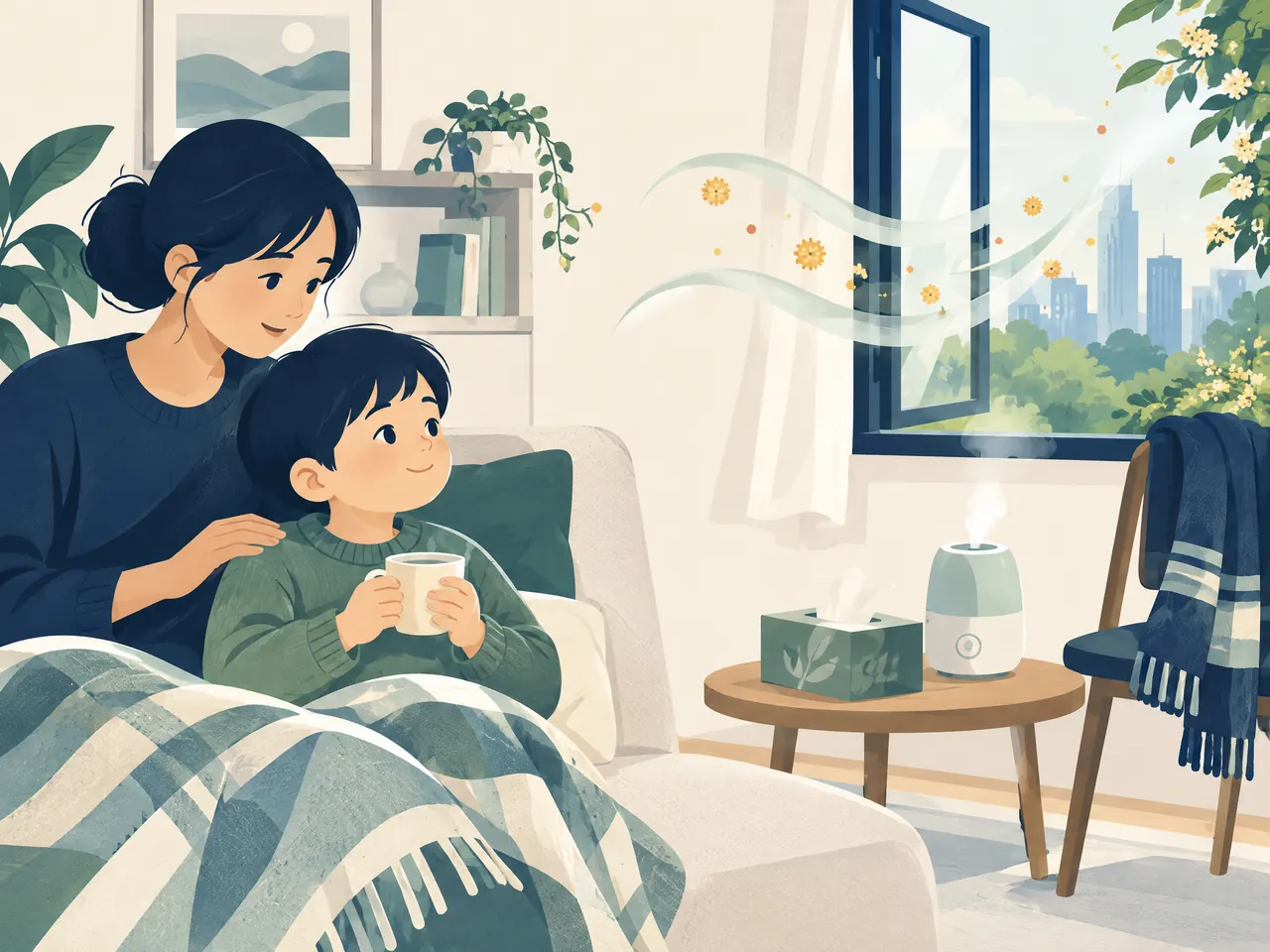
Bring the child’s date of birth or age and a concise symptom timeline. For a recurring concern, list the first and most recent episode and any pattern noticed. State the location of discomfort in the child’s own words when possible. For example, distinguish between ‘upper back after swimming’, ‘tummy pain before school’ and ‘pain wakes them at night’. Note whether the child can walk, climb stairs, join PE, eat, drink and sleep as usual. These details show day-to-day impact without asking parents to make a diagnosis at home.
If the concern followed an accident, bring when it happened, what body part was affected, whether the child continued playing and any assessment already received. Take relevant discharge letters, referral notes, imaging reports or laboratory results if available. For a posture or back concern, a dated photo or brief video in ordinary clothing can illustrate a change not obvious in the room, but cannot rule out injury or structural problems. It supports the in-person history, not a remote diagnosis.

Paediatric Chinese medicine consultation: What should parents bring to a paediatric Chinese medicine consultation? — Daily Patterns to Note
For several days before the appointment, write down ordinary patterns rather than monitoring every hour. Useful observations include bedtime and waking, appetite, foods avoided, thirst, bowel movements, urination, energy and mood. Also note nursery or school attendance, sport, commuting and bag-carrying if relevant. A child may eat normally at home but skip lunch at school, or sleep later after training. These details give context to a symptom and keep the consultation grounded in the child’s routine.
Bring a complete list of prescribed medicines, over-the-counter products, vitamins, herbal products and supplements, preferably with labels or photographs. Include known medicine, food or environmental allergies and describe the reaction if known. A paediatric consultation should also make room for the child’s perspective: older children can say what hurts and what makes a school day difficult. Parents looking for Chinese medicine for children can use it to prepare questions, while keeping individual decisions for the visit.
Compare your options
| What to bring or note | Useful details | Why it helps the conversation |
|---|---|---|
| Symptom timeline | Start date, frequency, triggers, what improves or worsens it, and effect on play or school | Gives the practitioner a clearer sequence than a general recollection. |
| Medicine and allergy list | Prescription and non-prescription products, supplements, labels where possible, and known reactions | Supports a safer discussion and prevents important current care from being missed. |
| Daily pattern notes | Sleep, appetite, bowel movements, urination, energy, activity and attendance | Shows how the concern fits into the child’s ordinary routine. |
| Previous assessments | Referral letters, discharge summaries, relevant test or imaging reports, and injury details | Avoids repeating history and helps identify when another assessment may need to come first. |
| Parent questions and consent | A short question list and a parent or guardian able to discuss decisions | Makes it easier to agree on practical next steps and when to seek further help. |
On smaller screens, scroll the table sideways to compare all columns.
Paediatric Chinese Medicine Consultation: What Should Parents Bring to a Paediatric Chinese Medicine Consultation? — Posture, Growth and Safety
A slouched stance, rounded shoulders or a sore back can make parents wonder whether a child needs Chinese medicine, physiotherapy, a doctor or simply a change in daily habits. Appearance alone cannot answer that question. Bring observations about when the posture is seen, whether it is new or longstanding, whether there is pain, and whether walking, balance, sport or normal activities have changed. Note growth, a heavier school bag, long study sessions, a new sport or a fall only as context. The practitioner can consider the history alongside an in-person assessment and advise if another assessment is more appropriate.
It is sensible to separate everyday comfort questions from warning signs. The Paediatric Orthopaedic Society of North America advises medical assessment for severe or progressively worsening back pain, pain lasting more than several days, or pain associated with fever, weight loss, night pain, trouble walking, weakness, numbness, pain down the leg, or bowel or bladder problems [3]. A child with those features should not be managed from a posture photograph or a generic exercise video. Parents can explore the focused guidance on when should a child with back pain see a doctor while arranging appropriate care.
Paediatric Chinese medicine consultation: What should parents bring to a paediatric Chinese medicine consultation? — When Posture Needs Assessment
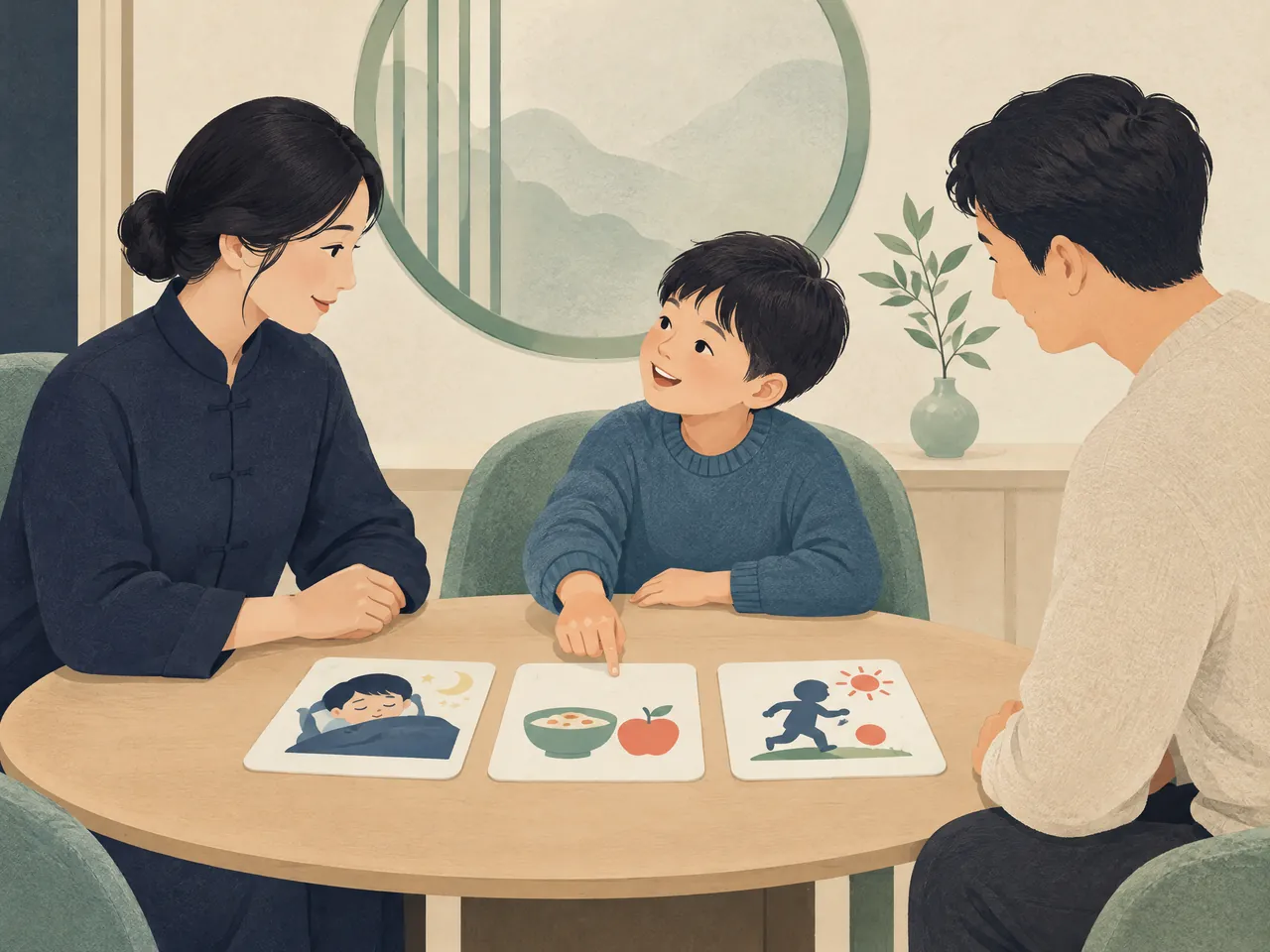
Bring a simple record of the function behind the posture concern. Does the child avoid homework, tire during a walk, stop an activity early, or complain only after a movement? Does the shape look the same in the morning and after school? Mention whether one shoulder, hip or side of the back appears different and any previous injury. If you bring photos, use a few dated images from normal standing or moving rather than asking the child to hold a painful position. The clinician may still need to inspect posture, walking, movement and tenderness directly.
Do not assume that a rounded back is only a habit, or that any back pain is caused by a bag. Orthopaedic information notes that muscular strain, injury and overuse are common contributors to back pain in children, while other causes need different assessment [3]. The useful preparation is therefore neutral and specific: activity, timing, symptoms and function. The related page on back pain in children may help a parent frame questions for a medical appointment, but it is not a substitute for examining a child with concerning symptoms.
Paediatric Chinese medicine consultation: What should parents bring to a paediatric Chinese medicine consultation? — Red Flags and Referral
Seek urgent medical help instead of waiting for a paediatric Chinese medicine consultation when a child has serious new symptoms such as difficulty breathing, blue, grey, very pale or mottled lips or skin, a seizure, fainting, inability to wake, or a rapidly changing condition. The NHS also lists a non-fading rash and signs of dehydration such as no urine for a prolonged period among urgent warning signs for babies and children under five [2]. Use Hong Kong’s appropriate emergency service or medical facility for an urgent situation. Bring the discharge information to a later consultation if one is arranged.
For non-emergency but worrying changes, ask a doctor or relevant health professional how soon the child should be assessed. Examples include persistent or worsening pain, fever with a back complaint, night pain, new weakness, altered walking, numbness, pain radiating down a leg, or bowel or bladder changes [3]. Referral is not a failure of a consultation; it is part of safe decision-making when the history points beyond a routine discussion. Parents should avoid self-directed strong massage, pressing painful areas, or starting herbal products based on an online description while they are trying to clarify a significant new symptom.
Paediatric Chinese Medicine Consultation: What Should Parents Bring to a Paediatric Chinese Medicine Consultation? — Understanding the Visit
The first visit is a conversation as well as an assessment. Official Hong Kong Chinese medicine materials describe a holistic consultation approach that considers the person as a whole rather than a single symptom [1]. For a child, this does not mean every concern has the same cause or that a checklist makes a diagnosis. The practitioner may ask about age, development, symptoms, food, sleep, bowel habits, activities, prior care and family observations. Bring the child when possible, because watching how they move, communicate and respond may add information that a parent’s summary cannot provide.
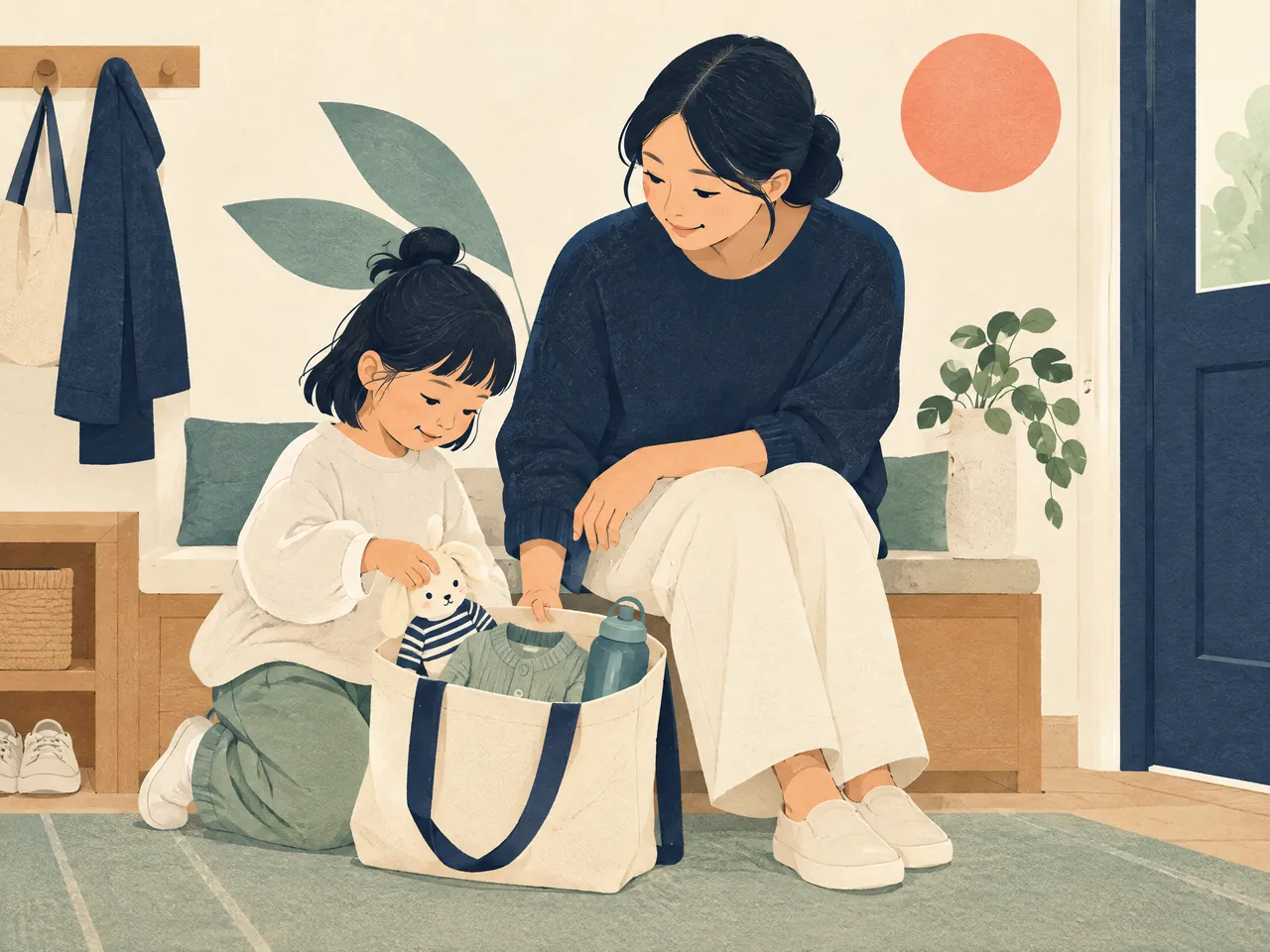
A calm plan makes the visit easier. Tell the child beforehand that they may be asked simple questions and that a parent or guardian will stay with them. Pack water, a familiar item for younger children and any glasses, hearing devices or mobility supports used daily. Wear comfortable clothing if movement or posture is likely to be discussed. The page on paediatrics in CM offers background terminology; your own list of questions should remain specific to the child and should include what to do if symptoms change before follow-up.
Paediatric Chinese medicine consultation: What should parents bring to a paediatric Chinese medicine consultation? — Questions About Care
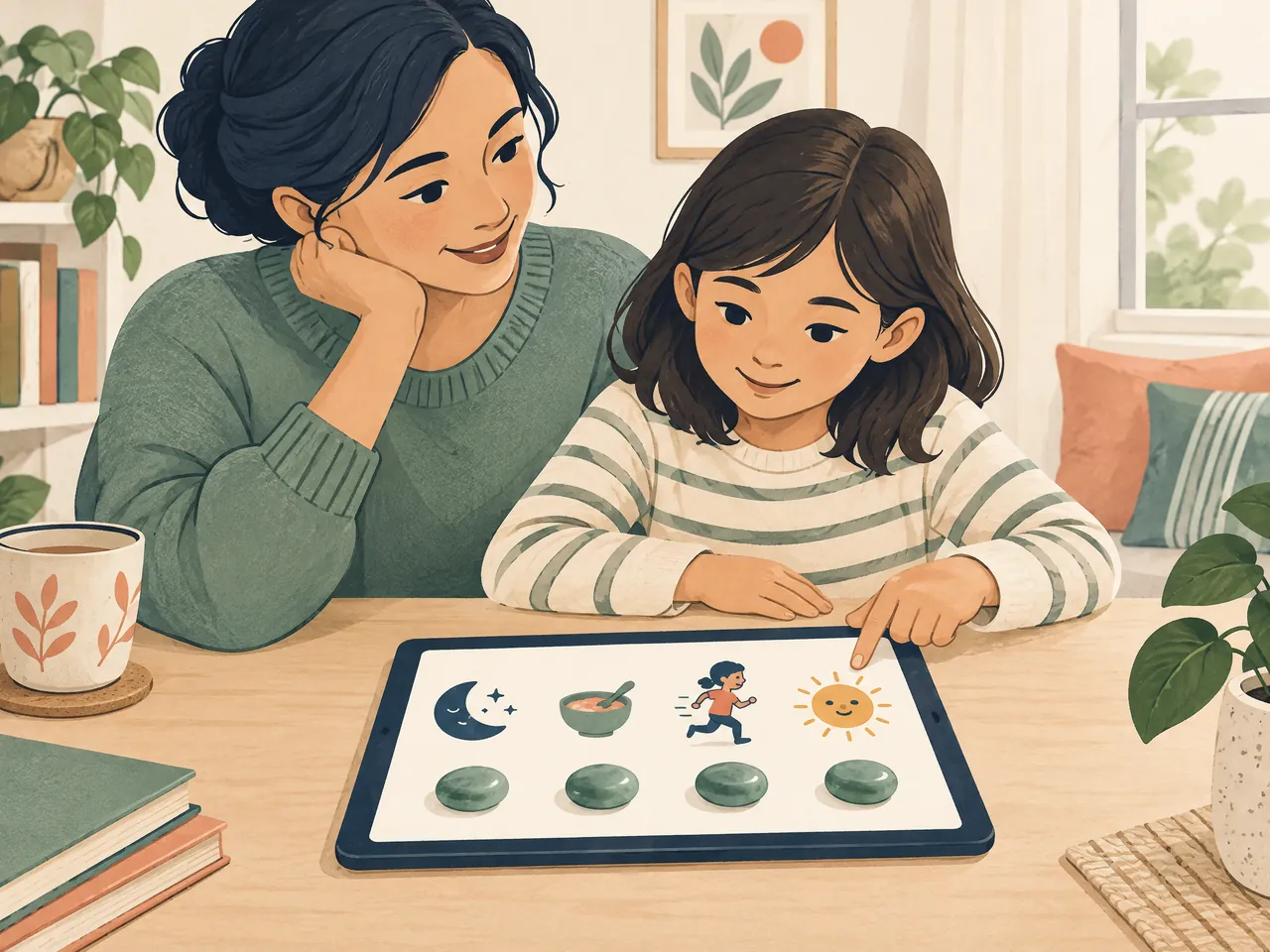
Write down a few questions before arriving. Helpful examples are: What features of this history need medical assessment first? What findings would change the plan? What should we monitor at home? What activities should we pause or continue? How will we know whether the next step is working, and when should we contact another clinician? If a treatment is discussed, ask its purpose, expected practical commitments, possible discomforts or risks, what information from the child’s other clinicians matters, and when to stop and seek advice. A good question is one that helps the family make an informed next decision, not one that asks for a guarantee.
It is appropriate to ask the practitioner to explain words you do not understand and to repeat key instructions in plain language. If a child is taking prescription medicine or has an ongoing specialist plan, say so before any individual recommendation is made. Do not change another clinician’s plan simply because a new option is mentioned. Families may also ask whether the concern sits better with a general medical review, paediatric assessment, orthopaedic assessment, physiotherapy or another service. The right route depends on the history and examination, not on the order in which websites were found.

Paediatric Chinese medicine consultation: What should parents bring to a paediatric Chinese medicine consultation? — Consent and Next Steps
A parent or legal guardian should accompany a minor and take part in the consent discussion. Bring identification or paperwork only if the clinic asks for it when arranging the visit; the essential clinical material is the child’s history and current information. The parent should understand what is being proposed, have time to ask questions and be comfortable saying no or asking for another explanation. Older children should be included in an age-appropriate way, especially when an examination or any intervention is being considered. Their discomfort, preferences and ability to cooperate are relevant to a safe, respectful visit.
Before leaving, make sure the next step is written down or clear: whether to monitor, return, contact the clinic, see another professional, or seek urgent help if a particular change appears. Keep a copy of any new instructions with the symptom diary and medicines list. To ask about arranging a consultation, families can contact TCM Lab and state the child’s age, main concern and any language or accessibility needs; availability should be confirmed rather than assumed. Location information is available for the Kwun Tong Chinese medicine clinic and Chinese medicine clinic Prince Edward.
Care and health guide
Health service information
This directory brings together services, reading, and visit information related to health services, to help you prepare questions for a consultation.
If you are organising health questions, Chinese medicine clinic Hong Kong is a starting point for learning about related services and preparing for a consultation.
People have different needs; acupuncture Hong Kong provides further reading to help you understand options in your own context.


Your questions, answered
Frequently asked questions
What should parents bring to a paediatric Chinese medicine consultation?
Bring a symptom timeline, current medicines and supplements, allergy details, injury history and relevant reports from previous assessments. Notes on sleep, eating, bowel movements, energy, activity and school participation can clarify how the concern affects everyday life. A parent or guardian should attend to give the history and discuss consent.
Should I bring photographs or videos of my child’s posture or symptoms?
Dated photos or short videos may help show an intermittent gait change, posture concern, rash or cough that is not happening in the room. They are supporting context, not a diagnosis. Do not delay medical assessment for pain, injury, altered walking, weakness or other concerning symptoms while trying to collect images.
Is a paediatric Chinese medicine consultation suitable for every child?
Not automatically. Suitability depends on age, symptoms, urgency, overall condition and the findings of an in-person assessment. A child with serious new symptoms, breathing difficulty, a seizure, inability to wake, concerning pain or a change in function may need urgent or medical assessment first.
Can I start massage or herbal products before the consultation?
Do not treat general online information as an individual plan. Massage pressure, any herbal product and the need for other care depend on the child’s age, health, medicines and assessment. Avoid pressing painful areas or starting self-directed products when symptoms are new, worsening, associated with injury or accompanied by fever.
Sources and further information
- [1] [1] Hong Kong Health Bureau — Chinese Medicine Clinical Services
Referenced for: Supports the official Hong Kong terminology for Paediatrics in CM and the description of a holistic consultation approach; it does not establish services, treatments or outcomes at TCM Lab.
- [2] [2] NHS — When to get urgent medical help for babies and children under 5
Referenced for: Supports the examples of urgent warning signs for babies and children under five; local emergency arrangements should be used in Hong Kong.
- [3] [3] OrthoKids / Pediatric Orthopaedic Society of North America — Back Pain in Children
Referenced for: Supports the back-pain warning signs and the value of a history and physical assessment; it does not diagnose an individual child.
- [4] [4] Chinese Medicine Hospital of Hong Kong — Paediatrics in Chinese Medicine
Referenced for: Supports Hong Kong English terminology and the developmental-stage framing for paediatrics in Chinese medicine.