
TCM Lab · Health reading
Acupuncture for allergic rhinitis: acupuncture for adult allergic rhinitis and acupuncture for allergic rhinitis in children
Published Updated
Acupuncture for allergic rhinitis may be worth discussing as an adjunct when an adult has a clear diagnosis, ongoing symptoms and a wish to consider supportive care alongside usual treatment. It is not a substitute for working out whether symptoms are allergic, non-allergic, infectious or linked to asthma. Adult research suggests possible symptom and quality-of-life benefits, but study limitations mean results cannot predict an individual response. For children, evidence is too limited for firm conclusions, so allergy assessment, prescribed care and the child’s comfort must lead the decision.
Appointments are confirmed through WhatsApp. If you have language requirements, please mention them in your enquiry.
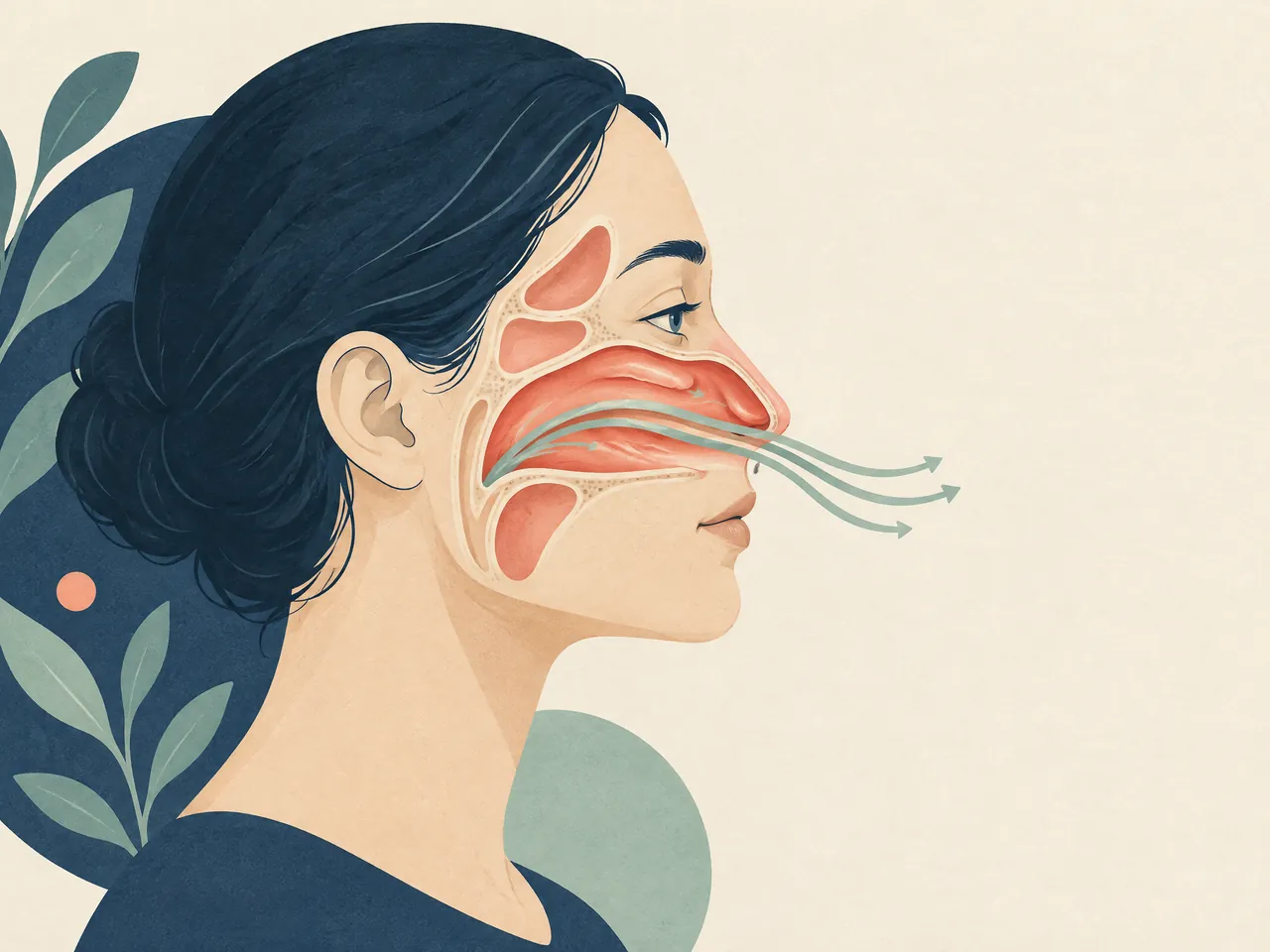
The short answer
Acupuncture for allergic rhinitis can be considered as supportive care for some adults after their symptoms and current treatment have been assessed. A systematic review found possible improvements in adult nasal symptoms and quality of life, but important bias concerns and incomplete confirmation of results mean it is not a guaranteed treatment [3]. Evidence for acupuncture for allergic rhinitis in children remains insufficient. Do not stop prescribed antihistamines, nasal sprays or asthma medicines because acupuncture is being considered.
Transparent pricing
See the fees.
Choose your care.
Explore our complete official price list, including first-trial prices, regular prices, packages and branch-specific options.
Opening WhatsApp prepares an enquiry; it does not send a message, take payment or confirm an appointment. Suitability and individual arrangements are confirmed during consultation.
Chinese medicine
All prices in HKDAcupuncture and Chinese herbal medicine package
Includes a Chinese medicine consultation with pulse assessment, body acupuncture and 3 days of Chinese herbal granules that do not require decoction.
HK$580 (single session)
Chinese medicine consultation with pulse assessment
Hair and scalp
All prices in HKDScalp health and hair-loss management
Includes AI scalp analysis, deep scalp and follicle cleansing, and scalp oil-control care.
HK$380 (first trial)
Regular price: HK$680
- 6 sessions: HK$3,480 (HK$580 per session)
- 12 sessions: HK$5,760 (HK$480 per session)
- 20 sessions: HK$8,600 (HK$430 per session)
- 30 sessions: HK$11,400 (HK$380 per session)
Hair acupuncture and Chinese herbal medicine package
Includes scalp acupuncture and 3 days of Chinese herbal medicine that does not require decoction.
HK$580 (single session)
Registered Chinese Medicine Practitioner consultation
- 6 sessions: HK$3,180 (HK$530 per session)
- 12 sessions: HK$5,760 (HK$480 per session)
- 20 sessions: HK$8,600 (HK$430 per session)
- 30 sessions: HK$11,400 (HK$380 per session)
Combined hair and scalp treatment
Combines acupuncture and Chinese herbal medicine with salon-level scalp and follicle care. Packages include complimentary hair-care shampoo and serum.
HK$1,260 (single session)
Combined treatment
- 8 sessions: HK$8,640 (HK$1,080 per session)
- 16 sessions: HK$15,680 (HK$980 per session)
- 20 sessions: HK$18,600 (HK$930 per session)
- 30 sessions: HK$26,400 (HK$880 per session)
Weight management
All prices in HKDFull-body acupoint embedding for weight management
Includes full-body acupoint embedding. Packages include complimentary Chinese herbal medicine for weight management, with the number of included days scaled to the package. Embedding material and the individual treatment arrangement are confirmed during consultation; this is not a cosmetic thread lift.
HK$980 (single session)
No trial session
- 10 sessions: HK$7,800 (HK$780 per session)
- 20 sessions: HK$14,600 (HK$730 per session)
- 30 sessions: HK$20,400 (HK$680 per session)
Facial acupuncture
All prices in HKDFacial acupuncture (basic)
Includes facial acupuncture and meridian-based facial care, including care for facial puffiness.
HK$480 (first trial)
Regular price: HK$680
- 10 sessions: HK$5,200 (HK$520 per session)
- 20 sessions: HK$9,600 (HK$480 per session)
- 30 sessions: HK$13,500 (HK$450 per session)
Facial acupuncture (advanced)
Includes enhanced facial acupuncture with a specially formulated moisturising mask and serum.
HK$780 (first trial)
Regular price: HK$1,180
- 10 sessions: HK$9,000 (HK$900 per session)
- 20 sessions: HK$16,600 (HK$830 per session)
- 30 sessions: HK$23,400 (HK$780 per session)
Pain care
All prices in HKDExtracorporeal shockwave treatment
Shockwave treatment for deep-tissue and fascial care. The Kwun Tong clinic offers the multi-area options shown below.
Priced by branch
Branch-specific pricing
Prince Edward: HK$250 per area
Kwun Tong: HK$250 for 1 area / HK$450 for 2 areas / HK$600 for 3 areas
Pain care (manual therapy)
Includes Chinese medicine musculoskeletal assessment, manual joint techniques and tui na.
HK$580 (single session)
Chinese medicine musculoskeletal assessment
Pain care (acupuncture and manual therapy)
Combines acupuncture and manual therapy.
HK$680 (single session)
Combined care
acupuncture for allergic rhinitis; acupuncture for adult allergic rhinitis; acupuncture for allergic rhinitis in children — distinguishing symptoms before treatment
Before deciding whether acupuncture for allergic rhinitis is relevant, start with the symptoms rather than the treatment name. Allergic rhinitis commonly involves repeated sneezing, an itchy nose, a runny or blocked nose, and itchy, red or watery eyes. Pollen, house dust mites, animal dander and mould are among common allergens [1]. A person who wakes with congestion, sneezes while cleaning, or develops itchy eyes after a particular exposure may have a useful pattern to describe, but that pattern alone does not prove the cause. The details help a pharmacist, doctor, allergy clinician or registered Chinese medicine practitioner decide what needs attention first.
The same nasal blockage can have several explanations. A cold, sinus concern, medicine effect or structural nasal issue may overlap with an allergy-type pattern. Temperature and humidity changes can also trigger non-allergic rhinitis, which is different from a response to an allergen [1]. This distinction matters because a needle-based supportive option cannot replace assessment of persistent one-sided blockage, recurrent nosebleeds, facial pain, a marked change in smell, or breathing symptoms. For a straightforward overview of medication, trigger reduction and daily routines, readers can also review allergic rhinitis symptom management.

acupuncture for allergic rhinitis; acupuncture for adult allergic rhinitis; acupuncture for allergic rhinitis in children — signs that suggest an allergic trigger
An allergy-type pattern is more likely to include itch as well as nasal symptoms, especially if it returns in similar places or seasons. A diary can note whether symptoms follow bedding changes, housework, contact with an animal, time outdoors, dampness, air pollution or a rapid weather change. Record the time, setting, sneezing, clear discharge, nasal blockage, eye symptoms and the effect on sleep. The purpose is not to diagnose yourself or to eliminate every item in the home. It is to replace a vague report of ‘my nose is always bad’ with observations that can guide a safer discussion.
For a child, caregivers may need to observe what the child cannot clearly describe. Night waking, mouth breathing, snoring, rubbing the nose, difficulty concentrating, cough during exercise and changes in usual activity are all useful to mention. Hong Kong’s Department of Health notes that poorly controlled allergic rhinitis can affect sleep, concentration, learning and daily function [2]. These effects do not prove that allergy is the only issue, but they make a timely medical review more important. When a child also wheezes, has chest tightness, becomes short of breath or has worsening asthma, the immediate priority is medical assessment rather than starting a new complementary approach.

acupuncture for allergic rhinitis; acupuncture for adult allergic rhinitis; acupuncture for allergic rhinitis in children — why the cause matters
Knowing the likely driver changes the practical plan. If symptoms seem linked to house dust, a clinician may discuss measures around bedding and cleaning. If a room is damp or has mould, the building issue deserves attention. If symptoms cluster around outdoor exposure, pollen or polluted air may be part of the conversation. The Department of Health recommends a clean, well-ventilated home and attention to damp corners, dust filters and known allergens [2]. These measures are not proof of a diagnosis, and they are not a replacement for prescribed treatment; they are sensible questions to raise alongside assessment.
Cause also matters when someone is thinking about acupuncture for adult allergic rhinitis. A consultation should make room for the pattern of symptoms, past tests if available, sleep, asthma or eczema history, and every medicine or spray currently used. In traditional Chinese medicine, a practitioner may ask about wider experiences such as energy, appetite, sleep and temperature preference. That traditional assessment is not the same as an allergy test or a modern medical diagnosis. It can inform a personalised supportive-care conversation, while established investigation and medical management remain necessary when the diagnosis is uncertain or symptoms are affecting breathing.
Compare your options
| Situation | Useful information to bring | What should guide the next step | Role of acupuncture |
|---|---|---|---|
| Adult with repeated sneezing, itch and clear runny nose | Timing, likely exposures, sleep effects, allergy tests and current medicines | Confirming the pattern and reviewing established symptom management | May be discussed as an adjunct; adult studies suggest possible but uncertain benefit |
| Child with blocked nose or disrupted sleep | Caregiver observations, school or activity effects, inhalers, sprays and asthma history | Child-focused medical assessment and comfort with any proposed intervention | Evidence is insufficient for firm conclusions; individual caution is needed |
| Symptoms continue despite self-care | Products tried, how they were used, response and adverse effects | Pharmacist or medical review, especially if sleep or daily life is affected | Not a substitute for reviewing diagnosis or prescribed care |
| Wheeze, chest tightness or worsening asthma | Onset, severity, inhaler use and other breathing symptoms | Prompt medical assessment and asthma management | Do not use acupuncture as the first response to breathing deterioration |
On smaller screens, scroll the table sideways to compare all columns.
acupuncture for allergic rhinitis; acupuncture for adult allergic rhinitis; acupuncture for allergic rhinitis in children — evidence, limits and shared decisions
People often ask a direct question: does acupuncture help a blocked, itchy or runny nose? The most accurate answer is cautious. A 2022 systematic review and meta-analysis reported that acupuncture may improve nasal symptoms and quality of life in adults with allergic rhinitis compared with no intervention or sham acupuncture. It found no clear difference from cetirizine or loratadine, and its trial-sequential analysis did not confirm the pooled findings [3]. The review also identified serious performance and attrition bias in many included studies. This supports discussion, not a promise that acupuncture will work for every adult or replace an agreed medical plan.
Shared decision-making means making the uncertainty usable. Ask what the intended role is: additional symptom support, an option for someone who prefers to explore non-drug care, or part of a broader consultation about recurring symptoms. Agree on practical signs to monitor, such as sleep disruption, daytime function, nasal blockage or the need for extra rescue advice. Keep using the symptom diary and avoid judging a complex seasonal pattern after one unusually good or bad day. A clear plan also specifies who should review medical symptoms and what changes, such as wheeze or persistent deterioration, require more urgent care.
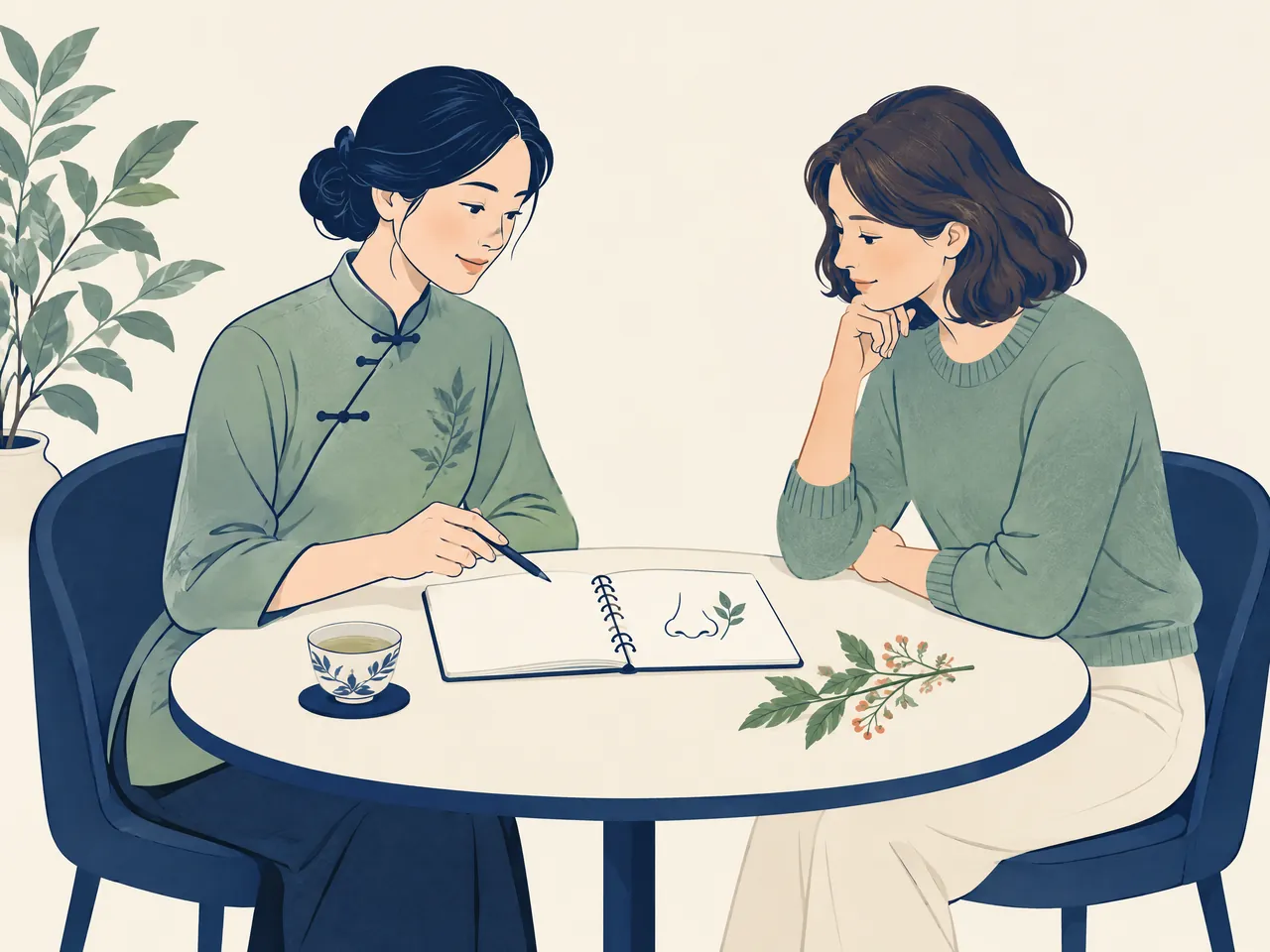
acupuncture for allergic rhinitis; acupuncture for adult allergic rhinitis; acupuncture for allergic rhinitis in children — what adult studies suggest about symptoms and quality of life
For adults, the evidence permits a measured conversation rather than an all-or-nothing claim. The systematic review’s conclusion was that acupuncture may have an advantage over no intervention and sham acupuncture for adult nasal symptoms and quality of life, while more trials are needed to confirm the findings [3]. ‘Quality of life’ can mean practical issues such as sleep, concentration, outdoor comfort and the frustration of repeated sneezing. Those outcomes matter to the person living with rhinitis, but they are still personal outcomes to monitor, not a fixed result that a clinic can predict in advance.
It is also important not to use research comparisons as instructions to abandon medicine. Antihistamines and steroid nasal sprays are among established options described by the NHS, and a pharmacist or prescriber can advise on their appropriate use [1]. Acupuncture may be considered alongside those measures only after the practitioner knows what is being taken and why. If you are exploring broader supportive care, Does Chinese medicine help allergic rhinitis? offers related reading, but it should not outweigh advice from the clinician managing asthma, a severe flare or a prescription.
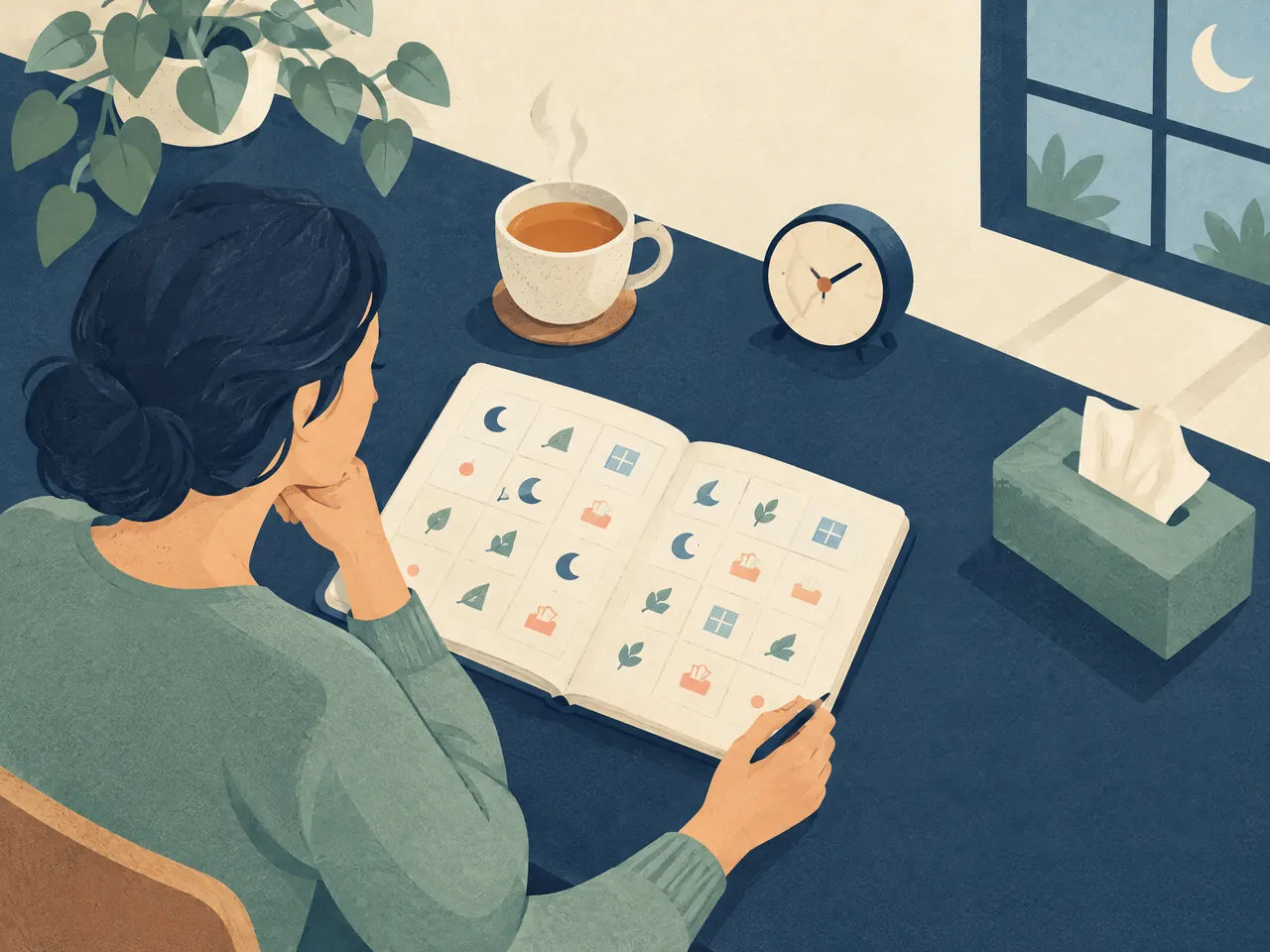
acupuncture for allergic rhinitis; acupuncture for adult allergic rhinitis; acupuncture for allergic rhinitis in children — different evidence standards
Acupuncture for allergic rhinitis in children deserves a higher level of caution, not a smaller version of an adult plan. The same review states that the effect for children and adolescents remains unclear because data are insufficient [3]. Children differ in how they communicate discomfort, tolerate needling and experience sleep or breathing problems. Their symptoms may also affect school and family routines in ways that need paediatric or family-doctor input. A parent should be able to say no or pause at any time, and the child’s willingness should be treated as part of suitability rather than an obstacle to overcome.
A sensible decision for a child begins with diagnosis and usual care. It includes checking current antihistamines, nasal sprays, inhalers and known allergies; asking whether sleep, exercise or concentration are affected; and identifying who will monitor progress. If symptoms are persistent, unclear or are worsening alongside asthma, seek medical review before treating acupuncture as the next answer. The guide When should I see a doctor for allergic rhinitis? can help families frame that conversation. Complementary care, if later considered, should fit around—not displace—that assessment.
acupuncture for allergic rhinitis; acupuncture for adult allergic rhinitis; acupuncture for allergic rhinitis in children — cautious care with conventional treatment
The safest way to consider acupuncture is to keep care connected. Take a list of current medicines, over-the-counter products, supplements, inhalers and previous reactions to the consultation. Mention whether a doctor has diagnosed allergic rhinitis, whether allergy testing has been done, and whether asthma, eczema, sinus symptoms or sleep problems are present. This gives the practitioner context for discussing suitability and avoids a plan built on incomplete information. It is especially important when symptoms affect daily life or when a child is involved, because the goal is steady control and clear escalation, not simply trying more interventions.
Conventional measures often remain central. The NHS advises avoiding known triggers where possible and lists antihistamines, steroid nasal sprays and saline options among measures that can help; it also warns that using decongestant sprays for too long can worsen blockage [1]. The Hong Kong Department of Health likewise describes allergen avoidance, antihistamines and steroid nasal spray as first-line treatment [2]. These are general information points, not a personalised prescription. Ask a pharmacist or the prescribing clinician before changing dose, technique or timing, and never stop a prescribed medicine solely because acupuncture is being considered.

acupuncture for allergic rhinitis; acupuncture for adult allergic rhinitis; acupuncture for allergic rhinitis in children — medication coordination
Medication coordination is simple but essential: tell each practitioner what the other is doing. Bring the actual packaging or a phone photo if names are hard to remember. Include nasal sprays, tablets, eye drops, inhalers and any medicine taken only during flares. Say whether you have had drowsiness, nasal dryness, nosebleeds or difficulty following a spray routine. A registered Chinese medicine practitioner can then discuss acupuncture as a possible adjunct with a realistic understanding of the existing plan. The practitioner should not ask you to replace a prescribed treatment without coordination with the prescriber.
A review is also a chance to check whether a familiar medicine is being used appropriately. The NHS says pharmacy treatment may be enough for many people, but advises medical review when symptoms worsen, affect sleep and everyday life, the cause is unclear, asthma is worsening, or pharmacy treatment is not helping [1]. Those thresholds apply whether or not acupuncture has been tried. They protect against treating an unresolved diagnosis, uncontrolled asthma or a changing symptom pattern as if it were only routine nasal sensitivity.

acupuncture for allergic rhinitis; acupuncture for adult allergic rhinitis; acupuncture for allergic rhinitis in children — home measures and when to seek medical review
Home measures work best when they respond to a real pattern. Keep a bedroom or living space dry and ventilated, deal with visible dampness, clean dust filters as needed, and reduce exposure to a known trigger where practical [2]. During poor air-quality days or rapid changes in temperature, note the effect on symptoms rather than assuming a single cause. If pollen is a concern, note time outdoors and whether eye symptoms accompany the nasal flare. Small, observable changes are easier to sustain than trying to control every possible trigger at once.
Seek medical advice when symptoms are disrupting sleep, work, study or a child’s daily function, when they are getting worse, or when you are unsure what is causing them [1]. Worsening wheeze, breathlessness or chest tightness needs prompt medical attention. A persistent one-sided nasal blockage, recurrent nosebleeds, significant facial pain or a lasting change in smell also warrants medical assessment. For an adult who has had appropriate evaluation and wants to discuss adjunctive acupuncture, TCM Lab can explain consultation arrangements at the Kwun Tong Chinese medicine clinic or Chinese medicine clinic Prince Edward.
Care and health guide
Health service information
This directory brings together services, reading, and visit information related to health services, to help you prepare questions for a consultation.
If you are organising health questions, Chinese medicine clinic Hong Kong is a starting point for learning about related services and preparing for a consultation.
People have different needs; acupuncture Hong Kong provides further reading to help you understand options in your own context.


Your questions, answered
Frequently asked questions
What does the evidence say about acupuncture for adult allergic rhinitis?
A systematic review found possible improvements in nasal symptoms and quality of life for adults compared with no intervention or sham acupuncture. However, it also found important study-bias concerns and did not fully confirm the pooled results. It is reasonable to discuss acupuncture as an optional adjunct, not a guaranteed treatment or replacement for conventional care [3].
Is acupuncture for allergic rhinitis in children suitable for every child?
No. The available review found insufficient data to draw clear conclusions for children and adolescents [3]. A child should first have appropriate assessment of symptoms, sleep and any asthma concerns. If acupuncture is considered, it should be individually assessed by an experienced registered Chinese medicine practitioner, with the child’s comfort and willingness respected.
Can I use acupuncture while taking an antihistamine or steroid nasal spray?
It may be considered alongside prescribed care, but disclose every medicine and spray to the practitioner. Do not stop or change a prescribed antihistamine, steroid nasal spray or inhaler because of acupuncture. Medication changes should be discussed with the pharmacist or clinician who manages that treatment.
When should I seek medical review instead of focusing on acupuncture?
Seek medical advice if symptoms are worsening, disturb sleep or everyday life, the cause is unclear, pharmacy treatment is not helping, or asthma is getting worse [1]. Breathing difficulty, wheeze or chest tightness needs prompt medical assessment. Persistent one-sided blockage, recurrent nosebleeds, notable facial pain or a lasting smell change also deserve evaluation.
Sources and further information
- [1] NHS: Allergic rhinitis
Referenced for: Symptoms, common triggers, distinction from non-allergic rhinitis, general treatments and thresholds for medical review.
- [2] Hong Kong Department of Health Student Health Service: Allergic Rhinitis
Referenced for: Hong Kong guidance on symptoms, household and environmental measures, first-line management, and effects on children’s sleep and function.
- [3] He et al.: Acupuncture for allergic rhinitis: a systematic review and meta-analysis
Referenced for: Adult symptom and quality-of-life findings, limitations of the evidence, and insufficient data for children and adolescents.