
TCM Lab · Health reading
Wrist Flexor Stretch for Tennis Elbow and Wrist Extensor Stretch for Tennis Elbow: What Exercises Are Good for Tennis Elbow?
Published Updated
A wrist flexor stretch for tennis elbow and a wrist extensor stretch for tennis elbow can be sensible starting points when pain sits around the outer elbow and is linked with gripping, lifting, turning a handle, or long periods at a mouse. The aim is not to force a tight forearm to lengthen. It is to reintroduce calm, comfortable movement while reducing the activity that keeps provoking the tendon. Gentle stretching works best as one part of a plan that also looks at grip, wrist position, recovery, and gradual strengthening. If pain is sharp, spreading, or accompanied by numbness or obvious weakness, arrange an assessment rather than pushing through an exercise routine.
Appointments are confirmed through WhatsApp. If you have language requirements, please mention them in your enquiry.
The short answer
What exercises are good for tennis elbow? Start with a wrist flexor stretch and wrist extensor stretch in a comfortable range, then add light wrist and grip strengthening only when the response is settled. The stretches should feel like a mild forearm pull, not sharp outer-elbow pain. Reduce the task that triggers symptoms, build load gradually, and seek assessment sooner for trauma, marked swelling, numbness, tingling, or worsening weakness.
Transparent pricing
See the fees.
Choose your care.
Explore our complete official price list, including first-trial prices, regular prices, packages and branch-specific options.
Opening WhatsApp prepares an enquiry; it does not send a message, take payment or confirm an appointment. Suitability and individual arrangements are confirmed during consultation.
Pain care
All prices in HKDExtracorporeal shockwave treatment
Shockwave treatment for deep-tissue and fascial care. The Kwun Tong clinic offers the multi-area options shown below.
Priced by branch
Branch-specific pricing
Prince Edward: HK$250 per area
Kwun Tong: HK$250 for 1 area / HK$450 for 2 areas / HK$600 for 3 areas
Pain care (manual therapy)
Includes Chinese medicine musculoskeletal assessment, manual joint techniques and tui na.
HK$580 (single session)
Chinese medicine musculoskeletal assessment
Pain care (acupuncture and manual therapy)
Combines acupuncture and manual therapy.
HK$680 (single session)
Combined care
Hair and scalp
All prices in HKDScalp health and hair-loss management
Includes AI scalp analysis, deep scalp and follicle cleansing, and scalp oil-control care.
HK$380 (first trial)
Regular price: HK$680
- 6 sessions: HK$3,480 (HK$580 per session)
- 12 sessions: HK$5,760 (HK$480 per session)
- 20 sessions: HK$8,600 (HK$430 per session)
- 30 sessions: HK$11,400 (HK$380 per session)
Hair acupuncture and Chinese herbal medicine package
Includes scalp acupuncture and 3 days of Chinese herbal medicine that does not require decoction.
HK$580 (single session)
Registered Chinese Medicine Practitioner consultation
- 6 sessions: HK$3,180 (HK$530 per session)
- 12 sessions: HK$5,760 (HK$480 per session)
- 20 sessions: HK$8,600 (HK$430 per session)
- 30 sessions: HK$11,400 (HK$380 per session)
Combined hair and scalp treatment
Combines acupuncture and Chinese herbal medicine with salon-level scalp and follicle care. Packages include complimentary hair-care shampoo and serum.
HK$1,260 (single session)
Combined treatment
- 8 sessions: HK$8,640 (HK$1,080 per session)
- 16 sessions: HK$15,680 (HK$980 per session)
- 20 sessions: HK$18,600 (HK$930 per session)
- 30 sessions: HK$26,400 (HK$880 per session)
Weight management
All prices in HKDFull-body acupoint embedding for weight management
Includes full-body acupoint embedding. Packages include complimentary Chinese herbal medicine for weight management, with the number of included days scaled to the package. Embedding material and the individual treatment arrangement are confirmed during consultation; this is not a cosmetic thread lift.
HK$980 (single session)
No trial session
- 10 sessions: HK$7,800 (HK$780 per session)
- 20 sessions: HK$14,600 (HK$730 per session)
- 30 sessions: HK$20,400 (HK$680 per session)
Facial acupuncture
All prices in HKDFacial acupuncture (basic)
Includes facial acupuncture and meridian-based facial care, including care for facial puffiness.
HK$480 (first trial)
Regular price: HK$680
- 10 sessions: HK$5,200 (HK$520 per session)
- 20 sessions: HK$9,600 (HK$480 per session)
- 30 sessions: HK$13,500 (HK$450 per session)
Facial acupuncture (advanced)
Includes enhanced facial acupuncture with a specially formulated moisturising mask and serum.
HK$780 (first trial)
Regular price: HK$1,180
- 10 sessions: HK$9,000 (HK$900 per session)
- 20 sessions: HK$16,600 (HK$830 per session)
- 30 sessions: HK$23,400 (HK$780 per session)
Chinese medicine
All prices in HKDAcupuncture and Chinese herbal medicine package
Includes a Chinese medicine consultation with pulse assessment, body acupuncture and 3 days of Chinese herbal granules that do not require decoction.
HK$580 (single session)
Chinese medicine consultation with pulse assessment
Wrist Flexor Stretch for Tennis Elbow, Wrist Extensor Stretch for Tennis Elbow, and What Exercises Are Good for Tennis Elbow? Start with the Symptoms
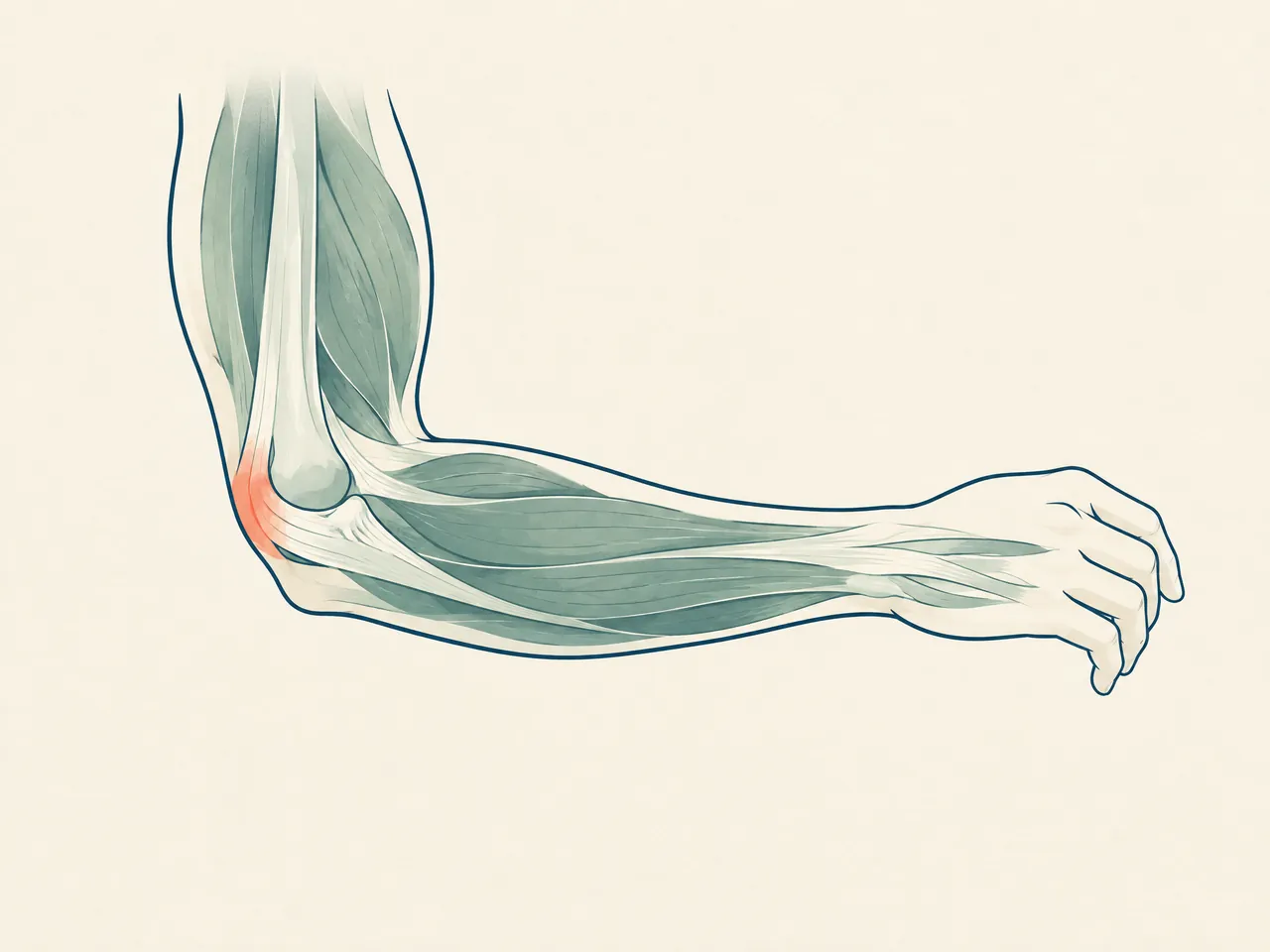
Tennis elbow is a common name for pain that is felt around the bony outside of the elbow. Despite the name, it is not limited to racquet sports. Repeated wrist and forearm work can be relevant whether that work comes from using a screwdriver, carrying shopping, preparing food, hair styling, computer use, or a new gym routine. The tendons involved connect forearm muscles that help lift the wrist and fingers to the outside of the elbow. Overuse can make that area sensitive, especially when the wrist has to stabilise a firm grip. [1] [3]
A useful first question is not simply, “Which stretch should I do?” It is, “What does my pain do during and after the task?” A person may tolerate typing but feel a sting when lifting a kettle with the palm down. Another may notice discomfort after a long tennis session, then struggle to turn a key. That pattern helps separate a manageable activity response from a routine that is repeatedly exceeding current capacity. The guide to tennis elbow stretches gives related positions, while this page focuses on choosing between a flexor and extensor stretch and fitting either one into daily life.
Pain on the inside of the elbow, pain that starts in the neck, or symptoms mainly affecting the little finger may not have the same cause. A label found online is not a diagnosis. Looking closely at elbow pain location can make a clinician conversation more precise.
Wrist Flexor Stretch for Tennis Elbow, Wrist Extensor Stretch for Tennis Elbow, and What Exercises Are Good for Tennis Elbow? Recognising Outer Elbow Pain
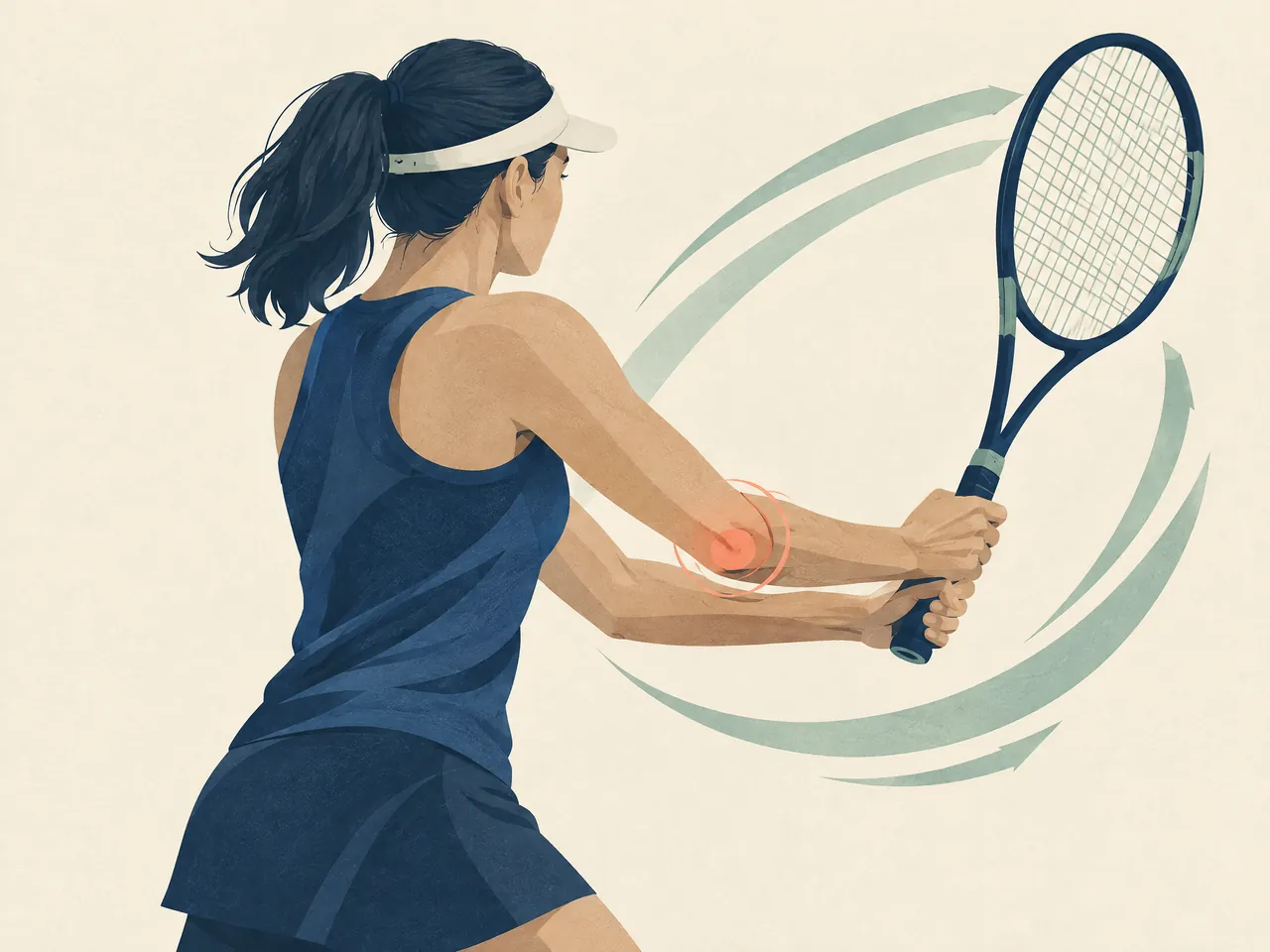
Outer-elbow pain commonly appears gradually rather than after one dramatic incident. It can be sore to press over the outside of the elbow, travel into the upper forearm, or show up as a weak or unreliable grip. Handshaking, picking up a mug, holding a pan with the elbow straight, turning a wrench, and wringing a cloth are familiar examples because they combine wrist control with force. The Hong Kong College of Orthopaedic Surgeons also lists gripping, lifting heavy objects, and wringing a towel among situations that can bring on pain. [1]
Recognising the pattern does not mean testing it repeatedly. If opening a tight jar has triggered pain twice, there is little value in repeating the test until it hurts more. Instead, note the grip position, weight, duration, and how long the elbow stays irritable afterwards. These observations help decide whether the next step should be a smaller range of movement, a lighter object, a short break from the task, or an assessment. They are also more informative than judging progress from one unusually good or bad day.
Wrist Flexor Stretch for Tennis Elbow, Wrist Extensor Stretch for Tennis Elbow, and What Exercises Are Good for Tennis Elbow? Understanding Grip and Load Triggers
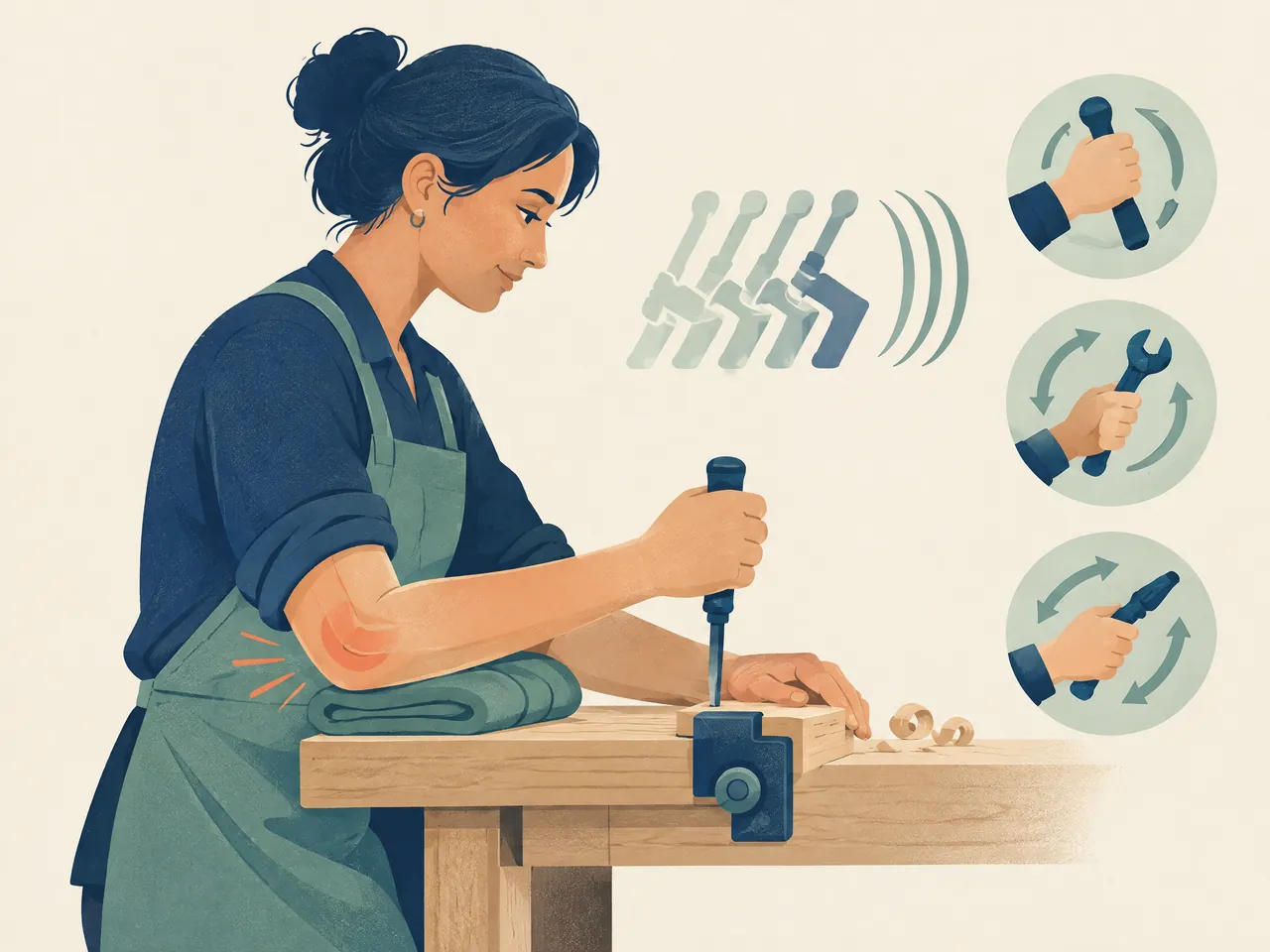
Grip is often the hidden load. A wrist can be fairly still while the forearm works hard to keep a shopping bag, a phone, a racquet, a tool, or a mouse from slipping. The demand rises when the elbow is straight, the wrist is held back, or the object is heavy and held far from the body. That is why a simple-looking task may be more provocative than an obvious exercise. It is also why complete rest alone may not answer the question of what the forearm can tolerate when the task returns.
Look for the combination rather than blaming a single movement. A brief light grip may be comfortable, yet a prolonged grip with repeated twisting may not be. A practical adjustment is to divide a task into smaller parts, use two hands where possible, bring a load closer to the body, or alternate hands. For a broader way to identify and alter those demands, see tennis elbow activity modification. The goal is not to make the arm inactive; it is to remove the sharpest spikes in demand while preserving useful movement.
Compare your options
| Situation | A gentler first option | What to monitor before progressing |
|---|---|---|
| Wrist feels stiff but the elbow is calm | Try a small-range wrist flexor or wrist extensor stretch with relaxed shoulder and breathing. | Whether the forearm pull stays mild during the stretch and does not clearly worsen later. |
| Stretch causes a sharp outer-elbow jab | Use less hand pressure, shorten the range, or stop for the day rather than pushing through. | Whether the sharp response settles; seek advice if it is persistent or escalating. |
| Light daily grip is manageable | Consider a slow supported wrist or light grip exercise after comfortable movement has been established. | Response during the exercise, later that day, and with normal tasks. |
| Heavy carrying or twisting repeatedly triggers pain | Break up the task, use two hands, change the handle or position, and reduce the most provocative demand. | Whether the adjustment makes the task more tolerable without needing to brace through pain. |
On smaller screens, scroll the table sideways to compare all columns.
Wrist Flexor Stretch for Tennis Elbow, Wrist Extensor Stretch for Tennis Elbow, and What Exercises Are Good for Tennis Elbow? A Gentle Exercise Approach
Stretching is a way to practise movement, not a contest with stiffness. A wrist flexor stretch is usually performed with the arm in front and the wrist guided back so the fingers point upward; the forearm stretch is felt on the palm side. A wrist extensor stretch usually begins with the fingers pointing toward the floor and may be felt on the back or upper side of the forearm. MyHealth.Alberta describes both positions and advises people to start slowly and ease off if exercise starts to cause pain. [2]
The named stretch is less important than the response. If the elbow is more painful during the movement, later that day, or the following morning, the current version may be too strong, too long, or too frequent. Reduce one variable at a time: use less hand pressure, bend the elbow slightly, shorten the hold, or do fewer repetitions. If even a very small range aggravates symptoms, do not keep trying to force the issue. A clinician or physiotherapist can help determine whether the exercise, diagnosis, or overall load needs to change.
Choose a quiet moment rather than adding a stretch straight after prolonged gripping. Keep the shoulder relaxed, avoid locking the elbow, and breathe normally. A soft local stretch differs from a sudden elbow jab, spreading burning, or tingling into the hand. Do not stretch farther in response to those symptoms.
Wrist Flexor Stretch for Tennis Elbow, Wrist Extensor Stretch for Tennis Elbow, and What Exercises Are Good for Tennis Elbow? How to Move Within a Comfortable Range
For a wrist flexor stretch, place the affected arm forward with the palm facing down. Gently bring the wrist back so the fingers point up, using the other hand only to add a small amount of guidance. For a wrist extensor stretch, keep the arm forward, allow the fingers to point down, and guide the wrist a little farther with the other hand. The Alberta patient handout uses a mild-to-moderate forearm stretch as the sensation to look for and gives 15 to 30 seconds with 2 to 4 repeats as an example, not as a personal prescription. [2]
Use the lightest version that you can perform without holding your breath or bracing your shoulder. Some people find a slight elbow bend more comfortable at first. Others prefer to rest the forearm on a table so the shoulder is not adding tension. Avoid bouncing, twisting the arm to chase a stronger pull, or using the stretch to test how much pain is present. Gentle, repeatable movement is more useful than an impressive range that leaves the arm aggravated.
Wrist Flexor Stretch for Tennis Elbow, Wrist Extensor Stretch for Tennis Elbow, and What Exercises Are Good for Tennis Elbow? When to Add Light Strengthening
Stretching alone does not recreate the demands of holding, lifting, or controlling the wrist. When gentle movement is reasonably settled, light strengthening may be introduced as part of a gradual plan. Examples used in public exercise guidance include a relaxed ball or rolled-sock squeeze, supported wrist movement, and slow resisted wrist flexion or extension with a light object. [2] The support under the forearm matters because it makes the movement easier to control and reduces the urge to use the shoulder or trunk instead.
Start with a load that allows slow, smooth motion and a symptom response you can monitor. More resistance, more repetitions, more days, and a longer stretch are all ways to progress, but changing everything at once makes it hard to know what caused a flare. Build only one element at a time and leave space to observe the response to ordinary activities as well. The page on lateral epicondylitis exercises can help readers compare exercise categories, but an individual programme is best tailored after assessment when pain or functional limits are significant.
Wrist Flexor Stretch for Tennis Elbow, Wrist Extensor Stretch for Tennis Elbow, and What Exercises Are Good for Tennis Elbow? Adjusting Daily Activities
A helpful exercise plan can fail if the rest of the day keeps repeating the same overload. Consider a person who stretches carefully in the morning, then spends several hours gripping a mouse tightly, carries heavy bags in one hand, and does a long session of DIY in the evening. The forearm has received several similar challenges even though none was labelled exercise. Matching activity demand to current tolerance is therefore as important as selecting the correct stretch.
This is not an instruction to avoid every task indefinitely. Divide jobs into smaller parts, share a heavy carry, take breaks before discomfort builds, use a comfortable handle if available, and keep the wrist nearer neutral where possible. At work, a different mouse grip or changing task briefly may be more realistic than perfect posture. In sport, review technique, equipment, volume, and recovery. [1] [3]

A forearm strap or brace may be considered for comfort during an activity, but it does not replace reviewing the provoking task or rebuilding capacity. Stop if it causes skin irritation or worsens symptoms. The key question is whether the adjustment makes ordinary movement more tolerable.

Wrist Flexor Stretch for Tennis Elbow, Wrist Extensor Stretch for Tennis Elbow, and What Exercises Are Good for Tennis Elbow? Managing Repetition and Recovery
Keep a simple record for several days: the task, how long it lasted, how hard you had to grip, what symptoms appeared, and how the arm felt later. This can expose a pattern that memory misses. For example, pain may not start while using a laptop but may follow a day in which mouse work, lifting groceries, and cooking all required the same forearm. The record is not for chasing a perfect score; it is for choosing one realistic adjustment at a time.
Recovery includes varied movement and enough time between similar demands. If a weekend project requires repetitive twisting, plan the next demanding task for another time rather than adding it immediately afterwards. If you play a racquet sport, reduce the element most likely to provoke symptoms first, such as duration or intensity, instead of making a sudden wholesale change to everything. The related page on tennis elbow pain relief exercises explores movement options; the key here is to make the home, work, or sport load compatible with the routine you choose.

Wrist Flexor Stretch for Tennis Elbow, Wrist Extensor Stretch for Tennis Elbow, and What Exercises Are Good for Tennis Elbow? Knowing When to Seek Assessment
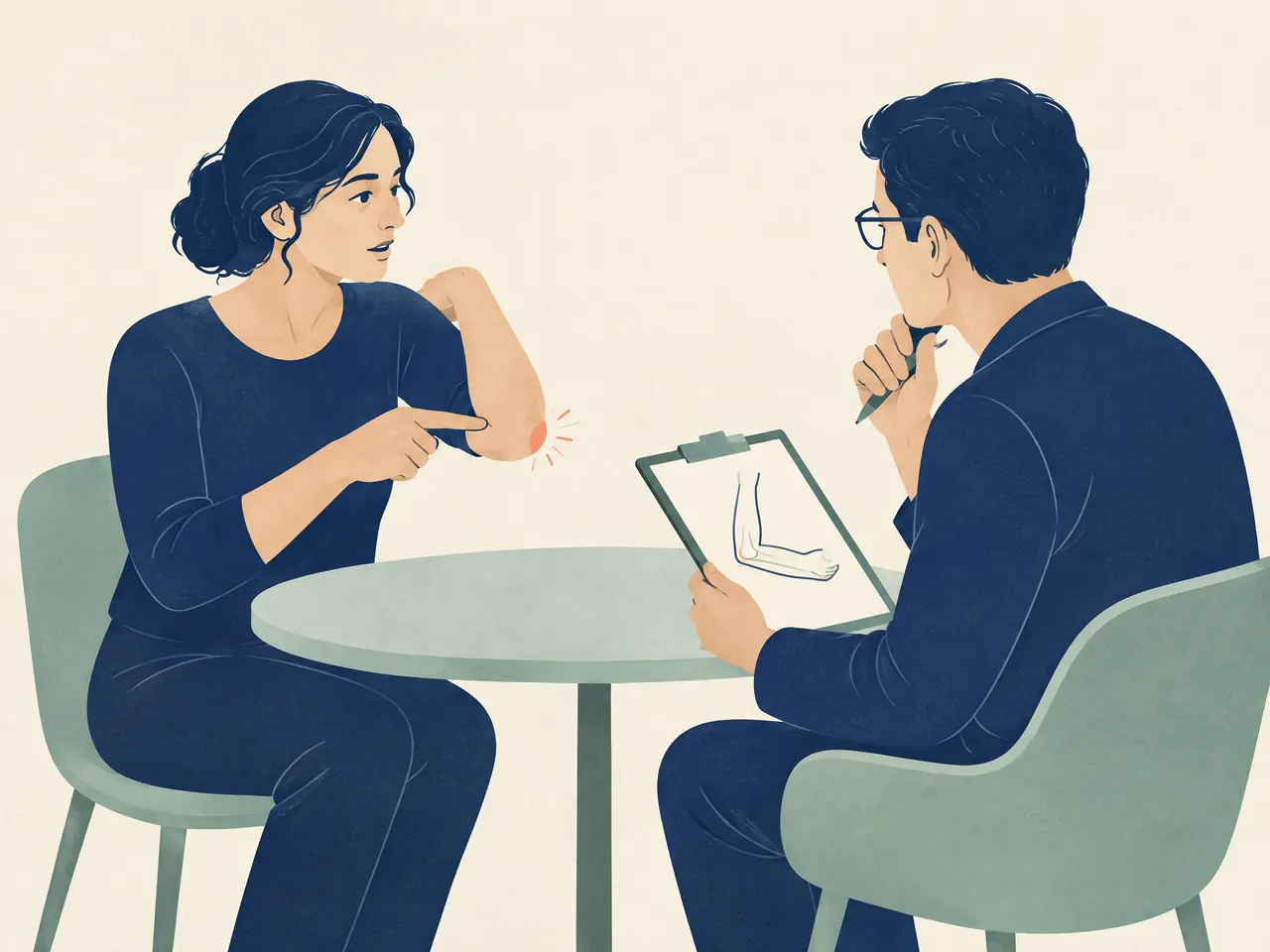
Seek prompt medical assessment after a fall or injury that leaves the elbow deformed, very swollen, hot, red, or difficult to move. Arrange assessment earlier as well if there is substantial loss of strength, persistent numbness or tingling, a rapidly changing lump, fever, or pain that is severe or spreading. These features are not well managed by simply adding stretches. Other conditions, including nerve irritation, joint problems, or pain referred from elsewhere, can resemble or accompany outer-elbow pain. [3]
For less urgent symptoms, make an appointment if sensible load reduction and gentle self-care have not helped, if daily tasks remain difficult, or if you are uncertain how to progress exercise. NHS guidance advises seeing a GP when elbow pain continues after resting the elbow and trying self-care for at least two weeks. [4] In Hong Kong, TCM Lab can be contacted to ask about an appointment and discuss your symptoms; this information page does not diagnose the cause or promise a fixed outcome.
Care and health guide
Health service information
This directory brings together services, reading, and visit information related to health services, to help you prepare questions for a consultation.
If you are organising health questions, Chinese medicine clinic Hong Kong is a starting point for learning about related services and preparing for a consultation.
People have different needs; acupuncture Hong Kong provides further reading to help you understand options in your own context.


Your questions, answered
Frequently asked questions
How often should I do a wrist flexor stretch for tennis elbow?
Frequency should fit your symptoms and the rest of your hand and forearm load. A public patient handout gives 15 to 30 seconds and 2 to 4 repeats as an example, but it also says to start slowly and ease off if pain begins. [2] If your elbow is clearly worse afterwards or the next day, reduce the range, pressure, duration, or frequency rather than adding more stretching.
Is the wrist flexor stretch or wrist extensor stretch better for tennis elbow?
They place the wrist in different positions and may create a pull on different sides of the forearm. Tennis elbow often relates to the wrist extensor tendon area, but the better choice is the one that stays comfortable and matches an assessed plan. Do not force either stretch to reproduce pain at the outside of the elbow.
Can I strengthen my wrist while I still have tennis elbow pain?
Light strengthening is often considered alongside stretching, but timing and load matter. Start with controlled, low-demand movement only if it does not produce a significant pain flare. A physiotherapist or other qualified clinician can check form and guide progress when gripping, work duties, or sport are still limited.
Can heat, ice, or a brace replace exercises and activity adjustment?
Comfort measures may be useful for some people, and NHS guidance includes wrapped hot or cold packs and a forearm strap among self-care options. [4] They do not remove the need to look at repetitive load, movement tolerance, or a new or worsening symptom. Stop any measure that makes symptoms worse or irritates the skin.
Sources and further information
- [1] Hong Kong College of Orthopaedic Surgeons — Tennis Elbow
Referenced for: Outer-elbow symptoms, common gripping and lifting triggers, activity modification, stretching and rehabilitation context.
- [2] MyHealth.Alberta.ca — Tennis Elbow: Exercises
Referenced for: Wrist flexor and extensor stretch positions, gradual exercise language, and example hold and repeat ranges.
- [3] American Academy of Orthopaedic Surgeons — Tennis Elbow (Lateral Epicondylitis)
Referenced for: Lateral epicondylitis symptoms, overuse context, assessment considerations, and nonsurgical care overview.
- [4] NHS — Tennis elbow
Referenced for: Self-care options, activity reduction, and when to seek non-urgent assessment.