
TCM Lab · Health reading
When to See a Doctor for Knee Pain: Can Knee Pain Be Caused by Arthritis or an Injury? Why Does My Knee Hurt When I Walk or Climb Stairs?
Published Updated
A sore knee after a long walk, a sudden twist during sport, or pain on the stairs can be worrying for different reasons. Knee pain can be caused by arthritis, an injury, or repeated loading, but the same activity can hurt for more than one reason. Start by noticing exactly when it began, where it is felt, whether the joint is swollen or warm, and whether it still supports you. Those details help decide whether you need urgent care, a routine medical review, or a cautious period of self-management.
Appointments are confirmed through WhatsApp. If you have language requirements, please mention them in your enquiry.
The short answer
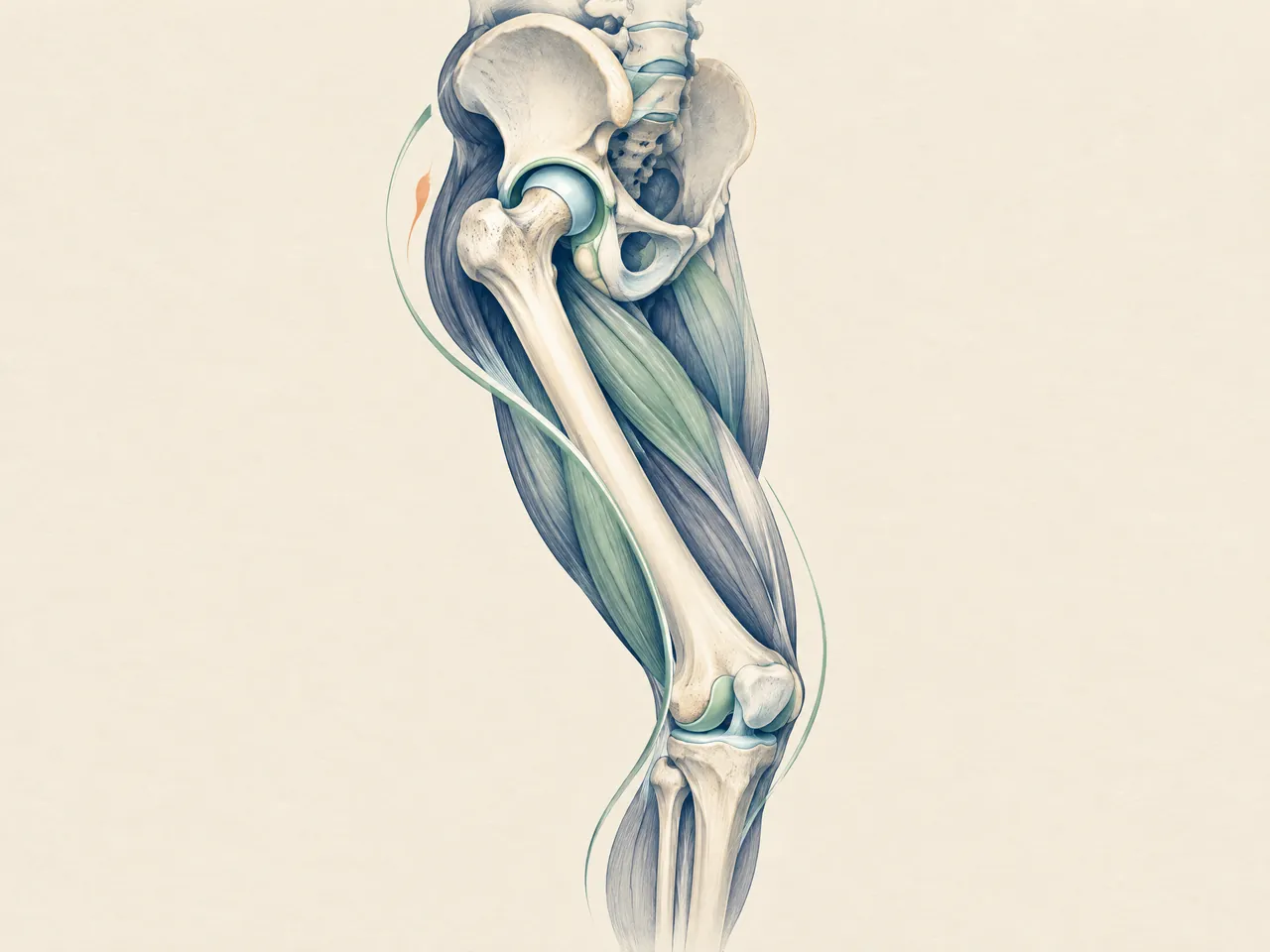
See a doctor promptly if knee pain follows a significant injury, stops you from bearing weight or moving the joint, or comes with a changed shape, rapid swelling, locking, giving way, or a hot red knee with fever or chills. Arthritis, injury, and overuse can all cause pain with walking or stairs. If there are no warning signs but pain persists, recurs, or changes daily activities, arrange an assessment rather than trying to diagnose the cause from location alone.
Transparent pricing
See the fees.
Choose your care.
Explore our complete official price list, including first-trial prices, regular prices, packages and branch-specific options.
Opening WhatsApp prepares an enquiry; it does not send a message, take payment or confirm an appointment. Suitability and individual arrangements are confirmed during consultation.
Pain care
All prices in HKDExtracorporeal shockwave treatment
Shockwave treatment for deep-tissue and fascial care. The Kwun Tong clinic offers the multi-area options shown below.
Priced by branch
Branch-specific pricing
Prince Edward: HK$250 per area
Kwun Tong: HK$250 for 1 area / HK$450 for 2 areas / HK$600 for 3 areas
Pain care (manual therapy)
Includes Chinese medicine musculoskeletal assessment, manual joint techniques and tui na.
HK$580 (single session)
Chinese medicine musculoskeletal assessment
Pain care (acupuncture and manual therapy)
Combines acupuncture and manual therapy.
HK$680 (single session)
Combined care
Hair and scalp
All prices in HKDScalp health and hair-loss management
Includes AI scalp analysis, deep scalp and follicle cleansing, and scalp oil-control care.
HK$380 (first trial)
Regular price: HK$680
- 6 sessions: HK$3,480 (HK$580 per session)
- 12 sessions: HK$5,760 (HK$480 per session)
- 20 sessions: HK$8,600 (HK$430 per session)
- 30 sessions: HK$11,400 (HK$380 per session)
Hair acupuncture and Chinese herbal medicine package
Includes scalp acupuncture and 3 days of Chinese herbal medicine that does not require decoction.
HK$580 (single session)
Registered Chinese Medicine Practitioner consultation
- 6 sessions: HK$3,180 (HK$530 per session)
- 12 sessions: HK$5,760 (HK$480 per session)
- 20 sessions: HK$8,600 (HK$430 per session)
- 30 sessions: HK$11,400 (HK$380 per session)
Combined hair and scalp treatment
Combines acupuncture and Chinese herbal medicine with salon-level scalp and follicle care. Packages include complimentary hair-care shampoo and serum.
HK$1,260 (single session)
Combined treatment
- 8 sessions: HK$8,640 (HK$1,080 per session)
- 16 sessions: HK$15,680 (HK$980 per session)
- 20 sessions: HK$18,600 (HK$930 per session)
- 30 sessions: HK$26,400 (HK$880 per session)
Weight management
All prices in HKDFull-body acupoint embedding for weight management
Includes full-body acupoint embedding. Packages include complimentary Chinese herbal medicine for weight management, with the number of included days scaled to the package. Embedding material and the individual treatment arrangement are confirmed during consultation; this is not a cosmetic thread lift.
HK$980 (single session)
No trial session
- 10 sessions: HK$7,800 (HK$780 per session)
- 20 sessions: HK$14,600 (HK$730 per session)
- 30 sessions: HK$20,400 (HK$680 per session)
Facial acupuncture
All prices in HKDFacial acupuncture (basic)
Includes facial acupuncture and meridian-based facial care, including care for facial puffiness.
HK$480 (first trial)
Regular price: HK$680
- 10 sessions: HK$5,200 (HK$520 per session)
- 20 sessions: HK$9,600 (HK$480 per session)
- 30 sessions: HK$13,500 (HK$450 per session)
Facial acupuncture (advanced)
Includes enhanced facial acupuncture with a specially formulated moisturising mask and serum.
HK$780 (first trial)
Regular price: HK$1,180
- 10 sessions: HK$9,000 (HK$900 per session)
- 20 sessions: HK$16,600 (HK$830 per session)
- 30 sessions: HK$23,400 (HK$780 per session)
Chinese medicine
All prices in HKDAcupuncture and Chinese herbal medicine package
Includes a Chinese medicine consultation with pulse assessment, body acupuncture and 3 days of Chinese herbal granules that do not require decoction.
HK$580 (single session)
Chinese medicine consultation with pulse assessment
When to See a Doctor for Knee Pain: Can Knee Pain Be Caused by Arthritis or an Injury? — Understanding the Main Causes Why does my knee hurt when I walk or climb stairs?
The short answer is yes: knee pain may arise from arthritis, an injury, or overuse, and these categories can overlap. A person with gradual stiffness may have a different story from someone whose knee hurt immediately after a pivot or fall. Yet symptoms are not a home test for a torn structure or arthritis. Official NHS guidance lists sprains and strains, tendon problems, ligament, tendon or meniscus injuries, osteoarthritis, bursitis, gout, and joint infection among possible explanations for knee symptoms [1]. The first task is therefore to describe the pattern clearly, not to attach a label too early.
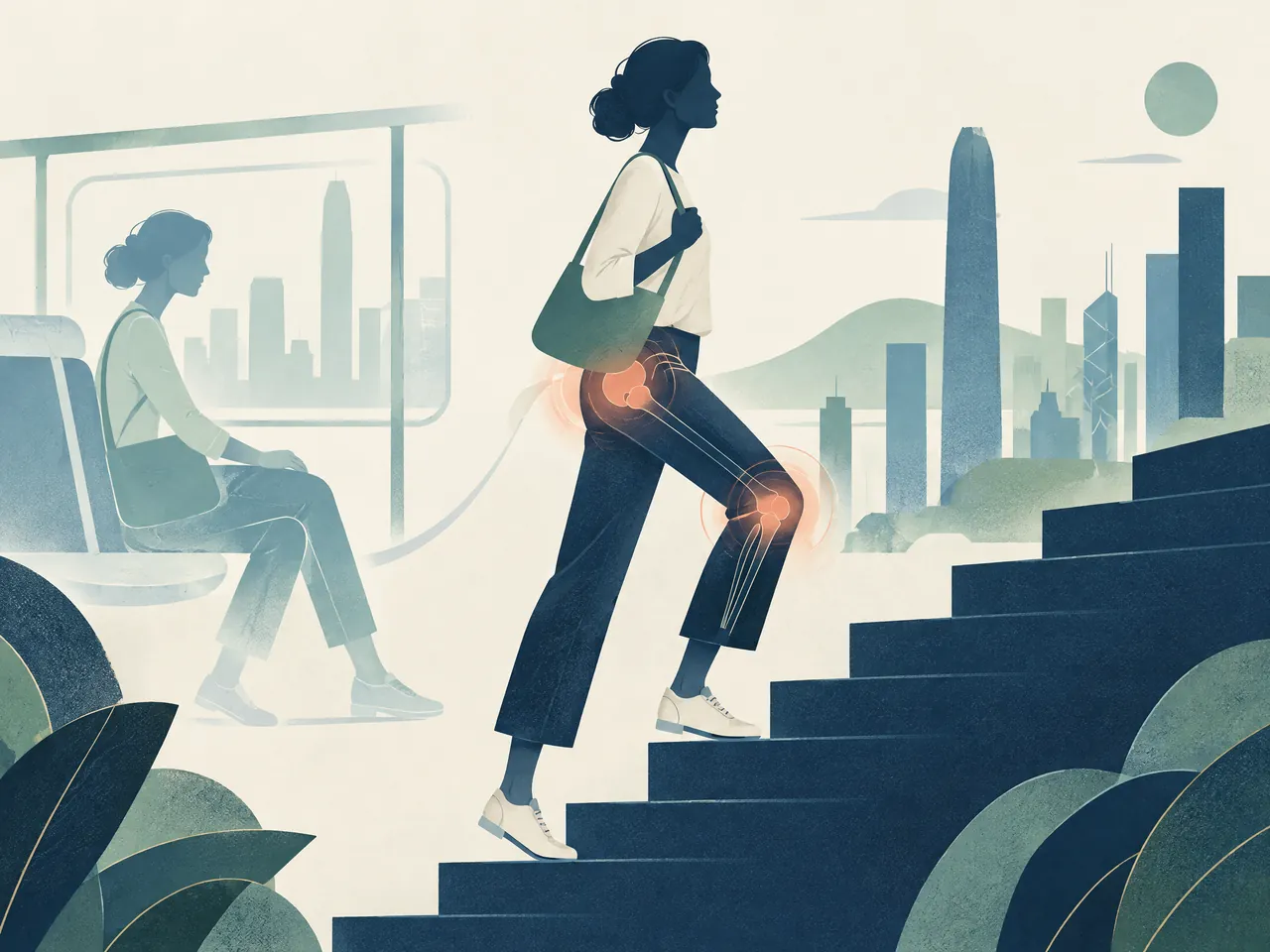
Think about timing as well as intensity. Did the pain start during one identifiable event, build through repeated stairs at an MTR station, or appear after an increase in running, hiking, kneeling, or standing work? Is it present only while bending, or does it wake you at night? Does a rest day change it? These questions turn a vague complaint into useful information for a clinician. For a broader introduction to patterns and possible contributors, see knee pain causes; it should complement, not replace, an examination.
When to See a Doctor for Knee Pain: Can Knee Pain Be Caused by Arthritis or an Injury? — Location, swelling, and movement clues Why does my knee hurt when I walk or climb stairs?
Where the pain sits can be a starting clue. Discomfort at the front may be noticed around the kneecap; pain at the inside or outside edge may be described after a twist; pain behind the knee may feel tight or full. A medically reviewed overview notes that front, back, inner, and outer knee pain have different possible explanations, including arthritis, bursitis, tendon or ligament injury, and a Baker's cyst [2]. These are examples, not a map that confirms a diagnosis. Two people can point to the same place and need different care.
Swelling, skin colour, warmth, bruising, and range of motion add important context. Compare the affected knee with the other side without forcing it straight or deeply bent. Notice whether swelling appeared quickly after an incident or has come and gone over time. Record whether you can fully straighten the knee, sit down and rise from a chair, or manage a few ordinary steps. If front-of-knee discomfort is your main concern, the page on pain in front of the knee offers a focused explanation of that location while preserving the need for assessment when symptoms are concerning.
When to See a Doctor for Knee Pain: Can Knee Pain Be Caused by Arthritis or an Injury? — Injury, overuse, and arthritis compared Why does my knee hurt when I walk or climb stairs?
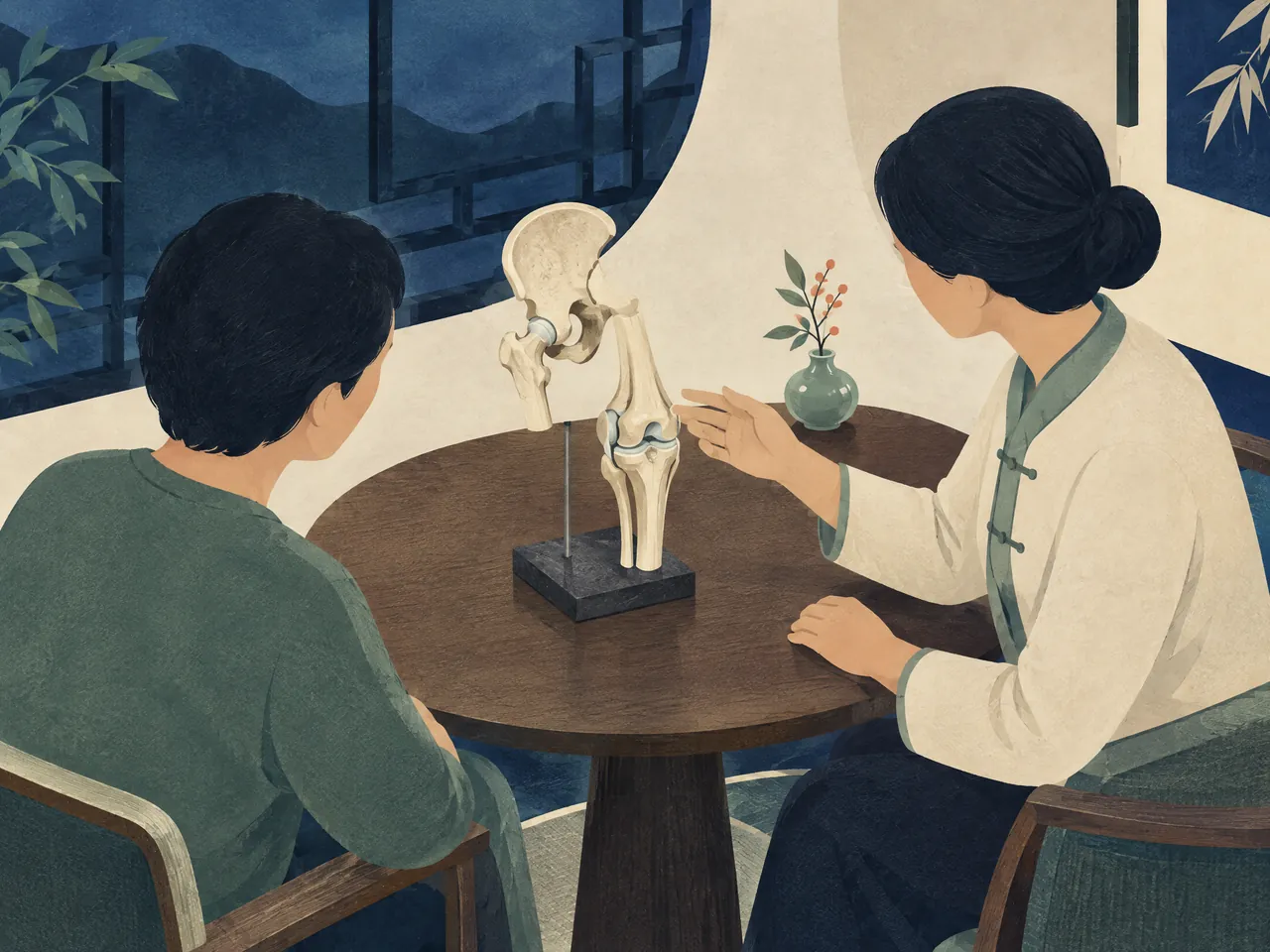
An injury pattern often has a clear moment: a collision, awkward landing, sudden change of direction, or twist. There may be a pop, immediate pain, bruising, or loss of confidence in putting weight through the leg. Overuse is usually less dramatic. It can follow a new training routine, repeated jumping, frequent kneeling, or a rapid increase in walking. The movement that provokes pain may be very specific at first, but it is still sensible to reduce activities that sharply worsen it rather than trying to push through.
Arthritis is another possible contributor, particularly when pain is activity-related and accompanied by stiffness or a gradual reduction in function. It is not simply an inevitable result of ageing, and a new hot swollen joint should not be casually assumed to be arthritis. NICE notes that osteoarthritis in appropriate adults is commonly diagnosed clinically from the overall presentation; imaging is not routinely needed unless there are atypical features or another diagnosis is suspected [3]. Recent trauma, rapid worsening, deformity, and a hot swollen joint are examples that call for a different level of clinical attention.
Compare your options
| Pattern you notice | What to write down | Why it helps at assessment |
|---|---|---|
| Pain during stairs or walking | Whether it is worse going up, down, at the start, or after a set activity | Shows how daily load and knee bending affect function |
| Pain after a twist, fall, or impact | What happened, whether there was a pop, and how soon swelling began | Helps distinguish a sudden injury story from a gradual flare |
| Swelling, warmth, redness, or bruising | When it appeared, whether it is spreading, and any fever or chills | Helps identify signs that may need more urgent review |
| Locking, painful clicking, or giving way | What movement triggers it, whether the knee can straighten, and any fall risk | Clarifies instability and movement restriction |
| Gradual stiffness or recurring pain | Duration, morning pattern, activity limits, and previous episodes | Provides context for a review of arthritis and other longer-term causes |
On smaller screens, scroll the table sideways to compare all columns.
When to See a Doctor for Knee Pain: Can Knee Pain Be Caused by Arthritis or an Injury? — Why Does My Knee Hurt When I Walk or Climb Stairs? Why does my knee hurt when I walk or climb stairs?
Walking and stairs are useful observations because they ask the knee to bend, support body weight, and control movement. Going downstairs may feel different from going up; a shallow chair may feel different from a firm one. Pain during these tasks does not tell you on its own whether the cause is arthritis or injury. It does show which everyday function is affected. Describe the task in plain terms: for example, pain on the first few steps after sitting, pain only after twenty minutes of walking, or pain when the knee bends beyond a certain point.
The best record includes what happened before and after the activity. Note footwear, surface, recent workload, any previous knee problem, and whether the knee swells later that day. Avoid testing the knee repeatedly by doing the same painful movement. Instead, choose a tolerable amount of activity and observe the result. This is more useful than a single pain score because it gives a clinician a picture of function, change over time, and possible aggravating factors. The related guide to knee pain symptoms can help you organise what you notice.
When to See a Doctor for Knee Pain: Can Knee Pain Be Caused by Arthritis or an Injury? — Pain with walking, stairs, squatting, or standing Why does my knee hurt when I walk or climb stairs?
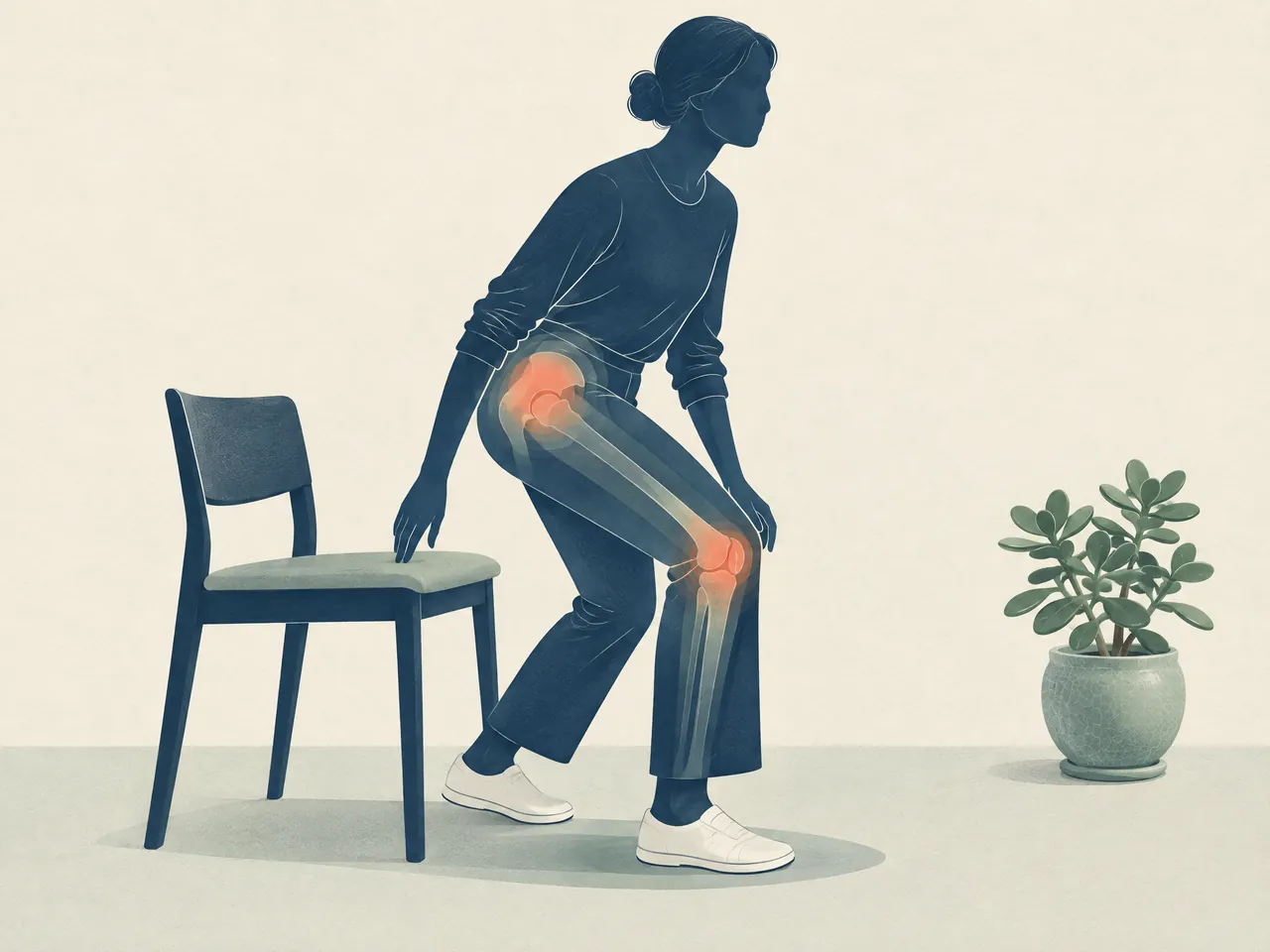
Stairs can make a mild problem more noticeable because each step combines bending and load. Squatting, rising from the toilet, getting out of a low car, or carrying shopping upstairs may expose the same limitation. It is reasonable to modify the task temporarily: use a handrail, take shorter routes, break up prolonged standing, or choose an elevator if stairs provoke substantial pain. The goal is not complete inactivity. It is to avoid a cycle in which a painful flare leads to compensatory limping, poor sleep, and less confidence in normal movement.
For knee osteoarthritis, NICE identifies tailored therapeutic exercise, information and support, and weight management when appropriate as core management [3]. That is not a generic instruction to start any exercise during an acute injury. It means a clinician can help choose movements that match the condition, current function, and other health issues. A plan may need adjustment if pain or swelling rises sharply. If an activity causes loss of balance, buckling, or a sense that the knee cannot support you, stop and seek medical advice rather than treating it as ordinary training discomfort.
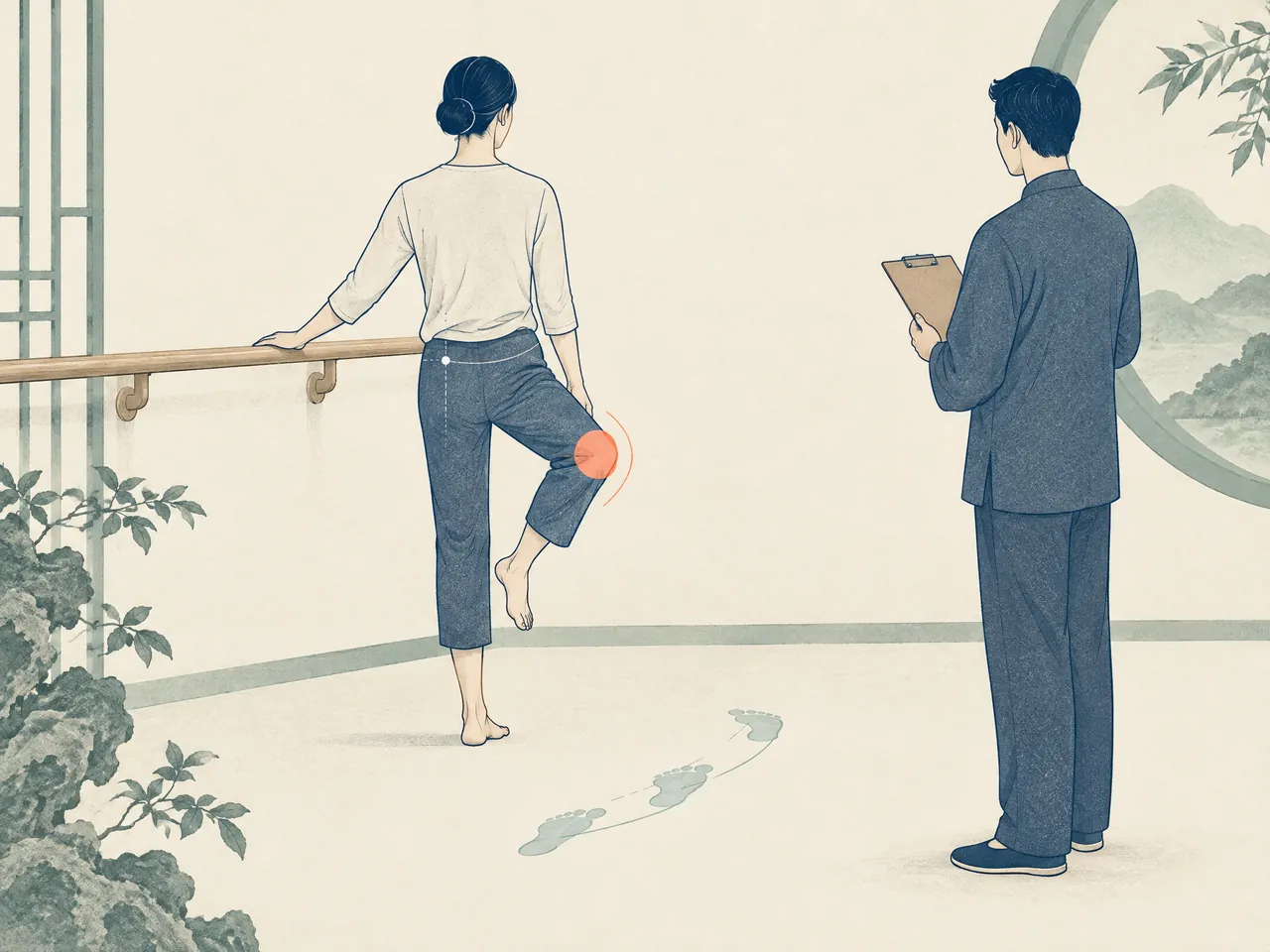
When to See a Doctor for Knee Pain: Can Knee Pain Be Caused by Arthritis or an Injury? — What locking, giving way, or rapid swelling may mean Why does my knee hurt when I walk or climb stairs?
A knee that truly locks may become stuck and unable to move normally, rather than simply feeling stiff. Giving way means the leg unexpectedly fails to support you or feels unstable. Painful clicking, a new inability to straighten the knee, or rapid swelling after an injury also deserve attention. NHS guidance includes a knee that locks, gives way, or painfully clicks among reasons for urgent advice, especially when the joint is very painful, badly swollen, changed in shape, or cannot bear weight [1]. These features are not a diagnosis, but they are a reason not to rely on self-care alone.
Not every sound from a knee is harmful. A painless click without swelling or loss of function is different from a painful click after a twist that changes how you walk. The distinction is why a short symptom diary helps. Include whether the event occurred once or repeatedly, whether the knee recovered between episodes, and whether there was a fall. If the knee gives way on stairs, protect yourself from another fall by avoiding risky situations until you have been assessed. Do not try to manipulate a locked joint back into place.
When to See a Doctor for Knee Pain: Can Knee Pain Be Caused by Arthritis or an Injury? — Why Does My Knee Hurt When I Walk or Climb Stairs? — Choosing Safe Next Steps Why does my knee hurt when I walk or climb stairs?
Choose the next step by combining the severity, the change in function, and any signs of infection or major trauma. The table below is a way to prepare information, not a triage tool that replaces medical advice. If a knee is visibly deformed, you cannot move it or take weight through it, swelling is pronounced, or it is hot and red with fever, chills, or feeling unwell, seek urgent medical care. These signs can require prompt assessment because the cause may need treatment beyond simple rest [1].
If there was no major injury and there are no urgent warning signs, a short period of cautious activity adjustment may be reasonable. NHS advice includes reducing weight through the knee, avoiding long periods of standing, and using a wrapped ice pack for up to 20 minutes at a time; it advises medical review if knee pain has not improved within a few weeks [1]. In Hong Kong, arrange a medical assessment sooner if pain is worsening, repeatedly interrupts work or sleep, or is changing how you walk. A clinician can decide whether examination, rehabilitation, imaging, or referral is appropriate.
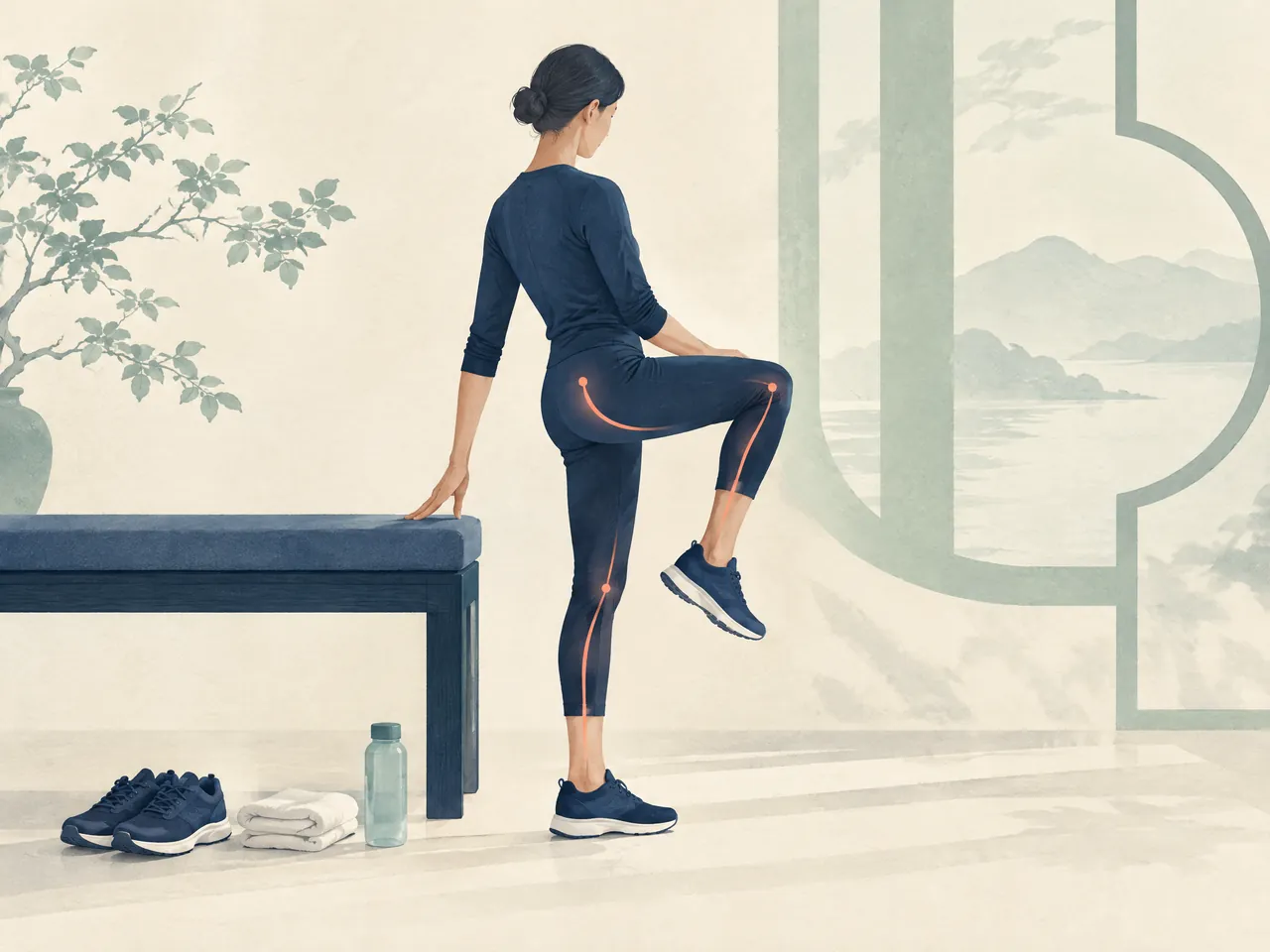
When to See a Doctor for Knee Pain: Can Knee Pain Be Caused by Arthritis or an Injury? — Why Does My Knee Hurt When I Walk or Climb Stairs? — Urgent warning signs Why does my knee hurt when I walk or climb stairs?
Act urgently after a severe fall, road traffic collision, or sporting impact, especially if the knee looks out of shape or a fracture is possible. Do the same when there is sudden severe pain with inability to bear weight, rapidly increasing swelling, or a joint that cannot be moved. A red, hot, swollen knee together with fever, chills, or a generally unwell feeling is another urgent pattern because infection must be considered [1]. It is safer to have these symptoms assessed promptly than to wait for a massage, exercise session, or complementary treatment appointment.
Urgency is also about safety at home. If the knee buckles, avoid carrying heavy items on stairs or driving if you cannot safely control the pedals. Ask for help with transport where necessary. Keep a note of the injury time, how it happened, medicines you have taken, and whether you use blood-thinning medication, as these details can matter to the assessing team. Do not eat or drink differently in anticipation of a procedure unless a healthcare professional has told you to do so.

When to See a Doctor for Knee Pain: Can Knee Pain Be Caused by Arthritis or an Injury? — Why Does My Knee Hurt When I Walk or Climb Stairs? — Self-care and professional assessment Why does my knee hurt when I walk or climb stairs?
For a less severe, recent flare, reduce the activity that clearly aggravates the pain and use a cloth barrier if trying cold or warmth for comfort. Stop either if it worsens symptoms or irritates the skin. Gentle day-to-day movement within comfort may be preferable to repeatedly testing a painful squat or run, but the right approach changes with the cause. Avoid copying someone else's rehabilitation plan or buying a brace solely because their symptoms sounded similar. An assessment can check movement, stability, tenderness, and the history behind the symptom pattern.
Some people also ask about Chinese medicine or acupuncture after medical red flags and structural concerns have been addressed. It is reasonable to discuss acupuncture for knee pain as a complementary option with a qualified practitioner, while keeping the wider care team informed. It should not delay urgent assessment or be presented as a proven fix for every type of knee pain. NICE specifically advises not offering acupuncture or dry needling to manage osteoarthritis [3], so expectations and alternatives deserve an open conversation. For a local consultation enquiry, you may contact a Kwun Tong Chinese medicine clinic or a Chinese medicine clinic Prince Edward after explaining your symptoms and any medical assessment already completed.
Care and health guide
Knee discomfort: care information
This directory brings together services, reading, and visit information related to knee discomfort, to help you prepare questions for a consultation.
When knee discomfort affects your day, noting when it occurs, its relation to activity, and what you have already tried can help prepare a consultation; Chinese medicine pain management Hong Kong is a relevant service or reading entry point.
Individual circumstances differ, and acupuncture Hong Kong offers related information to help you understand options and prepare questions.


Your questions, answered
Frequently asked questions
Can knee pain be caused by arthritis or an injury?
Yes. A knee can hurt because of arthritis, a sprain, tendon irritation, a ligament or meniscus injury, repeated loading, bursitis, gout, or infection. The same symptom can have more than one explanation. Assessment is particularly important when pain follows trauma, function changes, or symptoms persist.
Why does my knee hurt when I walk or climb stairs?
Walking and stairs put load through a bending knee, so they may reveal pain around the kneecap, a tendon problem, arthritis, or an injury. Describe whether the pain is worse going up or down, how long activity takes to trigger it, and whether swelling or instability follows.
When should I see a doctor for knee pain?
Seek urgent medical care when you cannot bear weight or move the knee, it is badly swollen or changed in shape, it locks or gives way, or it is hot and red with fever or chills. Arrange a review when pain continues, worsens, keeps returning, or limits work, sleep, walking, or stairs.
Can I rely on heat, ice, or rest alone?
They may be comfort measures for a minor flare, but they do not establish the cause or replace care for red flags. Avoid activities that clearly worsen pain and seek assessment if symptoms fail to improve, affect normal function, or are associated with instability, marked swelling, or systemic symptoms.
Sources and further information
- [1] NHS: Knee pain
Referenced for: Urgent warning signs, broad possible causes, simple self-care measures, and advice to seek review when pain does not improve.
- [2] Cleveland Clinic: Knee Pain
Referenced for: Location as a clue rather than a diagnosis, possible causes, and the value of describing activity-related symptoms.
- [3] NICE guideline NG226: Osteoarthritis in over 16s
Referenced for: Clinical diagnosis, atypical features, therapeutic exercise and weight management for osteoarthritis, and NICE's acupuncture recommendation.