
TCM Lab · Health reading
Period Pain Acupuncture Hong Kong: What It May Help With and What It Cannot Replace
Published Updated
Menstrual cramps are common, but the pattern matters as much as the intensity. Period pain acupuncture Hong Kong may be worth discussing as a complementary symptom-management option when cramps fit primary dysmenorrhea and medical causes have been considered. It is not a way to diagnose pelvic conditions or replace treatment recommended by a gynaecologist. This page helps you separate familiar cyclical cramps from changes that need investigation, prepare useful notes for an assessment, and make a cautious choice about acupuncture alongside—not instead of—medical care.
Appointments are confirmed through WhatsApp. If you have language requirements, please mention them in your enquiry.
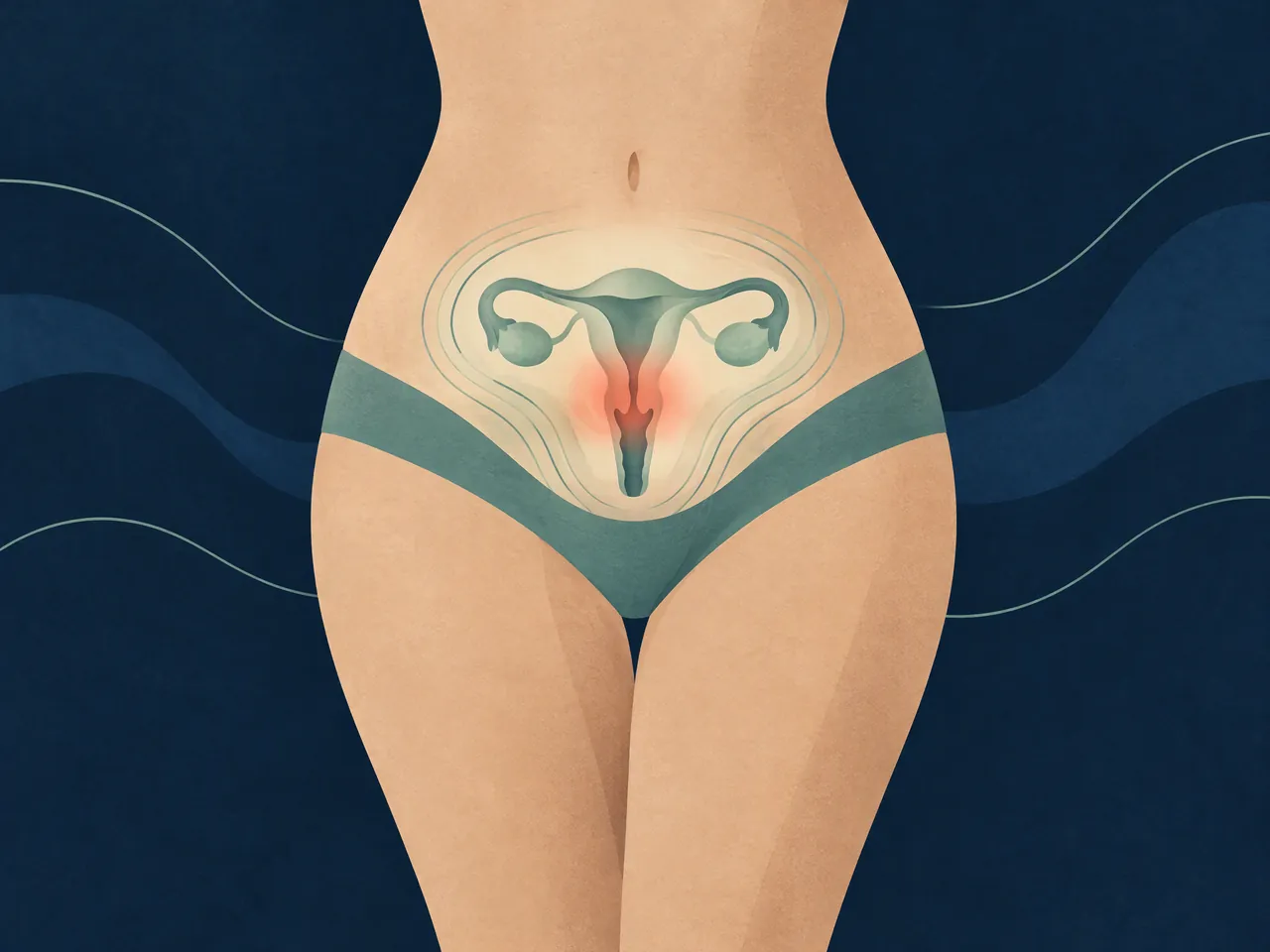
The short answer
Period pain acupuncture Hong Kong may be considered as a complementary option for primary dysmenorrhea after an individual assessment. It should not delay gynaecological review when pain is becoming worse, bleeding changes, or symptoms such as pain during sex or while passing urine or stool are present. If you use prescribed pain relief or hormonal treatment, do not stop it yourself; tell both practitioners so that care can be coordinated.
Transparent pricing
See the fees.
Choose your care.
Explore our complete official price list, including first-trial prices, regular prices, packages and branch-specific options.
Opening WhatsApp prepares an enquiry; it does not send a message, take payment or confirm an appointment. Suitability and individual arrangements are confirmed during consultation.
Pain care
All prices in HKDExtracorporeal shockwave treatment
Shockwave treatment for deep-tissue and fascial care. The Kwun Tong clinic offers the multi-area options shown below.
Priced by branch
Branch-specific pricing
Prince Edward: HK$250 per area
Kwun Tong: HK$250 for 1 area / HK$450 for 2 areas / HK$600 for 3 areas
Pain care (manual therapy)
Includes Chinese medicine musculoskeletal assessment, manual joint techniques and tui na.
HK$580 (single session)
Chinese medicine musculoskeletal assessment
Pain care (acupuncture and manual therapy)
Combines acupuncture and manual therapy.
HK$680 (single session)
Combined care
Hair and scalp
All prices in HKDScalp health and hair-loss management
Includes AI scalp analysis, deep scalp and follicle cleansing, and scalp oil-control care.
HK$380 (first trial)
Regular price: HK$680
- 6 sessions: HK$3,480 (HK$580 per session)
- 12 sessions: HK$5,760 (HK$480 per session)
- 20 sessions: HK$8,600 (HK$430 per session)
- 30 sessions: HK$11,400 (HK$380 per session)
Hair acupuncture and Chinese herbal medicine package
Includes scalp acupuncture and 3 days of Chinese herbal medicine that does not require decoction.
HK$580 (single session)
Registered Chinese Medicine Practitioner consultation
- 6 sessions: HK$3,180 (HK$530 per session)
- 12 sessions: HK$5,760 (HK$480 per session)
- 20 sessions: HK$8,600 (HK$430 per session)
- 30 sessions: HK$11,400 (HK$380 per session)
Combined hair and scalp treatment
Combines acupuncture and Chinese herbal medicine with salon-level scalp and follicle care. Packages include complimentary hair-care shampoo and serum.
HK$1,260 (single session)
Combined treatment
- 8 sessions: HK$8,640 (HK$1,080 per session)
- 16 sessions: HK$15,680 (HK$980 per session)
- 20 sessions: HK$18,600 (HK$930 per session)
- 30 sessions: HK$26,400 (HK$880 per session)
Weight management
All prices in HKDFull-body acupoint embedding for weight management
Includes full-body acupoint embedding. Packages include complimentary Chinese herbal medicine for weight management, with the number of included days scaled to the package. Embedding material and the individual treatment arrangement are confirmed during consultation; this is not a cosmetic thread lift.
HK$980 (single session)
No trial session
- 10 sessions: HK$7,800 (HK$780 per session)
- 20 sessions: HK$14,600 (HK$730 per session)
- 30 sessions: HK$20,400 (HK$680 per session)
Facial acupuncture
All prices in HKDFacial acupuncture (basic)
Includes facial acupuncture and meridian-based facial care, including care for facial puffiness.
HK$480 (first trial)
Regular price: HK$680
- 10 sessions: HK$5,200 (HK$520 per session)
- 20 sessions: HK$9,600 (HK$480 per session)
- 30 sessions: HK$13,500 (HK$450 per session)
Facial acupuncture (advanced)
Includes enhanced facial acupuncture with a specially formulated moisturising mask and serum.
HK$780 (first trial)
Regular price: HK$1,180
- 10 sessions: HK$9,000 (HK$900 per session)
- 20 sessions: HK$16,600 (HK$830 per session)
- 30 sessions: HK$23,400 (HK$780 per session)
Chinese medicine
All prices in HKDAcupuncture and Chinese herbal medicine package
Includes a Chinese medicine consultation with pulse assessment, body acupuncture and 3 days of Chinese herbal granules that do not require decoction.
HK$580 (single session)
Chinese medicine consultation with pulse assessment
Period Pain Acupuncture Hong Kong: Understanding Primary and Secondary Pain
People searching for period pain acupuncture in Hong Kong are often looking for a way to keep working, studying, travelling on the MTR, or sleeping through the first days of a period. That is understandable, yet it is useful to begin with the medical distinction between primary and secondary dysmenorrhea. Primary dysmenorrhea describes cramping pain before or during menstruation without an identified pelvic disorder. It often starts relatively soon after periods begin. Secondary dysmenorrhea is pain associated with a condition affecting the reproductive organs, and the pattern may become worse over time, last longer than usual cramps, or begin before bleeding and remain after it ends. Endometriosis, adenomyosis and fibroids are among the possible causes discussed in patient guidance. [1] [2]
The distinction is not something a person can safely make from one painful cycle or from an online checklist. A practitioner can listen for patterns, while a doctor or gynaecologist decides whether examinations or imaging are appropriate. The practical question is therefore not simply “can acupuncture help?” but “what is already known about this pain, and what needs to be checked?” For a broader explanation of complementary care, see acupuncture for period pain. A supportive option can sit alongside a medical plan; it should never be used to postpone a review of symptoms that are changing or concerning.

Period Pain Acupuncture Hong Kong and the Difference Between Primary and Secondary Dysmenorrhea
Primary cramps can still be very disruptive. Cramping may spread into the back or thighs and may occur with nausea, diarrhoea, headache, dizziness or fatigue. [1] The important point is not to minimise pain because it is common. A pattern that returns in a familiar way can be discussed with a registered Chinese medicine practitioner as well as with a conventional clinician. In a TCM consultation, acupuncture may be considered among supportive approaches for symptom management, with the session plan based on an in-person assessment rather than a promised number of visits. The American College of Obstetricians and Gynecologists notes acupuncture and acupressure among approaches that may be useful for painful periods, while conventional medical options remain relevant too. [1]
Secondary dysmenorrhea needs a different starting point. Pain that newly appears after years of easier periods, becomes progressively more severe, continues outside the period, or no longer responds as it used to deserves a medical conversation. That does not mean a diagnosis can be assumed; it means the cause should not be guessed. If a clinician suspects a pelvic condition, assessment may include discussion of a pelvic examination, ultrasound or other next steps. [1] A page on secondary dysmenorrhea can help frame the questions, but it cannot replace a consultation or diagnostic testing.
Period Pain Acupuncture Hong Kong: What to Record Before an Assessment
A simple record over more than one cycle can turn a vague description—“my period is awful”—into information that is easier to act on. Mark the first and last day of bleeding, when pain starts, where it is felt, whether it is cramping, sharp, aching or pressure-like, and how it affects ordinary tasks. Include whether flow seems heavier, lighter or different for you, and whether there is bleeding between periods. Record symptoms that occur with the pain, such as bowel or urinary discomfort, pain with sex, nausea, headaches, low mood or unusual tiredness. These notes can be shared with each clinician involved in care.
Also write down medicines, supplements and treatments already tried, including the name and timing of prescribed hormonal treatment or pain relief. The purpose is not to prove that one approach has failed; it is to prevent fragmented care and make the discussion safer. Bring any previous scan results or relevant diagnoses if you have them. If you are comparing complementary options, Does acupuncture help menstrual cramps? gives a focused starting point for questions about expectations. Do not change, skip or combine medication differently because of information on a webpage—ask the clinician who prescribed it.
Compare your options
| What you notice | Why it is useful to record | Appropriate next conversation |
|---|---|---|
| Cramping that follows a familiar pattern around the first days of bleeding | Helps describe the timing, severity and effect on daily life | Discuss primary dysmenorrhea, self-care, medical options and whether complementary support is appropriate |
| Pain that begins earlier, lasts longer, or grows worse from cycle to cycle | May point to a pattern that needs medical investigation rather than assumptions | Arrange a GP or gynaecology discussion before relying on acupuncture |
| Heavier, irregular or between-period bleeding | Documents a meaningful change in your menstrual pattern | Seek medical assessment; bring the record to any complementary consultation |
| Pain during sex, urination or bowel movements | Provides symptoms that may be relevant to secondary causes of pain | Prioritise gynaecological review and share the outcome with all providers |
| Current painkillers, hormonal treatment, supplements or previous scans | Supports safer coordination and avoids incomplete information | Tell the prescribing clinician and acupuncture practitioner; do not alter medication yourself |
On smaller screens, scroll the table sideways to compare all columns.
Period Pain Acupuncture Hong Kong: How TCM Assessment Frames Supportive Care
An acupuncture consultation is more than selecting points for “period pain.” A registered Chinese medicine practitioner will usually ask about the timing and character of pain, bleeding, sleep, appetite, stress, digestion, feeling hot or cold, past health history and current treatment. In traditional Chinese medicine, these answers are considered together with observation and other traditional assessment methods. Terms such as qi stagnation, blood stasis, cold accumulation or deficiency belong to that traditional clinical language; they are not modern medical diagnoses and do not establish the cause of pelvic pain. Keeping that distinction clear helps a person use both kinds of care responsibly.

Supportive care should leave room for medical findings. A person with a confirmed condition may consider acupuncture alongside a gynaecologist’s plan; someone with a concerning unexplained pattern may need gynaecological review first. In Hong Kong, Chinese medicine is regulated by the statutory Chinese Medicine Council of Hong Kong; checking that a practitioner is registered is sensible. [4] Ask what information should be shared with a GP or gynaecologist and which symptoms should prompt referral.

Period Pain Acupuncture Hong Kong: Questions About Timing, Clots and Other Symptoms
Timing gives context. Pain only on the first day of bleeding, pain that starts days beforehand, and pain that persists after a period are different stories to discuss, even though none proves a diagnosis. Questions about clots, flow and cycle regularity are similarly descriptive, not diagnostic. A practitioner may ask whether warmth feels soothing, whether pressure changes the sensation, or whether the pain is fixed in one place. These details can guide a traditional assessment, but they should be paired with the medical history and any tests already arranged. There is no need to withhold information about contraception, fertility plans, previous surgery or sexual health because it feels separate from acupuncture; each can matter to safe coordination.
Some accompanying symptoms change the urgency of the next step. NHS guidance advises medical review when periods become more painful, heavier or irregular; when pain disrupts usual activities; or when there is pain during sex, urination or bowel movements, bleeding between periods, abdominal swelling, appetite loss or unintentional weight loss. [2] Severe pain that is worse than usual and not helped by painkillers warrants urgent help. [2] If pregnancy is possible and there is severe abdominal pain or bleeding, seek urgent medical care rather than an acupuncture appointment. These are triage signals, not conditions that a TCM pattern label can rule out.

Period Pain Acupuncture Hong Kong and the Traditional Chinese Medicine View
Traditional Chinese medicine views period pain through patterns of imbalance and the movement of qi and blood. A practitioner may use those concepts to explain why acupuncture, lifestyle discussion or other TCM approaches are being considered for a particular presentation. This can be meaningful within the tradition, but it should be understood as a treatment approach, not a laboratory result or a replacement for a gynaecological diagnosis. An individual plan should follow the consultation. A public page cannot responsibly prescribe a herbal formula, needle protocol, dose or fixed timeline for an individual’s cramps.
For day-to-day comfort, some people find a warm bath, a wrapped heat pad or hot-water bottle, and gentle movement such as walking, yoga, swimming or cycling manageable around a period. [2] Rest, a lighter schedule and preparing supplies before the expected start of bleeding may also reduce practical strain. These measures are not tests of whether pain is “serious”: feeling better temporarily does not exclude an underlying condition. If you use pain medication, it is important to follow the directions supplied by the prescriber or pharmacist and to discuss any concerns with them. Complementary care should make the overall plan more coherent, not ask you to abandon treatments without medical advice.
Period Pain Acupuncture Hong Kong: Evidence, Safety and Next Steps
Evidence can help set realistic expectations. For primary dysmenorrhea, ACOG lists acupuncture among alternative treatments that may be useful, but that statement is not a guarantee that every person will respond or that acupuncture identifies the cause of pain. [1] Response may vary with the pain pattern, other conditions and the rest of the care plan. Discuss goals, such as less disruption on the first day while medical treatment continues. It does not mean expecting a cure, a guaranteed reduction in pain, or the same plan to suit everyone.
This evidence question matters when endometriosis is suspected or confirmed. A Cochrane review on acupuncture for endometriosis pain found that only one study met its criteria and concluded that evidence was limited. [3] Acupuncture should therefore be discussed only as an adjunct to diagnosis, follow-up and treatment recommended by a gynaecologist. Tell both providers what you are doing.

Period Pain Acupuncture Hong Kong for Primary Dysmenorrhea: What Evidence Can and Cannot Say
Evidence can support a conversation without deciding it for you. It can show that acupuncture is discussed in professional patient guidance for painful periods, yet it cannot predict an individual result or tell a practitioner to overlook a new symptom. [1] It also cannot turn acupuncture into a substitute for analgesics, hormonal treatment, imaging or specialist care when those are indicated. Before booking, ask what the consultation covers, how your current medicines and diagnoses will be documented, and how you will decide whether the approach is useful for your own goals. A clear answer is more valuable than a claim of universal success.
A useful review point is whether the pain pattern, function and medical follow-up remain on track. If pain is escalating, the period pattern is changing, or you are increasingly missing work, school or normal activity, return to the medical question rather than simply intensifying self-management. If you are considering a clinic visit, you can enquire with a Kwun Tong Chinese medicine clinic or a Chinese medicine clinic Prince Edward about an assessment. Explain your symptoms and language needs when you contact the clinic, and confirm the appointment arrangement before attending.

Period Pain Acupuncture Hong Kong: When Gynaecological Review Matters First
Put gynaecological review first when the story does not resemble stable, familiar cramps: pain is suddenly severe or increasingly intense; bleeding becomes unusually heavy, irregular or occurs between periods; pain occurs during sex, urination or bowel movements; or pain stops normal activities. [2] The same is true if you have a swollen abdomen, appetite or weight changes, or a concern about pregnancy with pain or bleeding. [2] A clinician may recommend examination, ultrasound or referral depending on the history and findings. [1] Those steps are not a rejection of complementary care. They give you safer information on which to decide whether acupuncture is appropriate as part of broader support.
Once urgent issues are addressed, prepare a short, honest summary for every provider: the dates and pattern of pain, test results or diagnoses, all medicines and supplements, and what you hope to improve. Keep copies of relevant reports and ask who should be contacted if symptoms change. Do not self-stop NSAIDs, hormonal medicines or any other prescribed treatment because you begin acupuncture; medication changes belong with the prescribing clinician. If fees are part of your decision, the Chinese medicine clinic price list Hong Kong is a practical place to review published clinic information before making an enquiry.
Care and health guide
Pain-care information
This directory brings together services, reading, and visit information related to pain care, to help you prepare questions for a consultation.
When pain care affects your day, noting when it occurs, its relation to activity, and what you have already tried can help prepare a consultation; Chinese medicine pain management Hong Kong is a relevant service or reading entry point.
Individual circumstances differ, and acupuncture Hong Kong offers related information to help you understand options and prepare questions.


Your questions, answered
Frequently asked questions
Can period pain acupuncture Hong Kong help with menstrual cramps?
It may be discussed as a complementary option for some people with primary dysmenorrhea. It is not guaranteed to help every person, and it should be chosen after discussing your symptom pattern, medical history and current treatment. ACOG lists acupuncture among alternative treatments that may be useful for painful periods. [1]
Can acupuncture cure endometriosis-related period pain?
No. Acupuncture should not be presented as a cure for endometriosis or as a replacement for gynaecological diagnosis and treatment. A Cochrane review found limited evidence for acupuncture in endometriosis pain and called for larger, well-designed studies. [3]
Should I see a gynaecologist before acupuncture for period pain?
Seek medical assessment first if pain is worsening, unusually severe, heavier or irregular bleeding occurs, or you have pain during sex, urination or bowel movements. These features can be associated with conditions that require investigation. [2]
Can I have acupuncture while taking painkillers or hormonal treatment?
Tell the acupuncture practitioner about all medicines and treatments you use. Do not stop or adjust prescribed pain medication or hormonal treatment on your own; discuss any change with the clinician who prescribed it so that care remains coordinated.
Sources and further information
- [1] [1] American College of Obstetricians and Gynecologists — Dysmenorrhea: Painful Periods
Referenced for: Primary and secondary dysmenorrhea, possible causes, medical assessment, home measures and acupuncture as a potentially useful alternative treatment.
- [2] [2] NHS — Period pain
Referenced for: Period-pain symptoms, self-care measures, warning signs and when to seek medical assessment.
- [3] [3] Cochrane — Acupuncture for pain in endometriosis
Referenced for: The limited evidence base for acupuncture for endometriosis-related pain.
- [4] [4] Chinese Medicine Council of Hong Kong — Regulation of Chinese Medicine Practitioners
Referenced for: Hong Kong statutory regulation of Chinese medicine practitioners and professional standards.