
TCM Lab · Health reading
Hormonal Acne, Menstrual Acne and Menstrual Cycle Acne: Tracking, Care and Assessment
Published Updated
A breakout that returns in a similar part of the menstrual cycle can be frustrating, especially when it is sore, deep or slow to settle. Hormonal acne, menstrual acne and menstrual cycle acne describe a pattern worth observing, not a diagnosis that can be made from one spot on the face. A short, consistent record can show whether flares cluster before bleeding, appear at other times, or travel with changes in sleep, stress, products or medication. That practical picture supports safer everyday care and a more focused conversation with a GP, gynaecologist, dermatologist or Registered Chinese Medicine Practitioner.
Appointments are confirmed through WhatsApp. If you have language requirements, please mention them in your enquiry.
The short answer
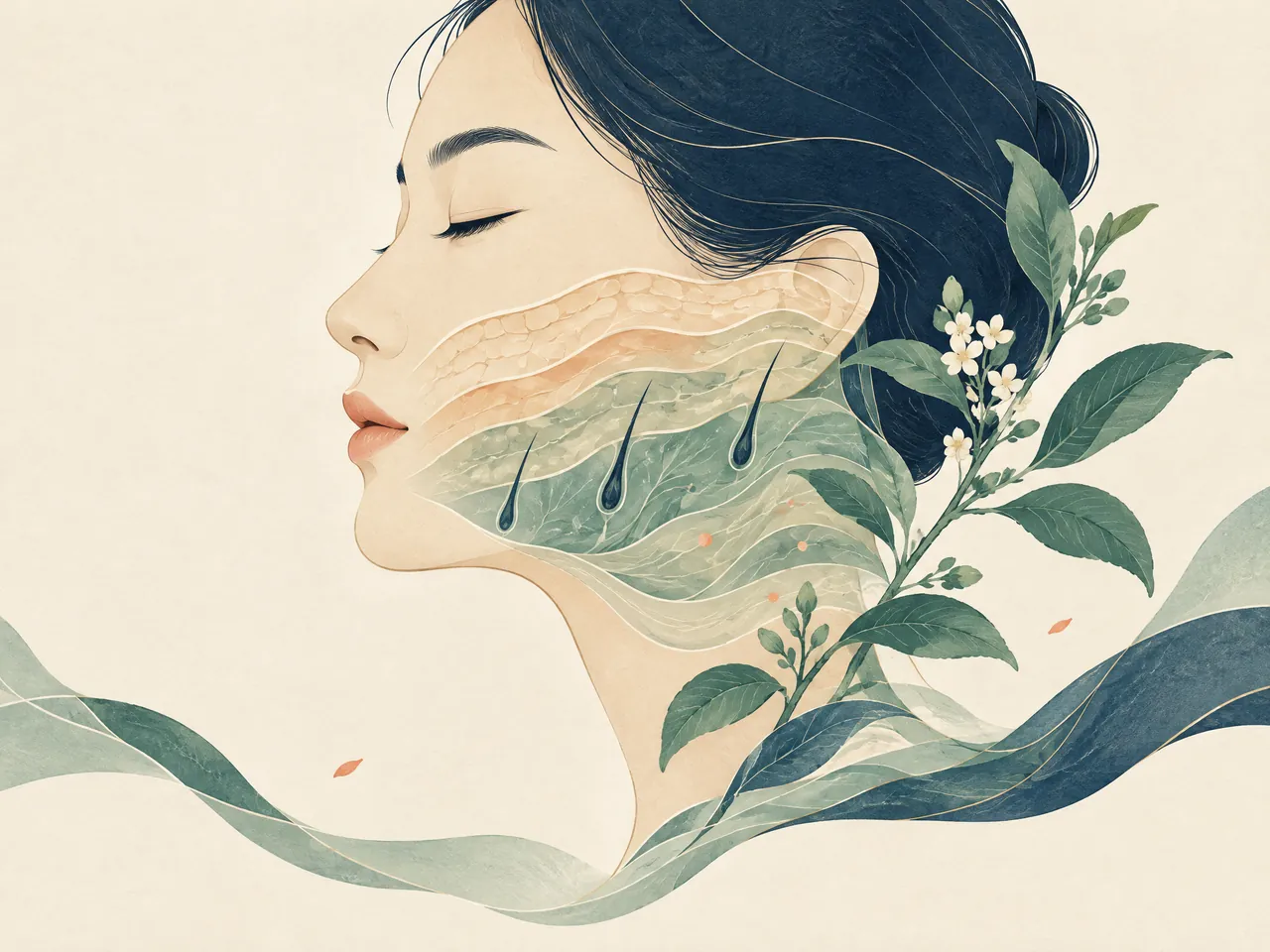
Hormonal acne, menstrual acne and menstrual cycle acne are best approached by looking for a repeatable pattern rather than guessing from the jawline alone. Record period dates, lesion type, location and related changes for several cycles; keep skincare gentle and non-comedogenic; and arrange medical review for painful deep lesions, scarring, persistent inflammation, markedly irregular periods or other signs that need conventional assessment.
Transparent pricing
See the fees.
Choose your care.
Explore our complete official price list, including first-trial prices, regular prices, packages and branch-specific options.
Opening WhatsApp prepares an enquiry; it does not send a message, take payment or confirm an appointment. Suitability and individual arrangements are confirmed during consultation.
Chinese medicine
All prices in HKDAcupuncture and Chinese herbal medicine package
Includes a Chinese medicine consultation with pulse assessment, body acupuncture and 3 days of Chinese herbal granules that do not require decoction.
HK$580 (single session)
Chinese medicine consultation with pulse assessment
Hair and scalp
All prices in HKDScalp health and hair-loss management
Includes AI scalp analysis, deep scalp and follicle cleansing, and scalp oil-control care.
HK$380 (first trial)
Regular price: HK$680
- 6 sessions: HK$3,480 (HK$580 per session)
- 12 sessions: HK$5,760 (HK$480 per session)
- 20 sessions: HK$8,600 (HK$430 per session)
- 30 sessions: HK$11,400 (HK$380 per session)
Hair acupuncture and Chinese herbal medicine package
Includes scalp acupuncture and 3 days of Chinese herbal medicine that does not require decoction.
HK$580 (single session)
Registered Chinese Medicine Practitioner consultation
- 6 sessions: HK$3,180 (HK$530 per session)
- 12 sessions: HK$5,760 (HK$480 per session)
- 20 sessions: HK$8,600 (HK$430 per session)
- 30 sessions: HK$11,400 (HK$380 per session)
Combined hair and scalp treatment
Combines acupuncture and Chinese herbal medicine with salon-level scalp and follicle care. Packages include complimentary hair-care shampoo and serum.
HK$1,260 (single session)
Combined treatment
- 8 sessions: HK$8,640 (HK$1,080 per session)
- 16 sessions: HK$15,680 (HK$980 per session)
- 20 sessions: HK$18,600 (HK$930 per session)
- 30 sessions: HK$26,400 (HK$880 per session)
Weight management
All prices in HKDFull-body acupoint embedding for weight management
Includes full-body acupoint embedding. Packages include complimentary Chinese herbal medicine for weight management, with the number of included days scaled to the package. Embedding material and the individual treatment arrangement are confirmed during consultation; this is not a cosmetic thread lift.
HK$980 (single session)
No trial session
- 10 sessions: HK$7,800 (HK$780 per session)
- 20 sessions: HK$14,600 (HK$730 per session)
- 30 sessions: HK$20,400 (HK$680 per session)
Facial acupuncture
All prices in HKDFacial acupuncture (basic)
Includes facial acupuncture and meridian-based facial care, including care for facial puffiness.
HK$480 (first trial)
Regular price: HK$680
- 10 sessions: HK$5,200 (HK$520 per session)
- 20 sessions: HK$9,600 (HK$480 per session)
- 30 sessions: HK$13,500 (HK$450 per session)
Facial acupuncture (advanced)
Includes enhanced facial acupuncture with a specially formulated moisturising mask and serum.
HK$780 (first trial)
Regular price: HK$1,180
- 10 sessions: HK$9,000 (HK$900 per session)
- 20 sessions: HK$16,600 (HK$830 per session)
- 30 sessions: HK$23,400 (HK$780 per session)
Pain care
All prices in HKDExtracorporeal shockwave treatment
Shockwave treatment for deep-tissue and fascial care. The Kwun Tong clinic offers the multi-area options shown below.
Priced by branch
Branch-specific pricing
Prince Edward: HK$250 per area
Kwun Tong: HK$250 for 1 area / HK$450 for 2 areas / HK$600 for 3 areas
Pain care (manual therapy)
Includes Chinese medicine musculoskeletal assessment, manual joint techniques and tui na.
HK$580 (single session)
Chinese medicine musculoskeletal assessment
Pain care (acupuncture and manual therapy)
Combines acupuncture and manual therapy.
HK$680 (single session)
Combined care
Hormonal Acne, Menstrual Acne and Menstrual Cycle Acne: What Timing Can Tell You
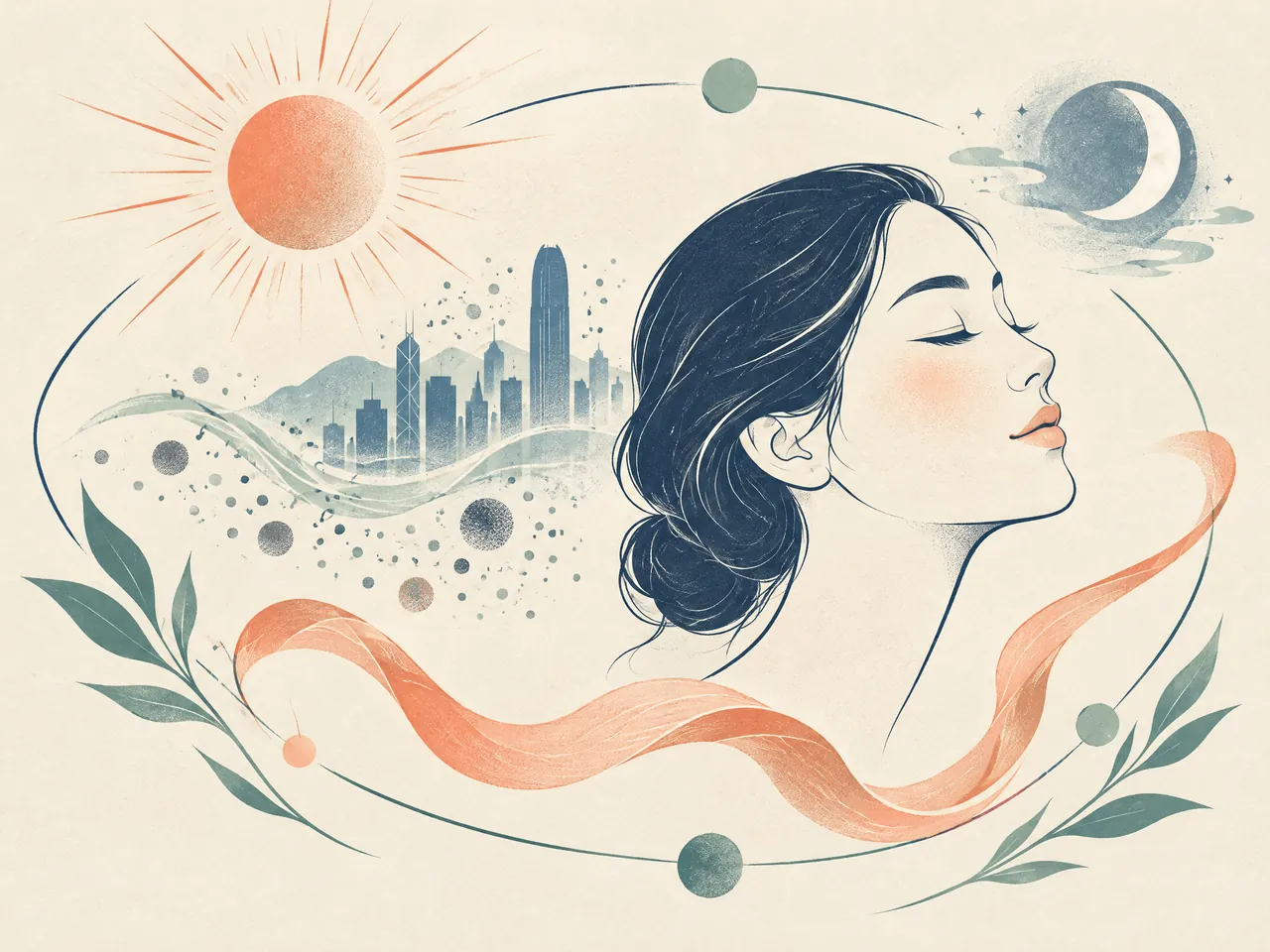
Menstrual timing can be a useful starting point because hormones change throughout the cycle and these changes can influence sebum, the skin’s oil. Some people notice a flare in the lead-up to a period; others have no reliable premenstrual pattern at all. Cleveland Clinic notes that painful, deeper papules or cyst-like lesions may occur with hormonal breakouts, while the timing and duration of a flare vary from person to person [1]. The practical question is therefore not, ‘Is every spot hormonal?’ but ‘What repeats, and what else was happening when it did?’
A cycle-linked pattern is easier to recognise after more than one month. One isolated flare could coincide with a new sunscreen, a hair product against the face, humid weather, mask friction, a stressful deadline or disrupted sleep. Repeated observations help separate a possible menstrual association from coincidence. If you are comparing descriptions online, our guide to period acne explains why dates and lesion changes are more informative than a single mirror check.
Do not make the record an exercise in self-blame. Food, sleep and stress can be relevant context, but a log is not a scorecard and it cannot diagnose an endocrine condition. Its value is that it gives the clinician a clear sequence: what happened first, what changed, how long it lasted and whether the skin recovered between flares. That sequence can make an appointment more productive than relying on memory alone.
Hormonal Acne, Menstrual Acne and Menstrual Cycle Acne: Looking Beyond the Jawline
The chin and jawline are often discussed in relation to hormonal acne, but location is only one observation. Acne can affect the cheeks, around the mouth, neck, shoulders and back; Cleveland Clinic specifically cautions that menstrual-pattern breakouts may occur beyond the lower third of the face [1]. A tender lower-face flare that returns around a similar cycle day may be worth noting, but it does not confirm ‘hormone imbalance’. For a closer look at that common assumption, see Is chin acne always hormonal?.
Look at lesion behaviour as well as place. Are there small surface bumps, whiteheads, blackheads, red inflamed papules, pustules, or deeper painful lumps? Do new lesions keep appearing, or is the concern now flat discolouration after a flare? These distinctions help a dermatologist identify the type of acne and help any clinician understand what needs attention first. They also reduce the risk of using an aggressive product simply because a mark looks like an active spot.
Hormonal Acne, Menstrual Acne and Menstrual Cycle Acne: Why Timing Is Only One Clue
Timing should sit alongside the rest of the picture. A flare that begins after a product change, appears exactly where a phone, helmet strap or mask rubs, or worsens when a fringe or hair oil touches the skin may have a local contribution. Repeated premenstrual timing is still meaningful, but it is not a reason to ignore these practical triggers. The related overview of hormonal breakouts can help you frame observations without treating a label as a conclusion.
It is also sensible to record wider menstrual and health changes without trying to interpret them yourself. Markedly irregular periods, new excess facial or body hair, sudden severe acne, or symptoms that concern you deserve conventional medical review. A family doctor, gynaecologist or dermatologist can decide whether examination or testing is appropriate. Traditional pattern assessment and modern endocrine assessment describe different things; one should not be presented as a substitute for the other.
Compare your options
| What to record | A useful example | Why it helps at an assessment |
|---|---|---|
| Cycle date | First day of bleeding and the date a flare began | Shows whether a pattern repeats around a similar point in the cycle |
| Lesion type and sensation | Tender deep bump, small whitehead, red papule or pustule | Distinguishes an active inflammatory concern from a vague description |
| Location and aftermath | Left jawline; settled with a flat brown mark; no indentation | Helps separate distribution, colour change and possible texture change |
| Recent changes | New hair oil, sleep disruption, medication change or prolonged mask use | Gives context for possible contributors beyond menstrual timing |
On smaller screens, scroll the table sideways to compare all columns.
Hormonal Acne, Menstrual Acne and Menstrual Cycle Acne: How to Keep a Useful Record
A useful diary takes less time than repeatedly searching for the perfect product. Choose one paper calendar, notes app or spreadsheet and keep the same fields each day or whenever a lesion changes. Start with the first day of bleeding, then write the date on which new lesions appeared. Add their approximate site, whether they are painful or pus-filled, and whether they resolve, leave colour change or leave a dent. A photo taken in similar lighting can be useful for your own comparison, but it should never replace an in-person assessment where one is needed.
The table below separates observations that tend to help from assumptions that can mislead. It is not a diagnostic checklist. The goal is to bring clear information to a consultation, so a professional can ask better follow-up questions and discuss appropriate options. If you are wondering about the common premenstrual pattern, Why do I get acne before my period? expands on the question in everyday terms.

Hormonal Acne, Menstrual Acne and Menstrual Cycle Acne: What to Note Each Month
Record cycle information in plain language: the first and last day of bleeding, changes you consider unusual for you, cramps, mood shifts, sleep disruption and other symptoms you want to mention. Next to this, note acne timing and type. A phrase such as ‘two tender bumps on the left jawline, started three days before bleeding’ is more useful than ‘bad skin’. It identifies timing, number, site and behaviour without trying to name a cause.
Also include changes that may affect the skin: a new cleanser, makeup, sunscreen, hair product, gym routine, travel, work stress, medication or supplement. Do not stop prescribed medicine on the basis of a diary; instead, flag the timing for the prescribing clinician. Record what you actually used rather than adding several treatments at once. Starting multiple actives together makes irritation and benefit harder to distinguish, particularly when a flare settles naturally with the cycle.

Hormonal Acne, Menstrual Acne and Menstrual Cycle Acne: Sharing Your Record at an Assessment
Bring the record, current products and a list of medicines or supplements to the appointment. It can help to state your main aim first: relief from painful active lesions, fewer recurring flares, advice on marks, or assessment of a menstrual concern. Mention pregnancy, breastfeeding or plans to conceive when relevant, because these factors can matter when clinicians discuss acne medication. The American Academy of Dermatology explains that treatment choices are tailored to acne type and location rather than being one-size-fits-all [3].
If you choose a TCM consultation, the Registered Chinese Medicine Practitioner may ask about the cycle, digestion, sleep, emotional strain and energy as part of a traditional whole-person pattern assessment. This can be a way to discuss symptom management and self-care in context. It is not an endocrine test or a diagnosis of PCOS. Keep the same GP, gynaecology or dermatology pathway for investigations and treatment that need conventional medical assessment.
Hormonal Acne, Menstrual Acne and Menstrual Cycle Acne: Care and Next Steps
For a currently inflamed breakout, keep the routine calm. Use a gentle cleanser, avoid harsh scrubs and choose skincare, makeup and hair products labelled non-comedogenic where possible. Cleveland Clinic similarly recommends gentle non-comedogenic cleansing and advises against scrubbing or picking at inflamed lesions [1]. Add or change one product at a time, and follow a doctor’s or dermatologist’s directions before combining active acne treatments. The aim is to avoid creating extra irritation while the cause and pattern are being assessed.
Active acne, post-inflammatory colour change and scars deserve different conversations. A flat red or brown area after a spot has settled may be a post-inflammatory colour change; it is not automatically a permanent scar. DermNet describes erythema, hyperpigmentation and hypopigmentation as colour changes that can accompany or follow acne, while scars involve structural changes in the skin [2]. Persistent inflammation and more severe lesions can raise scarring concerns, so timely assessment is preferable to squeezing or repeatedly experimenting with harsh products.
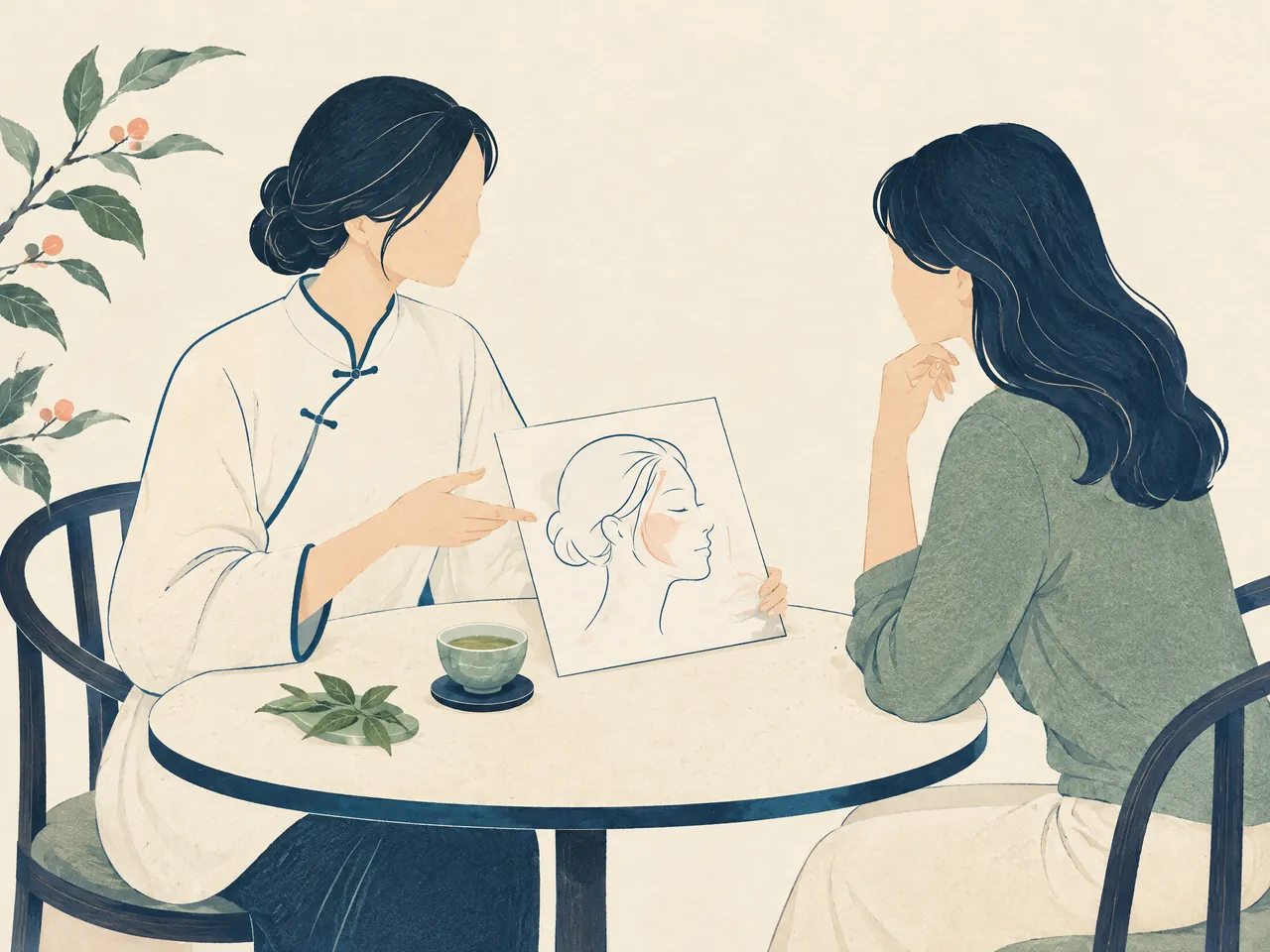
Seeking medical care is particularly important for deep painful nodules, widespread or rapidly worsening acne, signs of infection, distress that is affecting daily life, or scarring and textural change. Make an appointment too if acne accompanies markedly irregular periods or other new symptoms that concern you. A dermatologist can confirm whether the condition is acne or something that resembles it, then discuss evidence-based treatment options and skin protection [3].
Hormonal Acne, Menstrual Acne and Menstrual Cycle Acne: TCM Assessment in Context
At TCM Lab, an assessment for menstrual-pattern skin concerns can consider your cycle record alongside sleep, digestion, stress, daily routine and the skin changes you describe. In traditional Chinese medicine, this is part of pattern differentiation, not a claim to measure hormones or replace laboratory investigations. Being clear about that boundary protects good decision-making: a person can seek a traditional consultation for individualised discussion while also pursuing GP, gynaecology or dermatology assessment when symptoms call for it.
Bring questions as well as notes. You might ask which details in your record are most useful, how a gentle routine can fit your current care, and when another clinician should be involved. Avoid expecting a guaranteed timetable or a single explanation for every flare. If the immediate concern is recurring small lesions before bleeding, the companion guide on period pimples may help you organise questions before a consultation.

Hormonal Acne, Menstrual Acne and Menstrual Cycle Acne: Protecting Skin and Knowing When to Seek Care
Protecting skin often means doing less, more consistently. Avoid picking, squeezing and abrasive tools, especially on a deep or tender lesion. DermNet notes that picking or squeezing active lesions can increase the likelihood of acne scarring [2]. Use sun protection suitable for acne-prone skin, because sun exposure may make post-inflammatory colour changes more noticeable. If a product stings, burns or causes a rash, pause it and seek professional advice rather than layering on further actives.
A record is most helpful when it leads to an appropriate next step. Continue observing a mild, short-lived pattern while keeping care gentle; book routine advice when flares keep returning or leave marks; and seek prompt medical assessment for painful deep lesions, scarring, major menstrual change or a sudden severe eruption. If you would like to discuss a traditional assessment alongside your record, TCM Lab can be contacted by WhatsApp to enquire about an appointment; medical red flags should still be directed to the appropriate conventional service.
Care and health guide
Health service information
This directory brings together services, reading, and visit information related to health services, to help you prepare questions for a consultation.
If you are organising health questions, Chinese medicine clinic Hong Kong is a starting point for learning about related services and preparing for a consultation.
People have different needs; acupuncture Hong Kong provides further reading to help you understand options in your own context.


Your questions, answered
Frequently asked questions
Does acne along the chin always indicate a hormonal problem?
No. Chin and jawline acne may appear in a menstrual pattern, but location alone cannot establish a hormonal cause. Products, friction, sleep, stress and other factors can contribute. Record the timing and lesion behaviour, then seek professional assessment if inflammation is persistent, painful or scarring.
How long should I track menstrual acne before an appointment?
Start now rather than waiting for a perfect record. Notes from several cycles can make a repeating pattern easier to see, but a clinician can still assess current painful, deep or persistent acne promptly. Bring the dates and observations you already have, plus a list of products and medicines.
Can a TCM assessment replace medical testing for hormonal conditions?
No. Traditional pattern assessment may consider symptoms such as cycle changes, sleep, digestion and stress, but it is not an endocrine diagnosis or a replacement for medical examination, blood tests or imaging. Markedly irregular periods or suspected PCOS should be assessed through the appropriate conventional medical route.
Should I squeeze a painful premenstrual spot?
It is safer not to pick or squeeze it. Manipulating an active lesion can add irritation and may increase the risk of scarring. Use a gentle routine and seek medical advice for large, deep, painful or recurring lesions, especially if they are leaving textural changes.
Sources and further information
- [1] Cleveland Clinic — The Breakout Breakdown: Why You Get Acne Around Your Period
Referenced for: Menstrual-pattern acne timing, distribution, sebum changes, gentle non-comedogenic care and avoiding picking.
- [2] DermNet — Acne scarring
Referenced for: Difference between post-inflammatory colour change and structural scarring; relationship between picking, active inflammation and scarring.
- [3] American Academy of Dermatology — Acne: Diagnosis and treatment
Referenced for: Individualised acne assessment, differential diagnosis and evidence-based dermatology treatment context.