
TCM Lab · Health reading
Post-inflammatory erythema acne, post-inflammatory hyperpigmentation from acne, and facial acupuncture for uneven skin tone: what to know
Published Updated
A red patch that remains after a spot, a brown mark that seems to linger, and a small dip in the skin can all be called an acne mark in everyday conversation, but they are not the same change. Post-inflammatory erythema acne and post-inflammatory hyperpigmentation from acne are colour changes after inflammation; a scar changes the skin’s structure. Facial acupuncture for uneven skin tone may be discussed after an individual assessment, but it cannot be promised to clear marks or rebuild an indented scar. The useful first step is to identify what is still active, what has settled, and what needs dermatology input.
Appointments are confirmed through WhatsApp. If you have language requirements, please mention them in your enquiry.
The short answer
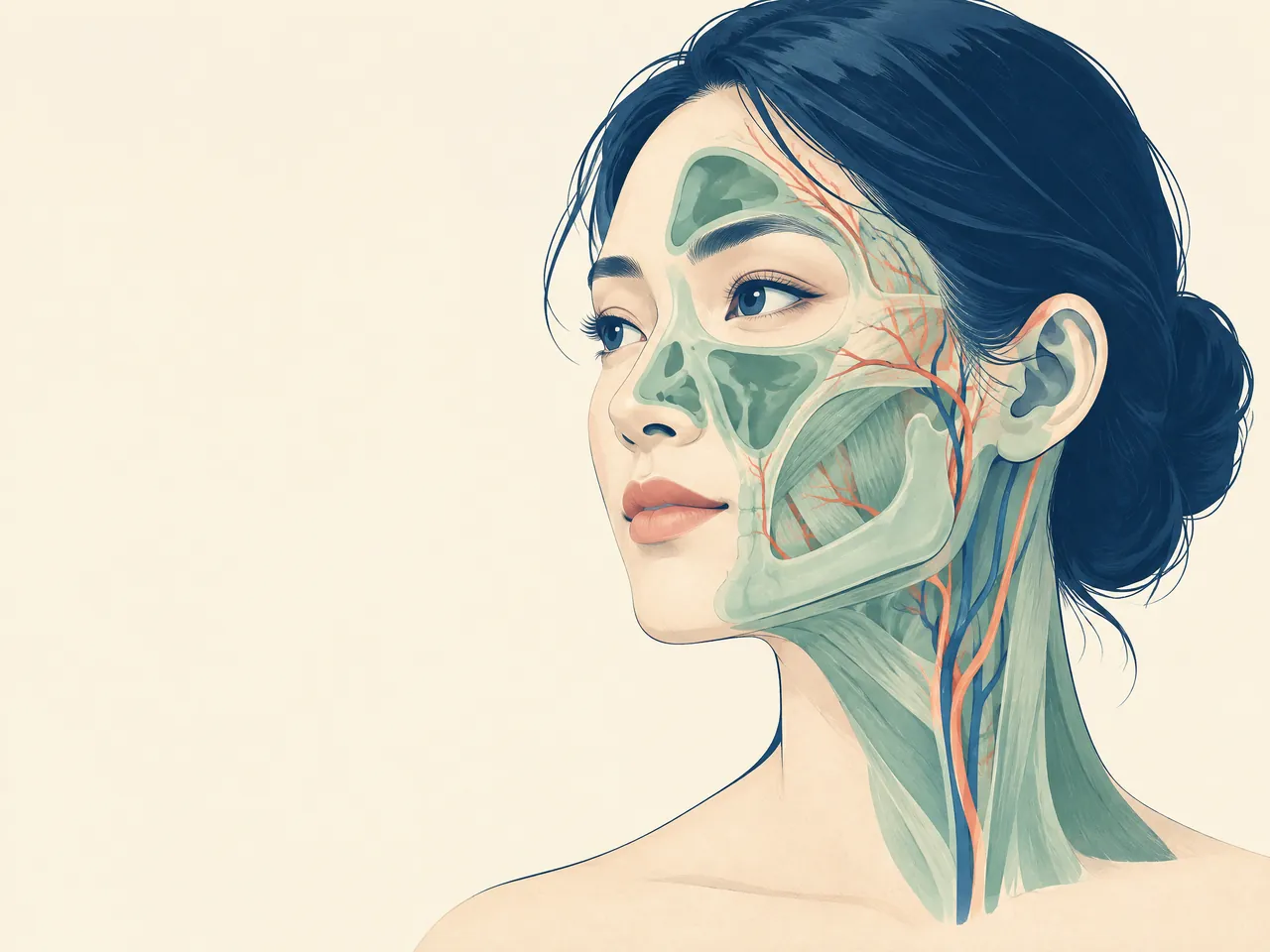
Facial acupuncture for uneven skin tone cannot be guaranteed to remove post-inflammatory erythema acne, post-inflammatory hyperpigmentation from acne, or structural acne scars. Red and dark marks often fade gradually, while indented or raised scars need separate professional assessment. A registered Chinese medicine practitioner can discuss facial acupuncture as one local skin-management option after reviewing the skin, current acne, medicines and recent procedures. Do not needle broken, infected, pustular or severely inflamed areas first.
Transparent pricing
See the fees.
Choose your care.
Explore our complete official price list, including first-trial prices, regular prices, packages and branch-specific options.
Opening WhatsApp prepares an enquiry; it does not send a message, take payment or confirm an appointment. Suitability and individual arrangements are confirmed during consultation.
Facial acupuncture
All prices in HKDFacial acupuncture (basic)
Includes facial acupuncture and meridian-based facial care, including care for facial puffiness.
HK$480 (first trial)
Regular price: HK$680
- 10 sessions: HK$5,200 (HK$520 per session)
- 20 sessions: HK$9,600 (HK$480 per session)
- 30 sessions: HK$13,500 (HK$450 per session)
Facial acupuncture (advanced)
Includes enhanced facial acupuncture with a specially formulated moisturising mask and serum.
HK$780 (first trial)
Regular price: HK$1,180
- 10 sessions: HK$9,000 (HK$900 per session)
- 20 sessions: HK$16,600 (HK$830 per session)
- 30 sessions: HK$23,400 (HK$780 per session)
Hair and scalp
All prices in HKDScalp health and hair-loss management
Includes AI scalp analysis, deep scalp and follicle cleansing, and scalp oil-control care.
HK$380 (first trial)
Regular price: HK$680
- 6 sessions: HK$3,480 (HK$580 per session)
- 12 sessions: HK$5,760 (HK$480 per session)
- 20 sessions: HK$8,600 (HK$430 per session)
- 30 sessions: HK$11,400 (HK$380 per session)
Hair acupuncture and Chinese herbal medicine package
Includes scalp acupuncture and 3 days of Chinese herbal medicine that does not require decoction.
HK$580 (single session)
Registered Chinese Medicine Practitioner consultation
- 6 sessions: HK$3,180 (HK$530 per session)
- 12 sessions: HK$5,760 (HK$480 per session)
- 20 sessions: HK$8,600 (HK$430 per session)
- 30 sessions: HK$11,400 (HK$380 per session)
Combined hair and scalp treatment
Combines acupuncture and Chinese herbal medicine with salon-level scalp and follicle care. Packages include complimentary hair-care shampoo and serum.
HK$1,260 (single session)
Combined treatment
- 8 sessions: HK$8,640 (HK$1,080 per session)
- 16 sessions: HK$15,680 (HK$980 per session)
- 20 sessions: HK$18,600 (HK$930 per session)
- 30 sessions: HK$26,400 (HK$880 per session)
Weight management
All prices in HKDFull-body acupoint embedding for weight management
Includes full-body acupoint embedding. Packages include complimentary Chinese herbal medicine for weight management, with the number of included days scaled to the package. Embedding material and the individual treatment arrangement are confirmed during consultation; this is not a cosmetic thread lift.
HK$980 (single session)
No trial session
- 10 sessions: HK$7,800 (HK$780 per session)
- 20 sessions: HK$14,600 (HK$730 per session)
- 30 sessions: HK$20,400 (HK$680 per session)
Pain care
All prices in HKDExtracorporeal shockwave treatment
Shockwave treatment for deep-tissue and fascial care. The Kwun Tong clinic offers the multi-area options shown below.
Priced by branch
Branch-specific pricing
Prince Edward: HK$250 per area
Kwun Tong: HK$250 for 1 area / HK$450 for 2 areas / HK$600 for 3 areas
Pain care (manual therapy)
Includes Chinese medicine musculoskeletal assessment, manual joint techniques and tui na.
HK$580 (single session)
Chinese medicine musculoskeletal assessment
Pain care (acupuncture and manual therapy)
Combines acupuncture and manual therapy.
HK$680 (single session)
Combined care
Chinese medicine
All prices in HKDAcupuncture and Chinese herbal medicine package
Includes a Chinese medicine consultation with pulse assessment, body acupuncture and 3 days of Chinese herbal granules that do not require decoction.
HK$580 (single session)
Chinese medicine consultation with pulse assessment
Post-inflammatory erythema acne, post-inflammatory hyperpigmentation from acne, and facial acupuncture for uneven skin tone: identifying the mark
A breakout can leave more than one reminder. When inflammation settles, a mark may look pink, red, purple-brown or brown depending on skin tone and lighting. It may be flat to the touch, or catch a shadow because the surface has changed. Look at it in daylight and from more than one angle rather than relying on a filtered close-up. Colour change, ongoing acne and structural scarring need different conversations.
Post-inflammatory erythema acne is a term for redness that remains after an inflamed spot. DermNet describes post-inflammatory erythema as being linked to microvascular changes and thinning during wound healing. Post-inflammatory hyperpigmentation from acne instead relates to melanin deposited in skin that has recently been inflamed; it is more common in darker skin types. Both are post-acne colour changes and may improve over months or longer, but neither description predicts an exact personal timeline [1].
It is reasonable to want a calmer, more even-looking complexion, especially when marks are obvious before work, under strong office lighting or after makeup is removed. Start with a practical question: is the concern colour, surface texture, new breakouts, or a mixture? Our guide to acne marks after acne can help organise that first observation. Avoid picking, squeezing and abrasive scrubbing while you assess the skin; the NHS notes that picking or squeezing spots can cause scars, and scrubbing can make acne worse [2].

Post-inflammatory erythema acne, post-inflammatory hyperpigmentation from acne, and facial acupuncture for uneven skin tone: red marks versus dark marks
A red mark is often most visible where an inflamed pimple was. It may read as pink or red, or as purple, burgundy or deeper than nearby skin. A dark mark can appear tan, brown, grey-brown or darker than the surrounding skin. These labels are clues, not a mirror diagnosis. Makeup, sunscreen tint, exercise, heat and room lighting can all change its appearance.
The difference is useful at a consultation because it stops every post-acne concern being treated as one category. Bring a few unfiltered photographs taken in similar light over time if you have them, and say whether marks began after a single severe spot or repeated breakouts. Mention if they darken after sun exposure, become irritated with a product, or sit beside active lesions. These details make a skin assessment more meaningful than asking for a generic promise to ‘remove acne marks’.
Post-inflammatory erythema acne, post-inflammatory hyperpigmentation from acne, and facial acupuncture for uneven skin tone: when a mark is a scar
A scar is about contour as well as colour. An indented area may look deeper from the side or become more obvious when the cheek is stretched; a raised area can feel firmer or thicker than surrounding skin. Dermatology resources describe common atrophic acne scar patterns as ice-pick, boxcar and rolling scars, while hypertrophic and keloid-type scars are raised patterns [1]. A person can have flat pigmentation over a shallow scar, so colour alone does not rule a scar in or out.
Facial acupuncture should not be represented as a way to repair lost or excessive scar tissue. If texture, pits, thick raised areas or a changing lesion are the main concern, arrange a medical or dermatology assessment before expecting a local complementary approach to answer the whole problem. For a clearer vocabulary before that conversation, see acne scar types. A careful plan may involve more than one kind of professional input, and the right next step depends on the mark itself, the skin type and whether acne is still active.
Compare your options
| What you notice | What it may suggest | Useful information to bring | Priority for discussion |
|---|---|---|---|
| Flat red, pink, purple or burgundy area after a spot | Post-inflammatory erythema or another post-inflammatory colour change | When it started, whether it is flat, and photos in consistent daylight | Check for active inflammation; do not assume it is a scar |
| Flat brown, grey-brown or darker patch | Post-inflammatory hyperpigmentation from acne | Skin routine, sun exposure pattern, irritation from products and duration | Discuss pigment-safe skin management and realistic gradual change |
| Pit, dip, shadow or uneven texture | Possible atrophic acne scar | Whether it changes when the skin is gently stretched and how long it has been present | Consider dermatology assessment; facial acupuncture does not rebuild structural tissue |
| Raised, firm, hot, tender, pus-filled or spreading area | Active inflammation, infection concern, or raised scar depending on appearance | Pain, warmth, fever, speed of change, medicines and recent procedures | Seek medical advice promptly when infection or severe acne is possible |
On smaller screens, scroll the table sideways to compare all columns.
Post-inflammatory erythema acne, post-inflammatory hyperpigmentation from acne, and facial acupuncture for uneven skin tone: a Chinese medicine assessment
A Chinese medicine assessment is not a shortcut diagnosis based only on a selfie. A registered Chinese medicine practitioner may ask about the timing and pattern of breakouts, how long marks have been present, sleep, stress, menstrual or hormonal changes where relevant, diet, skincare and general health. In traditional Chinese medicine, practitioners may use terms such as heat, dampness or blood stasis to describe an overall pattern. Those traditional concepts are not the same as modern dermatological mechanisms, so they should not replace assessment of infection, severe acne or structural scarring.
For facial acupuncture for uneven skin tone, the central question is suitability rather than a guaranteed cosmetic result. The practitioner should inspect the skin and ask about current treatments, allergies, bleeding concerns, previous reactions to needling and any tendency to feel faint. This supports a discussion of whether needling away from or near a particular area is appropriate, whether to defer, or whether to seek medical care first. There is limited high-quality evidence for facial acupuncture specifically clearing post-acne redness or pigmentation, so it is important to agree on a modest, observable concern rather than a promise of transformation.

A useful consultation leaves room for your priorities. Some people mainly want to know if the skin is calm enough for an appointment; others are worried about persistent discolouration after acne has stopped. Say whether your goal is to discuss local skin management, active acne, or both. If you have recently had injectable cosmetic treatment, do not assume that timing is interchangeable with ordinary skincare. Read facial acupuncture after cosmetic injections and share the procedure date and area during assessment.

Post-inflammatory erythema acne, post-inflammatory hyperpigmentation from acne, and facial acupuncture for uneven skin tone: what to tell the practitioner
Prepare a short skin history. Include when acne began, whether it recurs, the mark locations, and whether they are flat, indented or raised. List prescription and over-the-counter treatments, topical acids, retinoids, benzoyl peroxide, recent peels, lasers and injections. Mention medicines or conditions that may affect bleeding or healing, plus previous fainting or needle anxiety. This is safety information, not a test of whether you are a ‘good’ candidate.
Photos can add context when they show a change across weeks, but they cannot replace seeing the skin. Bring them without filters and note the dates if known. It also helps to describe what triggered the original acne: a new product, frequent friction from equipment, a menstrual pattern, stress, or no clear trigger. The practitioner can then distinguish a past mark from a continuing cycle of inflammation. If the current routine stings, burns or repeatedly causes flaking, tell them before adding another local intervention.

Post-inflammatory erythema acne, post-inflammatory hyperpigmentation from acne, and facial acupuncture for uneven skin tone: active acne and suitability
Active acne deserves attention before scar or mark management. Pustules, oozing areas, open lesions, marked tenderness and spreading inflammation are not simply ‘uneven tone’. DermNet advises treating active acne before starting scar management [1]. That sequence is practical: it reduces the chance that a discussion about old marks overlooks an inflammatory problem that is still creating new ones. A practitioner may decide not to needle affected facial skin and may recommend delaying a cosmetic-focused discussion until the area is calmer.
Do not use acupuncture as a reason to put off medical advice for worrying symptoms. The NHS advises medical help for many spots, deep painful spots, scarring, or signs of infection such as hot, swollen and red skin; acne that is affecting mental health also merits support [2]. Seek timely medical care for deep painful nodules, rapidly expanding redness or swelling, significant pus, fever, or a skin problem that feels acutely unwell. For less urgent but persistent acne, a GP or dermatologist can advise on evidence-based options while you decide what complementary care, if any, to discuss.
Post-inflammatory erythema acne, post-inflammatory hyperpigmentation from acne, and facial acupuncture for uneven skin tone: safety and realistic expectations
A safe decision is more valuable than a rushed attempt to make a mark disappear before an event. A practitioner should explain the proposal, inspect the skin, and give you room to mention discomfort or change your mind. Facial acupuncture is not a substitute for dermatology diagnosis, prescribed acne treatment or emergency care. It is not a guaranteed fix for pigmentation, redness or scar texture. Track changes in the same lighting and routine rather than chasing daily fluctuations.
While marks settle, use a gentle cleanser, remove makeup at the end of the day and choose non-comedogenic products where possible. The NHS includes these measures in its self-care advice [2]. Ask an appropriate clinician or pharmacist about a sun-protection routine that suits your skin and existing treatments. Introducing several strong products or procedures at once makes irritation harder to identify.

The table below is a preparation aid, not a diagnostic chart. It separates common questions from claims about what a treatment will do. If you are considering facial acupuncture after Botox, fillers or another injectable procedure, tell the practitioner exactly what was done and when; use our information on facial acupuncture after Botox as a prompt for that discussion rather than deciding from a general waiting rule online.
Post-inflammatory erythema acne, post-inflammatory hyperpigmentation from acne, and facial acupuncture for uneven skin tone: what a session may involve
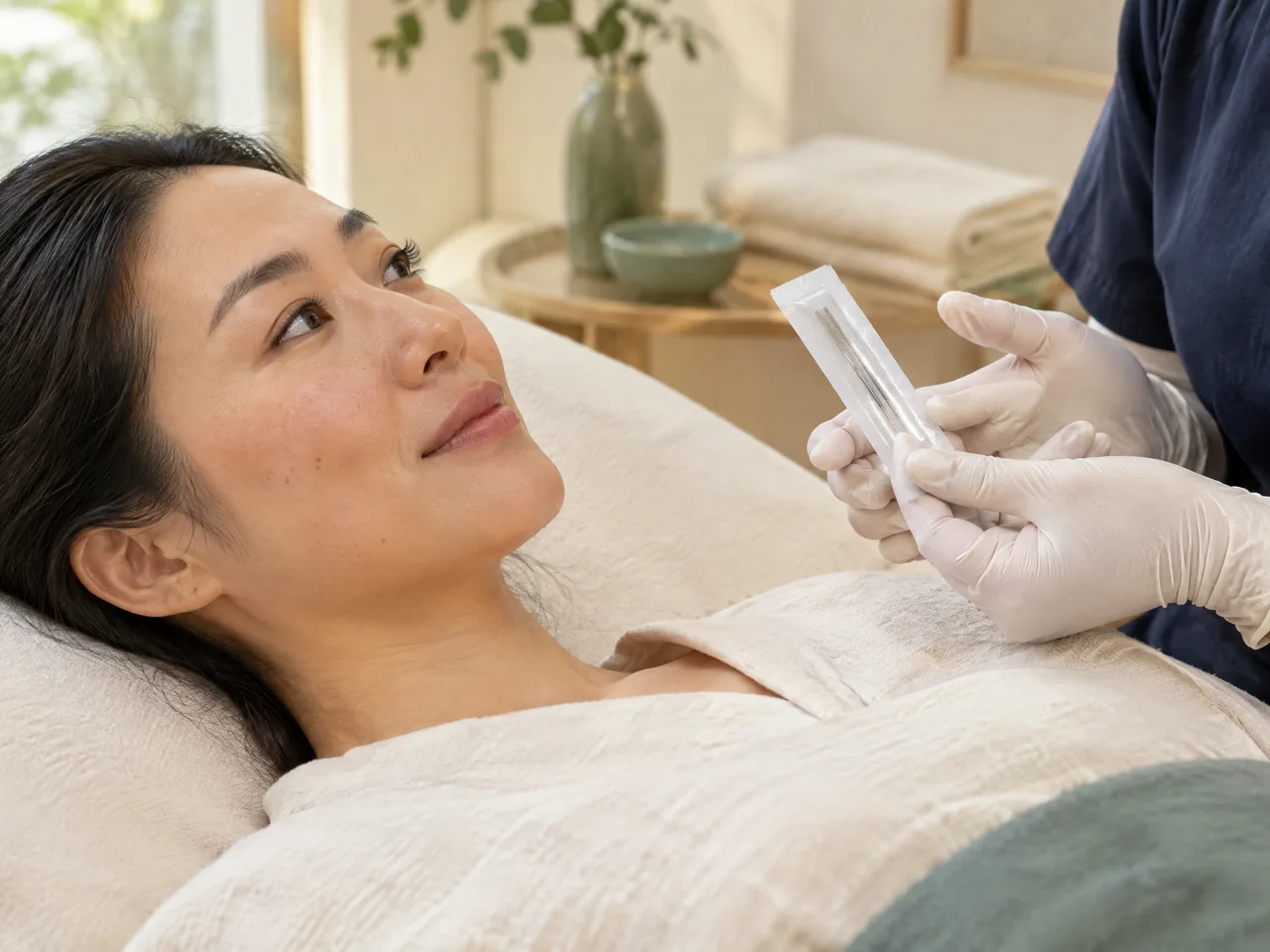
If assessment indicates that a session is appropriate, expect questions first and a clean, professional setting. You may be asked to lie comfortably while the face is cleaned and the proposed areas are considered. Acupuncture needles should be sterile and single-use. The U.S. National Center for Complementary and Integrative Health notes that complications have occurred with nonsterile needles or improper delivery, including infection, and advises discussing complementary approaches with health-care providers [3]. Tell the practitioner at once if you feel faint, unusually uncomfortable or worried about a particular area.
There is no responsible fixed number of appointments for post-inflammatory erythema acne or post-inflammatory hyperpigmentation from acne. Frequency and whether to continue should follow a reassessment of the skin and your experience, not a prepaid promise. Discuss comfort, new active lesions, and whether you have sought appropriate care for texture or severe acne. Keep other providers informed so skincare, medicines and procedures are considered together.

Post-inflammatory erythema acne, post-inflammatory hyperpigmentation from acne, and facial acupuncture for uneven skin tone: when to seek medical care
Arrange medical assessment promptly when lesions are deep and painful, when swelling or redness is spreading, when there is substantial pus, fever, or a hot and tender area that could suggest infection. Persistent acne that is leaving scars also deserves medical attention rather than waiting for marks to fade. A raised scar that grows beyond its original spot, a rapidly changing lesion, or uncertainty about what you are seeing should be assessed by an appropriate medical professional. These are decisions about skin health first, not a failure of skincare.
Emotional impact matters too. If you are avoiding work, photos, social plans or looking in the mirror because of acne or marks, say so to a health professional. Acne can affect confidence and mental health, and the NHS specifically includes mental-health impact among reasons to seek help [2]. Once active concerns have been assessed, you can make a calmer choice about local skin management. To ask about an in-person assessment at one of the two locations, see the Chinese medicine clinic Prince Edward or the Kwun Tong Chinese medicine clinic page.
Care and health guide
Facial acupuncture information
This directory brings together services, reading, and visit information related to facial acupuncture, to help you prepare questions for a consultation.
When exploring facial acupuncture, noting the service-arrangement questions you want to discuss can help prepare a consultation; facial acupuncture Hong Kong is a relevant service or reading entry point.
People may have different priorities, and acupuncture Hong Kong offers related information to help you understand options and prepare questions.

Your questions, answered
Frequently asked questions
Can facial acupuncture remove post-inflammatory erythema acne or post-inflammatory hyperpigmentation from acne?
It cannot be guaranteed to remove either type of mark. A registered Chinese medicine practitioner may discuss facial acupuncture for uneven skin tone as one local skin-management option after assessing the skin, active acne, medical history and current treatments. Redness and pigmentation can fade gradually, but individual timing and response vary.
How can I tell whether an acne mark is a scar?
A flat red or dark area may be a post-inflammatory colour change. A scar usually includes a structural change such as a pit, broad depression, uneven surface or raised firm tissue. Colour and scars can occur together, so a medical or dermatology assessment is appropriate when texture is a main concern or the appearance is uncertain.
Should active acne be controlled before facial acupuncture?
Yes. Severe active acne, pus, broken skin, marked inflammation or signs of infection should be addressed before needling the area. Deep painful lumps, rapidly spreading redness or swelling, substantial pus, fever, or a hot tender area need timely medical attention. Active acne should not be mistaken for an old mark.
How many facial acupuncture sessions are needed for acne marks?
There is no fixed number of sessions and no guaranteed timeline. The appropriate next step depends on whether the concern is redness, pigmentation, scar texture or continuing acne, as well as the person’s skin state, treatments and response over time. A reassessment should come before deciding whether further appointments are suitable.
Sources and further information
- [1] [1] DermNet — Acne scarring
Referenced for: Distinguishes post-inflammatory erythema, post-inflammatory hyperpigmentation and scar patterns; notes that active acne should be treated before scar management.
- [2] [2] NHS — Acne
Referenced for: Supports basic acne self-care and advice to seek medical help for deep painful spots, scarring, infection signs or mental-health impact.
- [3] [3] National Center for Complementary and Integrative Health — Acupuncture: What You Need To Know
Referenced for: Supports sterile single-use acupuncture needle safety and the importance of discussing complementary approaches with health-care providers.