
Prince Edward & Kwun Tong clinics · Home-visit enquiries elsewhere

TCM Lab

TCM Lab · Beauty & lifestyle / Fit and comfort

A wig for hot humid weather: compare comfort during an ordinary day

Content updated

A comfortable moment in an air-conditioned fitting room is only the beginning. Use your commute, desk time and after-work plans to work out what you need from a wig, then compare the actual fit rather than a summer label.

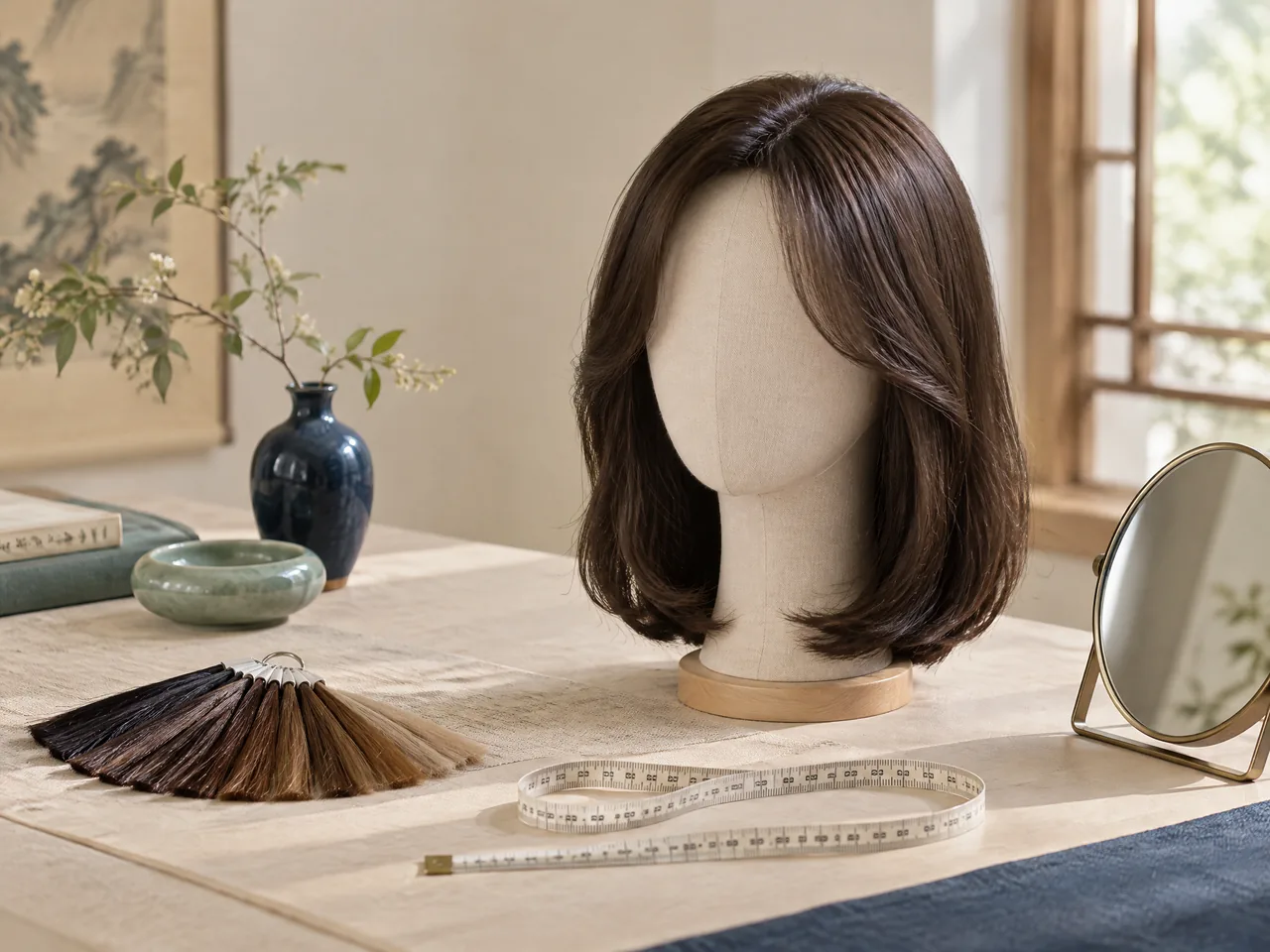
Illustrative wig selection, colour swatches and fitting tools
Illustrative wig-lifestyle concept; not an OWNSTRAND product photograph or a client record.

The short answer

Choose around the day you actually have. Compare the cap’s covered areas, how it sits with your usual accessories, and whether hair at the forehead or neck bothers you. Record warmth, dampness and pressure separately during any permitted trial. No wig is guaranteed sweat-proof, and a good fitting-room impression cannot predict every humid journey.

OWNSTRAND is an external wig and hairpiece website under the same ownership as TCM Lab. These appearance and everyday wearing guides are separate from Chinese medicine care, not diagnosis, treatment or a promise of hair growth.

Start with the warmest part of your normal day

Picture an ordinary weekday, not an outdoor endurance test. Perhaps you walk to the MTR, stand outside while waiting for a bus, then spend most of the day at a desk. Mark the part you find least comfortable and say why: hair touching a damp neck, pressure above the ears, or the wish to remove everything once home. Those descriptions give a fitter something more useful than ‘I need a summer wig’.

Hong Kong’s heat is not explained by air temperature alone. The Observatory identifies humidity, airflow and solar radiation as factors affecting heat stress.[1] A sheltered wait and a sunny walk can therefore be different situations even on the same day. Keep your usual pace when judging everyday comfort, and check local warnings before any outing. There is no need to deliberately overheat to test a purchase.

For product questions, OWNSTRAND’s wig for hot humid weather guide offers a place to explore the details of a particular option.[4] TCM Lab and OWNSTRAND share the same owner; this is a product resource, not an independent endorsement. Bring your description of the difficult part of your day, so the conversation starts with your needs rather than a claim of universal cooling.

Look inside the cap before comparing hairstyles

Ask to see the inside of each candidate. Have the fitter point out what covers the crown, what sits against the forehead, and how the back is built. Open areas in one part do not tell you what is happening elsewhere. For example, Jon Renau describes open-wefted caps with either a velvet hairline or a lace front.[3] That is a construction distinction to check, not proof that every open cap feels the same.

Put two similarly appealing styles beside each other and ask where their coverage differs. You may value a particular parting appearance enough to accept its construction, or decide another style feels less distracting. Do not choose from a picture of mesh alone. The useful question is how the complete piece sits on you, including any lining or accessory you intend to wear underneath.

Also confirm what kind of piece you are comparing. The American Cancer Society distinguishes a full wig, which covers the whole head, from a topper that adds coverage over thinning hair on top.[2] A smaller piece is not an automatic replacement for the coverage you want. Likewise, a men’s attached hair system needs its own fitting and attachment discussion; observations about a removable full wig cannot settle that choice.

Use ordinary movements during the fitting

Arrive with the accessories you normally use, especially glasses. If you still have hair beneath the wig, explain how you expect to arrange it each morning and ask the fitter to show a repeatable method. The American Cancer Society advises checking the specific brand’s sizing and following the wig’s directions.[2] A familiar size label should not replace checking the actual piece on your head.

Once fitted, turn to look over each shoulder, glance down as if reading your phone, and sit back against a chair without forcing the cap into position. Put your glasses back on. Notice whether you feel rubbing near the arms, a tug at the nape, or a patch of pressure at the hairline. Describe the location precisely and ask for adjustment rather than accepting discomfort as the price of looking secure.

Repeat those same movements after an adjustment. Change only one thing at a time so you can tell what helped. If an uncomfortable area remains, pause and ask about another size or construction. The aim is a fit you can live with, not the tightest possible fit. A short appointment can reveal immediate pressure or movement, but it cannot establish how your scalp will feel after a whole working day.

Separate hair contact from the layers underneath

When something feels warm or clammy, identify what you are noticing before changing the whole wig. Is it hair brushing your forehead, the ends resting on your neck, or the sensation underneath the cap? If you like a longer style, ask whether it can be arranged away from the neck without exposing the base or pulling the piece. You need not commit to a short cut before exploring the styling you actually enjoy.

Treat a liner or grip as another fitting choice, not a guaranteed cooling upgrade. Ask to compare the proposed combination with the wig as initially fitted, if appropriate for your scalp and the fitting arrangements. Record whether pressure changes and whether the extra layer feels acceptable. If you plan to use an accessory every day, assess the complete combination rather than trying it for the first time after buying.

Keep fibre choice separate from these observations. Synthetic and human-hair pieces have different care and styling requirements, but the fibre name alone does not tell you which individual wig you will prefer. Ask for the exact care instructions before using heat or altering the style.[2] A ‘heat-friendly’ description concerns permitted styling; do not read it as a promise of cooler wear in Hong Kong.

Make a small comfort note, not a temperature claim

If a take-home trial is offered, confirm its conditions before treating it as normal wear. Otherwise, ask what you can assess during a fitting. For a permitted trial, make brief notes when leaving home, arriving indoors and taking the wig off. Write the setting alongside separate observations of warmth, dampness, pressure and adjustment. ‘Damp after the walk, no temple pressure’ is more informative than one overall comfort score.

When comparing two permitted options, use similar everyday activities where possible and note any obvious difference in weather or time outdoors. Do not conclude that one is cooler because you wore it on the easier day. Your notes are a personal decision aid, not a laboratory result. They can help you decide whether a concern belongs to the fit, your preferred hairstyle or the conditions of that particular journey.

Keep the comparison safe and optional. No cap prevents all sweating, and looking neat is not a reason to ignore feeling unwell. The Observatory advises rest, adequate water and seeking help when affected by prolonged heat.[1] Stop the trial rather than extending it to meet a target. A wig changes appearance; it is not a treatment for hair loss or protection against heat illness.

Bring the observations back to your next conversation

Choose the next question from your notes. If the style feels fine indoors but bothers your neck on the walk, discuss the finish around the nape. If one area presses from the moment you put it on, return to fitting. Before purchase, ask how the exact piece and any liner should be cleaned and dried after wear. Follow its supplied instructions rather than improvising a daily washing or hot-drying routine.[2]

For local browsing, the wigs Hong Kong page is a starting point for asking OWNSTRAND about a shortlisted style. Its single shop is at Unit 2103, 利寶時中心, 50 Hoi Yuen Road, Kwun Tong. The stated handmade custom human-hair process includes sample viewing and measurement, then a return fitting with washing, cutting and blow-drying.[5] Confirm which samples can be viewed and the availability of your chosen option before travelling.

You do not need to arrive with a technical verdict. Bring one preferred look, the location of any discomfort, and the part of your day that matters most. Ask what can be adjusted and what cannot. A useful choice balances appearance with a routine you are willing to maintain, while leaving room for a different head covering or a private break on days when you do not want to wear the wig.

Take it into everyday life

A practical checklist

  • Describe the most uncomfortable part of your normal journey or working day, including where you feel it.
  • Ask to see the inside of the cap and identify the covered areas, lining and adjustment features.
  • Confirm whether the piece is a full wig, topper or attached hair system before comparing fitting needs.
  • Bring glasses and explain how you normally arrange any hair underneath.
  • Repeat shoulder turns, looking down and sitting back after each fitting adjustment.
  • Assess any proposed liner or grip together with the wig, not as a separate promise of comfort.
  • Confirm trial conditions and record warmth, dampness, pressure and setting separately if a trial is permitted.
  • Obtain the exact care instructions and confirm sample viewing, availability and visit arrangements before buying or travelling.

Questions & answers

Can I tell whether a wig suits humid weather from an air-conditioned fitting?

You can check immediate fit, rubbing, movement and how the hairstyle feels around your face or neck. You cannot reproduce your whole commute there. Ask whether any further trial is permitted and what its conditions are. If not, use the appointment to resolve specific fit concerns and discuss your daily routine rather than assuming a comfortable first impression guarantees all-day comfort.

Does an open-wefted cap mean I will not sweat?

No. Open-wefted describes construction, not sweat prevention. Look at which areas are open and which remain covered, then assess the complete fit. A lace-front detail does not describe the whole cap either. Your observations during ordinary wear can help you judge the individual option, but neither a cap label nor a personal trial establishes a sweat-proof guarantee.

Should I buy a short wig even if I prefer longer hair?

Not automatically. Start by identifying whether hair touching your neck is actually what bothers you. Ask whether your preferred longer style can be arranged away from that area without exposing the base or pulling on the fit. Compare the look in that arrangement before deciding. A shorter style is an option, not a requirement or a cure for warmth underneath the cap.

Will adding a liner make the wig more comfortable?

It may change how the combination feels, but do not assume the change will suit you. Ask to assess the proposed liner with the actual wig and recheck pressure and stability. Follow the accessory’s care instructions as well. If you have a painful, irritated or unusually sensitive scalp, seek appropriate professional advice rather than adding more layers to push through discomfort.

What should I send before arranging a Kwun Tong visit?

Send the name or image of the option you like, your usual wearing situation, and one or two specific comfort questions. Ask which relevant samples can be seen and what fitting arrangements are available for that option. Confirm quotation and availability separately; a catalogue page is not a stock promise. OWNSTRAND’s shop is in Kwun Tong, so confirm arrangements before making the journey.

Sources & further context

Numbered references follow the source order below. Product and service websites provide appearance-related context, not medical evidence.

  1. [1] Hong Kong Observatory — Beware of Health Effects of Extremely Hot Weather
  2. [2] American Cancer Society — Wigs for Hair Loss
  3. [3] Jon Renau — Open Cap
  4. [4] OWNSTRAND — Wig for Hot Humid Weather
  5. [5] OWNSTRAND — Wigs in Hong Kong

Keep the sample details beside your comfort notes

Give each candidate a separate note headed with its exact model or sample name. Below it, describe the cap areas the fitter showed you and identify any lining used in the comparison. If photographs are permitted, an inside view can help you remember which sample had which features. Do not use the illustration here to identify a product: its panels and band are generic. Your own record should distinguish what you actually saw from details you still need the supplier to confirm.

Add the size or measurements used for that fitting, then record the adjustment made before you repeated your ordinary movements. The American Cancer Society advises checking the relevant brand's sizing.[2] This makes a later discussion more specific: 'The second sample pressed above my left ear after this adjustment' identifies both the piece and the setting. If a different liner or arrangement of your own hair is proposed, start a new entry rather than treating it as the same comparison.
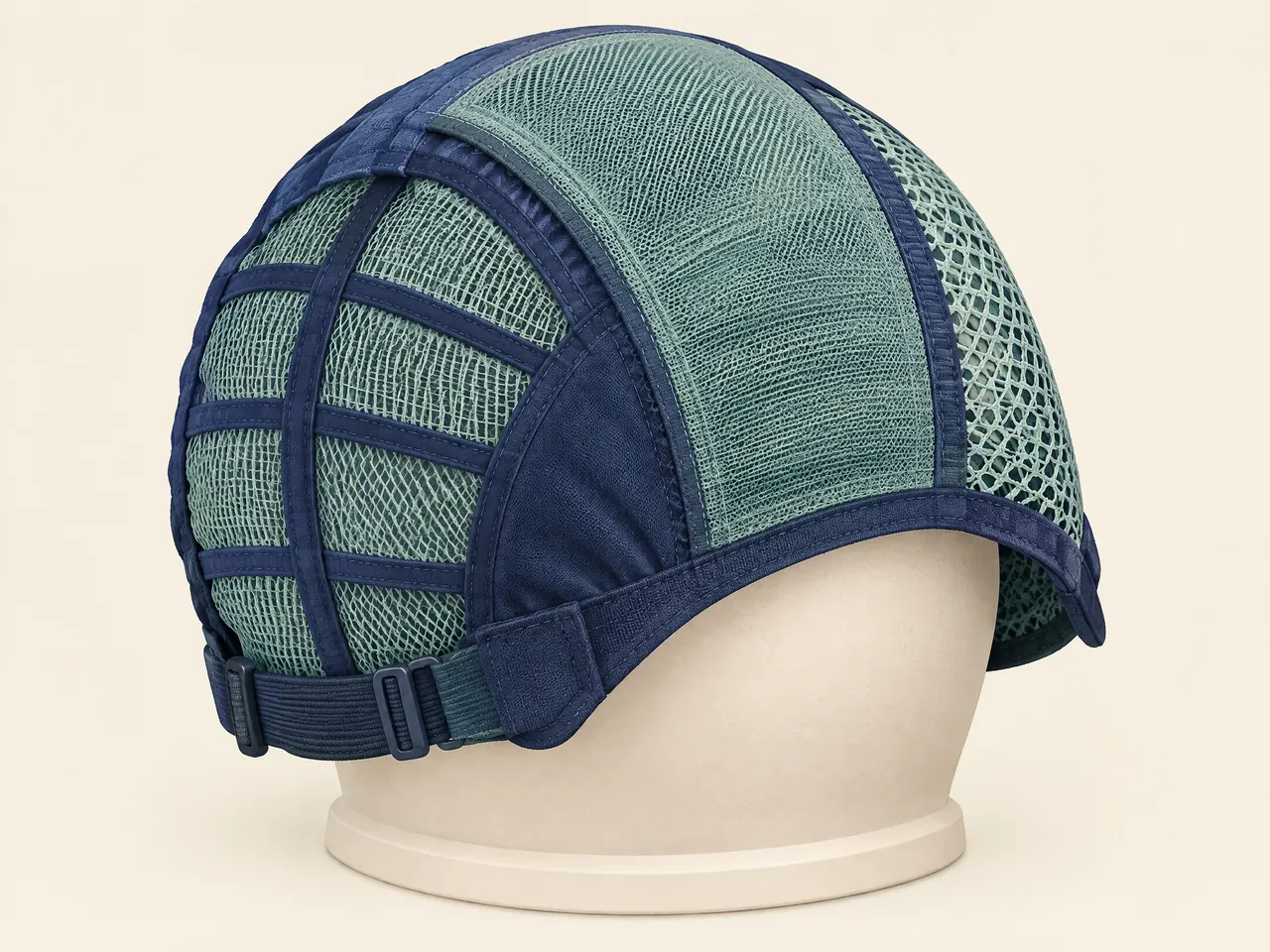

Inside-out generic wig cap on a plain dome stand, showing illustrative mesh panels and an adjustable band
Generic cap illustration for recording covered areas and adjustment features; not an OWNSTRAND product photograph or evidence of cooling.Generated illustrative image
Fabric measuring tape around a blank mannequin dome beside an empty fit-note card and a mirror
Illustrative measurement and note-taking setup; the actual piece's sizing and fit must be confirmed individually.Generated illustrative image

Clarify removal before planning a private break

If taking the piece off at home or during a private break matters to you, make that part of the fitting brief. Ask the supplier to demonstrate the permitted removal and refitting method for the exact piece, and whether you can practise it during the appointment. A full wig and a topper provide different coverage,[2] so decide what you want to cover before discussing removal. Do not assume that a smaller piece is the right substitute simply because you expect to take breaks.

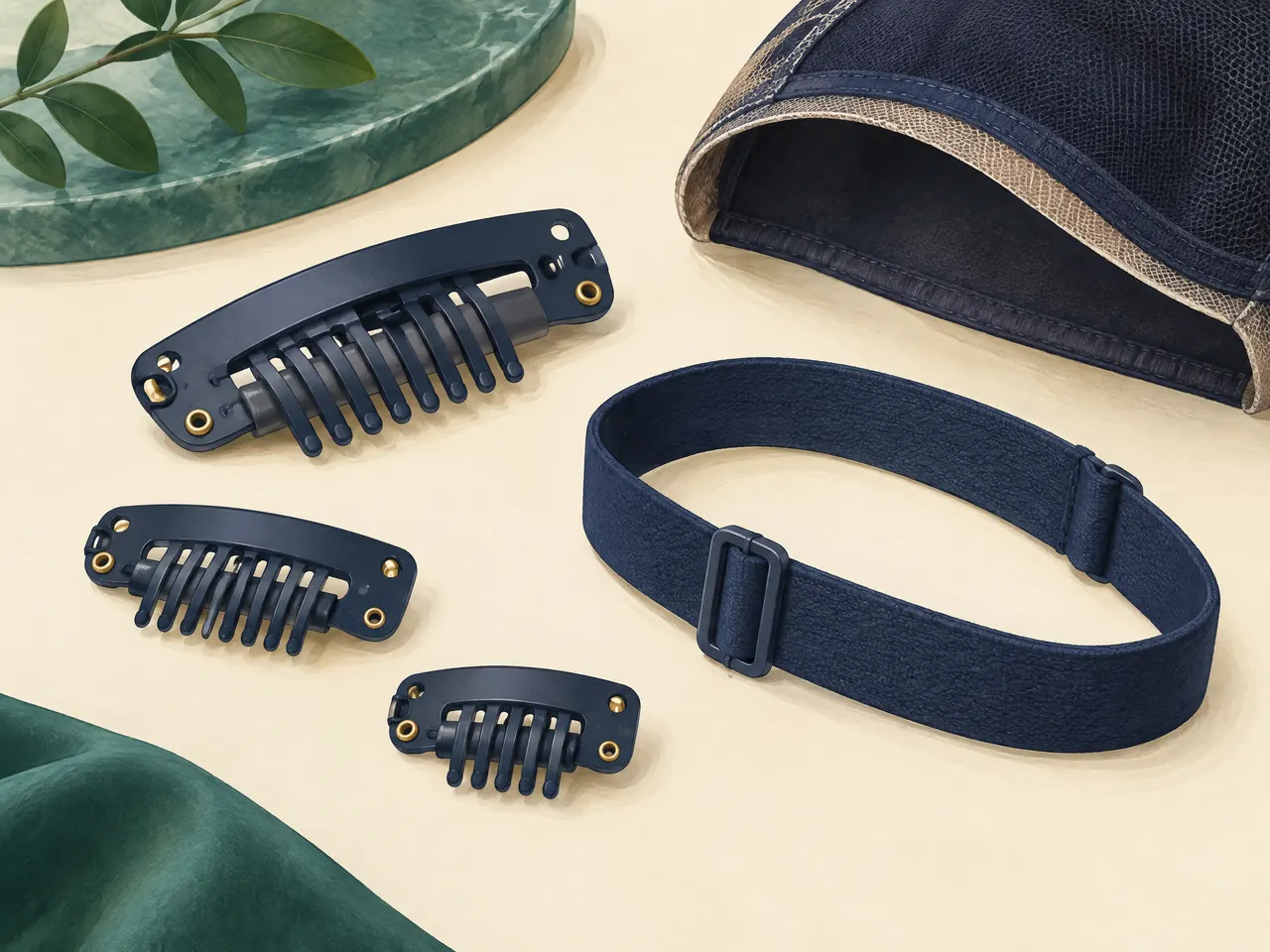
The clips and band in the illustration are prompts for questions, not instructions to add a fastening. Ask which attachment belongs with the shortlisted piece, what you need to do before removing it, and how it should be positioned again. If the proposal is an attached hair system, ask separately whether wearer removal is intended at all. Keep that answer in your notes: a plan built around taking off a removable wig may not fit another attachment arrangement. Do not improvise with extra clips, adhesive or tighter adjustment to resolve an unanswered fitting question.
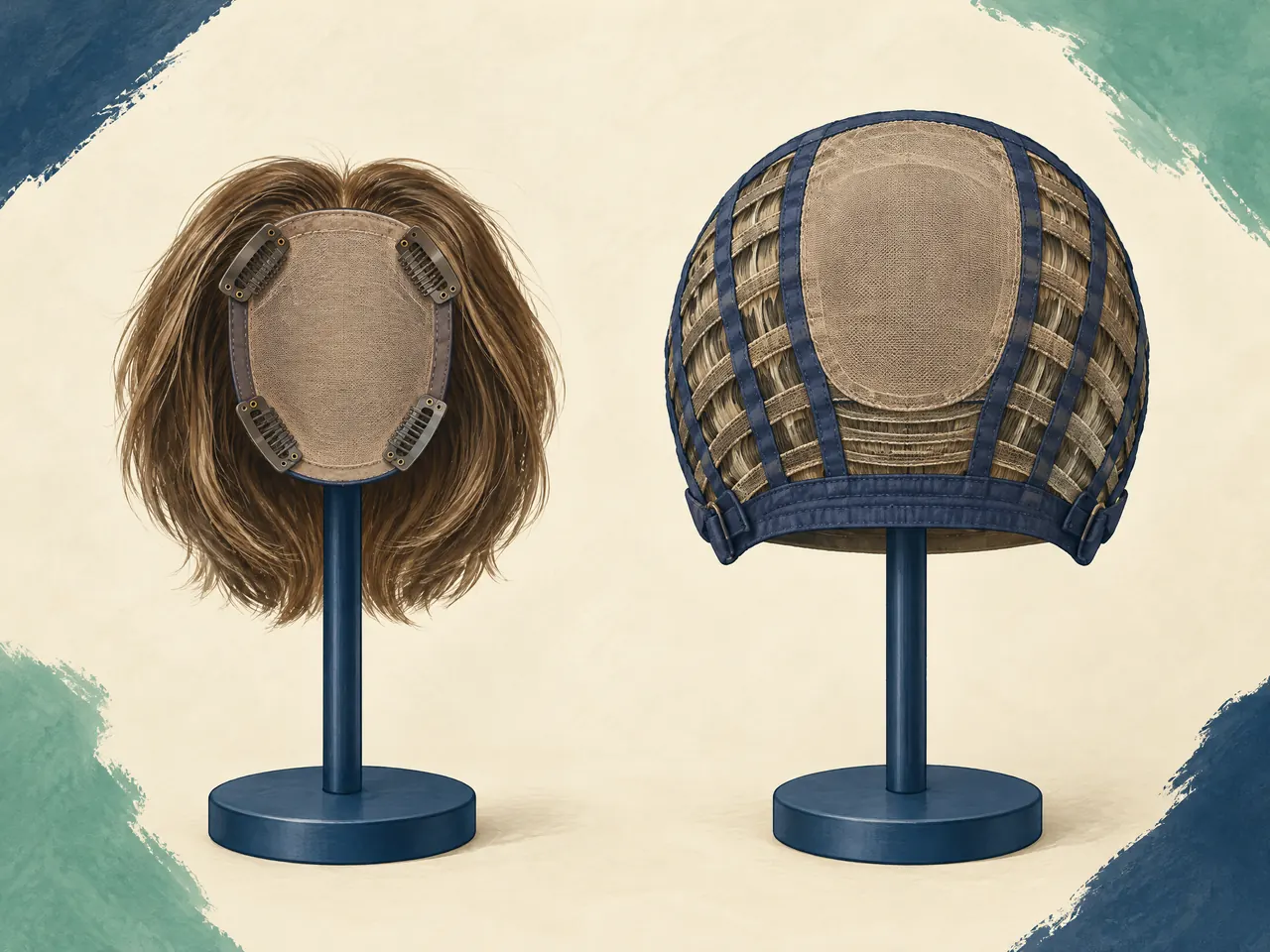
Generic removable topper and full empty wig cap on separate plain stands with their underside construction visible
Illustrative partial-coverage and full-cap objects; choose the coverage you need before asking about removal.Generated illustrative image
Generic hairpiece clips, soft adjustable band and empty sample cap edge arranged separately on a tabletop
Generic attachment objects for supplier questions; not a recommended fastening method or a demonstration of a particular product.Generated illustrative image

Plan the space and equipment needed between wears

Before buying, picture where the piece will go when you reach home. Ask which stand or support is suitable, how to handle the cap when taking it off, and how to check that it is ready to store after any instructed cleaning. The American Cancer Society describes stand storage for short periods and room-temperature drying, but its general advice should not replace the supplied directions for your exact wig.[2] Do not infer that a dryer is allowed because it was used during a professional finishing appointment.

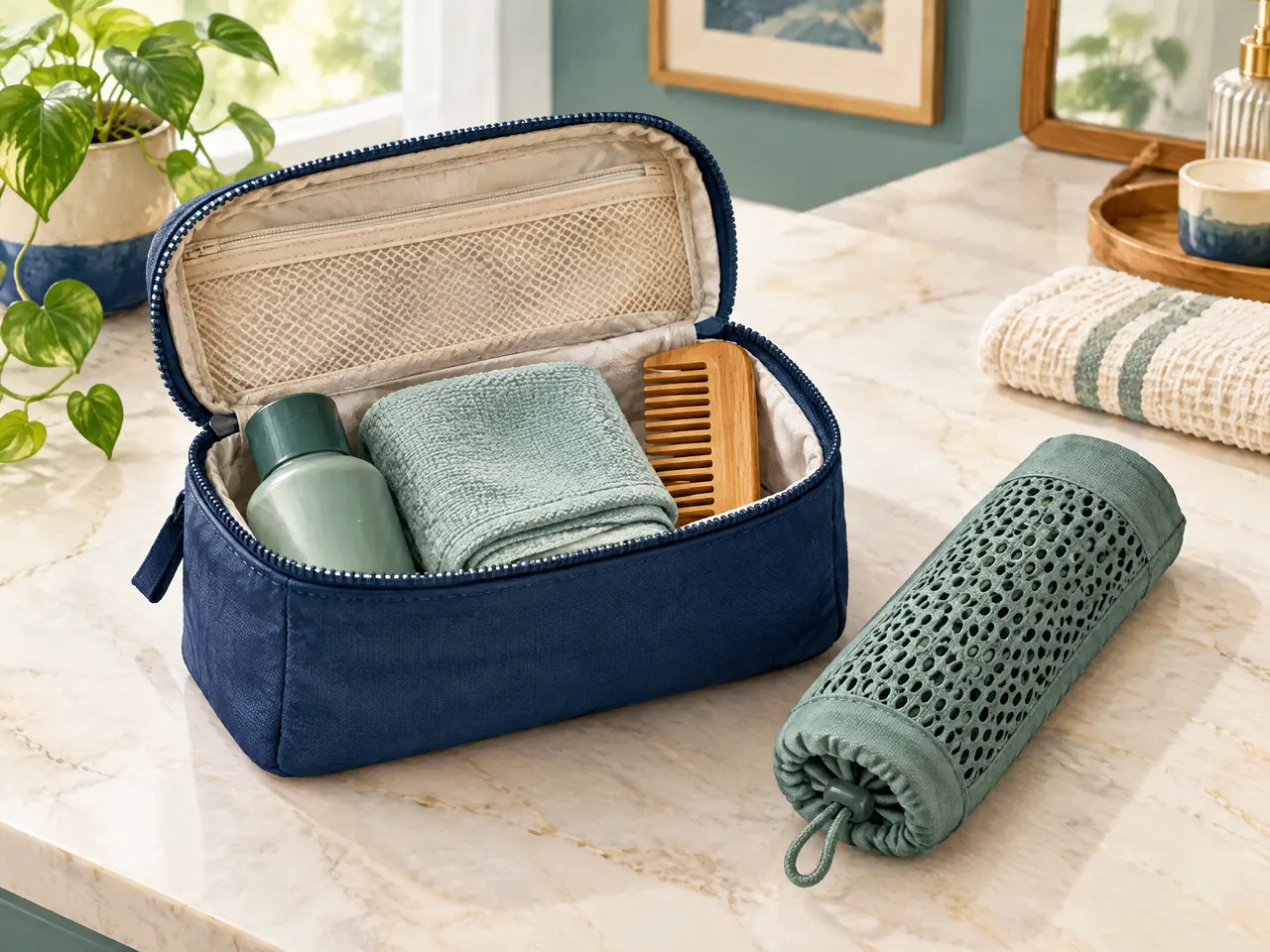
For a day when you might remove the wig away from home, ask what temporary carrying arrangement is appropriate. The pouch illustration shows packing objects, not a drying method or a promise that its sleeve suits your piece. Confirm whether the supplier recommends a protective container and how the wig should be positioned inside it. Keep any care product in its identified original container so you can check its instructions. Separate this temporary transport question from the routine for cleaning and drying at home; neither requires inventing a fixed washing frequency for every humid day.
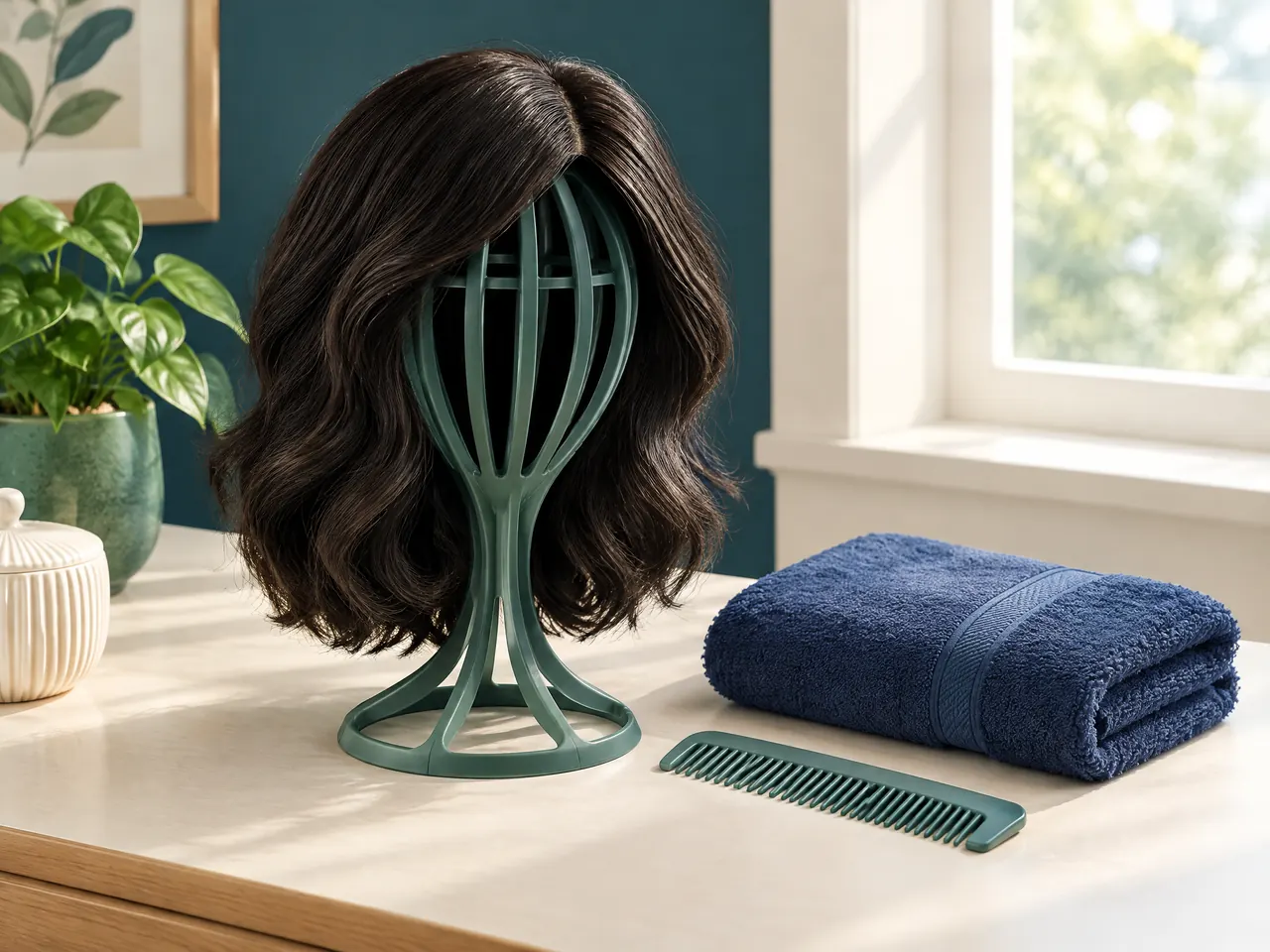
Anonymous wig on an open stand beside a folded towel and an unbranded comb near indirect daylight
Illustrative care equipment, not a universal drying setup; confirm the support and method allowed for the exact piece.Generated illustrative image
Open unbranded travel pouch with a capped bottle, folded cloth and comb beside a separate ventilated storage sleeve
Illustrative packing objects for a temporary-storage discussion; the pouch and sleeve are not endorsements or substitutes for care instructions.Generated illustrative image

Clinic enquiries

Contact and appointment arrangements

Clinics
Prince Edward and Kwun Tong
Opening hours
11:00–21:00
WhatsApp and telephone
+852 6940 5663

Appointments, practitioner availability and service arrangements are confirmed via WhatsApp.

Please mention any consultation language needs in your WhatsApp enquiry so that arrangements can be confirmed.

Enquire via WhatsApp
Food, gifts and floral lifeWhatsApp enquiry