
TCM Lab · Health reading
Is an Itchy Flaky Scalp With Hair Loss Serious? What to Notice
Published Updated
An itchy, flaky scalp with hair loss is not automatically serious, but the combination deserves more attention than a few hairs in the shower. The useful question is not simply how much hair has come away. Notice the speed of change, the distribution of loss, and whether the scalp is becoming red, sore, crusted, oozing, shiny or visibly different. A gradual change can usually be discussed in a routine appointment. Sudden shedding, a new smooth patch, pain, or an inflamed-looking scalp are reasons not to rely on product changes alone.
Appointments are confirmed through WhatsApp. If you have language requirements, please mention them in your enquiry.
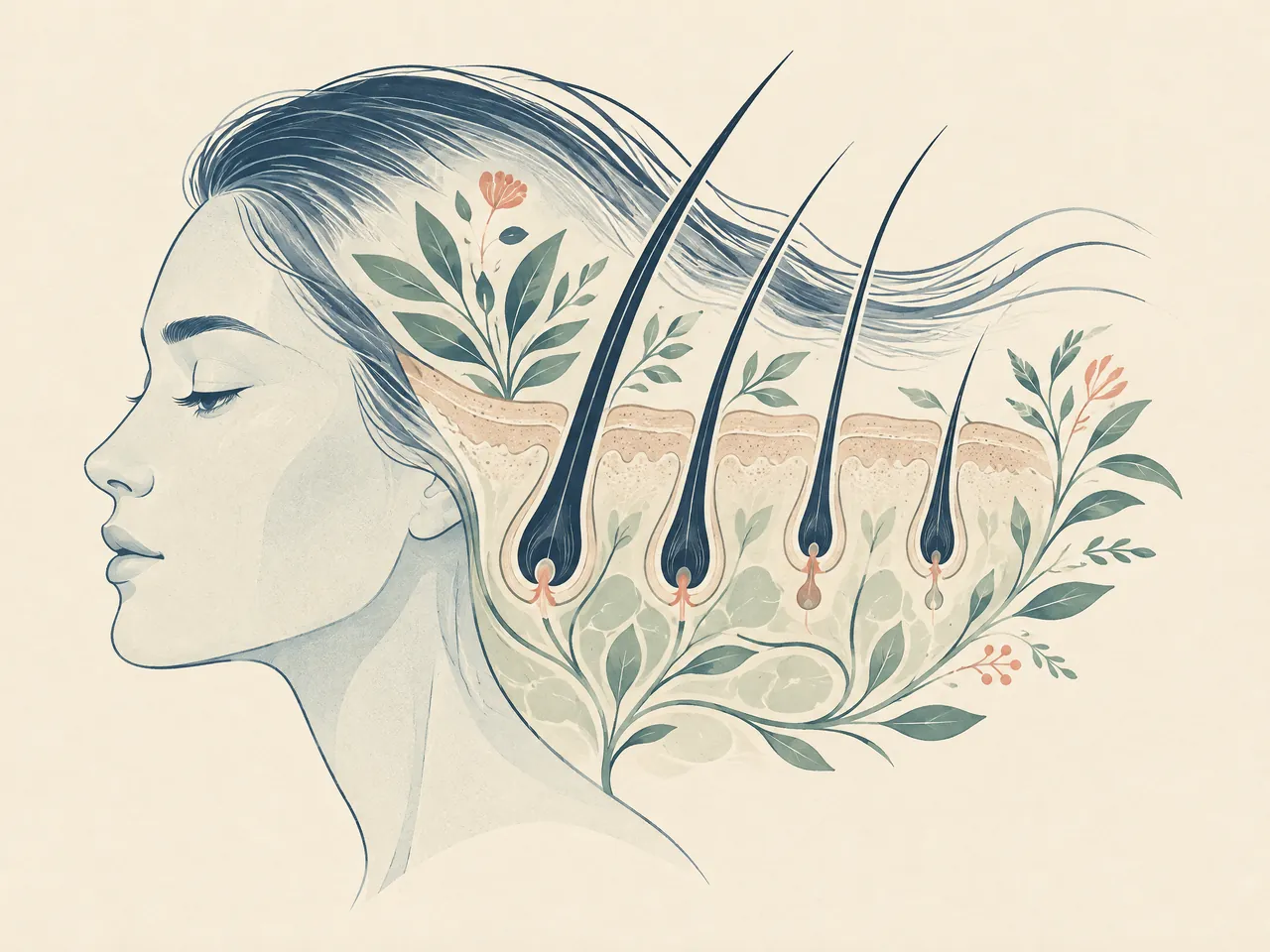
The short answer
An itchy flaky scalp with hair loss can be a sign of a scalp condition or another cause of hair loss, but it is not possible to judge seriousness from shedding alone. Arrange medical assessment when loss is sudden, patchy, rapidly worsening, or accompanied by redness, pain, marked scale, crusting, discharge, or an abnormal-looking area of scalp. Gradual thinning still merits a routine discussion if it persists, feels different from your usual pattern, or is worrying you.
Transparent pricing
See the fees.
Choose your care.
Explore our complete official price list, including first-trial prices, regular prices, packages and branch-specific options.
Opening WhatsApp prepares an enquiry; it does not send a message, take payment or confirm an appointment. Suitability and individual arrangements are confirmed during consultation.
Hair and scalp
All prices in HKDScalp health and hair-loss management
Includes AI scalp analysis, deep scalp and follicle cleansing, and scalp oil-control care.
HK$380 (first trial)
Regular price: HK$680
- 6 sessions: HK$3,480 (HK$580 per session)
- 12 sessions: HK$5,760 (HK$480 per session)
- 20 sessions: HK$8,600 (HK$430 per session)
- 30 sessions: HK$11,400 (HK$380 per session)
Hair acupuncture and Chinese herbal medicine package
Includes scalp acupuncture and 3 days of Chinese herbal medicine that does not require decoction.
HK$580 (single session)
Registered Chinese Medicine Practitioner consultation
- 6 sessions: HK$3,180 (HK$530 per session)
- 12 sessions: HK$5,760 (HK$480 per session)
- 20 sessions: HK$8,600 (HK$430 per session)
- 30 sessions: HK$11,400 (HK$380 per session)
Combined hair and scalp treatment
Combines acupuncture and Chinese herbal medicine with salon-level scalp and follicle care. Packages include complimentary hair-care shampoo and serum.
HK$1,260 (single session)
Combined treatment
- 8 sessions: HK$8,640 (HK$1,080 per session)
- 16 sessions: HK$15,680 (HK$980 per session)
- 20 sessions: HK$18,600 (HK$930 per session)
- 30 sessions: HK$26,400 (HK$880 per session)
Weight management
All prices in HKDFull-body acupoint embedding for weight management
Includes full-body acupoint embedding. Packages include complimentary Chinese herbal medicine for weight management, with the number of included days scaled to the package. Embedding material and the individual treatment arrangement are confirmed during consultation; this is not a cosmetic thread lift.
HK$980 (single session)
No trial session
- 10 sessions: HK$7,800 (HK$780 per session)
- 20 sessions: HK$14,600 (HK$730 per session)
- 30 sessions: HK$20,400 (HK$680 per session)
Facial acupuncture
All prices in HKDFacial acupuncture (basic)
Includes facial acupuncture and meridian-based facial care, including care for facial puffiness.
HK$480 (first trial)
Regular price: HK$680
- 10 sessions: HK$5,200 (HK$520 per session)
- 20 sessions: HK$9,600 (HK$480 per session)
- 30 sessions: HK$13,500 (HK$450 per session)
Facial acupuncture (advanced)
Includes enhanced facial acupuncture with a specially formulated moisturising mask and serum.
HK$780 (first trial)
Regular price: HK$1,180
- 10 sessions: HK$9,000 (HK$900 per session)
- 20 sessions: HK$16,600 (HK$830 per session)
- 30 sessions: HK$23,400 (HK$780 per session)
Pain care
All prices in HKDExtracorporeal shockwave treatment
Shockwave treatment for deep-tissue and fascial care. The Kwun Tong clinic offers the multi-area options shown below.
Priced by branch
Branch-specific pricing
Prince Edward: HK$250 per area
Kwun Tong: HK$250 for 1 area / HK$450 for 2 areas / HK$600 for 3 areas
Pain care (manual therapy)
Includes Chinese medicine musculoskeletal assessment, manual joint techniques and tui na.
HK$580 (single session)
Chinese medicine musculoskeletal assessment
Pain care (acupuncture and manual therapy)
Combines acupuncture and manual therapy.
HK$680 (single session)
Combined care
Chinese medicine
All prices in HKDAcupuncture and Chinese herbal medicine package
Includes a Chinese medicine consultation with pulse assessment, body acupuncture and 3 days of Chinese herbal granules that do not require decoction.
HK$580 (single session)
Chinese medicine consultation with pulse assessment
Is an Itchy Flaky Scalp With Hair Loss Serious? Start With the Pattern
Hair naturally comes away as part of its growth cycle, so one wash day or one hairbrush is a poor measure of what is happening. The more useful story is the change from your own baseline. Ask when you first noticed it, whether the parting or hairline has altered, whether more hair appears on the pillow or in the drain, and whether the loss looks diffuse or concentrated. Take the question seriously without jumping from a visible change to a diagnosis. The Hong Kong Centre for Health Protection notes that continual loss, hair that does not grow normally, or abnormal-looking skin beneath an affected area are reasons to consult a doctor [1].
It also helps to separate what you can see from what you think caused it. A flaky scalp may be a separate scalp symptom, may occur alongside hair loss, or may be part of the presentation a clinician needs to examine. Similarly, short hairs on the shoulders may reflect breakage, while a bulb at one end may suggest a shed hair; neither observation proves the reason. Make a note of both. This page is designed to help you decide which details make a routine consultation more useful and which changes should not be left to trial-and-error hair care.

Is an Itchy Flaky Scalp With Hair Loss Serious When Thinning Develops Gradually?
Gradual thinning over weeks or months is not automatically an emergency. A widening part, reduced density at the crown, or a receding hairline can be easier to notice in photographs than day to day. Family pattern can be relevant, but it is only one piece of context. The NHS notes that some permanent pattern hair loss runs in families, while other types may be temporary and can follow illness, stress, weight loss, iron deficiency, or cancer treatment [2]. That is why it is more helpful to describe the timeline and any changes around it than to assume that every gradual change has the same cause.
Routine does not mean ignore it. Arrange a non-urgent medical discussion if the change keeps progressing, is distressing, or does not resemble the pattern you have previously had. Bring a concise history: recent illness or surgery, major changes in weight or diet, pregnancy or postpartum timing if relevant, new or stopped medicines, and close relatives with a similar pattern. Include hair practices too, such as repeated tight styles, colouring, bleaching, heat, extensions, or a new scalp product. These details give a clinician places to start rather than turning a single symptom into a conclusion.
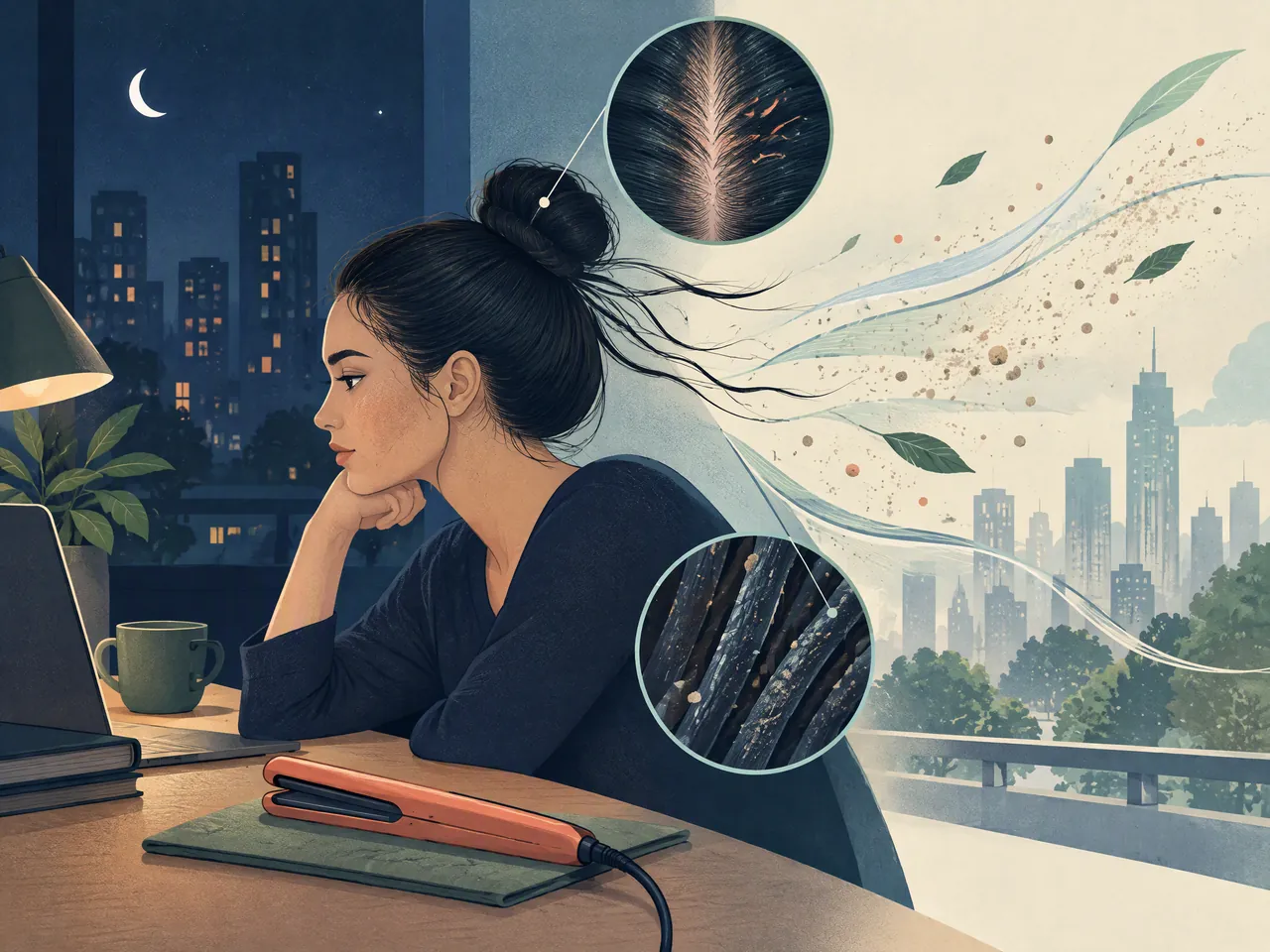
Is an Itchy Flaky Scalp With Hair Loss Serious When Shedding Suddenly Increases?
A noticeable increase in shedding over days or a few weeks should be described rather than averaged away. It may show up as hair coming away while washing, on clothing, or when styling, but the context matters: did it follow a fever or other illness, an operation, a major stressor, a big dietary change, or a medication change? Those events do not diagnose the cause, but they are relevant history. The American Academy of Dermatology says assessment starts with questions about how long the loss has been present and whether it came on quickly, followed by close examination of the scalp, nails, and other affected areas [3].
Sudden change can be unsettling, especially when itching and flakes make the scalp feel active or uncomfortable. Try not to test it by repeatedly combing, brushing, or pulling the hair to see what comes out. That can irritate the scalp and makes it harder to remember the unaltered pattern. Instead, note the date the change was first clear, whether loss is all over or focused, whether hairs look broken, and whether eyebrows, lashes, beard hair, or body hair are changing as well. This is the type of information that helps distinguish an observation from a guess. Read alopecia for terminology that may arise in an assessment.
Compare your options
| What you notice | Useful detail to record | Why it changes the assessment conversation |
|---|---|---|
| Gradual thinning | Where density changed, when it began, family pattern, and hair practices | Helps compare a developing pattern with your baseline rather than one day of shedding |
| Sudden extra shedding | Start date, distribution, recent illness, surgery, stress, weight change, or medicine change | Gives the clinician a timeline for asking about possible triggers and other symptoms |
| Red, sore, crusted, or oozing scalp | Colour, pain or burning, type of scale, discharge, and whether the area is spreading | Shows that scalp findings, not only hair quantity, need prompt examination |
| Smooth or unusual patch | Shape, surface, enlargement, and changes to brows, lashes, beard, or body hair | Supports assessment of focal hair loss and avoids self-diagnosis from appearance |
| Possible need for tests | Relevant health symptoms, medicines, supplements, photographs, and questions about purpose | Helps decide whether any test is clinically useful after examination |
On smaller screens, scroll the table sideways to compare all columns.
Is an Itchy Flaky Scalp With Hair Loss Serious? Scalp Warning Signs
The scalp gives information that the amount of shedding cannot. Look without scratching: is the skin its usual colour, or is it red, swollen, scaly, crusted, shiny, broken, or leaking fluid? Is there pain, burning, or tenderness as well as itch? Has a patch developed a smooth or indented appearance, or do follicle openings seem less visible than surrounding skin? None of these features lets you name the condition at home. Together, however, they make a clear case for medical assessment instead of cycling through shampoos, oils, supplements, or online treatments.
It is reasonable to seek help earlier when the scalp itself looks abnormal, the area is expanding, or discomfort interferes with sleep, work, washing, or touching the hair. In a consultation, say exactly what you saw and when. ‘Itchy’ may mean mild intermittent irritation to one person and constant burning to another; ‘flaky’ may mean fine loose scale, thick adherent scale, or crust after scratching. Concrete language reduces the risk that a clinically useful sign is lost in a general statement that your hair is falling out. See hair loss warning signs for a focused note list.
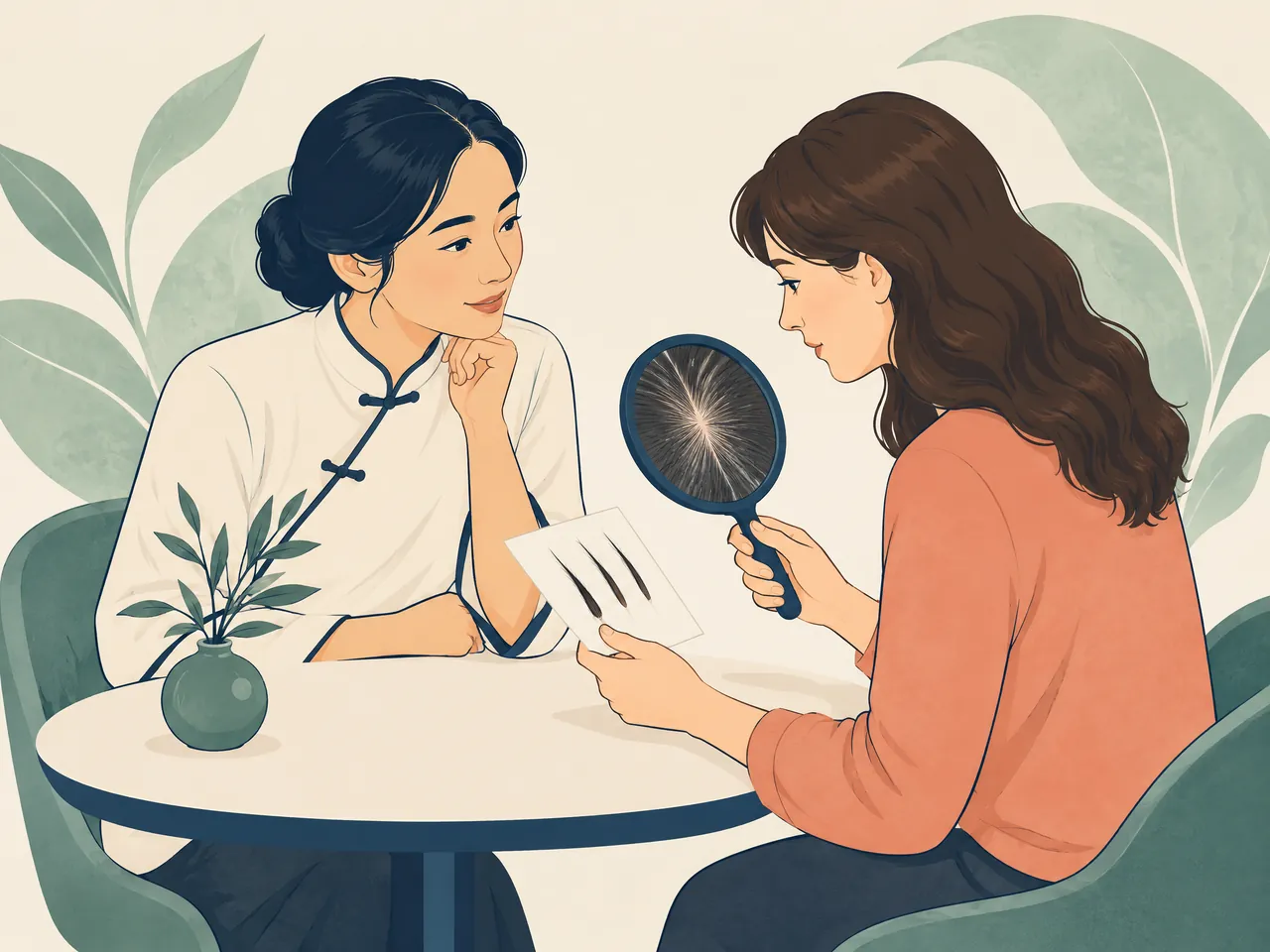
Is an Itchy Flaky Scalp With Hair Loss Serious if the Scalp Is Red, Painful or Flaky?
Redness, pain, burning, heavy scale, crusting, or discharge alongside hair loss deserve prompt professional attention. They can occur with inflammation, infection, or other scalp problems, but this combination cannot be sorted reliably by choosing an anti-flake product. The AAD notes that when infection or painful inflammation is involved, treatment may be directed at that cause [3]. The practical point before treatment is less dramatic: make sure the scalp is examined so that care is based on what is actually present.
While waiting for an appointment, keep the record simple. Write down any new products and the dates you used them; list hair dye, chemical straightening, bleaching, extensions, or tightly pulled styles; and note medicines or supplements. Do not apply a succession of strong or fragranced products to a sore scalp simply to make it look better before the visit. If there is discharge or crusting, a clear photograph taken before cleansing may be useful for description, but it should not delay getting assessed. Avoid sharing combs, brushes, hats, or hair accessories while an unexplained scalp problem is being evaluated.
Is an Itchy Flaky Scalp With Hair Loss Serious if There Are Patches or Possible Scarring?
A discrete patch is different from a generally wider parting. It may be round, oval, irregular, smooth, scaly, or tender; the surface matters as much as the outline. The Centre for Health Protection advises medical advice when the skin under an involved area is abnormal and notes that clinicians may use blood tests or tissue sampling to establish the type and cause of baldness [1]. That does not mean every patch requires the same tests. It means a patch with an unusual scalp surface should be assessed rather than covered up and watched indefinitely.
Be especially clear if the patch seems to enlarge, if several patches appear, if the surface looks shiny or sunken, or if hairs are also changing at the eyebrows, eyelashes, or beard. Do not try to scrape scale away to check whether the area is scarred. A clinician needs to inspect the skin and follicles directly. The word ‘scarring’ is sometimes used casually online, but it is not a conclusion to draw from a photograph. Describe what you can see—smoothness, shine, scale, colour, tenderness, or loss of visible openings—and leave interpretation to assessment.
Is an Itchy Flaky Scalp With Hair Loss Serious? Preparing for Assessment
A productive assessment begins before you enter the room. Bring a short timeline rather than a long, anxious diary: first date noticed; first scalp symptom; whether the change was sudden or gradual; areas involved; and what has changed since. Add any relevant illness, operation, high stress period, dietary restriction, major weight change, childbirth, medicines, supplements, and hair treatments. This is not a search for blame. It helps the clinician ask the next questions efficiently and decide whether the scalp, hair shaft, general health, or more than one factor needs attention.
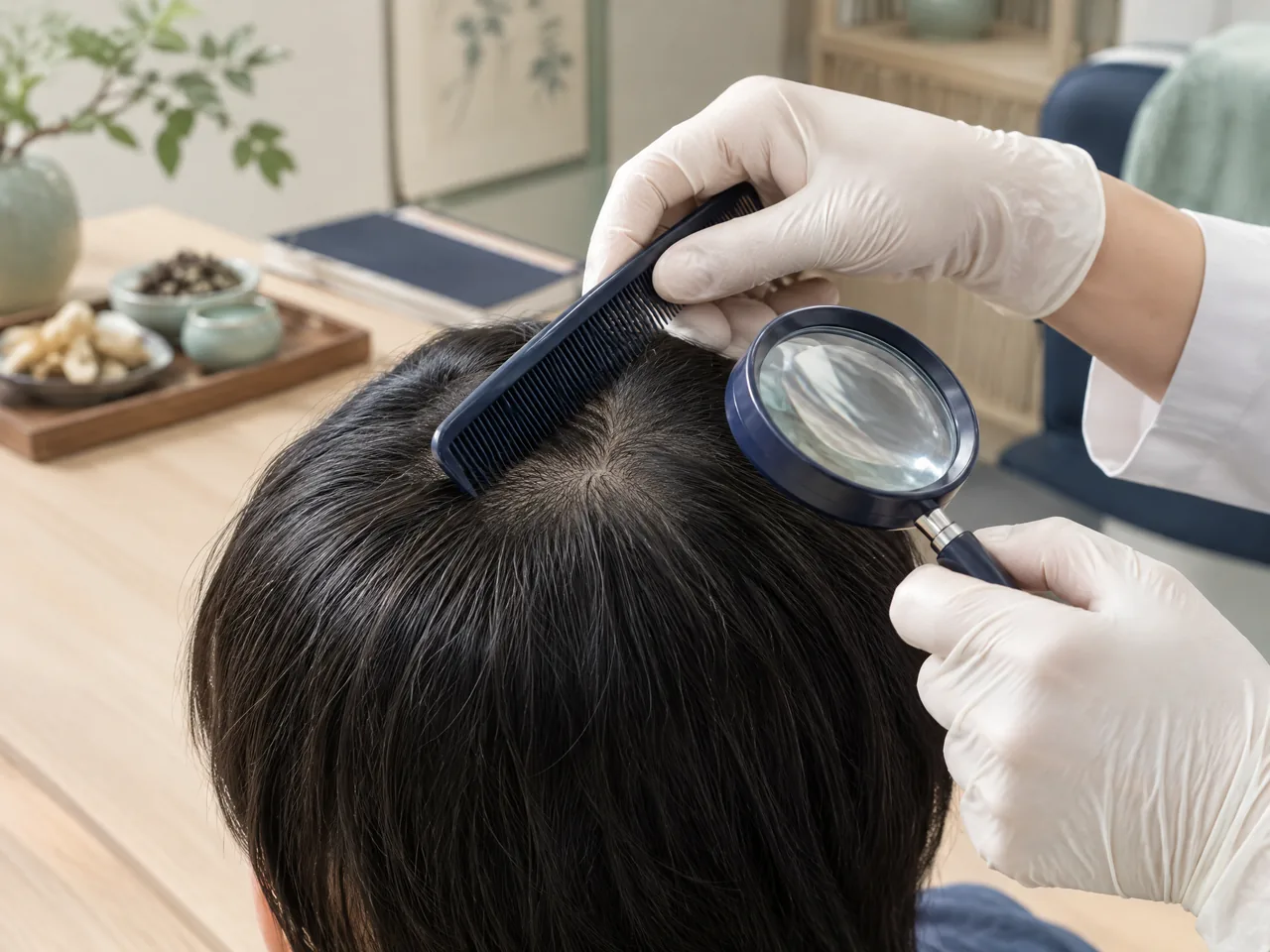
The assessment may involve looking carefully at the scalp and hair, asking about health and family history, and considering tests only when the clinical picture suggests they are useful. The AAD describes a history, inspection of the scalp and nails, and a gentle pull test as parts of assessment; blood testing or a scalp biopsy may be considered when disease, deficiency, hormone imbalance, or infection is suspected [3]. The decision is individual. A blood panel is not a universal answer to hair loss, and the absence of a test at the first visit does not mean the concern has been dismissed. For a later non-urgent enquiry, see the Kwun Tong Chinese medicine clinic or Chinese medicine clinic Prince Edward pages.
Is an Itchy Flaky Scalp With Hair Loss Serious Alongside Other Body Changes?
Hair and scalp changes are easier to assess when they are placed beside the rest of your health story. Mention fatigue, feeling unusually cold or hot, a change in weight, menstrual changes, altered appetite, skin or nail changes, fever or recent illness, and any new symptoms that appeared around the same time. These details do not establish a diagnosis, and you do not need to decide which one is relevant before the visit. They can help a clinician decide whether the loss is likely to need a broader medical review.
Also mention whether other hair-bearing areas are affected and whether anyone in the family has experienced a similar gradual pattern. The timing matters: ‘I noticed flakes after changing shampoo’ differs from ‘I developed a smooth patch, then the scalp became itchy.’ If a medicine was started, stopped, or changed, bring its name or a photo of the label rather than relying on memory. The NHS lists illness, stress, weight loss, iron deficiency, and cancer treatment among possible causes of temporary hair loss [2], which is one reason a full timeline is more helpful than one symptom alone.

Is an Itchy Flaky Scalp With Hair Loss Serious Enough to Need Tests?
Not everyone with hair loss needs a blood test, a swab, a hair examination, or a scalp biopsy. Testing is chosen to answer a clinical question after history and examination, not to create a standard package for every itchy scalp. The Centre for Health Protection says that a doctor may examine a hair sample or arrange investigations such as blood tests and tissue sampling to find the type and cause of baldness [1]. The word ‘may’ matters: the most appropriate next step depends on the pattern and the signs found.
You can make the testing discussion clearer by asking, ‘What are you trying to rule in or rule out with this test?’ and ‘How would the result change the next step?’ This is particularly useful if you have read online about iron, thyroid tests, hormones, vitamin tests, or biopsy and are wondering whether you should request them all. The related guide does hair loss need a blood test explains why assessment comes before a test list. Bring all supplements with you or photograph their labels, because they can be relevant to interpretation and safety.
Care and health guide
Hair and scalp care information
This directory brings together services, reading, and visit information related to hair and scalp care, to help you prepare questions for a consultation.
For questions about hair or scalp care, noting the everyday concerns and service questions you want to discuss can help prepare a consultation; Chinese medicine for hair loss is a relevant service or reading entry point.
People may have different priorities, and acupuncture Hong Kong offers related information to help you understand options and prepare questions.

Your questions, answered
Frequently asked questions
Is an itchy flaky scalp with hair loss serious if my thinning is gradual?
Gradual thinning is not automatically urgent, but it should not be dismissed if it continues, differs from your usual pattern, or is worrying you. Record where it began, how it has changed, family history, recent health events, medicines, and hair practices. A routine medical consultation can examine the scalp and decide whether the pattern needs further assessment.
Can dandruff or a dry scalp cause a smooth bald patch?
A smooth bald patch should not be attributed to dandruff or dryness without an examination. The appearance alone cannot confirm the cause. Arrange medical assessment, especially if the patch is new, enlarging, painful, scaly, or accompanied by changes to eyebrows, eyelashes, beard hair, or other areas.
When should I seek help for a red, itchy scalp with hair loss?
Seek prompt medical assessment when hair loss occurs with redness, pain, burning, heavy scale, crusting, discharge, or an abnormal-looking area of scalp. These signs can accompany inflammation, infection, or other scalp problems and are not reliably sorted by switching products at home. Describe the timing and take a clear photo if it does not delay care.
Will I definitely need a blood test or scalp biopsy?
No. A clinician decides whether tests are useful after asking about your history and examining the hair and scalp. Blood tests, examination of a hair sample, or a biopsy may be considered when they would help identify a suspected cause. Ask what each proposed test is intended to clarify and how it would guide the next step.
Sources and further information
- [1] [1] Hong Kong Centre for Health Protection — Men's Health Line: Alopecia
Referenced for: Supports general alopecia patterns, advice to seek medical input for continual loss or abnormal scalp skin, and clinician-directed investigations.
- [2] [2] NHS — Hair loss
Referenced for: Supports general causes and context for temporary and pattern hair loss, and the recommendation to see a GP when worried.
- [3] [3] American Academy of Dermatology — Hair loss: Diagnosis and treatment
Referenced for: Supports history-taking, scalp examination, possible testing, and the need to identify the cause before treatment decisions.