
TCM Lab · Health reading
When should I see a doctor for period pain? What is the difference between primary and secondary dysmenorrhea?
Published Updated
Period pain is common, but you do not have to guess whether a change is important. See a doctor when cramps are suddenly severe, become worse than your usual pattern, stop you from working, studying or sleeping, or do not settle with the measures that normally help. Heavier, irregular or between-period bleeding, pain with sex, urination or bowel movements, fever, a swollen abdomen, unintentional weight loss, or a possible pregnancy also need medical attention. Primary dysmenorrhea usually follows a familiar period-related pattern; secondary dysmenorrhea can reflect an underlying pelvic condition and deserves assessment rather than self-diagnosis.
Appointments are confirmed through WhatsApp. If you have language requirements, please mention them in your enquiry.
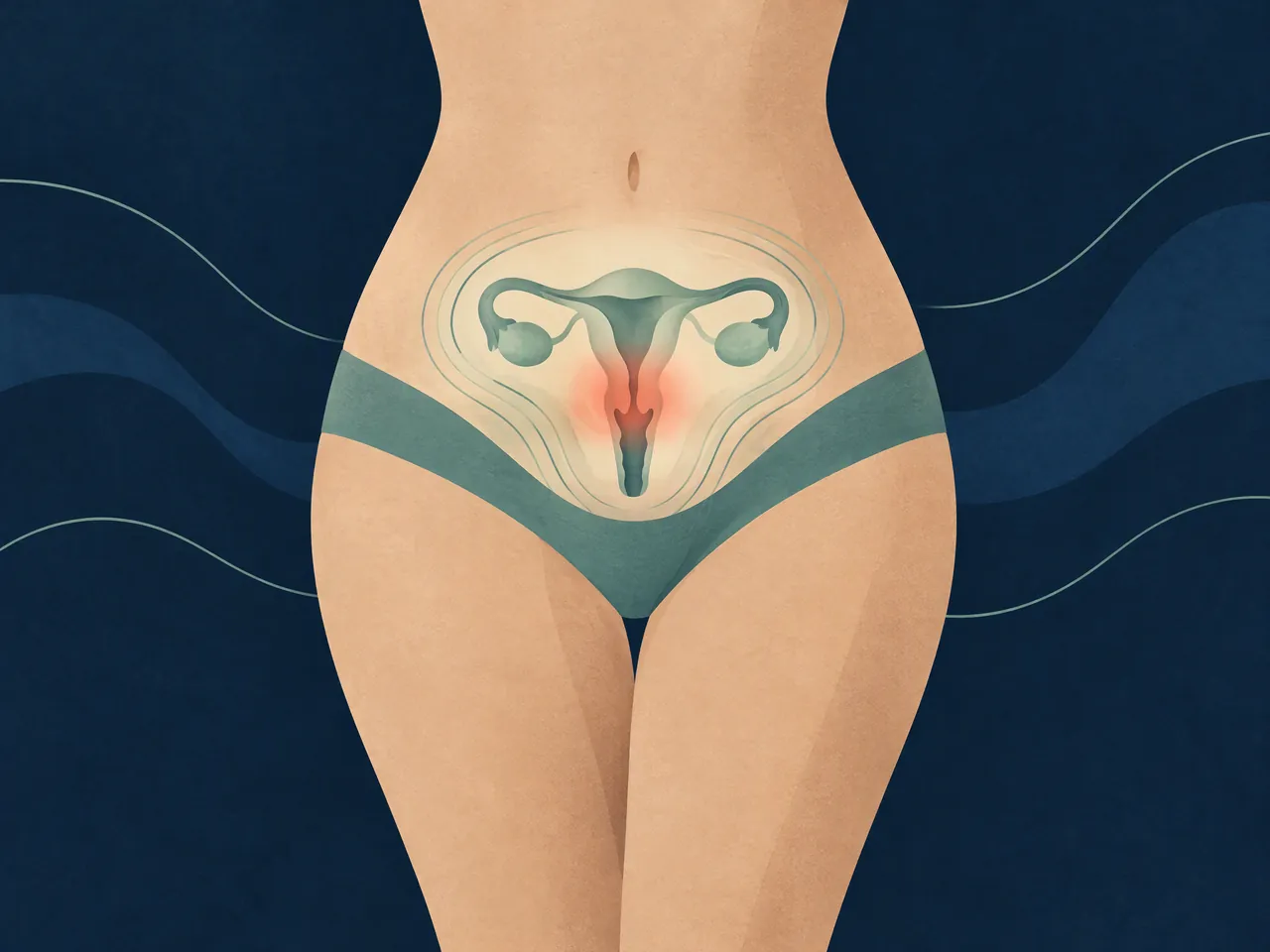
The short answer
See a doctor for period pain that is new, severe, worsening, longer-lasting, disruptive, or not relieved by your usual approach. Seek assessment too if bleeding becomes heavier or irregular, bleeding occurs between periods, or pain occurs with sex, urination or bowel movements. Primary dysmenorrhea is often cramping around a period without another pelvic disorder; secondary dysmenorrhea is pain linked to an underlying condition, so a changing pattern should be discussed with a clinician.
Transparent pricing
See the fees.
Choose your care.
Explore our complete official price list, including first-trial prices, regular prices, packages and branch-specific options.
Opening WhatsApp prepares an enquiry; it does not send a message, take payment or confirm an appointment. Suitability and individual arrangements are confirmed during consultation.
Pain care
All prices in HKDExtracorporeal shockwave treatment
Shockwave treatment for deep-tissue and fascial care. The Kwun Tong clinic offers the multi-area options shown below.
Priced by branch
Branch-specific pricing
Prince Edward: HK$250 per area
Kwun Tong: HK$250 for 1 area / HK$450 for 2 areas / HK$600 for 3 areas
Pain care (manual therapy)
Includes Chinese medicine musculoskeletal assessment, manual joint techniques and tui na.
HK$580 (single session)
Chinese medicine musculoskeletal assessment
Pain care (acupuncture and manual therapy)
Combines acupuncture and manual therapy.
HK$680 (single session)
Combined care
Hair and scalp
All prices in HKDScalp health and hair-loss management
Includes AI scalp analysis, deep scalp and follicle cleansing, and scalp oil-control care.
HK$380 (first trial)
Regular price: HK$680
- 6 sessions: HK$3,480 (HK$580 per session)
- 12 sessions: HK$5,760 (HK$480 per session)
- 20 sessions: HK$8,600 (HK$430 per session)
- 30 sessions: HK$11,400 (HK$380 per session)
Hair acupuncture and Chinese herbal medicine package
Includes scalp acupuncture and 3 days of Chinese herbal medicine that does not require decoction.
HK$580 (single session)
Registered Chinese Medicine Practitioner consultation
- 6 sessions: HK$3,180 (HK$530 per session)
- 12 sessions: HK$5,760 (HK$480 per session)
- 20 sessions: HK$8,600 (HK$430 per session)
- 30 sessions: HK$11,400 (HK$380 per session)
Combined hair and scalp treatment
Combines acupuncture and Chinese herbal medicine with salon-level scalp and follicle care. Packages include complimentary hair-care shampoo and serum.
HK$1,260 (single session)
Combined treatment
- 8 sessions: HK$8,640 (HK$1,080 per session)
- 16 sessions: HK$15,680 (HK$980 per session)
- 20 sessions: HK$18,600 (HK$930 per session)
- 30 sessions: HK$26,400 (HK$880 per session)
Weight management
All prices in HKDFull-body acupoint embedding for weight management
Includes full-body acupoint embedding. Packages include complimentary Chinese herbal medicine for weight management, with the number of included days scaled to the package. Embedding material and the individual treatment arrangement are confirmed during consultation; this is not a cosmetic thread lift.
HK$980 (single session)
No trial session
- 10 sessions: HK$7,800 (HK$780 per session)
- 20 sessions: HK$14,600 (HK$730 per session)
- 30 sessions: HK$20,400 (HK$680 per session)
Facial acupuncture
All prices in HKDFacial acupuncture (basic)
Includes facial acupuncture and meridian-based facial care, including care for facial puffiness.
HK$480 (first trial)
Regular price: HK$680
- 10 sessions: HK$5,200 (HK$520 per session)
- 20 sessions: HK$9,600 (HK$480 per session)
- 30 sessions: HK$13,500 (HK$450 per session)
Facial acupuncture (advanced)
Includes enhanced facial acupuncture with a specially formulated moisturising mask and serum.
HK$780 (first trial)
Regular price: HK$1,180
- 10 sessions: HK$9,000 (HK$900 per session)
- 20 sessions: HK$16,600 (HK$830 per session)
- 30 sessions: HK$23,400 (HK$780 per session)
Chinese medicine
All prices in HKDAcupuncture and Chinese herbal medicine package
Includes a Chinese medicine consultation with pulse assessment, body acupuncture and 3 days of Chinese herbal granules that do not require decoction.
HK$580 (single session)
Chinese medicine consultation with pulse assessment
When should I see a doctor for period pain? What is the difference between primary and secondary dysmenorrhea? Start with the pattern
The most useful starting point is not a single pain score but the whole pattern. Think back over several cycles: did cramps begin soon after periods started, do they appear at roughly the same point in each cycle, and do they ease as bleeding progresses? Or did pain first appear later, move beyond the first days of bleeding, or start changing year by year? A pattern does not diagnose a cause on its own. It does give a clinician a clearer account than simply saying that the pain is bad. This is also why a short diary is more helpful than relying on memory during an appointment.

When should I see a doctor for period pain? What is the difference between primary and secondary dysmenorrhea? Track timing and intensity
Dysmenorrhea is the medical term for painful menstruation. Primary dysmenorrhea refers to cramping pain before or during a period without a separate pelvic disorder causing it. It commonly begins not long after menstruation starts. ACOG explains that prostaglandins made in the uterine lining contribute to uterine contractions, which is why cramping often clusters around the beginning of bleeding and tends to lessen after the first days. [1] A familiar, period-bound pattern can fit primary dysmenorrhea, but it is still worth discussing if it is severe or repeatedly prevents normal activities.
Secondary dysmenorrhea means period pain caused by a disorder involving the reproductive organs or another relevant condition. It often begins later than primary dysmenorrhea, becomes worse over time, lasts longer than typical cramps, or begins days before a period and continues after it ends. Conditions that may be considered include endometriosis, adenomyosis and fibroids; pelvic infection or urinary and bowel conditions can also matter in the broader assessment. [1] These are possibilities, not conclusions to draw from an online checklist. The practical signal is a change in your personal pattern, particularly a pattern that is getting more intrusive.

When should I see a doctor for period pain? What is the difference between primary and secondary dysmenorrhea? Note changes in bleeding
Pain and bleeding should be written down together because the combination can be more informative than either symptom alone. Note whether bleeding seems much heavier than usual, whether your periods have become irregular, whether you see clots, and how often you need to change your usual period products. Include spotting or bleeding between periods. You do not need to estimate a precise volume to make the record useful. Plain comparisons such as “I used to change every few hours and now need to change far more often” can help communicate a real change without false precision.
Also note the calendar context. Write down the first day of bleeding, the day the pain begins, whether pain peaks before or during the period, and when it ends. If you use hormonal contraception, have recently started or changed it, or have an intrauterine device, include that information rather than assuming it explains every symptom. NHS guidance advises medical review when periods become more painful, heavier or irregular, or when bleeding happens between periods. [2] A diary can show whether a one-off difficult cycle has become a repeated trend.
Compare your options
| What you notice | Why it is useful to mention | What to record for the consultation |
|---|---|---|
| Pain starts just before or with bleeding and follows a familiar pattern | This can help describe a primary-dysmenorrhea-like pattern, while severity and impact still matter. | Start day, end day, location, and whether it eases after the first days of bleeding. |
| Pain begins later than before, lasts longer, or worsens over successive cycles | A changing pattern can lead a clinician to consider secondary causes. | When the change first appeared and whether pain continues after bleeding ends. |
| Bleeding is heavier, irregular, or occurs between periods | Bleeding changes can be relevant to the assessment rather than being treated as a separate detail. | Cycle dates, spotting, changes from your usual products, and clots if noticed. |
| Pain with sex, urination or bowel movements, or pain outside the period | Associated symptoms broaden the picture and are reasons to seek medical advice. | Exact activity, timing in the cycle, severity, and whether the symptom is new. |
| Usual relief no longer helps or normal activities are interrupted | The functional impact and response to previous measures help guide the conversation. | What you tried, the result, missed activities, sleep disruption, and any medication list. |
On smaller screens, scroll the table sideways to compare all columns.
When should I see a doctor for period pain? What is the difference between primary and secondary dysmenorrhea? Recognise reasons to seek assessment
It is reasonable to seek care before pain reaches a crisis. If the same monthly symptoms are making you cancel plans, miss school, lose sleep or repeatedly take time off work, the burden itself is worth discussing. Assessment is not a test of whether you are coping well enough. It is a chance to describe the pattern, rule in or out causes where appropriate, and talk through safe options. Bring any list of medicines, supplements or herbs you use, because that information helps the clinician consider the full picture.

When should I see a doctor for period pain? What is the difference between primary and secondary dysmenorrhea? When symptoms worsen
Arrange prompt medical advice when pelvic or period pain is severe or worse than usual and the pain relief that normally helps has not helped. [2] Do not wait for a future routine appointment if the pain feels suddenly different, is escalating quickly, or leaves you unable to manage ordinary activities. If there is a possibility of pregnancy, seek timely medical advice rather than assuming that bleeding and cramping are an ordinary period. Fever or feeling unwell alongside pelvic pain is another reason not to treat the situation as a routine monthly symptom.
Worsening does not only mean a higher number on a pain scale. It can mean cramps now start several days earlier, last after bleeding finishes, return between periods, or respond differently to measures that were previously enough. Write down what you tried—such as heat, rest, gentle movement or an over-the-counter medicine—and what happened. This is not a request to increase medication on your own. It helps a doctor understand whether usual self-care has become inadequate and whether further examination, imaging or referral may be appropriate. ACOG notes that ultrasound may be considered when pain is not relieved with medication. [1]

When should I see a doctor for period pain? What is the difference between primary and secondary dysmenorrhea? When associated symptoms matter
Symptoms outside the usual cramp pattern are especially useful to report. Pain during sex, when passing urine, or during bowel movements; a noticeable change in bowel or bladder habits; bleeding between periods; abdominal swelling; loss of appetite; and unintentional weight loss are among the features NHS lists as reasons to see a doctor. [2] These symptoms do not identify one specific condition, and they should not be used to alarm yourself. They do make a more complete assessment sensible, because a clinician needs to consider the pelvis and the surrounding systems rather than only the first day of a period.
Be direct about symptoms that feel embarrassing or hard to describe. For example, “deep pain during sex only near my period,” “bowel pain on the second day of bleeding,” or “spotting most months after my period ends” gives more useful clinical information than a general statement that you feel unwell. Mention nausea, vomiting, diarrhoea, headache or dizziness if they occur with severe pain too; these can accompany dysmenorrhea. [1] If you have previously been told that painful menstruation is normal, a changing or disabling pattern is still worth raising again.
When should I see a doctor for period pain? What is the difference between primary and secondary dysmenorrhea? Consider supportive care carefully
Supportive care can sit alongside, not ahead of, appropriate assessment. A warm bath, a wrapped heat pad, gentle exercise and rest can be useful comforts for some people with a familiar cramping pattern; NHS includes these among measures that may ease period pain. [2] What is safe or suitable varies with your health history and other medicines. If you use pain medicine, follow the product directions and ask a pharmacist or clinician when you are unsure, especially if you have other conditions, take prescription medicines, are trying to conceive or could be pregnant.

When should I see a doctor for period pain? What is the difference between primary and secondary dysmenorrhea? The role of Chinese medicine
Some people explore Chinese medicine because they want to discuss period pain in relation to sleep, stress, digestion, energy and the rhythm of the cycle. Those observations can be valuable conversation points, but traditional terms such as “cold uterus” or “blood stasis” are not a substitute for a gynaecological diagnosis. A practitioner should know about diagnosed conditions, ultrasound or other test results, all prescribed and over-the-counter medicines, supplements, allergies, contraception and any chance of pregnancy. This protects against treating a label while missing a medical issue that needs another route of care.
Acupuncture or Chinese herbal medicine should be discussed as individual supportive options, not as a promise to remove pain or replace a doctor’s treatment plan. ACOG says acupuncture and acupressure may be useful for painful periods, while the cause of persistent or changing pain still needs attention. [1] For a wider introduction to questions people raise about period pain Chinese medicine, start with the topic guide. If acupuncture is specifically on your mind, read Can acupuncture help with period pain? alongside a medical assessment when warning signs are present.

When should I see a doctor for period pain? What is the difference between primary and secondary dysmenorrhea? Preparing for a consultation
Bring a simple cycle diary, even if it covers only the last two or three cycles. Include dates, pain location, intensity in your own words, bleeding changes, clots if noticed, symptoms between periods, effects on work or study, and relief measures tried. Add a current medication list and relevant medical or surgical history. It may help to write two questions in advance: “What causes should be considered in my pattern?” and “What changes should make me seek help sooner?” A clear account helps the appointment focus on your actual experience rather than on a generic definition of menstrual cramps.
Choose the next step based on the issue you need addressed. For a plain-language overview, our article on painful periods may help you organise your questions. If you have been told that an underlying cause is possible, the guide to secondary dysmenorrhea explains why follow-up matters. If you want to enquire about a Chinese medicine consultation after considering medical assessment, TCM Lab has a Kwun Tong Chinese medicine clinic and a Chinese medicine clinic Prince Edward. Tell the team about your symptoms and language needs when you make an enquiry.
Care and health guide
Pain-care information
This directory brings together services, reading, and visit information related to pain care, to help you prepare questions for a consultation.
When pain care affects your day, noting when it occurs, its relation to activity, and what you have already tried can help prepare a consultation; Chinese medicine pain management Hong Kong is a relevant service or reading entry point.
Individual circumstances differ, and acupuncture Hong Kong offers related information to help you understand options and prepare questions.


Your questions, answered
Frequently asked questions
How do I know whether my period pain is primary or secondary dysmenorrhea?
You cannot confirm the type by pain intensity alone. Primary dysmenorrhea commonly begins soon after periods start and is cramping around the period. Secondary dysmenorrhea is caused by an underlying condition and often starts later, worsens over time, lasts longer or occurs with other changes. A medical history and, when appropriate, examination or tests determine the next steps. [1]
Should I see a doctor if painkillers used to work but no longer do?
Yes. NHS advises urgent medical advice for severe or worse-than-usual pelvic or period pain when painkillers have not helped. Record what you took and when, but do not simply increase or combine medicines without advice from a pharmacist or clinician. [2]
Can I wait and see if pain happens only during my period?
A stable, manageable pattern can be discussed at a routine appointment. Do not simply wait if pain is severe, worsening, disruptive, or accompanied by heavier or irregular periods, bleeding between periods, pain with sex, urination or bowel movements, fever, swelling, weight loss or a possible pregnancy. [2]
What information should I share with a Chinese medicine practitioner?
Share your cycle diary, any diagnosed gynaecological condition, test results you have, medicines, supplements, allergies, contraception and pregnancy possibility. That information is important if acupuncture or herbal medicine is being considered as supportive care. It does not replace medical assessment for a new or changing pain pattern.
Sources and further information
- [1] [1] American College of Obstetricians and Gynecologists — Dysmenorrhea: Painful Periods
Referenced for: Primary and secondary dysmenorrhea definitions, potential causes, associated symptoms, evaluation context, and discussion of acupuncture or acupressure.
- [2] [2] NHS — Period pain
Referenced for: When to seek urgent or non-urgent medical advice, associated symptoms, common causes, and general self-care context.