
TCM Lab · Health reading
What Is Paediatric Tui Na, Is Paediatric Tui Na Suitable for My Child, and What Happens During a Paediatric Tui Na Session?
Published Updated
When a child is unsettled, has a recurring everyday concern, or simply finds unfamiliar care worrying, a parent usually wants to know what the appointment will actually feel like before deciding anything. Paediatric Tui Na is a child-focused, hands-on Chinese medicine approach discussed through the child’s circumstances rather than through a one-size-fits-all promise. This guide explains what to bring to the conversation, how to judge whether a consultation is the right next step, and how a calm, parent-present session can be discussed at TCM Lab in Hong Kong.
Appointments are confirmed through WhatsApp. If you have language requirements, please mention them in your enquiry.

The short answer
Paediatric Tui Na is a child-focused hands-on approach within Chinese medicine, commonly discussed with a parent before any care proceeds. Whether it is suitable for your child depends on the child’s age, current concern, health history, comfort and the practitioner’s assessment. A first conversation normally clarifies why you are attending, relevant symptoms and medication, what touch-based approach may be considered, how your child can be supported, and when medical assessment should come first.
Transparent pricing
See the fees.
Choose your care.
Explore our complete official price list, including first-trial prices, regular prices, packages and branch-specific options.
Opening WhatsApp prepares an enquiry; it does not send a message, take payment or confirm an appointment. Suitability and individual arrangements are confirmed during consultation.
Chinese medicine
All prices in HKDAcupuncture and Chinese herbal medicine package
Includes a Chinese medicine consultation with pulse assessment, body acupuncture and 3 days of Chinese herbal granules that do not require decoction.
HK$580 (single session)
Chinese medicine consultation with pulse assessment
Hair and scalp
All prices in HKDScalp health and hair-loss management
Includes AI scalp analysis, deep scalp and follicle cleansing, and scalp oil-control care.
HK$380 (first trial)
Regular price: HK$680
- 6 sessions: HK$3,480 (HK$580 per session)
- 12 sessions: HK$5,760 (HK$480 per session)
- 20 sessions: HK$8,600 (HK$430 per session)
- 30 sessions: HK$11,400 (HK$380 per session)
Hair acupuncture and Chinese herbal medicine package
Includes scalp acupuncture and 3 days of Chinese herbal medicine that does not require decoction.
HK$580 (single session)
Registered Chinese Medicine Practitioner consultation
- 6 sessions: HK$3,180 (HK$530 per session)
- 12 sessions: HK$5,760 (HK$480 per session)
- 20 sessions: HK$8,600 (HK$430 per session)
- 30 sessions: HK$11,400 (HK$380 per session)
Combined hair and scalp treatment
Combines acupuncture and Chinese herbal medicine with salon-level scalp and follicle care. Packages include complimentary hair-care shampoo and serum.
HK$1,260 (single session)
Combined treatment
- 8 sessions: HK$8,640 (HK$1,080 per session)
- 16 sessions: HK$15,680 (HK$980 per session)
- 20 sessions: HK$18,600 (HK$930 per session)
- 30 sessions: HK$26,400 (HK$880 per session)
Weight management
All prices in HKDFull-body acupoint embedding for weight management
Includes full-body acupoint embedding. Packages include complimentary Chinese herbal medicine for weight management, with the number of included days scaled to the package. Embedding material and the individual treatment arrangement are confirmed during consultation; this is not a cosmetic thread lift.
HK$980 (single session)
No trial session
- 10 sessions: HK$7,800 (HK$780 per session)
- 20 sessions: HK$14,600 (HK$730 per session)
- 30 sessions: HK$20,400 (HK$680 per session)
Facial acupuncture
All prices in HKDFacial acupuncture (basic)
Includes facial acupuncture and meridian-based facial care, including care for facial puffiness.
HK$480 (first trial)
Regular price: HK$680
- 10 sessions: HK$5,200 (HK$520 per session)
- 20 sessions: HK$9,600 (HK$480 per session)
- 30 sessions: HK$13,500 (HK$450 per session)
Facial acupuncture (advanced)
Includes enhanced facial acupuncture with a specially formulated moisturising mask and serum.
HK$780 (first trial)
Regular price: HK$1,180
- 10 sessions: HK$9,000 (HK$900 per session)
- 20 sessions: HK$16,600 (HK$830 per session)
- 30 sessions: HK$23,400 (HK$780 per session)
Pain care
All prices in HKDExtracorporeal shockwave treatment
Shockwave treatment for deep-tissue and fascial care. The Kwun Tong clinic offers the multi-area options shown below.
Priced by branch
Branch-specific pricing
Prince Edward: HK$250 per area
Kwun Tong: HK$250 for 1 area / HK$450 for 2 areas / HK$600 for 3 areas
Pain care (manual therapy)
Includes Chinese medicine musculoskeletal assessment, manual joint techniques and tui na.
HK$580 (single session)
Chinese medicine musculoskeletal assessment
Pain care (acupuncture and manual therapy)
Combines acupuncture and manual therapy.
HK$680 (single session)
Combined care
What Is Paediatric Tui Na, Is Paediatric Tui Na Suitable for My Child, and What Happens During a Paediatric Tui Na Session in a First Conversation
In plain terms, paediatric Tui Na refers to a child-focused form of Tui Na: a hands-on approach that may use gentle touch and pressure in a Chinese medicine consultation. It is not a diagnosis, and it does not tell you in advance which techniques, areas of the body, or number of visits would be discussed for an individual child. That distinction matters when a parent is searching for a clear answer rather than a broad list of promised results. Traditional Chinese medicine brings together different physical approaches and products, and authoritative guidance advises discussing complementary care with a child’s usual health-care provider rather than using it to replace or delay needed conventional care [1].
A useful first enquiry starts with the child, not with a label. You might describe a pattern that is affecting the household: a toddler who is hard to settle at bedtime, a school-age child whose routine has become uncomfortable, or a child who seems anxious about bodywork after a difficult healthcare experience. Explain what you have noticed, when it occurs, what makes it better or worse, and what you have already tried. One Hong Kong paediatric Tui Na service page likewise describes recording a child’s history before a session [3]. This helps turn the question ‘what is paediatric tui na?’ into a practical discussion of whether an in-person consultation is sensible for your family.
If you are comparing wording online, you may see ‘Tui Na’, ‘Tuina’, ‘paediatric Tui Na’, or child tui na massage. The language can vary, but it should not obscure the more important questions: who will assess the child, what information is needed, what touch may be proposed, and how a parent can raise a concern. A familiar term is not a guarantee that every clinic uses the same process.

What Is Paediatric Tui Na for families, Is Paediatric Tui Na Suitable for My Child, and What Happens During a Paediatric Tui Na Session before scheduling
Before scheduling, separate three decisions that can otherwise get tangled together. First, decide whether your child needs prompt medical advice because of the current symptoms. Second, decide whether a non-urgent Chinese medicine consultation is something you want to explore. Third, decide whether the practical setting is likely to work for your child: travel, nap time, sensory needs, a parent being present, and the child’s response to touch. A consultation can answer the latter two questions; it should not be used to wait out a problem that needs urgent assessment.
The first decision is especially important with young children because their condition can change quickly. Breathing difficulty, blue, grey or unusually pale colour, a child who is difficult to wake, a seizure, or markedly reduced drinking and urination are examples of warning signs that call for urgent medical help, not a routine Tui Na appointment [2]. If you are worried that something is seriously wrong, seek emergency care locally. For a non-urgent concern, a concise timeline, current medicine list and a note of any medical advice already received make the conversation more useful.
What Is Paediatric Tui Na in plain terms, Is Paediatric Tui Na Suitable for My Child, and What Happens During a Paediatric Tui Na Session explained in consultation
In a first consultation, paediatric Tui Na should be explained as a proposed approach, not presented as an automatic answer to every childhood complaint. The practitioner may ask about the main concern, onset, daily pattern, sleep, appetite, elimination, activities and relevant medical history. The exact questions will vary. Parents should also volunteer injuries, skin changes, pain on touch, recent illness, operations, regular medicine, supplements and any previous reactions to treatment or massage. That information lets the discussion stay specific rather than relying on a generic online description.
For an overview of the service subject before contacting the clinic, see paediatric tui na Hong Kong. The page is a starting point, not a substitute for sharing the child’s own situation. In particular, do not infer a fixed age range, session length, response or treatment course from a general description. Those particulars need to be discussed for the child and the appointment requested.
Compare your options
| Moment | What to prepare or ask | Why it helps the conversation |
|---|---|---|
| Before contacting the clinic | Write a short timeline, including what changed, what affects the concern and any care already sought. | Gives the practitioner a clear starting point without asking you to self-diagnose. |
| When sharing health information | List relevant diagnoses, medicines, supplements, allergies, injuries, recent procedures and sensitivities to touch. | Helps the discussion stay tailored to the child and flags information that may need medical follow-up. |
| When discussing the session | Ask how touch may be introduced, whether you can remain with the child, and how a pause or stop will be handled. | Sets realistic expectations and supports the child’s comfort and participation. |
| After the conversation | Confirm the next step, questions to take to the child’s usual clinician, and which changes need urgent medical help. | Keeps a complementary-care enquiry separate from decisions that require prompt medical assessment. |
On smaller screens, scroll the table sideways to compare all columns.
Is Paediatric Tui Na Suitable for My Child, What Is Paediatric Tui Na, and What Happens During a Paediatric Tui Na Session when considering options
The sensible answer to ‘is paediatric tui na suitable for my child?’ is not a simple yes or no from a webpage. Start with the urgency and nature of the concern. A child with new, severe, worsening or alarming symptoms needs appropriate medical evaluation. For an ongoing, non-urgent concern, a Chinese medicine consultation may be something a family chooses to discuss alongside—not instead of—the child’s usual care. Bringing a clear account of what has happened helps the practitioner explain whether a hands-on session is appropriate to consider on that day.

It is also reasonable to compare approaches without treating them as rivals. A visit to your GP, paediatrician or other health professional may be the priority when diagnosis, testing, medication or urgent treatment is needed. A parent may separately enquire about paediatric Tui Na to understand a complementary Chinese medicine approach. The important thing is that all relevant providers receive an accurate picture of medicines, supplements and other care. NCCIH similarly advises families considering TCM for a child to consult the child’s health-care provider and communicate about complementary approaches [1].
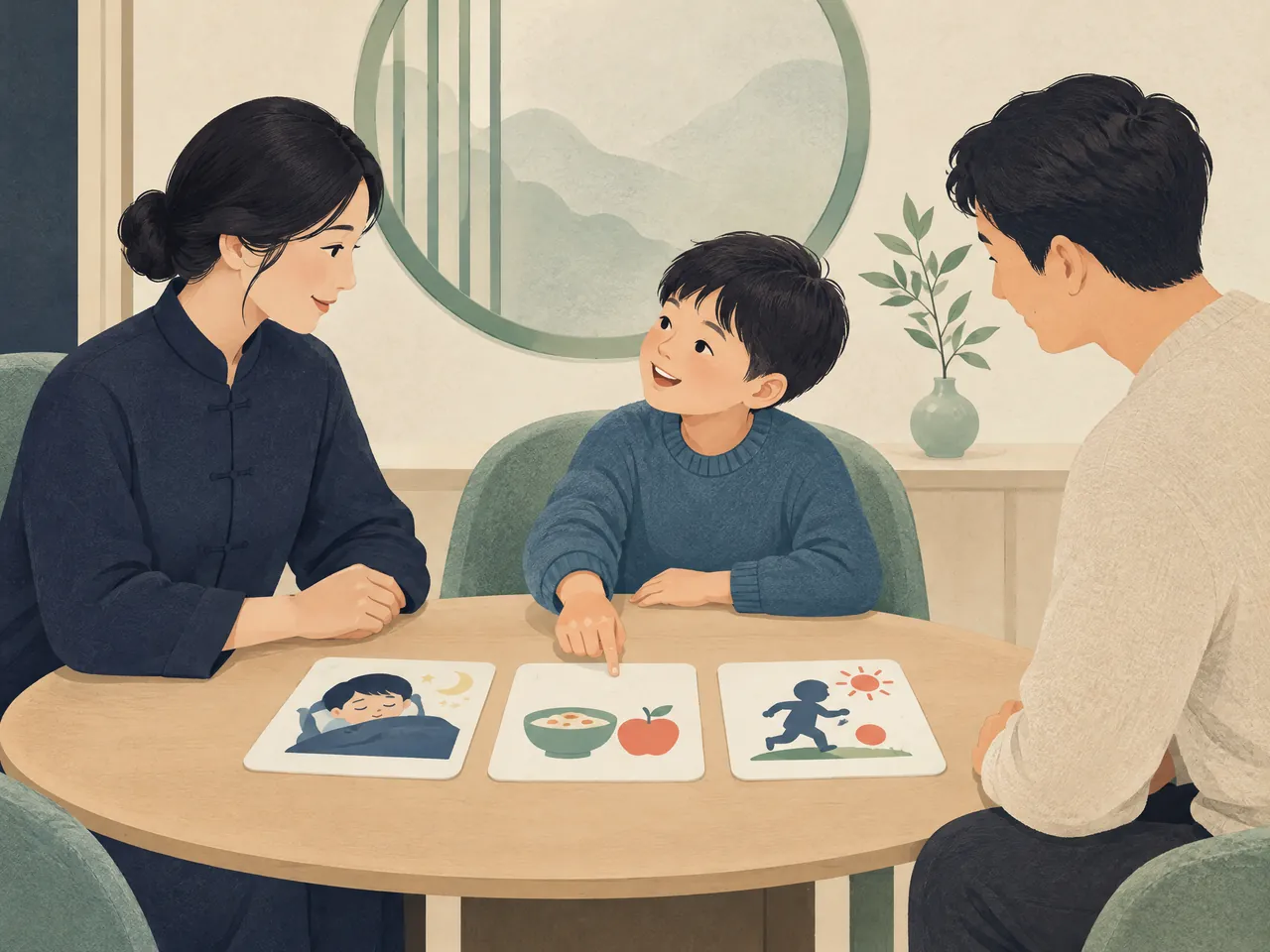
Is Paediatric Tui Na Suitable for My Child with current concerns, What Is Paediatric Tui Na, and What Happens During a Paediatric Tui Na Session discussed with a parent
Use the current concern to guide your questions. If the issue is mainly a change from your child’s normal routine, say when it started and whether it is stable, improving or worsening. If discomfort affects school, play, eating, sleep or mood, describe the effect rather than just naming a body area. If another clinician has already assessed the child, say what advice was given and whether there are follow-up plans. This background helps distinguish an exploratory consultation from a situation that needs another route of care first.
A parent can ask: What information do you need before deciding whether to proceed? How would you introduce the proposed touch? Which areas might be discussed, and how will my child’s comfort be checked? Can we pause or stop? What should I do if the child’s symptoms change before the appointment? These questions invite a concrete answer. They are more helpful than asking for a guarantee, because no responsible practitioner can predict an individual child’s experience or outcome from a brief message.

Is Paediatric Tui Na Suitable for My Child after questions, What Is Paediatric Tui Na, and What Happens During a Paediatric Tui Na Session outlined step by step
For logistics, use how to book paediatric tui na for a child rather than assuming that a slot is automatically confirmed. An enquiry can include the child’s age, general reason for attending, preferred location, availability and any access or language needs you would like the clinic to consider. TCM Lab has consultation locations at Prince Edward and Kwun Tong; the clinic can confirm the suitable appointment arrangement by WhatsApp at +852 6940 5663.
If cost is part of the family decision, ask about the relevant service rather than relying on a search result or an unrelated adult treatment. The Chinese medicine clinic price list Hong Kong is a useful place to check published information, while the booking conversation can clarify what is appropriate to ask about for your child. Keeping practical questions separate from clinical promises makes the decision calmer and more transparent.
What Happens During a Paediatric Tui Na Session, What Is Paediatric Tui Na, and Is Paediatric Tui Na Suitable for My Child across a typical appointment
A typical appointment should feel like a sequence of small, understandable steps rather than a child being hurried into an unfamiliar procedure. It normally begins with a parent-led conversation: why you came, what has changed, relevant health information and what you hope to discuss. The child can be included in an age-appropriate way—by being told who is in the room, what will happen first, and that they can show discomfort or ask for a pause. A parent should feel able to speak up if the explanation does not match what they expected.
Only after that discussion can the practitioner explain whether a Tui Na approach may be considered and how it may be introduced. The explanation should cover the areas to be approached, the nature of contact in simple language and how the child’s comfort will be monitored. There is no need for a family to accept a plan because they have already travelled to the clinic. Consent is an ongoing part of a child-focused encounter: ask a question, check the child’s response, pause if needed, and decide together whether it is appropriate to continue.

What Happens During a Paediatric Tui Na Session from welcome to wrap-up, What Is Paediatric Tui Na, and Is Paediatric Tui Na Suitable for My Child considered throughout
The welcome sets the tone. Arriving a little early can give a child time to look around, use the toilet, have a drink if appropriate and settle beside their parent. Bring a comfort item if it helps, and choose clothing that is easy for the child to wear comfortably. Tell the practitioner at the start if the child is tired, hungry, unwell, overwhelmed or reluctant. Those are not minor inconveniences; they can change whether it is sensible to proceed or to reschedule.
During discussion or any hands-on part, watch your child as well as listening to the explanation. A relaxed child may still change their mind. A quieter child may communicate discomfort by stiffening, avoiding eye contact, pulling away or becoming tearful. The parent’s role is not to persuade the child to endure an experience; it is to share what the child’s signals usually mean and to ask for a pause whenever needed. That approach respects both the child’s participation and the purpose of the consultation.
When choosing where to attend, practical familiarity can help. Families who prefer the east Kowloon setting can review the Kwun Tong Chinese medicine clinic; those travelling on the Kowloon side can review the Chinese medicine clinic Prince Edward. Location pages help with travel planning, while appointment availability and the right arrangement for your child still need confirmation.

What Happens During a Paediatric Tui Na Session with time for questions, What Is Paediatric Tui Na, and Is Paediatric Tui Na Suitable for My Child addressed clearly
A thoughtful consultation also acknowledges limits. A hands-on Chinese medicine appointment does not diagnose every cause of a symptom and should not postpone emergency or routine medical care that is needed. Keep looking at the whole child, including new symptoms and changes in alertness, breathing, drinking or behaviour. If a concern becomes acute, use appropriate local medical services rather than waiting for a scheduled appointment. This is a safety decision, not a judgment on the value of asking about Tui Na.
If you would like to talk through the practical fit, send TCM Lab a WhatsApp message at +852 6940 5663. State that the enquiry is for a child, summarise the non-urgent concern without assuming a diagnosis, and mention your preferred location. The clinic can discuss availability and what information will be helpful for the first conversation. A measured enquiry gives you room to decide whether paediatric Tui Na is a suitable option to explore for your child.
Care and health guide
Pain-care information
This directory brings together services, reading, and visit information related to pain care, to help you prepare questions for a consultation.
When pain care affects your day, noting when it occurs, its relation to activity, and what you have already tried can help prepare a consultation; Chinese medicine pain management Hong Kong is a relevant service or reading entry point.
Individual circumstances differ, and acupuncture Hong Kong offers related information to help you understand options and prepare questions.


Your questions, answered
Frequently asked questions
What is paediatric Tui Na?
Paediatric Tui Na is a child-focused form of Tui Na discussed in a Chinese medicine consultation. It is a hands-on approach rather than a single standard treatment. The practitioner should consider the child’s current concern, health history, comfort with touch and the parent’s questions before deciding whether and how to proceed.
Is paediatric Tui Na suitable for my child?
That cannot be decided from a webpage or a general age label. Suitability depends on the child’s present condition, medical history, the nature and urgency of the concern, willingness to participate and an individual consultation. If symptoms are severe, new or worsening, or you are worried your child is seriously unwell, seek appropriate medical care first.
What happens during a paediatric Tui Na session?
A typical session begins with a parent-led conversation about the child and the reason for attending. The practitioner can explain the proposed approach, invite questions and check the child’s comfort before any hands-on part is considered. The parent should be able to ask for a pause or stop, and the wrap-up should clarify the next practical step.
What should I bring or tell the practitioner?
Bring or message a short symptom timeline, relevant diagnoses, medicines or supplements, allergies, recent injuries or procedures, and details of any medical advice already received. Also mention sensitivities to touch, communication needs, a comfort item and anything that helps your child settle. These details are more useful than trying to choose a technique yourself.
Sources and further information
- [1] [1] National Center for Complementary and Integrative Health — Traditional Chinese Medicine: What You Need To Know
Referenced for: Supports the cautious context that TCM includes varied approaches, that evidence differs by approach, and that parents should discuss complementary care for a child with the child’s health-care provider rather than delay needed conventional care.
- [2] [2] NHS — When to get urgent medical help for babies and children under 5
Referenced for: Supports the urgent-care signposting for serious warning signs such as breathing difficulty, altered colour, difficulty waking, seizures and significant changes in drinking or urination. Local emergency services should be used in Hong Kong.
- [3] [3] Eu Yan Sang Hong Kong — Paediatric Tui Na
Referenced for: Supports the use of the term Paediatric Tui Na and that child-focused services may include a history discussion before a session. It does not support claims about TCM Lab’s availability, ages, treatment duration or clinical outcomes.