
TCM Lab · Health reading
Knee Pain When to Seek Medical Help: A Practical Guide
Published Updated
Knee pain after a walk, a stair twist, or changed training can be unsettling. The key question is whether the knee is safe to manage at home today. Seek urgent medical advice if you cannot bear weight or move the knee, if it is badly swollen or misshapen, if it locks or gives way, or if redness and heat occur with a high temperature or shivering. [1] Without those signs, activity adjustment and gentle movement may be reasonable while you watch for improvement.
Appointments are confirmed through WhatsApp. If you have language requirements, please mention them in your enquiry.
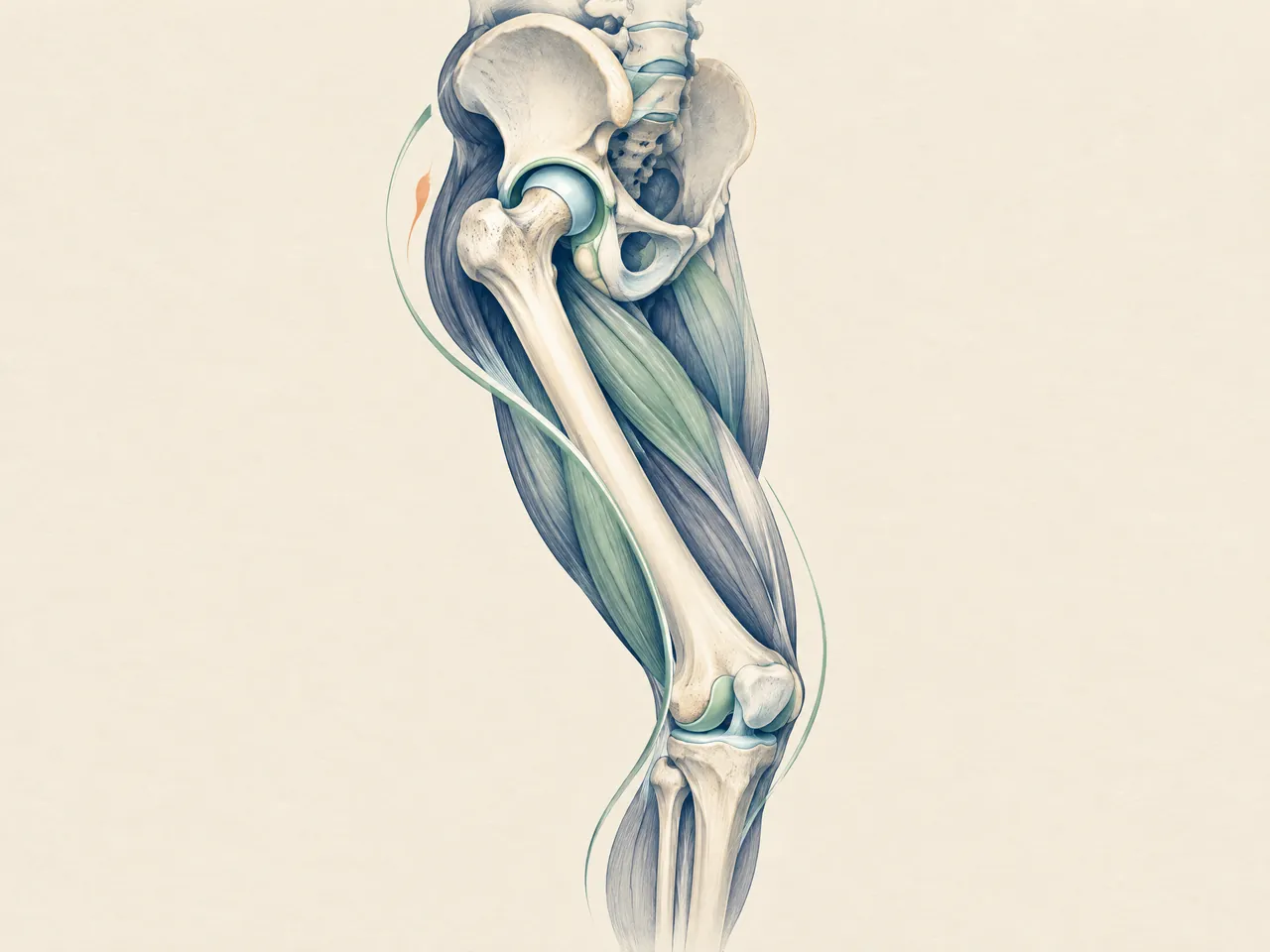
The short answer
Seek urgent medical advice for knee pain after significant trauma, an obvious change in shape, inability to put weight through the leg, inability to move the knee, locking or giving way, or a hot red swollen knee with fever or chills. [1] For a milder new problem without these signs, reduce the activity that aggravates it, keep the knee moving gently within comfort, and arrange assessment if it is worsening, affects daily function, or does not improve over the following weeks. [1] [2]
Transparent pricing
See the fees.
Choose your care.
Explore our complete official price list, including first-trial prices, regular prices, packages and branch-specific options.
Opening WhatsApp prepares an enquiry; it does not send a message, take payment or confirm an appointment. Suitability and individual arrangements are confirmed during consultation.
Pain care
All prices in HKDExtracorporeal shockwave treatment
Shockwave treatment for deep-tissue and fascial care. The Kwun Tong clinic offers the multi-area options shown below.
Priced by branch
Branch-specific pricing
Prince Edward: HK$250 per area
Kwun Tong: HK$250 for 1 area / HK$450 for 2 areas / HK$600 for 3 areas
Pain care (manual therapy)
Includes Chinese medicine musculoskeletal assessment, manual joint techniques and tui na.
HK$580 (single session)
Chinese medicine musculoskeletal assessment
Pain care (acupuncture and manual therapy)
Combines acupuncture and manual therapy.
HK$680 (single session)
Combined care
Hair and scalp
All prices in HKDScalp health and hair-loss management
Includes AI scalp analysis, deep scalp and follicle cleansing, and scalp oil-control care.
HK$380 (first trial)
Regular price: HK$680
- 6 sessions: HK$3,480 (HK$580 per session)
- 12 sessions: HK$5,760 (HK$480 per session)
- 20 sessions: HK$8,600 (HK$430 per session)
- 30 sessions: HK$11,400 (HK$380 per session)
Hair acupuncture and Chinese herbal medicine package
Includes scalp acupuncture and 3 days of Chinese herbal medicine that does not require decoction.
HK$580 (single session)
Registered Chinese Medicine Practitioner consultation
- 6 sessions: HK$3,180 (HK$530 per session)
- 12 sessions: HK$5,760 (HK$480 per session)
- 20 sessions: HK$8,600 (HK$430 per session)
- 30 sessions: HK$11,400 (HK$380 per session)
Combined hair and scalp treatment
Combines acupuncture and Chinese herbal medicine with salon-level scalp and follicle care. Packages include complimentary hair-care shampoo and serum.
HK$1,260 (single session)
Combined treatment
- 8 sessions: HK$8,640 (HK$1,080 per session)
- 16 sessions: HK$15,680 (HK$980 per session)
- 20 sessions: HK$18,600 (HK$930 per session)
- 30 sessions: HK$26,400 (HK$880 per session)
Weight management
All prices in HKDFull-body acupoint embedding for weight management
Includes full-body acupoint embedding. Packages include complimentary Chinese herbal medicine for weight management, with the number of included days scaled to the package. Embedding material and the individual treatment arrangement are confirmed during consultation; this is not a cosmetic thread lift.
HK$980 (single session)
No trial session
- 10 sessions: HK$7,800 (HK$780 per session)
- 20 sessions: HK$14,600 (HK$730 per session)
- 30 sessions: HK$20,400 (HK$680 per session)
Facial acupuncture
All prices in HKDFacial acupuncture (basic)
Includes facial acupuncture and meridian-based facial care, including care for facial puffiness.
HK$480 (first trial)
Regular price: HK$680
- 10 sessions: HK$5,200 (HK$520 per session)
- 20 sessions: HK$9,600 (HK$480 per session)
- 30 sessions: HK$13,500 (HK$450 per session)
Facial acupuncture (advanced)
Includes enhanced facial acupuncture with a specially formulated moisturising mask and serum.
HK$780 (first trial)
Regular price: HK$1,180
- 10 sessions: HK$9,000 (HK$900 per session)
- 20 sessions: HK$16,600 (HK$830 per session)
- 30 sessions: HK$23,400 (HK$780 per session)
Chinese medicine
All prices in HKDAcupuncture and Chinese herbal medicine package
Includes a Chinese medicine consultation with pulse assessment, body acupuncture and 3 days of Chinese herbal granules that do not require decoction.
HK$580 (single session)
Chinese medicine consultation with pulse assessment
Knee Pain When to Seek Medical Help: Start With Safety
Begin with function, not only a pain score. A knee can hurt yet still bend, straighten and support a careful walk. In contrast, pain may seem less dramatic but the person cannot take a step, the joint buckles, or it feels physically stuck. Knee pain has many possible causes, including sprain, tendon irritation, ligament or meniscus injury, osteoarthritis, bursitis, gout, and infection. Similar symptoms overlap, so an online description cannot identify the structure involved. [1]
The first task is to separate a possible urgent problem from a mild one. Significant new trauma, a changed shape, immediate major swelling after a twist, inability to put weight through the leg, or inability to move the knee require urgent medical advice. A very painful or badly swollen knee, or one that is hot and red while you have a high temperature, chills, or shivering, also needs urgent attention. Infection is one concern clinicians must exclude. [1] [2]
The absence of a red flag is not a diagnosis. It only means cautious observation may be reasonable when symptoms are mild and controllable. Pause the sport, deep squat, long standing period, or repeated stairs that clearly flare the knee. Then use knee pain self-care alongside a plan to seek assessment if the pattern changes.
Knee Pain When to Seek Medical Help: Check Weight-Bearing and Movement
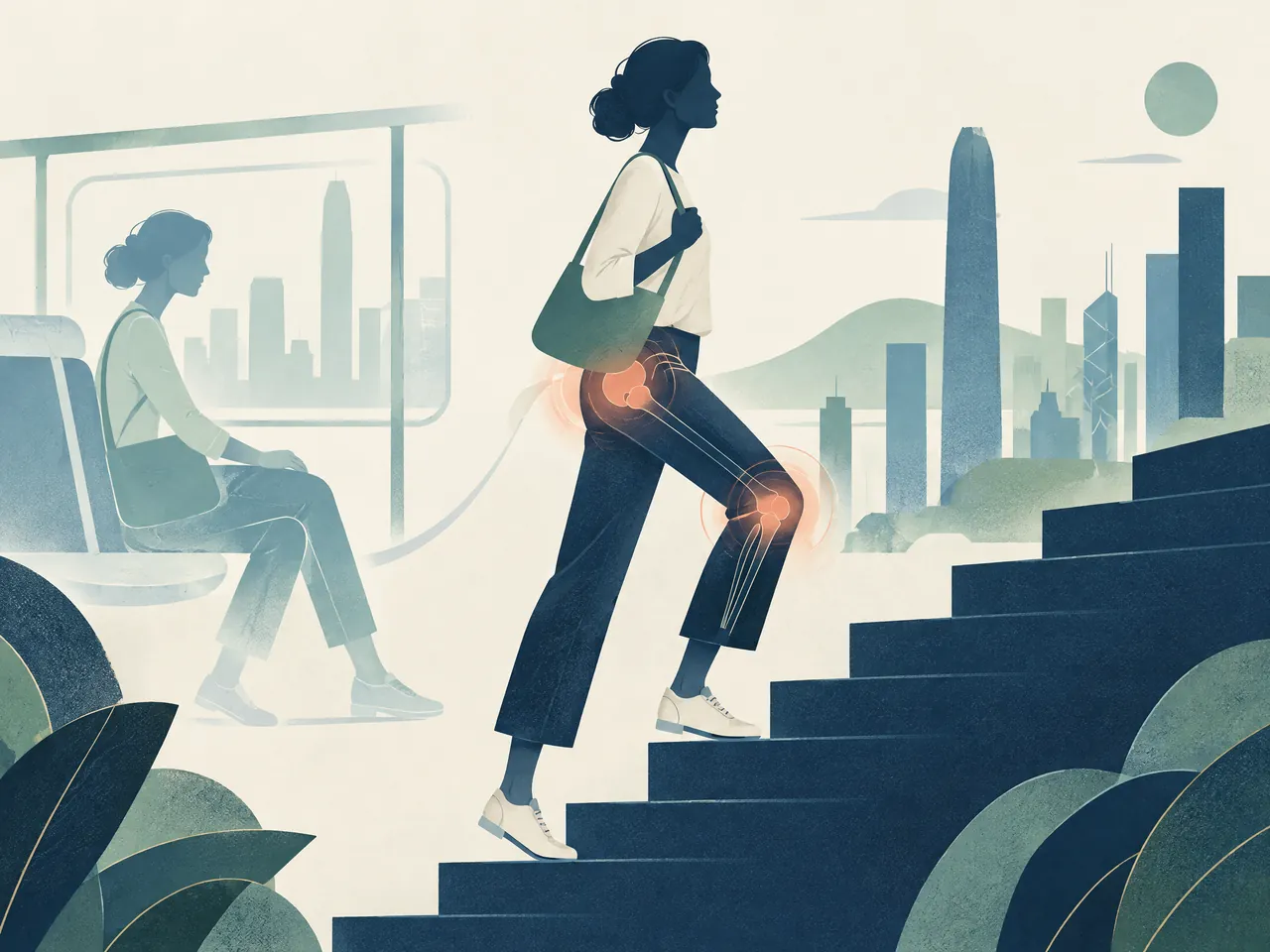
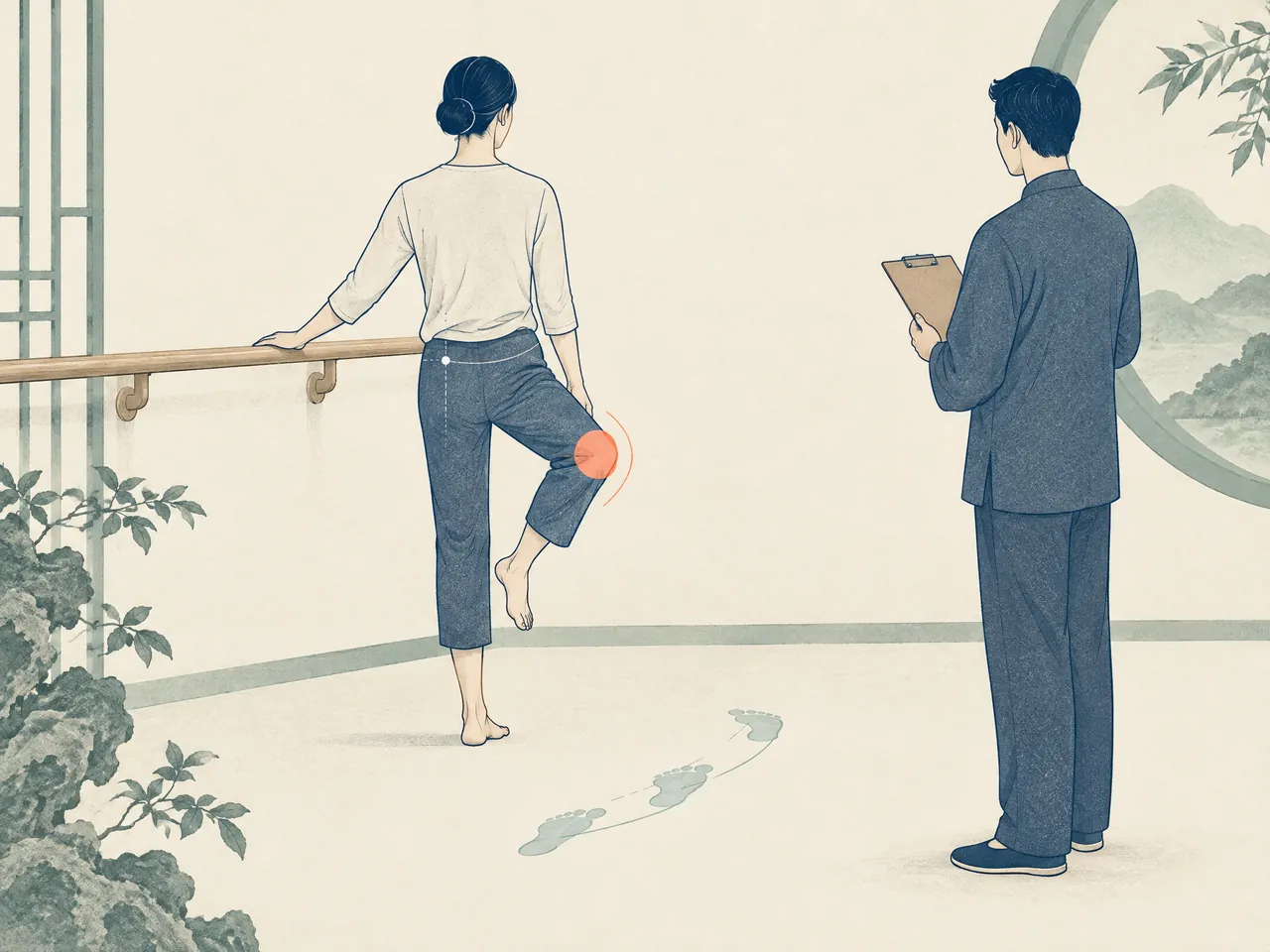
Describe weight-bearing in everyday terms. Can you rise from a chair with both feet down, take a few ordinary indoor steps, or use stairs with a handrail without the knee collapsing? This is not a home test to prove that nothing is wrong. It helps you notice a meaningful loss of function and communicate it accurately. Complete inability to put weight through the leg is an urgent sign. [1] [2]
Compare movement gently, without forcing it. Notice whether the knee bends and straightens enough for sitting, getting out of bed, and walking. Do not push through a hard block, sharp catch, or rapidly rising pain. People with recent knee surgery, a diagnosed knee condition, or activity restrictions should follow their own healthcare plan rather than general web advice. [2]
The circumstances matter too. A direct blow, fall, collision, sudden pivot, or landing differs from pain that built gradually after a new running route or longer working day. Note when the pain began, what happened just before it, and whether swelling appeared straight away or later. This may help a clinician choose an examination or referral; it cannot self-diagnose a ligament or cartilage injury.
Knee Pain When to Seek Medical Help: Recognise Locking, Instability and Deformity
People use “locking” differently. A knee truly stuck so that it cannot straighten or bend normally is more concerning than a brief painless crack or click. NHS guidance lists locking, giving way, or painful clicking among reasons for urgent advice, while painless clicking can be normal. [1] Describe the event: “it stopped halfway when I straightened it” is more useful than guessing the injury name.
Giving way can mean the knee feels unreliable when you stand, walk downhill, or turn. Because another fall is possible, avoid activities that depend on a stable knee until you have advice. A handrail, a slower route, or help carrying a load may reduce risk, but does not replace assessment when instability is new or recurring. Do not try to correct a visibly altered kneecap or other deformity yourself. [1]
A hot, red, tender knee with fever, chills, or general illness needs urgent assessment. Do not test it with heat, vigorous massage, acupuncture, or a new exercise routine. The same caution applies to a knee that becomes hot and swollen without a clear injury. [1] [2] After urgent causes are excluded, knee pain self management can help organise non-urgent activity questions.
Compare your options
| What you notice | Why the urgency changes | Practical next step |
|---|---|---|
| You cannot put weight through the leg, cannot move the knee, or the knee looks misshapen after injury. | These can follow a significant injury and need prompt assessment rather than a home exercise test. [1] [2] | Seek urgent medical advice appropriate to your location. Avoid forcing movement or trying to realign the knee. |
| The knee locks, gives way, or painfully clicks during movement. | Mechanical symptoms or instability can affect safety and need clinical advice; painless clicking alone can be normal. [1] | Reduce fall-risk activities and arrange urgent advice as directed by local services. |
| The knee is hot, red and swollen with a high temperature, chills, or feeling shivery. | This combination can be a sign of infection and should not be managed with heat or massage. [1] [2] | Seek urgent medical assessment. |
| Pain is mild, there are no red flags, and you can walk carefully, but activity triggers discomfort. | Many new knee problems can begin to settle with sensible load adjustment and gentle movement. [2] | Reduce provoking activity, keep movement gentle within comfort, and monitor the trend. |
| Pain is not improving after a few weeks, is worsening, or increasingly affects walking, stairs, work, sleep, or daily tasks. | Persistence and functional impact make an assessment useful even without an emergency sign. [1] | Arrange a healthcare assessment and bring a concise symptom and activity record. |
On smaller screens, scroll the table sideways to compare all columns.
Knee Pain When to Seek Medical Help: Common Causes and Self-Care
Many knee problems are not emergencies, but the cause still changes what makes sense next. A gradual ache after repeated running or jumping can differ from pain after a twist, while stiffness in both knees with mild swelling can occur with osteoarthritis. Warmth and redness can occur with several conditions, including bursitis, gout, or infection. [1] Pain location can be a clue, but cannot confirm a diagnosis by itself.
For a new mild problem without warning signs, adjust load rather than becoming completely still. NHS Inform advises reducing activity while moving as symptoms allow, avoiding long periods on your feet, and moving the knee gently. [2] This may mean shorter level walks, a handrail, breaks from standing, or postponing kneeling and deep squats. The aim is not to work through escalating pain or prescribe the same exercise to every knee.
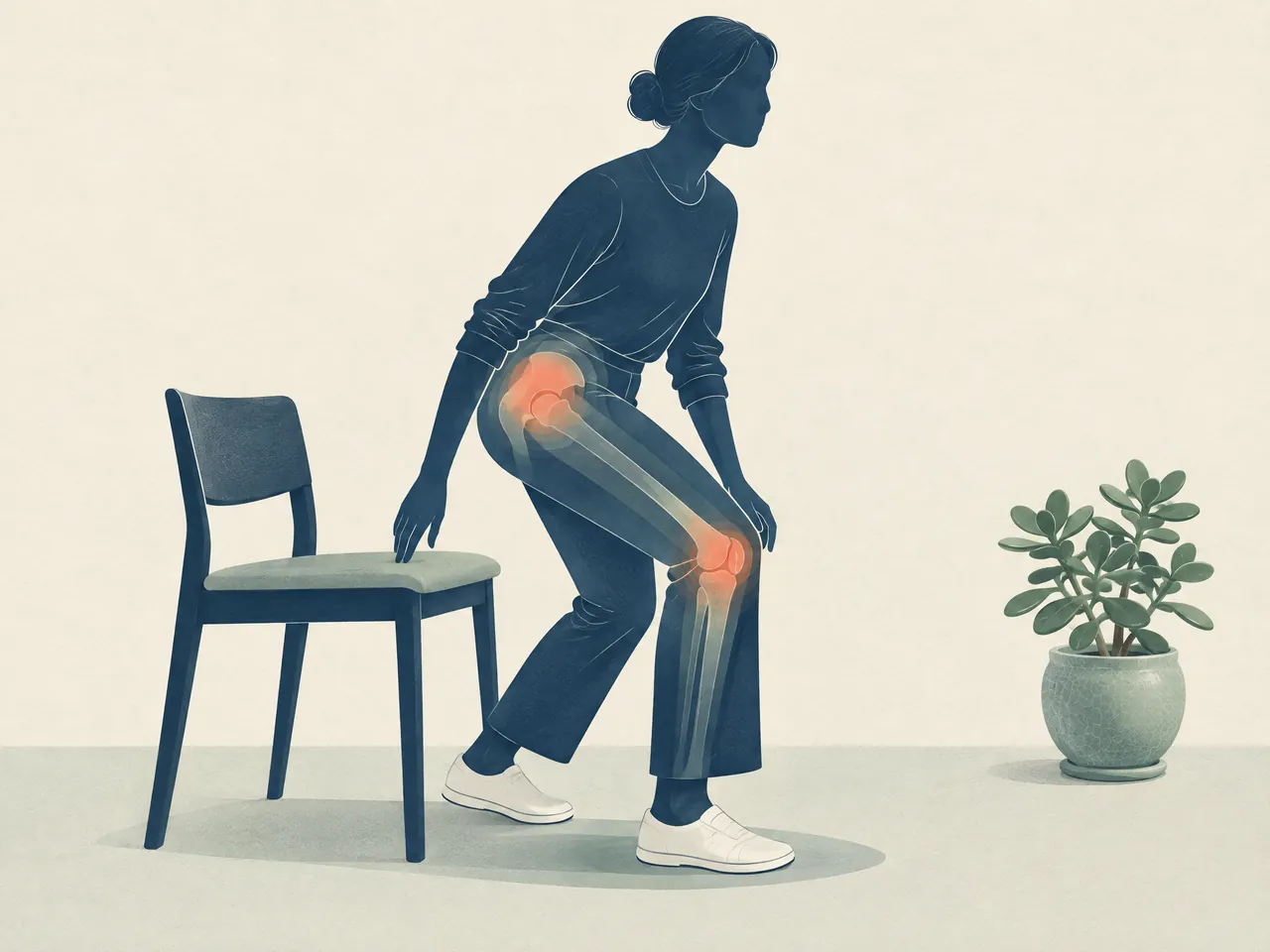
Check the response that evening and next morning. If gentle movement is acceptable but pain, swelling, or instability is clearly worse afterwards, scale back and seek advice rather than adding repetitions. After the safety check, What exercises are safe for knee pain? offers more focused reading about movement. Rehabilitation should be tailored once diagnosis, function, and recovery stage are understood.
Knee Pain When to Seek Medical Help: Adjust Activity and Try Gentle Movement
Match activity changes to the trigger. If standing at work aggravates the knee, arrange brief chances to sit instead of limping through a whole shift. If stairs are difficult, use a handrail and move deliberately. NHS Inform suggests leading with the less painful leg going upstairs and the problem leg going downstairs to reduce strain, when safe. [2] Do not use stairs as a fitness test when the knee is unstable.
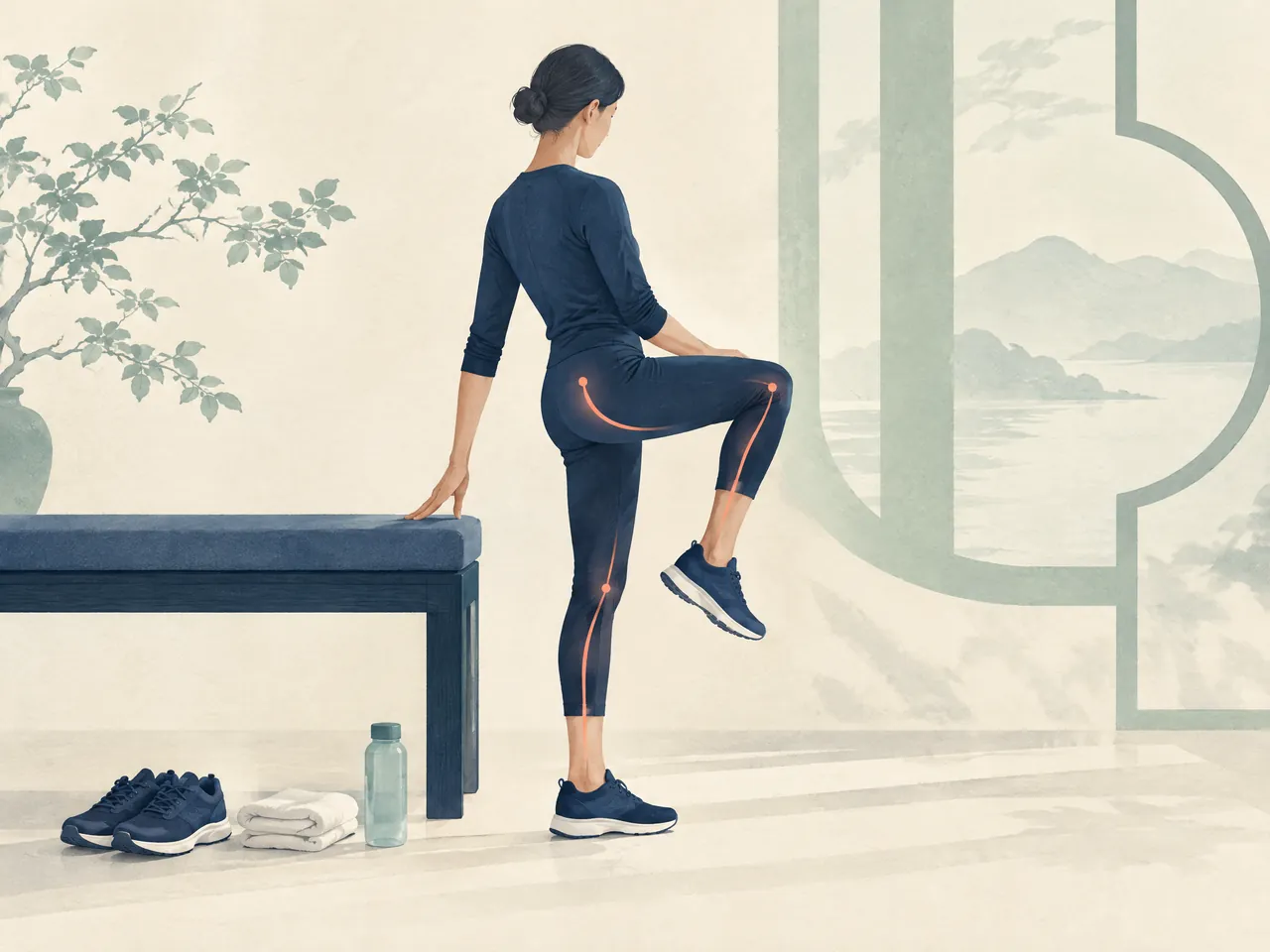
Gentle movement may simply mean changing position regularly and bending and straightening the knee within a comfortable range. It does not mean forcing a blocked joint or painful end range. Avoid a universal “strengthen through it” approach, especially after a recent injury or with post-operative restrictions. A return to sport or heavy lifting is more sensible after everyday movement is comfortable and guidance supports it. [2]
For people with diagnosed osteoarthritis, tailored therapeutic exercise is a core management option, and weight management may be relevant for those living with overweight or obesity. [3] This does not mean every reader with knee pain has osteoarthritis or should lose weight. A persistent problem needs an assessment that considers diagnosis, other health conditions, work demands, medication, and personal goals.
Knee Pain When to Seek Medical Help: Use Heat or Ice Carefully
Heat and ice are comfort measures, not tests of the cause. NHS Inform says ice is most beneficial when the problem is injury-related, while heat may be tried when there is no swelling and symptoms are not related to a recent injury. [2] A newly swollen knee after a knock is not the same situation as an older stiff knee without swelling. When uncertain, ask a professional rather than repeatedly alternating treatments.
Protect the skin with a towel or other barrier; never put a pack directly on it. NHS Inform advises up to 15 minutes at a time with a few hours between treatments, and stopping for increasing redness, discolouration, or blistering. It advises against heat or ice where circulation or sensation is impaired. [2] The NHS also advises an ice pack wrapped in a tea towel for knee pain and swelling. [1]
Stop if the treatment is uncomfortable or the skin reacts. A hot, red knee with fever or chills is an urgent medical concern, not an indication for heat. [1] If symptoms involve more than the knee, do not assume one joint explains everything; the related hip pain topic can help you frame a separate discussion when the hip, thigh, and knee are involved.
Knee Pain When to Seek Medical Help: Planning Your Next Step
Choose a next step from the trend over time. An episode steadily improving after modest activity adjustment differs from one that interrupts sleep, prevents a normal walk, or flares with ordinary tasks. NHS advice recommends seeing a clinician when knee pain does not improve within a few weeks. [1] Do not wait for a named diagnosis if function is deteriorating or a safety sign appears.
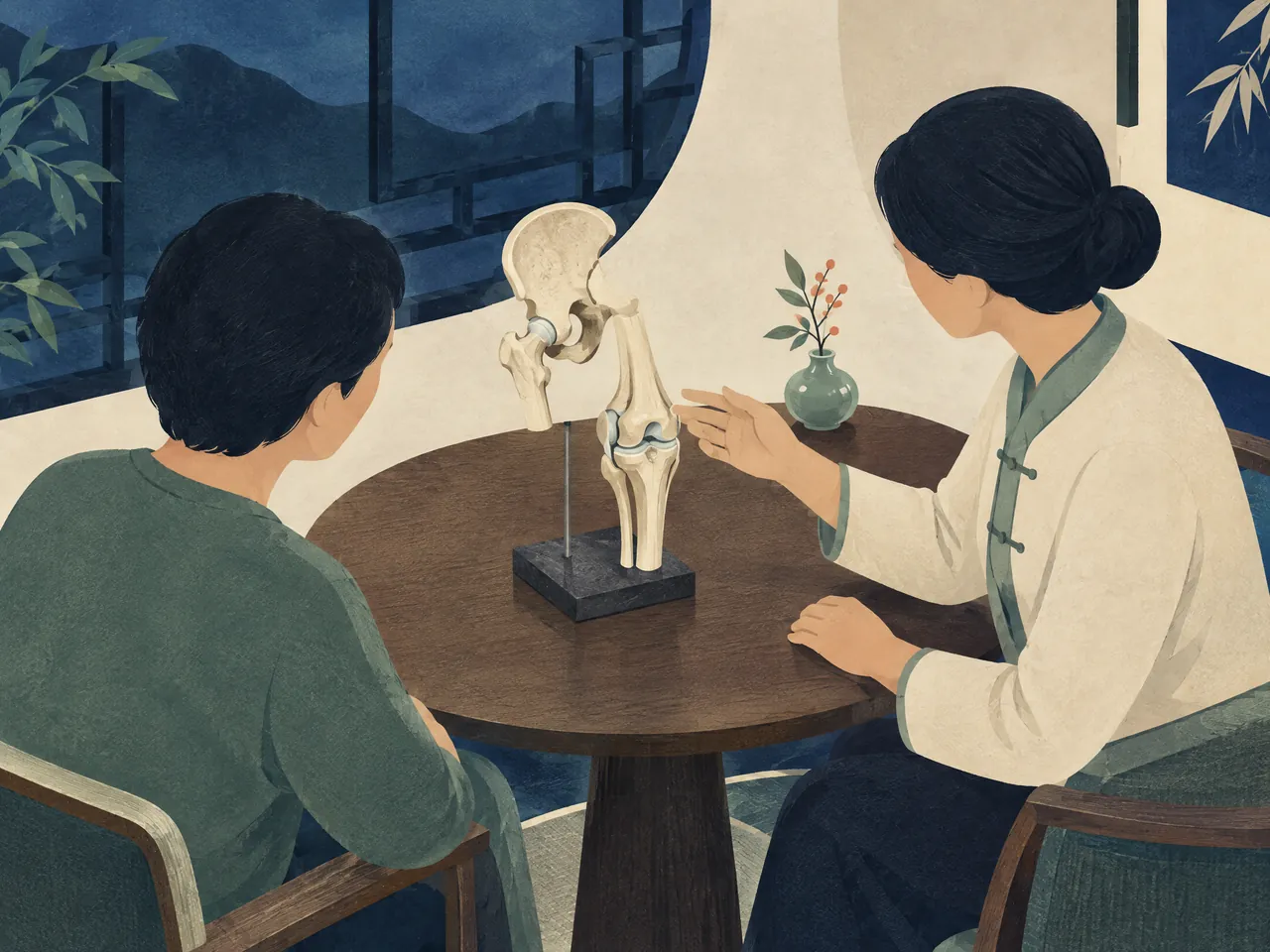
At an appointment, a clinician may ask about onset, injury, pain location, stiffness, swelling, prior episodes, medicines, and effects on work, transport, stairs, sleep, or exercise. They may examine movement, tenderness, stability, and walking. Depending on the suspected cause, the outcome could be advice, rehabilitation, medication discussion, imaging, or referral. No single test or treatment is automatic for every painful knee. [1]
Some people also ask about Traditional Chinese Medicine once medical red flags and important causes have been assessed. A Registered Chinese Medicine Practitioner can take a history within a traditional practice approach, but that is not a modern medical diagnosis. For osteoarthritis, NICE says not to offer acupuncture or dry needling to manage the condition. [3] It should never be presented as a response to infection, deformity, or another urgent problem.
Knee Pain When to Seek Medical Help: What Persistent Symptoms May Mean
Persistence does not identify a single cause. It shows that the first self-care response has not resolved the issue. Pain may remain because load has not changed, movement has become guarded, an injury needs rehabilitation, or another condition contributes. A known osteoarthritis flare does not make a new hot swollen joint, rapid worsening, recent trauma, prolonged morning stiffness, or deformity routine; these are atypical features needing clinical consideration. [3]
Functional change is often clearer than trying to rank pain from one to ten. Be specific if you can no longer walk to public transport, stop halfway through shopping, cannot rise from a chair normally, avoid stairs, or wake while turning in bed. Note whether one or both knees are involved and whether there is warmth, swelling, bruising, numbness, or instability. These details can guide the urgency and type of assessment.
Do not cycle through products, supports, or treatments merely because a previous episode settled with them. NICE recommends considering walking aids for lower-limb osteoarthritis and does not recommend routinely offering braces, tape, splints, or supports unless specified conditions are met. [3] A device is best chosen for a defined problem and functional aim. Persistent symptoms call for investigation, not stronger self-treatment.

Knee Pain When to Seek Medical Help: Questions to Discuss at an Appointment
Bring a concise account instead of trying to remember everything under pressure. Ask: What causes are likely? What activities should I temporarily avoid? Is rehabilitation assessment appropriate? What changes should make me seek help sooner? If medicine, a support, or referral is suggested, ask what it is intended to help with and how benefits and risks fit your health history. These questions support shared decisions without presuming a diagnosis.
A simple note makes a consultation more efficient. Record the start date, any fall or twist, whether swelling came quickly, the time symptoms are worst, triggering activities, what you tried, and effects on walking and sleep. If you use ice or heat, note whether it was comfortable and whether skin changed. Photographs of visible swelling or a short symptom diary can show a pattern absent during the appointment.
For a non-urgent Chinese medicine consultation enquiry after appropriate medical assessment, contact TCM Lab through the Kwun Tong Chinese medicine clinic or Chinese medicine clinic Prince Edward. Mention recent injury or surgery, marked swelling, fever, locking, difficulty bearing weight, any previous diagnosis, and language needs. Availability and suitability of an approach must be confirmed individually.
Care and health guide
Knee discomfort: care information
This directory brings together services, reading, and visit information related to knee discomfort, to help you prepare questions for a consultation.
When knee discomfort affects your day, noting when it occurs, its relation to activity, and what you have already tried can help prepare a consultation; Chinese medicine pain management Hong Kong is a relevant service or reading entry point.
Individual circumstances differ, and acupuncture Hong Kong offers related information to help you understand options and prepare questions.


Your questions, answered
Frequently asked questions
How do I know if knee pain needs urgent medical help?
Get urgent medical advice if you cannot move the knee or put weight through it, it is badly swollen or has changed shape, it locks or gives way, or redness and heat occur with a high temperature, chills, or feeling shivery. Significant trauma and immediate swelling after a twisting injury are also reasons for urgent advice. [1] [2]
Should I rest completely when my knee hurts?
For a mild new knee problem without warning signs, total bed rest is usually not the goal. NHS Inform advises reducing activities while moving as much as symptoms allow, avoiding long periods on your feet, and moving the knee gently. [2] Do not apply this general advice to a locked, unstable, severely painful, or post-operative knee without professional guidance.
Should I use ice or heat for knee pain?
Ice may be more useful when the problem is related to an injury, while heat may be tried when there is no swelling and symptoms are not related to a recent injury. Keep a towel barrier between the pack and your skin, do not use either if you have circulation or sensation problems, and stop if the skin becomes more red, discoloured, or blistered. [2]
When should persistent knee pain be assessed?
Arrange a healthcare assessment if knee pain has not improved within a few weeks, keeps worsening, or increasingly limits walking, stairs, sleep, work, or usual activities. [1] Take notes on the onset, any injury, swelling, heat, triggers, and episodes of locking or giving way; they can help the clinician understand the pattern.
Can acupuncture cure knee osteoarthritis?
It should not be described as a cure, a substitute for diagnosis, or a response to urgent warning signs. NICE recommends against offering acupuncture or dry needling to manage osteoarthritis. [3] If you are considering any complementary approach, first obtain appropriate assessment of persistent or concerning symptoms and discuss how it fits alongside evidence-based care.
Sources and further information
- [1] NHS — Knee pain
Referenced for: Official NHS guidance supporting the urgent warning signs, common cause examples, ice-pack advice, and review when symptoms have not improved within a few weeks.
- [2] NHS inform — Knee problems
Referenced for: Official NHS inform guidance supporting activity adjustment, gentle movement, stairs advice, heat and ice precautions, and help-seeking signs.
- [3] NICE NG226 — Osteoarthritis in over 16s: diagnosis and management
Referenced for: NICE guidance supporting statements limited to osteoarthritis management, tailored exercise, weight management where appropriate, atypical features, devices, and its recommendation against acupuncture or dry needling for osteoarthritis.