
TCM Lab · Health reading
Elbow pain red flags, elbow pain emergency symptoms, and when is elbow pain an emergency?
Published Updated
An aching elbow after lifting, typing, sport, or a minor knock is often not an emergency. The decision changes when the pain arrives suddenly with chest pressure, follows a significant injury, comes with altered sensation or strength, or is paired with heat, redness, swelling, and fever. This guide separates those elbow pain red flags from symptoms that may allow brief, careful observation, so you can choose emergency help, urgent assessment, or a routine appointment without trying to diagnose the cause yourself.
Appointments are confirmed through WhatsApp. If you have language requirements, please mention them in your enquiry.
The short answer
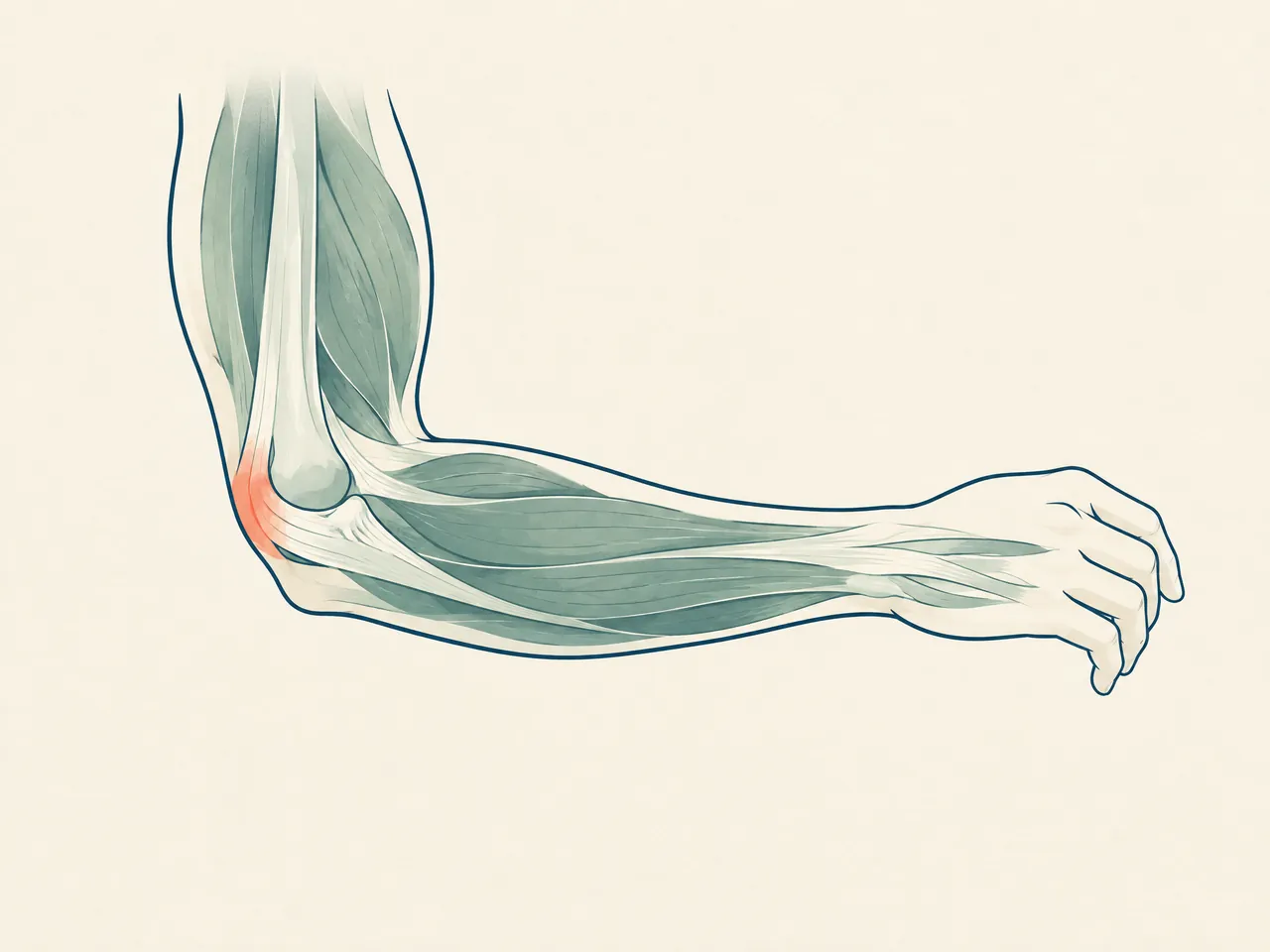
When is elbow pain an emergency? In Hong Kong, call 999 immediately for sudden arm or elbow pain with pressure, heaviness, or squeezing across the chest. Seek urgent medical assessment for an injured arm that is misshapen, a snapping sound with major pain or difficulty moving, sudden numbness or loss of power, or a hot, red, swollen, painful elbow with fever. Mild pain without these warning signs can sometimes be observed briefly, but worsening, persistent, or function-limiting symptoms need a clinician.
Transparent pricing
See the fees.
Choose your care.
Explore our complete official price list, including first-trial prices, regular prices, packages and branch-specific options.
Opening WhatsApp prepares an enquiry; it does not send a message, take payment or confirm an appointment. Suitability and individual arrangements are confirmed during consultation.
Pain care
All prices in HKDExtracorporeal shockwave treatment
Shockwave treatment for deep-tissue and fascial care. The Kwun Tong clinic offers the multi-area options shown below.
Priced by branch
Branch-specific pricing
Prince Edward: HK$250 per area
Kwun Tong: HK$250 for 1 area / HK$450 for 2 areas / HK$600 for 3 areas
Pain care (manual therapy)
Includes Chinese medicine musculoskeletal assessment, manual joint techniques and tui na.
HK$580 (single session)
Chinese medicine musculoskeletal assessment
Pain care (acupuncture and manual therapy)
Combines acupuncture and manual therapy.
HK$680 (single session)
Combined care
Hair and scalp
All prices in HKDScalp health and hair-loss management
Includes AI scalp analysis, deep scalp and follicle cleansing, and scalp oil-control care.
HK$380 (first trial)
Regular price: HK$680
- 6 sessions: HK$3,480 (HK$580 per session)
- 12 sessions: HK$5,760 (HK$480 per session)
- 20 sessions: HK$8,600 (HK$430 per session)
- 30 sessions: HK$11,400 (HK$380 per session)
Hair acupuncture and Chinese herbal medicine package
Includes scalp acupuncture and 3 days of Chinese herbal medicine that does not require decoction.
HK$580 (single session)
Registered Chinese Medicine Practitioner consultation
- 6 sessions: HK$3,180 (HK$530 per session)
- 12 sessions: HK$5,760 (HK$480 per session)
- 20 sessions: HK$8,600 (HK$430 per session)
- 30 sessions: HK$11,400 (HK$380 per session)
Combined hair and scalp treatment
Combines acupuncture and Chinese herbal medicine with salon-level scalp and follicle care. Packages include complimentary hair-care shampoo and serum.
HK$1,260 (single session)
Combined treatment
- 8 sessions: HK$8,640 (HK$1,080 per session)
- 16 sessions: HK$15,680 (HK$980 per session)
- 20 sessions: HK$18,600 (HK$930 per session)
- 30 sessions: HK$26,400 (HK$880 per session)
Weight management
All prices in HKDFull-body acupoint embedding for weight management
Includes full-body acupoint embedding. Packages include complimentary Chinese herbal medicine for weight management, with the number of included days scaled to the package. Embedding material and the individual treatment arrangement are confirmed during consultation; this is not a cosmetic thread lift.
HK$980 (single session)
No trial session
- 10 sessions: HK$7,800 (HK$780 per session)
- 20 sessions: HK$14,600 (HK$730 per session)
- 30 sessions: HK$20,400 (HK$680 per session)
Facial acupuncture
All prices in HKDFacial acupuncture (basic)
Includes facial acupuncture and meridian-based facial care, including care for facial puffiness.
HK$480 (first trial)
Regular price: HK$680
- 10 sessions: HK$5,200 (HK$520 per session)
- 20 sessions: HK$9,600 (HK$480 per session)
- 30 sessions: HK$13,500 (HK$450 per session)
Facial acupuncture (advanced)
Includes enhanced facial acupuncture with a specially formulated moisturising mask and serum.
HK$780 (first trial)
Regular price: HK$1,180
- 10 sessions: HK$9,000 (HK$900 per session)
- 20 sessions: HK$16,600 (HK$830 per session)
- 30 sessions: HK$23,400 (HK$780 per session)
Chinese medicine
All prices in HKDAcupuncture and Chinese herbal medicine package
Includes a Chinese medicine consultation with pulse assessment, body acupuncture and 3 days of Chinese herbal granules that do not require decoction.
HK$580 (single session)
Chinese medicine consultation with pulse assessment
Immediate elbow pain red flags and elbow pain emergency symptoms: when is elbow pain an emergency?
The location of pain is not enough to decide its urgency. Pain near the outer elbow after gripping may behave very differently from abrupt arm pain that appears while resting, or from pain after a fall. The immediate question is not whether the label is “tennis elbow”; it is whether there is a time-sensitive problem involving the chest, circulation, bone, joint, or nerves. The NHS distinguishes sudden arm pain with chest pressure from ordinary elbow and arm pain, and lists severe pain with difficult movement, a changed arm shape, a snapping noise, and numbness as reasons for urgent or emergency care [1]. For a broader non-emergency pathway, see when to see a doctor for elbow pain.
It is reasonable to be unsure after ordinary overuse, because soreness may be felt at the elbow even when the triggering task involves the wrist, shoulder, or neck. Urgency is not decided by the side of the elbow alone. A useful check is whether the symptom has a clear mechanical pattern and remains mild, versus whether it began abruptly, is severe, or is accompanied by symptoms beyond the elbow. If a person has chest pressure, breathlessness, faintness, or feels acutely unwell with arm pain, the safer choice is emergency help. Do not drive yourself if you feel unsafe to do so; call 999 and describe the symptoms plainly.
Chest pressure with arm pain: elbow pain red flags, elbow pain emergency symptoms, and when is elbow pain an emergency?
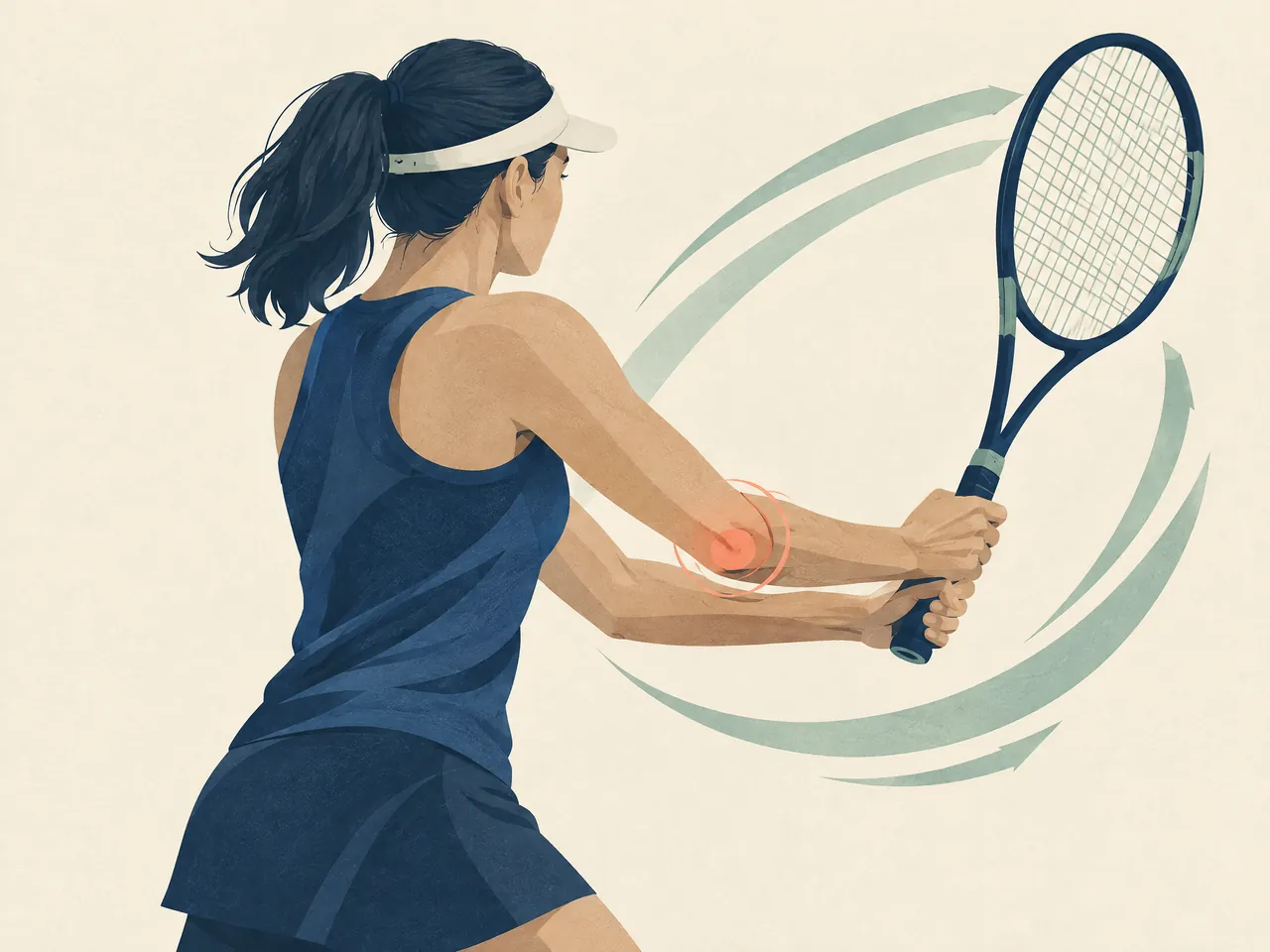
Call 999 now if arm or elbow pain begins suddenly with pressure, heaviness, or squeezing across the chest. Do not wait to see whether stretching the elbow changes it, arrange a routine pain appointment, or send a message to a clinic first. The NHS identifies this combination as a possible heart-attack warning and directs people to emergency help [1]. In Hong Kong, the Government states that 999 is the number for Police, Fire Services Department, or an ambulance [3]. The fact that you can point to the elbow does not safely rule out a problem elsewhere; emergency clinicians need to assess the full pattern and timing.
Injury, deformity, or severe loss of movement: elbow pain red flags, elbow pain emergency symptoms, and when is elbow pain an emergency?
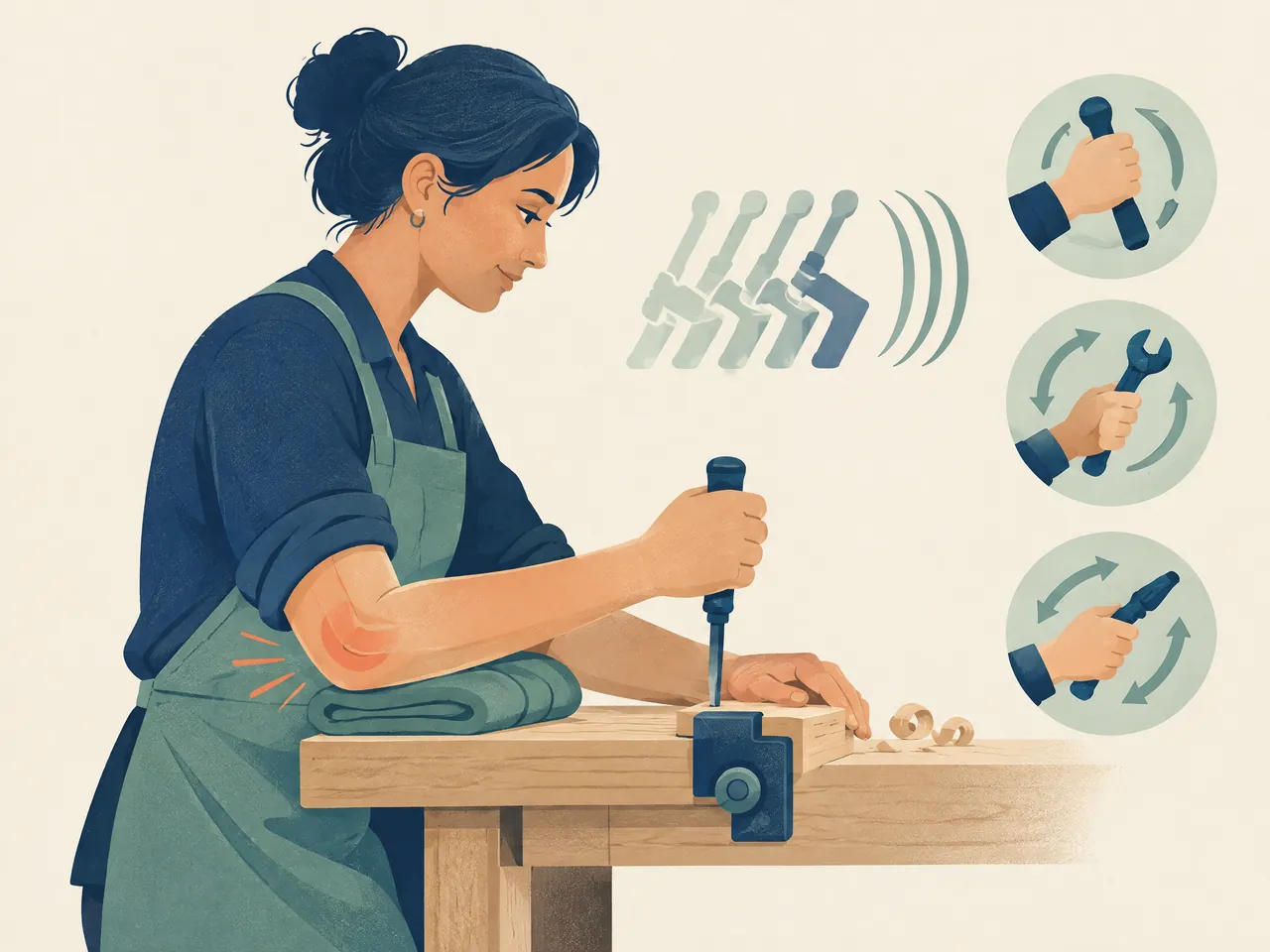
After a fall, direct blow, twist, or sports accident, seek urgent assessment if the arm looks bent or misshapen, swelling is marked, you heard a snap, pain is severe, or you cannot properly move the elbow or arm. These are elbow pain emergency symptoms because an injury may need examination and, where appropriate, imaging or other timely care; they cannot be sorted reliably by gently forcing the joint at home. Keep the arm as still and comfortable as you can while arranging help. Avoid testing strength with a heavy bag, forceful stretching, “popping” the joint, or strong massage. NHS guidance sends severe pain with difficulty moving, a snapping sound, or a changed arm shape to urgent treatment or emergency care [1].
Compare your options
| What you notice | Recommended next step | What not to do | Useful detail to report |
|---|---|---|---|
| Sudden arm or elbow pain with chest pressure, heaviness, or squeezing | Call 999 immediately in Hong Kong. | Do not wait for a routine appointment or test the elbow with stretches. | When the pain started and any chest symptoms. |
| Fall or injury with a snap, changed shape, severe pain, or major movement loss | Seek urgent assessment or emergency care. | Do not force the elbow straight, lift a bag, or use strong massage. | How the injury happened, visible change, and whether you can move fingers. |
| New numbness, tingling, or sudden weakness in the arm or hand | Arrange urgent medical assessment, especially after injury or with movement loss. | Do not repeatedly test grip strength or stretch through altered sensation. | Which area feels different, onset time, and impact on grip or hand use. |
| Hot, red, swollen, painful elbow with fever or feeling shivery | Obtain same-day urgent medical assessment. | Do not rely on ice, topical products, or home observation alone. | Fever or chills, speed of swelling, and any recent skin break or injury. |
| Mild pain with preserved movement and no red flags | Reduce the provoking load briefly and arrange review if it worsens, persists, or limits daily life. | Do not keep provoking sharp pain or assume all elbow pain is one condition. | Triggering tasks, symptom trend, sleep impact, and what you have tried. |
On smaller screens, scroll the table sideways to compare all columns.
Neurological and infection-related elbow pain emergency symptoms and elbow pain red flags: when is elbow pain an emergency?
Some warning signs are less visible than a deformity. Sensation and temperature changes can shift the decision from ordinary self-care to same-day assessment. Compare the affected arm with the other side only as a simple observation, not as a home diagnosis: note new pins and needles, numbness, weakness, spreading swelling, skin redness, unusual heat, chills, or fever. Pain that is provoked by exertion and then eases with rest also deserves urgent advice rather than being dismissed as an elbow-only issue [1]. A pattern can suggest several possibilities, but it does not identify the cause with certainty. The safe action is guided by the red flag and the change in function.

Numbness, tingling, or sudden weakness: elbow pain red flags, elbow pain emergency symptoms, and when is elbow pain an emergency?
New tingling or numbness in the elbow, forearm, hand, or fingers is not a useful signal to “stretch through,” especially after an injury or when grip suddenly feels weaker. Seek urgent medical assessment if there is sudden loss of power or feeling, if you cannot move normally, or if altered sensation is increasing. University Hospitals Coventry and Warwickshire lists sudden loss of power and/or feeling in an arm or hand as a reason for immediate medical advice, while the NHS lists an arm that tingles or feels numb among symptoms needing urgent assessment [1] [2]. Make a note of which fingers feel different, when it started, and whether weakness affects everyday tasks such as turning a key or holding a cup. For a focused explanation of this decision point, read can elbow pain with numbness wait?.

Heat, redness, swelling, and fever: elbow pain red flags, elbow pain emergency symptoms, and when is elbow pain an emergency?
A hot, red, swollen, painful elbow with fever is not a “wait for next week” pattern. It needs urgent same-day medical assessment because infection or another acute inflammatory problem may need to be considered. Feeling shivery, very unwell, or noticing swelling that develops quickly adds to the urgency. This does not mean every red elbow has the same cause, and it is not a diagnosis from a webpage. It does mean that cold packs, topical products, or self-massage should not replace assessment. NHS guidance advises urgent help for a swollen arm with a very high temperature or feeling hot, cold, or shivery; the UHCW guidance specifically identifies fever with a hot, red, swollen, painful elbow as needing immediate medical advice [1] [2].
Next steps and timing: elbow pain red flags, elbow pain emergency symptoms, and when is elbow pain an emergency?
If none of the red flags above applies, the next step depends on the direction of travel: is the pain gradually easing, staying the same, or becoming more limiting? Mild discomfort after a recognisable activity increase may settle with temporary changes to the load that provokes it, such as repeated gripping, lifting with the palm down, prolonged tool use, or forceful wrist turning. That is different from pushing through escalating pain or treating every ache as proof of one named condition. The NHS notes that elbow and arm pain that does not go away after a few weeks should be assessed [1]. Worsening pain, disturbed sleep, reduced range of motion, catching or locking, or difficulty at work are practical reasons to bring the appointment forward.
For a routine appointment, the aim is to describe the problem accurately, not to prove a diagnosis. A clinician can consider the history, movement, tenderness, strength, sensation, and whether tests or referral are appropriate. Tell them if the pain started after a new racquet sport, a day of carrying boxes, a change in desk work, or a single impact, but also mention symptoms that do not fit that story. For example, pain that wakes you repeatedly, weakness when lifting a light object, or symptoms spreading into the hand can change the assessment. Short-term pacing is a way to avoid repeatedly provoking pain while you arrange care; it is not a substitute for assessment when function is declining.

Mild symptoms, short-term observation, and follow-up: elbow pain red flags, elbow pain emergency symptoms, and when is elbow pain an emergency?
For mild symptoms with normal sensation, no fever, no major injury, and usable movement, take a short period to reduce the clearly aggravating task rather than stopping all normal activity indefinitely. A keyboard worker might lighten repeated mouse gripping and take short movement breaks; a home cook might avoid repeatedly lifting a heavy pan with the painful hand; a gym-goer might pause the particular lift that reproduces sharp elbow pain. Notice whether ordinary actions such as dressing, pouring a drink, opening a door, or sleeping become easier. Do not use a fixed number of days as permission to ignore deterioration. The UHCW advises contacting a GP if pain is getting worse or has not improved after 3–4 weeks of self-help, while NHS advice says to seek review when elbow or arm pain remains after a few weeks [1] [2]. If the problem lingers, this page on persistent elbow pain can help you prepare the next question to ask.

What to record before an appointment: elbow pain red flags, elbow pain emergency symptoms, and when is elbow pain an emergency?
A brief symptom record makes a routine consultation more useful without requiring you to name the condition. Write down the start date and whether there was a fall, twist, repetitive task, or sudden load change. Mark the main site—outer elbow, inner elbow, front, back, or pain travelling from the neck or forearm—and list what reliably brings it on. Include loss of movement, clicking or locking, visible swelling, numbness, fever, sleep disruption, and the effect on work or home tasks. Also bring a list of medicines, relevant health conditions, and what you have already tried. If you are weighing an appointment, elbow pain when to seek medical help provides another practical route through the options. For a non-urgent TCM Lab enquiry, you may ask about an appointment at the Chinese medicine clinic Prince Edward or the Kwun Tong Chinese medicine clinic; emergency symptoms always take priority over a clinic enquiry.
Care and health guide
Pain-care information
This directory brings together services, reading, and visit information related to pain care, to help you prepare questions for a consultation.
When pain care affects your day, noting when it occurs, its relation to activity, and what you have already tried can help prepare a consultation; Chinese medicine pain management Hong Kong is a relevant service or reading entry point.
Individual circumstances differ, and acupuncture Hong Kong offers related information to help you understand options and prepare questions.


Your questions, answered
Frequently asked questions
Should I wait for an appointment if elbow pain comes with chest pressure?
What should I do after an elbow injury with a snapping sound or deformity?
Seek urgent assessment, particularly if pain is severe or movement is difficult. Keep the arm supported and avoid forcing movement, testing it with weights, or applying strong massage. A snapping noise or an arm that has changed shape is listed by the NHS as a reason for urgent treatment or emergency care [1].
Can I continue self-care if my fingers feel numb or tingling?
Is a hot, swollen elbow with fever something to monitor at home?
How long should I wait before seeking help for mild elbow pain?
There is no need to wait through a red flag or clear worsening. If symptoms are mild and function is preserved, brief load reduction may be reasonable. Seek review sooner if daily tasks, sleep, or movement are affected, and arrange assessment when pain is not improving over the following weeks [1] [2].
Sources and further information
- [1] NHS: Elbow and arm pain
Referenced for: Supports emergency chest-pressure guidance, urgent injury and numbness signs, exertional pain guidance, fever or swelling signals, and review for symptoms lasting weeks.
- [2] University Hospitals Coventry and Warwickshire NHS Trust: Elbow pain
Referenced for: Supports immediate medical advice for a misshapen swollen elbow after injury, inability to move, sudden loss of power or feeling, and fever with a hot, red, swollen, painful elbow; also supports review for worsening or non-improving symptoms.
- [3] GovHK: Getting Emergency Help
Referenced for: Confirms that 999 is the Hong Kong number for Police, Fire Services Department, or an ambulance.