
TCM Lab · Health reading
Recurrent Ankle Sprains and Chronic Ankle Instability: Ankle Instability Rehabilitation Guide
Published Updated
An ankle that rolls again while stepping off a kerb, turning in a crowded MTR station, or landing from a familiar sport is worth more than a quick recovery-time guess. Recurrent ankle sprains and chronic ankle instability can show up as repeat swelling, hesitancy on uneven ground, or a sudden sense that the joint may give way. The useful next step is to separate a new injury that needs assessment from a longer-term rehabilitation problem, then rebuild loading, movement and balance in a measured order. This guide explains what to record, when to seek medical care, and how ankle instability rehabilitation can be planned around daily life in Hong Kong.
Appointments are confirmed through WhatsApp. If you have language requirements, please mention them in your enquiry.
The short answer
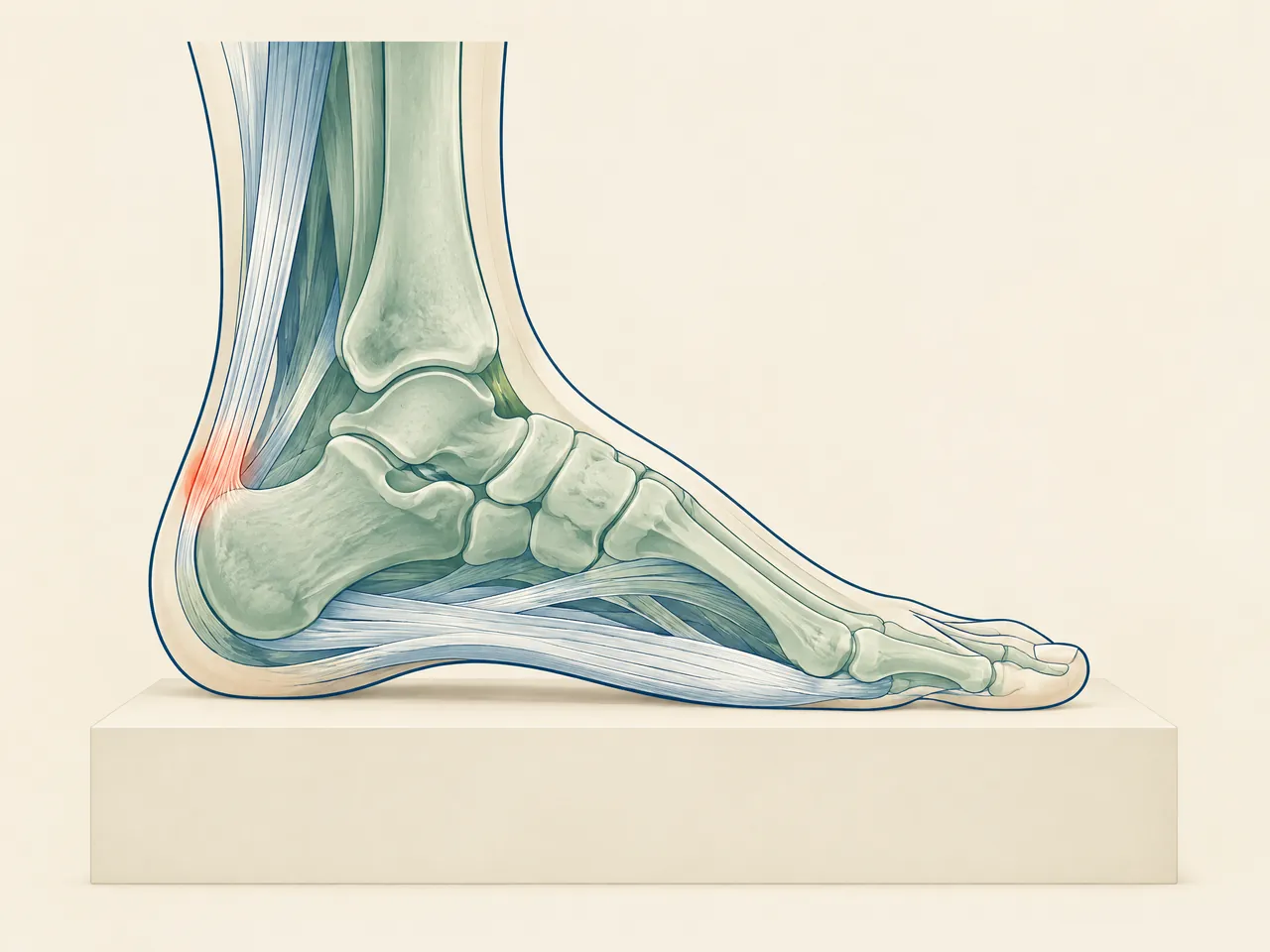
Recurrent ankle sprains and chronic ankle instability call for a functional review, not a fixed number of rest days. Note how the injury happened, where it hurts, swelling or bruising, whether you can take steps, and whether the ankle gives way. New inability to bear weight, deformity, persistent numbness, or a cold or discoloured foot needs prompt medical assessment. When serious injury has been assessed, ankle instability rehabilitation usually progresses from protected movement and weight bearing to strength, balance and activity-specific control.
Transparent pricing
See the fees.
Choose your care.
Explore our complete official price list, including first-trial prices, regular prices, packages and branch-specific options.
Opening WhatsApp prepares an enquiry; it does not send a message, take payment or confirm an appointment. Suitability and individual arrangements are confirmed during consultation.
Pain care
All prices in HKDExtracorporeal shockwave treatment
Shockwave treatment for deep-tissue and fascial care. The Kwun Tong clinic offers the multi-area options shown below.
Priced by branch
Branch-specific pricing
Prince Edward: HK$250 per area
Kwun Tong: HK$250 for 1 area / HK$450 for 2 areas / HK$600 for 3 areas
Pain care (manual therapy)
Includes Chinese medicine musculoskeletal assessment, manual joint techniques and tui na.
HK$580 (single session)
Chinese medicine musculoskeletal assessment
Pain care (acupuncture and manual therapy)
Combines acupuncture and manual therapy.
HK$680 (single session)
Combined care
Hair and scalp
All prices in HKDScalp health and hair-loss management
Includes AI scalp analysis, deep scalp and follicle cleansing, and scalp oil-control care.
HK$380 (first trial)
Regular price: HK$680
- 6 sessions: HK$3,480 (HK$580 per session)
- 12 sessions: HK$5,760 (HK$480 per session)
- 20 sessions: HK$8,600 (HK$430 per session)
- 30 sessions: HK$11,400 (HK$380 per session)
Hair acupuncture and Chinese herbal medicine package
Includes scalp acupuncture and 3 days of Chinese herbal medicine that does not require decoction.
HK$580 (single session)
Registered Chinese Medicine Practitioner consultation
- 6 sessions: HK$3,180 (HK$530 per session)
- 12 sessions: HK$5,760 (HK$480 per session)
- 20 sessions: HK$8,600 (HK$430 per session)
- 30 sessions: HK$11,400 (HK$380 per session)
Combined hair and scalp treatment
Combines acupuncture and Chinese herbal medicine with salon-level scalp and follicle care. Packages include complimentary hair-care shampoo and serum.
HK$1,260 (single session)
Combined treatment
- 8 sessions: HK$8,640 (HK$1,080 per session)
- 16 sessions: HK$15,680 (HK$980 per session)
- 20 sessions: HK$18,600 (HK$930 per session)
- 30 sessions: HK$26,400 (HK$880 per session)
Weight management
All prices in HKDFull-body acupoint embedding for weight management
Includes full-body acupoint embedding. Packages include complimentary Chinese herbal medicine for weight management, with the number of included days scaled to the package. Embedding material and the individual treatment arrangement are confirmed during consultation; this is not a cosmetic thread lift.
HK$980 (single session)
No trial session
- 10 sessions: HK$7,800 (HK$780 per session)
- 20 sessions: HK$14,600 (HK$730 per session)
- 30 sessions: HK$20,400 (HK$680 per session)
Facial acupuncture
All prices in HKDFacial acupuncture (basic)
Includes facial acupuncture and meridian-based facial care, including care for facial puffiness.
HK$480 (first trial)
Regular price: HK$680
- 10 sessions: HK$5,200 (HK$520 per session)
- 20 sessions: HK$9,600 (HK$480 per session)
- 30 sessions: HK$13,500 (HK$450 per session)
Facial acupuncture (advanced)
Includes enhanced facial acupuncture with a specially formulated moisturising mask and serum.
HK$780 (first trial)
Regular price: HK$1,180
- 10 sessions: HK$9,000 (HK$900 per session)
- 20 sessions: HK$16,600 (HK$830 per session)
- 30 sessions: HK$23,400 (HK$780 per session)
Chinese medicine
All prices in HKDAcupuncture and Chinese herbal medicine package
Includes a Chinese medicine consultation with pulse assessment, body acupuncture and 3 days of Chinese herbal granules that do not require decoction.
HK$580 (single session)
Chinese medicine consultation with pulse assessment
Recurrent Ankle Sprains and Chronic Ankle Instability: Recognising the Pattern Through Ankle Instability Rehabilitation
A sprain involves injury to one or more ankle ligaments. The Hong Kong College of Orthopaedic Surgeons lists ankle pain, swelling, bruising, difficulty walking and stiffness among common symptoms, while noting that people with earlier sprains can feel unstable even without obvious pain or swelling [1]. That distinction matters. A fresh twist with rapid swelling has a different immediate question from an ankle that repeatedly feels unreliable months after the last obvious injury. In either case, avoid assuming it is simply a weak ankle or something that can be worked through. Recurrent episodes can reflect incomplete functional recovery, but examination is needed to distinguish that concern from another injury or a problem elsewhere in the foot or leg.
Describe the pattern in ordinary terms before looking for a label. Does the ankle roll inward or outward? Did it happen while descending stairs, crossing uneven pavement, pivoting in a court sport, or simply walking after a long day? Does it feel as though it gives way, or is the limiting feature pain, stiffness, swelling, fear of loading, or loss of confidence? A short written record makes the consultation more specific and helps set a realistic starting point for ankle instability rehabilitation.

For a focused explanation of the repeat-injury question, see why does my ankle keep spraining. It is also helpful to record what changed between episodes, such as terrain, fatigue or an earlier episode that never regained comfortable movement. These observations do not diagnose the cause, but they help a clinician understand the demands the ankle is failing to meet.
Recurrent Ankle Sprains and Chronic Ankle Instability: What Repeated Injuries May Mean for Ankle Instability Rehabilitation
Repeated sprains do not all mean the same thing. One person may re-injure the ankle during a new high-force fall; another may notice a recurring roll during low-demand daily movements. Ligaments help limit side-to-side movement at the ankle [1], but comfortable function also depends on how the joint moves, how the surrounding muscles respond, and how the person controls position during real tasks. This is why ankle instability rehabilitation is broader than a single exercise or an instruction to rest until the pain fades.
A functional review usually looks at the current episode alongside the history. The route may include assessment of tender areas and painful movement; imaging can be considered when an injury is severe or there is concern about bone or ligament damage [2]. The result is not a promise that every instability problem needs a scan or an operation. Rather, it is a way to avoid choosing exercises or return-to-sport decisions before the seriousness and likely source of symptoms have been considered.

Recurrent Ankle Sprains and Chronic Ankle Instability: Symptoms to Record Before Ankle Instability Rehabilitation
Bring details that cannot be recovered later: the direction of the twist, whether you heard or felt a pop, the first point of pain, and whether swelling or bruising arrived quickly. Note whether you could bear weight immediately and whether you can now walk a few steps without sharply changing your gait. Also note altered sensation, skin colour, temperature, or pain higher up the leg. These details guide the urgency and scope of assessment rather than acting as a self-diagnosis checklist.
For a longer-standing issue, record the situations that expose the problem. Examples include stepping out of a bus, carrying groceries downstairs, a turn on a badminton court, or the last minutes of a run when fatigue changes control. Rate neither your character nor your pain tolerance; describe what you could do before symptoms began, what happened during the task, and how the ankle felt later that day and the next morning. This turns the vague phrase “unstable ankle” into a practical rehabilitation target.
Compare your options
| What you notice | Useful details to record | Appropriate next focus |
|---|---|---|
| A new twist with swelling, bruising or difficulty walking | Direction of the twist, exact painful area, ability to take steps, and symptoms that are worsening | Protect the ankle and consider timely clinical assessment; do not test it with sport |
| Ankle gives way on uneven ground but there is little swelling | Which task triggers it, previous sprains, footwear, fatigue, and whether confidence changes your gait | Arrange a functional review and discuss a staged ankle instability rehabilitation plan |
| Pain is lower but walking is still altered | Limping, avoidance of stairs, range of motion, later-day swelling, and response to ordinary loading | Review weight-bearing and movement progression rather than jumping to impact activity |
| Comfortable straight-line walking but uncertainty during turns or sport | Specific directional movement, surface, speed, fatigue point, and any giving-way sensation | Build balance and activity-specific control with professional guidance before return |
On smaller screens, scroll the table sideways to compare all columns.
Recurrent Ankle Sprains and Chronic Ankle Instability: Early Protection and Assessment for Ankle Instability Rehabilitation
After a new sprain, the first priority is protection and assessment, not forcing the ankle through a mobility test or trying to disperse swelling aggressively. Rest, ice, compression and elevation are described as first-aid measures by the Hong Kong College of Orthopaedic Surgeons [1]. Mayo Clinic similarly describes R.I.C.E. self-care for the first two or three days and advises avoiding activity that causes pain, swelling or discomfort [2]. Use ice with a cloth barrier. Loosen compression and seek advice if it causes numbness, colour change, increased pain or a cold foot.
A repeat sprain deserves the same initial caution as a first one. Prior experience can make it tempting to self-manage automatically, yet a new injury may coexist with a fracture or other damage. Medical assessment should come before ankle instability rehabilitation when there is inability to bear weight, obvious deformity, severe or increasing pain and swelling, a crack at injury, ongoing numbness or pins and needles, or pale, blue, or cold skin in the foot. If symptoms do not improve with sensible self-care or instability continues, an appointment is appropriate [2]. No home observation replaces urgent assessment for these warning signs.

Once immediate risk has been considered, useful practical reading includes ankle sprain first aid and ankle sprain compression and elevation. They can help someone prepare questions, but they should not delay a review for a serious injury. The aim in the early phase is to reduce unnecessary provocation while preserving a clear picture of symptoms and function.
Recurrent Ankle Sprains and Chronic Ankle Instability: Safe First Steps Before Ankle Instability Rehabilitation
Relative rest does not mean that every movement is harmful. It means pausing activities that reproduce pain, swelling or a giving-way sensation while following the level of protection and loading advised for the injury. Walking aids, an elastic bandage, tape, a brace, a boot or other support may be considered according to severity and clinical advice; Mayo Clinic notes that the choice can range from an elastic bandage or brace to a cast or walking boot for a severe sprain [2].
Avoid early heat, alcohol and local massage if the ankle is becoming more swollen. Keep a brief daily note of swelling, comfort at rest, how far you can move the ankle, and the quality of each step. This gives a safer basis for deciding whether the plan is helping. If traditional Chinese medicine is being considered, it should be discussed after appropriate triage as a complementary conversation; it should not replace assessment for a suspected fracture, circulation problem or significant nerve symptoms.

Recurrent Ankle Sprains and Chronic Ankle Instability: When Medical Assessment Comes Before Ankle Instability Rehabilitation
Assessment is especially important when the story and function do not match a simple improving sprain. A clinician may inspect the ankle and lower leg, press on tender areas, assess movement and decide whether imaging is needed to look for broken bone or ligament injury [2]. Ask what activities are safe today, what symptoms should trigger re-contact, whether a support is suitable, and what needs to improve before moving to the next rehabilitation stage.
For someone with recurrent symptoms, the assessment is also an opportunity to discuss goals that matter outside the clinic: walking the hills around Hong Kong, returning to a standing job, taking stairs without guarding the ankle, or resuming a sport. A useful goal is observable and task-based, such as completing a normal commute without a giving-way episode. It is more useful than setting a date by which the ankle must be “fully healed”, because recovery and safe progression depend on injury severity and functional response.
Recurrent Ankle Sprains and Chronic Ankle Instability: Building Functional Recovery with Ankle Instability Rehabilitation
Ankle instability rehabilitation is normally progressive rather than a jump from rest to full activity. The Hong Kong College of Orthopaedic Surgeons describes stages that move from rest, stabilisation and swelling reduction to restoring range of movement, strength and flexibility, followed by progressive stability and proprioception work [1]. Mayo Clinic similarly describes exercises after pain and swelling improve to restore movement, strength, flexibility and stability, with balance exercises used to retrain coordinated muscle activity [2]. A clinician can decide which task suits the injury.
Progress is best judged by quality, not bravado. Can you put weight through the foot with a controlled gait? Is the ankle more comfortable later that day and the next morning, rather than increasingly swollen? Can you move it without a sharp pain or repeated giving-way feeling? These questions help decide whether the current level is tolerable. Use staged, supervised progression.

If your goal is a recreational class, a work shift on your feet, trail walking, or competitive play, read return to sport after ankle sprain before treating one pain-free day as clearance. The final stage should resemble the demands of the activity: a straight walk does not test the same control as a lateral cut, a quick stop, or an uneven trail.
Recurrent Ankle Sprains and Chronic Ankle Instability: Weight Bearing and Movement in Ankle Instability Rehabilitation
Weight bearing often progresses from protected loading toward normal walking, but the correct pace depends on the injury and advice you have received. Start by noticing how the foot accepts load: are you limping, turning the foot outward to avoid a tender area, or unable to transfer weight without a sharp catch? Gentle movement may be introduced when appropriate, but a painful forceful stretch is not evidence of useful rehabilitation. The College describes avoiding ankle turning and twisting early, then gradually increasing training frequency and intensity as function returns [1].
Movement work should have a purpose that connects to life. For one person, that might be regaining enough ankle motion to descend stairs without gripping the rail; for another, it could be a comfortable squat or a controlled step-down. Report delayed swelling, new bruising, worsening pain, or instability after a new task. Those responses can tell the treating clinician that the dose, technique or stage should be reconsidered. They are more informative than trying to match another person’s recovery timeline.

Recurrent Ankle Sprains and Chronic Ankle Instability: Balance, Stability and Return to Activity Through Ankle Instability Rehabilitation
Balance and neuromuscular work matter because an ankle must respond to changing surfaces and direction, not simply move through a range when seated. A programme may build from stable, supported tasks to more challenging positions and activity-specific movements as appropriate. The American Physical Therapy Association’s guideline addresses the recognition, diagnosis and management of acute lateral ankle sprain and ankle instability in adolescents and adults [3]. This supports taking recurring instability seriously rather than viewing it only as a nuisance after sport. The particular exercises, support and progression should still be individualised after assessment.
Return to activity is a decision about capacity and confidence, not merely the absence of bruising. Before increasing sport or demanding work, discuss whether the ankle can tolerate the relevant movements, whether it remains stable when tired, and what signs mean to pause. Keep equipment and environment practical: suitable footwear, attention to uneven surfaces, a gradual training load and a warm-up can all be part of risk reduction [1]. If you would like to discuss a TCM consultation after medical triage, TCM Lab can be contacted on WhatsApp at +852 6940 5663; explain the injury history and language needs when making an enquiry.
Care and health guide
Health service information
This directory brings together services, reading, and visit information related to health services, to help you prepare questions for a consultation.
If you are organising health questions, Chinese medicine clinic Hong Kong is a starting point for learning about related services and preparing for a consultation.
People have different needs; acupuncture Hong Kong provides further reading to help you understand options in your own context.


Your questions, answered
Frequently asked questions
Why do recurrent ankle sprains keep happening?
Repeat sprains can be associated with lingering limitation in movement, strength, balance or control, or an ankle that still feels unreliable after an earlier ligament injury. A new incident can also be a separate injury. Recording the circumstances and arranging appropriate assessment helps determine what needs attention instead of assuming one cause.
When is chronic ankle instability more than normal stiffness after a sprain?
A recurring giving-way sensation, repeated rolling, ongoing pain or swelling, altered walking, or difficulty with daily surfaces and sport warrants a clinical discussion. The concern is functional: what the ankle cannot do safely or confidently, not whether it fits a fixed timetable.
Should I use heat or massage immediately after another ankle sprain?
When swelling is increasing after a fresh injury, early care commonly focuses on protection, relative rest, wrapped ice, appropriate compression and elevation rather than heat, alcohol or local massage. Stop compression and seek help if it causes numbness, colour change, a cold foot or worsening pain.
When can I return to sport after recurrent ankle sprains?
Return should be discussed when the ankle is tolerating the relevant loading and movements with adequate stability, rather than when a certain number of days has passed. Sport involves more than straight-line walking, so turning, stopping, landing and fatigue-related control may need to be addressed in a progressive plan.
Sources and further information
- [1] [1] The Hong Kong College of Orthopaedic Surgeons — Ankle Sprain
Referenced for: Symptoms, immediate R.I.C.E. care, clinical assessment context, rehabilitation stages and prevention considerations.
- [2] [2] Mayo Clinic — Sprained ankle: Diagnosis and treatment
Referenced for: Assessment and imaging context, self-care, supports, exercise progression and when persistent pain or instability warrants care.
- [3] [3] American Physical Therapy Association — Ankle Stability and Movement Coordination Impairments
Referenced for: Professional guideline scope for risk factor recognition, diagnosis and management of lateral ankle sprain and ankle instability.