
TCM Lab · Health reading
Stiff Neck Causes: What Causes Neck Pain After Sleeping and Acute Neck Pain and Stiffness
Published Updated
Waking up unable to turn your head comfortably can make an ordinary workday difficult. Stiff neck causes are often described as ‘sleeping wrong’, yet that phrase does not identify one damaged structure or diagnosis. What causes neck pain after sleeping may be a temporary movement restriction, protective muscle tightening, or another pattern that needs attention. Most uncomplicated acute neck pain and stiffness eases within a few weeks, but the sensible response depends on the pain pattern, other symptoms, and whether it is safe to keep moving.
Appointments are confirmed through WhatsApp. If you have language requirements, please mention them in your enquiry.

The short answer
Stiff neck causes are not limited to a bad pillow or one sleeping position. What causes neck pain after sleeping can involve temporary irritation or movement restriction in the neck’s joints and soft tissues, while acute neck pain and stiffness may also occur with radiating symptoms or after injury. A low, supportive pillow, tolerable movement, and wrapped heat or cold can be reasonable self-care for uncomplicated symptoms. Seek medical advice promptly for injury, fever, severe headache, neurological symptoms, or worsening pain.
Transparent pricing
See the fees.
Choose your care.
Explore our complete official price list, including first-trial prices, regular prices, packages and branch-specific options.
Opening WhatsApp prepares an enquiry; it does not send a message, take payment or confirm an appointment. Suitability and individual arrangements are confirmed during consultation.
Pain care
All prices in HKDExtracorporeal shockwave treatment
Shockwave treatment for deep-tissue and fascial care. The Kwun Tong clinic offers the multi-area options shown below.
Priced by branch
Branch-specific pricing
Prince Edward: HK$250 per area
Kwun Tong: HK$250 for 1 area / HK$450 for 2 areas / HK$600 for 3 areas
Pain care (manual therapy)
Includes Chinese medicine musculoskeletal assessment, manual joint techniques and tui na.
HK$580 (single session)
Chinese medicine musculoskeletal assessment
Pain care (acupuncture and manual therapy)
Combines acupuncture and manual therapy.
HK$680 (single session)
Combined care
Hair and scalp
All prices in HKDScalp health and hair-loss management
Includes AI scalp analysis, deep scalp and follicle cleansing, and scalp oil-control care.
HK$380 (first trial)
Regular price: HK$680
- 6 sessions: HK$3,480 (HK$580 per session)
- 12 sessions: HK$5,760 (HK$480 per session)
- 20 sessions: HK$8,600 (HK$430 per session)
- 30 sessions: HK$11,400 (HK$380 per session)
Hair acupuncture and Chinese herbal medicine package
Includes scalp acupuncture and 3 days of Chinese herbal medicine that does not require decoction.
HK$580 (single session)
Registered Chinese Medicine Practitioner consultation
- 6 sessions: HK$3,180 (HK$530 per session)
- 12 sessions: HK$5,760 (HK$480 per session)
- 20 sessions: HK$8,600 (HK$430 per session)
- 30 sessions: HK$11,400 (HK$380 per session)
Combined hair and scalp treatment
Combines acupuncture and Chinese herbal medicine with salon-level scalp and follicle care. Packages include complimentary hair-care shampoo and serum.
HK$1,260 (single session)
Combined treatment
- 8 sessions: HK$8,640 (HK$1,080 per session)
- 16 sessions: HK$15,680 (HK$980 per session)
- 20 sessions: HK$18,600 (HK$930 per session)
- 30 sessions: HK$26,400 (HK$880 per session)
Weight management
All prices in HKDFull-body acupoint embedding for weight management
Includes full-body acupoint embedding. Packages include complimentary Chinese herbal medicine for weight management, with the number of included days scaled to the package. Embedding material and the individual treatment arrangement are confirmed during consultation; this is not a cosmetic thread lift.
HK$980 (single session)
No trial session
- 10 sessions: HK$7,800 (HK$780 per session)
- 20 sessions: HK$14,600 (HK$730 per session)
- 30 sessions: HK$20,400 (HK$680 per session)
Facial acupuncture
All prices in HKDFacial acupuncture (basic)
Includes facial acupuncture and meridian-based facial care, including care for facial puffiness.
HK$480 (first trial)
Regular price: HK$680
- 10 sessions: HK$5,200 (HK$520 per session)
- 20 sessions: HK$9,600 (HK$480 per session)
- 30 sessions: HK$13,500 (HK$450 per session)
Facial acupuncture (advanced)
Includes enhanced facial acupuncture with a specially formulated moisturising mask and serum.
HK$780 (first trial)
Regular price: HK$1,180
- 10 sessions: HK$9,000 (HK$900 per session)
- 20 sessions: HK$16,600 (HK$830 per session)
- 30 sessions: HK$23,400 (HK$780 per session)
Chinese medicine
All prices in HKDAcupuncture and Chinese herbal medicine package
Includes a Chinese medicine consultation with pulse assessment, body acupuncture and 3 days of Chinese herbal granules that do not require decoction.
HK$580 (single session)
Chinese medicine consultation with pulse assessment
Stiff Neck Causes, What Causes Neck Pain After Sleeping, and Acute Neck Pain and Stiffness: Common Patterns
A stiff neck is a symptom description, not a diagnosis. The neck contains small joints, discs, ligaments, muscles and nerves that work together whenever you look over a shoulder, lift a bag, or hold a phone. Pain may feel local and tight, or it may make turning to one side sharply limited. The NHS lists an awkward sleep position, prolonged poor posture, a pinched nerve and injury among common causes of neck pain. That list is useful as a starting point, but it is not a way to identify the exact tissue involved in an individual case. [1]
Sleep can be the moment you notice the problem rather than the only explanation. A head held rotated or bent for a long period may leave the neck guarded on waking, especially after a long desk session or unfamiliar activity. The same pillow may feel fine for months, then coincide with stiffness after a workload or movement change. Notice which direction is limited, whether symptoms settle with gentle movement, and whether discomfort stays in the neck or travels elsewhere.

The way symptoms present helps separate a simple movement problem from a situation that deserves earlier assessment. A clinical practice guideline classifies neck pain using findings such as motion limitation, history of trauma, headache, and referred or radiating arm pain. [2] This does not let a reader diagnose themselves, but it explains why two people who both say ‘I slept funny’ may need different advice. Sudden stiffness without other symptoms is not the same presentation as neck pain with arm tingling, a new severe headache, or pain after a collision.
Understanding Stiff Neck Causes, What Causes Neck Pain After Sleeping, and Acute Neck Pain and Stiffness
For many people, the first symptom is a sharp catch when they turn toward the alarm clock or check a blind spot. Muscles may tighten protectively when movement hurts, while a sensitive joint can make one direction feel blocked. These are possible explanations, not conclusions from a morning symptom alone. Describe what you can and cannot do: for example, ‘turning right hurts and stops early’, ‘pain is centred at the base of my neck’, or ‘pain runs toward my arm’. Those details help a clinician if the problem persists.
If you are comparing your experience with our guide to stiff neck after sleeping, keep the distinction between a trigger and a diagnosis in mind. A low, firm pillow is one NHS self-care suggestion, but it is not a universal prescription for every body shape or sleep preference. [1] The practical goal is a supported, neutral-feeling position rather than a pillow marketed as a cure. Avoid turning the neck to an extreme position in bed, and reassess if a change makes symptoms noticeably worse rather than more comfortable.

Why Stiff Neck Causes, What Causes Neck Pain After Sleeping, and Acute Neck Pain and Stiffness Are Not One Diagnosis
Terms such as ‘crick’, ‘locked neck’ and wry neck are useful everyday labels, but they can hide important differences. Some people mean an abrupt painful tilt or rotation; others mean ordinary stiffness after sleep. Neither label confirms a joint ‘out of place’ or a torn muscle, and neither should override warning signs. Ask whether pain is improving, function is returning, and symptoms extend outside the neck.
A person with pain that remains near the neck and gradually allows more motion may reasonably begin with simple measures. Pain that shoots down an arm, or comes with numbness, pins and needles, weakness, clumsiness, or a cold arm, belongs in a different conversation. The NHS specifically advises medical review when neck pain or stiffness has not gone after a few weeks, when usual pain relief has not helped, or when symptoms such as pins and needles or a cold arm occur. [1] That is why internet descriptions cannot safely settle the cause of acute neck pain and stiffness.
Compare your options
| What you notice | Reasonable immediate response | What changes the next step |
|---|---|---|
| Local stiffness and painful turning, with no trauma or arm symptoms | Use a low, supportive sleep setup, gentle tolerable movement, and wrapped heat or cold if soothing. | Seek advice if it is not improving over a few weeks or usual self-care is not helping. [1] |
| Pain moving into an arm, pins and needles, numbness, weakness, or a cold arm | Avoid forceful neck movements and arrange medical advice. | Neurological or circulation-type symptoms should not be treated as a routine pillow problem. [1] [4] |
| Neck pain after a significant fall, collision, or impact | Keep movement cautious and obtain medical assessment; do not self-manipulate. | Possible injury needs a different assessment from uncomplicated morning stiffness. [1] [4] |
| Fever with severe headache and neck stiffness, chest pain or pressure, breathing or swallowing difficulty | Seek urgent or emergency medical help. | These symptoms can signal conditions that require prompt medical evaluation. [4] |
On smaller screens, scroll the table sideways to compare all columns.
Stiff Neck Causes, What Causes Neck Pain After Sleeping, and Acute Neck Pain and Stiffness: Practical Self-Care
When there has been no significant injury or warning sign, keep the first response modest. Stay safely active in a tolerable range rather than testing how far the neck can be forced. Get out of bed slowly, turn with the whole body if needed, and take breaks from a fixed desk or screen position. Avoid prolonged stretching, sudden self-manipulation, or repeatedly pushing into sharp pain. A gradual return of easier movement is more useful than one dramatic stretch.
A practical sleep check is simple: can your head rest without being pushed forward, dropped sideways, or twisted? The NHS advises a low, firm pillow, keeping the head at the same height as the rest of the body, and avoiding sleeping on the front. [1] Do not replace bedding immediately. Adjust one element at a time, such as pillow height or head support, so you can judge whether it helps. Persistent pain calls for assessment rather than endless equipment changes.

Daily load matters after you are up. Position a screen so you do not have to keep your head turned, bring a phone or reading material closer instead of bending the neck for long periods, and vary posture rather than trying to sit perfectly rigid. The comparison below shows how the context around a stiff neck changes the safest next action. It is designed to help with a decision, not to label the cause at home.

How to Respond to Stiff Neck Causes, What Causes Neck Pain After Sleeping, and Acute Neck Pain and Stiffness
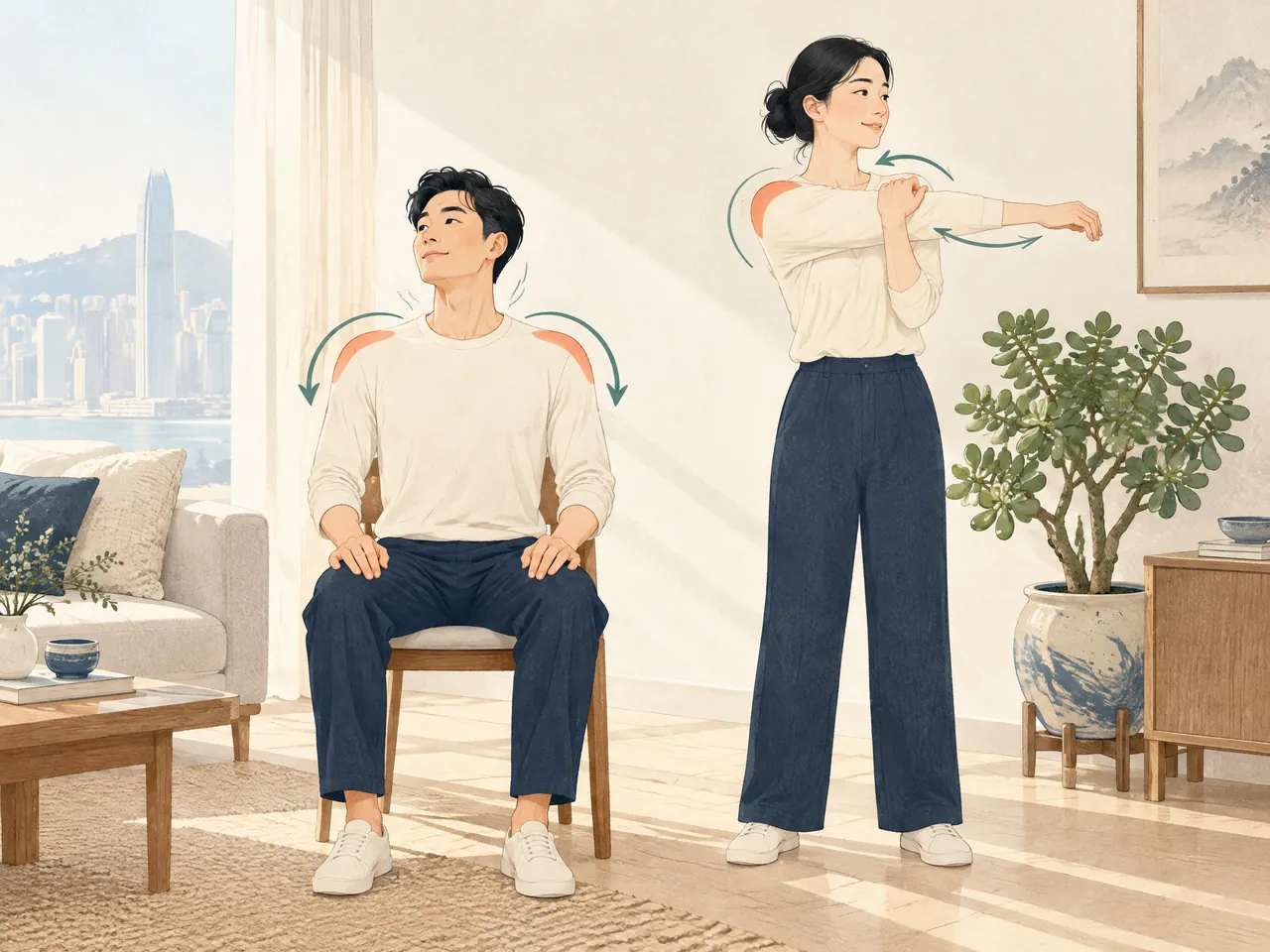
Choose gentle motion over complete rest when it feels tolerable. Slowly look left and right within the comfortable range, nod lightly, or move your shoulders, stopping before sharp pain. The neck-pain guideline includes range-of-motion exercises for people assessed as having acute neck pain with mobility deficits. [2] That is not a reason to copy a demanding video programme. For a new problem, check that easy movement stays controlled and does not bring on arm symptoms, dizziness, or marked worsening.
Use workarounds for tasks that require rapid head turns. Ask someone else to reverse a car, choose a route that does not require cycling, or move a laptop rather than twisting toward it. The NHS cautions against driving or cycling when you cannot move your neck because it may be dangerous. [1] If you want a more focused explanation of the morning pattern, why do I wake up with a stiff neck explores common everyday contributors without assuming that every wake-up symptom has the same cause.

Heat, Cold and Movement for Stiff Neck Causes, What Causes Neck Pain After Sleeping, and Acute Neck Pain and Stiffness
Heat and cold are comfort measures, not diagnostic tests. If either feels soothing, protect the skin with cloth and use a limited session rather than falling asleep with it in place. The NHS gives examples of a wrapped cold pack for five minutes or a wrapped hot-water bottle for 20 minutes, and warns against direct skin contact. [1] Stop for unusual pain, numbness, marked redness, pallor, or blistering. People with reduced sensation or circulation concerns should ask a clinician or pharmacist first.
Do not judge the value of heat, cold, or movement by whether discomfort disappears instantly. A better measure is whether you can carry out a small daily task with less guarding afterward and whether the overall trend is improving. Keep a brief note of onset, any injury, sleep position changes, arm symptoms, headaches, fever, and what helps or aggravates the problem. This record can make a professional conversation more precise if self-care is not enough. A soft collar is not a default solution: the NHS advises keeping the neck moving unless a doctor tells you otherwise. [1]
Stiff Neck Causes, What Causes Neck Pain After Sleeping, and Acute Neck Pain and Stiffness: When to Seek Help
Stop treating the problem as routine stiffness when the context changes. Neck pain after a substantial fall, road-traffic collision, sporting impact, or other significant trauma needs medical assessment because injury can involve more than sore muscles. Do not try to ‘put it back’ with a forceful twist. For a related overview of what should prompt an evaluation after trauma, see upper back pain after a fall or injury. If movement is unsafe, arrange urgent care rather than driving yourself.
Some symptoms require urgent attention even if the neck first felt ordinarily stiff. Harvard Health highlights fever with headache and neck stiffness; arm pain with weakness, numbness, or tingling; loss of bowel or bladder control; instability after impact; persistent swollen glands; and chest pain or pressure. [4] Do not manage breathing or swallowing difficulty, new confusion, or trouble walking with home stretching or complementary care. In an emergency, seek emergency medical help.
For less urgent but unresolved symptoms, do not wait indefinitely for a pillow adjustment to solve the problem. Book medical advice if pain or stiffness is not improving after a few weeks, if it keeps recurring, if usual pain-relief measures have not helped, or if you are worried about the pattern. [1] When neck discomfort is accompanied by a broader upper-back problem, upper back pain medical assessment may help you prepare useful questions for the appointment.
Warning Signs Alongside Stiff Neck Causes, What Causes Neck Pain After Sleeping, and Acute Neck Pain and Stiffness
Pay attention to symptoms that are new, spreading, or affecting strength and control. Tingling with a weak hand, arm pain, loss of balance, or difficulty using the hands needs prompt clinical advice. A neck that feels unusually unstable after a significant impact is not a situation to test at home. These warning signs do not make every sore neck alarming; they help prevent a serious condition being mistaken for a sleeping-position problem. [4]
Fever with severe headache and marked neck stiffness requires particular urgency because serious infection is one possibility. [4] Chest discomfort or pressure with neck pain must also be treated as a medical concern, not as a reason for massage or exercise. When in doubt, describe the full picture rather than only saying ‘stiff neck’: when it started, whether there was trauma, where pain travels, what makes it worse, and whether there are neurological or systemic symptoms. Those details support appropriate triage.
Professional Assessment for Stiff Neck Causes, What Causes Neck Pain After Sleeping, and Acute Neck Pain and Stiffness
A clinician may ask about the onset, a recent fall or collision, sleep and work positions, headache, fever, arm symptoms, and medical history. They can examine movement, strength, sensation, and other findings before deciding whether tests or referral are needed. This is more reliable than trying to identify one muscle from a diagram. Bring the short symptom note described above, and say if you are taking medicines that affect bleeding or have a condition that changes what treatments are appropriate. A professional assessment is especially important before any forceful neck technique is considered.
Some people may wish to discuss Chinese medicine consultation or acupuncture as an adjunct after urgent causes have been addressed. The U.S. National Center for Complementary and Integrative Health says acupuncture may be helpful for some back or neck pain, while research findings vary by comparison and do not establish a guaranteed result for every episode of acute waking stiffness. [3] Acupuncture should be delivered with sterile, single-use needles by a properly qualified practitioner; improper practice can cause serious complications. [3] It should not delay medical assessment of trauma, fever, neurological change, chest symptoms, or rapidly worsening pain.
Care and health guide
Neck discomfort: care information
This directory brings together services, reading, and visit information related to neck discomfort, to help you prepare questions for a consultation.
When neck discomfort affects your day, noting when it occurs, its relation to activity, and what you have already tried can help prepare a consultation; acupuncture for neck pain is a relevant service or reading entry point.
Individual circumstances differ, and acupuncture Hong Kong offers related information to help you understand options and prepare questions.


Your questions, answered
Frequently asked questions
Why does my neck hurt after sleeping?
An awkward sustained position during sleep can contribute, but waking pain does not prove one pillow or one muscle is responsible. Consider whether pain is local or travels into an arm, whether there was an injury, and whether gentle movement is becoming easier.
Should I use heat or cold for a stiff neck?
Either can be used for comfort if it feels helpful. Wrap the pack or hot-water bottle in cloth, limit the session, and never sleep with it on the skin. Stop if skin changes, numbness, or worsening symptoms occur.
Can I exercise when I have acute neck pain and stiffness?
Gentle movement within a tolerable range can be reasonable for uncomplicated symptoms. Do not force a stretch or copy intensive exercises when pain is sharp, movement is unsafe, or symptoms include arm weakness, numbness, dizziness, or recent trauma.
When is a stiff neck an emergency?
Seek urgent medical help for fever with severe headache and marked neck stiffness, pain after major trauma, new weakness or numbness, loss of bowel or bladder control, chest pain or pressure, breathing difficulty, swallowing difficulty, confusion, or trouble walking.
Sources and further information
- [1] [1] NHS — Neck pain
Referenced for: Supports the common-cause examples, low firm pillow, wrapped heat or cold, keeping the neck moving, driving and cycling caution, and the advice to seek assessment for persistent pain, pins and needles, or a cold arm.
- [2] [2] Journal of Orthopaedic & Sports Physical Therapy — Neck Pain: Revision 2017
Referenced for: Supports the clinical classification categories and the statement that a programme of range-of-motion exercise is part of care for patients assessed with acute neck pain with mobility deficits.
- [3] [3] National Center for Complementary and Integrative Health — Acupuncture: Effectiveness and Safety
Referenced for: Supports cautious wording that acupuncture may help some neck-pain presentations and the safety information on sterile, single-use needles and risks of improper treatment.
- [4] [4] Harvard Health Publishing — When to seek immediate medical attention for neck pain
Referenced for: Supports the urgent-warning-sign language for fever, headache and neck stiffness; arm pain with weakness, numbness or tingling; bowel or bladder changes; injury-related instability; chest symptoms; and persistent swollen glands.