
TCM Lab · Health reading
Scalp Health and Hair Loss Management with Chinese Medicine
Published Updated
Hair shedding, widening part lines, a greasy or uncomfortable scalp, and changes in hair texture can feel connected, even when their causes are not obvious. Scalp health and hair loss management with Chinese medicine starts by putting those observations into a fuller health conversation rather than promising a one-size-fits-all answer. A Registered Chinese Medicine Practitioner may ask when the change began, whether it is diffuse or patchy, what the scalp feels like, and how sleep, food, stress, medicines, recent illness and family history fit the picture. That discussion helps identify what may need medical attention.
Appointments are confirmed through WhatsApp. If you have language requirements, please mention them in your enquiry.
The short answer
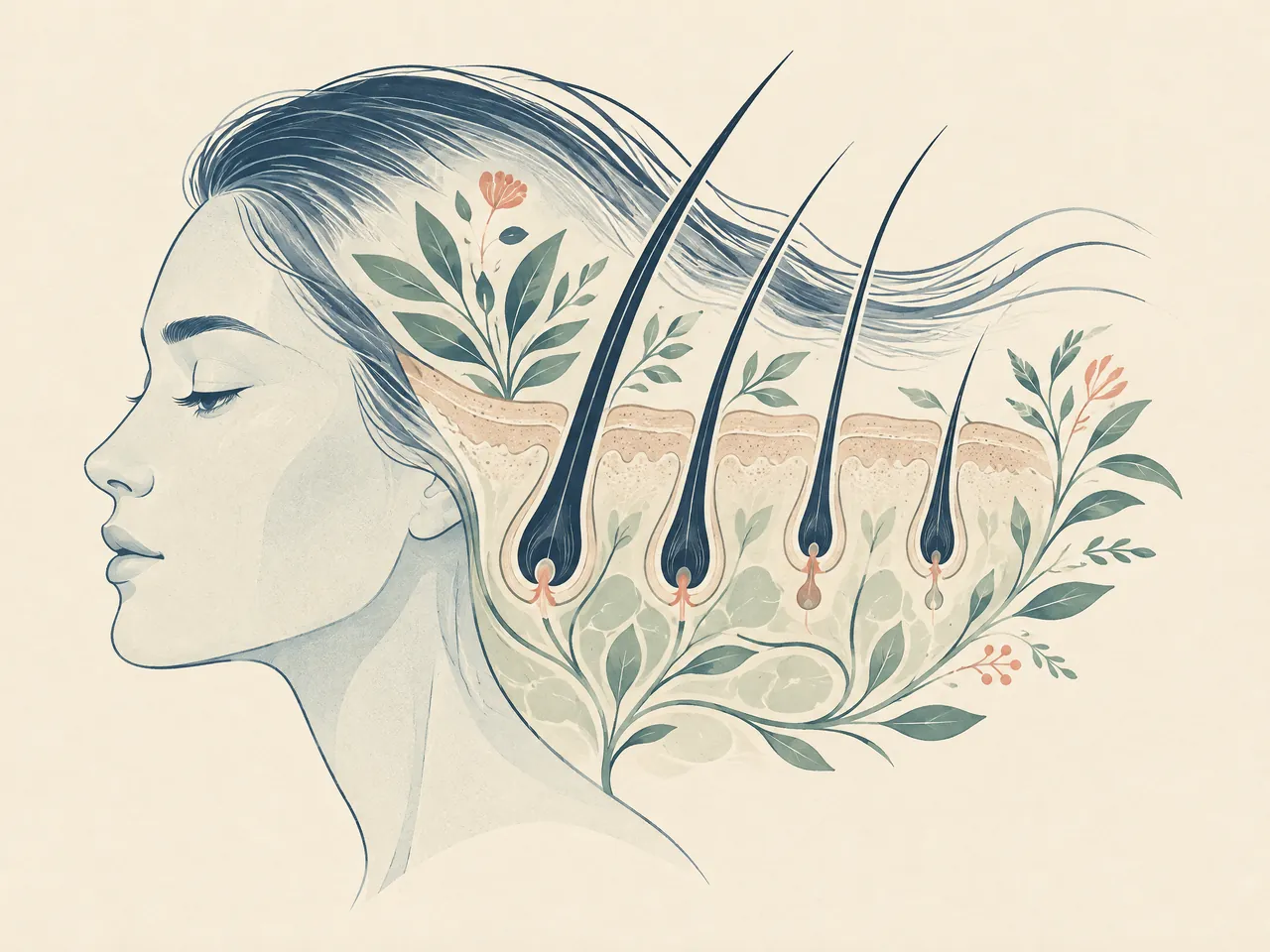
Scalp health and hair loss management in Chinese medicine is an individual consultation process, not a guaranteed hair-growth programme. A practitioner considers the pattern of shedding or thinning together with scalp symptoms, sleep, diet, stress, health history and current medicines. Depending on the consultation, herbal medicine, acupuncture or external-care advice may be discussed. Sudden, patchy or worrying hair loss should be medically assessed so that important causes are not overlooked.
Transparent pricing
See the fees.
Choose your care.
Explore our complete official price list, including first-trial prices, regular prices, packages and branch-specific options.
Opening WhatsApp prepares an enquiry; it does not send a message, take payment or confirm an appointment. Suitability and individual arrangements are confirmed during consultation.
Hair and scalp
All prices in HKDScalp health and hair-loss management
Includes AI scalp analysis, deep scalp and follicle cleansing, and scalp oil-control care.
HK$380 (first trial)
Regular price: HK$680
- 6 sessions: HK$3,480 (HK$580 per session)
- 12 sessions: HK$5,760 (HK$480 per session)
- 20 sessions: HK$8,600 (HK$430 per session)
- 30 sessions: HK$11,400 (HK$380 per session)
Hair acupuncture and Chinese herbal medicine package
Includes scalp acupuncture and 3 days of Chinese herbal medicine that does not require decoction.
HK$580 (single session)
Registered Chinese Medicine Practitioner consultation
- 6 sessions: HK$3,180 (HK$530 per session)
- 12 sessions: HK$5,760 (HK$480 per session)
- 20 sessions: HK$8,600 (HK$430 per session)
- 30 sessions: HK$11,400 (HK$380 per session)
Combined hair and scalp treatment
Combines acupuncture and Chinese herbal medicine with salon-level scalp and follicle care. Packages include complimentary hair-care shampoo and serum.
HK$1,260 (single session)
Combined treatment
- 8 sessions: HK$8,640 (HK$1,080 per session)
- 16 sessions: HK$15,680 (HK$980 per session)
- 20 sessions: HK$18,600 (HK$930 per session)
- 30 sessions: HK$26,400 (HK$880 per session)
Weight management
All prices in HKDFull-body acupoint embedding for weight management
Includes full-body acupoint embedding. Packages include complimentary Chinese herbal medicine for weight management, with the number of included days scaled to the package. Embedding material and the individual treatment arrangement are confirmed during consultation; this is not a cosmetic thread lift.
HK$980 (single session)
No trial session
- 10 sessions: HK$7,800 (HK$780 per session)
- 20 sessions: HK$14,600 (HK$730 per session)
- 30 sessions: HK$20,400 (HK$680 per session)
Facial acupuncture
All prices in HKDFacial acupuncture (basic)
Includes facial acupuncture and meridian-based facial care, including care for facial puffiness.
HK$480 (first trial)
Regular price: HK$680
- 10 sessions: HK$5,200 (HK$520 per session)
- 20 sessions: HK$9,600 (HK$480 per session)
- 30 sessions: HK$13,500 (HK$450 per session)
Facial acupuncture (advanced)
Includes enhanced facial acupuncture with a specially formulated moisturising mask and serum.
HK$780 (first trial)
Regular price: HK$1,180
- 10 sessions: HK$9,000 (HK$900 per session)
- 20 sessions: HK$16,600 (HK$830 per session)
- 30 sessions: HK$23,400 (HK$780 per session)
Pain care
All prices in HKDExtracorporeal shockwave treatment
Shockwave treatment for deep-tissue and fascial care. The Kwun Tong clinic offers the multi-area options shown below.
Priced by branch
Branch-specific pricing
Prince Edward: HK$250 per area
Kwun Tong: HK$250 for 1 area / HK$450 for 2 areas / HK$600 for 3 areas
Pain care (manual therapy)
Includes Chinese medicine musculoskeletal assessment, manual joint techniques and tui na.
HK$580 (single session)
Chinese medicine musculoskeletal assessment
Pain care (acupuncture and manual therapy)
Combines acupuncture and manual therapy.
HK$680 (single session)
Combined care
Chinese medicine
All prices in HKDAcupuncture and Chinese herbal medicine package
Includes a Chinese medicine consultation with pulse assessment, body acupuncture and 3 days of Chinese herbal granules that do not require decoction.
HK$580 (single session)
Chinese medicine consultation with pulse assessment
Scalp Health and Hair Loss Management: How Chinese Medicine Assesses the Whole Person
A useful scalp health and hair loss management consultation begins with description, not assumption. Some people notice extra strands while washing; others first see a broader part, less volume in a ponytail, hair breaking along the front, or a scalp that feels oily, tight or itchy. Timing also matters, particularly when shedding follows illness, weight change, stress or a new medicine. The NHS notes that hair loss can have several causes, including illness, stress, weight loss and iron deficiency, and advises speaking with a GP if you are worried about hair loss. [1]
The aim of the consultation is not to label every concern from the appearance of the scalp alone. It is to gather a coherent history and to identify the next sensible question. A practitioner may ask about menstrual or other hormonal changes where relevant, appetite and digestion, energy, sleep quality, temperature comfort, bowel habits and emotional pressure, alongside hair and skin observations. If you already have a diagnosis, laboratory results or advice from another clinician, bring that information. It helps keep the discussion connected to your wider care rather than treating the scalp as separate from the rest of you.
Scalp Health and Hair Loss Management Through Traditional Pattern Assessment
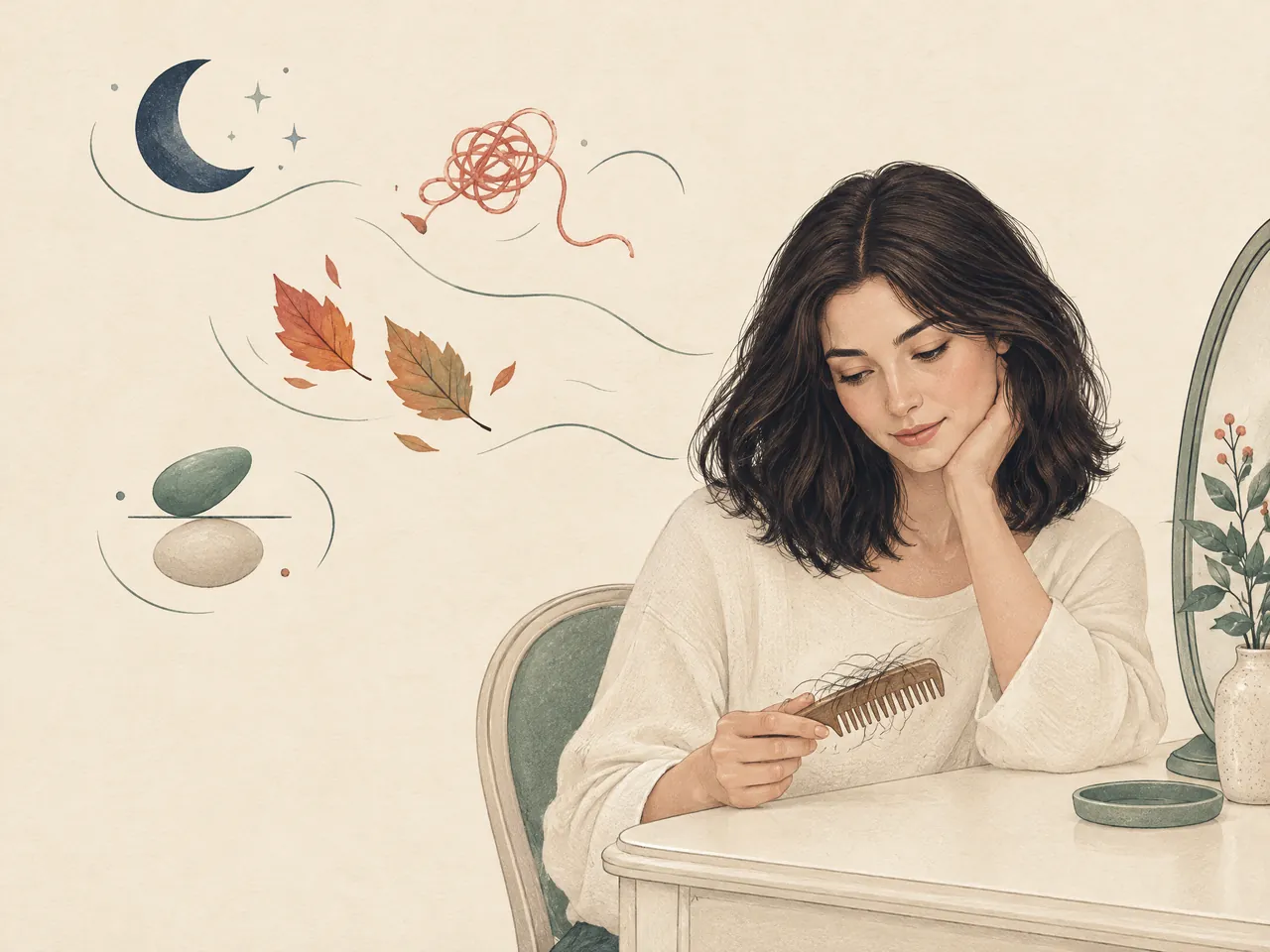
In traditional Chinese medicine, hair concerns are often discussed through pattern assessment. You may hear terms relating to qi and blood, liver and kidney, or damp-heat. These are traditional clinical descriptions used to organise a person’s signs and symptoms; they are not a substitute for a biomedical diagnosis, blood test or dermatology examination. A practitioner considers the combination of observations rather than matching one symptom to one fixed formula. For example, fine hair with fatigue may prompt different questions from scalp oiliness with flakes and itch, even if both people describe thinning.
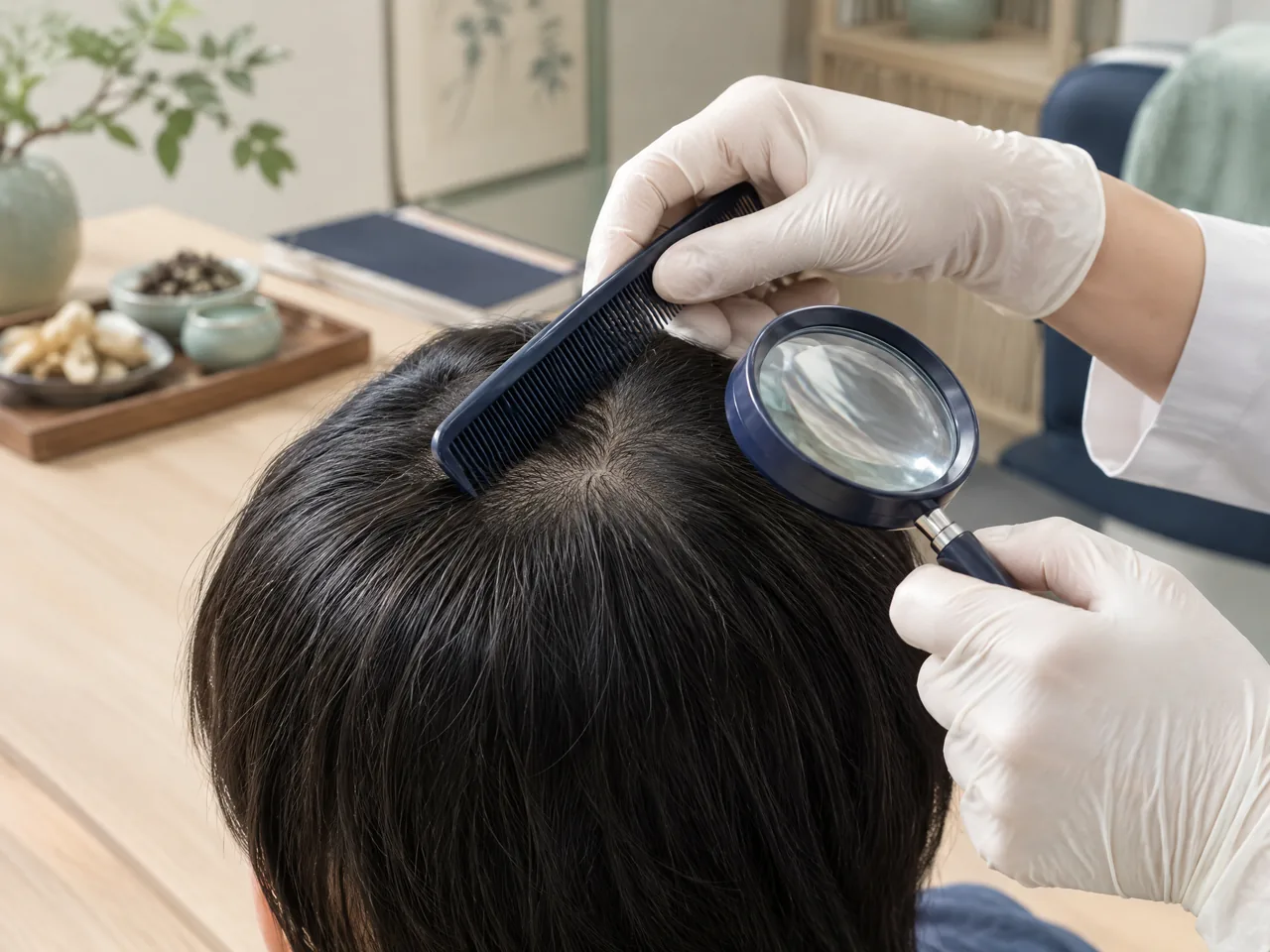
Assessment may include looking at the hair and scalp, listening to the history, asking focused questions and, where appropriate in the consultation, traditional tongue and pulse observations. The value is in explaining what the practitioner is considering and why. It is reasonable to ask which features of your history matter most, what other causes still need checking, and what change would mean you should seek medical care promptly. If the concern is new or unclear, reading about hair loss assessment before your appointment can help you prepare a useful timeline rather than relying on memory in the room.

Scalp Health and Hair Loss Management and Your Daily Health History
Daily detail is clinically useful when it is specific. Instead of saying that stress is high, note whether sleep has become short or broken, whether meals are skipped, and when the hair change followed. Instead of saying that the scalp is bad, record whether there is itch, tenderness, visible scale, oiliness, redness, breakage or simply more hair in the brush. A brief set of photographs taken in similar lighting can be helpful for your own comparison, although photographs do not diagnose the cause. Tell the practitioner about colouring, bleaching, tight styles, extensions, heat styling and new shampoos as well as internal symptoms.
Your medical and medicine history belongs in the conversation. Mention recent fever or surgery, major dietary change, pregnancy or post-partum changes where applicable, chronic conditions, supplements and prescription or over-the-counter medicines. This is especially important before discussing herbs, because ‘natural’ does not automatically mean appropriate alongside every medicine or condition. The NHS recommends understanding what may be causing hair loss before attending a commercial hair clinic. [1] For a focused way to organise this information, our guide on does hair loss need a blood test explains the questions that can guide a medical discussion without implying that every person needs the same tests.
Compare your options
| What you notice | Useful details to record | Why it helps the discussion |
|---|---|---|
| Shedding or thinning | When it started, whether it is gradual or sudden, and where it is most visible | Helps separate a broad timeline from a localised scalp concern and identify questions for medical assessment |
| Scalp discomfort | Itch, tenderness, oiliness, flakes, redness, product reactions and the areas involved | Gives a clearer picture than simply saying the scalp feels unhealthy |
| Recent health changes | Illness, weight change, surgery, major stress, menstrual or post-partum changes where relevant | Connects hair observations with events that may need further discussion |
| Medicines and supplements | Names, doses where known, new starts and any previous reactions | Supports safer consideration of herbal medicine and coordinated care |
| Hair and scalp routine | Washing frequency, colouring or bleaching, tight styles, heat tools and products used | Identifies possible sources of breakage, traction or irritation to discuss |
On smaller screens, scroll the table sideways to compare all columns.
Scalp Health and Hair Loss Management: Common Chinese Medicine Approaches
After history-taking, the discussion may turn to options that fit the findings, your preferences and any care already underway. In Hong Kong, Chinese medicine services may describe individualised consultations, Chinese herbal treatment and acupuncture when addressing hair loss or thinning. CUHK’s Integrative Medical Centre, for example, lists hair loss, thinning and falling hair among concerns within a programme that uses personalised treatment plans, Chinese medicines and acupuncture; its page also states that plans are subject to clinical judgement. [2] That illustrates the vocabulary used in local practice, not a promise that a particular method will work for every cause of hair loss.
A clear consultation separates what is being proposed from what is known. Ask whether an option is intended to address a scalp symptom, support a broader traditional pattern discussion, or sit alongside medical treatment. Ask what the expected commitment is, what practical precautions apply, and when the plan should be reviewed. The page on Chinese medicine for hair loss offers related context, while your own plan should remain personal. Hair growth and shedding change over time, so it is more honest to agree on observations to review than to promise a fixed course or a permanent result.
Scalp Health and Hair Loss Management with Herbal Medicine Considerations
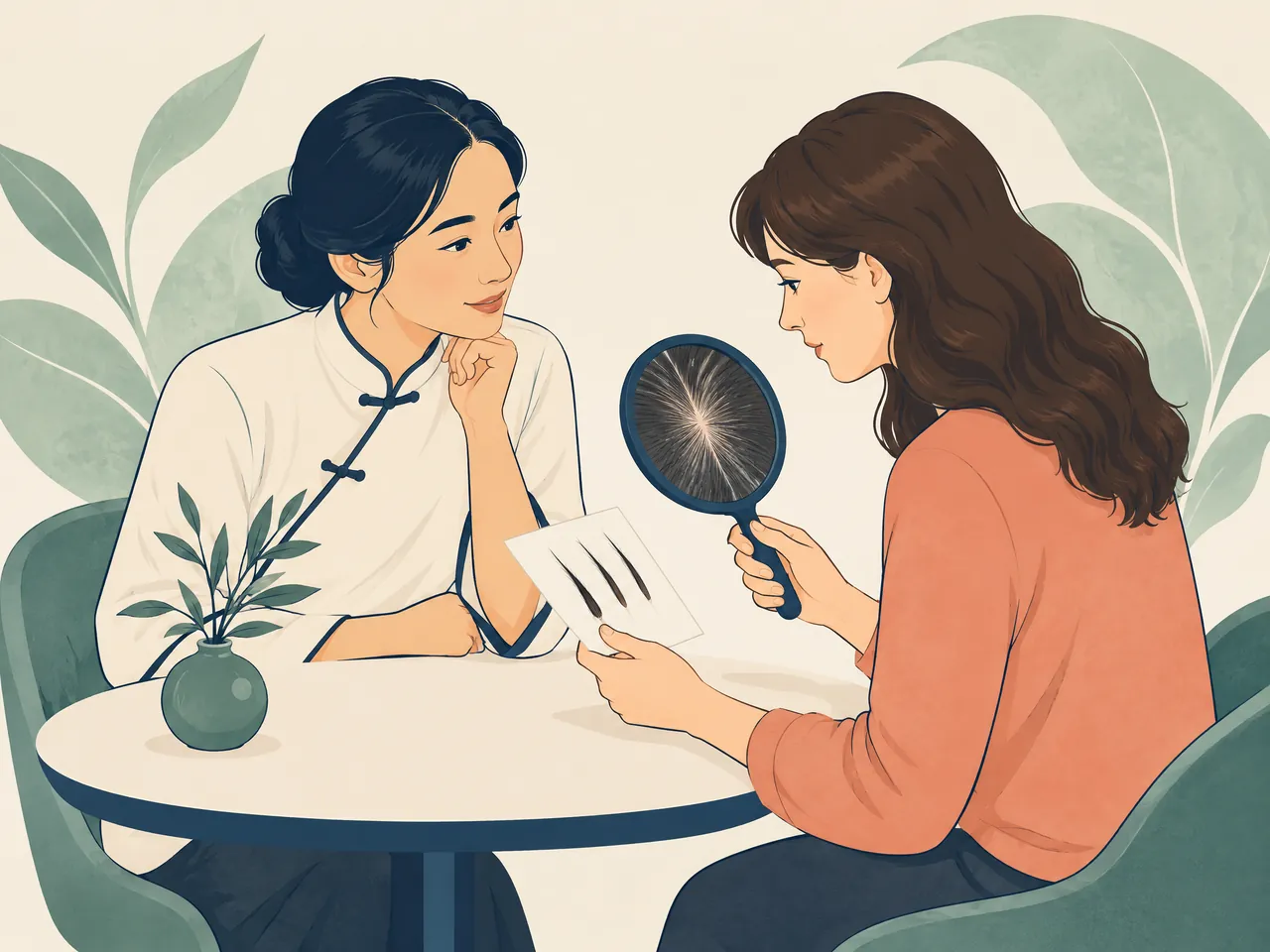
If herbal medicine is discussed, the prescription should follow the consultation rather than an online list of ‘hair herbs’. Traditional practitioners may select herbs according to the overall pattern they have identified and adjust the approach as the person’s symptoms, tolerance or circumstances change. Tell the practitioner about all supplements and medicines, allergies, pregnancy or breast-feeding where relevant, liver or kidney concerns, and any planned procedures. It is also sensible to ask how and when to take the prescribed medicine, what reactions should be reported, and whether other clinicians involved in your care need to know about it.
Food is often part of the same conversation, but a restrictive diet is not automatically helpful for thinning hair. A practitioner may ask about irregular meals, highly processed or rich foods, appetite and digestion before offering diet suggestions within a traditional approach. Practical advice should fit your health needs and should not replace medical treatment for a diagnosed deficiency or disease. If a person has recently lost weight, feels unwell or has a dramatic change in shedding, the priority is to make sure appropriate medical assessment is not delayed. This is why a good plan leaves room for both Chinese medicine consultation and conventional care when needed.
Scalp Health and Hair Loss Management with Acupuncture and External Care
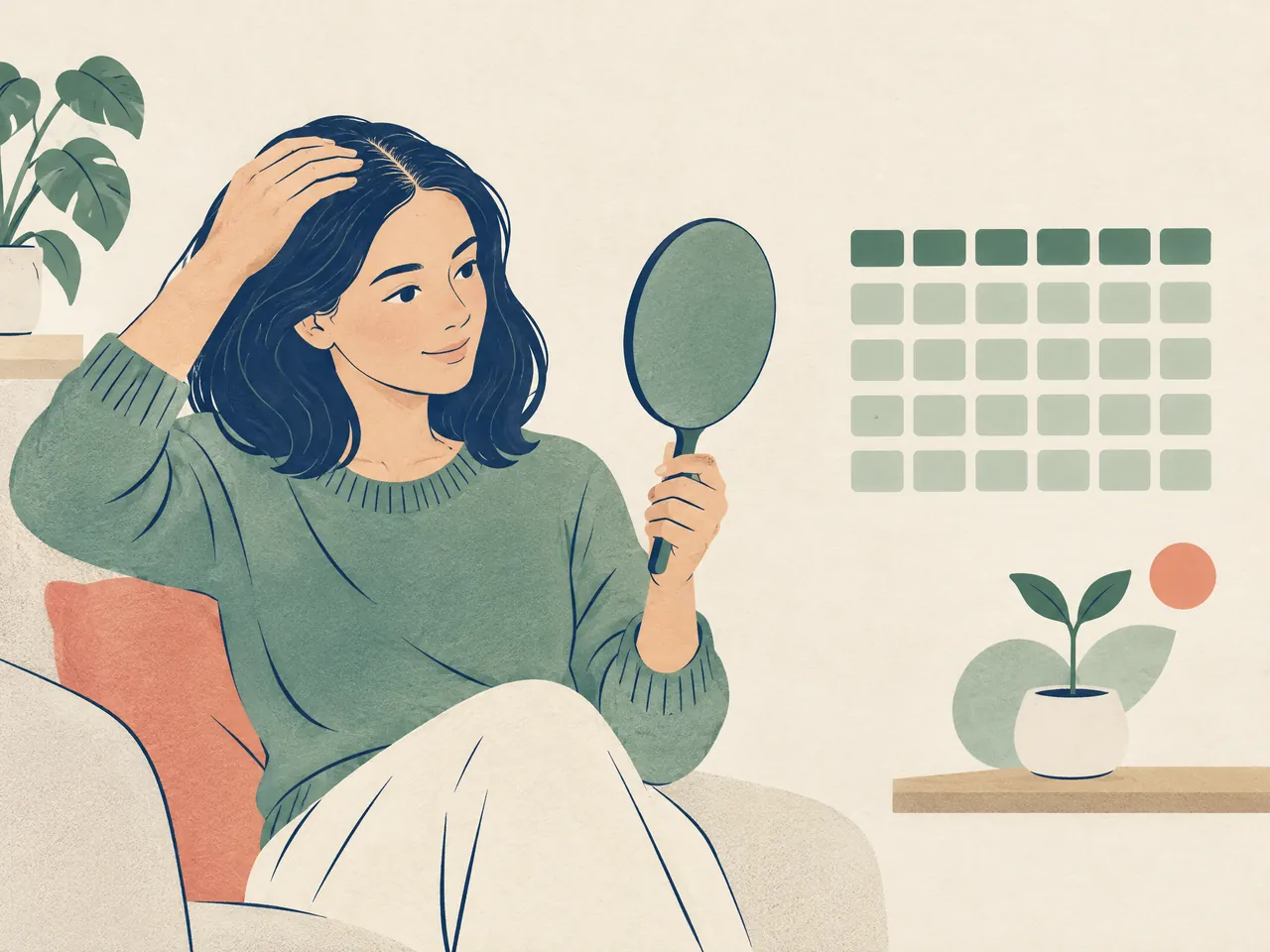
Acupuncture may be discussed as part of an individual Chinese medicine plan. Before deciding, ask what the appointment involves, whether the practitioner has identified any reasons to postpone treatment, and how the plan relates to your wider health history. The experience should not be presented as an automatic solution for every kind of shedding, thinning or scalp discomfort. CUHK’s service page refers to acupuncture alongside Chinese medicines within an individualised programme, which is consistent with discussing it as an option subject to clinical judgement rather than a universal outcome. [2]
External care is often the most immediate place to reduce avoidable irritation. Gentle cleansing suited to your scalp, rinsing products thoroughly, avoiding aggressive scratching and limiting traction or repeated high heat may be worth discussing. The right routine depends on whether the concern is oiliness, flaking, sensitivity, breakage or a combination. Bring the names or photographs of products you use, including dry shampoo, styling sprays and scalp serums. For readers comparing terms used online, our article on hair thinning treatment can help distinguish a treatment enquiry from a careful assessment of the underlying concern.
Scalp Health and Hair Loss Management: Expectations and Everyday Support
Meaningful scalp health and hair loss management is measured by careful review, not by dramatic claims. Hair has its own growth cycle, and the amount of visible change can be affected by the original cause, the duration of the concern, styling, breakage, health events and the way changes are observed. The NHS states that no hair-loss treatment is 100% effective. [1] This is a helpful reminder to be cautious with claims that guarantee regrowth, a fixed number of sessions or a permanent result. Your consultation should make room for questions and for changing direction when the history or symptoms point elsewhere.
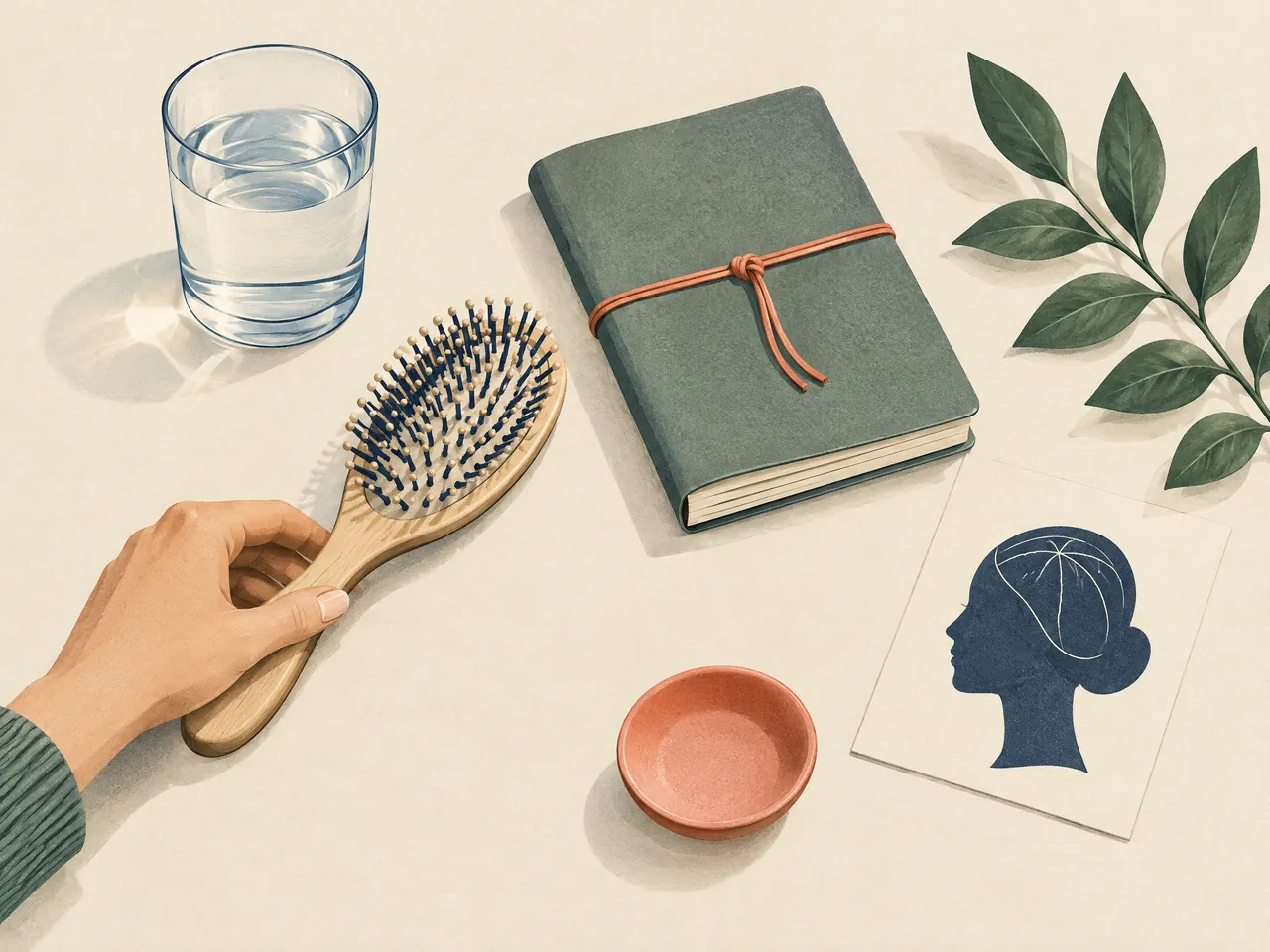
Support at home is not a replacement for diagnosis, but it can make the next review more informative. Keep notes that distinguish shedding from breakage and scalp discomfort from appearance concerns. Focus on a few sustainable habits rather than trying every supplement, oil or treatment at once. If hair loss is distressing, say so; the impact on confidence and daily life is relevant to care. The NHS recognises that hair loss can be upsetting and suggests discussing its effect on wellbeing with a GP. [1] A plan that respects both physical observations and emotional strain is more useful than dismissing either.
Scalp Health and Hair Loss Management Requires Ongoing Review
At follow-up, a practitioner can revisit the original timeline, scalp comfort, sleep, digestion, stress load and any changes in medicines or health. This does not mean every visit must lead to a new intervention. Sometimes the most helpful outcome is recognising that symptoms are stable, deciding to seek another medical opinion, or simplifying a routine that is irritating the scalp. Bring questions about any change you have noticed and be direct about what is difficult to follow. Shared information makes it easier to judge whether the plan remains appropriate.
Do not wait for a routine Chinese medicine review if there is a sudden or rapidly worsening change, clearly patchy loss, scalp pain, marked redness, sores, signs of infection, or other severe symptoms. Seek advice from an appropriately qualified healthcare professional. If you are uncertain about urgency, the practical question is when to see a doctor for hair loss; it is better to clarify possible causes than to delay evaluation while trying multiple products. A Chinese medicine consultation can then be considered with a clearer picture of your health needs.

Scalp Health and Hair Loss Management, Sleep, Diet and Scalp Care
Everyday support works best when it is realistic. Set a regular sleep window if you can, eat regular meals that meet your nutritional needs, and avoid treating food as a quick cure for hair change. If hectic workdays lead to skipped meals or late washing, describe that honestly rather than feeling that you have failed a regimen. Your practitioner can use the pattern to discuss manageable changes. Stress support might mean protecting a wind-down period, speaking with a trusted person or seeking professional help when anxiety or low mood is becoming difficult to manage.
Choose scalp care for comfort and practicality. Wash often enough to remove sweat, oil and product build-up without harsh scrubbing; loosen hairstyles that pull; and pause a product if it causes burning or a clear worsening of irritation. Avoid changing several things in the same week, because it becomes hard to tell what is helping or aggravating the scalp. If you would like to discuss an individual consultation, TCM Lab can be contacted by WhatsApp at +852 6940 5663. You may also enquire at the Kwun Tong Chinese medicine clinic or the Chinese medicine clinic Prince Edward about appointment arrangements.
Care and health guide
Hair and scalp care information
This directory brings together services, reading, and visit information related to hair and scalp care, to help you prepare questions for a consultation.
For questions about hair or scalp care, noting the everyday concerns and service questions you want to discuss can help prepare a consultation; Chinese medicine for hair loss is a relevant service or reading entry point.
People may have different priorities, and acupuncture Hong Kong offers related information to help you understand options and prepare questions.

Your questions, answered
Frequently asked questions
Is scalp health and hair loss management with Chinese medicine suitable for everyone?
Not necessarily. Suitability depends on the pattern of symptoms, health history, medicines, current medical care and consultation findings. Sudden, patchy, painful or rapidly worsening hair loss needs appropriate medical attention. Share diagnoses, test results and medicines so that a Registered Chinese Medicine Practitioner can decide whether Chinese medicine discussion is appropriate and whether other assessment should come first.
What should I prepare before discussing scalp health and hair loss management?
Prepare a simple timeline of hair and scalp changes, photographs taken in comparable lighting if you have them, relevant medical history, medicines and supplements, and any previous test information. Also note sleep, meals, stress, recent illness, major weight change, family history and hair-care habits. This helps the consultation move beyond a general description of hair loss.
Can Chinese medicine for scalp health and hair loss guarantee regrowth?
No. A consultation cannot guarantee regrowth, permanent improvement, a fixed session number or a particular speed of change. Hair and scalp concerns have different causes, and responses differ between people. A responsible plan explains what is being considered, reviews progress and symptoms, and refers back to medical assessment when that is the safer next step.
Can I use herbal medicine, acupuncture and my current medical care together?
Sometimes coordinated care may be possible, but it should not be assumed. Bring a complete medicine and supplement list, plus information about diagnoses and planned procedures. Ask the practitioner about potential precautions and make sure other relevant clinicians know about treatments you are considering. Do not stop prescribed medicines because of a hair or scalp concern without medical advice.
Sources and further information
- [1] NHS: Hair loss
Referenced for: Supports the general discussion of varied hair-loss causes, when to speak with a GP, the advice to understand causes before attending a commercial clinic, emotional impact, and the limitation that no treatment is 100% effective.
- [2] CUHK Integrative Medical Centre: Chinese Medicine for Skin Condition Improvement Program
Referenced for: Supports local English service terminology for hair loss, thinning and falling hair, individualised Chinese medicine consultation, Chinese herbal treatment and acupuncture; it does not support outcome guarantees.