
TCM Lab · Health reading
Can acupuncture help tennis elbow? Does acupuncture hurt for tennis elbow? How long does acupuncture for tennis elbow take?
Published Updated
Pain on the outside of the elbow can make a coffee mug, laptop bag or damp towel feel unexpectedly demanding. Often called tennis elbow, the pattern is not limited to sport: repeated gripping and wrist use can overload the tissues that help extend the wrist and fingers. Acupuncture may be considered as part of symptom management after an individual assessment, alongside changes to the activity that keeps provoking the pain. It is not a way to repair a fracture, dislocation or suspected tendon tear. This guide explains what may be assessed, what needling may feel like, and why the practical question is not simply whether to have a session, but how to reduce the elbow load that follows it.
Appointments are confirmed through WhatsApp. If you have language requirements, please mention them in your enquiry.
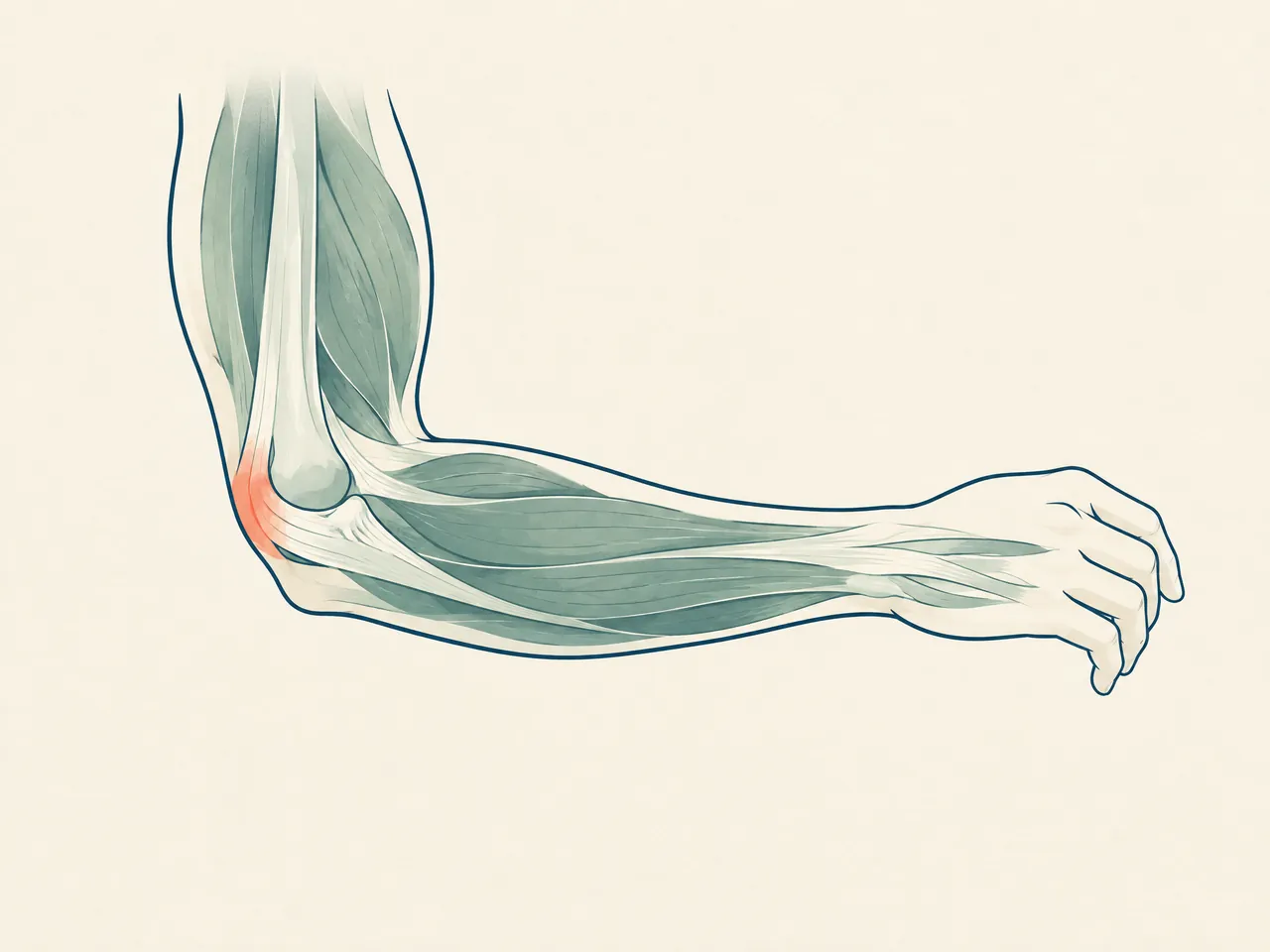
The short answer
Acupuncture may be considered for tennis-elbow symptom management when an assessment indicates it is appropriate, but research does not establish a guaranteed or lasting benefit for every person. Needles are fine and sensations vary from a brief prick to an ache, tingling, heaviness or warmth. A needling portion commonly lasts around 20–30 minutes. The number and timing of visits depend on symptoms, elbow load, response and any need for medical assessment rather than a fixed course.
Transparent pricing
See the fees.
Choose your care.
Explore our complete official price list, including first-trial prices, regular prices, packages and branch-specific options.
Opening WhatsApp prepares an enquiry; it does not send a message, take payment or confirm an appointment. Suitability and individual arrangements are confirmed during consultation.
Pain care
All prices in HKDExtracorporeal shockwave treatment
Shockwave treatment for deep-tissue and fascial care. The Kwun Tong clinic offers the multi-area options shown below.
Priced by branch
Branch-specific pricing
Prince Edward: HK$250 per area
Kwun Tong: HK$250 for 1 area / HK$450 for 2 areas / HK$600 for 3 areas
Pain care (manual therapy)
Includes Chinese medicine musculoskeletal assessment, manual joint techniques and tui na.
HK$580 (single session)
Chinese medicine musculoskeletal assessment
Pain care (acupuncture and manual therapy)
Combines acupuncture and manual therapy.
HK$680 (single session)
Combined care
Hair and scalp
All prices in HKDScalp health and hair-loss management
Includes AI scalp analysis, deep scalp and follicle cleansing, and scalp oil-control care.
HK$380 (first trial)
Regular price: HK$680
- 6 sessions: HK$3,480 (HK$580 per session)
- 12 sessions: HK$5,760 (HK$480 per session)
- 20 sessions: HK$8,600 (HK$430 per session)
- 30 sessions: HK$11,400 (HK$380 per session)
Hair acupuncture and Chinese herbal medicine package
Includes scalp acupuncture and 3 days of Chinese herbal medicine that does not require decoction.
HK$580 (single session)
Registered Chinese Medicine Practitioner consultation
- 6 sessions: HK$3,180 (HK$530 per session)
- 12 sessions: HK$5,760 (HK$480 per session)
- 20 sessions: HK$8,600 (HK$430 per session)
- 30 sessions: HK$11,400 (HK$380 per session)
Combined hair and scalp treatment
Combines acupuncture and Chinese herbal medicine with salon-level scalp and follicle care. Packages include complimentary hair-care shampoo and serum.
HK$1,260 (single session)
Combined treatment
- 8 sessions: HK$8,640 (HK$1,080 per session)
- 16 sessions: HK$15,680 (HK$980 per session)
- 20 sessions: HK$18,600 (HK$930 per session)
- 30 sessions: HK$26,400 (HK$880 per session)
Weight management
All prices in HKDFull-body acupoint embedding for weight management
Includes full-body acupoint embedding. Packages include complimentary Chinese herbal medicine for weight management, with the number of included days scaled to the package. Embedding material and the individual treatment arrangement are confirmed during consultation; this is not a cosmetic thread lift.
HK$980 (single session)
No trial session
- 10 sessions: HK$7,800 (HK$780 per session)
- 20 sessions: HK$14,600 (HK$730 per session)
- 30 sessions: HK$20,400 (HK$680 per session)
Facial acupuncture
All prices in HKDFacial acupuncture (basic)
Includes facial acupuncture and meridian-based facial care, including care for facial puffiness.
HK$480 (first trial)
Regular price: HK$680
- 10 sessions: HK$5,200 (HK$520 per session)
- 20 sessions: HK$9,600 (HK$480 per session)
- 30 sessions: HK$13,500 (HK$450 per session)
Facial acupuncture (advanced)
Includes enhanced facial acupuncture with a specially formulated moisturising mask and serum.
HK$780 (first trial)
Regular price: HK$1,180
- 10 sessions: HK$9,000 (HK$900 per session)
- 20 sessions: HK$16,600 (HK$830 per session)
- 30 sessions: HK$23,400 (HK$780 per session)
Chinese medicine
All prices in HKDAcupuncture and Chinese herbal medicine package
Includes a Chinese medicine consultation with pulse assessment, body acupuncture and 3 days of Chinese herbal granules that do not require decoction.
HK$580 (single session)
Chinese medicine consultation with pulse assessment
Can acupuncture help tennis elbow? — Does acupuncture hurt for tennis elbow? — How long does acupuncture for tennis elbow take? Understanding the condition
Tennis elbow is a familiar name for lateral elbow pain related to the tendon area on the outer side of the elbow. It may begin after a change in work, training or home tasks rather than after one dramatic incident. The wrist and finger extensor muscles work whenever you pick up a pan with the palm down, steady a suitcase, use hand tools, type while keeping the wrist tense, or repeatedly click and drag a mouse. If that demand exceeds current capacity, pain may show up at the outside of the elbow or travel a short distance into the forearm. The Hong Kong College of Orthopaedic Surgeons describes discomfort with gripping, lifting and wringing as common features of this pattern [1].
The label can be misleading. You do not need a racket to develop it, and not every ache at the outer elbow is tennis elbow. A recent fall, a sudden snap, marked loss of movement, pain that travels from the neck, or altered feeling in the hand deserves a broader medical assessment. In traditional Chinese medicine, persistent pain after repeated strain may be discussed in terms of local obstruction and impaired movement. That perspective can inform an acupuncture consultation, but it does not identify a fracture or other structural problem. The starting point is therefore a clear account of where the pain is, what loads it, and what has changed in daily life.
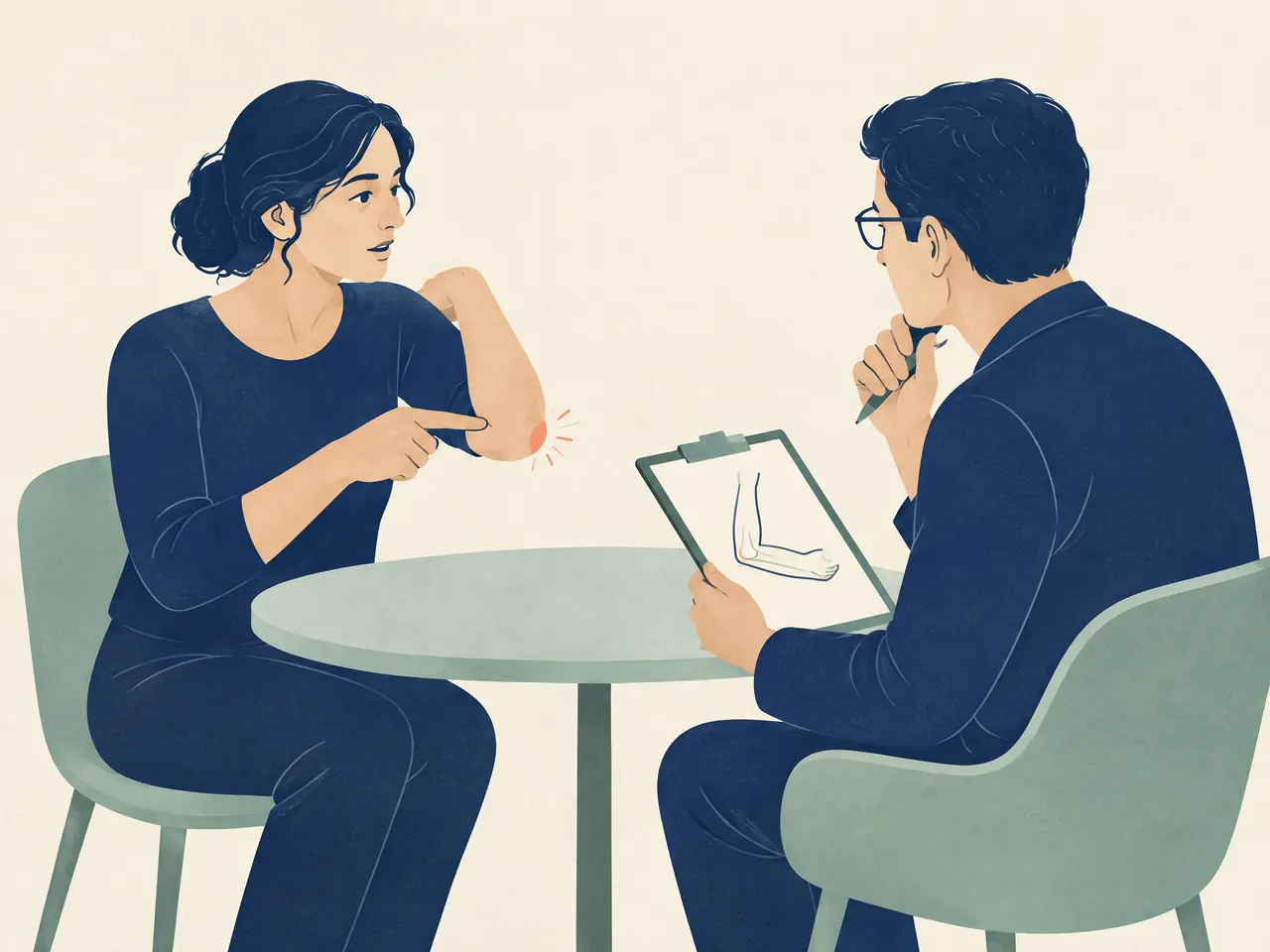
Can acupuncture help tennis elbow? — Does acupuncture hurt for tennis elbow? — How long does acupuncture for tennis elbow take? Recognising overuse
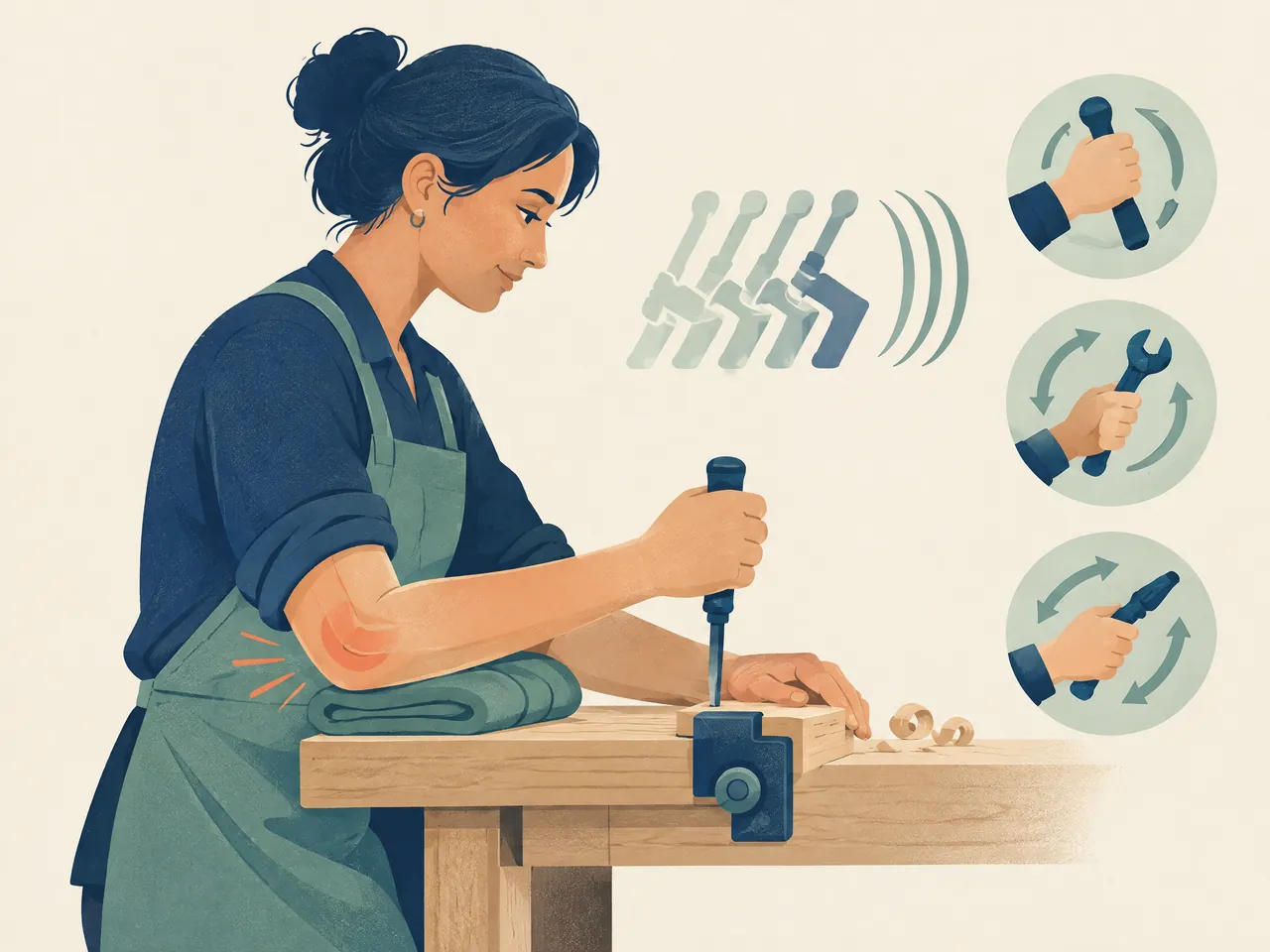
Overuse does not necessarily mean doing one activity for many hours. A smaller task repeated while the elbow is straight and the wrist is held firm can be enough to make the area noticeable. People commonly report pain when shaking hands, opening a tight jar, lifting a kettle, carrying groceries, wringing laundry, or using a screwdriver. Compare the painful side with the other side during ordinary tasks. Is the grip weaker because pain appears? Does the discomfort settle when the task stops and return with the next similar load? These observations help distinguish a load-sensitive pattern from a vague elbow complaint.
A useful next step is to write down the last week rather than guessing from memory. Note the task, how long it lasted, the grip needed, the wrist position and whether discomfort arose during the task or afterwards. Include sport, gaming, childcare, cooking, cleaning and computer use. This gives an assessment more to work with than a pain score alone. It can also show a practical place to intervene: smaller loads, a two-handed lift, a different grip, a pause between repetitive jobs, or temporary help with a painful chore. For a related discussion focused on symptoms after work or sport, see tennis elbow pain after activity.

Can acupuncture help tennis elbow? — Does acupuncture hurt for tennis elbow? — How long does acupuncture for tennis elbow take? Checking elbow load
Elbow load is not just the weight in the hand. A light object held far from the body, a tightly squeezed handle, a repeated wrist extension, or a long uninterrupted task may all increase demand. A barista tamping coffee, an office worker switching constantly between keyboard and trackpad, and a parent lifting a child under the arms may each use the same outer-elbow tissues in different ways. The aim is not to stop all movement. It is to identify the combination of force, repetition, position and recovery that repeatedly triggers symptoms, then make a workable adjustment.
Consider a simple traffic-light check before a demanding activity. Green means the task can be done with a neutral wrist, comfortable grip and no meaningful increase in symptoms. Amber means modify it: lighten the load, move the object closer, change hands, use a larger handle or take a pause. Red means stop and seek assessment if pain is sudden or severe, the elbow is visibly deformed, or there is rapidly increasing swelling, redness or heat. An elbow support may be discussed for some people, but it does not remove the need to change the aggravating action. The Hong Kong orthopaedic guidance similarly places activity modification, stretching, physiotherapy and braces among non-surgical options [1].
Compare your options
| What you notice | What to record or discuss | Why it can affect the plan |
|---|---|---|
| Pain when gripping a mug, tool or bag | Which object, the hand position, its weight and how long the pain lasts | Grip and wrist position can change elbow load and reveal a repeatable trigger. |
| Symptoms after a new job, sport or household task | What changed in frequency, force, technique or recovery time | The assessment can focus on an adjustable recent demand rather than tennis alone. |
| A needling appointment feels worrying | Your past needle experience, anxiety, tendency to faint and questions about sensation | The practitioner can explain the process, gain consent and respond if discomfort occurs. |
| Redness, heat, marked swelling, trauma or loss of normal use | When it started, whether there was a fall or impact, and associated symptoms | These features may call for prompt medical assessment before acupuncture. |
| Pain keeps returning after the same activity | The task, grip, wrist angle, breaks and any modification already attempted | A repeatable pattern can guide a safer activity adjustment and further referral if needed. |
On smaller screens, scroll the table sideways to compare all columns.
Can acupuncture help tennis elbow? — Does acupuncture hurt for tennis elbow? — How long does acupuncture for tennis elbow take? What assessment involves
An acupuncture assessment should begin with the story of the pain, not with a promise about a set number of needles or visits. Expect questions about the exact point of tenderness, whether gripping or resisted wrist movement reproduces it, when symptoms started, any previous elbow or neck problem, and what you need the arm to do at work and at home. A practitioner may observe movement and gently assess the elbow and forearm. In a TCM consultation, broader information such as sleep, energy, temperature sensitivity or other health concerns may also be discussed to guide the approach. Tell the practitioner about all treatment you are receiving so advice can be coordinated.
The evidence for acupuncture in tennis elbow should be read with care. UCLA Health notes that studies have suggested possible short-term pain relief but that the available evidence does not establish a sustained response, and describes acupuncture as one of several modalities rather than a stand-alone answer [3]. That is why an honest consultation does not predict a cure date. It asks what outcome would matter to you: holding a mug with less discomfort, resuming a modified gym exercise, completing computer work with fewer flare-ups, or sleeping without waking when you turn onto the arm. Those goals can be reviewed alongside activity changes and any care recommended by another clinician.
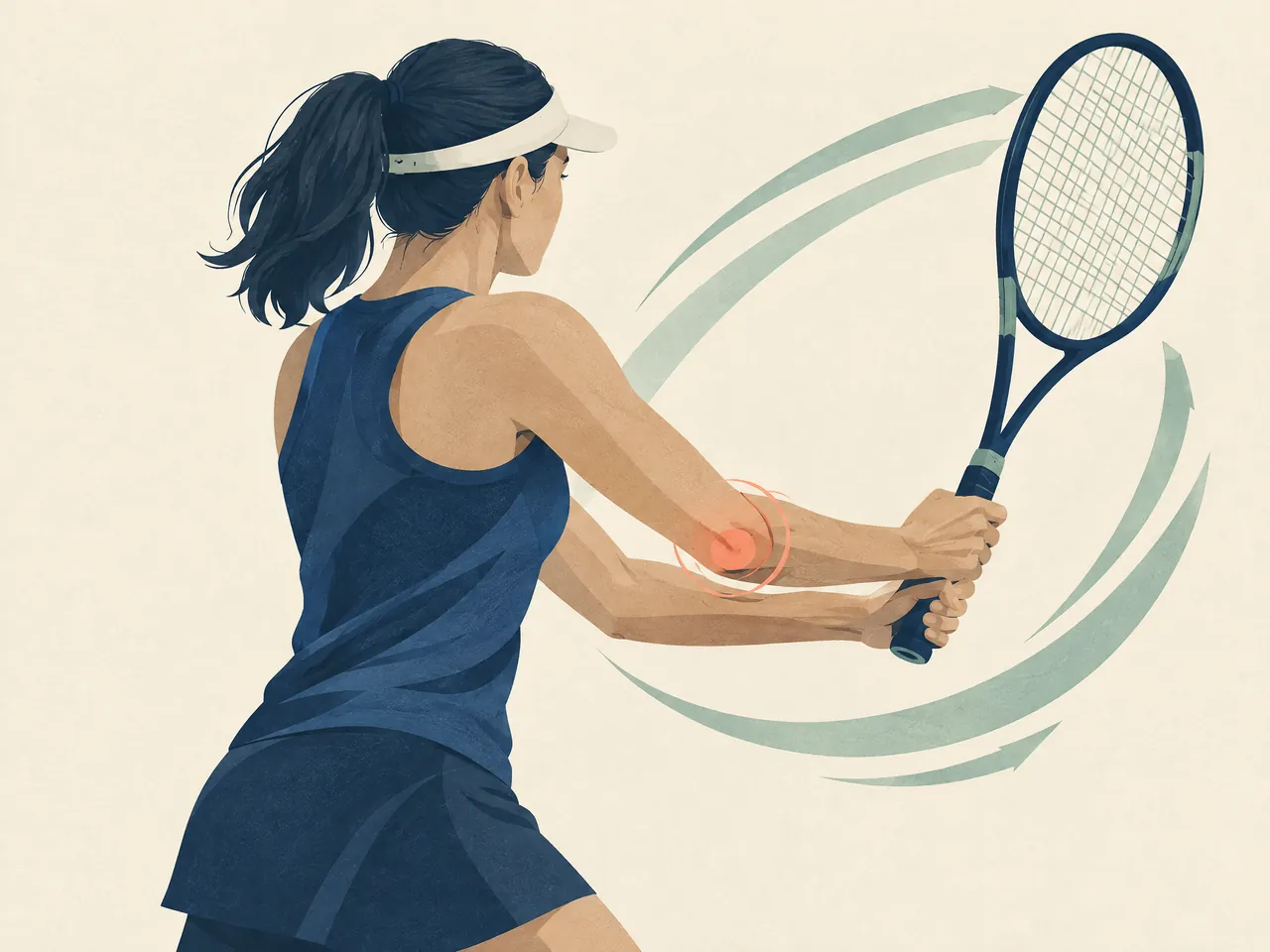
Can acupuncture help tennis elbow? — Does acupuncture hurt for tennis elbow? — How long does acupuncture for tennis elbow take? Discussing symptoms and activity
Bring a concise activity picture to the appointment. Mention a new racquet, a heavier training routine, a workstation change, a period of DIY work, a manual job, or a sudden increase in household lifting. Also say what you have already tried and what happened afterwards. Rest that removes every activity can make it harder to understand which element is provocative, while pushing through worsening pain can perpetuate the cycle. The middle ground is often a planned reduction or variation of the specific trigger, with a gradual return guided by symptoms and appropriate clinical advice.
It is also important to disclose pregnancy, medicines and supplements that affect bleeding, a bleeding disorder, pacemaker or implanted electrical device if electroacupuncture is being considered, allergy or sensitivity concerns, and any broken, infected or irritated skin near a proposed treatment area. These details are not a formality; they help decide whether, where and how treatment should proceed. The U.S. National Center for Complementary and Integrative Health states that acupuncture needles should be sterile and labelled for single use, and that poor technique or nonsterile needles can cause serious adverse effects [2]. Ask how single-use needle practice and comfort will be handled before treatment starts.

Can acupuncture help tennis elbow? — Does acupuncture hurt for tennis elbow? — How long does acupuncture for tennis elbow take? Knowing when imaging matters
Imaging is not automatically required for every outer-elbow complaint. The Hong Kong College of Orthopaedic Surgeons explains that diagnosis commonly draws on the history and examination, and that X-ray can help exclude other causes such as fracture or osteoarthritis; ultrasound or MRI may be considered in selected circumstances [1]. In other words, an image is not a routine substitute for listening carefully to the symptoms, but it may matter when the presentation does not fit a straightforward overuse pattern or when a structural injury is suspected.
Seek prompt medical assessment before relying on acupuncture if pain began with significant trauma, there is a suspected fracture or dislocation, the elbow is acutely red, hot or swollen, or you feel generally unwell with the joint symptoms. New weakness, persistent numbness, an inability to use the arm normally, or pain that continues to worsen also needs medical attention. Acupuncture may be part of later symptom management only when it is suitable; it cannot set a bone, reduce a dislocation or repair a structural injury. If the main concern is specifically outer-elbow symptoms and treatment choices, this companion page on lateral elbow pain acupuncture offers another focused starting point.
Can acupuncture help tennis elbow? — Does acupuncture hurt for tennis elbow? — How long does acupuncture for tennis elbow take? Preparing for care
Preparation can make an acupuncture appointment more informative and more comfortable. Wear or bring clothing that allows the elbow and forearm to be reached without strain. Eat and drink as normally appropriate for you unless another clinician has given different instructions, and avoid arriving rushed after a task that has sharply aggravated the elbow. Have a short list of medicines, relevant medical conditions and questions ready. It can be helpful to decide in advance how you will describe the pain: the location, the task that brings it on, the sensation, how long it lasts after the task and what you cannot currently do.
Think of acupuncture as a scheduled clinical encounter, not a test you must endure silently. The practitioner should explain the proposed approach and you can ask why local or more distant points are being considered. You may also ask what to do if you feel faint, anxious, overly warm, a sharp sensation or discomfort that does not feel manageable. Fine needles are used, and people often describe a brief insertion sensation followed by dullness, tingling, heaviness or an ache. Experiences differ; feeling little is not proof that nothing happened, and feeling more is not a measure of benefit. Clear communication is more useful than trying to tolerate pain.
Can acupuncture help tennis elbow? — Does acupuncture hurt for tennis elbow? — How long does acupuncture for tennis elbow take? Understanding a session
A first appointment generally needs room for assessment and consent as well as the treatment itself. Once the plan is agreed, the needling portion for an elbow concern commonly lasts about 20–30 minutes. Needle placement, whether any additional method is appropriate, and the exact time are individual clinical decisions. A person with a recent, clearly load-related complaint may need a different conversation from someone whose pain has persisted, whose work cannot be readily changed or whose symptoms raise a question outside the elbow. No fixed number of sessions can honestly predict the result for everyone.
During the session, settle in a position that does not pull on the painful side. If a needle feels sharply painful, burning or persistently uncomfortable, say so at once. After needles are removed, check how the arm feels before lifting a bag or rushing back to a repetitive task. Mild temporary sensations are possible, but increasing pain or an unexpected reaction should be reported to the treating practitioner or an appropriate healthcare professional. NCCIH notes that acupuncture is generally associated with relatively few reported complications when delivered properly, while stressing the importance of sterile, single-use needles and proper technique [2].
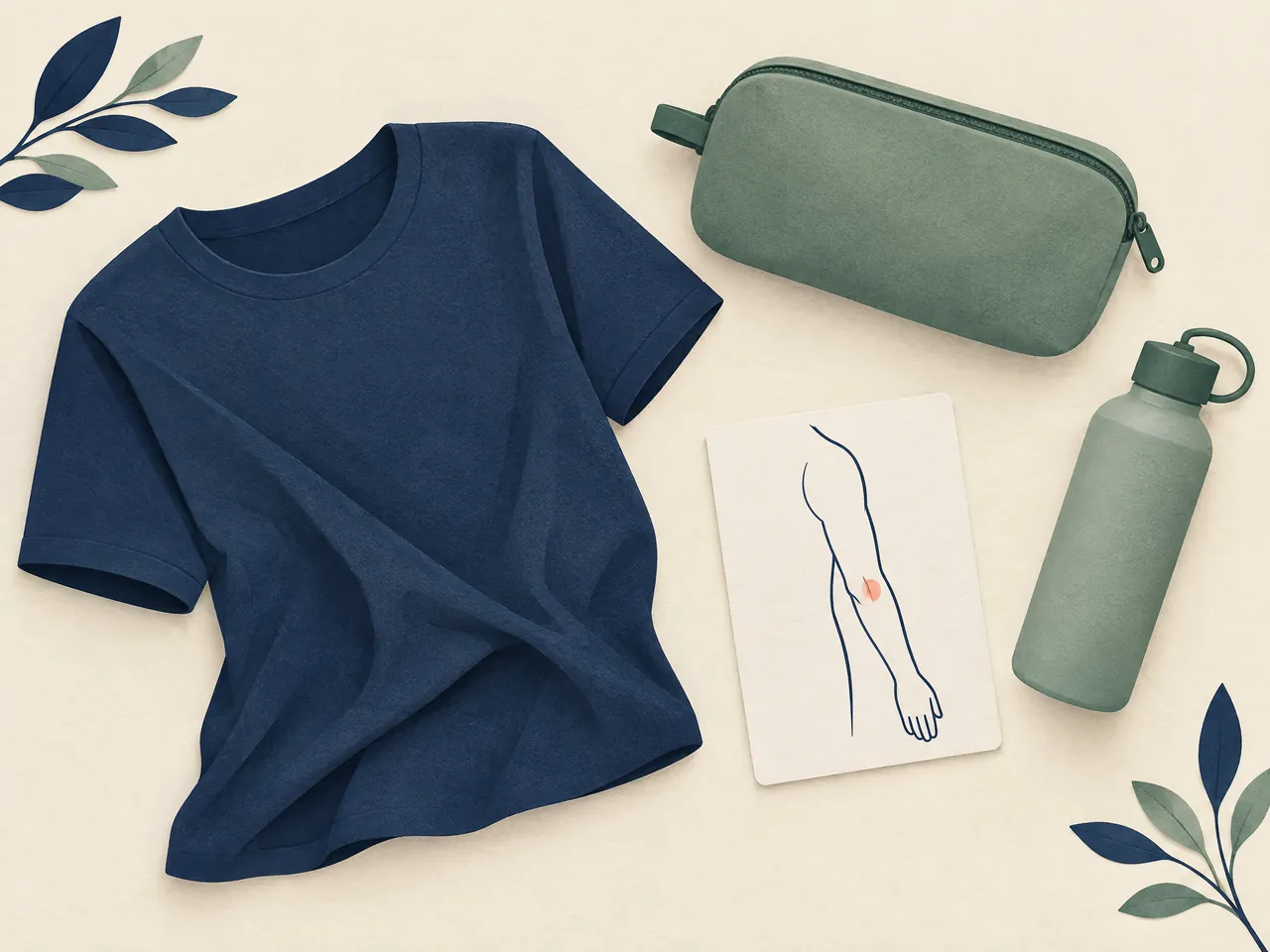
Can acupuncture help tennis elbow? — Does acupuncture hurt for tennis elbow? — How long does acupuncture for tennis elbow take? Managing activity afterwards
After a session, use the elbow normally for light, comfortable daily tasks, but avoid treating a temporarily easier feeling as a reason to immediately test maximum grip strength or resume the exact task that caused the flare-up. Review the load plan: can the grocery bag be split, can lifting be shared, can the mouse be moved closer, can a tool handle be changed, or can a long task be divided into shorter blocks? Keeping notes on what the elbow tolerates the next day is more informative than judging the appointment only by how it felt while lying down.
If symptoms recur whenever a particular movement returns, that is useful feedback rather than failure. Discuss it at the next assessment and consider whether further medical, physiotherapy or occupational guidance is needed. For a wider introduction to the decision, read tennis elbow acupuncture or Is acupuncture helpful for tennis elbow?. To ask about a consultation at a local location, you may also review the Kwun Tong Chinese medicine clinic. A WhatsApp enquiry can describe your symptoms and preferred language so appointment arrangements can be confirmed rather than assumed.
Care and health guide
Health service information
This directory brings together services, reading, and visit information related to health services, to help you prepare questions for a consultation.
If you are organising health questions, Chinese medicine clinic Hong Kong is a starting point for learning about related services and preparing for a consultation.
People have different needs; acupuncture Hong Kong provides further reading to help you understand options in your own context.


Your questions, answered
Frequently asked questions
Can acupuncture help tennis elbow if I still need to work with my hands?
It may be considered for symptom management, but the work demands need attention too. An assessment can identify painful tasks such as gripping, lifting or repeated wrist extension and discuss modifications. Continuing the same aggravating load without change can make it difficult to judge whether any treatment is useful.
Does acupuncture hurt for tennis elbow more when the elbow is very sore?
A sensitive elbow can make any contact feel more noticeable, but a session should be communicated throughout rather than endured. Fine needles may cause a brief prick, ache, tingling or heaviness. Tell the practitioner about sharp, burning or persistent pain so the approach can be reconsidered or stopped.
How long does acupuncture for tennis elbow take at the first visit?
The needling portion is commonly about 20–30 minutes. A first visit also needs time to discuss symptoms, activity, medical history and suitability. The total appointment and whether follow-up is appropriate are individual; there is no fixed course that predicts improvement for every elbow.
Do I need an X-ray before acupuncture for outer-elbow pain?
Not always. History and examination are commonly central to assessment, and imaging may be used when another cause or structural injury needs to be excluded. Seek medical assessment first after significant trauma, with a suspected fracture or dislocation, acute redness or heat, marked swelling, worsening symptoms or inability to use the arm normally.
Sources and further information
- [1] [1] Hong Kong College of Orthopaedic Surgeons — Tennis Elbow
Referenced for: Supports the description of common load-related symptoms, assessment, imaging context and conservative activity management for tennis elbow.
- [2] [2] National Center for Complementary and Integrative Health — Acupuncture: Effectiveness and Safety
Referenced for: Supports general information about fine needles, sterile single-use practice and safety considerations; it does not establish acupuncture effectiveness for this elbow condition.
- [3] [3] UCLA Health — Can acupuncture ease the pain of tennis elbow?
Referenced for: Supports the statement that evidence discussed for acupuncture in tennis elbow is mixed and does not demonstrate a guaranteed sustained response.