
TCM Lab · Health reading
Acupuncture for Lumbar Spondylosis: Lumbar Spondylosis and Lumbar Spondylosis Treatment Options
Published Updated
When an X-ray or scan mentions lumbar spondylosis, it is natural to ask whether acupuncture can help and whether the finding explains every ache in the lower back. Lumbar spondylosis is a term for age-related degenerative changes in the lower spine. It may occur with no symptoms at all, or it may be associated with back pain, stiffness, reduced movement, or symptoms into a buttock or leg. Acupuncture for lumbar spondylosis can be considered as one part of symptom management after an individual assessment. It cannot remove bone spurs, restore disc thickness, or reverse structural degeneration. The useful next step is to match the scan, symptoms, function, medicines, and any nerve signs before choosing between acupuncture, medical review, physiotherapy, or a combination of care.
Appointments are confirmed through WhatsApp. If you have language requirements, please mention them in your enquiry.
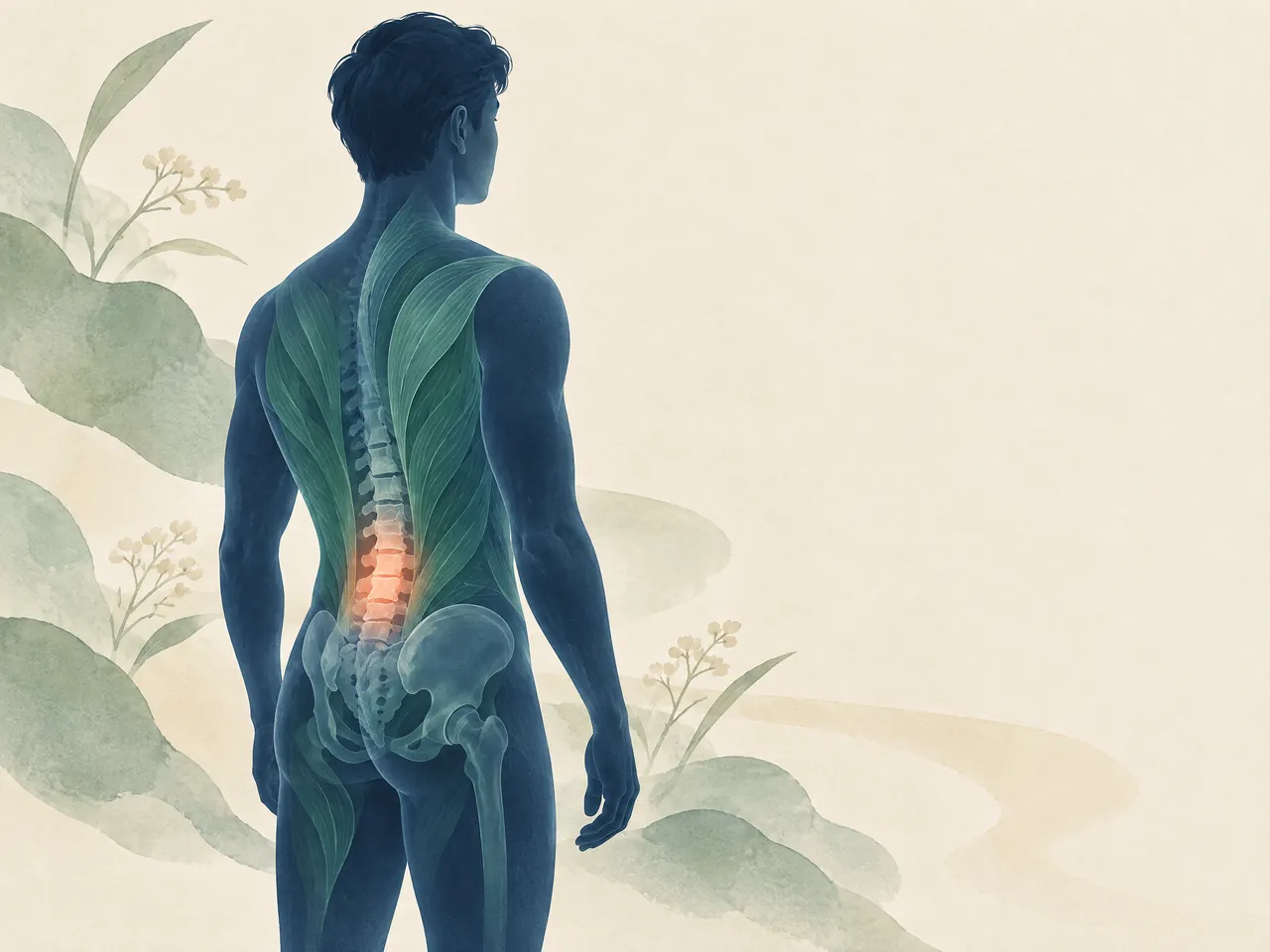
The short answer
Acupuncture for lumbar spondylosis may be discussed as a symptom-management option after assessment, particularly when low-back pain, stiffness, or movement limits are the main concern. It does not repair degeneration, remove a bone spur, or replace assessment for nerve compression. Seek urgent medical help rather than acupuncture first if there are bladder or bowel changes, numbness around the genitals or anus, new weakness in both legs, fever, or rapidly worsening severe pain.
Transparent pricing
See the fees.
Choose your care.
Explore our complete official price list, including first-trial prices, regular prices, packages and branch-specific options.
Opening WhatsApp prepares an enquiry; it does not send a message, take payment or confirm an appointment. Suitability and individual arrangements are confirmed during consultation.
Pain care
All prices in HKDExtracorporeal shockwave treatment
Shockwave treatment for deep-tissue and fascial care. The Kwun Tong clinic offers the multi-area options shown below.
Priced by branch
Branch-specific pricing
Prince Edward: HK$250 per area
Kwun Tong: HK$250 for 1 area / HK$450 for 2 areas / HK$600 for 3 areas
Pain care (manual therapy)
Includes Chinese medicine musculoskeletal assessment, manual joint techniques and tui na.
HK$580 (single session)
Chinese medicine musculoskeletal assessment
Pain care (acupuncture and manual therapy)
Combines acupuncture and manual therapy.
HK$680 (single session)
Combined care
Hair and scalp
All prices in HKDScalp health and hair-loss management
Includes AI scalp analysis, deep scalp and follicle cleansing, and scalp oil-control care.
HK$380 (first trial)
Regular price: HK$680
- 6 sessions: HK$3,480 (HK$580 per session)
- 12 sessions: HK$5,760 (HK$480 per session)
- 20 sessions: HK$8,600 (HK$430 per session)
- 30 sessions: HK$11,400 (HK$380 per session)
Hair acupuncture and Chinese herbal medicine package
Includes scalp acupuncture and 3 days of Chinese herbal medicine that does not require decoction.
HK$580 (single session)
Registered Chinese Medicine Practitioner consultation
- 6 sessions: HK$3,180 (HK$530 per session)
- 12 sessions: HK$5,760 (HK$480 per session)
- 20 sessions: HK$8,600 (HK$430 per session)
- 30 sessions: HK$11,400 (HK$380 per session)
Combined hair and scalp treatment
Combines acupuncture and Chinese herbal medicine with salon-level scalp and follicle care. Packages include complimentary hair-care shampoo and serum.
HK$1,260 (single session)
Combined treatment
- 8 sessions: HK$8,640 (HK$1,080 per session)
- 16 sessions: HK$15,680 (HK$980 per session)
- 20 sessions: HK$18,600 (HK$930 per session)
- 30 sessions: HK$26,400 (HK$880 per session)
Weight management
All prices in HKDFull-body acupoint embedding for weight management
Includes full-body acupoint embedding. Packages include complimentary Chinese herbal medicine for weight management, with the number of included days scaled to the package. Embedding material and the individual treatment arrangement are confirmed during consultation; this is not a cosmetic thread lift.
HK$980 (single session)
No trial session
- 10 sessions: HK$7,800 (HK$780 per session)
- 20 sessions: HK$14,600 (HK$730 per session)
- 30 sessions: HK$20,400 (HK$680 per session)
Facial acupuncture
All prices in HKDFacial acupuncture (basic)
Includes facial acupuncture and meridian-based facial care, including care for facial puffiness.
HK$480 (first trial)
Regular price: HK$680
- 10 sessions: HK$5,200 (HK$520 per session)
- 20 sessions: HK$9,600 (HK$480 per session)
- 30 sessions: HK$13,500 (HK$450 per session)
Facial acupuncture (advanced)
Includes enhanced facial acupuncture with a specially formulated moisturising mask and serum.
HK$780 (first trial)
Regular price: HK$1,180
- 10 sessions: HK$9,000 (HK$900 per session)
- 20 sessions: HK$16,600 (HK$830 per session)
- 30 sessions: HK$23,400 (HK$780 per session)
Chinese medicine
All prices in HKDAcupuncture and Chinese herbal medicine package
Includes a Chinese medicine consultation with pulse assessment, body acupuncture and 3 days of Chinese herbal granules that do not require decoction.
HK$580 (single session)
Chinese medicine consultation with pulse assessment
Acupuncture for Lumbar Spondylosis: Understanding Lumbar Spondylosis and Lumbar Spondylosis Treatment Options
Lumbar spondylosis is a descriptive term for degenerative change in the lower spine. Changes can involve the discs, facet joints, and bony edges of vertebrae. They are common with time and load, but a report of degeneration is not a complete diagnosis of a person’s pain. Some people learn of it only when imaging is obtained for another reason. Others have local low-back pain or less flexible movement. A scan needs to be read alongside the story of when symptoms began, what triggers them, and whether there are signs that a nerve is involved. Hospital for Special Surgery notes that imaging changes may be present without pain or discomfort. [1] That distinction helps keep lumbar spondylosis treatment options focused on the person rather than on an image alone.
Acupuncture is sometimes sought because the back feels guarded after long desk work, lifting, driving, or standing. In traditional Chinese medicine, the practitioner may use pattern identification to guide a treatment discussion. That traditional approach does not replace a neurological or musculoskeletal assessment when it is needed. The practical question is not whether one method has to replace every other method. It is whether acupuncture can sit safely beside activity advice, physiotherapy, prescribed medicines, or medical follow-up for the symptom pattern in front of you. The Chinese Medicine Hospital of Hong Kong describes a low-back-pain programme using systematic assessment and an integrated Chinese-Western care model; this illustrates why assessment and coordination matter. [2]

Acupuncture for Lumbar Spondylosis: What Lumbar Spondylosis Can Involve and Lumbar Spondylosis Treatment Options
The word spondylosis can cover more than one structure, so it does not automatically mean a slipped disc, sciatica, spinal stenosis, or an operation is required. Disc wear, a bulge, joint arthritis, and narrowing around nerves can overlap, but they are not interchangeable labels. If pain travels from the buttock down a leg, or there is tingling, numbness, or weakness, a clinician may need to consider nerve irritation or compression rather than treating it as ordinary stiffness. People comparing terms can read about slipped disc and sciatica and sciatica from a herniated disc. These related topics do not establish the cause in any one person, but they help explain why a careful history comes before a treatment plan.

Acupuncture for Lumbar Spondylosis: Symptoms to Discuss in Lumbar Spondylosis and Lumbar Spondylosis Treatment Options
Describe the symptom in practical terms: where it starts, whether it spreads, whether sitting, walking, bending, coughing, or changing position affects it, and what it stops you doing. Morning stiffness that eases as the body gets moving creates a different discussion from pain that becomes heavier in the legs during a walk and eases on sitting or bending forward. Lumbar spondylosis can be linked with low-back pain, leg pain, or nerve-compression symptoms; walking-related heaviness, tingling, or weakness can occur when spinal canal narrowing affects neural structures. [1] A diary of work posture, sleep disruption, walking tolerance, and symptom changes can make the consultation more useful. For a focused discussion of everyday restriction, see low back stiffness and limited movement.
Compare your options
| What you notice | Why details matter | Reasonable next step | What acupuncture cannot establish |
|---|---|---|---|
| Local low-back ache or stiffness after one position | Timing, movement limits, sleep, work setup, and activity tolerance help distinguish a manageable pattern from a new problem. | Arrange an assessment; discuss movement, physiotherapy, medical options, and whether acupuncture is suitable. | It cannot confirm the exact structure causing pain or reverse degeneration. |
| Pain, tingling, or numbness travelling into one leg | Distribution, onset, and any loss of strength may suggest nerve involvement and need examination. | Seek timely clinical assessment; bring existing reports and list medicines before considering adjunctive care. | It cannot rule out nerve compression or replace neurological assessment. |
| Leg heaviness or symptoms that change with walking and sitting | The walking pattern and what relieves symptoms can be clinically important when narrowing is considered. | Discuss with a medical clinician or physiotherapist; ask whether imaging and a rehabilitation plan are relevant. | It cannot determine whether spinal canal narrowing is present. |
| Bladder or bowel change, saddle numbness, or new weakness in both legs | These can signal a neurological emergency rather than routine wear and tear. | Seek emergency care immediately rather than booking complementary treatment. | It is not an emergency substitute and should not delay urgent assessment. |
On smaller screens, scroll the table sideways to compare all columns.
Acupuncture for Lumbar Spondylosis: Assessment Before Lumbar Spondylosis Treatment Options
An assessment should make space for the whole picture. Expect questions about the first episode, recurrence, recent strain or fall, pain location, leg symptoms, sleep, occupation, and the activities you want to return to. Previous surgery, cancer history, osteoporosis risk, infection symptoms, pregnancy, bleeding disorders, and other conditions may alter the next step. Mention every medicine and supplement, especially medicines that affect bleeding or any pain medicine that may change how symptoms are felt. The low-back-pain acupuncture guideline from a Hong Kong taskforce includes diagnosis, syndrome differentiation, rehabilitation, and follow-up in its care pathway, while also recommending that unsuitable conditions be excluded. [3] This is a reason to be open about your history, not a promise that a named pattern determines an outcome.
Local examination may include observing posture and movement, asking which movements reproduce symptoms, and noting areas of tenderness or muscle guarding. When a leg symptom is present, the location and character matter: a vague ache after exertion is not the same as new loss of strength, altered sensation, or a changing gait. A practitioner may decide that the priority is medical assessment, physiotherapy, or review of an existing plan. If you already have reports, bring the wording rather than trying to remember it. The page How is lumbar spondylosis assessed? gives a closer look at why history, examination, and imaging findings need to be considered together.

Acupuncture for Lumbar Spondylosis: History and Examination for Lumbar Spondylosis Treatment Options
Good preparation makes the conversation more specific. Note whether pain is central or one-sided, whether it stays above the buttock or passes below the knee, and whether it wakes you from sleep. Say how far you can walk or stand before symptoms change and whether a seated rest changes them. Explain what has already been tried, including exercises, heat, manual treatment, injections, or medicines, and what happened afterwards. If you are unsure whether acupuncture fits your circumstances, bring a short list of questions: What is the working explanation for my symptoms? What needs monitoring? What would mean pausing treatment and seeking another assessment? This supports informed choice without assuming a fixed number of visits or a guaranteed response. It is also helpful to state which ordinary task matters most: getting out of a chair, carrying a bag, turning in bed, commuting, or returning to a preferred activity. A meaningful goal gives you and the practitioner a clearer way to review whether the plan remains appropriate.

Acupuncture for Lumbar Spondylosis: Imaging, Medicines and Lumbar Spondylosis Treatment Options
X-rays show bony changes well, while MRI or CT may be used to look at discs and other soft structures in the appropriate clinical setting. Imaging can be useful, but it does not measure pain severity or replace examination. [1] Tell both your medical clinician and Chinese medicine practitioner about prescribed pain relief, anti-inflammatory medicines, anticoagulants, herbal products, and recent procedures. Do not stop or change a prescribed medicine because you plan to try acupuncture; discuss concerns with the prescriber. Keep a copy of the imaging report and the date it was done, since older images may not reflect new symptoms. The aim is a coherent plan, not competing explanations for the same back problem.
Acupuncture for Lumbar Spondylosis: Limits, Safety and Lumbar Spondylosis Treatment Options
The clearest limit is structural: acupuncture for lumbar spondylosis does not remove an osteophyte, rebuild a thinned disc, correct instability, or release a severely compressed nerve. It may be explored for symptom management after suitability is assessed, but results vary and should be reviewed against meaningful goals such as sitting through a work meeting, getting dressed with less guarding, walking more comfortably, or sleeping with fewer pain interruptions. It should not be presented as a substitute for a clinician’s plan where progressive neurological symptoms are present. The NCCIH advises not to use acupuncture to postpone seeing a health-care provider and notes that complications can occur with nonsterile needles or improper treatment. [4] Discuss any concerns and ensure the practitioner knows your current health information.
Safety also includes realistic communication. There is no universal course that suits every scan finding, and an imaging label alone cannot predict how many sessions someone needs or whether they will notice a change. The Hong Kong clinical guideline describes clean needle technique, consent, monitoring where necessary, and possible minor effects such as bruising, temporary soreness, dizziness, or minor bleeding. [3] Ask what you may feel during or after a session, how activity will be approached, and when a symptom needs a different kind of review. This is more useful than waiting for discomfort to become severe.

Acupuncture for Lumbar Spondylosis: What Lumbar Spondylosis Treatment Options Can and Cannot Change
A treatment plan may include education about pacing, suitable movement or strengthening advice, physiotherapy, medicine review, and, for selected problems, specialist procedures. The components are chosen according to the diagnosis, severity, function, and response over time. For many people, the initial goal is to stay safely active rather than to rest for long periods. The NHS advises remaining active and continuing daily activities as able, while stopping exercises that worsen pain and seeking advice. [5] Acupuncture may be one element of a plan, not the plan itself. It cannot tell from a painful spot alone whether a nerve needs urgent evaluation, nor can it replace rehabilitation work that is appropriate for your condition.

Acupuncture for Lumbar Spondylosis: Red Flags and Next Steps in Lumbar Spondylosis Treatment Options
Do not wait for an acupuncture appointment if back symptoms come with changes in bladder or bowel control, difficulty passing urine, loss of feeling around the genitals or anus, or pain, tingling, weakness, or numbness in both legs. These need emergency assessment. New severe pain that starts suddenly or rapidly worsens, or back pain with feeling feverish, shivery, or generally unwell, also requires prompt medical advice. Unexplained weight loss, pain that is worse at night or does not improve with rest, a major accident, or a history that raises concern should be discussed with a doctor. [5] A single-sided ache or familiar stiffness may be non-urgent, but progressive weakness, gait change, or altered sensation should not be self-managed as routine degeneration.
Care and health guide
Health service information
This directory brings together services, reading, and visit information related to health services, to help you prepare questions for a consultation.
If you are organising health questions, acupuncture Hong Kong is a starting point for learning about related services and preparing for a consultation.
People have different needs; Chinese medicine pain management Hong Kong provides further reading to help you understand options in your own context.


Your questions, answered
Frequently asked questions
Can acupuncture repair lumbar spondylosis or get rid of bone spurs?
No. Acupuncture does not remove bone spurs, restore disc thickness, or reverse degenerative change. It may be discussed for symptom management after assessment, alongside rather than instead of appropriate medical or rehabilitation care.
What information should I bring when discussing acupuncture for lumbar spondylosis?
Bring imaging reports if you have them, a list of medicines and supplements, details of previous injuries or treatment, and a clear account of pain, stiffness, leg symptoms, walking changes, numbness, weakness, and bladder or bowel symptoms. This helps determine whether acupuncture is appropriate or another assessment should come first.
Does a lumbar spondylosis finding on an X-ray mean it is the cause of my pain?
Not necessarily. Degenerative findings can occur without symptoms. The relevance of an image depends on whether it fits your symptoms, examination, function, and any signs of nerve involvement.
When should I seek urgent medical care instead of acupuncture?
Seek emergency care for bladder or bowel changes, difficulty urinating, numbness around the genitals or anus, or new pain, tingling, numbness, or weakness in both legs. Prompt medical advice is also important for rapidly worsening severe pain or back pain with feverish illness.
Sources and further information
- [1] Hospital for Special Surgery — Lumbar and Cervical Spondylosis: Symptoms and Treatments
Referenced for: Symptoms, imaging context, nerve-related presentations, and the limits of non-operative treatment for structural changes.
- [2] Chinese Medicine Hospital of Hong Kong — Low Back Pain Care Programme
Referenced for: Hong Kong terminology for systematic assessment and integrated Chinese-Western care; not evidence of TCM Lab service availability or outcomes.
- [3] Hong Kong taskforce — Acupuncture for low back pain: a clinical practice guideline
Referenced for: Assessment, exclusion of unsuitable cases, clean-needle practice, consent, possible minor adverse effects, rehabilitation, and follow-up context.
- [4] National Center for Complementary and Integrative Health — Acupuncture: What You Need To Know
Referenced for: Evidence and safety overview, including the importance of not delaying needed health care.
- [5] NHS — Back pain
Referenced for: Self-care context and urgent neurological or systemic warning signs.