
TCM Lab · Health reading
Ankle Sprain Home Treatment, Ankle Sprain Medical Assessment and Ankle Sprain Gradual Weight Bearing
Published Updated
A twisted ankle after a missed step, a run or a game can be hard to judge at home. Early ankle sprain home treatment is usually about protecting the area, reducing activity without becoming completely inactive, using wrapped cold therapy if it is comfortable, applying gentle compression and elevating the ankle. But a sprain can resemble a fracture or another injury. This guide explains what to record, when ankle sprain medical assessment should take priority, and how ankle sprain gradual weight bearing can be reintroduced without treating pain as something to push through.
Appointments are confirmed through WhatsApp. If you have language requirements, please mention them in your enquiry.
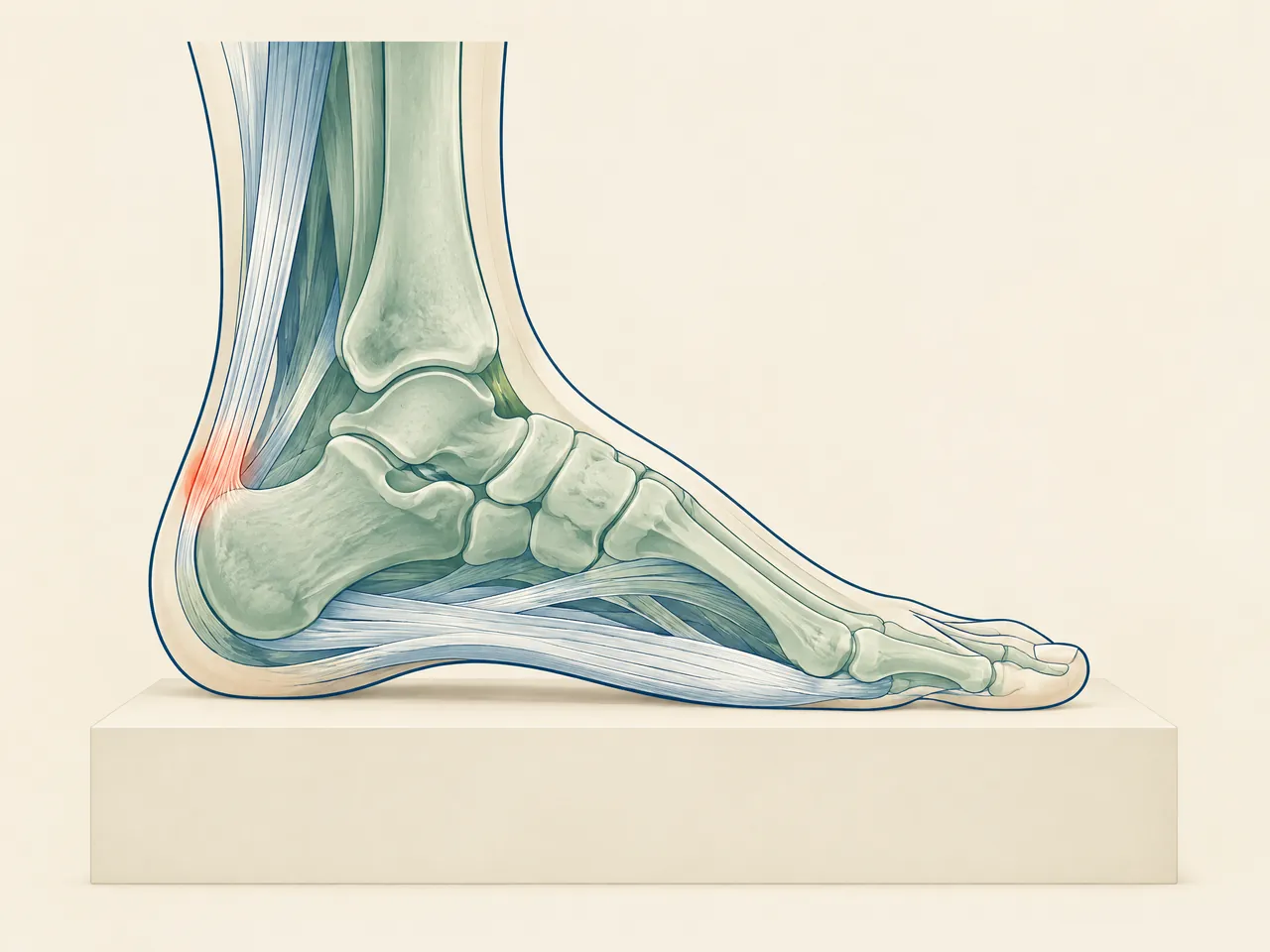
The short answer
For ankle sprain home treatment, protect the ankle, rest relatively, use a wrapped cold pack if comfortable, apply compression that does not affect circulation, and elevate the leg. Seek ankle sprain medical assessment promptly if weight bearing is not possible, the ankle looks deformed, pain or swelling is worsening, or there is numbness, unusual colour or cold skin. Ankle sprain gradual weight bearing should begin only within a tolerable range and progress with improving movement, balance and stability.
Transparent pricing
See the fees.
Choose your care.
Explore our complete official price list, including first-trial prices, regular prices, packages and branch-specific options.
Opening WhatsApp prepares an enquiry; it does not send a message, take payment or confirm an appointment. Suitability and individual arrangements are confirmed during consultation.
Pain care
All prices in HKDExtracorporeal shockwave treatment
Shockwave treatment for deep-tissue and fascial care. The Kwun Tong clinic offers the multi-area options shown below.
Priced by branch
Branch-specific pricing
Prince Edward: HK$250 per area
Kwun Tong: HK$250 for 1 area / HK$450 for 2 areas / HK$600 for 3 areas
Pain care (manual therapy)
Includes Chinese medicine musculoskeletal assessment, manual joint techniques and tui na.
HK$580 (single session)
Chinese medicine musculoskeletal assessment
Pain care (acupuncture and manual therapy)
Combines acupuncture and manual therapy.
HK$680 (single session)
Combined care
Hair and scalp
All prices in HKDScalp health and hair-loss management
Includes AI scalp analysis, deep scalp and follicle cleansing, and scalp oil-control care.
HK$380 (first trial)
Regular price: HK$680
- 6 sessions: HK$3,480 (HK$580 per session)
- 12 sessions: HK$5,760 (HK$480 per session)
- 20 sessions: HK$8,600 (HK$430 per session)
- 30 sessions: HK$11,400 (HK$380 per session)
Hair acupuncture and Chinese herbal medicine package
Includes scalp acupuncture and 3 days of Chinese herbal medicine that does not require decoction.
HK$580 (single session)
Registered Chinese Medicine Practitioner consultation
- 6 sessions: HK$3,180 (HK$530 per session)
- 12 sessions: HK$5,760 (HK$480 per session)
- 20 sessions: HK$8,600 (HK$430 per session)
- 30 sessions: HK$11,400 (HK$380 per session)
Combined hair and scalp treatment
Combines acupuncture and Chinese herbal medicine with salon-level scalp and follicle care. Packages include complimentary hair-care shampoo and serum.
HK$1,260 (single session)
Combined treatment
- 8 sessions: HK$8,640 (HK$1,080 per session)
- 16 sessions: HK$15,680 (HK$980 per session)
- 20 sessions: HK$18,600 (HK$930 per session)
- 30 sessions: HK$26,400 (HK$880 per session)
Weight management
All prices in HKDFull-body acupoint embedding for weight management
Includes full-body acupoint embedding. Packages include complimentary Chinese herbal medicine for weight management, with the number of included days scaled to the package. Embedding material and the individual treatment arrangement are confirmed during consultation; this is not a cosmetic thread lift.
HK$980 (single session)
No trial session
- 10 sessions: HK$7,800 (HK$780 per session)
- 20 sessions: HK$14,600 (HK$730 per session)
- 30 sessions: HK$20,400 (HK$680 per session)
Facial acupuncture
All prices in HKDFacial acupuncture (basic)
Includes facial acupuncture and meridian-based facial care, including care for facial puffiness.
HK$480 (first trial)
Regular price: HK$680
- 10 sessions: HK$5,200 (HK$520 per session)
- 20 sessions: HK$9,600 (HK$480 per session)
- 30 sessions: HK$13,500 (HK$450 per session)
Facial acupuncture (advanced)
Includes enhanced facial acupuncture with a specially formulated moisturising mask and serum.
HK$780 (first trial)
Regular price: HK$1,180
- 10 sessions: HK$9,000 (HK$900 per session)
- 20 sessions: HK$16,600 (HK$830 per session)
- 30 sessions: HK$23,400 (HK$780 per session)
Chinese medicine
All prices in HKDAcupuncture and Chinese herbal medicine package
Includes a Chinese medicine consultation with pulse assessment, body acupuncture and 3 days of Chinese herbal granules that do not require decoction.
HK$580 (single session)
Chinese medicine consultation with pulse assessment
Ankle Sprain Home Treatment, Ankle Sprain Medical Assessment and Ankle Sprain Gradual Weight Bearing: Start Safely
The first decision is not which remedy to try; it is whether the ankle can be managed cautiously while you watch its course. An ankle sprain involves one or more ligaments that stabilise the joint, commonly after the foot rolls or twists. Pain may be immediate, or swelling and bruising may become more obvious later. The Hong Kong College of Orthopaedic Surgeons lists pain, swelling, bruising, walking difficulty and stiffness among common features, while recognising that severity varies with the injury [1]. Treat the first hours as a time to reduce further strain and collect useful facts, not a test of toughness or a diagnosis made from appearance alone.

Ankle Sprain Home Treatment, Ankle Sprain Medical Assessment and Ankle Sprain Gradual Weight Bearing: What to Record
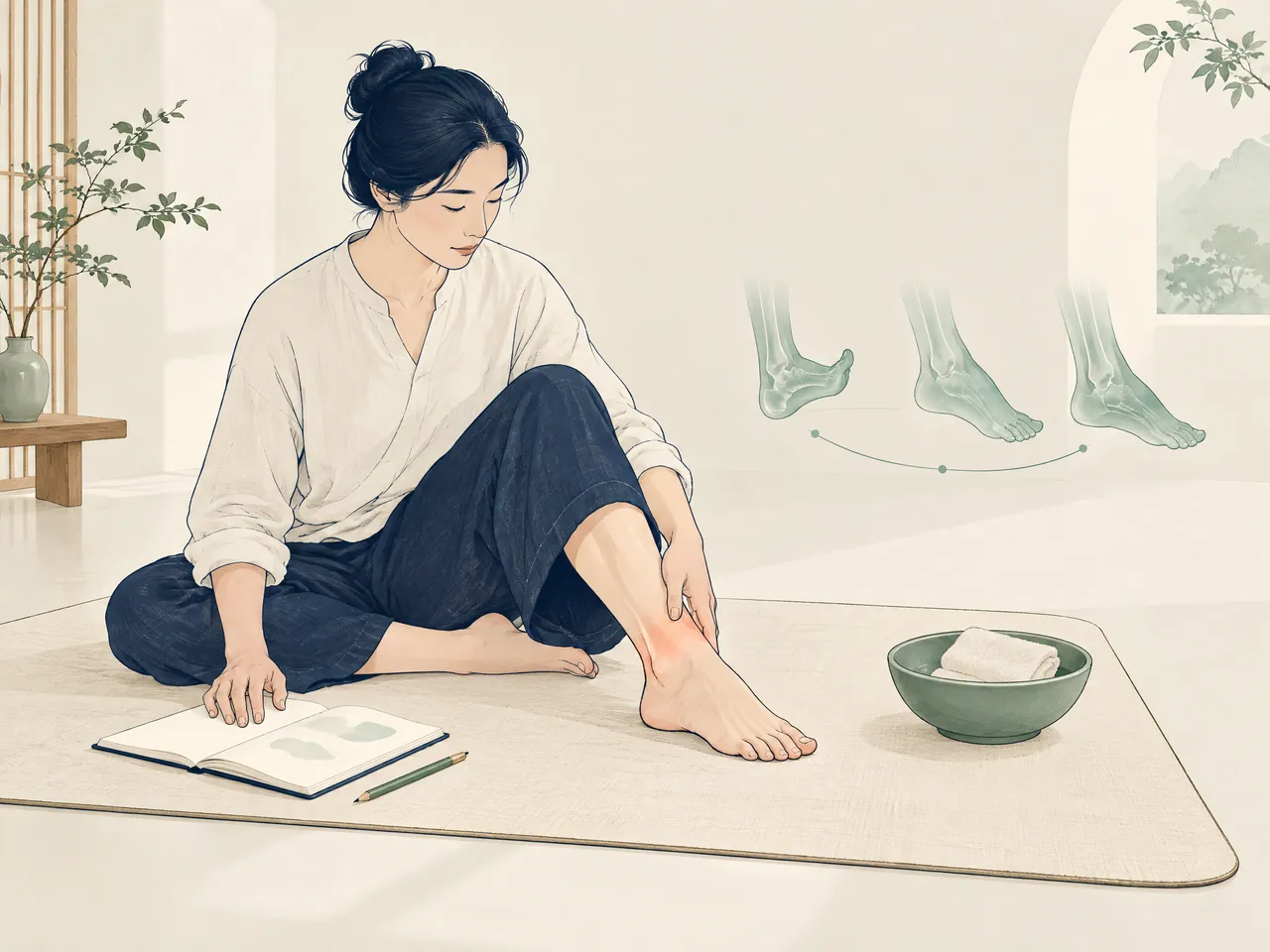
Make a brief injury record before the details blur. Write down the time, surface and activity: for example, whether you stepped off a kerb, landed from a jump, changed direction, or slipped in unsuitable footwear. Note which way the foot turned, where the pain is sharpest, whether you heard or felt a pop, and whether you could take steps immediately afterwards. Later, add changes in swelling, bruising, warmth, sleep disruption and the distance you can walk. A photo taken for your own comparison can be useful if swelling changes, but it cannot show whether a ligament, bone, tendon or joint surface has been injured.
Ankle Sprain Home Treatment, Ankle Sprain Medical Assessment and Ankle Sprain Gradual Weight Bearing: Early Care
For a mild-looking injury without warning signs, early care is deliberately simple. Protect the ankle from a second roll, stop the sport or task that triggered pain, and use relative rest rather than attempting a long walk to prove that it is fine. A wrapped cold pack may feel soothing; keep a cloth between the pack and skin and stop if the skin becomes painful, very numb or irritated. An elastic wrap can feel supportive, but it should not create tingling, colour change, increasing pain or a cold foot. Elevating the ankle when resting may also help with swelling. This practical combination is often called R.I.C.E.; it appears in Hong Kong orthopaedic first-aid advice [1].
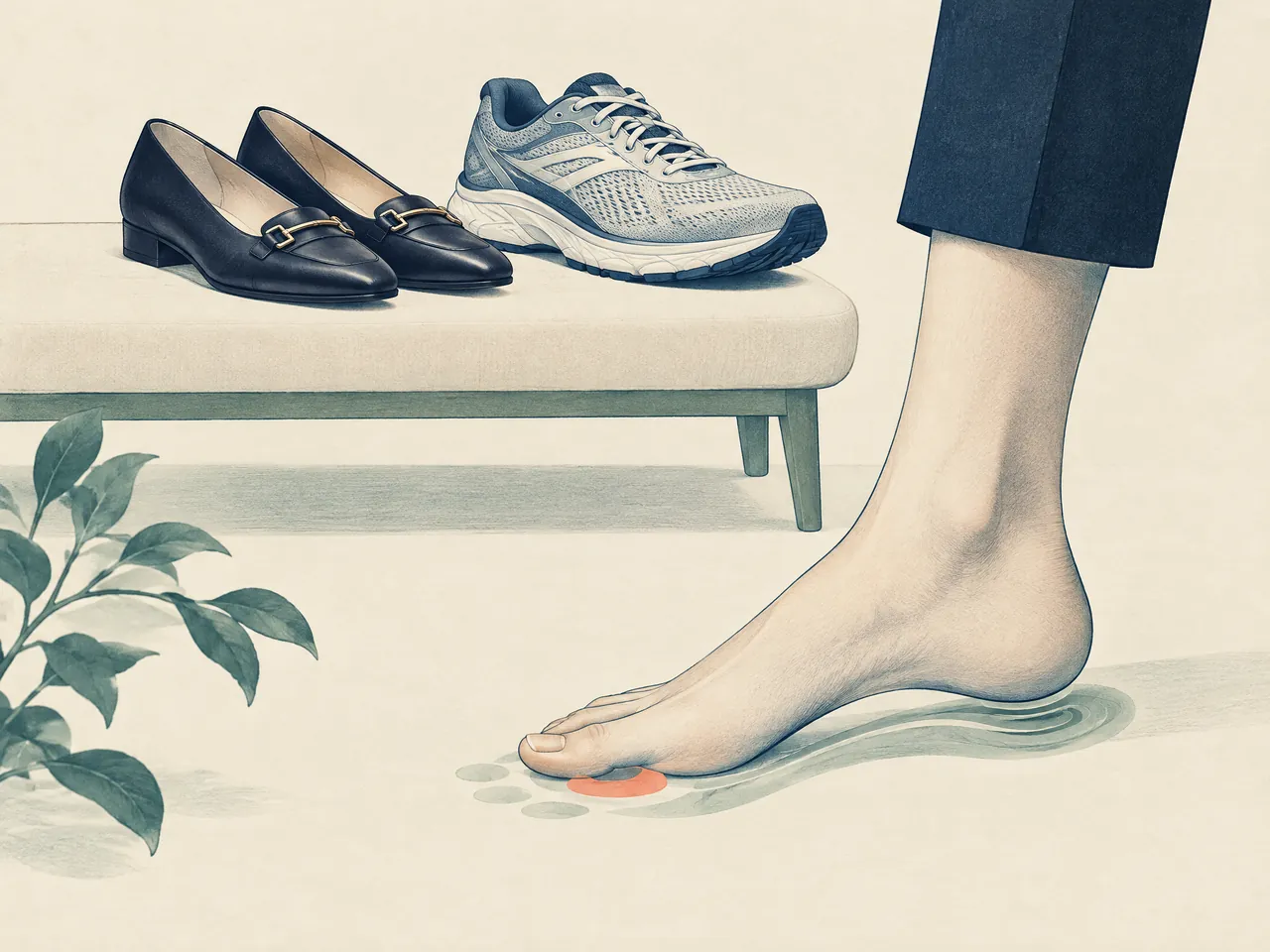
Early care should also fit ordinary Hong Kong routines. Wear a stable, roomy shoe rather than a loose slipper if you must move around the home, clear trip hazards, and use a handrail on stairs. Do not test the ankle by rushing for transport or carrying a heavy bag. If you are sitting at work, arrange the foot so it is supported rather than hanging for hours, then stand and walk only as comfort allows. For more practical first-day decisions, see ankle sprain self-care. If the discomfort is mainly under the sole rather than around the ankle, the pattern may call for a different conversation; this guide to bottom of foot pain causes explains why location and loading history matter.
Compare your options
| What you notice | Reasonable immediate response | When the plan should change |
|---|---|---|
| Mild pain, limited swelling and you can take careful steps | Protect the ankle, reduce provoking activity, use wrapped cold therapy, comfortable compression and elevation if helpful; record how it changes. | Seek review if walking becomes harder, symptoms are worsening, or improvement does not begin. |
| Bruising or swelling that appears later | Continue gentle protection and monitor function rather than judging severity from colour alone. | Arrange assessment if there is marked pain, bony tenderness, instability or difficulty bearing weight. |
| Unable to bear weight, obvious deformity, a crack, or rapidly escalating pain | Stop activity and arrange urgent medical assessment; avoid trying to manipulate the ankle. | Do not wait to see whether massage, heat or a stronger wrap makes it better. |
| Numbness, tingling, unusual colour or coldness in the foot | Loosen anything constricting the area and seek prompt medical help. | Do not treat altered sensation or circulation changes as a routine sprain symptom. |
| Walking is improving but the ankle feels weak or unsteady | Progress load cautiously and discuss movement, balance and strengthening with a clinician or physiotherapist. | Reduce activity and seek review if the ankle gives way or swelling increases after the new load. |
On smaller screens, scroll the table sideways to compare all columns.
Ankle Sprain Home Treatment, Ankle Sprain Medical Assessment and Ankle Sprain Gradual Weight Bearing: Recognise Risk
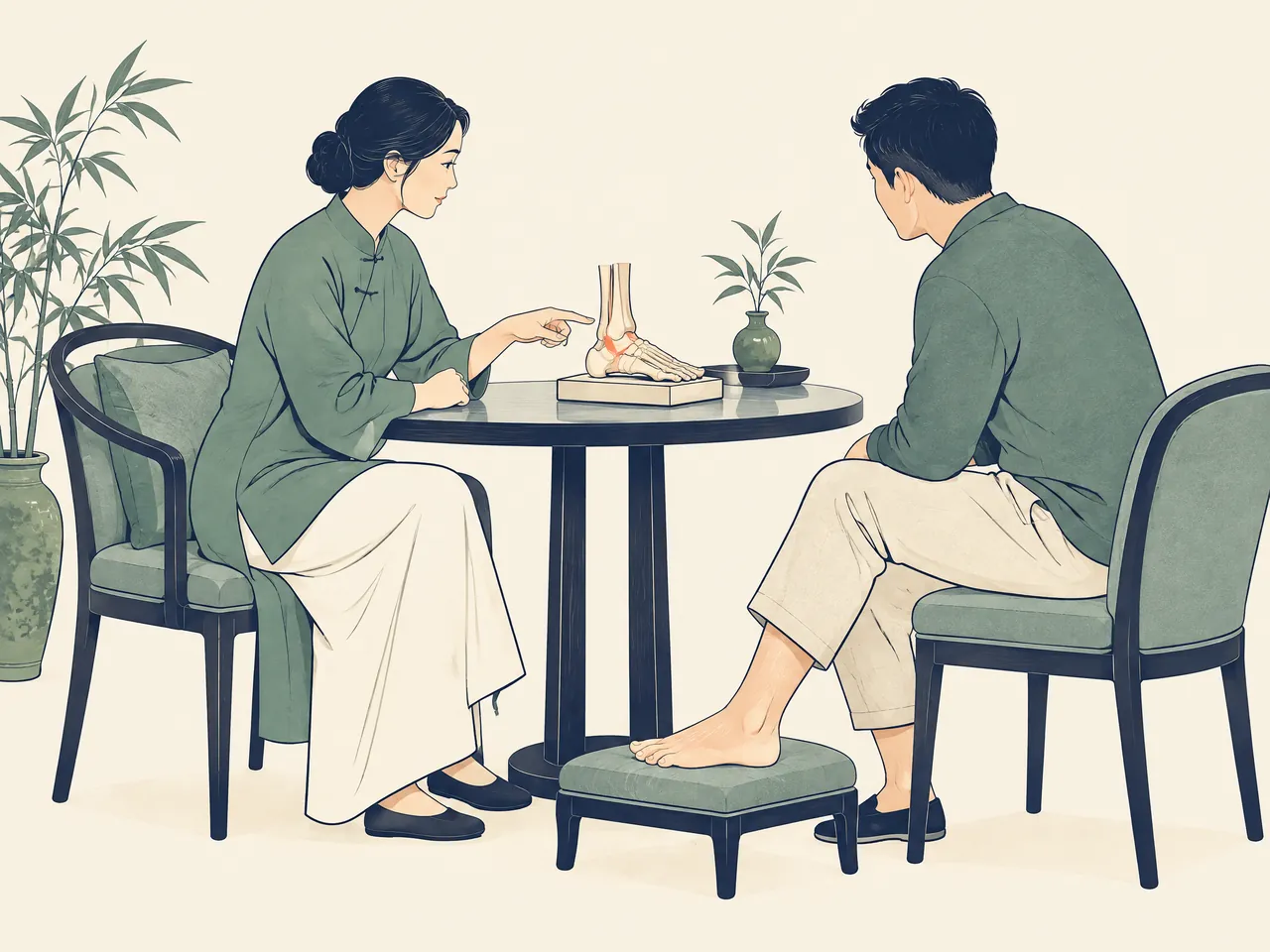
Do not let a familiar story—“I have twisted it before”—make a new injury seem automatically minor. Severe sprains and fractures can overlap in their early symptoms, and a clinician may examine the painful areas, movement and stability before deciding whether imaging is useful. The American Academy of Orthopaedic Surgeons notes that trouble bearing weight or tenderness over the bones can lead to further testing to rule out a fracture [2]. A medical assessment is not a failure of home care. It is the safer next step when the possible consequence of missing a structural injury is greater than the convenience of waiting.
Ankle Sprain Home Treatment, Ankle Sprain Medical Assessment and Ankle Sprain Gradual Weight Bearing: Warning Signs
Seek urgent medical help rather than continuing self-care if you cannot bear weight, the ankle or foot is visibly deformed, pain or swelling is rapidly getting worse, or you heard a crack at the time of injury. Numbness, pins and needles, a foot that becomes unusually pale, blue or cold, or an open wound also need prompt assessment. These signs may point to more than a straightforward ligament injury and should not be managed with massage, heat or forceful stretching. If the pain is severe enough that you cannot safely get around, arrange help rather than driving yourself or testing the ankle repeatedly.
Use function, not bravado, as a checkpoint. A person who can reach the bathroom but cannot take four steady steps outdoors, or who can walk only by turning the whole leg to avoid ankle movement, may need assessment even if the swelling does not look dramatic. Do not keep tightening a wrap to overcome pressure or numbness, and do not use a pain-relieving measure to return immediately to a twisting or jumping activity. The page ankle sprain when to see a doctor offers another decision aid for warning changes. If sensation in the foot is altered, read When should I see a doctor for foot pain and numbness? and seek timely professional advice rather than assuming it is a normal recovery feature.
Ankle Sprain Home Treatment, Ankle Sprain Medical Assessment and Ankle Sprain Gradual Weight Bearing: Clinical Review
Arrange clinical review when the ankle remains substantially swollen or painful, walking remains difficult, the joint keeps giving way, or progress stalls despite cautious care. An assessment commonly begins with how the injury happened and a physical examination; X-ray can help rule out a broken bone, while other tests may be considered for selected concerns involving soft tissues [3]. Bring your symptom record, a list of medicines and any prior ankle injuries. That context helps the clinician distinguish a first uncomplicated twist from recurrent instability, a high-ankle pattern or a problem that needs a different plan.
Ankle Sprain Home Treatment, Ankle Sprain Medical Assessment and Ankle Sprain Gradual Weight Bearing: Recovery Planning
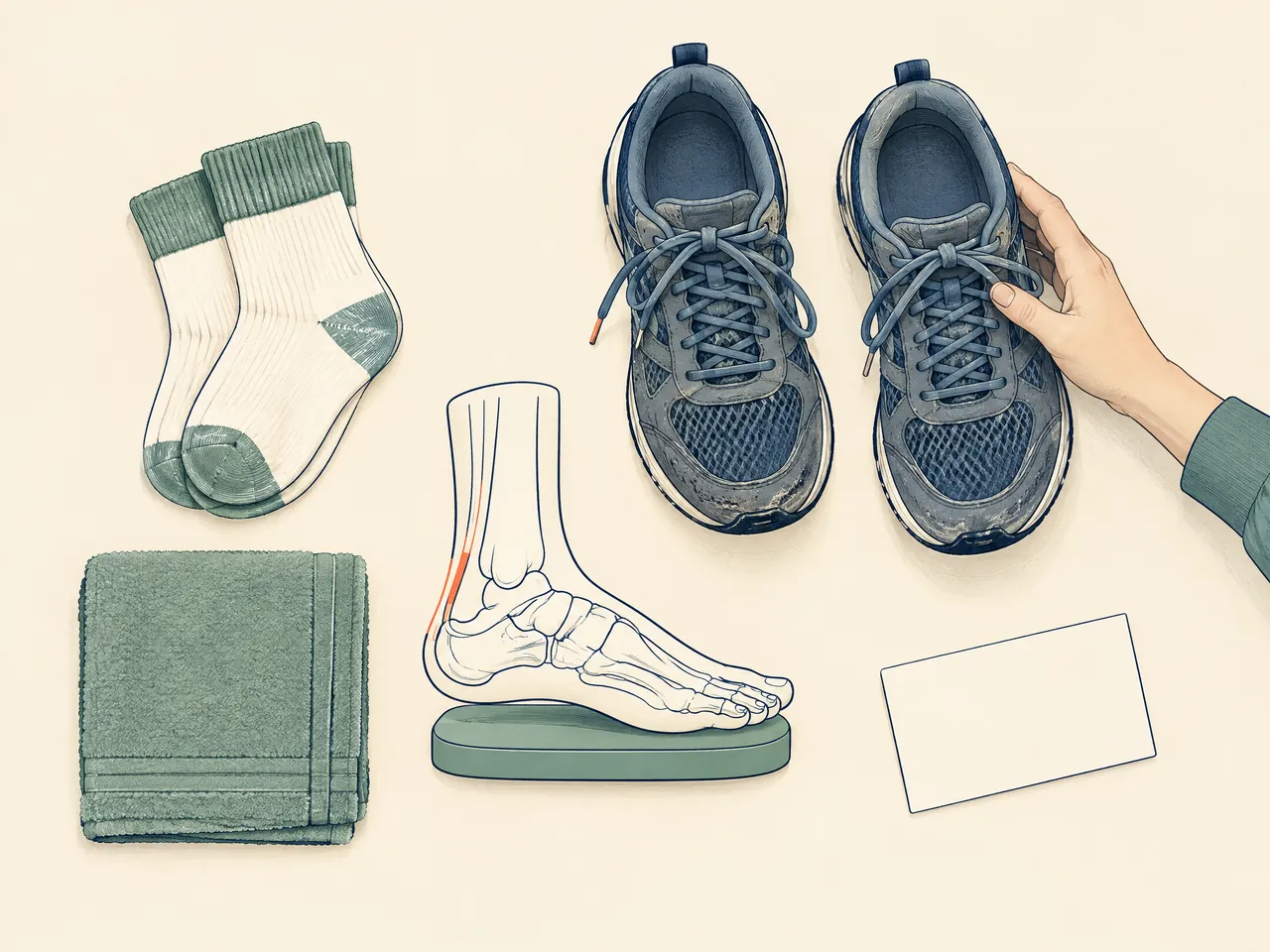
Recovery is more useful when it follows function rather than a calendar alone. In the very early phase, getting from room to room may require shorter distances, a handrail, supportive footwear or a mobility aid recommended by a clinician. As pain and swelling settle, the next questions become whether the ankle can move more freely, whether walking is less guarded, and whether it feels steady on ordinary ground. Avoid testing readiness with uneven pavements, sudden turns, hopping or a return to court sport. Those demands come later because they ask the ankle to manage rotation, balance and rapid load changes, not merely a few careful steps.
Ankle Sprain Home Treatment, Ankle Sprain Medical Assessment and Ankle Sprain Gradual Weight Bearing: Movement
Ankle sprain gradual weight bearing means adding load in a controlled, tolerable way, not ignoring a sharp pain signal. Depending on the injury, a clinician may recommend support such as a brace, boot or crutches for a period. For isolated low ankle sprains, AAOS describes early weight bearing as tolerated within a staged programme, followed by work on range of motion, balance and strengthening [2]. The word “tolerated” matters: a person who limps heavily, feels the joint give way or has more pain and swelling after activity should reduce the load and seek advice rather than simply pushing on.
Plan the next increase in activity around a real task, such as walking across a level room, preparing a meal, travelling a short familiar route, or managing one flight of stairs with a rail. Begin with the simplest version of the task and see how the ankle responds during it and later that day. A useful note is whether pain becomes sharper, whether the limp increases, whether the ankle feels less secure, and whether swelling is more noticeable after the attempt. If any of those responses are clear, step back to the earlier comfortable amount rather than adding distance, speed and uneven ground at the same time. As recovery advances, clinicians or physiotherapists may introduce controlled range-of-motion work, muscle strengthening and balance practice; those elements address the stability demands that ordinary walking does not fully test. Sports, trail walks and fast direction changes belong after basic walking is comfortable and the recovery plan says they are appropriate.

Ankle Sprain Home Treatment, Ankle Sprain Medical Assessment and Ankle Sprain Gradual Weight Bearing: Complementary Care
Some people wish to discuss Chinese medicine or acupuncture while recovering from an ankle injury. First make sure urgent injury assessment is not being delayed. In traditional Chinese medicine, a Registered Chinese Medicine Practitioner may use a whole-person consultation and traditional pattern-based discussion; that approach is not the same as a modern diagnosis of a fracture, ligament tear or nerve problem. Tell the practitioner about the mechanism of injury, imaging or diagnoses, medicines, braces and other treatment already in use. The purpose of the conversation should be to consider whether complementary care is appropriate alongside the established recovery plan, not to promise that it will repair a particular structure or replace rehabilitation.
If you choose to ask about complementary care after medical priorities have been addressed, bring the information that lets the consultation stay connected to your recovery: the injury date and mechanism, current pain pattern, any imaging or diagnosis, medicines, allergies, pregnancy status where relevant, and the brace, boot or exercise plan already advised. Do not stop prescribed rehabilitation or medication without discussing it with the clinician who manages it. A Cochrane review of acupuncture for acute ankle sprains found the available studies highly variable and the evidence too uncertain to establish effectiveness or safety, so it should be discussed without promises of a fixed outcome [4]. For a non-urgent practical enquiry, readers can review the Kwun Tong Chinese medicine clinic or Chinese medicine clinic Prince Edward location details. If cost is part of the question, the Chinese medicine clinic price list Hong Kong is a starting point for asking about charges; it does not decide whether a service is suitable for the injury.
Care and health guide
Weight-management information
This directory brings together services, reading, and visit information related to weight management, to help you prepare questions for a consultation.
When considering weight management, noting the goals, daily habits, and approaches you have already tried can help prepare a consultation; acupoint embedding Hong Kong is a relevant service or reading entry point.
People may have different priorities, and acupuncture Hong Kong offers related information to help you understand options and prepare questions.

Your questions, answered
Frequently asked questions
Should I use heat or massage right after an ankle sprain?
Early after an injury, heat, alcohol and massage may aggravate swelling for some people. Prioritise protection and measures that are comfortable, such as wrapped cold therapy, appropriate compression and elevation. Stop any measure that worsens pain, swelling, skin irritation, numbness or colour change.
How do I know when ankle sprain gradual weight bearing is appropriate?
It depends on severity and how you can walk. Begin only within a tolerable range and do not force a marked limp, sharp pain or a giving-way feeling. A clinician may recommend a brace, boot, crutches or a staged rehabilitation plan. Increased swelling or pain after activity is a reason to reduce the load and seek advice.
When does an ankle sprain need medical assessment?
Seek urgent assessment for inability to bear weight, deformity, a crack at injury, worsening pain or swelling, numbness, pins and needles, colour change or cold skin. Arrange a non-urgent review if pain, swelling, instability or walking difficulty persists, because fractures and significant ligament injuries may require examination or imaging.
Can acupuncture replace rehabilitation for an ankle sprain?
No. Acupuncture may be discussed as a complementary option after appropriate assessment, but it should not replace evaluation of a potentially serious injury, gradual loading, or a rehabilitation plan where needed. A Cochrane review found the available acute ankle-sprain acupuncture evidence very low quality and insufficient to establish effectiveness or safety [4].
Sources and further information
- [1] The Hong Kong College of Orthopaedic Surgeons — Ankle Sprain
Referenced for: Hong Kong orthopaedic information on ankle-sprain symptoms, R.I.C.E. first aid, assessment and rehabilitation stages.
- [2] AAOS OrthoInfo — Sprained Ankle
Referenced for: Orthopaedic guidance on symptoms, possible fracture assessment, staged weight bearing, movement, balance and strengthening.
- [3] Mayo Clinic — Sprained ankle: Diagnosis and treatment
Referenced for: Clinical overview of examination, imaging considerations, support devices, self-care and rehabilitation.
- [4] Cochrane — Acupuncture for sudden-onset ankle sprains in adults
Referenced for: Systematic-review conclusion on the very low-certainty, heterogeneous evidence for acupuncture in acute ankle sprains.