
TCM Lab · Health reading
Cold Pack for Wrist Pain or Warm Compress for Wrist Pain: Should I use ice or heat for wrist pain?
Published Updated
The most useful answer to “Should I use ice or heat for wrist pain?” is to look at how the problem began and what the wrist looks and feels like now. After a fall, twist, impact or sudden overload, a wrist that becomes puffy, warm and tender calls for a different response from one that has slowly become stiff during keyboard work, lifting or craft activities. A cold pack can be a short-term comfort measure after a recent injury; a warm compress can be more suitable when early swelling has passed and stiffness is the main issue. Neither option identifies the cause of wrist pain, so changes in function and circulation matter as much as the choice of pack.
Appointments are confirmed through WhatsApp. If you have language requirements, please mention them in your enquiry.
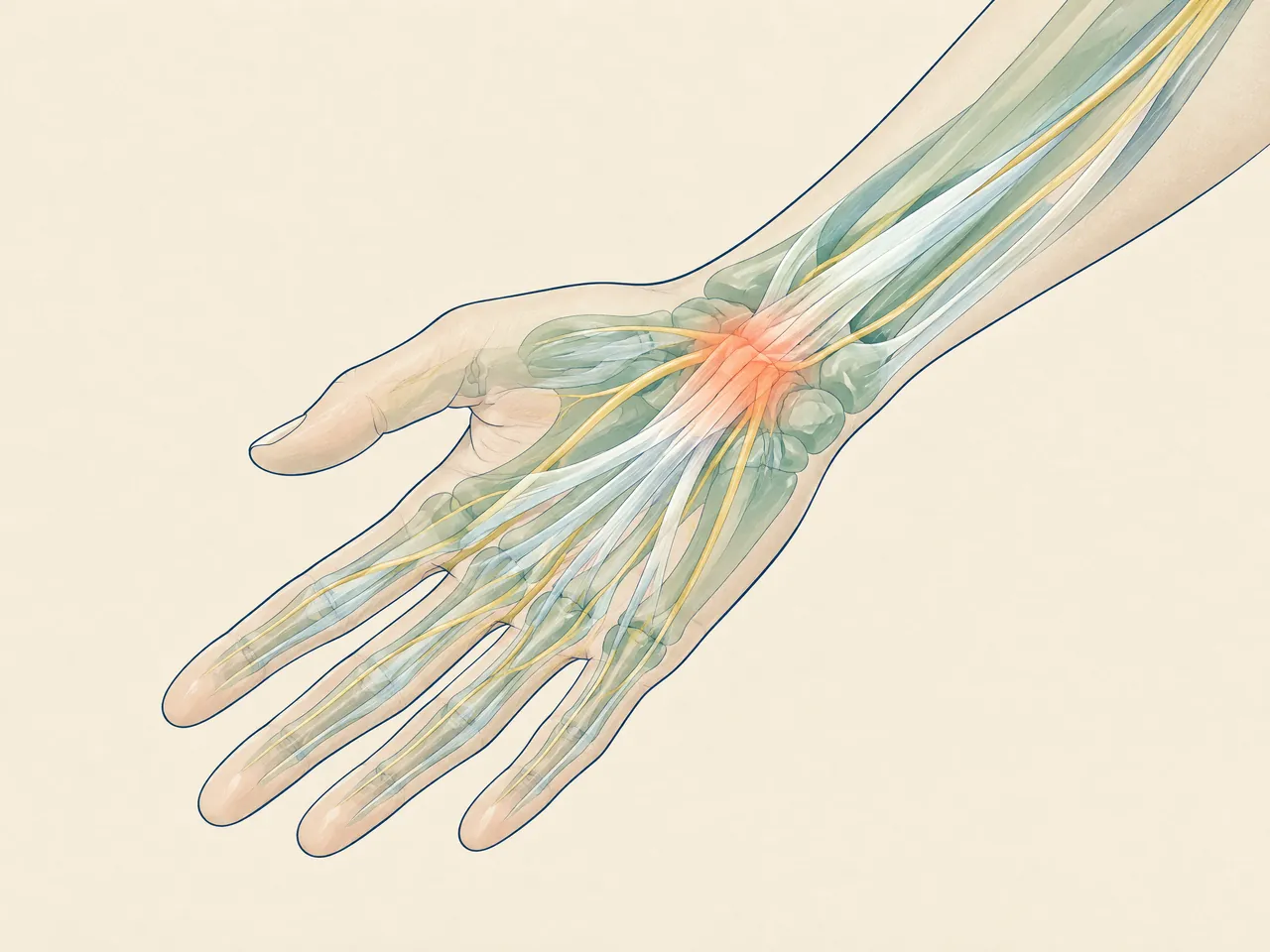
The short answer
After a recent wrist injury with swelling, local warmth or throbbing, choose a cloth-wrapped cold pack instead of heat for short, comfortable sessions; it may temporarily ease pain and swelling. When the early inflammatory signs have settled, gentle warmth may be more useful for stiffness before easy movement. Never put either pack on bare skin. A deformity, severe or worsening pain, altered sensation, or a hand that is cold or blue needs urgent medical assessment rather than another pack.
Transparent pricing
See the fees.
Choose your care.
Explore our complete official price list, including first-trial prices, regular prices, packages and branch-specific options.
Opening WhatsApp prepares an enquiry; it does not send a message, take payment or confirm an appointment. Suitability and individual arrangements are confirmed during consultation.
Pain care
All prices in HKDExtracorporeal shockwave treatment
Shockwave treatment for deep-tissue and fascial care. The Kwun Tong clinic offers the multi-area options shown below.
Priced by branch
Branch-specific pricing
Prince Edward: HK$250 per area
Kwun Tong: HK$250 for 1 area / HK$450 for 2 areas / HK$600 for 3 areas
Pain care (manual therapy)
Includes Chinese medicine musculoskeletal assessment, manual joint techniques and tui na.
HK$580 (single session)
Chinese medicine musculoskeletal assessment
Pain care (acupuncture and manual therapy)
Combines acupuncture and manual therapy.
HK$680 (single session)
Combined care
Hair and scalp
All prices in HKDScalp health and hair-loss management
Includes AI scalp analysis, deep scalp and follicle cleansing, and scalp oil-control care.
HK$380 (first trial)
Regular price: HK$680
- 6 sessions: HK$3,480 (HK$580 per session)
- 12 sessions: HK$5,760 (HK$480 per session)
- 20 sessions: HK$8,600 (HK$430 per session)
- 30 sessions: HK$11,400 (HK$380 per session)
Hair acupuncture and Chinese herbal medicine package
Includes scalp acupuncture and 3 days of Chinese herbal medicine that does not require decoction.
HK$580 (single session)
Registered Chinese Medicine Practitioner consultation
- 6 sessions: HK$3,180 (HK$530 per session)
- 12 sessions: HK$5,760 (HK$480 per session)
- 20 sessions: HK$8,600 (HK$430 per session)
- 30 sessions: HK$11,400 (HK$380 per session)
Combined hair and scalp treatment
Combines acupuncture and Chinese herbal medicine with salon-level scalp and follicle care. Packages include complimentary hair-care shampoo and serum.
HK$1,260 (single session)
Combined treatment
- 8 sessions: HK$8,640 (HK$1,080 per session)
- 16 sessions: HK$15,680 (HK$980 per session)
- 20 sessions: HK$18,600 (HK$930 per session)
- 30 sessions: HK$26,400 (HK$880 per session)
Weight management
All prices in HKDFull-body acupoint embedding for weight management
Includes full-body acupoint embedding. Packages include complimentary Chinese herbal medicine for weight management, with the number of included days scaled to the package. Embedding material and the individual treatment arrangement are confirmed during consultation; this is not a cosmetic thread lift.
HK$980 (single session)
No trial session
- 10 sessions: HK$7,800 (HK$780 per session)
- 20 sessions: HK$14,600 (HK$730 per session)
- 30 sessions: HK$20,400 (HK$680 per session)
Facial acupuncture
All prices in HKDFacial acupuncture (basic)
Includes facial acupuncture and meridian-based facial care, including care for facial puffiness.
HK$480 (first trial)
Regular price: HK$680
- 10 sessions: HK$5,200 (HK$520 per session)
- 20 sessions: HK$9,600 (HK$480 per session)
- 30 sessions: HK$13,500 (HK$450 per session)
Facial acupuncture (advanced)
Includes enhanced facial acupuncture with a specially formulated moisturising mask and serum.
HK$780 (first trial)
Regular price: HK$1,180
- 10 sessions: HK$9,000 (HK$900 per session)
- 20 sessions: HK$16,600 (HK$830 per session)
- 30 sessions: HK$23,400 (HK$780 per session)
Chinese medicine
All prices in HKDAcupuncture and Chinese herbal medicine package
Includes a Chinese medicine consultation with pulse assessment, body acupuncture and 3 days of Chinese herbal granules that do not require decoction.
HK$580 (single session)
Chinese medicine consultation with pulse assessment
Cold Pack for Wrist Pain, Warm Compress for Wrist Pain: Should I use ice or heat for wrist pain? — First identify the pattern
Start with the story of the pain, not the calendar alone. A clear incident—such as landing on an outstretched hand, catching the wrist while carrying a bag, or a sudden twist in sport—raises the possibility of an acute injury. Pain that comes on within minutes, followed by swelling, bruising or warmth, is a reason to protect the wrist and avoid adding heat in the early stage. Cold does not repair a ligament or rule out a broken bone; its role is temporary symptom relief while you watch the wrist carefully and decide whether assessment is needed.
By contrast, gradual discomfort often has a different pattern. The wrist may feel tight at the start of the day, ache after a long mouse or phone session, or pull during repeated gripping with no single moment of injury. That pattern can still have several causes, so do not label every ache as overuse. If the wrist is not actively hot, red or swollen, a warm compress may be a reasonable comfort measure before light movement. For a broader comparison of these choices, see wrist pain: ice or heat.

Cold Pack for Wrist Pain, Warm Compress for Wrist Pain: Should I use ice or heat for wrist pain? — Recent injury or ongoing stiffness
A recent injury and an ongoing stiff wrist can overlap, but they should not be managed as if they are identical. In the first two to three days after a suspected sprain or strain, NHS self-care guidance recommends protecting the area, reducing aggravating activity, using wrapped ice for up to 20 minutes at a time, and avoiding heat while swelling is being managed [3]. For a wrist, that might mean setting aside racquet sports, heavy lifting, push-ups and repetitive twisting for the moment rather than trying to work through sharp pain.
Later, the decision should follow symptoms rather than an automatic switch on a particular day. If the swelling and local heat have reduced but the wrist feels guarded or stiff, mild warmth before a short session of easy motion may feel more comfortable. The American Society for Surgery of the Hand describes heat as helpful for some stiff joints and muscles, while cold can help after activity when pain, swelling or irritation are present [1]. If you are unsure about a fresh injury, the practical guide on when to use ice for a wrist injury explains the same early-stage distinction in more detail.
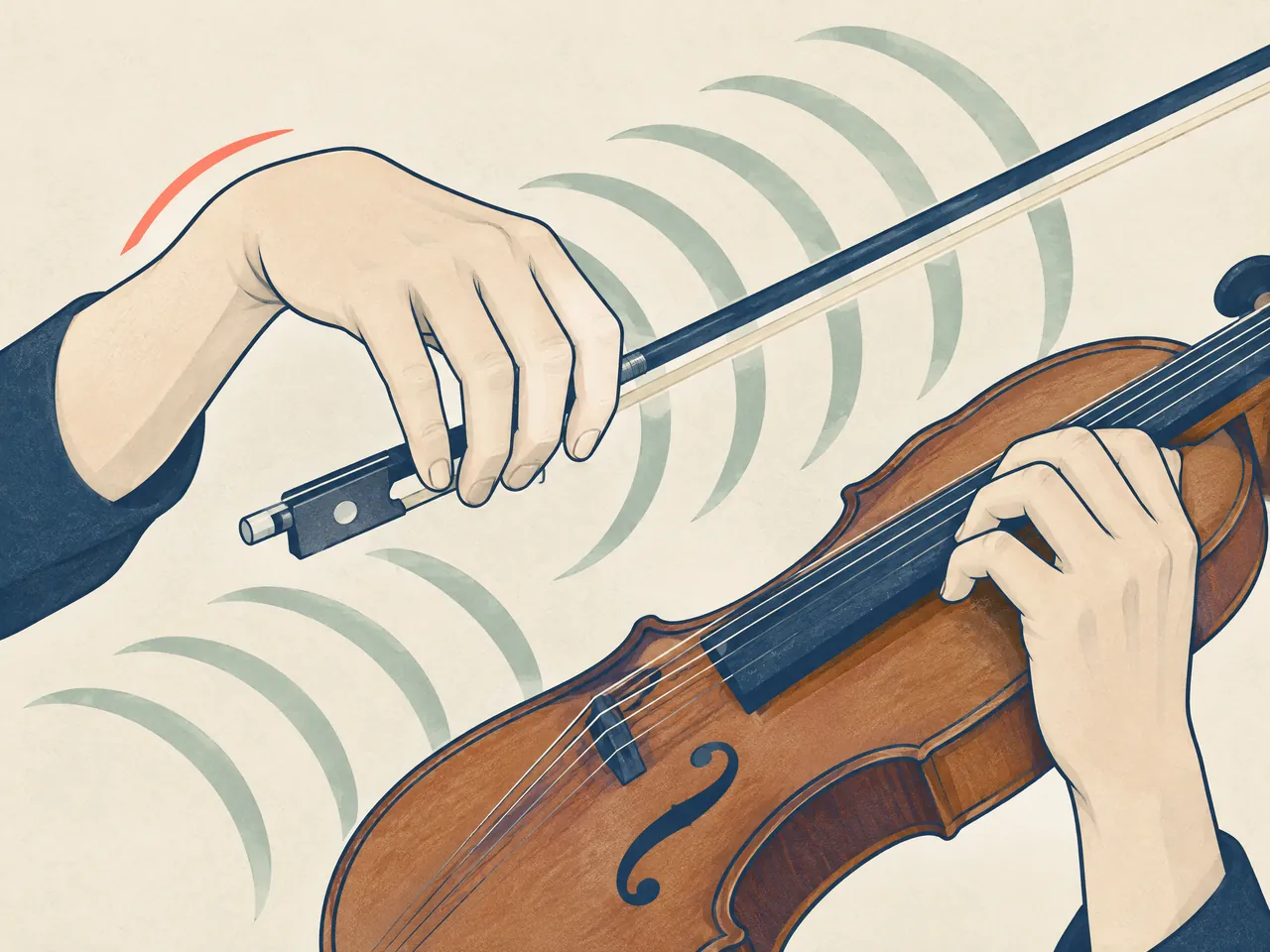
Cold Pack for Wrist Pain, Warm Compress for Wrist Pain: Should I use ice or heat for wrist pain? — What swelling, warmth and movement may suggest
Use observable clues rather than trying to diagnose yourself from one sensation. Compare the two wrists: is one visibly fuller, warmer, bruised or more painful to touch? Does opening a jar, turning a key, holding a cup or moving the thumb provoke the pain? New swelling and tenderness after an event support a cautious cold-first approach, but they do not tell you exactly which structure is injured. A wrist can be painful from a sprain, a fracture, a tendon condition, joint irritation, a cyst or nerve compression, among other possibilities.
Movement is useful information, but it is not a test to force. Notice whether you can gently bend and straighten the wrist, rotate the forearm and make a relaxed fist without a marked increase in pain. Stop a movement that catches, causes sharp pain or leaves the symptoms noticeably worse afterward. Repetitive pain on the thumb side or with gripping deserves an assessment rather than repeated self-treatment; the related discussion of wrist tendonitis pain may help you describe the pattern clearly when seeking advice.
Compare your options
| Current pattern | What you may notice | First comfort choice | Important next step |
|---|---|---|---|
| New twist, fall or impact | Rapid pain, swelling, bruising or warmth | Cloth-wrapped cold pack for a short session | Protect the wrist and avoid heat early; monitor function |
| Early injury with severe features | Deformity, severe pain, numbness, blue/cold hand or a crack | Do not rely on a pack | Seek urgent medical assessment |
| Gradual stiffness without active swelling | Tightness before activity or after repetitive use | Gentle warmth before comfortable movement | Reduce the provoking task and seek advice if it persists |
| Pain flares after a task | More tenderness or puffiness after gripping or exercise | Cold may be more comfortable than heat | Modify the load; assess recurring or worsening symptoms |
On smaller screens, scroll the table sideways to compare all columns.
Cold Pack for Wrist Pain, Warm Compress for Wrist Pain: Should I use ice or heat for wrist pain? — Using each option carefully
A pack should feel comfortably cool or warm, never painful. The barrier between the pack and the skin is not optional: wrap a cold gel pack, bag of ice or frozen food in a towel, and put cloth between a warm compress or heating pad and the wrist. Check the skin before and after. Unusual pallor, blotchiness, burning, increasing pain or numbness means stop. Skin with reduced sensation or poor circulation is less able to warn you that a temperature is unsafe, so self-treating with heat or cold calls for extra caution in those circumstances.
Think of the pack as one small part of a plan. Keep the wrist in a comfortable position, reduce the particular task that triggers pain, and resume gentle movement only when it does not aggravate symptoms. A splint, bandage or brace may be appropriate for some injuries, but the right choice depends on the diagnosis and fit; a device that causes tingling, colour change or escalating pain should not simply be tightened. The table below helps distinguish common starting points, not replace an examination after a significant injury.

Cold Pack for Wrist Pain, Warm Compress for Wrist Pain: Should I use ice or heat for wrist pain? — Safe cold application after an injury
Prepare the cold source before you sit down: use a flexible cold gel pack or a sealed bag with ice, wrap it in a thin towel, and support the wrist in a relaxed position. Do not fall asleep with it in place and do not press hard enough to make the wrist ache. Guidance varies slightly by setting: the NHS suggests ice for up to 20 minutes every two to three hours during the first days of a sprain or strain, while the hand-surgery society gives a general guide of 15 minutes of ice followed by a 15-minute rest [1] [3]. In either case, the skin response sets the limit.
Cold can be particularly practical after an unavoidable burst of activity has left a recently irritated wrist more sore or puffy. It should not be used to make it possible to continue a painful shift, workout or household job without modification. If the wrist is still swollen, weak or difficult to use, reduce that load and ask for advice. For a focused timing reminder, read How long should I ice a sore wrist?. Seek prompt care rather than another cold cycle if pain is severe, a bone is very tender, or normal hand use is not returning.
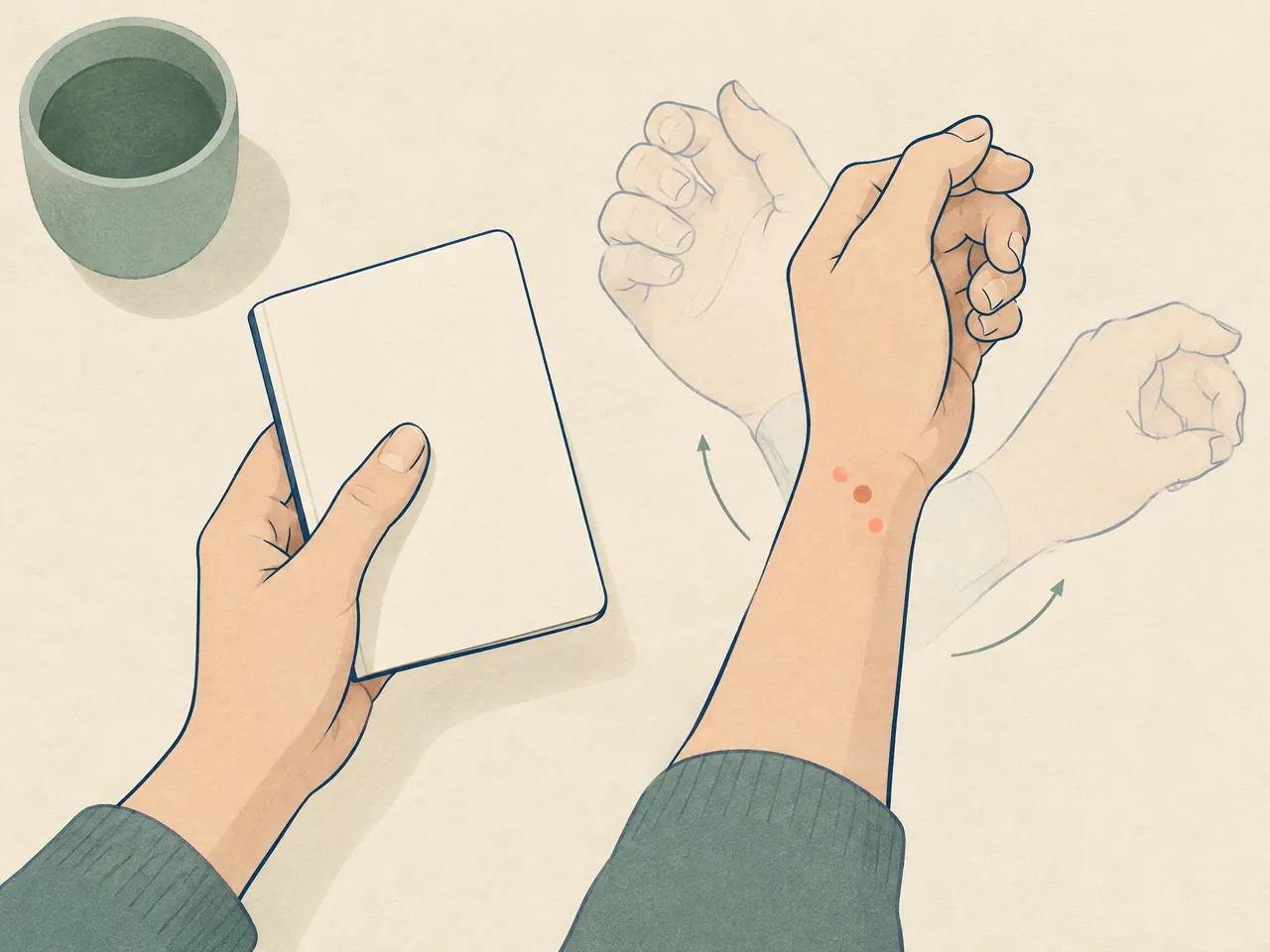
Cold Pack for Wrist Pain, Warm Compress for Wrist Pain: Should I use ice or heat for wrist pain? — When warmth may be unsuitable
Do not use a warm compress on a newly injured wrist that is clearly swollen, hot or throbbing. Johns Hopkins Medicine advises against heat in the first 48 hours after an injury and explains that cold may reduce pain, swelling and inflammation [2]. This is why a hot shower, heated wrap or vigorous massage can be a poor match straight after a fall or twist, even if warmth feels soothing for a few minutes. First protect the area and keep an eye on changes in swelling, bruising and function.
Warmth is also unsuitable over an open wound, a skin infection or skin that cannot reliably feel temperature. Be particularly careful if there is nerve damage, diabetes-related loss of sensation or a circulation problem, because a heating device can burn without normal warning pain. If you use warmth later for uncomplicated stiffness, choose warm rather than scalding water or a low, comfortable setting; the hand-surgery society notes that heat should never be painful and offers 15 minutes as a general upper guide [1]. Stop if swelling returns or the ache intensifies after treatment.
Cold Pack for Wrist Pain, Warm Compress for Wrist Pain: Should I use ice or heat for wrist pain? — When to seek assessment
Pack choice is not the main question when the injury may be serious. Urgent assessment is warranted after a crack or snap, visible deformity, a wrist pointing at an unusual angle, numbness or pins and needles, or skin that becomes blue, grey or cold. NHS guidance lists these as possible signs of a broken bone needing urgent care [3]. Rapidly increasing swelling, severe pain, fever or feeling unwell, and an inability to use the hand normally also deserve timely medical attention. Remove rings early if the hand is swelling, but do not attempt to straighten or manipulate a deformed wrist.
For less dramatic but persistent symptoms, arrange an assessment if self-care is not helping, pain keeps returning with ordinary tasks, or you are compensating by avoiding gripping, typing or sleeping on that side. Bring a simple account of when it started, which actions provoke it, whether there was a fall, and what cold or heat did to the symptoms. This makes the appointment more useful than arriving with only a label. It also helps a clinician decide whether examination, imaging, rehabilitation advice or another pathway is appropriate.
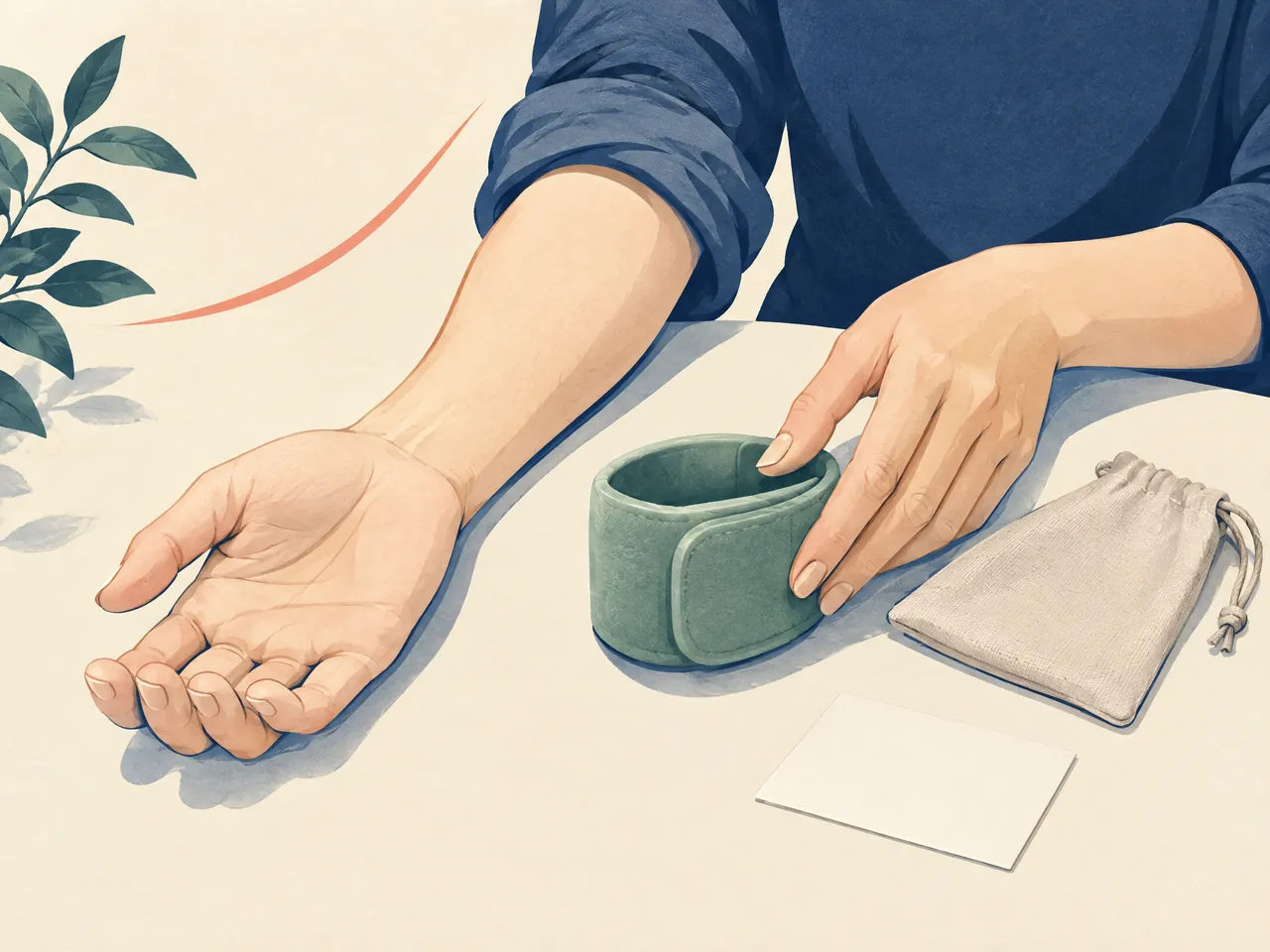
Cold Pack for Wrist Pain, Warm Compress for Wrist Pain: Should I use ice or heat for wrist pain? — Warning signs and activity changes
While waiting for non-urgent advice, change the load rather than stopping every movement indefinitely. Break up long keyboard or handheld-device sessions, use two hands for a heavy object where possible, and postpone movements that require forceful twisting or weight through the palm. Gentle, pain-limited motion can help prevent a wrist from becoming unnecessarily stiff once it is safe to move; NHS advice similarly encourages movement when pain is no longer stopping it [3]. The key boundary is a clear flare: if an activity produces sharp pain, more swelling or worsening function later that day, scale it back.
A useful home check is function, not toughness. Can you pick up a light cup, turn a door handle, type a short message and make a relaxed fist without escalating symptoms? A “yes” does not prove there is no injury, and a “no” after a fall is a reason not to rely on packs alone. Avoid repeatedly testing painful grip strength or doing deep stretches to prove recovery. A wrist that remains weak, locks, clicks painfully or interrupts ordinary work needs an individual assessment, particularly when it has not been improving.

Cold Pack for Wrist Pain, Warm Compress for Wrist Pain: Should I use ice or heat for wrist pain? — A traditional Chinese medicine perspective
A Registered Chinese Medicine Practitioner can take a fuller history of the wrist complaint, including the timing, quality of pain, aggravating activities, sleep and general health. In traditional Chinese medicine, practitioners may describe pain patterns using concepts such as cold-damp obstruction, qi stagnation and blood stasis. These are traditional pattern descriptions, not modern medical diagnoses, and they do not show whether a wrist is fractured or has a tendon tear. Tell the practitioner about any fall, new numbness, medication, diagnosed condition and previous treatment so care can be coordinated safely.
If you would like to ask whether a consultation is suitable for a persistent, non-emergency wrist concern, TCM Lab can be contacted by WhatsApp at +852 6940 5663. Availability can be discussed at the Kwun Tong Chinese medicine clinic or the Chinese medicine clinic Prince Edward; state any language needs when you enquire. You may also review the Chinese medicine clinic price list Hong Kong before contacting the clinic. For a new traumatic injury or any warning sign above, seek conventional medical assessment first rather than treating a pack choice as a diagnosis.
Care and health guide
Pain-care information
This directory brings together services, reading, and visit information related to pain care, to help you prepare questions for a consultation.
When pain care affects your day, noting when it occurs, its relation to activity, and what you have already tried can help prepare a consultation; Chinese medicine pain management Hong Kong is a relevant service or reading entry point.
Individual circumstances differ, and acupuncture Hong Kong offers related information to help you understand options and prepare questions.


Your questions, answered
Frequently asked questions
How do I choose between a cold pack and a warm compress for wrist pain?
Use the pattern as your guide. A recent injury with swelling, warmth or bruising generally calls for a wrapped cold pack in the early stage. Gentle warmth may suit later stiffness when there is no active redness, heat or swelling. If you cannot use the hand normally or symptoms are worsening, arrange assessment instead of switching packs.
How can I use a cold pack safely on my wrist?
Place a towel between the cold source and your skin, keep the wrist in a relaxed position, and stop if the area becomes painfully cold, numb, very pale or blotchy. Do not sleep with a pack on and do not use it to push through an activity that is aggravating the injury.
When should I avoid a warm compress for wrist pain?
Avoid heat in the early period after a fresh injury and whenever the wrist is visibly swollen, hot, red or throbbing. Do not apply warmth over an open wound or infection. Get individual advice before using heat if skin sensation is reduced or circulation is poor, because burns can occur without a reliable warning.
Can heat or ice fix wrist tendonitis or a sprain?
No. Heat and cold can be temporary comfort measures, but neither confirms the cause or repairs a structural injury by itself. Recurring pain with gripping, thumb movement, typing or sport needs assessment so that activity modification and any rehabilitation advice fit the actual problem.
Sources and further information
- [1] [1] American Society for Surgery of the Hand — Heat Treatment and Cold Treatment for Hands
Referenced for: Heat for some hand and wrist stiffness; cold for pain, swelling and irritation; cloth barriers, time limits and skin-safety warnings.
- [2] [2] Johns Hopkins Medicine — Ice Packs vs. Warm Compresses For Pain
Referenced for: Cold for pain and swelling after injury; avoid heat during the first 48 hours; protect skin from direct ice or heating devices.
- [3] [3] NHS — Sprains and strains
Referenced for: Early sprain and strain self-care, wrapped ice guidance, activity advice and warning signs requiring urgent assessment.