
TCM Lab · Health reading
How to Relieve Neck and Shoulder Pain: Neck and Shoulder Pain and Neck Pain Posture
Published Updated
Neck and shoulder pain is frustrating when it is unclear whether it comes from a tired-muscle pattern, a posture habit, or something needing a closer look. Start with the pattern: where it begins, whether it is dull, pulling, sharp or burning, what happens when you turn your head, and whether desk work, sleep, travel or exercise changes it. Neck pain posture can contribute, but it does not explain every case. Pain travelling into an arm, persistent tingling, loss of sensation, weakness, fever, significant trauma, trouble walking, or new bladder or bowel changes needs prompt medical assessment [1] [3].
Appointments are confirmed through WhatsApp. If you have language requirements, please mention them in your enquiry.
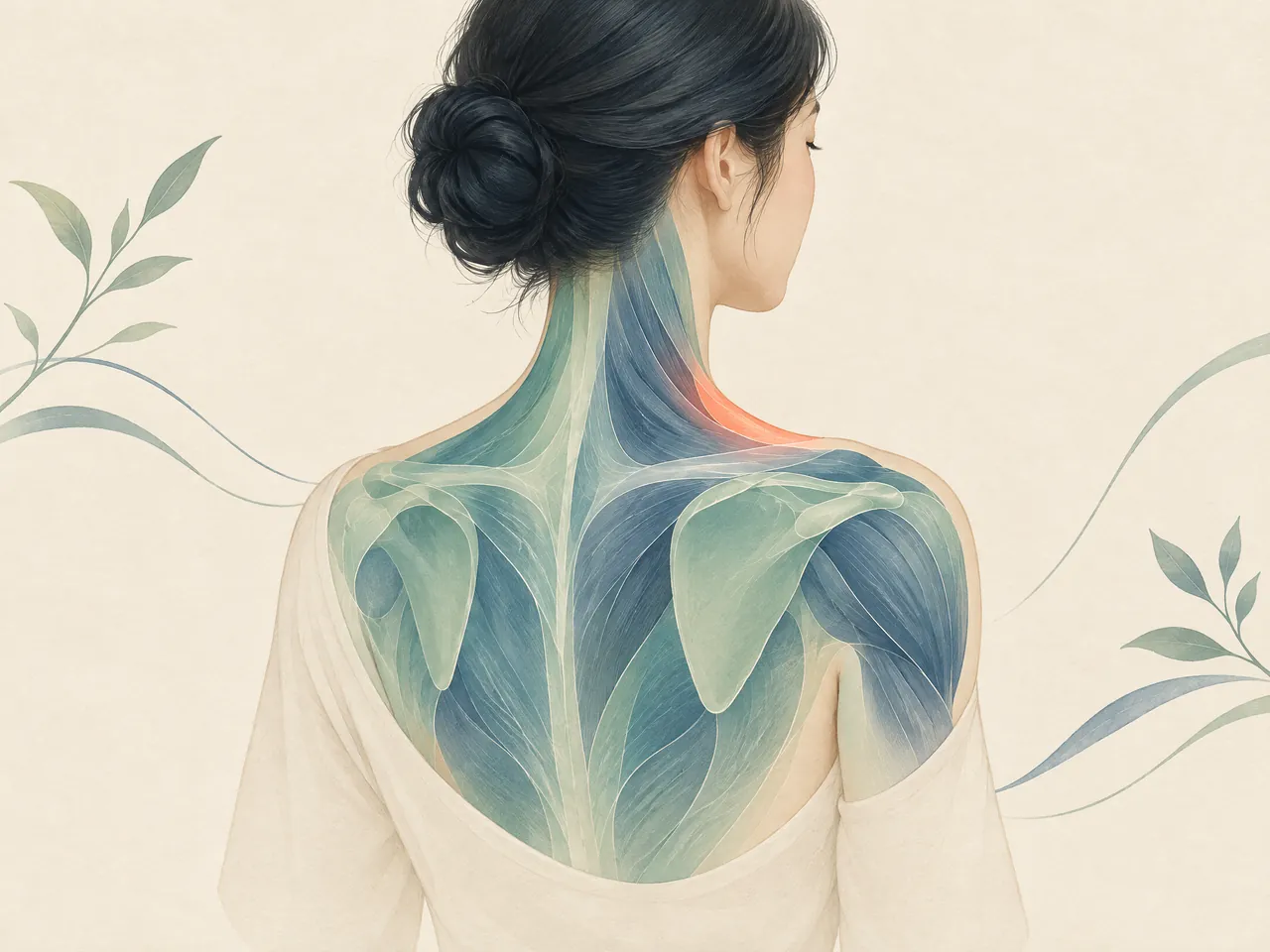
The short answer
To relieve neck and shoulder pain, first record where it is, what triggers it and whether it spreads beyond the neck. For mild, non-urgent discomfort, avoid staying in one position for too long, use gentle movement, and choose protected heat or cold only if it feels comfortable. Improve screen and sleep setup gradually rather than forcing a rigid posture. Seek medical assessment promptly for injury, fever, worsening pain, arm numbness or weakness, trouble walking, or bladder or bowel changes.
Transparent pricing
See the fees.
Choose your care.
Explore our complete official price list, including first-trial prices, regular prices, packages and branch-specific options.
Opening WhatsApp prepares an enquiry; it does not send a message, take payment or confirm an appointment. Suitability and individual arrangements are confirmed during consultation.
Pain care
All prices in HKDExtracorporeal shockwave treatment
Shockwave treatment for deep-tissue and fascial care. The Kwun Tong clinic offers the multi-area options shown below.
Priced by branch
Branch-specific pricing
Prince Edward: HK$250 per area
Kwun Tong: HK$250 for 1 area / HK$450 for 2 areas / HK$600 for 3 areas
Pain care (manual therapy)
Includes Chinese medicine musculoskeletal assessment, manual joint techniques and tui na.
HK$580 (single session)
Chinese medicine musculoskeletal assessment
Pain care (acupuncture and manual therapy)
Combines acupuncture and manual therapy.
HK$680 (single session)
Combined care
Hair and scalp
All prices in HKDScalp health and hair-loss management
Includes AI scalp analysis, deep scalp and follicle cleansing, and scalp oil-control care.
HK$380 (first trial)
Regular price: HK$680
- 6 sessions: HK$3,480 (HK$580 per session)
- 12 sessions: HK$5,760 (HK$480 per session)
- 20 sessions: HK$8,600 (HK$430 per session)
- 30 sessions: HK$11,400 (HK$380 per session)
Hair acupuncture and Chinese herbal medicine package
Includes scalp acupuncture and 3 days of Chinese herbal medicine that does not require decoction.
HK$580 (single session)
Registered Chinese Medicine Practitioner consultation
- 6 sessions: HK$3,180 (HK$530 per session)
- 12 sessions: HK$5,760 (HK$480 per session)
- 20 sessions: HK$8,600 (HK$430 per session)
- 30 sessions: HK$11,400 (HK$380 per session)
Combined hair and scalp treatment
Combines acupuncture and Chinese herbal medicine with salon-level scalp and follicle care. Packages include complimentary hair-care shampoo and serum.
HK$1,260 (single session)
Combined treatment
- 8 sessions: HK$8,640 (HK$1,080 per session)
- 16 sessions: HK$15,680 (HK$980 per session)
- 20 sessions: HK$18,600 (HK$930 per session)
- 30 sessions: HK$26,400 (HK$880 per session)
Weight management
All prices in HKDFull-body acupoint embedding for weight management
Includes full-body acupoint embedding. Packages include complimentary Chinese herbal medicine for weight management, with the number of included days scaled to the package. Embedding material and the individual treatment arrangement are confirmed during consultation; this is not a cosmetic thread lift.
HK$980 (single session)
No trial session
- 10 sessions: HK$7,800 (HK$780 per session)
- 20 sessions: HK$14,600 (HK$730 per session)
- 30 sessions: HK$20,400 (HK$680 per session)
Facial acupuncture
All prices in HKDFacial acupuncture (basic)
Includes facial acupuncture and meridian-based facial care, including care for facial puffiness.
HK$480 (first trial)
Regular price: HK$680
- 10 sessions: HK$5,200 (HK$520 per session)
- 20 sessions: HK$9,600 (HK$480 per session)
- 30 sessions: HK$13,500 (HK$450 per session)
Facial acupuncture (advanced)
Includes enhanced facial acupuncture with a specially formulated moisturising mask and serum.
HK$780 (first trial)
Regular price: HK$1,180
- 10 sessions: HK$9,000 (HK$900 per session)
- 20 sessions: HK$16,600 (HK$830 per session)
- 30 sessions: HK$23,400 (HK$780 per session)
Chinese medicine
All prices in HKDAcupuncture and Chinese herbal medicine package
Includes a Chinese medicine consultation with pulse assessment, body acupuncture and 3 days of Chinese herbal granules that do not require decoction.
HK$580 (single session)
Chinese medicine consultation with pulse assessment
How to Relieve Neck and Shoulder Pain: Understanding Neck and Shoulder Pain and Neck Pain Posture
The useful first goal is to separate a manageable pattern from one that should be assessed. Neck and shoulder pain can involve the neck, upper back, shoulder area, or more than one region. A sore band across the upper shoulders after laptop work is different from an electric feeling that runs from the neck into a hand. Write down the location with one finger, the feeling, the time it appears and the activity that changes it. That record makes a medical or Chinese medicine consultation more focused without assuming a diagnosis.
Think of neck pain posture as an adjustable load, not a test that you pass or fail. Looking down at a phone, leaning towards a screen, carrying a bag on one side, or waking with the neck turned awkwardly can aggravate tired tissues. The Hong Kong College of Orthopaedic Surgeons notes that everyday posture can contribute to strain and pain may extend towards the shoulders or elbows [1]. Screen height, sleep, work pace and recent activity can all matter, so a small repeatable change is usually more helpful than forcing a rigid position.

How to Relieve Neck and Shoulder Pain by Tracking Neck and Shoulder Pain Patterns and Neck Pain Posture
Keep a short note for several days. Record whether symptoms are strongest on waking, after screens, during a commute, after lifting, or late in the day. Note whether turning left differs from turning right and whether looking down, a short walk or rest changes the feeling. Include sleep interruption, headache, dizziness, arm symptoms and measures already tried. You do not need a perfect diary; you need a useful contrast, such as a local ache that eases after changing position versus a sensation that repeatedly moves into the forearm. If you are wondering What causes neck and shoulder pain?, this contrast is a sound starting point.
Make posture changes easy enough to repeat. Set the screen near eye level, keep commonly used items within reach, and raise a phone rather than bending the neck for a prolonged spell. For sleep, aim to support the head at roughly the same level as the rest of the body. The NHS advises avoiding a long fixed neck position and sleeping on the front [2]. There is no single correct pose for everyone; look for a change that is comfortable, sustainable and followed by less irritation.

How to Relieve Neck and Shoulder Pain When Neck and Shoulder Pain Radiates Beyond Poor Neck Pain Posture
Describe local and radiating symptoms separately. Local discomfort may stay at the base or side of the neck, between the shoulder blades, or over the upper shoulder. Radiating pain may move through a shoulder and down an arm, sometimes with tingling, altered sensation or weakness. Mayo Clinic notes that neck pain can involve the neck and shoulders or radiate down an arm, and that numbness or muscle weakness can help narrow possible causes [3]. Those signs do not diagnose the cause, but they change the threshold for medical review. The guide to neck pain radiating to arm can help you prepare a clear description, not diagnose yourself online. If you are concerned about pinched nerve in neck symptoms, record the route of the sensation, whether particular fingers are affected, what worsens it, and whether weakness is new or increasing.
Compare your options
| What you notice | Reasonable first response | When to seek medical assessment |
|---|---|---|
| Local ache or stiffness after prolonged desk, phone or sleep position | Vary position, use comfortable gentle movement, review screen and sleep setup, and track the response. | If it persists, recurs, disrupts sleep, limits normal activity or does not improve with sensible self-care. |
| Pain moving from the neck into a shoulder or arm | Record the route, trigger, side involved and any tingling; avoid self-diagnosing the cause. | Arrange assessment, especially if symptoms are persistent, worsening or accompanied by altered sensation. |
| Numbness, weakness, clumsy hands, walking difficulty, or bowel or bladder changes | Do not rely on posture changes, stretching, heat or cold as the main response. | Seek prompt or emergency medical assessment, particularly if symptoms are new, progressive or severe. |
| Pain after a fall, collision or other traumatic event | Protect yourself from activities that strain the neck further and note how the event occurred. | Seek prompt medical assessment; urgent care is needed for severe pain, neurological changes or other serious symptoms. |
| Interest in acupuncture or Chinese medicine alongside current care | Prepare a symptom timeline and a complete list of medicines and treatments for an individual discussion. | First seek necessary medical assessment for red flags; do not stop prescribed care without professional advice. |
On smaller screens, scroll the table sideways to compare all columns.
How to Relieve Neck and Shoulder Pain: Neck and Shoulder Pain Causes and Neck Pain Posture Clues
Neck and shoulder pain has more than one possible contributor. An awkward sleeping position, long fixed desk posture, a sudden increase in exercise or lifting, strain, falls and whiplash can all be relevant. Medical sources also list conditions involving discs, joints, inflammation and other structures, so a web page cannot reliably name the cause from one symptom [1] [3]. The combination of onset, location, movement response and nerve-related signs gives a more useful direction than posture alone. A gradual local ache after an increased workload needs a different conversation from pain that began in an accident.
Avoid the false choice between “it is only posture” and “it must be serious.” A desk habit may be a modifiable contributor even when it is not the whole explanation. Use self-care while the pattern remains mild, stable and free of concerning symptoms. If pain is not improving, repeatedly returns, disrupts sleep, limits normal activity or worries you, arrange professional assessment. This is particularly important with inflammatory disease, osteoporosis, cancer history, recent unexplained weight loss or a significant injury, because those details change the clinical context [1].
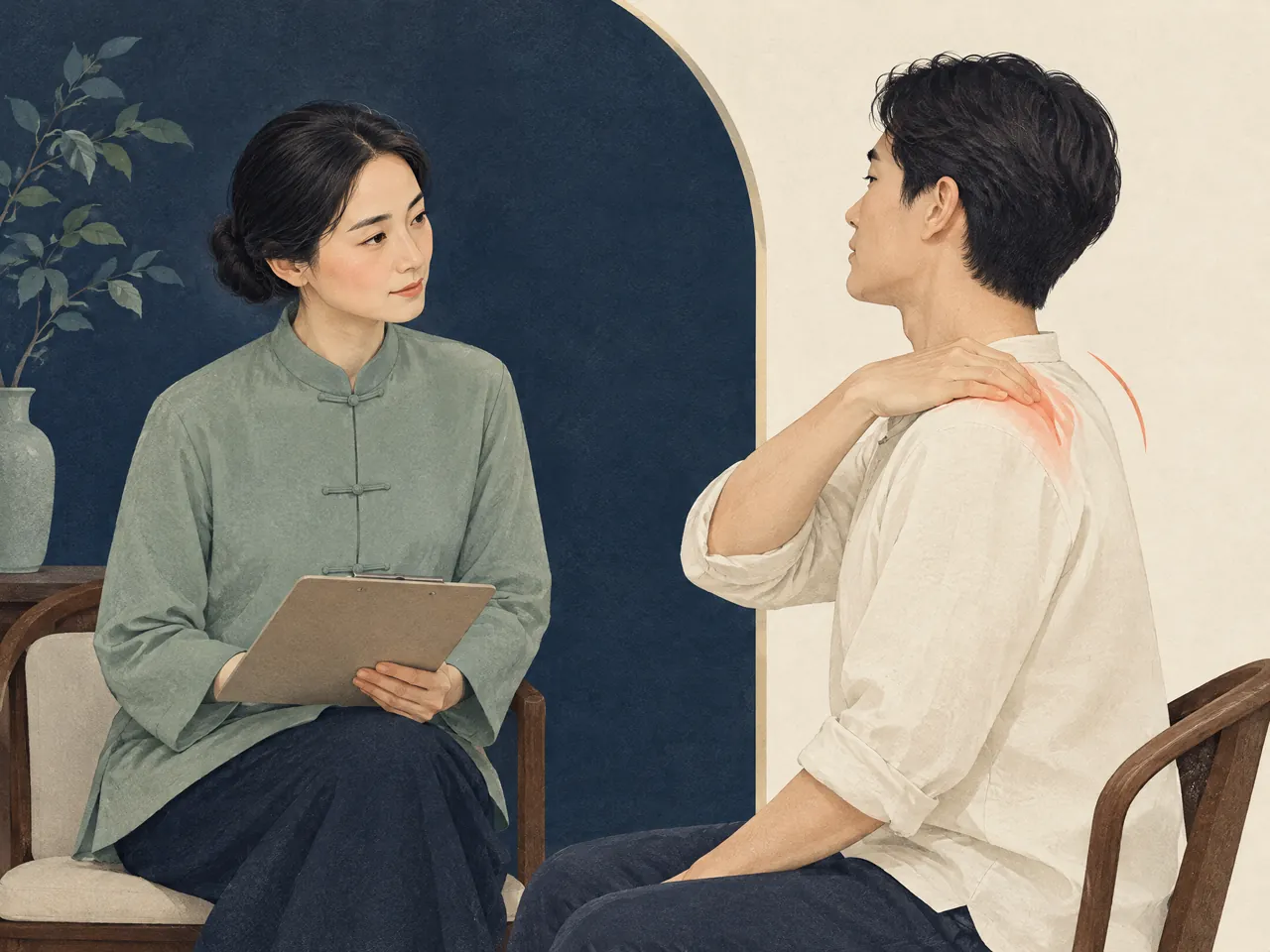
How to Relieve Neck and Shoulder Pain While Distinguishing Neck and Shoulder Pain from Neck Pain Posture Strain
A posture-related strain pattern often builds after one position or task and eases somewhat with a break, gentle movement or task variation. It may feel like stiffness or tiredness through the upper shoulders, with a limited but non-progressive range of motion. That is a clue rather than a diagnosis. The NHS lists prolonged desk sitting and an awkward sleeping position among common causes of neck pain, while also naming a pinched nerve and injury as other possibilities [2]. Try posture changes as an experiment across ordinary days rather than expecting one adjustment to solve every symptom immediately.
Start with the least disruptive workstation changes: support the back, keep the screen near eye level, use a headset rather than trapping a phone between shoulder and ear, and put the keyboard and mouse within easy reach. Take a break before stiffness becomes intense: stand, walk briefly and let the shoulders move normally. Do not brace the neck into a “perfect” pose all afternoon. Comfortable support and frequent variation are more practical than sustained muscle tension.

How to Relieve Neck and Shoulder Pain When Neck and Shoulder Pain Includes Numbness and Neck Pain Posture Is Not the Whole Story
Numbness, pins and needles, a cold-feeling arm, weakness or pain beyond the shoulder needs a careful description. State whether it is intermittent or constant, where it travels, whether one or both sides are affected, and whether it is worsening. Mention headache, fever, a recent accident, balance changes and difficulty using the hands. The NHS advises medical review when neck pain does not settle or when symptoms such as pins and needles or a cold arm occur [2]. This is the point to stop treating the issue as a simple neck pain posture problem.
Seek emergency care for severe neck pain after traumatic injury, severe pain with high fever, weakness in an arm or leg, or trouble walking, as described by Mayo Clinic [3]. The local orthopaedic guidance also identifies progressive clumsiness, new incontinence and difficulty controlling bowel movements as warning signs [1]. If these urgent features are absent but symptoms persist or recur, book a non-emergency appointment rather than increasing stretches or pain relief measures on your own.
How to Relieve Neck and Shoulder Pain: Neck and Shoulder Pain Care and Neck Pain Posture Changes
For mild neck and shoulder pain without red flags, care is about easing load while keeping the area comfortably active. Avoid long spells in the position that brings symptoms on, but do not force aggressive stretching or use a collar unless a clinician directs it. Gentle head turns, looking up and down within a comfortable range, short walks and ordinary light activity can be more useful than guarding the area all day. Stop and seek assessment if symptoms spread, consistently worsen, or change strength or sensation. The right amount of activity lets you move without a sharp or escalating response.
Heat or cold is a comfort choice, not a diagnosis or cure. The NHS suggests protected heat or cold packs for neck pain, and Mayo Clinic also includes ice or heat in self-care advice [2] [3]. Wrap a pack or bottle in cloth, protect the skin, and stop if it is unpleasant, aggravates symptoms or leaves the skin very numb or irritated. Some people prefer cold after a strain and heat for tightness; others simply prefer one. The guide to heat or cold for neck pain explains a cautious, comfort-focused approach. Neither option should mask a pattern that needs assessment.

How to Relieve Neck and Shoulder Pain with Activity, Heat or Cold, and Better Neck Pain Posture
Fit a brief reset into moments you already have. After screen work, stand, let the arms hang, move the shoulders gently, look left and right without forcing the end range, and take a few steps. On public transport, avoid holding the phone low for the entire journey. At home, vary reading, television and device positions rather than spending the evening with the chin tucked. These changes reduce prolonged loading and show which movements are comfortable. They do not replace an individual rehabilitation plan after injury or evaluation of neurological symptoms.
Use heat or cold with basic safety in mind. Do not apply either directly to bare skin, sleep on a heating pad, or use an intensely hot or frozen pack in search of a stronger effect. Check the skin and stop with burning, marked numbness or discomfort. People with altered sensation, circulation problems or difficulty judging temperature should ask a clinician or pharmacist what is suitable. A warm shower, cloth-wrapped pack or short movement break may be enough when the aim is comfort and safe everyday activity.
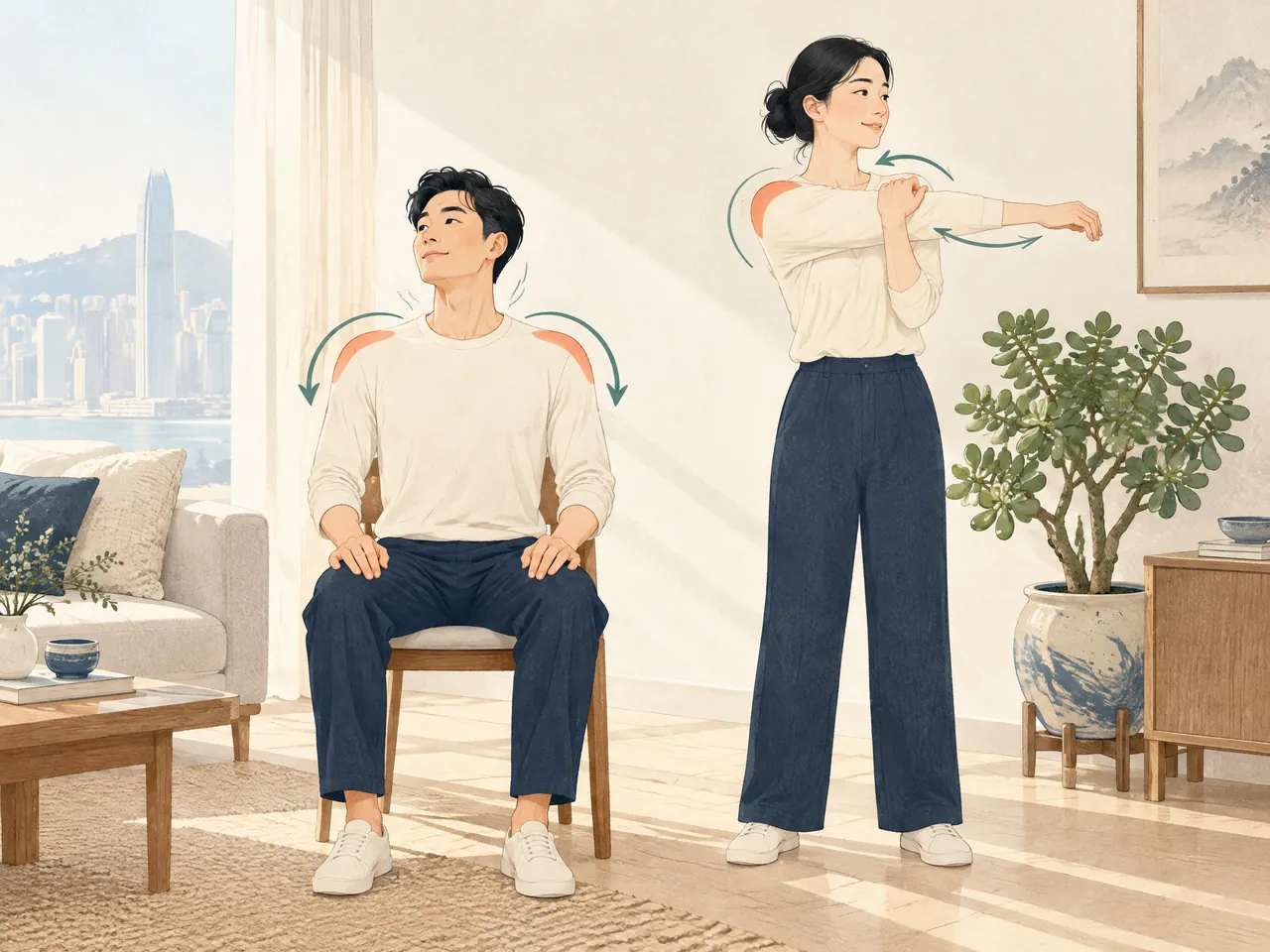
How to Relieve Neck and Shoulder Pain Through Assessment of Neck and Shoulder Pain and Neck Pain Posture
Assessment helps when pain persists, returns, interrupts sleep or makes work and daily tasks difficult despite sensible changes. Bring the pattern record, treatments and medicines, previous injuries, and the questions that worry you most. A clinician can assess movement, strength and sensation and decide whether more investigation, physiotherapy, medication changes or another approach is appropriate. The aim is not to demand a scan or a single explanation. It is to choose the next step that fits the pattern and rule out problems home care cannot safely address.
If you are interested in acupuncture, discuss it after sharing full health information and current treatment. The National Center for Complementary and Integrative Health says acupuncture may be helpful for some pain conditions, including back or neck pain, while noting that effects vary across comparisons and improperly delivered acupuncture can cause serious adverse effects [4]. It is a complementary option to discuss after assessment, not a guaranteed cure or a substitute for urgent care. Mention bleeding-related conditions or medicines, pregnancy, implanted electrical devices, skin infection near a proposed area, needle-related fainting and current treatment. For a local enquiry, ask about a Kwun Tong Chinese medicine clinic or Chinese medicine clinic Prince Edward appointment and describe the symptom pattern first. If comparing costs, consult the Chinese medicine clinic price list Hong Kong, then confirm what applies to your consultation. Contact TCM Lab on WhatsApp at +852 6940 5663 to enquire; a message does not replace examination or automatically confirm an appointment.
For a local enquiry, you can ask about a Kwun Tong Chinese medicine clinic or Chinese medicine clinic Prince Edward appointment and describe the symptom pattern first. If comparing costs, consult the Chinese medicine clinic price list Hong Kong, then confirm what applies to your consultation rather than assuming a listed item is suitable. Contact TCM Lab on WhatsApp at +852 6940 5663 to enquire about an assessment arrangement. A message begins an enquiry; it does not replace examination or automatically confirm an appointment.
Care and health guide
Shoulder discomfort: care information
This directory brings together services, reading, and visit information related to shoulder discomfort, to help you prepare questions for a consultation.
When shoulder discomfort affects your day, noting when it occurs, its relation to activity, and what you have already tried can help prepare a consultation; acupuncture for shoulder pain is a relevant service or reading entry point.
Individual circumstances differ, and acupuncture Hong Kong offers related information to help you understand options and prepare questions.


Your questions, answered
Frequently asked questions
How long should I try posture changes before seeking help for neck and shoulder pain?
Try gentle, sustainable changes only while symptoms are mild and stable. Arrange professional assessment if pain persists, keeps returning, affects sleep or daily activity, or does not improve with sensible self-care. Seek prompt care sooner after trauma or if you have fever, worsening pain, arm symptoms, numbness, weakness, walking difficulty, or bowel or bladder changes.
Can poor neck pain posture cause pain in the shoulder and arm?
Prolonged or awkward positions can contribute to neck strain and pain that reaches the shoulder area. However, pain travelling down an arm, especially with tingling, numbness or weakness, should not be assumed to be posture alone. Describe the route and accompanying symptoms to a medical professional for appropriate assessment.
Should I use heat or cold for neck and shoulder pain?
Either may be used cautiously for comfort if it feels helpful. Wrap the source in cloth, protect the skin and stop if symptoms or skin irritation increase. Heat or cold does not diagnose the cause and should not delay assessment for red-flag symptoms, injury, neurological changes or persistent pain.
Can acupuncture be considered for neck and shoulder pain?
Acupuncture can be discussed as a complementary option after an individual assessment. It is not a guaranteed cure and cannot replace necessary medical evaluation, physiotherapy or prescribed treatment. Tell the practitioner about all current care and relevant safety information, including medicines that affect bleeding, pregnancy, implanted devices, skin concerns and previous needle reactions.
What should I bring to an assessment for neck and shoulder pain?
Bring a short symptom timeline, details of any injury, a list of medicines, supplements and current treatments, and copies of relevant reports if you have them. Note which movements, positions and times of day alter the pain, whether sleep is disrupted, and whether any arm numbness, tingling or weakness has occurred.
Sources and further information
- [1] The Hong Kong College of Orthopaedic Surgeons — Neck Pain
Referenced for: Local professional guidance on posture-related strain, radiating symptoms, warning signs, assessment and rehabilitation for neck pain.
- [2] NHS — Neck pain
Referenced for: Public health guidance on self-care, protected heat or cold, movement, posture and reasons to seek medical advice.
- [3] Mayo Clinic — Neck pain: Symptom
Referenced for: Clinical overview of associated causes, radiating pain, urgent warning symptoms and cautious self-care.
- [4] NCCIH — Acupuncture: Effectiveness and Safety
Referenced for: U.S. government health information on acupuncture evidence for pain conditions and safety considerations.