
TCM Lab · Health reading
Does acupuncture work for IBS? When should I see a doctor for IBS? What should I eat if I have IBS?
Published Updated
IBS can make ordinary decisions—whether to eat before a meeting, travel across Hong Kong, or accept a dinner invitation—feel unpredictable. Acupuncture may be discussed as a complementary option after appropriate assessment, but the strongest sham-controlled research has not shown a clear benefit over sham acupuncture. Start by making sure recurring symptoms have been assessed, then use a simple record to identify patterns in food, bowel habits, sleep and stress. A balanced, individual approach is more useful than assuming one treatment or one diet suits everyone.
Appointments are confirmed through WhatsApp. If you have language requirements, please mention them in your enquiry.
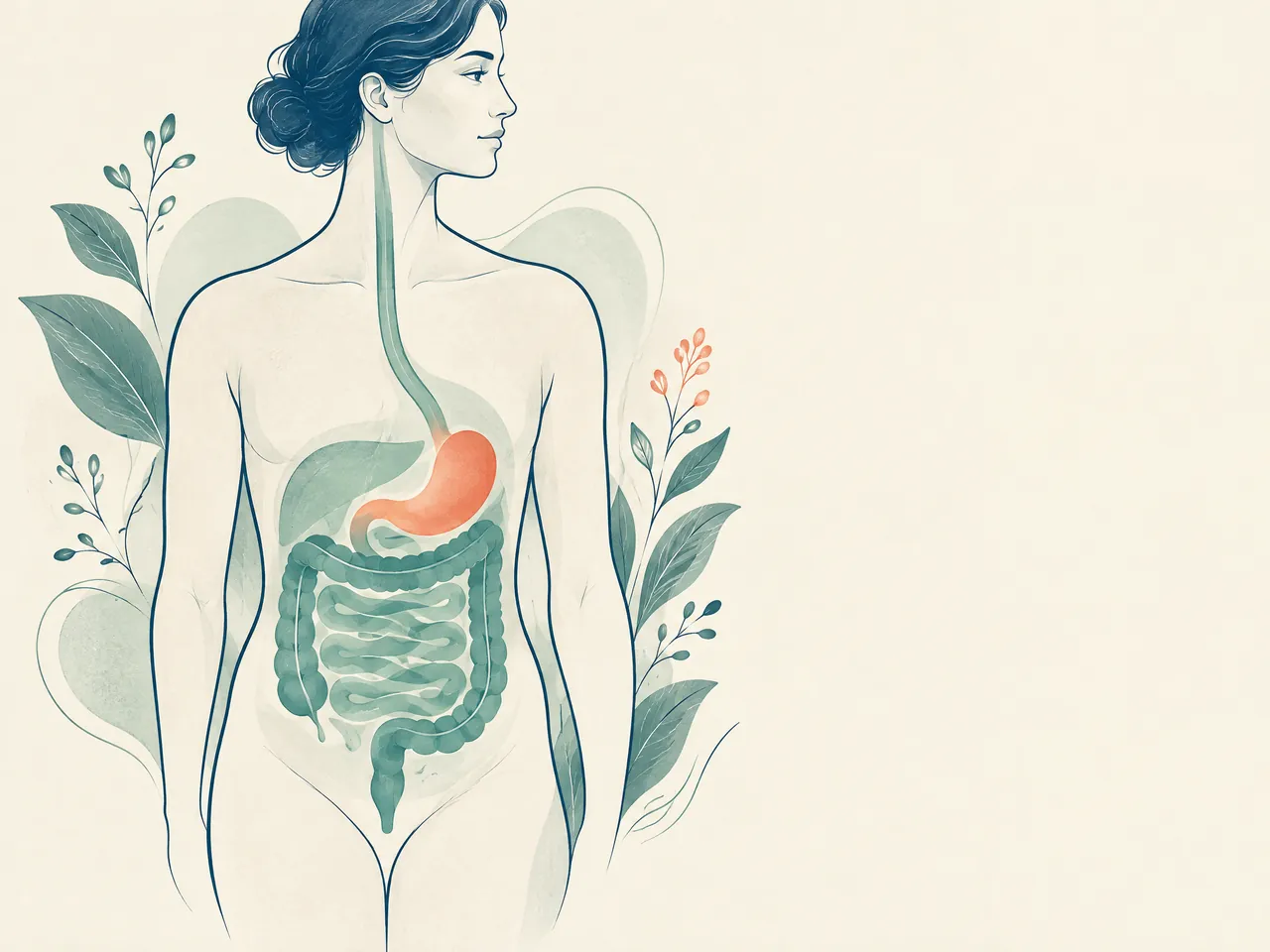
The short answer
Acupuncture is not a proven stand-alone treatment for IBS: sham-controlled trials reviewed by Cochrane did not show it to be better than sham acupuncture for IBS symptom severity or quality of life [3]. See a doctor for symptoms that persist or disrupt life, and seek urgent assessment for bleeding, unexplained weight loss, a hard abdominal swelling, or bloody diarrhoea [1]. For food, keep a diary and test focused, balanced changes with professional guidance rather than cutting out many foods at once.
Transparent pricing
See the fees.
Choose your care.
Explore our complete official price list, including first-trial prices, regular prices, packages and branch-specific options.
Opening WhatsApp prepares an enquiry; it does not send a message, take payment or confirm an appointment. Suitability and individual arrangements are confirmed during consultation.
Chinese medicine
All prices in HKDAcupuncture and Chinese herbal medicine package
Includes a Chinese medicine consultation with pulse assessment, body acupuncture and 3 days of Chinese herbal granules that do not require decoction.
HK$580 (single session)
Chinese medicine consultation with pulse assessment
Hair and scalp
All prices in HKDScalp health and hair-loss management
Includes AI scalp analysis, deep scalp and follicle cleansing, and scalp oil-control care.
HK$380 (first trial)
Regular price: HK$680
- 6 sessions: HK$3,480 (HK$580 per session)
- 12 sessions: HK$5,760 (HK$480 per session)
- 20 sessions: HK$8,600 (HK$430 per session)
- 30 sessions: HK$11,400 (HK$380 per session)
Hair acupuncture and Chinese herbal medicine package
Includes scalp acupuncture and 3 days of Chinese herbal medicine that does not require decoction.
HK$580 (single session)
Registered Chinese Medicine Practitioner consultation
- 6 sessions: HK$3,180 (HK$530 per session)
- 12 sessions: HK$5,760 (HK$480 per session)
- 20 sessions: HK$8,600 (HK$430 per session)
- 30 sessions: HK$11,400 (HK$380 per session)
Combined hair and scalp treatment
Combines acupuncture and Chinese herbal medicine with salon-level scalp and follicle care. Packages include complimentary hair-care shampoo and serum.
HK$1,260 (single session)
Combined treatment
- 8 sessions: HK$8,640 (HK$1,080 per session)
- 16 sessions: HK$15,680 (HK$980 per session)
- 20 sessions: HK$18,600 (HK$930 per session)
- 30 sessions: HK$26,400 (HK$880 per session)
Weight management
All prices in HKDFull-body acupoint embedding for weight management
Includes full-body acupoint embedding. Packages include complimentary Chinese herbal medicine for weight management, with the number of included days scaled to the package. Embedding material and the individual treatment arrangement are confirmed during consultation; this is not a cosmetic thread lift.
HK$980 (single session)
No trial session
- 10 sessions: HK$7,800 (HK$780 per session)
- 20 sessions: HK$14,600 (HK$730 per session)
- 30 sessions: HK$20,400 (HK$680 per session)
Facial acupuncture
All prices in HKDFacial acupuncture (basic)
Includes facial acupuncture and meridian-based facial care, including care for facial puffiness.
HK$480 (first trial)
Regular price: HK$680
- 10 sessions: HK$5,200 (HK$520 per session)
- 20 sessions: HK$9,600 (HK$480 per session)
- 30 sessions: HK$13,500 (HK$450 per session)
Facial acupuncture (advanced)
Includes enhanced facial acupuncture with a specially formulated moisturising mask and serum.
HK$780 (first trial)
Regular price: HK$1,180
- 10 sessions: HK$9,000 (HK$900 per session)
- 20 sessions: HK$16,600 (HK$830 per session)
- 30 sessions: HK$23,400 (HK$780 per session)
Pain care
All prices in HKDExtracorporeal shockwave treatment
Shockwave treatment for deep-tissue and fascial care. The Kwun Tong clinic offers the multi-area options shown below.
Priced by branch
Branch-specific pricing
Prince Edward: HK$250 per area
Kwun Tong: HK$250 for 1 area / HK$450 for 2 areas / HK$600 for 3 areas
Pain care (manual therapy)
Includes Chinese medicine musculoskeletal assessment, manual joint techniques and tui na.
HK$580 (single session)
Chinese medicine musculoskeletal assessment
Pain care (acupuncture and manual therapy)
Combines acupuncture and manual therapy.
HK$680 (single session)
Combined care
Does acupuncture work for IBS? When should I see a doctor for IBS? What should I eat if I have IBS? Understanding symptoms and assessment
IBS is a pattern of digestive symptoms rather than a label to apply to every episode of stomach discomfort. Abdominal pain or cramps, bloating, diarrhoea, constipation, or a change between the two can all occur. Symptoms often fluctuate, and eating may make cramps worse while opening the bowels may bring temporary relief. This variability can be frustrating, but it also makes a careful account of timing useful. The NHS notes that alcohol, caffeine, spicy or fatty foods, and stress or anxiety can be triggers for some people; none is automatically a trigger for every person [1].
A doctor can assess whether the overall pattern fits IBS and decide whether tests or referral are appropriate. Hong Kong consensus guidance stresses a positive, symptom-based clinical diagnosis while considering age, family history and alarm features when choosing investigations [4]. This matters before treating recurrent symptoms as “just IBS”. It also gives you a sensible baseline if you later want to discuss diet, prescribed medicine, psychological support, acupuncture or another complementary approach. For broader background on the traditional-care discussion, see Chinese medicine for IBS.
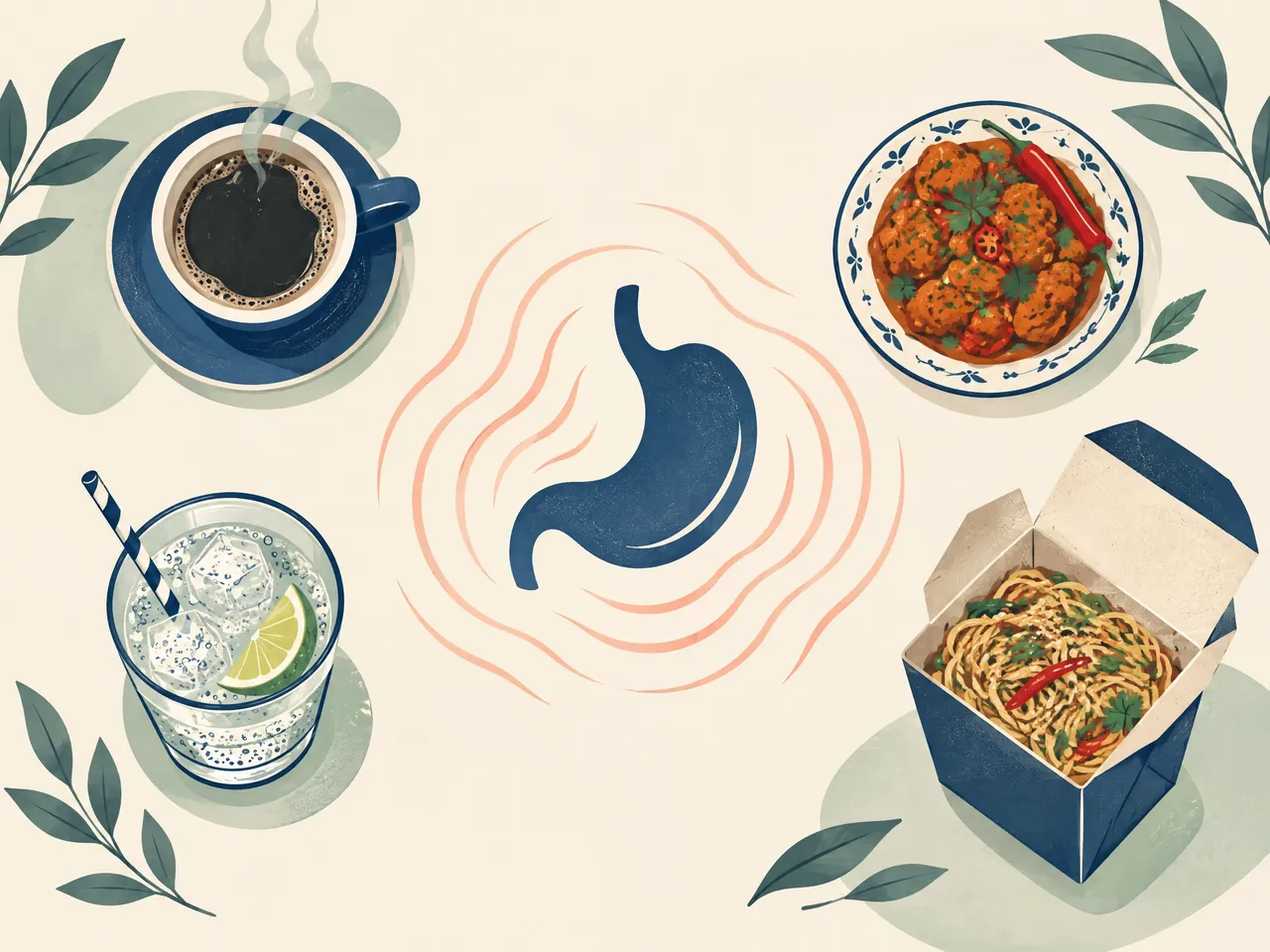
Does acupuncture work for IBS? When should I see a doctor for IBS? What should I eat if I have IBS? Start with a clear symptom record
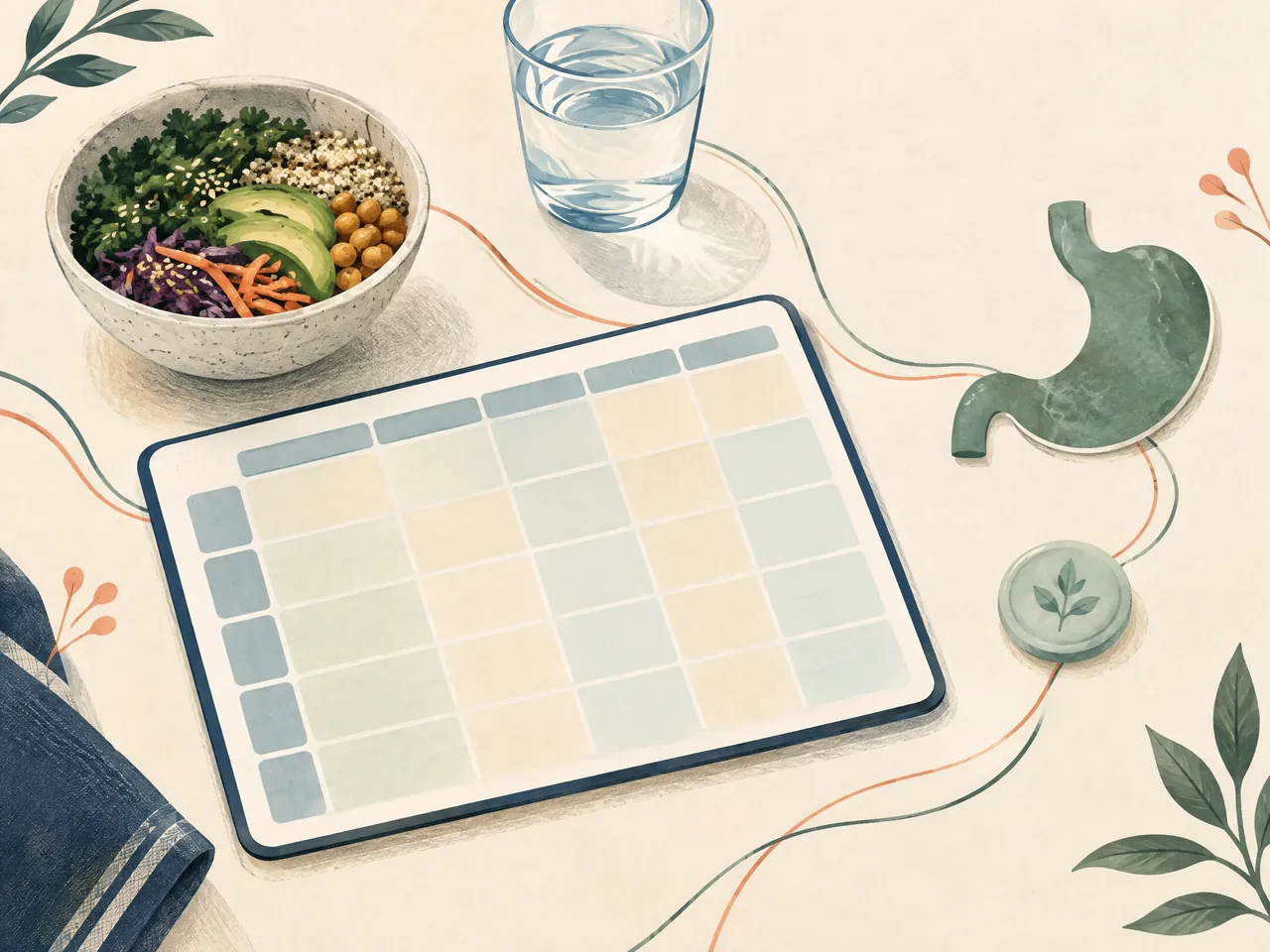
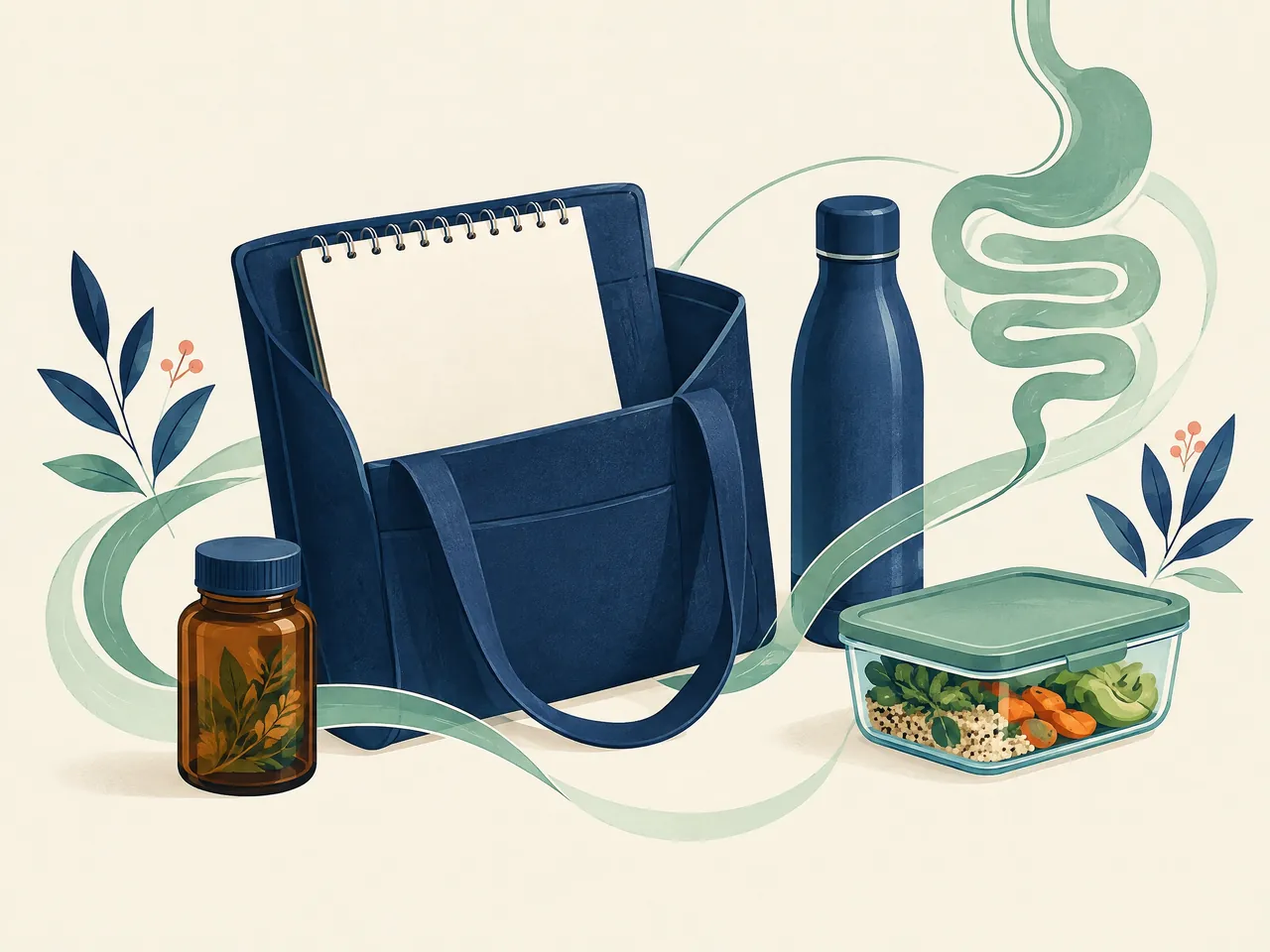
Use a diary that is detailed enough to reveal a pattern but simple enough to maintain. On most days, note when discomfort began, whether it was cramping, pressure or bloating, the bowel change that followed, and whether symptoms eased after a bowel movement. Record meals and drinks without judging them as good or bad. Include meal timing, sleep disruption, travel, menstruation where relevant, work pressure, exercise and new medicines or supplements. A photo-free note on a phone is often enough.
The purpose is not to blame stress or food for every flare. It is to give a clinician concrete information: perhaps loose stools are more likely after a rushed lunch and coffee, or constipation follows irregular meals and poor sleep. Record what helped as well as what seemed to aggravate symptoms. Take the diary to a GP, dietitian or consultation. If you are comparing options, our guide to IBS treatment options Hong Kong can help you frame questions without self-diagnosing.
Does acupuncture work for IBS? When should I see a doctor for IBS? What should I eat if I have IBS? Distinguish IBS from other conditions
Do not assume that a familiar-looking flare needs no review. Seek medical advice if you think you may have IBS and symptoms have continued for more than four weeks. Arrange urgent medical assessment for rectal bleeding or bloody diarrhoea, substantial unexplained weight loss, a hard lump or swelling in the abdomen, or breathlessness with palpitations and unusual pallor [1]. Those signs need prompt clinical assessment rather than a food experiment or acupuncture appointment.
Medical review is also sensible when a previously stable pattern changes, pain is severe, symptoms repeatedly interrupt sleep, or daily functioning is shrinking because you are avoiding meals, journeys or social events. Conditions such as inflammatory bowel disease, infection, medicine effects and gynaecological problems may need different care; Hong Kong guidance identifies inflammatory bowel disease and colorectal cancer as important differentials to actively consider in people with IBS-related symptoms [4]. Keep taking prescribed medication unless the prescriber tells you otherwise.
Compare your options
| What you notice | Useful first step | When individual medical advice matters |
|---|---|---|
| Recurring pain, bloating and bowel changes without alarm signs | Start a brief food, symptom and routine diary; arrange assessment if symptoms persist. | New symptoms, unclear pattern, or symptoms affecting work, travel or eating. |
| Bleeding, bloody diarrhoea, unexplained weight loss or a hard abdominal swelling | Seek urgent medical assessment rather than trying a restrictive diet or complementary therapy. | Immediately; these are not symptoms to manage as presumed IBS. |
| Constipation with bloating | Discuss gradual soluble-fibre changes and adequate fluid intake; record the response. | When symptoms are persistent, worsening, or dietary changes cause more discomfort. |
| Considering acupuncture or Chinese medicine after assessment | Discuss the limited evidence, practical goals, current treatments and how progress will be reviewed. | Before altering prescribed medicines or adding herbs or supplements. |
On smaller screens, scroll the table sideways to compare all columns.
Does acupuncture work for IBS? When should I see a doctor for IBS? What should I eat if I have IBS? Reviewing evidence and safety
People often ask about acupuncture because they want relief without adding another daily medicine, or because IBS symptoms persist despite careful routines. It is reasonable to ask what the evidence shows before committing time and money. The most useful answer is measured: research does not establish acupuncture as a reliable stand-alone solution for IBS, yet an individual may still wish to discuss it as one component of a wider plan after medical assessment. Expectations, safety and coordination with other care all belong in that conversation.
A clinician should know about all medicines, over-the-counter remedies, supplements and herbal products you use. Do not stop antidiarrhoeal medicine, laxatives, pain medicine, antidepressants or any other prescribed treatment because you plan to try acupuncture or Chinese medicine. If a dietary restriction, new medicine or complementary treatment is being considered at the same time, change one major thing at a time where possible. That makes it easier to understand what is tolerable, what is unhelpful and what should be reviewed.

Does acupuncture work for IBS? When should I see a doctor for IBS? What should I eat if I have IBS? What current evidence can and cannot show
Cochrane reviewed 17 randomised trials involving adults with IBS. In the five trials that compared acupuncture with sham acupuncture, neither the individual trials nor pooled results found acupuncture better for IBS symptom severity or IBS-related quality of life [3]. Sham-controlled studies matter here because attention, expectation and the treatment setting can influence symptoms that naturally fluctuate. This finding does not mean a person’s symptoms are unreal; it means the evidence does not support promising a specific acupuncture effect beyond a credible sham procedure.
Some unblinded comparative trials reported better outcomes with acupuncture than certain medicines, but Cochrane judged those studies at high risk of bias because participants knew which treatment they received [3]. That contrast explains why headlines can sound more certain than the underlying evidence. Ask a practitioner what the proposed role is, how progress would be reviewed, and when to return to your medical team. Read our focused page on IBS acupuncture for related questions to raise before deciding.
Does acupuncture work for IBS? When should I see a doctor for IBS? What should I eat if I have IBS? How Chinese medicine may complement care
In a Chinese medicine consultation, a Registered Chinese Medicine Practitioner may ask about appetite, stool pattern, bloating, sleep, temperature preferences, emotional strain and the wider health history. These observations are used within a traditional pattern-identification approach; they are not interchangeable with a modern medical diagnosis. A consultation can therefore be a place to discuss a complementary plan, but it does not replace evaluation for bleeding, weight loss, persistent change or other alarm features.
If you choose to explore this route, be specific about your aim: for example, whether you want help reviewing routines around recurrent bloating, want to understand acupuncture's limits, or need a plan that fits alongside medical care. Bring your symptom record and test history, and name every medicine and supplement. No practitioner can responsibly guarantee that IBS will resolve, give a fixed number of visits that will work, or advise a web reader on a personal herbal formula. For another evidence-aware overview, see Can Chinese medicine help IBS?.
Does acupuncture work for IBS? When should I see a doctor for IBS? What should I eat if I have IBS? Practical food and lifestyle steps
There is no universal IBS menu. A food that is comfortable for one person may bring cramps, gas or urgency for another, and a food avoided during a bad week may be fine later. Start with regular, unhurried meals and sufficient fluids rather than beginning with a long list of exclusions. Avoiding delayed or skipped meals and eating less quickly are practical steps listed in NHS lifestyle guidance [5]. They are not cures, but they can make a diary easier to interpret and daily symptoms less chaotic.
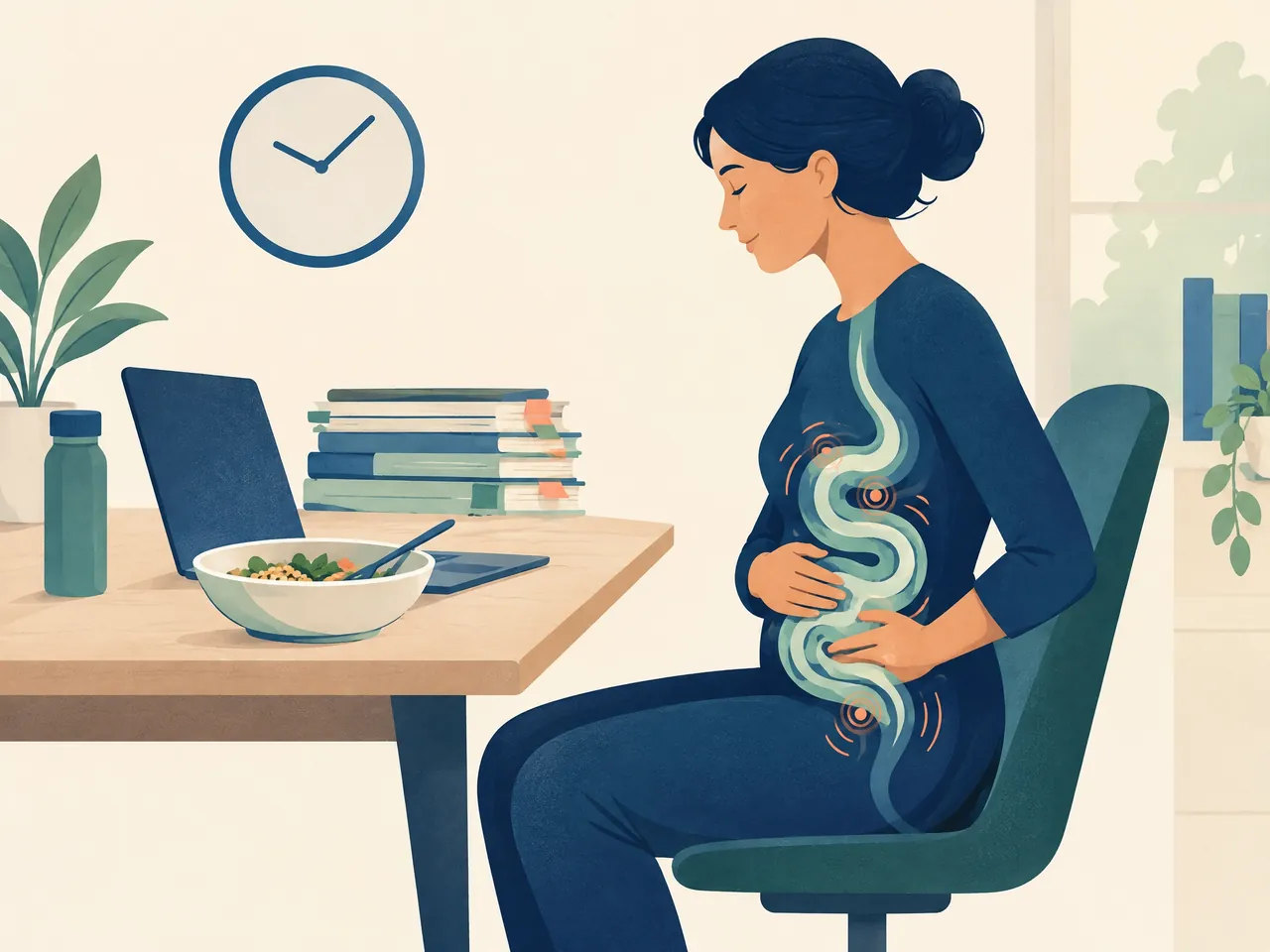
Diet changes should match the main problem. For constipation, soluble-fibre foods may be useful, but adding fibre suddenly can increase gas and bloating. NIDDK advises gradual increases and notes that a doctor may recommend more fibre, avoiding gluten, or a low-FODMAP diet depending on the person [2]. For diarrhoea, hydration is important and some people find fatty foods, alcohol, caffeine or certain sweeteners aggravating. The aim is an adequate diet that you can live with, not a permanently narrower diet.
Does acupuncture work for IBS? When should I see a doctor for IBS? What should I eat if I have IBS? Identify personal food triggers
Choose one focused change based on your record. If symptoms repeatedly follow large, high-fat meals, experiment with smaller portions and calmer meal timing before eliminating whole food groups. If dairy, wheat, onions, fruit juice or sugar-free sweets seem relevant, discuss the pattern with a clinician or dietitian rather than assuming the first suspected food is the answer. NIDDK describes low FODMAP as a special diet that may be tried for a few weeks, followed by slow reintroduction if symptoms improve [2].
A dietitian can be especially helpful when you feel you must avoid many foods, have lost weight, have additional dietary needs, or cannot tell whether restriction is helping. The NHS advises seeing a GP if diet changes and pharmacy medicines do not help or if you need to avoid lots of foods; referral to a dietitian or specialist may follow [5]. If upper-abdominal discomfort is also part of the picture, Chinese medicine for indigestion explains why a separate assessment can be useful rather than assuming every digestive symptom is IBS.
Does acupuncture work for IBS? When should I see a doctor for IBS? What should I eat if I have IBS? Support the gut–brain connection
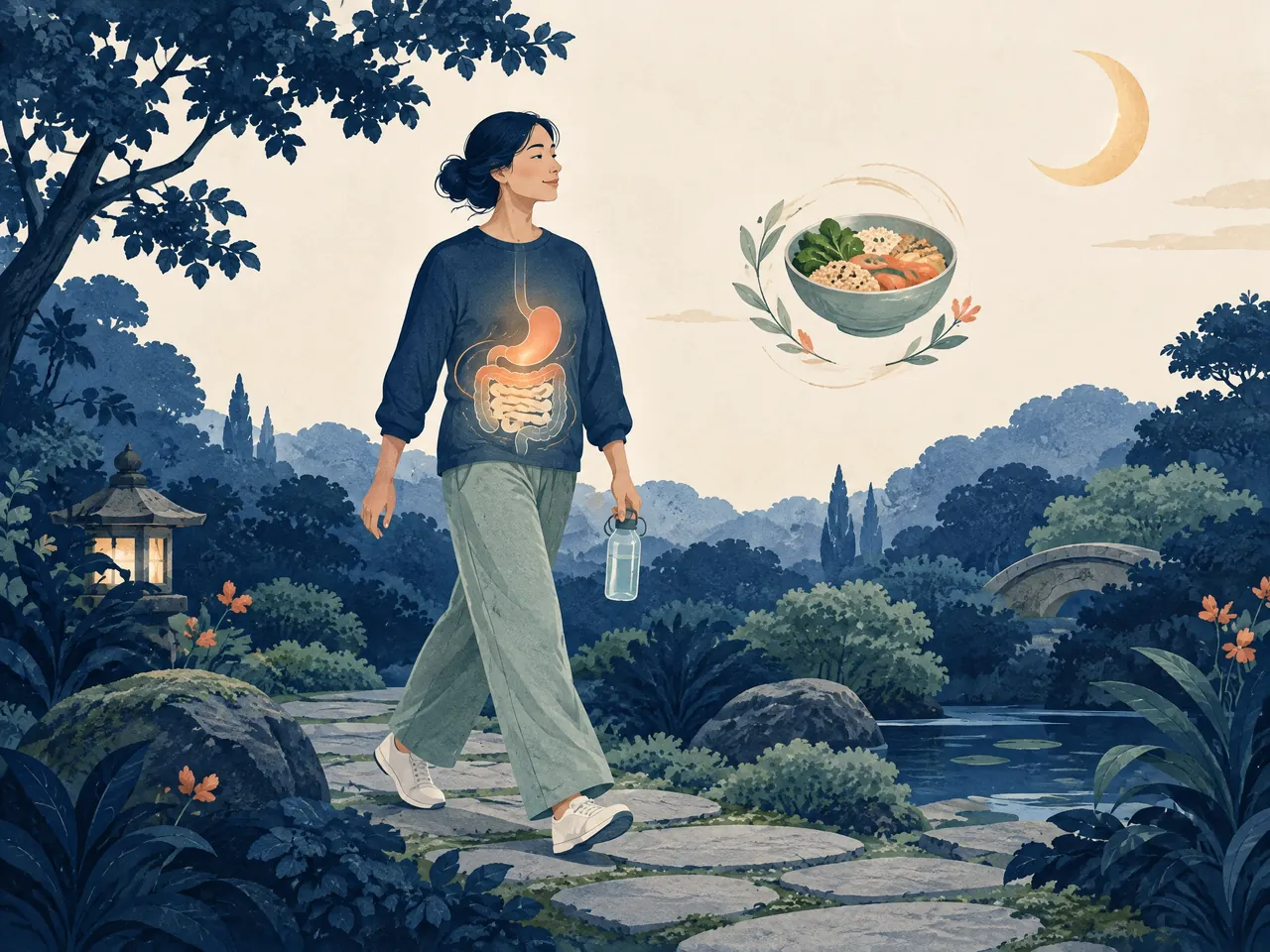
The gut and brain communicate, so a deadline, poor sleep or worry about finding a toilet can coincide with a flare. This is not a suggestion that symptoms are imagined. It is a reason to include sleep, stress and daily routines in a practical plan. Hong Kong consensus guidance recommends addressing exercise, diet, stress-coping strategies and sleep as part of IBS management [4]. Pick a small action you can repeat: a short walk, a wind-down routine, slower breathing before a meal, or protected time for breakfast.
Notice the cycle between symptoms and avoidance. Missing breakfast to prevent urgency may leave you over-hungry later; cancelling every plan may increase anxiety about symptoms. Build flexibility gradually, with medical support when symptoms are severe or anxiety and low mood are persistent. Psychological therapies are a legitimate topic to discuss with a doctor, not a last resort or a competing explanation for digestive symptoms. A combined plan can include medical follow-up, food guidance, regular movement, sleep support and carefully chosen complementary care.
Care and health guide
Health service information
This directory brings together services, reading, and visit information related to health services, to help you prepare questions for a consultation.
If you are organising health questions, Chinese medicine clinic Hong Kong is a starting point for learning about related services and preparing for a consultation.
People have different needs; acupuncture Hong Kong provides further reading to help you understand options in your own context.


Your questions, answered
Frequently asked questions
Does acupuncture work for IBS?
It may be discussed as a complementary option, but it should not be presented as a proven stand-alone IBS treatment. Cochrane found that sham-controlled trials did not show acupuncture was better than sham acupuncture for IBS symptom severity or quality of life [3]. Seek assessment first and keep medical care in place.
When should I see a doctor for IBS symptoms?
See a doctor if you think you have IBS and symptoms have lasted more than four weeks, or sooner if they are significantly affecting daily life. Seek urgent assessment for bleeding from the bottom, bloody diarrhoea, substantial unexplained weight loss, or a hard abdominal lump or swelling [1].
What should I eat if I have IBS?
Begin with regular, balanced meals and a food-and-symptom record. Your doctor may suggest a gradual fibre change, a trial avoiding gluten, or a structured low-FODMAP approach, depending on the pattern [2]. Do not eliminate many foods indefinitely without dietetic or medical advice.
Can I use Chinese medicine while taking prescribed IBS medicine?
Possibly, but tell each practitioner about every prescribed medicine, over-the-counter remedy, supplement and herb. Do not stop or change prescribed treatment on your own. A complementary consultation should work alongside, not replace, medical assessment and follow-up.
Sources and further information
- [1] [1] NHS — Symptoms of IBS
Referenced for: IBS symptoms, common triggers, four-week assessment advice, and urgent alarm symptoms.
- [2] [2] National Institute of Diabetes and Digestive and Kidney Diseases — Eating, Diet, & Nutrition for Irritable Bowel Syndrome
Referenced for: Individual dietary changes, gradual fibre adjustment, and low-FODMAP trial and reintroduction guidance.
- [3] [3] Cochrane — Acupuncture for irritable bowel syndrome
Referenced for: Systematic-review findings comparing acupuncture with sham acupuncture and limitations of unblinded comparisons.
- [4] [4] Hong Kong Medical Journal — The current treatment landscape of irritable bowel syndrome in adults in Hong Kong: consensus statements
Referenced for: Hong Kong clinical assessment, differential diagnosis, alarm features, and lifestyle-management context.
- [5] [5] NHS — Diet, lifestyle and medicines for IBS
Referenced for: Regular meal, fluid, lifestyle, dietitian-referral and symptom-management guidance.