
TCM Lab · Health reading
what is Chinese medicine weight management; is acupoint embedding the same as Chinese medicine weight management; does Chinese medicine weight management include acupuncture: A Clear Guide for Hong Kong Readers
Published Updated
Chinese medicine weight management is a broad, personalised discussion about a person’s weight-related goals, health context and everyday routines; it is not the name of one procedure and it does not promise a particular change on the scale. In Hong Kong, a careful conversation can include eating patterns, activity, sleep, current medicines and concerns that may need medical input, then consider whether any Chinese medicine approach is appropriate. Acupuncture may be one option to discuss, while acupoint embedding is a separate, invasive procedure involving absorbable suture material placed at selected points. Keeping those terms separate helps you ask better questions about purpose, safety and follow-up. It also keeps diet, activity and appropriate medical care in view rather than treating any single treatment as a substitute for them.
Appointments are confirmed through WhatsApp. If you have language requirements, please mention them in your enquiry.

The short answer
Chinese medicine weight management is a personalised approach that can bring together an assessment of weight-related concerns, daily habits and possible Chinese medicine options. It is broader than acupoint embedding. Acupuncture may be discussed after assessment, but it is not automatically included in every plan. Acupoint embedding is a distinct invasive procedure, so its suitability, materials, risks and aftercare need their own conversation with a Registered Chinese Medicine Practitioner.
Transparent pricing
See the fees.
Choose your care.
Explore our complete official price list, including first-trial prices, regular prices, packages and branch-specific options.
Opening WhatsApp prepares an enquiry; it does not send a message, take payment or confirm an appointment. Suitability and individual arrangements are confirmed during consultation.
Weight management
All prices in HKDFull-body acupoint embedding for weight management
Includes full-body acupoint embedding. Packages include complimentary Chinese herbal medicine for weight management, with the number of included days scaled to the package. Embedding material and the individual treatment arrangement are confirmed during consultation; this is not a cosmetic thread lift.
HK$980 (single session)
No trial session
- 10 sessions: HK$7,800 (HK$780 per session)
- 20 sessions: HK$14,600 (HK$730 per session)
- 30 sessions: HK$20,400 (HK$680 per session)
Hair and scalp
All prices in HKDScalp health and hair-loss management
Includes AI scalp analysis, deep scalp and follicle cleansing, and scalp oil-control care.
HK$380 (first trial)
Regular price: HK$680
- 6 sessions: HK$3,480 (HK$580 per session)
- 12 sessions: HK$5,760 (HK$480 per session)
- 20 sessions: HK$8,600 (HK$430 per session)
- 30 sessions: HK$11,400 (HK$380 per session)
Hair acupuncture and Chinese herbal medicine package
Includes scalp acupuncture and 3 days of Chinese herbal medicine that does not require decoction.
HK$580 (single session)
Registered Chinese Medicine Practitioner consultation
- 6 sessions: HK$3,180 (HK$530 per session)
- 12 sessions: HK$5,760 (HK$480 per session)
- 20 sessions: HK$8,600 (HK$430 per session)
- 30 sessions: HK$11,400 (HK$380 per session)
Combined hair and scalp treatment
Combines acupuncture and Chinese herbal medicine with salon-level scalp and follicle care. Packages include complimentary hair-care shampoo and serum.
HK$1,260 (single session)
Combined treatment
- 8 sessions: HK$8,640 (HK$1,080 per session)
- 16 sessions: HK$15,680 (HK$980 per session)
- 20 sessions: HK$18,600 (HK$930 per session)
- 30 sessions: HK$26,400 (HK$880 per session)
Facial acupuncture
All prices in HKDFacial acupuncture (basic)
Includes facial acupuncture and meridian-based facial care, including care for facial puffiness.
HK$480 (first trial)
Regular price: HK$680
- 10 sessions: HK$5,200 (HK$520 per session)
- 20 sessions: HK$9,600 (HK$480 per session)
- 30 sessions: HK$13,500 (HK$450 per session)
Facial acupuncture (advanced)
Includes enhanced facial acupuncture with a specially formulated moisturising mask and serum.
HK$780 (first trial)
Regular price: HK$1,180
- 10 sessions: HK$9,000 (HK$900 per session)
- 20 sessions: HK$16,600 (HK$830 per session)
- 30 sessions: HK$23,400 (HK$780 per session)
Pain care
All prices in HKDExtracorporeal shockwave treatment
Shockwave treatment for deep-tissue and fascial care. The Kwun Tong clinic offers the multi-area options shown below.
Priced by branch
Branch-specific pricing
Prince Edward: HK$250 per area
Kwun Tong: HK$250 for 1 area / HK$450 for 2 areas / HK$600 for 3 areas
Pain care (manual therapy)
Includes Chinese medicine musculoskeletal assessment, manual joint techniques and tui na.
HK$580 (single session)
Chinese medicine musculoskeletal assessment
Pain care (acupuncture and manual therapy)
Combines acupuncture and manual therapy.
HK$680 (single session)
Combined care
Chinese medicine
All prices in HKDAcupuncture and Chinese herbal medicine package
Includes a Chinese medicine consultation with pulse assessment, body acupuncture and 3 days of Chinese herbal granules that do not require decoction.
HK$580 (single session)
Chinese medicine consultation with pulse assessment
what is Chinese medicine weight management; is acupoint embedding the same as Chinese medicine weight management; does Chinese medicine weight management include acupuncture — the meaning of a personalised approach
The simplest answer to “what is Chinese medicine weight management?” is that it describes a conversation and a plan-making process, not a single device, medicine or course. Someone may arrive because they feel their eating is irregular after late work, their activity has dropped after an injury, they are worried about gradual weight change, or they want to understand an option they have seen online. A meaningful assessment starts with those lived details. It should also make space for relevant diagnoses, prescribed medicines, sleep, stress, menstrual or menopausal changes where relevant, and previous attempts that were difficult to sustain. That context matters because weight change is not explained by one habit alone.
This wider view reflects mainstream public-health practice as well as the questions people bring to Chinese medicine. Hong Kong’s Action Plan on Weight Management calls for personalised care plans that include dietary and exercise recommendations and referral pathways when indicated [1]. A Chinese medicine consultation can be part of a person’s broader health conversation, but it should not be positioned as a replacement for assessment of conditions that affect weight or for other care already in place. If new symptoms, a marked unexplained change, or a health concern is worrying you, say so clearly rather than assuming a routine weight-management consultation answers every question.

what is Chinese medicine weight management; is acupoint embedding the same as Chinese medicine weight management; does Chinese medicine weight management include acupuncture — assessment, daily habits and realistic goals
A personalised assessment is useful because the same stated goal can hide very different pressures. One person may skip breakfast, rely on convenience food between meetings and sleep poorly. Another may be recovering from reduced mobility, managing a medicine change, or feeling anxious about a number rather than a particular health problem. Describe a typical weekday and weekend, not an ideal day. Mention meals and drinks, appetite changes, movement at work and outside work, sleep timing, alcohol if relevant, and anything that makes routine harder. This is not a test of willpower. It gives the practitioner a clearer basis for discussing realistic next steps.
Realistic goals are more helpful when they are specific and observable. Instead of asking for an instant or localised change, you might ask how to make regular meals workable on late shifts, how to return to activity after a setback, or what information should be checked with another clinician. The NHS similarly frames weight management around sustained lifestyle changes, balanced eating, physical activity and extra clinical support when needed [2]. A plan should not turn shame, fatigue or a busy week into a personal failure. It should identify one or two practical changes that fit your life and make clear what should be reviewed rather than assumed.
what is Chinese medicine weight management; is acupoint embedding the same as Chinese medicine weight management; does Chinese medicine weight management include acupuncture — how diet and physical activity fit the discussion
Diet and physical activity belong in the discussion because they are part of everyday weight management, not because there is one universal food list or exercise target for every person. Start with workable questions: Which meals are routinely missed? When do you eat because a long commute or a deadline leaves no other option? What movement do you already enjoy, and what makes it difficult to continue? If joint pain, breathlessness, a recent injury, pregnancy, an eating disorder, low mood or a chronic condition affects the picture, raise that early. The appropriate next step may include another health professional rather than a more restrictive self-made plan.
It is useful to write down a few observations before an appointment, such as a week of meal timing, sleep pattern, symptoms, activity and current treatments. This can reveal pressures without pretending that a food diary is a diagnosis. The guide to what happens at a weight management consultation can help you prepare the questions you want answered. For an overview of service discussions, see Chinese medicine weight management Hong Kong. Both are starting points for an enquiry; personal recommendations need a direct assessment.
Compare your options
| What you are considering | What the term usually covers | Useful questions before deciding |
|---|---|---|
| Chinese medicine weight management | A broad, personalised discussion of weight-related goals, daily habits, health context and possible Chinese medicine options. | What should be assessed first, and how do diet, activity, sleep and other healthcare fit the plan? |
| Lifestyle and routine support | Practical discussion of eating patterns, movement, sleep, work demands and barriers to sustained changes. | Which changes are realistic for my week, and what health issues need separate assessment? |
| Acupuncture | A needle-based approach that may be discussed after individual assessment; it is not automatically included in weight management. | Why is it being considered, what safety information matters, and what should I expect afterwards? |
| Acupoint embedding | A distinct invasive procedure involving absorbable suture material at selected points, not a synonym for broad weight management. | What material and procedure are proposed, what risks apply to me, and what aftercare or review is needed? |
On smaller screens, scroll the table sideways to compare all columns.
what is Chinese medicine weight management; is acupoint embedding the same as Chinese medicine weight management; does Chinese medicine weight management include acupuncture — comparing acupoint embedding with broader care
The question “is acupoint embedding the same as Chinese medicine weight management?” has a clear answer: no. Weight management names a wider area of care and planning. Acupoint embedding names a particular procedure. Hong Kong’s Chinese Medicine Regulatory Office describes acupoint embedding as placing absorbable surgical suture material at acupuncture points to provide continuing stimulation in a traditional acupuncture context [3]. That description explains why it should not be casually treated as interchangeable with a lifestyle or consultation-based programme.

The difference is important for informed choice. A broad consultation may end with practical habit changes, a request for more medical information, a discussion of Chinese herbal medicine, acupuncture, no procedure at all, or a decision to revisit the question later. Acupoint embedding, by contrast, raises procedure-specific questions about the individual indication, the material proposed, insertion areas, sterile practice, aftercare and what should prompt medical review. Longer stimulation is not proof of better weight-related results. It also does not make the procedure a replacement for food, activity, sleep, ongoing medical care or attention to a new symptom.
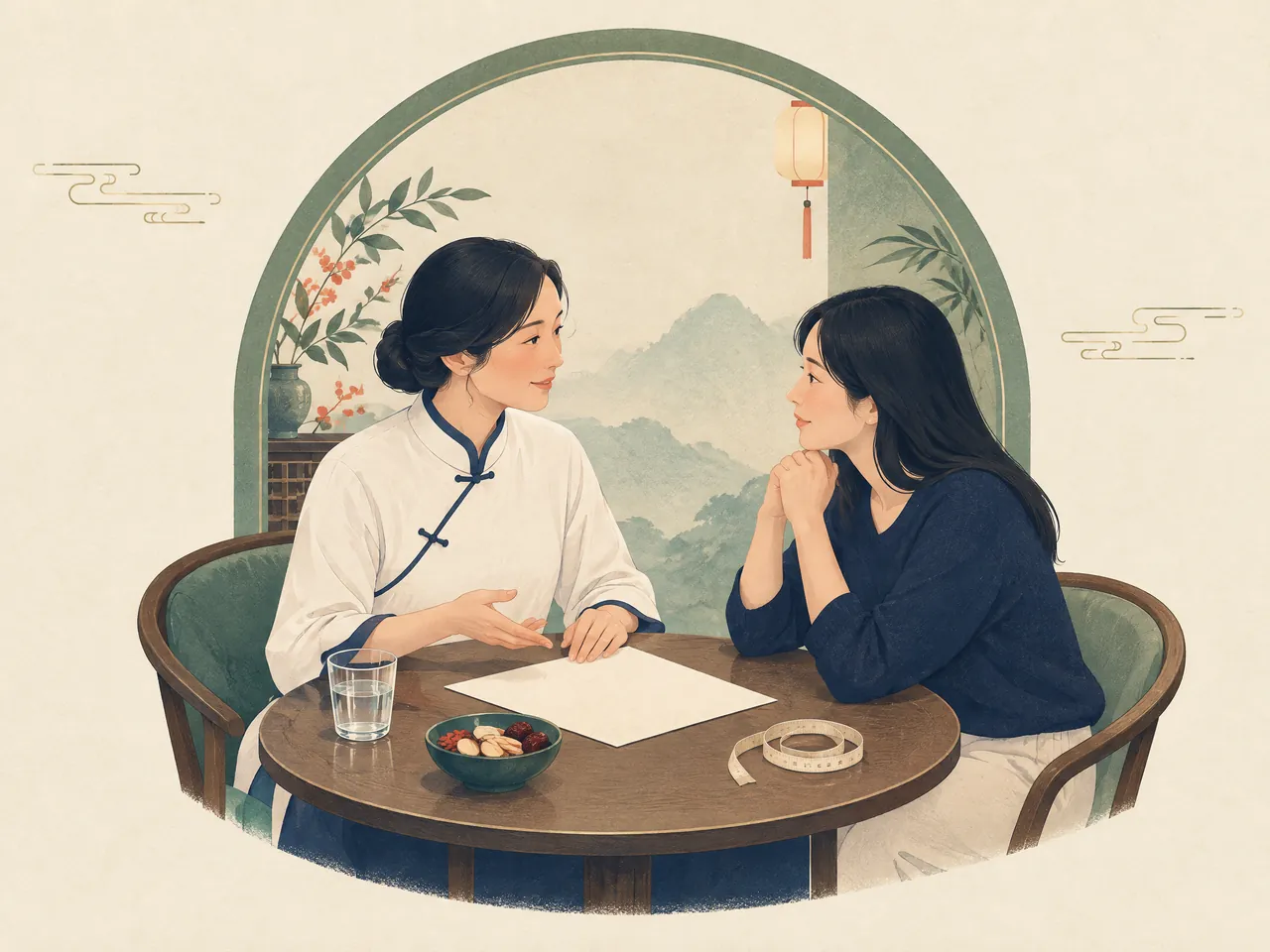
what is Chinese medicine weight management; is acupoint embedding the same as Chinese medicine weight management; does Chinese medicine weight management include acupuncture — why acupoint embedding is one possible approach to discuss
Acupoint embedding may come up because someone is exploring traditional approaches alongside changes to daily routine. It is only one possible topic, however, and it is not an assumed first step. Before a procedure is considered, a practitioner needs enough information to discuss whether it makes sense in that person’s circumstances. Be ready to share allergies or past reactions, skin problems near a possible treatment area, pregnancy, conditions or medicines that affect bleeding, diabetes or immune health, and any recent illness. Do not use online accounts of another person’s appointment to decide that the same arrangement is right for you.
The official Hong Kong information also notes potential acupuncture-related risks when procedures are improperly performed, including bleeding, infection and injury, and lists circumstances in which needling may not be appropriate [3]. These points are reasons for a proper assessment, not a reason to self-screen into or out of care. Ask what the practitioner is considering, why it may or may not fit your situation, and what alternatives remain available. A careful answer can be more useful than being told a procedure is suitable before the relevant health information has been discussed.

what is Chinese medicine weight management; is acupoint embedding the same as Chinese medicine weight management; does Chinese medicine weight management include acupuncture — what the phrase does and does not tell you
The phrase “Chinese medicine weight management” does tell you that the enquiry is about weight-related goals through a Chinese medicine lens. It does not tell you which treatment will be recommended, how many visits are appropriate, what material would be used for a procedure, or what result a person will have. It also cannot establish whether a particular health issue needs medical investigation first. Treat broad promotional wording as an invitation to ask questions, rather than as evidence that every option is included or that outcomes can be predicted.
A comparison can prevent misunderstandings when you contact a clinic. You may simply want to discuss eating routines and activity; you may be asking specifically about acupuncture; or you may be considering acupoint embedding. State which of these is true, then ask how the assessment changes the conversation. If fees are your practical concern, the Chinese medicine clinic price list Hong Kong page is useful for checking published information, while a practitioner still needs to confirm appropriateness and arrangements. Cost should not be used to infer that a procedure is necessary or appropriate for an individual.
what is Chinese medicine weight management; is acupoint embedding the same as Chinese medicine weight management; does Chinese medicine weight management include acupuncture — understanding acupuncture and next steps
Does Chinese medicine weight management include acupuncture? It may include a discussion of acupuncture, but neither the term “weight management” nor an initial enquiry means acupuncture will be used. Acupuncture involves inserting fine needles into the skin; it is distinct from acupoint embedding, which involves absorbable suture material. The National Center for Complementary and Integrative Health notes that acupuncture has been studied for several uses, particularly pain conditions, while its mechanisms are not fully understood and poor practice can cause serious harm [4]. This is why the right question is not simply “Will I get acupuncture?” but “What is being assessed, what is the aim, and what makes this appropriate for me?”
If acupuncture is raised, explain previous experiences and anything that could affect safe planning. Mention pregnancy, a tendency to faint with needles, bleeding problems, medicines that affect bleeding, a pacemaker or other implanted electronic device where relevant, skin infection or irritation, and current treatment from other clinicians. Tell the practitioner what you hope to change in daily life, too. A person who wants help returning to regular walks after a painful flare-up has a different conversation from someone mainly struggling with meal timing or sleep. Any procedure discussion should sit inside that practical context.

what is Chinese medicine weight management; is acupoint embedding the same as Chinese medicine weight management; does Chinese medicine weight management include acupuncture — when acupuncture may be part of a conversation
Acupuncture may be part of a conversation when a practitioner thinks it is relevant after hearing the person’s concern and medical context. That is not the same as claiming acupuncture causes weight loss or guarantees a body-shape outcome. Ask the practitioner to explain the intended role in plain language, how it relates to the broader plan, and what other actions still matter. The discussion may be especially useful if discomfort, stress, disrupted sleep or another issue is making it hard to maintain usual routines, but those concerns may also need assessment or treatment beyond Chinese medicine.
Make a plan for communication after any needle-based procedure. Mild local reactions and signs that need prompt review are not the same thing. Seek medical advice rather than relying on a webpage if pain, redness or swelling worsens, there is pus, fever develops, or you feel unwell. The article on redness swelling pus after acupuncture explains why these changes merit attention. Do not massage, squeeze or self-treat a suspected infection, and do not delay care for a concerning reaction while waiting to see whether it settles.

what is Chinese medicine weight management; is acupoint embedding the same as Chinese medicine weight management; does Chinese medicine weight management include acupuncture — questions to ask before arranging an assessment
Before arranging an assessment, write down the question that matters most. You might ask: What information should I bring? Are my current medicines or health conditions relevant? Is my goal better addressed with nutrition, activity, medical review, Chinese medicine options, or more than one of these? If acupuncture or acupoint embedding is discussed, ask what each involves, why it is being considered, what the expected process and aftercare are, and what would make you seek help. Clear questions protect you from assuming that a broad service label answers all the details.
For a local conversation, you can begin with a weight management consultation Hong Kong enquiry and say whether Prince Edward or Kwun Tong is easier for you. The location guides for Chinese medicine clinic Prince Edward and Kwun Tong Chinese medicine clinic can help with travel planning. WhatsApp TCM Lab at +852 6940 5663 with your main concern and preferred location; appointment, practitioner and service arrangements should be confirmed through the reply rather than assumed from an online enquiry.
Care and health guide
Weight-management information
This directory brings together services, reading, and visit information related to weight management, to help you prepare questions for a consultation.
When considering weight management, noting the goals, daily habits, and approaches you have already tried can help prepare a consultation; acupoint embedding Hong Kong is a relevant service or reading entry point.
People may have different priorities, and acupuncture Hong Kong offers related information to help you understand options and prepare questions.
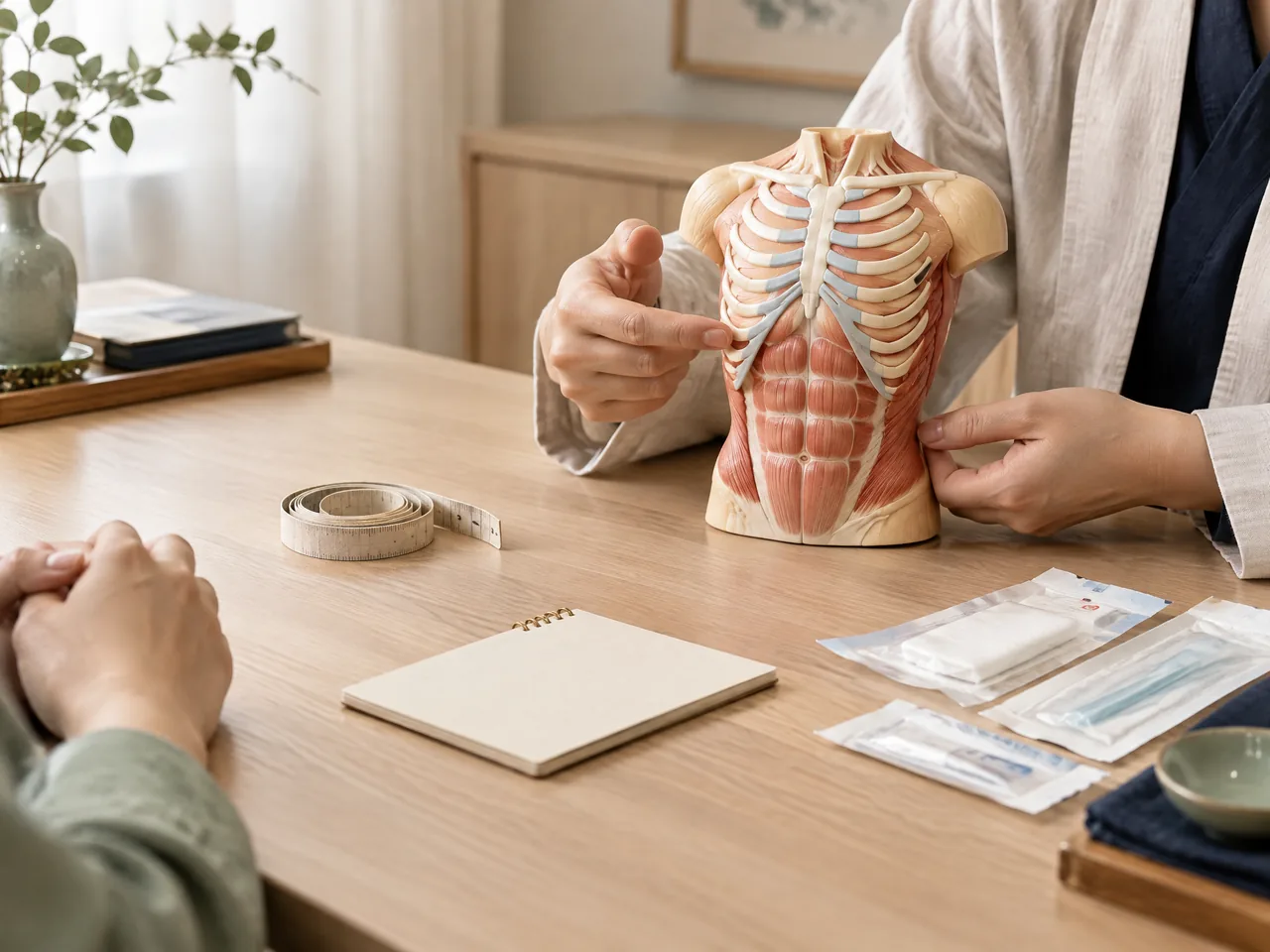

Your questions, answered
Frequently asked questions
What is Chinese medicine weight management?
It is a broad, individualised approach to discussing weight-related goals. An assessment can consider eating, activity, sleep, medical context and possible Chinese medicine options. It should not be presented as a guaranteed result or a substitute for medical evaluation when that is needed.
Is acupoint embedding the same as Chinese medicine weight management?
No. Acupoint embedding is a specific invasive procedure involving absorbable suture material placed at selected points. Chinese medicine weight management is broader and can include assessment, lifestyle discussion, other options or no procedure. Suitability requires an individual consultation.
Does Chinese medicine weight management include acupuncture?
Acupuncture may be discussed, but it is not automatically included in every plan. The practitioner should consider your goal, health history, current medicines and relevant safety information before advising whether it is appropriate to explore.
What should I tell a practitioner before asking about acupuncture or acupoint embedding?
Share your main goal, current medicines, diagnoses, allergies or past reactions, skin concerns, pregnancy, bleeding-related issues and other relevant health history. Also ask what the proposed option involves, what aftercare applies and what symptoms should prompt medical review.
Can acupoint embedding replace diet, activity or medical weight management?
No. Weight-related health is affected by many factors. Acupoint embedding is not a substitute for sustainable eating and activity changes, assessment of symptoms or conditions, or medical and nutrition support when those are appropriate.
Sources and further information
- [1] Hong Kong Department of Health — Action Plan on Weight Management
Referenced for: Hong Kong public-health context for personalised weight-management care, dietary and exercise recommendations, and referral pathways, including Chinese medicine in multidisciplinary management.
- [2] NHS — Overweight and obesity in adults
Referenced for: Public-health guidance on sustainable lifestyle changes, balanced eating, physical activity and clinical weight-management support.
- [3] Hong Kong Chinese Medicine Regulatory Office — Common Chinese Medicine Treatments
Referenced for: Official Hong Kong background on acupoint embedding as absorbable surgical suture material placed at points, and procedure-related cautions and risks; not evidence of weight-loss effectiveness.
- [4] NCCIH — Acupuncture: Effectiveness and Safety
Referenced for: Public health information on what acupuncture is, evidence context, safety and the need not to delay appropriate healthcare evaluation.