
TCM Lab · Health reading
when to use ice for a wrist injury, when to use heat for wrist stiffness, and Is ice or heat better for a wrist injury?
Published Updated
Ice or heat is not a contest with one winner for every sore wrist. Start with the pattern: a fall, twist, impact, or sudden overload followed by new swelling, warmth, bruising, or sharp pain is different from a wrist that has felt tight after computer work, crafts, or a previous injury. For the first pattern, a cloth-wrapped cold pack is usually the more cautious short-term option; for stiffness without fresh heat or swelling, gentle warmth may make movement more comfortable. A misshapen, numb, unusable, or severely painful wrist needs assessment, not repeated home packs.
Appointments are confirmed through WhatsApp. If you have language requirements, please mention them in your enquiry.
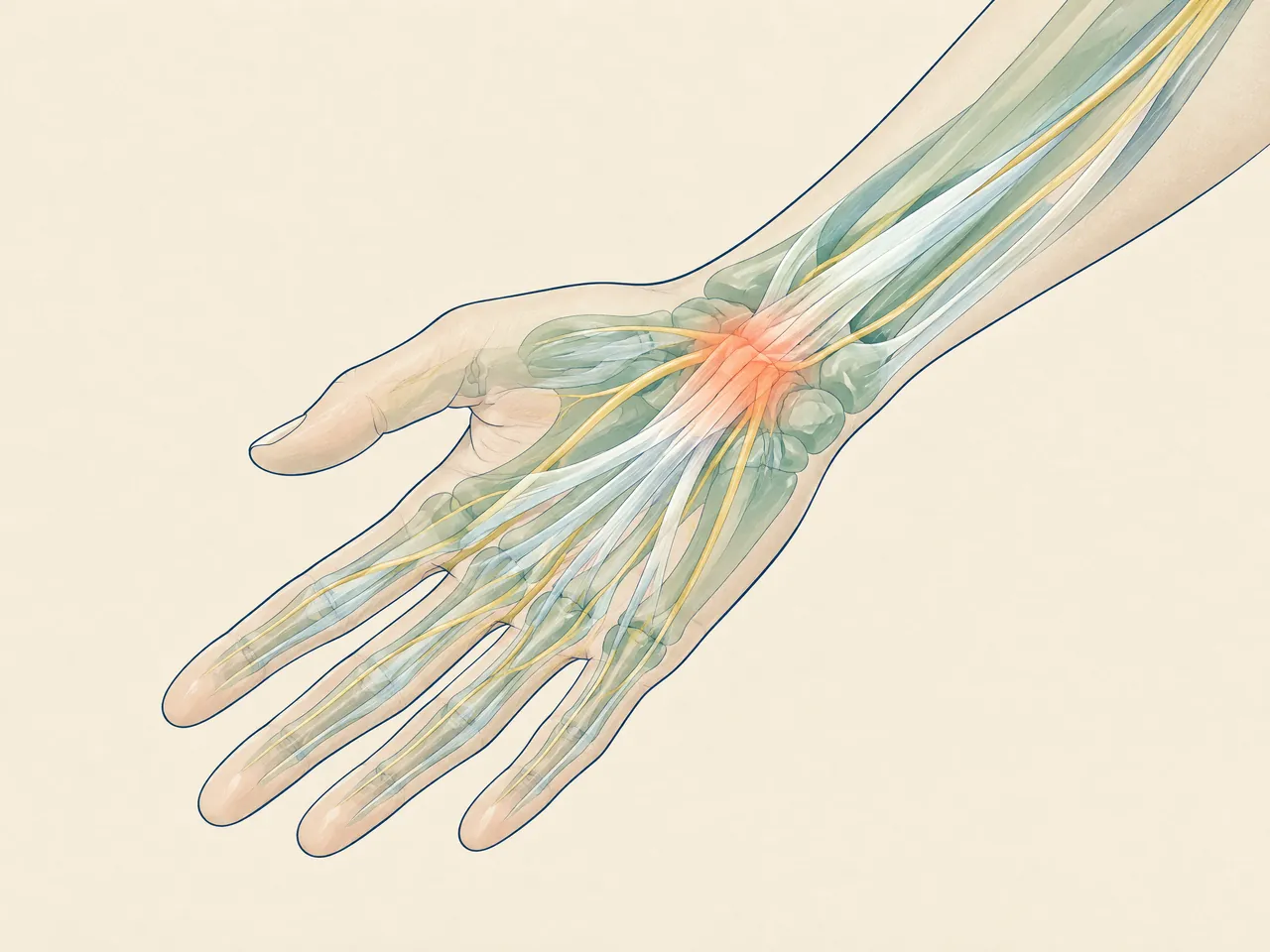
The short answer
For a recent wrist injury with swelling, bruising, or local heat, use a cold pack wrapped in cloth for short periods during the first 2–3 days; NHS guidance says up to 20 minutes every 2–3 hours. For gradual stiffness or tight muscles without those acute signs, gentle warmth can be more useful before comfortable movement. Do not use heat early after an injury, and seek urgent assessment for deformity, loss of feeling, severe pain, or inability to grip. [1]
Transparent pricing
See the fees.
Choose your care.
Explore our complete official price list, including first-trial prices, regular prices, packages and branch-specific options.
Opening WhatsApp prepares an enquiry; it does not send a message, take payment or confirm an appointment. Suitability and individual arrangements are confirmed during consultation.
Pain care
All prices in HKDExtracorporeal shockwave treatment
Shockwave treatment for deep-tissue and fascial care. The Kwun Tong clinic offers the multi-area options shown below.
Priced by branch
Branch-specific pricing
Prince Edward: HK$250 per area
Kwun Tong: HK$250 for 1 area / HK$450 for 2 areas / HK$600 for 3 areas
Pain care (manual therapy)
Includes Chinese medicine musculoskeletal assessment, manual joint techniques and tui na.
HK$580 (single session)
Chinese medicine musculoskeletal assessment
Pain care (acupuncture and manual therapy)
Combines acupuncture and manual therapy.
HK$680 (single session)
Combined care
Hair and scalp
All prices in HKDScalp health and hair-loss management
Includes AI scalp analysis, deep scalp and follicle cleansing, and scalp oil-control care.
HK$380 (first trial)
Regular price: HK$680
- 6 sessions: HK$3,480 (HK$580 per session)
- 12 sessions: HK$5,760 (HK$480 per session)
- 20 sessions: HK$8,600 (HK$430 per session)
- 30 sessions: HK$11,400 (HK$380 per session)
Hair acupuncture and Chinese herbal medicine package
Includes scalp acupuncture and 3 days of Chinese herbal medicine that does not require decoction.
HK$580 (single session)
Registered Chinese Medicine Practitioner consultation
- 6 sessions: HK$3,180 (HK$530 per session)
- 12 sessions: HK$5,760 (HK$480 per session)
- 20 sessions: HK$8,600 (HK$430 per session)
- 30 sessions: HK$11,400 (HK$380 per session)
Combined hair and scalp treatment
Combines acupuncture and Chinese herbal medicine with salon-level scalp and follicle care. Packages include complimentary hair-care shampoo and serum.
HK$1,260 (single session)
Combined treatment
- 8 sessions: HK$8,640 (HK$1,080 per session)
- 16 sessions: HK$15,680 (HK$980 per session)
- 20 sessions: HK$18,600 (HK$930 per session)
- 30 sessions: HK$26,400 (HK$880 per session)
Weight management
All prices in HKDFull-body acupoint embedding for weight management
Includes full-body acupoint embedding. Packages include complimentary Chinese herbal medicine for weight management, with the number of included days scaled to the package. Embedding material and the individual treatment arrangement are confirmed during consultation; this is not a cosmetic thread lift.
HK$980 (single session)
No trial session
- 10 sessions: HK$7,800 (HK$780 per session)
- 20 sessions: HK$14,600 (HK$730 per session)
- 30 sessions: HK$20,400 (HK$680 per session)
Facial acupuncture
All prices in HKDFacial acupuncture (basic)
Includes facial acupuncture and meridian-based facial care, including care for facial puffiness.
HK$480 (first trial)
Regular price: HK$680
- 10 sessions: HK$5,200 (HK$520 per session)
- 20 sessions: HK$9,600 (HK$480 per session)
- 30 sessions: HK$13,500 (HK$450 per session)
Facial acupuncture (advanced)
Includes enhanced facial acupuncture with a specially formulated moisturising mask and serum.
HK$780 (first trial)
Regular price: HK$1,180
- 10 sessions: HK$9,000 (HK$900 per session)
- 20 sessions: HK$16,600 (HK$830 per session)
- 30 sessions: HK$23,400 (HK$780 per session)
Chinese medicine
All prices in HKDAcupuncture and Chinese herbal medicine package
Includes a Chinese medicine consultation with pulse assessment, body acupuncture and 3 days of Chinese herbal granules that do not require decoction.
HK$580 (single session)
Chinese medicine consultation with pulse assessment
when to use ice for a wrist injury, when to use heat for wrist stiffness, and Is ice or heat better for a wrist injury? Start with timing
The first question is not simply where the wrist hurts, but what changed and when. If pain began immediately after catching yourself in a fall, twisting a handle, receiving an impact, or lifting something awkwardly, treat it as a fresh injury until it has been assessed or settles. New swelling, bruising, throbbing, local warmth, or tenderness point toward a period in which a cold pack can be a sensible symptom-relief choice. Cold numbs the area and may reduce swelling and inflammation; it does not tell you whether the underlying problem is a sprain, fracture, tendon injury, or something else. [1] [3]
By contrast, a wrist that feels guarded first thing in the morning, tight after a long keyboard session, or stiff as it returns to use after an earlier injury may respond differently. When there is no new trauma and no obvious redness, swelling, or heat, gentle warmth can make stiff or sore tissues easier to move. The American Society for Surgery of the Hand notes that warmth can help stiff or sore hands move and may be useful before activity. Think of warmth as preparation for comfortable motion, not permission to push through sharp pain, a growing lump, tingling, or a weak grip. [2]

when to use ice for a wrist injury, when to use heat for wrist stiffness, and Is ice or heat better for a wrist injury? After a sudden injury
For a sudden injury, the early aim is to avoid making a painful, swollen wrist work harder. In the first 2–3 days, use a cold pack rather than a heat pack, reduce the task that triggered the pain, and remove rings or bracelets if the hand is swelling. NHS wrist guidance suggests placing a towel-wrapped ice pack on the wrist for up to 20 minutes every 2–3 hours and avoiding heat packs or hot baths during this early window. Between applications, let the skin return to its usual temperature and colour. A more detailed comparison is available in wrist pain: ice or heat, but a pack is only one part of early self-care. [1]
Avoid forceful gripping, push-ups, racquet play, heavy bags, and repetitive twisting while the wrist is acutely sore. Still, keep the fingers, elbow, and shoulder moving comfortably, and use the wrist only within a range that does not sharply worsen symptoms. Scale activity back if it increases swelling or pain later that day. For an injury where swelling is the main immediate issue, see acute wrist injury swelling treatment for a focused overview.
when to use ice for a wrist injury, when to use heat for wrist stiffness, and Is ice or heat better for a wrist injury? Signs of stiffness
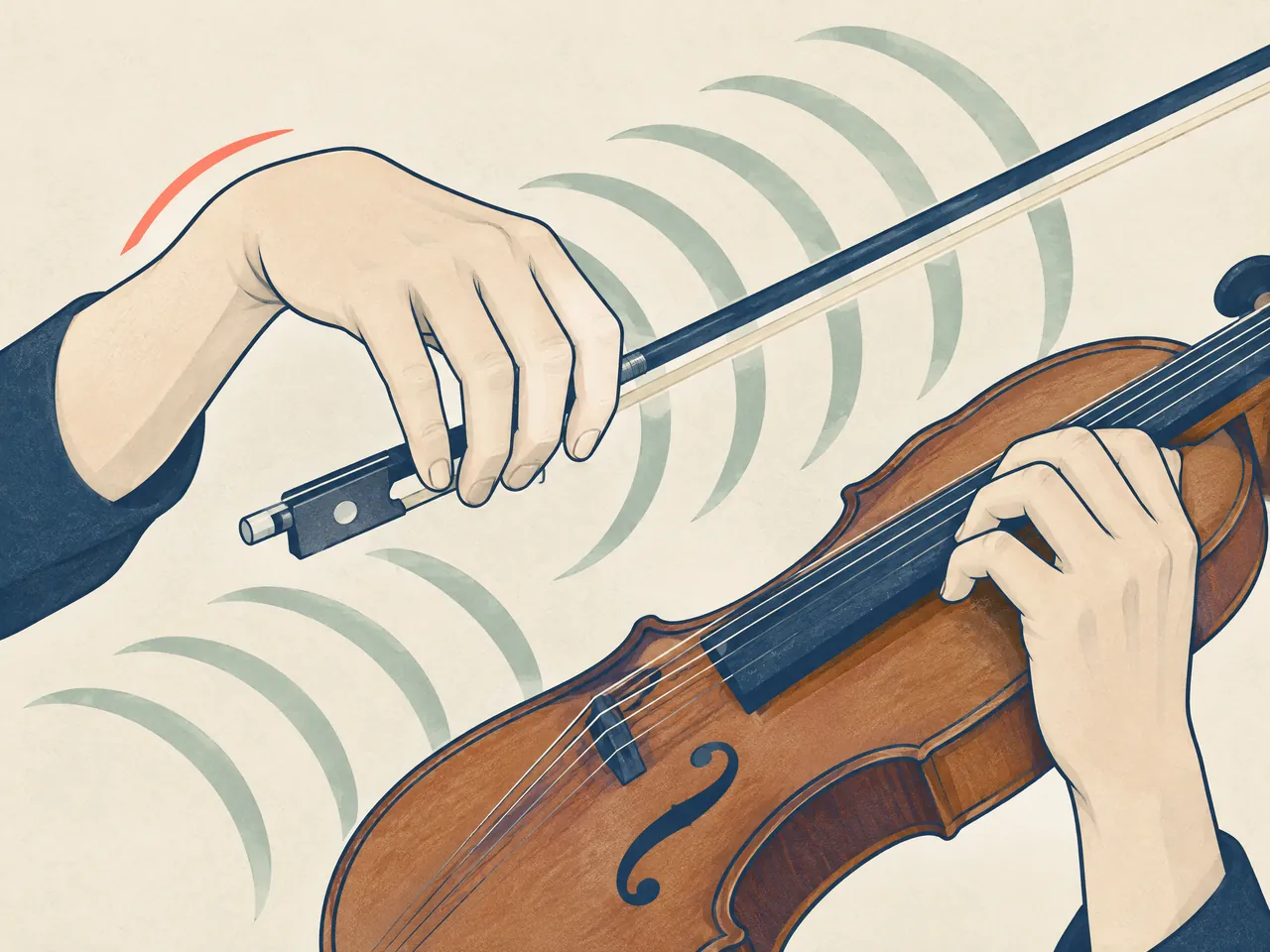
Stiffness often feels like resistance or a dull pull when you bend the wrist, turn a key, reach for a mug, type, or start a familiar manual task. It may be most noticeable after rest or after a predictable spell of repetitive use. If that pattern has built gradually and the wrist is not newly swollen, hot, or visibly inflamed, a comfortably warm—not scalding—compress before gentle movement can be a practical option. Heat should never feel painful. The hand-surgery society gives a general, non-absolute guide of no more than 15 minutes at a time, with the heat source wrapped to protect the skin. [2]
Use the response to warmth as information, not as a test of toughness. If a warm shower or wrapped compress makes movement easier, follow with a few easy movements and a lighter task. Stop if warmth brings pulsing pain, more swelling, redness, or a hot joint. Recurrent stiffness, sleep disruption, or pins and needles merit assessment because heat and ice cannot identify the cause.
Compare your options
| Pattern and timing | A cautious pack choice | How to use it | What changes the plan |
|---|---|---|---|
| Recent fall, twist, impact, or sudden overload with new swelling or bruising | Cold | Wrap the pack in a towel; use for up to 20 minutes every 2–3 hours in the first 2–3 days. [1] | Do not use heat early; seek urgent care for severe pain, deformity, numbness, or inability to hold things. [1] |
| Gradual tightness after routine use, without fresh swelling, heat, or redness | Gentle warmth | Use a wrapped warm compress, comfortably warm rather than hot; a general guide is no more than 15 minutes. [2] | Stop if throbbing, swelling, or redness develops; reduce the task that triggers symptoms. |
| Sore wrist after an activity but no major injury signs | Cold can be considered for pain or irritation | Use a fabric barrier and short sessions; check the skin and stop for extreme pain or numbness. [2] | Persistent weakness, tingling, or repeated flares merit assessment rather than ongoing pack use. |
| Warm, swollen, very painful wrist; feverish feeling; open wound; altered sensation or poor circulation | Neither without professional advice | Protect the area and avoid direct hot or cold treatment on unsafe skin or circulation. [1] [4] | Arrange medical assessment promptly; urgent signs after injury need urgent or emergency care. [1] [5] |
On smaller screens, scroll the table sideways to compare all columns.
when to use ice for a wrist injury, when to use heat for wrist stiffness, and Is ice or heat better for a wrist injury? Use each safely
Safe application matters as much as choosing the right temperature. Separate a cold gel pack, ice, or frozen food from the wrist with a towel; direct ice can injure bare skin. Use a timer, check the skin, and stop if cold becomes extremely painful or causes numbness. The hand-surgery society suggests a general pattern of 15 minutes of ice then 15 minutes of rest, while NHS wrist guidance allows up to 20 minutes every 2–3 hours. These are practical limits, not a reason to keep icing a worsening injury. [1] [2]
A warm compress or heating pad also needs a barrier and active supervision. The intended sensation is comfortably warm, not intense. Warmth may feel appealing after a demanding day, but a hot pack can burn the skin or worsen discomfort when a wrist is still inflamed. Johns Hopkins advises that heat should not be used for the first 48 hours after an injury and stresses extra burn precautions for people with nerve damage, including nerve damage associated with diabetes. When sensation is reduced, judging a safe temperature is harder, so do not rely on a home heat treatment without individual advice. [3]

when to use ice for a wrist injury, when to use heat for wrist stiffness, and Is ice or heat better for a wrist injury? Cold-pack precautions
Set up cold treatment before you begin: wrap the pack, support the forearm so the wrist can relax, and keep the hand visible rather than buried under layers. Do not apply cold over an open wound. Avoid a cold pack on an area with poor circulation or where you cannot reliably feel hot and cold. A wrist-and-hand NHS leaflet also advises stopping if the skin becomes white, blue, blotchy, excessively painful, numb, or tingly. These are skin and circulation warnings, not signs that the cold is ‘working’. [4]
Cold is most useful when it has a clear purpose: easing pain after the recent incident, or calming a flare after an activity. It is less useful as an all-day routine for a vague ache. Leave enough time between sessions to notice whether the wrist is changing, then adjust the activity that is provoking it. If you are deciding how much time to use rather than whether cold is appropriate, How long should I ice a sore wrist? covers the timing question. Do not make a tightly wrapped pack substitute for medical evaluation when the hand is becoming pale, cold, numb, or difficult to move.
when to use ice for a wrist injury, when to use heat for wrist stiffness, and Is ice or heat better for a wrist injury? When warmth is unsuitable
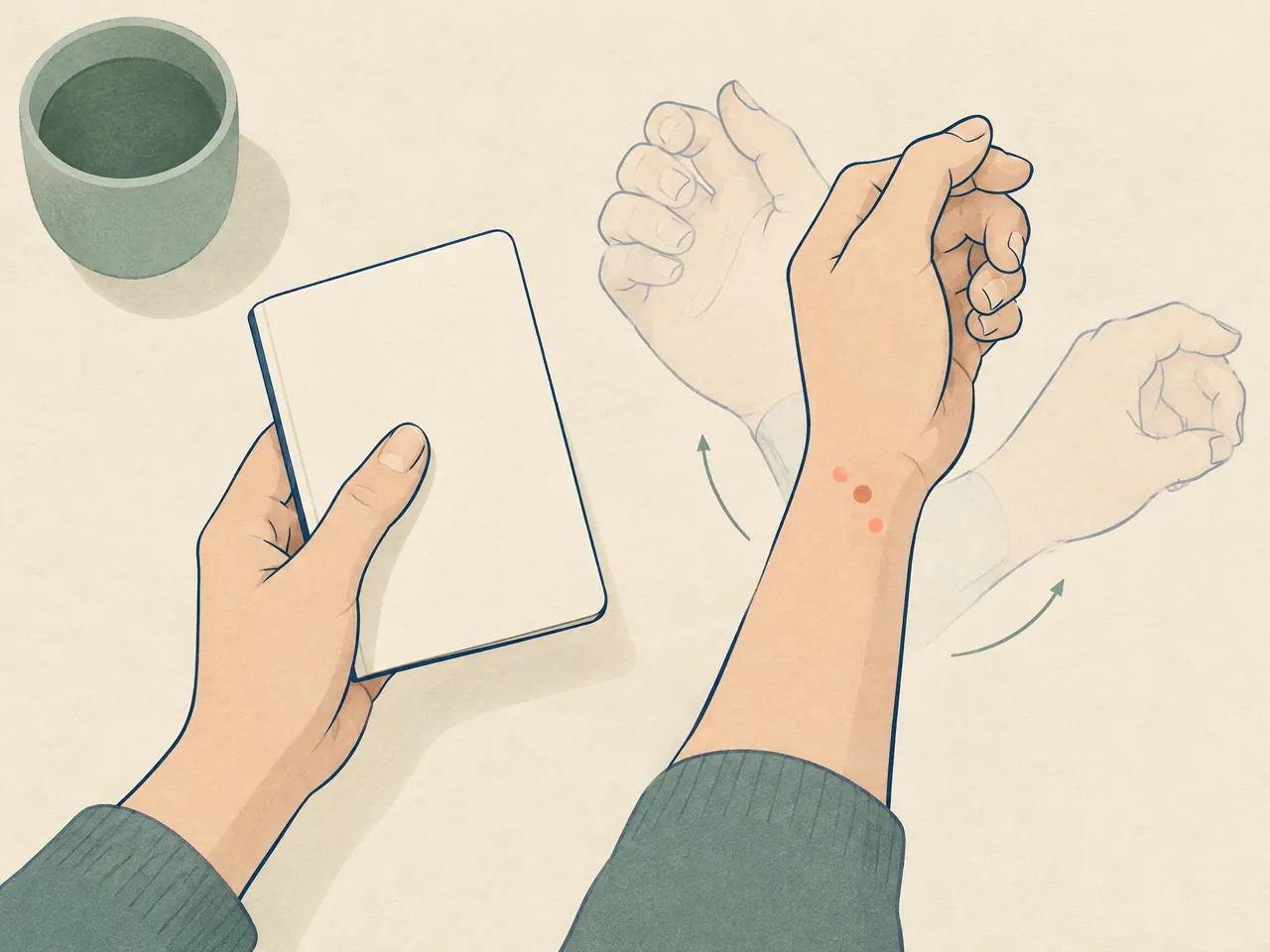
Do not apply heat to a wrist that is newly injured or clearly red, swollen, hot, and acutely painful. In that situation, warmth can feel soothing briefly while the swelling or throbbing becomes more noticeable afterward. Skip heat on broken skin, a suspected infection, or an area with impaired sensation or circulation unless a clinician has advised otherwise. Be careful with heating pads if you may doze off, and never turn up the temperature to overcome a dull sensation. A warm towel is often easier to monitor than prolonged, unattended heat.
The same caution applies when the story is unclear. For example, a wrist that became sore after a fall but only started swelling hours later should be treated as a recent injury, not as ordinary desk-related stiffness. A warm, swollen wrist with fever or feeling unwell needs medical assessment rather than a contrast bath or repeated packs. NHS guidance advises seeking help for wrist pain that is warm, swollen, stiff, associated with a high temperature, or accompanied by altered sensation. [1] A temperature treatment may provide short-lived comfort; it should not mask a progression that needs attention.
when to use ice for a wrist injury, when to use heat for wrist stiffness, and Is ice or heat better for a wrist injury? Know when to seek care
Once the initial pain is manageable, build use back in small steps. Choose low-force tasks first: hold a light cup with the wrist neutral, type for a shorter interval with breaks, or use two hands for a pan rather than lifting it one-handed. Then review the wrist later that day and the next morning. A modest increase in awareness that settles can be a cue to repeat the same level; a clear flare of pain or swelling means the step was too large. This gradual approach is more informative than assuming a heat pack has ‘fixed’ the wrist or that an ice pack has made it ready for sport.
Heat and cold may sit alongside an assessment, not in place of one. In a Chinese medicine consultation, a Registered Chinese Medicine Practitioner may take a history, consider the pattern of symptoms and daily load, and discuss supportive options within a traditional Chinese medicine assessment. That traditional approach is not the same as a modern diagnosis and should not be used to rule out a fracture, nerve compression, infection, or inflammatory joint condition. Tell the practitioner about the injury mechanism, past wrist problems, numbness, medication, and any imaging or medical advice already received so care can be coordinated appropriately.
when to use ice for a wrist injury, when to use heat for wrist stiffness, and Is ice or heat better for a wrist injury? Gentle movement and load
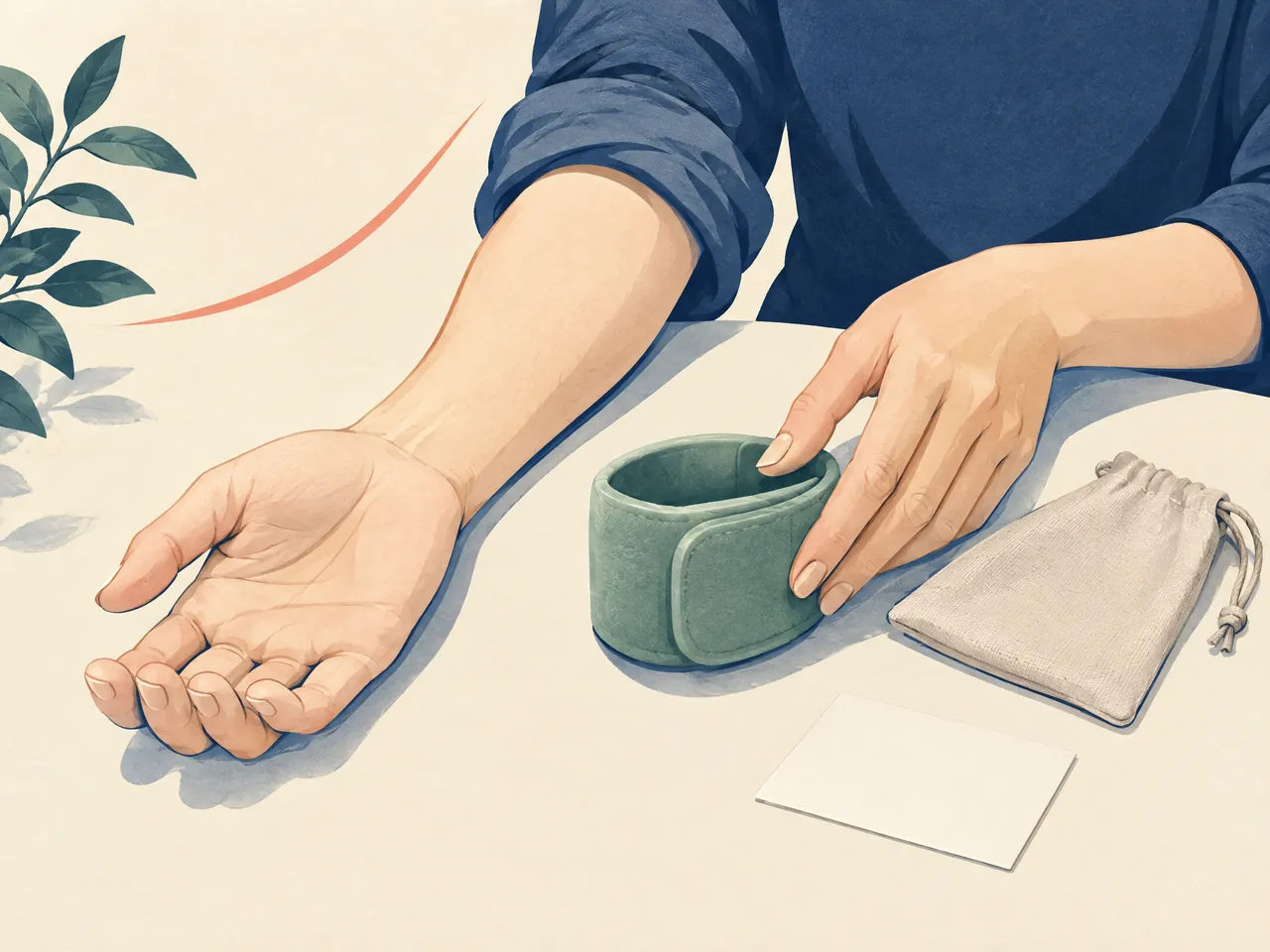
Gentle movement means movement that stays within a tolerable range, not an aggressive stretch to regain every degree of motion immediately. With the forearm supported, you might slowly open and close the fingers, turn the palm upward and downward, or make a small wrist bend if it is comfortable. Keep the movement smooth and stop if it causes sharp pain, catching, spreading tingling, or a lasting worsening afterwards. NHS guidance encourages gentle exercises for mild wrist pain and stiffness, while reducing activities such as typing, vibrating tools, instruments, heavy lifting, and tight gripping when they are causing pain. [1]
Plan the environment as well as the exercise. Split a long keyboard task into shorter blocks, move a heavy delivery with both hands, use a larger-handled tool where possible, and take a break before fatigue changes your grip. For a hobby such as climbing, yoga, golf, gaming, or sewing, return through simpler movements before loading the wrist at its end range. If symptoms repeatedly return with the same task, that is useful assessment information. Record which position, duration, and load bring it on, rather than trying to solve every recurrence by switching between hot and cold.

when to use ice for a wrist injury, when to use heat for wrist stiffness, and Is ice or heat better for a wrist injury? Warning signs and assessment
Seek urgent medical assessment after a wrist injury if there is severe pain, a snapping, grinding, or popping sound at the time of injury, an obvious change in shape or colour, or an inability to move the wrist or hold objects. Loss of feeling in part or all of the hand is also an urgent warning sign. These symptoms can occur with a broken wrist or another significant problem and should not be managed by choosing a stronger temperature treatment. NHS specifically advises urgent help for these features. [1] If an injury causes a crack, an odd angle, numbness or tingling, or blue, grey, or cold skin, emergency assessment is appropriate. [5]
Arrange non-emergency assessment when pain prevents normal activity, keeps worsening, returns repeatedly, or has not improved with home care; also seek advice for tingling, reduced sensation, diabetes, or a painful wrist that is warm, swollen, stiff, and accompanied by feeling unwell. [1] For a non-urgent enquiry at TCM Lab, you can ask about consultation availability at the Kwun Tong Chinese medicine clinic or Chinese medicine clinic Prince Edward. WhatsApp +852 6940 5663 with the injury timing and symptoms; an appointment is arranged only after availability is confirmed.
Care and health guide
Health service information
This directory brings together services, reading, and visit information related to health services, to help you prepare questions for a consultation.
If you are organising health questions, Chinese medicine clinic Hong Kong is a starting point for learning about related services and preparing for a consultation.
People have different needs; acupuncture Hong Kong provides further reading to help you understand options in your own context.


Your questions, answered
Frequently asked questions
Should I ice my wrist if it is swollen the day after an injury?
If the injury is recent and the wrist is swollen, cold is generally the more cautious option. Wrap the pack in a towel, use it for a short session, and avoid heat during the first 2–3 days. NHS advises up to 20 minutes every 2–3 hours. If swelling is large, worsening, or paired with severe pain or poor function, seek assessment. [1]
Can I use heat for a stiff wrist from typing?
Gentle warmth may be reasonable for gradual stiffness when there is no fresh injury, redness, swelling, or local heat. Keep it comfortably warm, not hot, and follow it with easy movement and a change to the typing setup or schedule. If numbness, tingling, night pain, or weakness develops, arrange assessment rather than relying on heat. [1] [2]
What if ice makes my wrist more numb or the skin changes colour?
When is wrist pain more than something to manage at home?
Get urgent medical advice for severe pain, a snap or grinding sound at injury, a wrist that has changed shape or colour, inability to move it or hold objects, or loss of sensation. Arrange an assessment for pain that stops normal activity, keeps recurring, or is warm and swollen with feeling unwell. [1]
Sources and further information
- [1] [1] NHS — Wrist pain
Referenced for: Supports towel-wrapped ice-pack use, avoidance of early heat, gentle movement and activity modification, plus wrist-pain escalation signs.
- [2] [2] American Society for Surgery of the Hand — Heat Treatment and Cold Treatment for Hands
Referenced for: Supports general hand-and-wrist heat and cold use, fabric barriers, short application guidance, and skin-safety precautions.
- [3] [3] Johns Hopkins Medicine — Ice Packs vs. Warm Compresses For Pain
Referenced for: Supports the distinction between cold for pain and swelling and warmth for stiffness, including avoiding heat early after injury.
- [4] [4] Hull University Teaching Hospitals NHS Trust — Soft Tissue Injury: Wrist and Hand
Referenced for: Supports wrist-and-hand cold-pack skin precautions, cautions for impaired sensation, wounds or poor circulation, and graded return to load.
- [5] [5] NHS — Sprains and strains
Referenced for: Supports urgent and emergency warning signs after an injury, including an odd angle, altered colour, numbness, tingling, or cold skin.