
TCM Lab · Health reading
Pinched Nerve in Neck Symptoms and Cervical Radiculopathy Symptoms Explained
Published Updated
Pain that begins in the neck and shoots, burns or aches into one shoulder, arm or hand can feel different from an ordinary stiff neck. Pinched nerve in neck symptoms and cervical radiculopathy symptoms may include arm pain, tingling, numbness or altered strength, but this pattern does not prove the cause. Note where the feeling starts and travels, whether neck movement changes it, and whether hand function has changed. These details help a clinician assess when self-care is reasonable and when medical assessment should come first.
Appointments are confirmed through WhatsApp. If you have language requirements, please mention them in your enquiry.
The short answer
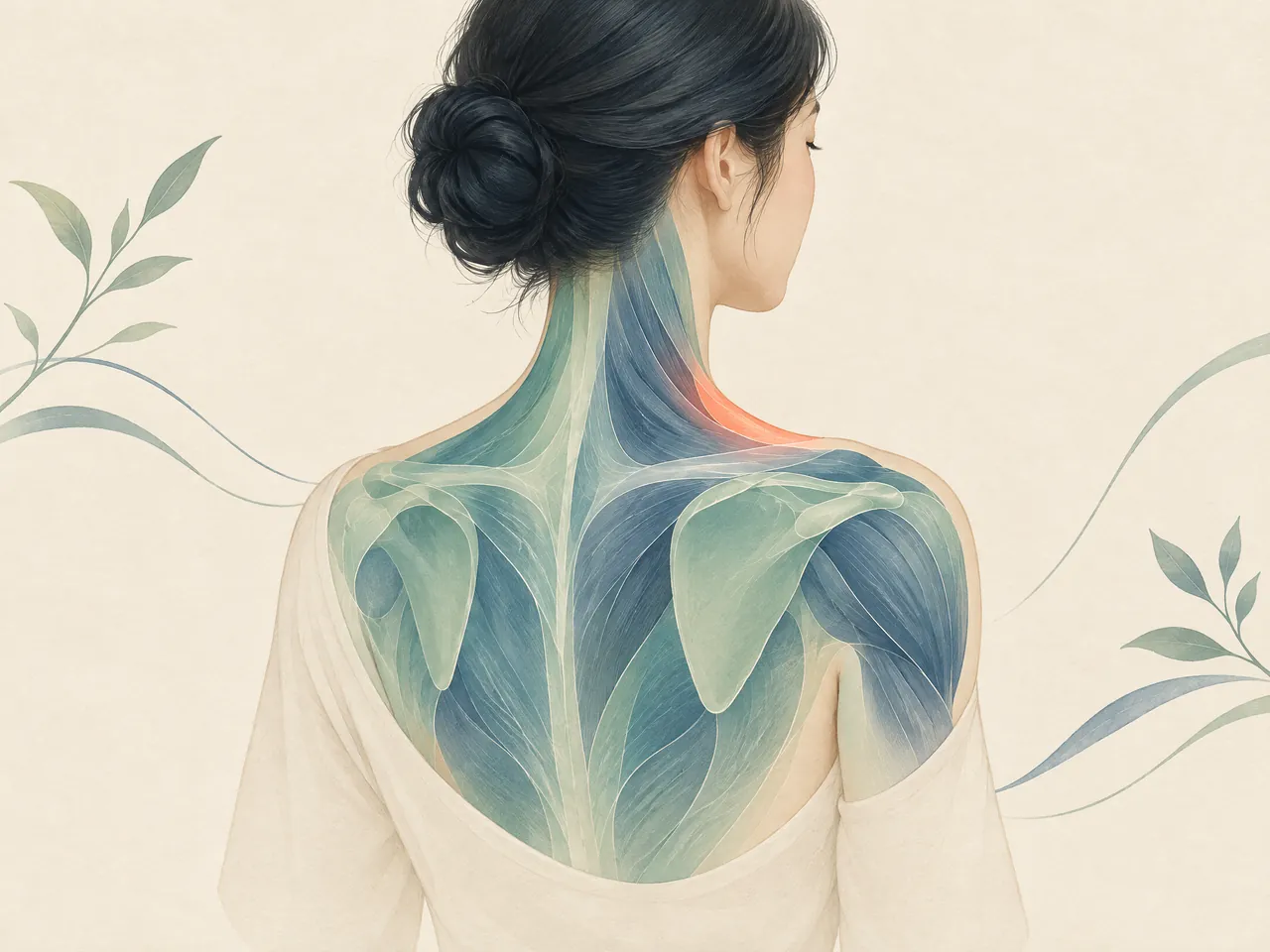
Pinched nerve in neck symptoms may include neck pain that travels into the shoulder or arm, pins and needles, numbness, or weakness in the arm or hand. Cervical radiculopathy symptoms are worth medical assessment when they are new, persistent, worsening, or affecting daily function. Seek prompt help after significant injury or for progressive weakness, balance or walking changes, clumsy hands, bowel or bladder changes, fever, or severe headache with neck pain [1].
Transparent pricing
See the fees.
Choose your care.
Explore our complete official price list, including first-trial prices, regular prices, packages and branch-specific options.
Opening WhatsApp prepares an enquiry; it does not send a message, take payment or confirm an appointment. Suitability and individual arrangements are confirmed during consultation.
Pain care
All prices in HKDExtracorporeal shockwave treatment
Shockwave treatment for deep-tissue and fascial care. The Kwun Tong clinic offers the multi-area options shown below.
Priced by branch
Branch-specific pricing
Prince Edward: HK$250 per area
Kwun Tong: HK$250 for 1 area / HK$450 for 2 areas / HK$600 for 3 areas
Pain care (manual therapy)
Includes Chinese medicine musculoskeletal assessment, manual joint techniques and tui na.
HK$580 (single session)
Chinese medicine musculoskeletal assessment
Pain care (acupuncture and manual therapy)
Combines acupuncture and manual therapy.
HK$680 (single session)
Combined care
Hair and scalp
All prices in HKDScalp health and hair-loss management
Includes AI scalp analysis, deep scalp and follicle cleansing, and scalp oil-control care.
HK$380 (first trial)
Regular price: HK$680
- 6 sessions: HK$3,480 (HK$580 per session)
- 12 sessions: HK$5,760 (HK$480 per session)
- 20 sessions: HK$8,600 (HK$430 per session)
- 30 sessions: HK$11,400 (HK$380 per session)
Hair acupuncture and Chinese herbal medicine package
Includes scalp acupuncture and 3 days of Chinese herbal medicine that does not require decoction.
HK$580 (single session)
Registered Chinese Medicine Practitioner consultation
- 6 sessions: HK$3,180 (HK$530 per session)
- 12 sessions: HK$5,760 (HK$480 per session)
- 20 sessions: HK$8,600 (HK$430 per session)
- 30 sessions: HK$11,400 (HK$380 per session)
Combined hair and scalp treatment
Combines acupuncture and Chinese herbal medicine with salon-level scalp and follicle care. Packages include complimentary hair-care shampoo and serum.
HK$1,260 (single session)
Combined treatment
- 8 sessions: HK$8,640 (HK$1,080 per session)
- 16 sessions: HK$15,680 (HK$980 per session)
- 20 sessions: HK$18,600 (HK$930 per session)
- 30 sessions: HK$26,400 (HK$880 per session)
Weight management
All prices in HKDFull-body acupoint embedding for weight management
Includes full-body acupoint embedding. Packages include complimentary Chinese herbal medicine for weight management, with the number of included days scaled to the package. Embedding material and the individual treatment arrangement are confirmed during consultation; this is not a cosmetic thread lift.
HK$980 (single session)
No trial session
- 10 sessions: HK$7,800 (HK$780 per session)
- 20 sessions: HK$14,600 (HK$730 per session)
- 30 sessions: HK$20,400 (HK$680 per session)
Facial acupuncture
All prices in HKDFacial acupuncture (basic)
Includes facial acupuncture and meridian-based facial care, including care for facial puffiness.
HK$480 (first trial)
Regular price: HK$680
- 10 sessions: HK$5,200 (HK$520 per session)
- 20 sessions: HK$9,600 (HK$480 per session)
- 30 sessions: HK$13,500 (HK$450 per session)
Facial acupuncture (advanced)
Includes enhanced facial acupuncture with a specially formulated moisturising mask and serum.
HK$780 (first trial)
Regular price: HK$1,180
- 10 sessions: HK$9,000 (HK$900 per session)
- 20 sessions: HK$16,600 (HK$830 per session)
- 30 sessions: HK$23,400 (HK$780 per session)
Chinese medicine
All prices in HKDAcupuncture and Chinese herbal medicine package
Includes a Chinese medicine consultation with pulse assessment, body acupuncture and 3 days of Chinese herbal granules that do not require decoction.
HK$580 (single session)
Chinese medicine consultation with pulse assessment
Pinched Nerve in Neck Symptoms and Cervical Radiculopathy Symptoms to Notice
The phrase “pinched nerve” is common shorthand, while cervical radiculopathy describes irritation or compression affecting a nerve root in the neck. Discomfort may start around the neck, pass through the shoulder or shoulder blade, and continue down an arm. It can feel aching, sharp or burning, with pins and needles, reduced sensation, or altered strength. NHS Inform lists arm pain, pins and needles or numbness, and weakness in the arm or hand among cervical radiculopathy symptoms [1]. Arm symptoms can have several causes, so an online description cannot identify the affected structure or side with certainty.
Compare the episode with your usual baseline rather than focusing only on its intensity. Is discomfort local to the neck, or does it reach the forearm, fingers or thumb? Does looking up, turning the head, laptop work, carrying a bag, driving, or waking from sleep alter it? Are buttons, typing, opening jars, holding chopsticks, or lifting a kettle becoming harder? A focused page on neck pain radiating to arm can help you describe the travel pattern, but not self-diagnose it. Persistent, escalating, or function-changing symptoms deserve in-person assessment.

How Pinched Nerve in Neck Symptoms and Cervical Radiculopathy Symptoms May Travel into the Shoulder or Arm
Radiating pain differs from pain that remains in one tender neck muscle. It may start at the neck and continue through the shoulder, upper arm, forearm, or hand; at times arm symptoms are more noticeable than neck pain. Certain neck movements can aggravate radicular pain, and a clinician may consider how neck and arm movements affect symptoms during examination [3]. That observation is useful information, not a home test: do not repeatedly force a painful movement to reproduce the feeling.
Location alone does not settle the question. Shoulder-joint conditions, nerve irritation elsewhere in the arm, and some non-musculoskeletal problems can also cause shoulder or arm symptoms. Pain mainly triggered by reaching or rotating the shoulder may need a different discussion than symptoms tracking from the neck into the hand. The article on rotator cuff tear shoulder pain explains why shoulder pain has its own possible causes. Report chest symptoms, breathlessness, or a sudden severe headache; do not assume every shoulder-to-arm pain is a pinched nerve.
Which Pinched Nerve in Neck Symptoms and Cervical Radiculopathy Symptoms Involve Tingling, Numbness or Weakness
Tingling is often described as pins and needles, buzzing, prickling, or a hand that has “gone to sleep.” Numbness can mean a reduced ability to feel touch in a defined patch, or simply a strange, less certain sensation. Weakness means the muscle cannot produce its usual force; it is not always the same as avoiding a movement because it hurts. Notice practical changes: objects slipping, a weaker grip, trouble spreading fingers, new difficulty with handwriting, zips, or fastenings. These distinctions help an assessor examine strength and sensation instead of relying only on the word “numb.”
New or worsening weakness deserves attention, especially when it is clearly progressing. NHS Inform advises urgent contact for significant new or worsening arm or leg weakness, changing sensation, reduced balance or difficulty walking, clumsy hands, and bowel or bladder changes [1]. These signs may point beyond an isolated arm symptom and should not be managed with massage, heat, a neck collar, or a routine appointment alone. If the change is sudden, severe, or accompanied by a severe headache, seek urgent local medical advice. If you are unsure whether a symptom is true weakness, describe the task that has changed rather than testing it repeatedly at home.
Compare your options
| What you notice | What to record or avoid | Appropriate next step |
|---|---|---|
| Local neck stiffness after a sustained position, with no arm tingling, numbness or weakness | Note desk, phone, sleep or load-carrying positions; avoid holding one posture for long periods | Try gentle movement and paced activity; arrange review if it persists, worries you or changes |
| Pain travelling from the neck into the shoulder or arm, with intermittent tingling | Record the route, trigger movements, duration, sleep disruption and effect on work or driving | Arrange a clinical assessment, particularly if symptoms are new, recurrent or limiting function |
| Numbness, reduced grip, dropping objects, or arm or hand weakness | Record specific task changes; do not repeatedly test painful strength or force neck movements | Seek timely medical assessment; get prompt advice if symptoms are new or worsening |
| Major injury, progressive weakness, walking or balance change, clumsy hands, bowel or bladder change, severe headache or fever with neck pain | Do not delay care to use home treatments, book a routine visit, or gather a complete diary | Use urgent local medical services or prompt medical assessment |
On smaller screens, scroll the table sideways to compare all columns.
Possible Causes Behind Pinched Nerve in Neck Symptoms and Cervical Radiculopathy Symptoms
A posture photo cannot diagnose the source of neck-and-arm symptoms. The NHS notes that prolonged desk positioning, an awkward sleeping position, a pinched nerve and injury can all be associated with neck pain [2]. For cervical radiculopathy specifically, irritation around the nerve, a neck injury, and age-related changes in discs, ligaments or joints are among possible contributors [1]. The American Academy of Orthopaedic Surgeons also describes age-related degenerative change and a disc injury as common mechanisms [3]. These are general explanations, not a way to decide from home which one applies to you.
Timing matters as much as the label. An episode after a fall, traffic incident, forceful pull, or sports collision needs different caution from a gradual problem after static desk work. A sudden new symptom may also need earlier assessment than a familiar ache that settles with a position change. Keep the description factual: onset date, what was happening, affected areas, and whether symptoms are stable, improving, or worsening. What causes neck and shoulder pain? gives broader context for why one simple explanation is often insufficient.

Sleep, Posture and Repeated Loading with Pinched Nerve in Neck Symptoms and Cervical Radiculopathy Symptoms
An awkward sleep position or a long, unbroken work posture may leave the neck feeling locked, sore, or more sensitive the next day. A laptop set low, a phone held below eye level, repeated overhead work, long driving, or carrying a load on one side can all be useful context to report. The key word is context: a person can have poor workstation habits without nerve-root symptoms, and a person with radiating symptoms may have more going on than posture. Avoid blaming yourself or trying to “correct” the neck through forceful stretches, aggressive manipulation, or hours of rigidly holding one position.
A useful short experiment is to break up one sustained task and see whether symptoms change. Alternate screen work with standing and a few comfortable movements, adjust screen height, and use both hands for a load when practical. At night, a pillow that does not push the head markedly forward, backward, or sideways may be worth discussing; NHS guidance includes a low, firm pillow among general neck-pain measures [2]. Stop any adjustment that increases arm pain, numbness or weakness. For non-urgent muscular discomfort, how to relieve neck and shoulder pain offers broader self-care context without assuming every case is radiculopathy.
Injury and Other Factors Associated with Pinched Nerve in Neck Symptoms and Cervical Radiculopathy Symptoms
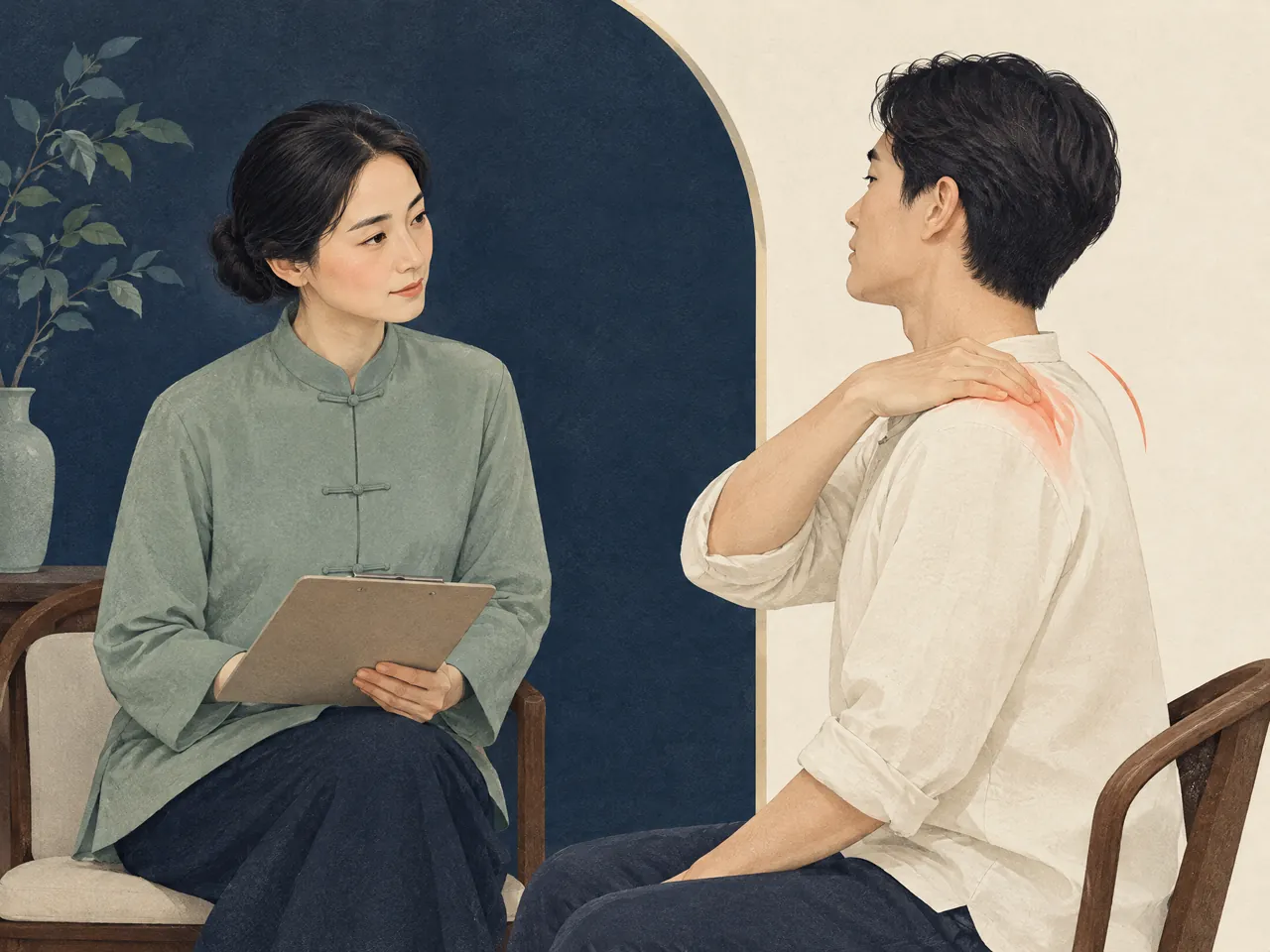
Injury can matter even when pain seems to arrive later. A fall, collision, sudden lifting effort, twisting incident, or pull to the arm or neck can be relevant, so include it when you seek care. Do not rely on the absence of visible bruising to decide that persistent numbness or weakness is harmless. AAOS explains that a disc problem can occur after injury and that symptoms can include pain radiating into the shoulder or arm, weakness, tingling and loss of sensation [3]. An examination helps determine whether the symptoms may be neck-related or need another route of assessment.
Other health information can change the next step. Mention a history of cancer, inflammatory disease, infection, surgery, osteoporosis, recent unexplained weight loss, fevers, or medicines that affect bleeding or immunity. This is not a list of diagnoses; it is a reason not to reduce every symptom to a compressed nerve. Also mention wrist or elbow symptoms, because nerve irritation outside the neck can resemble a neck-related problem. A clinician may assess neck motion, shoulder movement, sensation, reflexes and strength, then decide whether further tests or imaging are appropriate rather than ordering them based only on an internet checklist [1] [3].
What to Do About Pinched Nerve in Neck Symptoms and Cervical Radiculopathy Symptoms
The appropriate next step depends on severity, change over time, and the presence of warning signs. For mild, familiar neck discomfort without progressive neurological change, temporarily reducing provoking activities, avoiding long fixed positions, and keeping gently active can be reasonable. NHS Inform recommends building activity gradually, pacing tasks, avoiding one position for too long, and moving a little and often for cervical radiculopathy [1]. This is not a request to push through a spreading pain or test strength repeatedly. Choose comfortable movement and use the response over the next day, rather than aiming to “release” a nerve in one session.

A medical assessment can clarify the symptom pattern, examine the neck, shoulder, arm and hand, and decide whether rehabilitation, medication, testing, imaging, or referral is needed. Acupuncture or other Chinese medicine approaches should be discussed only after red flags have been considered and in an individual assessment; they do not replace urgent neurological, injury, or medical evaluation. For a non-urgent TCM Lab conversation after appropriate assessment, ask about the Chinese medicine clinic Prince Edward or Kwun Tong Chinese medicine clinic. A WhatsApp enquiry can describe the main problem and preferred arrangement, but is not a diagnosis by message.

Gentle Self-Care and Assessment for Pinched Nerve in Neck Symptoms and Cervical Radiculopathy Symptoms
Start with simple, low-risk observations. Note the movements, positions and tasks that aggravate the symptom, then organise the day so they are not continuous. Take short breaks from a desk, vary the way you hold a phone, pause a repetitive task before symptoms build, and keep the neck moving only within a comfortable range. Heat or cold may be used for general neck pain according to comfort when wrapped to protect the skin; NHS guidance lists both as options [2]. Neither one treats a serious neurological problem, and either should be stopped if it aggravates skin, pain, tingling or numbness.
Bring useful information to an assessment: a timeline, a sketch or written description of the travel of symptoms, work and sleep triggers, injury details, medical conditions, current medicines, and previous scans or reports if you have them. Say if symptoms wake you, disturb work, or limit driving. Do not drive or cycle if neck movement is so restricted that you cannot do so safely [2]. During the assessment, ask what findings are being checked, what symptoms should prompt earlier review, and what activity changes are suitable for you. This turns self-care from guesswork into a plan that can be adjusted if the pattern changes.
When Pinched Nerve in Neck Symptoms and Cervical Radiculopathy Symptoms Need Prompt Medical Attention
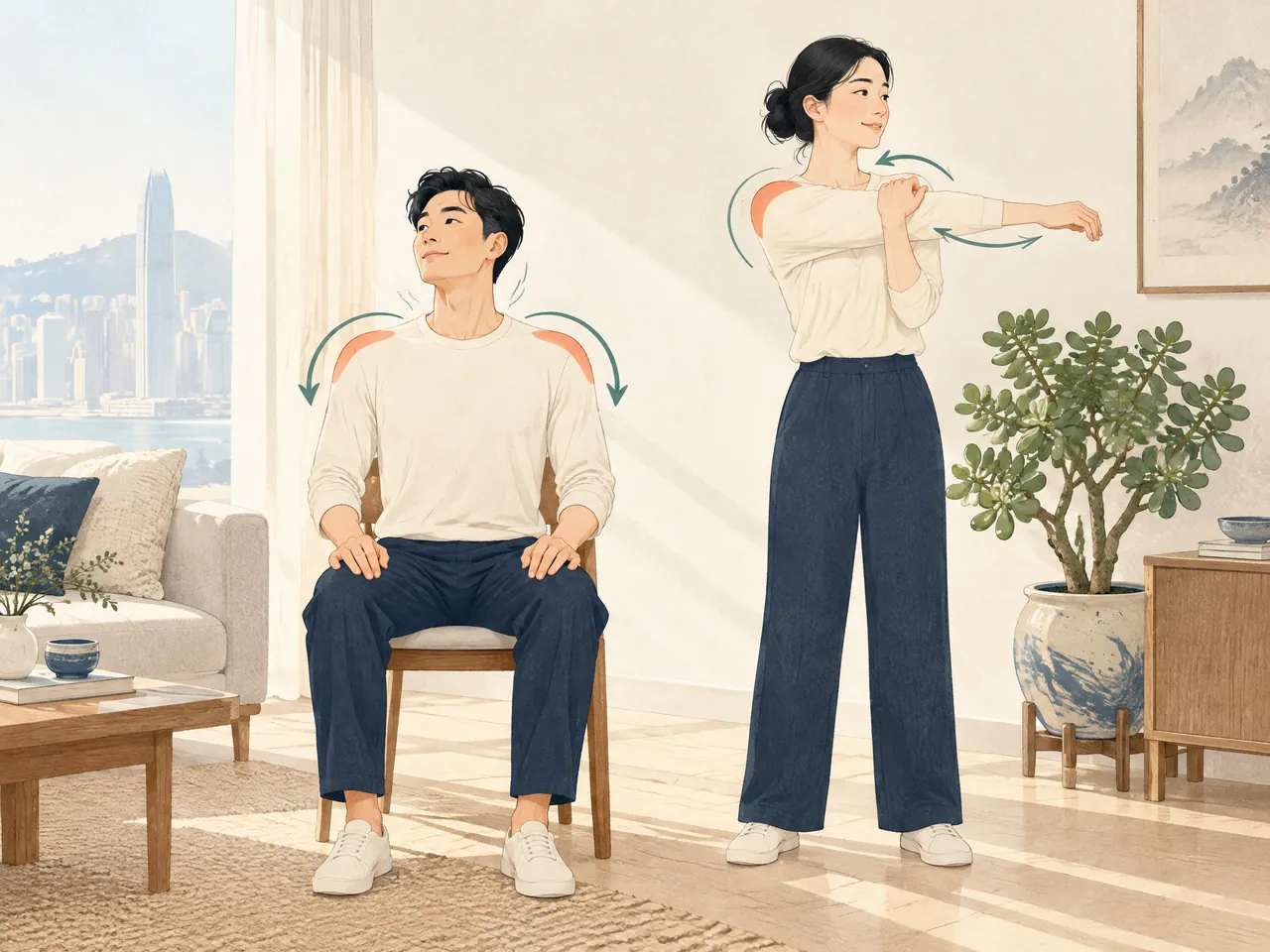
Seek prompt medical attention after significant trauma, or for new or clearly worsening weakness, numbness affecting more than a small stable area, loss of balance, difficulty walking, clumsy hands, or a change in bowel or bladder function. Seek urgent advice for neck pain linked with a severe headache, and for fever or feeling generally unwell with neck symptoms [1]. Severe pain that rapidly worsens at rest, unexplained weight loss, or a known serious health condition also changes the urgency of assessment. These symptoms do not prove one cause, but they should not be watched at home while waiting for a routine complementary-care appointment.
For symptoms that are not urgent but have not improved, keep getting worse, or interfere with sleep, work or normal hand use, arrange appropriate medical review. NHS guidance advises assessment when neck pain or stiffness persists for weeks, pain relief has not helped, or there are symptoms such as pins and needles or a cold arm [2]. A clinician can decide whether conservative care remains appropriate and whether tests are needed. If a later TCM consultation is suitable for your circumstances, see the Chinese medicine clinic price list Hong Kong before arranging a visit, and disclose any diagnoses, medications and treatment already underway.
Care and health guide
Neck discomfort: care information
This directory brings together services, reading, and visit information related to neck discomfort, to help you prepare questions for a consultation.
When neck discomfort affects your day, noting when it occurs, its relation to activity, and what you have already tried can help prepare a consultation; acupuncture for neck pain is a relevant service or reading entry point.
Individual circumstances differ, and acupuncture Hong Kong offers related information to help you understand options and prepare questions.


Your questions, answered
Frequently asked questions
Can cervical radiculopathy symptoms occur without much neck pain?
Yes. Some people notice arm pain, tingling, numbness or weakness more than neck pain. That does not confirm cervical radiculopathy, because shoulder conditions and nerve irritation elsewhere in the arm can look similar. A clinician can assess the pattern, strength, sensation and relevant movements.
Should I rest completely when I have pinched nerve in neck symptoms?
Complete rest is usually not the same as sensible pacing. For non-urgent symptoms, gradual activity, regular position changes and gentle comfortable movement can be more useful than staying fixed in one posture [1]. Avoid movements or tasks that clearly worsen the symptom, and obtain medical advice if pain spreads, numbness increases or strength changes.
Does tingling in my fingers prove that a neck nerve is pinched?
No. Tingling can be related to a neck nerve, but it may also arise from other areas of the arm or wrist and from other health conditions. The route of symptoms, neck and arm examination, strength, sensation and your history all help decide what should be investigated.
When should I seek urgent help for cervical radiculopathy symptoms?
Seek prompt medical help after significant injury or with new or worsening weakness, difficulty walking or balancing, clumsy hands, bowel or bladder changes, severe headache with neck pain, fever or feeling generally unwell [1]. Do not wait for a routine acupuncture or Chinese medicine consultation when these warning signs are present.
Sources and further information
- [1] NHS Inform — Cervical radiculopathy
Referenced for: Official NHS patient guidance on cervical radiculopathy symptoms, possible causes, gradual activity, assessment, and urgent neurological warning signs.
- [2] NHS — Neck pain
Referenced for: Official NHS guidance on broad neck-pain causes, heat or cold packs, gentle movement, restricted driving, and when to seek care.
- [3] American Academy of Orthopaedic Surgeons — Cervical Radiculopathy Pinched Nerve
Referenced for: Orthopaedic patient guidance on symptoms, degenerative and injury-related mechanisms, clinical examination and conditions that can mimic cervical radiculopathy.