
TCM Lab · Health reading
Hip Pain Home Treatment and Hip Pain Treatment at Home: Should You Use Heat or Ice?
Published Updated
Hip pain does not automatically mean you should reach for heat, and it does not automatically mean you should use ice. For hip pain home treatment, the safer starting point is to rule out urgent warning signs, then choose the gentle option that feels more comfortable. Cold can be a practical comfort measure after activity when soreness or swelling is noticeable; warmth may feel better when stiffness or tight surrounding muscles are the main problem. Neither choice identifies the cause of pain or replaces assessment when walking becomes difficult, symptoms worsen, or the hip is hot and swollen.
Appointments are confirmed through WhatsApp. If you have language requirements, please mention them in your enquiry.
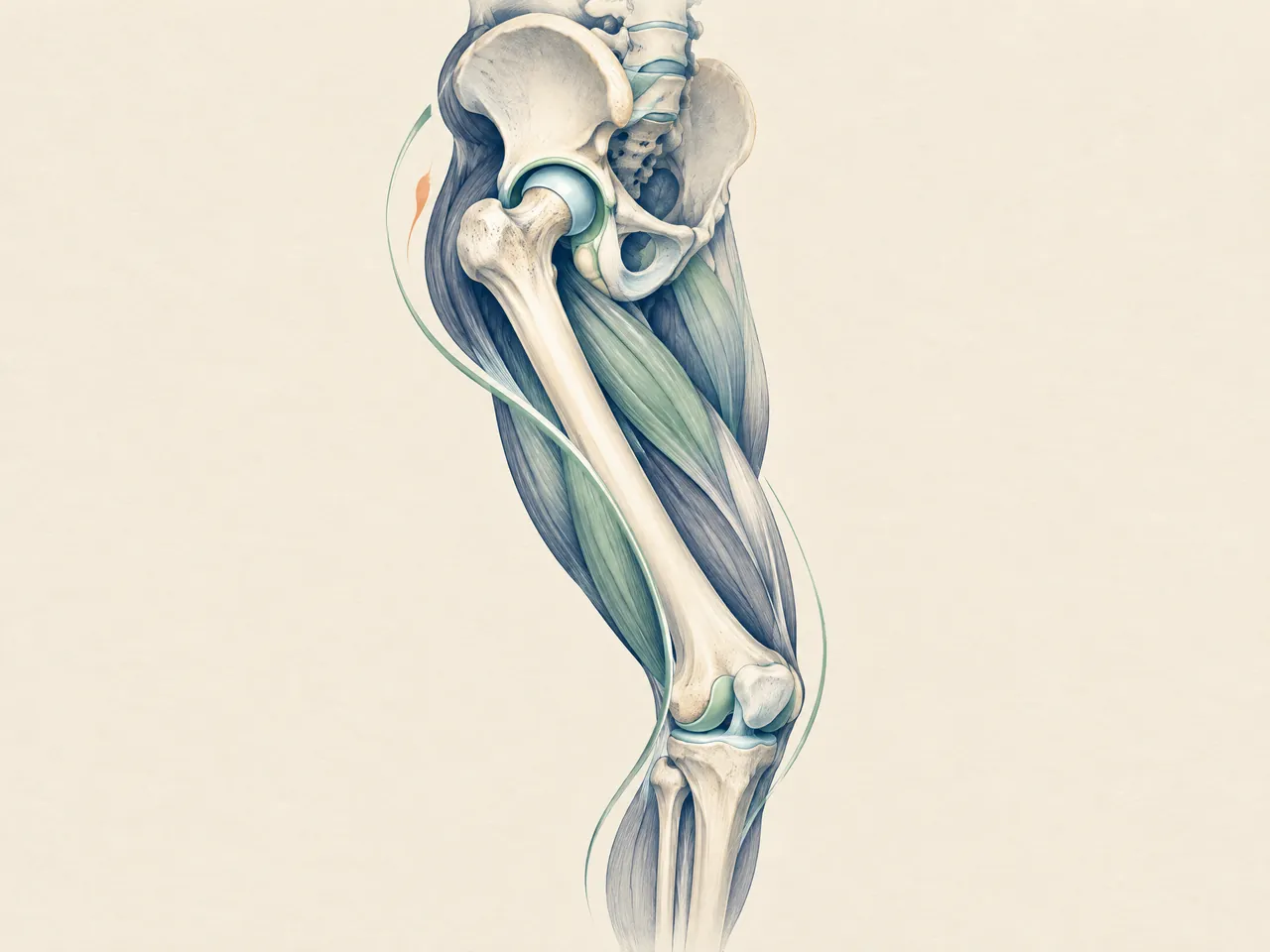
The short answer
For hip pain treatment at home, use heat or cold only when there are no urgent warning signs and choose the option that feels most comfortable. Put a towel between the pack and skin, use it for no longer than 20 minutes, and leave a few hours before another application. Stop for increasing redness, colour change, blisters, or worse pain. Do not use either if you have reduced sensation or circulation; seek urgent assessment after serious injury, inability to bear weight, or a hot swollen hip with fever or feeling unwell.
Transparent pricing
See the fees.
Choose your care.
Explore our complete official price list, including first-trial prices, regular prices, packages and branch-specific options.
Opening WhatsApp prepares an enquiry; it does not send a message, take payment or confirm an appointment. Suitability and individual arrangements are confirmed during consultation.
Pain care
All prices in HKDExtracorporeal shockwave treatment
Shockwave treatment for deep-tissue and fascial care. The Kwun Tong clinic offers the multi-area options shown below.
Priced by branch
Branch-specific pricing
Prince Edward: HK$250 per area
Kwun Tong: HK$250 for 1 area / HK$450 for 2 areas / HK$600 for 3 areas
Pain care (manual therapy)
Includes Chinese medicine musculoskeletal assessment, manual joint techniques and tui na.
HK$580 (single session)
Chinese medicine musculoskeletal assessment
Pain care (acupuncture and manual therapy)
Combines acupuncture and manual therapy.
HK$680 (single session)
Combined care
Hair and scalp
All prices in HKDScalp health and hair-loss management
Includes AI scalp analysis, deep scalp and follicle cleansing, and scalp oil-control care.
HK$380 (first trial)
Regular price: HK$680
- 6 sessions: HK$3,480 (HK$580 per session)
- 12 sessions: HK$5,760 (HK$480 per session)
- 20 sessions: HK$8,600 (HK$430 per session)
- 30 sessions: HK$11,400 (HK$380 per session)
Hair acupuncture and Chinese herbal medicine package
Includes scalp acupuncture and 3 days of Chinese herbal medicine that does not require decoction.
HK$580 (single session)
Registered Chinese Medicine Practitioner consultation
- 6 sessions: HK$3,180 (HK$530 per session)
- 12 sessions: HK$5,760 (HK$480 per session)
- 20 sessions: HK$8,600 (HK$430 per session)
- 30 sessions: HK$11,400 (HK$380 per session)
Combined hair and scalp treatment
Combines acupuncture and Chinese herbal medicine with salon-level scalp and follicle care. Packages include complimentary hair-care shampoo and serum.
HK$1,260 (single session)
Combined treatment
- 8 sessions: HK$8,640 (HK$1,080 per session)
- 16 sessions: HK$15,680 (HK$980 per session)
- 20 sessions: HK$18,600 (HK$930 per session)
- 30 sessions: HK$26,400 (HK$880 per session)
Weight management
All prices in HKDFull-body acupoint embedding for weight management
Includes full-body acupoint embedding. Packages include complimentary Chinese herbal medicine for weight management, with the number of included days scaled to the package. Embedding material and the individual treatment arrangement are confirmed during consultation; this is not a cosmetic thread lift.
HK$980 (single session)
No trial session
- 10 sessions: HK$7,800 (HK$780 per session)
- 20 sessions: HK$14,600 (HK$730 per session)
- 30 sessions: HK$20,400 (HK$680 per session)
Facial acupuncture
All prices in HKDFacial acupuncture (basic)
Includes facial acupuncture and meridian-based facial care, including care for facial puffiness.
HK$480 (first trial)
Regular price: HK$680
- 10 sessions: HK$5,200 (HK$520 per session)
- 20 sessions: HK$9,600 (HK$480 per session)
- 30 sessions: HK$13,500 (HK$450 per session)
Facial acupuncture (advanced)
Includes enhanced facial acupuncture with a specially formulated moisturising mask and serum.
HK$780 (first trial)
Regular price: HK$1,180
- 10 sessions: HK$9,000 (HK$900 per session)
- 20 sessions: HK$16,600 (HK$830 per session)
- 30 sessions: HK$23,400 (HK$780 per session)
Chinese medicine
All prices in HKDAcupuncture and Chinese herbal medicine package
Includes a Chinese medicine consultation with pulse assessment, body acupuncture and 3 days of Chinese herbal granules that do not require decoction.
HK$580 (single session)
Chinese medicine consultation with pulse assessment
Hip pain home treatment and hip pain treatment at home: choose by the situation
The useful question is not simply “heat or ice?” but “what is happening today?” A hip can feel sore after a hill walk, stiff after a long spell at a desk, or sharply painful after a fall. Those situations deserve different responses. When there is no emergency sign, a short, protected heat or cold application can be one part of hip pain home treatment. It should sit alongside reducing the activity that clearly aggravates symptoms, not testing the hip through a painful twist, deep squat, run or heavy carry.
Pain around the hip can also be felt in the groin, buttock, thigh, back or knee, so the place a person points to does not settle the cause. NHS guidance lists many possible causes and advises against diagnosing the cause alone from a symptom pattern. [2] Use comfort measures as a short-term response while watching function: can you get up from a chair, manage a few steps, and sleep without a clear deterioration? If not, assessment is more useful than repeatedly changing packs.

Hip pain home treatment and hip pain treatment at home for stiffness, soreness and swelling
For a familiar, mild ache without red flags, choose the sensation that is easier to tolerate. Cold may feel more soothing when a hip is sore or puffy after activity. Gentle warmth may feel more comfortable when the dominant experience is stiffness after rest or a tense feeling in the surrounding muscles. This is a comfort preference, not a rule that proves one condition is present. If alternating packs seems confusing, it is reasonable to use only the one that helps rather than forcing a sequence.
Pair the pack with a quieter version of normal movement. For example, after sitting through a meeting, stand up carefully, take a short level walk if comfortable, and avoid staying on your feet for a long uninterrupted period. After a busy day, postpone heavy lifting and avoid a low chair that makes standing harder. NHS Inform encourages gentle movement within symptoms and a gradual return to activity instead of complete immobility. [1] Our related guide to hip pain self-care can help you plan the rest of the day around tolerable activity.
Hip pain home treatment and hip pain treatment at home when an injury may need assessment
Do not use a warm pack or ice pack to wait out a possible serious injury. Severe hip pain after a fall or injury, being unable to walk or put weight through the leg, and tingling or loss of feeling after injury are reasons for immediate emergency assessment in NHS guidance. [2] A person who fell but can still take a few steps should not assume that this alone rules out injury; consider how severe the pain is and whether function is getting worse.
Urgent assessment is also appropriate for sudden severe pain without a fall, or a hip that is swollen, hot or associated with a colour change, fever, chills or feeling generally unwell. These signs are not situations to “see whether heat helps.” For a fuller explanation of the decision points, read when to see a doctor for hip pain. If fever is part of the picture, Can hip pain with fever be serious? addresses why prompt attention matters.
Compare your options
| What you notice | A reasonable comfort response if no red flags are present | What to monitor or do next |
|---|---|---|
| Mild soreness or some swelling after familiar activity | Try a towel-wrapped cold pack only if it feels more comfortable; stop before 20 minutes. | Reduce the aggravating activity, keep gently moving as tolerated, and note whether walking is improving. |
| Stiffness after rest or tight-feeling muscles around the hip | Try gentle warmth with a towel barrier if it feels more comfortable. | Avoid forcing a deep stretch; check whether getting up, walking and sleep are becoming easier. |
| Skin becomes more red, discoloured, blistered, or pain increases during a pack | Remove the heat or cold source immediately. | Do not reapply; seek clinical advice if the skin is injured or the reaction does not settle. |
| Reduced sensation or circulation problems | Do not use heat or ice for self-treatment. | Ask a healthcare professional for individual advice before using a pack. |
| Severe pain after a fall, inability to bear weight, a hot swollen hip with fever, or feeling unwell | Do not rely on a heat or cold trial. | Seek urgent medical assessment promptly. |
On smaller screens, scroll the table sideways to compare all columns.
Hip pain home treatment and hip pain treatment at home: use heat or cold carefully
A heat pack and an ice pack both need the same basic safeguards. Keep a cloth barrier between the pack and your skin, use a temperature that feels comfortable, and do not press the pack tightly in an attempt to make it work faster. NHS Inform states that either heat or ice may reduce symptoms, recommends a barrier such as a towel, and says to apply it for no longer than 20 minutes at a time with a few hours between treatments. [1]
The 20-minute figure is a ceiling, not a target to complete. A pack that feels unpleasant after five minutes should come off. Set a timer before settling onto a sofa or bed, especially if you are tired. Avoid falling asleep with a heating product or cold pack in place. Do not use direct skin contact, even if the hip feels deeply sore; the skin can be injured before the deeper ache has changed. See hip pain ice or heat for a focused comparison before deciding which option to try.
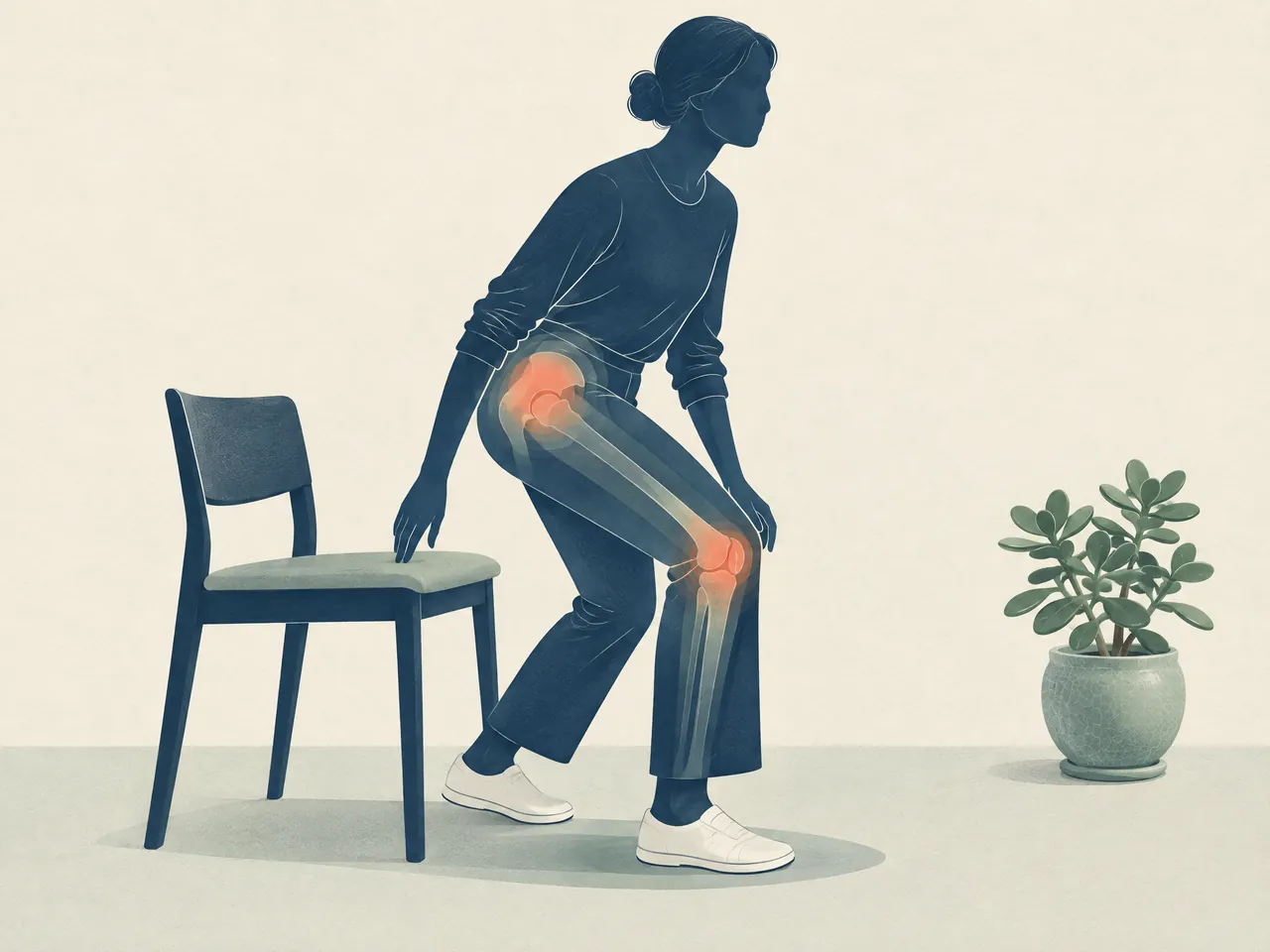
Hip pain home treatment and hip pain treatment at home with a towel barrier and time limit
Prepare the application before you sit down. Check that the skin is intact and dry, wrap the pack in a clean towel, and position it gently over the painful area rather than underneath your body weight. A reusable cold pack, wrapped ice, a hot pack or a warm shower are different ways people seek comfort, but none should be so hot or cold that skin sensation is overwhelmed. Alberta Health Services similarly advises using whichever heat or cold option helps most and placing a thin cloth between ice and skin. [3]
Keep the rest of the session simple. Sit or lie in a position that does not pinch the groin or force the leg to turn out. Do not combine the pack with aggressive stretching, massage pressure, or a test of how far you can rotate the hip. When the timer ends, remove the pack and let the skin return to its usual temperature and colour. If you are specifically comparing cold-pack timing with your activity pattern, How long should I use an ice pack for hip pain? explains the same cautious limit in more detail.
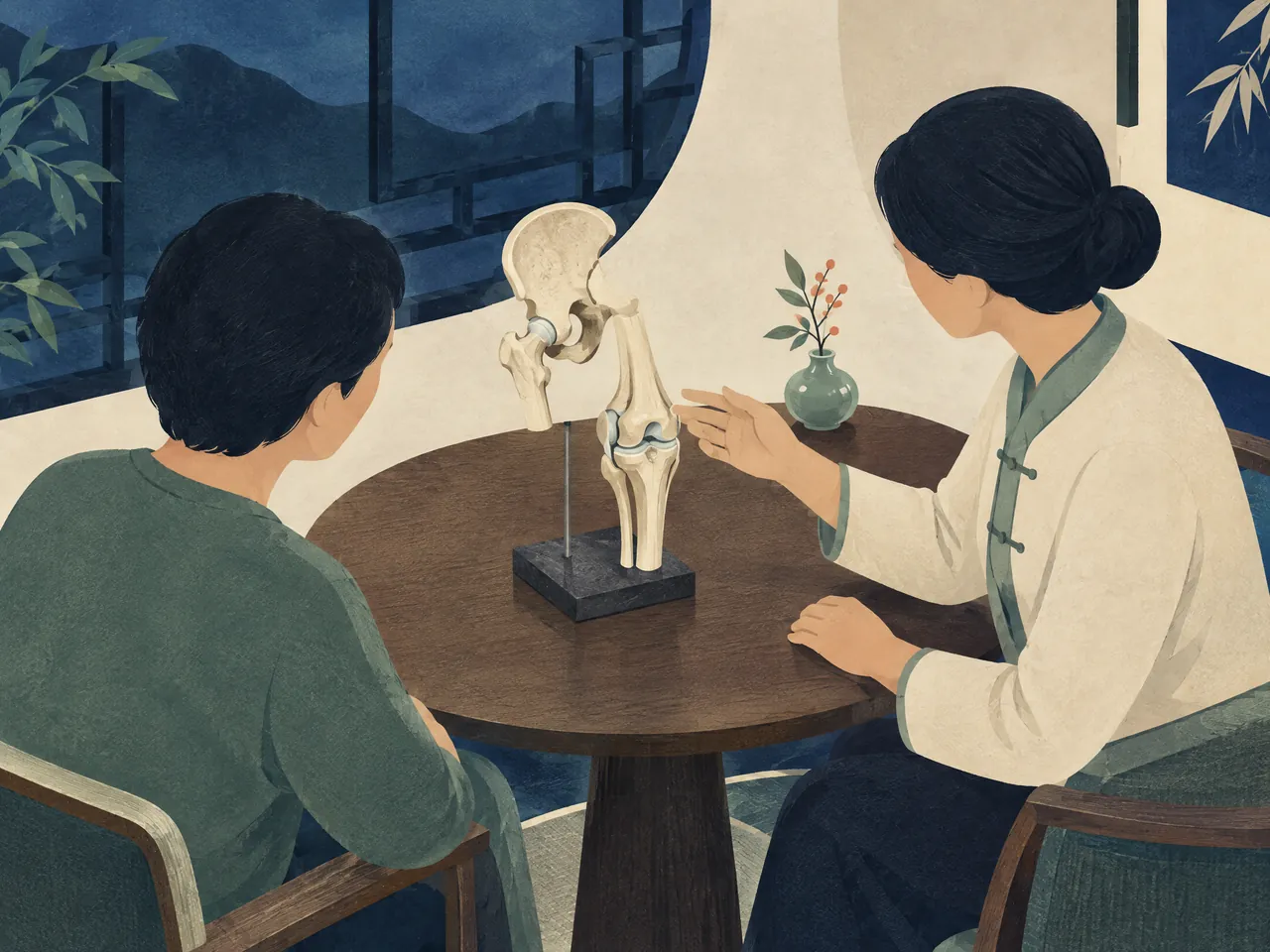
Hip pain home treatment and hip pain treatment at home: skin checks and reasons to stop
Look at and feel the exposed skin before and after the application. Stop using heat or ice if redness increases, the skin changes colour, blistering appears, or the pain becomes worse. Those changes matter even when the original hip discomfort briefly eases. A new rash, open skin, or an irritated area is also a reason not to place a pack there until a healthcare professional has advised you. Do not keep reapplying a pack simply because the first short application did not solve the ache.
Reduced feeling changes the safety calculation. NHS Inform says people with problems in circulation or sensation should not use heat or ice as a treatment for hip pain. [1] If you are unsure whether numbness, altered sensation, vascular problems, diabetes-related nerve changes, or a recent procedure affects you, ask a clinician or pharmacist before trying a pack. This precaution is about avoiding skin injury; it is not a judgement on how severe your hip pain is.
Hip pain home treatment and hip pain treatment at home: monitor symptoms and next steps
A better day after warmth or cold is useful information, but it is not proof that the underlying problem has resolved. Track the hip across normal tasks rather than judging success only while the pack is on. Notice whether standing from a chair, climbing stairs, walking on level ground, turning in bed, and sleeping are easier, unchanged, or harder afterward. This makes hip pain treatment at home more purposeful and gives a clinician a clearer account if you need help.
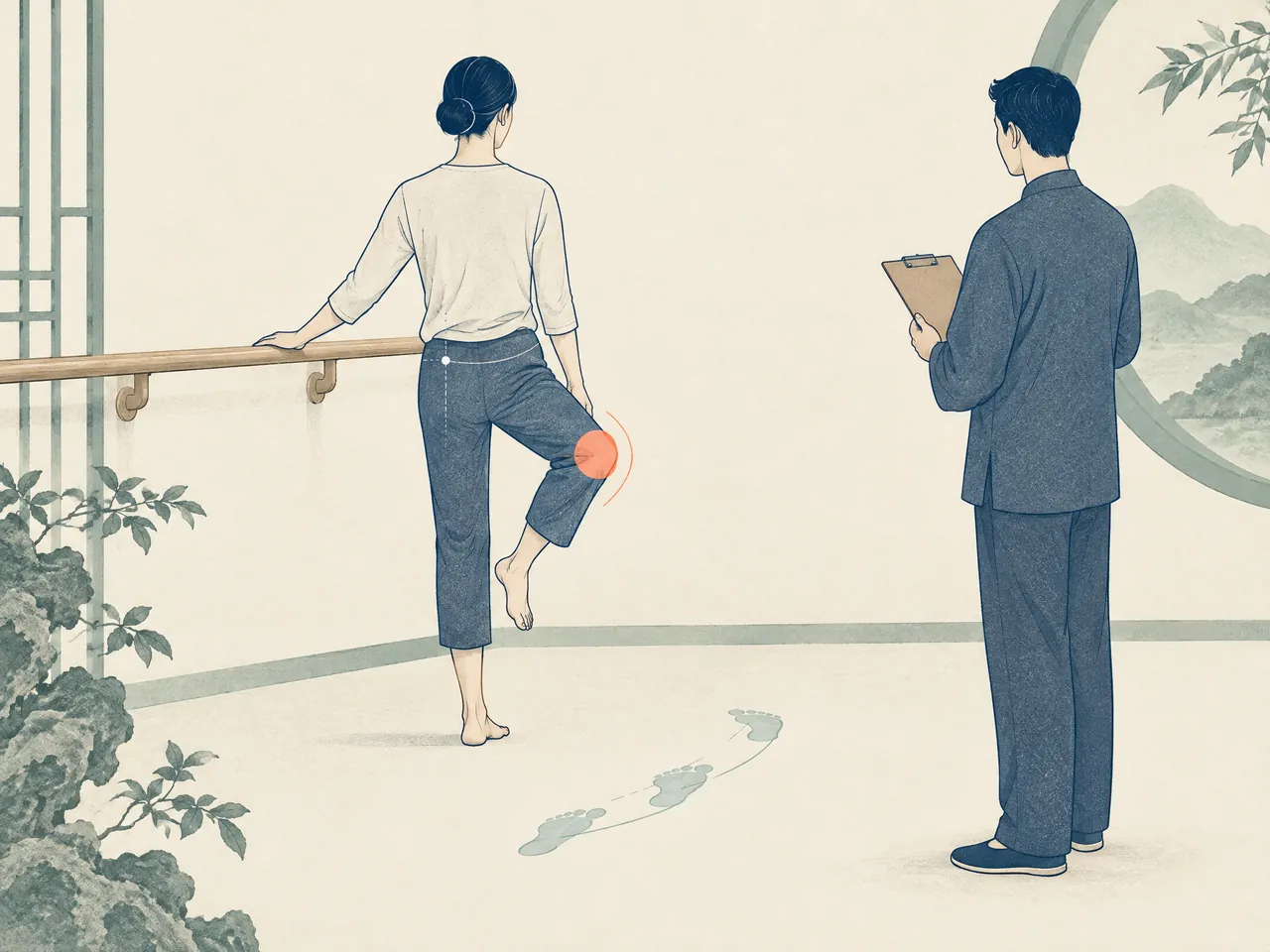
As a practical checkpoint, arrange a routine assessment if hip pain is stopping normal activities, affecting sleep, worsening or recurring, or has not improved after two weeks of home treatment. NHS also identifies persistent morning stiffness lasting more than 30 minutes as a reason to seek non-urgent advice. [2] Do not extend the observation period when urgent symptoms appear: a pack is for temporary comfort, not a substitute for timely evaluation.
Hip pain home treatment and hip pain treatment at home: record walking, pain and skin changes
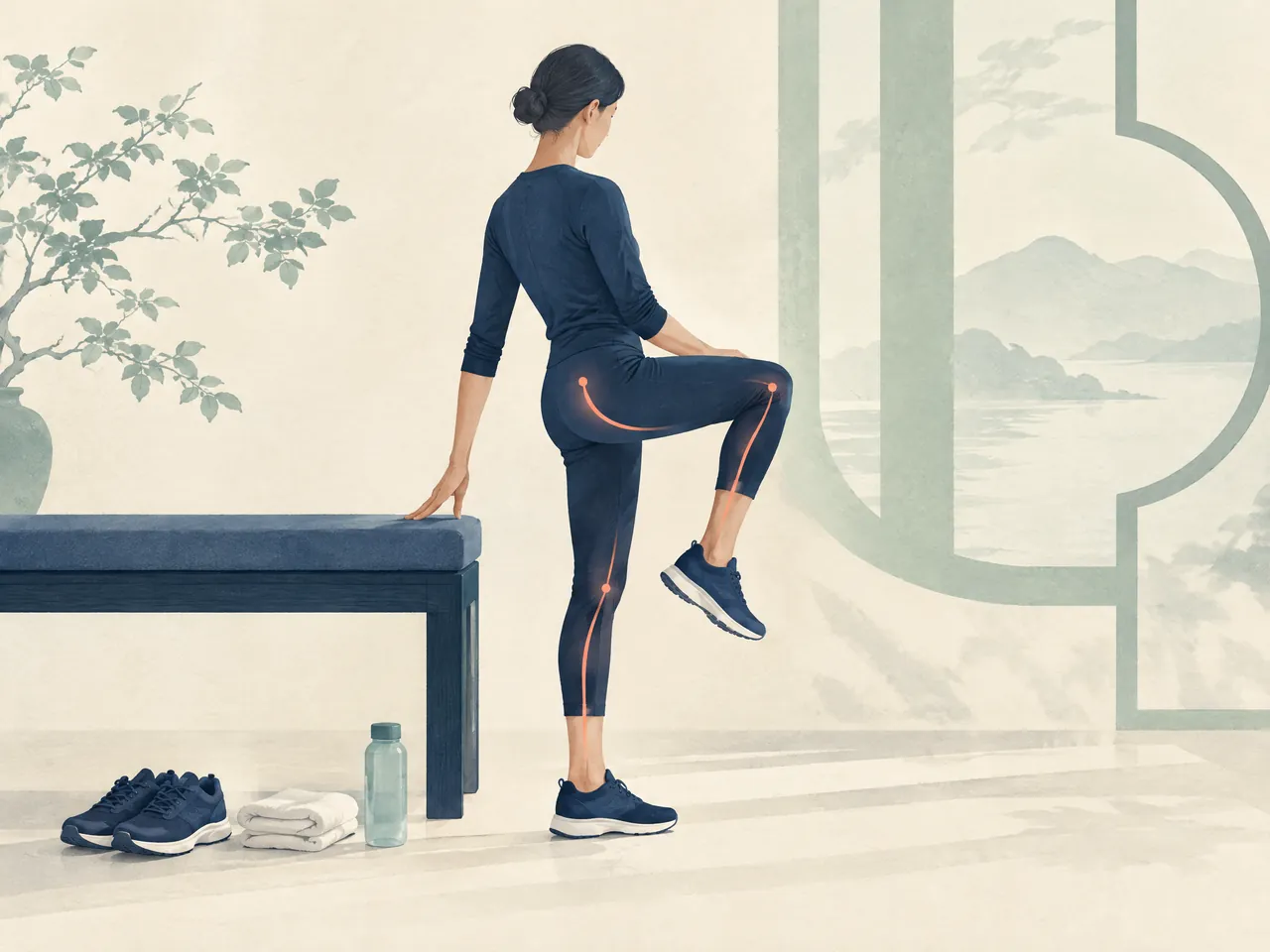
A short note can be more useful than trying to remember a week of ups and downs. Record when the pain started, what happened before it, where it is felt, and whether it is dull, sharp, burning, stiff or mainly movement-related. Add a simple description of walking ability, such as “walked ten minutes on flat ground” or “needed the handrail on stairs.” Note whether pain travels into the groin, buttock, thigh, knee or lower leg, but avoid deciding from that pattern alone what the diagnosis must be.
For each heat or cold trial, write down which you used, whether there was a towel barrier, roughly how long it stayed on, and what happened to the skin and movement afterward. Also record anything that made symptoms worse: a long drive, low chair, lifting, side-lying, sport, or an unexpected twist. This record helps distinguish a brief comfort response from a repeated functional problem. It can be shared with a qualified healthcare professional rather than used to self-diagnose from a checklist.

Hip pain home treatment and hip pain treatment at home: know when to seek professional care
Seek urgent medical care now after a fall or injury with severe pain, if you cannot walk or bear weight, or if numbness or tingling follows the injury. Seek urgent advice for severe pain that begins suddenly without injury, or for a hot swollen hip, skin colour change, fever, or feeling unwell. These combinations can need prompt assessment because home measures cannot determine their cause. The relevant level of service depends on where you are and local emergency arrangements; do not drive yourself if you cannot do so safely.
For pain without those urgent features, a clinician can assess the history, function and examination findings if the pattern is persistent or limiting. If you want to ask TCM Lab about a non-urgent appointment, contact the team by WhatsApp at +852 6940 5663 and describe the symptoms and any urgent signs already excluded. Appointments may be discussed at the Kwun Tong Chinese medicine clinic or Chinese medicine clinic Prince Edward. A clinic enquiry should never delay emergency assessment for the warning signs above.
Care and health guide
Pain-care information
This directory brings together services, reading, and visit information related to pain care, to help you prepare questions for a consultation.
When pain care affects your day, noting when it occurs, its relation to activity, and what you have already tried can help prepare a consultation; Chinese medicine pain management Hong Kong is a relevant service or reading entry point.
Individual circumstances differ, and acupuncture Hong Kong offers related information to help you understand options and prepare questions.


Your questions, answered
Frequently asked questions
Is heat or ice better for hip pain?
Neither is automatically better. If there are no urgent warning signs, choose the one that feels most comfortable. Cold may be preferred after activity when soreness or swelling is present, while gentle warmth may feel better for stiffness or muscular tightness. The response does not tell you the cause of the pain.
Can I put an ice pack or hot pack directly on my hip?
No. Keep a towel or other cloth barrier between the pack and your skin. Use it for no more than 20 minutes and leave a few hours before another heat or cold treatment. Remove it earlier if it feels unpleasant.
Why should I avoid heat or ice when sensation or circulation is reduced?
When you cannot reliably feel temperature or have circulation concerns, skin injury can be easier to miss. NHS Inform advises against using heat or ice for hip pain in this situation. Ask a healthcare professional for advice tailored to you instead.
When should hip pain be assessed urgently?
Get urgent assessment after a fall or injury with severe pain, if you cannot walk or put weight on the leg, or if numbness or tingling follows injury. Sudden severe pain without injury, or a hot swollen or discoloured hip with fever or feeling unwell, also needs prompt medical attention.
Sources and further information
- [1] NHS Inform — Hip problems
Referenced for: Supports heat-or-ice choice by comfort, a towel barrier, a maximum 20-minute application, spacing treatments by a few hours, skin-stop signs, reduced sensation/circulation precautions, gentle movement, and escalation when symptoms worsen or do not improve.
- [2] NHS — Hip pain in adults
Referenced for: Supports the range of possible causes, ice-pack self-care wording, routine review thresholds, and urgent warning signs including severe post-injury pain, inability to walk or bear weight, altered sensation after injury, and hot swollen hip with systemic symptoms.
- [3] Alberta Health Services — Hip Arthritis: Care Instructions
Referenced for: Supports consumer wording for heat or cold packs, selecting the option that helps most, and using a thin cloth between ice and skin.