
TCM Lab · Health reading
Muscle Strain Treatment, Pulled Muscle Treatment and Muscle Strain Rehabilitation: A Practical Guide
Published Updated
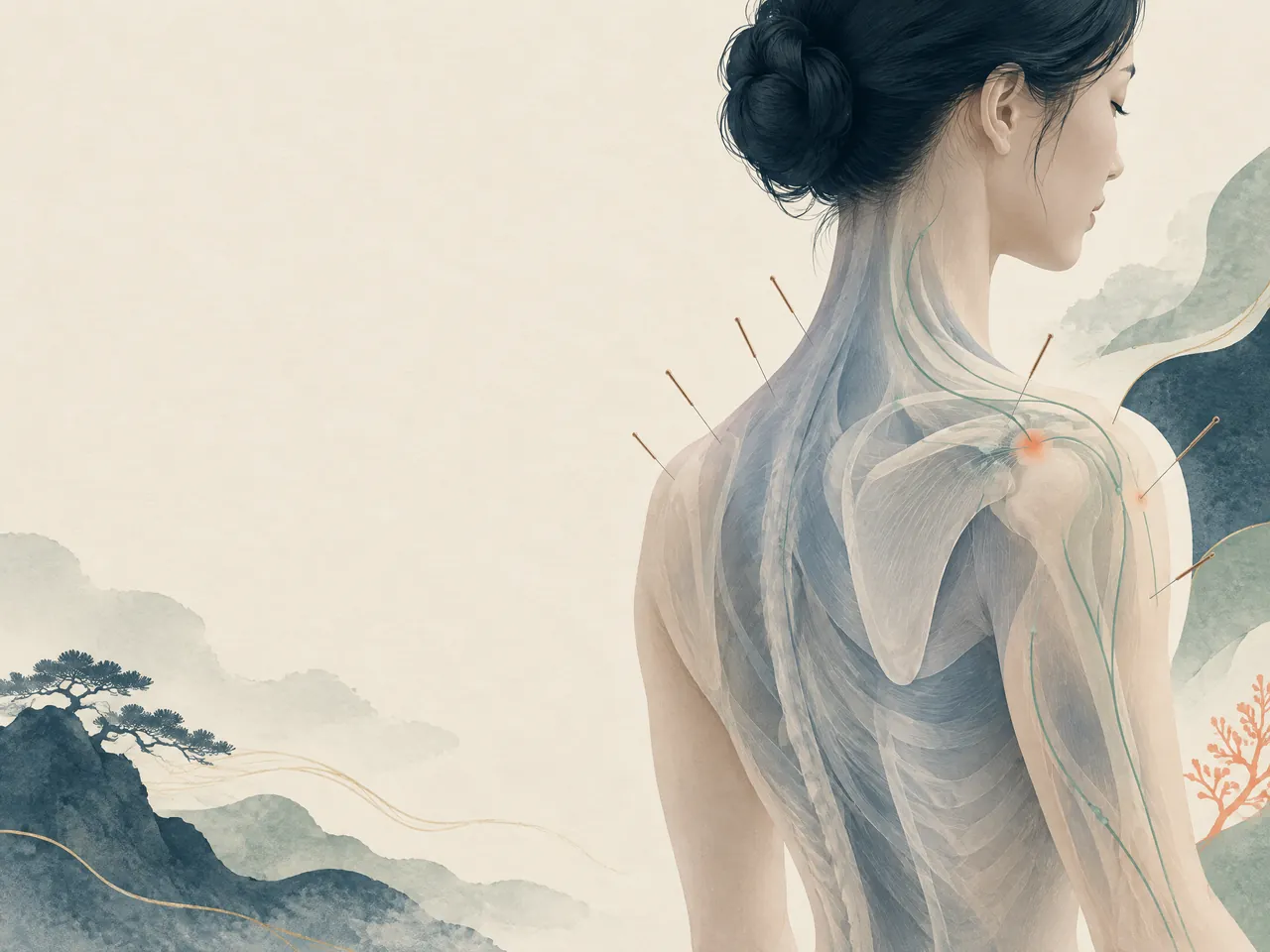
A pulled muscle is frustrating because a small movement can make an ordinary day feel uncertain. Effective muscle strain treatment starts by working out whether this is likely to be a mild overload or a more substantial injury, then protecting the area and rebuilding use in stages. Pulled muscle treatment is not a race to stretch, train or return to a long shift. Early swelling, pain and loss of control matter, and so does the way the muscle performs once it feels less sore. Acupuncture may be a supportive topic after appropriate assessment, but it does not replace evaluation of a possible tear or the gradual loading central to muscle strain rehabilitation. This guide helps you decide what to do now, what not to overlook, and when to seek medical care rather than self-manage.
Appointments are confirmed through WhatsApp. If you have language requirements, please mention them in your enquiry.
The short answer
Muscle strain treatment usually begins with stopping the provoking activity, protecting the area and judging severity. A wrapped cold pack, suitable compression, elevation and relative rest can be useful early measures for a new injury. Muscle strain rehabilitation then progresses from comfortable movement to strength and task-specific loading. Acupuncture may be discussed as supportive care after assessment, but it cannot be promised to repair torn fibres, remove swelling or shorten a fixed recovery period.
Transparent pricing
See the fees.
Choose your care.
Explore our complete official price list, including first-trial prices, regular prices, packages and branch-specific options.
Opening WhatsApp prepares an enquiry; it does not send a message, take payment or confirm an appointment. Suitability and individual arrangements are confirmed during consultation.
Pain care
All prices in HKDExtracorporeal shockwave treatment
Shockwave treatment for deep-tissue and fascial care. The Kwun Tong clinic offers the multi-area options shown below.
Priced by branch
Branch-specific pricing
Prince Edward: HK$250 per area
Kwun Tong: HK$250 for 1 area / HK$450 for 2 areas / HK$600 for 3 areas
Pain care (manual therapy)
Includes Chinese medicine musculoskeletal assessment, manual joint techniques and tui na.
HK$580 (single session)
Chinese medicine musculoskeletal assessment
Pain care (acupuncture and manual therapy)
Combines acupuncture and manual therapy.
HK$680 (single session)
Combined care
Hair and scalp
All prices in HKDScalp health and hair-loss management
Includes AI scalp analysis, deep scalp and follicle cleansing, and scalp oil-control care.
HK$380 (first trial)
Regular price: HK$680
- 6 sessions: HK$3,480 (HK$580 per session)
- 12 sessions: HK$5,760 (HK$480 per session)
- 20 sessions: HK$8,600 (HK$430 per session)
- 30 sessions: HK$11,400 (HK$380 per session)
Hair acupuncture and Chinese herbal medicine package
Includes scalp acupuncture and 3 days of Chinese herbal medicine that does not require decoction.
HK$580 (single session)
Registered Chinese Medicine Practitioner consultation
- 6 sessions: HK$3,180 (HK$530 per session)
- 12 sessions: HK$5,760 (HK$480 per session)
- 20 sessions: HK$8,600 (HK$430 per session)
- 30 sessions: HK$11,400 (HK$380 per session)
Combined hair and scalp treatment
Combines acupuncture and Chinese herbal medicine with salon-level scalp and follicle care. Packages include complimentary hair-care shampoo and serum.
HK$1,260 (single session)
Combined treatment
- 8 sessions: HK$8,640 (HK$1,080 per session)
- 16 sessions: HK$15,680 (HK$980 per session)
- 20 sessions: HK$18,600 (HK$930 per session)
- 30 sessions: HK$26,400 (HK$880 per session)
Weight management
All prices in HKDFull-body acupoint embedding for weight management
Includes full-body acupoint embedding. Packages include complimentary Chinese herbal medicine for weight management, with the number of included days scaled to the package. Embedding material and the individual treatment arrangement are confirmed during consultation; this is not a cosmetic thread lift.
HK$980 (single session)
No trial session
- 10 sessions: HK$7,800 (HK$780 per session)
- 20 sessions: HK$14,600 (HK$730 per session)
- 30 sessions: HK$20,400 (HK$680 per session)
Facial acupuncture
All prices in HKDFacial acupuncture (basic)
Includes facial acupuncture and meridian-based facial care, including care for facial puffiness.
HK$480 (first trial)
Regular price: HK$680
- 10 sessions: HK$5,200 (HK$520 per session)
- 20 sessions: HK$9,600 (HK$480 per session)
- 30 sessions: HK$13,500 (HK$450 per session)
Facial acupuncture (advanced)
Includes enhanced facial acupuncture with a specially formulated moisturising mask and serum.
HK$780 (first trial)
Regular price: HK$1,180
- 10 sessions: HK$9,000 (HK$900 per session)
- 20 sessions: HK$16,600 (HK$830 per session)
- 30 sessions: HK$23,400 (HK$780 per session)
Chinese medicine
All prices in HKDAcupuncture and Chinese herbal medicine package
Includes a Chinese medicine consultation with pulse assessment, body acupuncture and 3 days of Chinese herbal granules that do not require decoction.
HK$580 (single session)
Chinese medicine consultation with pulse assessment
Muscle Strain Treatment, Pulled Muscle Treatment and Muscle Strain Rehabilitation: Start with the Injury
A strain, often called a pulled muscle, involves muscle fibres that have been stretched beyond their tolerance and damaged. It can happen in a sudden sprint, an awkward lift, a slip, or after repeating a demanding task without enough recovery. The same label is sometimes used for soreness after an unfamiliar workout, so it is useful to describe the exact moment symptoms began, the body part involved and what you can no longer do comfortably. This gives pulled muscle treatment a safer starting point than guessing from pain alone.
The immediate aim is not to prove toughness by testing the injury again. Stop the movement that brought on the pain, protect the area from a second strain and note changes over the next hours. A severe injury can resemble a less serious strain at first, while a tendon injury, fracture or nerve problem may need a different response. If you are considering acupuncture for muscle strain, first make sure that a concerning injury is not being diverted away from appropriate medical assessment.
Muscle Strain Treatment, Pulled Muscle Treatment and Muscle Strain Rehabilitation: Recognising Symptoms and Severity
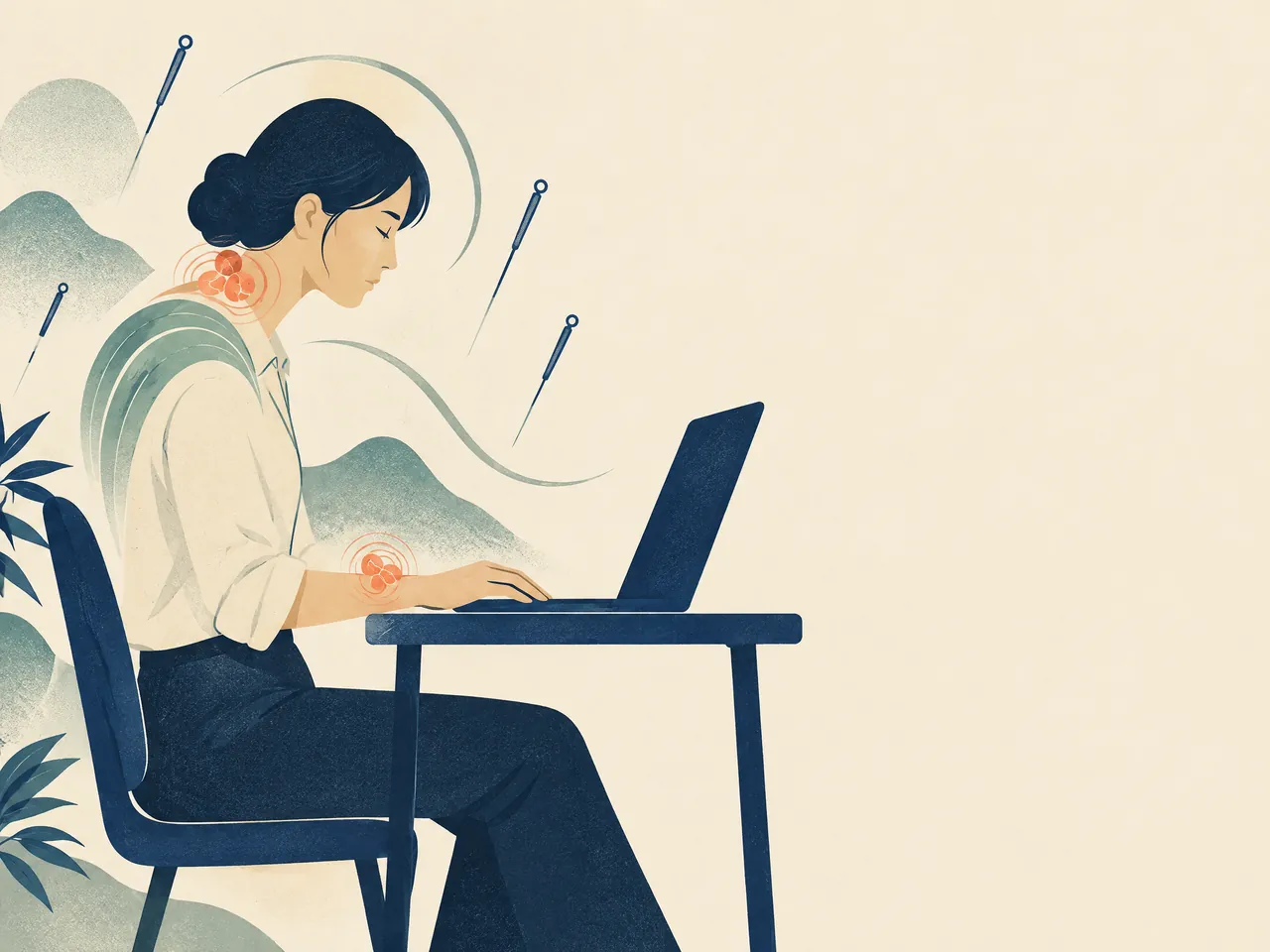
A mild strain may feel localised and sore when the muscle is used, with only a small loss of confidence or range. A more substantial injury can bring sharper pain, bruising, swelling, spasm, weakness or reduced movement. Feeling or hearing a pop at the time, seeing a gap or dent, or being unable to use the muscle are more concerning features. Cleveland Clinic describes muscle strains as ranging from limited fibre damage to a complete tear, with strength and range of motion often more affected as severity rises [1].
Do not treat a grade label as a home diagnosis or a timetable. A hamstring that hurts only at its end range, a calf that makes walking difficult and a shoulder that will not lift have different practical demands even when each is called a strain. Record whether discomfort is easing, stable or escalating; whether swelling or bruising is spreading; and whether you can control the limb. That short record is useful if you later see a doctor or physiotherapist, and it stops an apparently minor incident being judged only by how it feels while resting.
Muscle Strain Treatment, Pulled Muscle Treatment and Muscle Strain Rehabilitation: When Assessment Comes First
Arrange prompt medical assessment rather than continuing self-care if there is a visible deformity or dent, a pop with major loss of function, rapidly developing bruising or swelling, an inability to bear weight or use the muscle, or new numbness, tingling, colour change or unusual coldness below the injury. These signs do not diagnose the cause by themselves, but they can accompany a significant tear or another injury that should not be managed as routine soreness. Seek assessment too if symptoms persist, worsen after a few days, or new weakness appears [1].
Assessment is also sensible when the story does not fit a simple overuse problem: pain after a high-force impact, pain near a joint with instability, repeated strains in the same place, or pain that prevents normal work or sleep. A clinician may use the history and examination to assess strength, tenderness and movement, and decide whether imaging or referral is relevant. Bring a list of medicines, previous injuries and treatments already tried. This is particularly important before any hands-on or needling approach, and before choosing between exercise-based rehabilitation and a discussion of dry needling for muscle strain.
Compare your options
| What you notice | Priority now | Why that choice matters |
|---|---|---|
| Local soreness with mild limitation after a clear activity | Stop the provoking movement; protect the area and use relative rest | This allows symptoms to settle while you monitor ordinary movement and function. |
| New swelling or bruising after a fresh strain | Use a wrapped cold pack, suitable compression and elevation if appropriate | Early measures can be used alongside observation; avoid testing the injury repeatedly. |
| Pop, deformity, major weakness, inability to bear weight, numbness or colour change | Seek prompt medical assessment | A significant tear, fracture or nerve or circulation problem needs evaluation before supportive care. |
| Symptoms improving but work or sport still feels difficult | Build movement, strength and task-specific loading gradually | A pain score alone does not show that the muscle is ready for the required demand. |
| Considering acupuncture after the acute phase | Discuss the injury history, medicines and rehabilitation plan first | It may be a supportive option, but it does not establish diagnosis or replace rehabilitation. |
On smaller screens, scroll the table sideways to compare all columns.
Muscle Strain Treatment, Pulled Muscle Treatment and Muscle Strain Rehabilitation: Where Acupuncture Fits
People often seek another option when a muscle remains painful, tight or difficult to use. That question is reasonable, but it helps to separate symptom support from a claim of tissue repair. Muscle strain rehabilitation still needs a plan for progressively restoring motion, strength, tolerance to load and the exact activity that matters to you. Needles cannot tell whether a tear is complete, whether a tendon is involved, or whether it is safe to run, lift or return to a physical job. Those are assessment and function questions.
An individual discussion may include where pain is felt, the injury timeline, sleep disruption, work demands, current exercises and relevant medical history. It should also address whether acupuncture is appropriate at that point or whether medical or physiotherapy input should lead. For a broader overview of the question, see does acupuncture help a muscle strain. The useful outcome is a proportionate plan, not an assurance that one treatment will make every strain settle on schedule.

Muscle Strain Treatment, Pulled Muscle Treatment and Muscle Strain Rehabilitation: Evidence and Reasonable Expectations
The evidence base needs careful wording. The U.S. National Center for Complementary and Integrative Health reports that acupuncture may be helpful for several pain conditions, including back or neck pain and knee osteoarthritis, and also notes that study comparisons with no treatment and with sham procedures can give different-sized effects [2]. That information may support a conversation about pain management, but it is not proof that acupuncture closes a muscle tear, prevents reinjury or shortens recovery from an acute strain.
Reasonable goals are more useful than sweeping promises. After the seriousness of the injury has been considered, someone may ask whether acupuncture could be used alongside their rehabilitation for symptom relief or comfort. The answer depends on the person and the clinical context. It should never be expressed as a guaranteed reduction in swelling, a substitute for strengthening, or a fixed return-to-sport deadline. Learn about the procedure and discussion points through Chinese medicine acupuncture, then ask how any proposed supportive care fits the current rehabilitation plan.
Muscle Strain Treatment, Pulled Muscle Treatment and Muscle Strain Rehabilitation: Safety Before Supportive Care
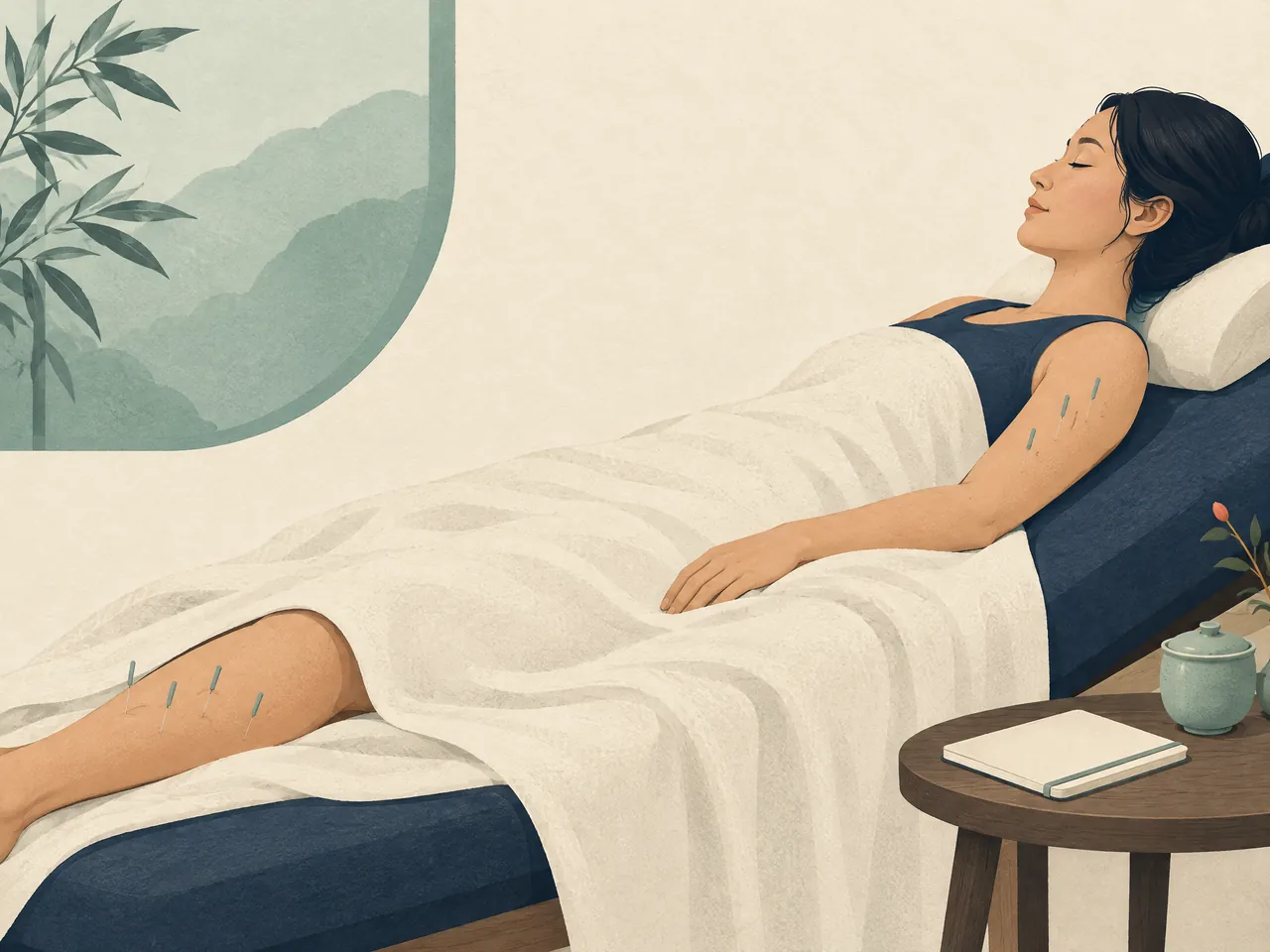
A practitioner needs enough information to consider safety, not merely the painful spot. Say if you take medicines that affect bleeding, have a bleeding condition, are pregnant, have a skin infection or open wound near a possible treatment area, tend to faint with needles, or have had an unusual reaction to needling. NCCIH notes that acupuncture involves fine needles inserted into the skin and that incorrect delivery can cause serious adverse effects; sterile, single-use needles are an essential safety expectation [2].
Do not use a supportive-care appointment to postpone urgent assessment after trauma or when red flags are present. If the situation is non-urgent, ask what will be done, what sensations to report, and what activity changes are expected afterwards. You can make an acupuncture Hong Kong enquiry with a concise injury history, but an enquiry does not establish that acupuncture is suitable. It is safer to mention the injury mechanism, current function and all relevant health information before a plan is considered.
Muscle Strain Treatment, Pulled Muscle Treatment and Muscle Strain Rehabilitation: Recovery Priorities
Recovery is easier to judge by what the muscle can do than by the calendar alone. In the early stage, protect it from the movement or load that triggered pain while maintaining only activity that does not clearly aggravate it. As symptoms settle, muscle strain rehabilitation usually shifts toward comfortable movement, then controlled strength, balance or endurance, and finally the demands of the person’s job, commute, training or sport. A return is more convincing when the muscle tolerates these steps without a meaningful flare afterwards.
The detail matters. A delivery worker may need stairs and carrying tolerance; a runner may need acceleration and deceleration; an office worker may need an arm or neck position that can be sustained through the day. Rather than repeating a test that causes a sharp pain, use the functional goal to guide questions for the health professional leading your care. The Victorian Government’s Better Health Channel advises a gradual introduction of activity back toward normal levels and supervision of return to work or sport through a physiotherapist [3].
Muscle Strain Treatment, Pulled Muscle Treatment and Muscle Strain Rehabilitation: Cold, Heat and Early Activity
For a fresh strain, early care is commonly about protection, relative rest, ice or cold applied with a barrier, compression where suitable and elevation. The Better Health Channel advises stopping the activity and avoiding heat, alcohol, running and firm direct massage during the first 72 hours because they may increase swelling [3]. Do not apply a cold pack directly to bare skin, and stop if the skin becomes blotchy, painful, excessively numb or blue.
Cold and heat are tools, not a test of whether an injury is healing. An NHS Trust advises cold treatment every two hours while awake during the first 24 to 48 hours, with a cloth barrier; for a large muscular area it advises up to 20 minutes, while smaller bony areas need less time [4]. The same guidance says not to use heat on a new injury. Later, gentle warmth may be considered for stiffness, but it should not be hot and it should not override a worsening pattern.
Muscle Strain Treatment, Pulled Muscle Treatment and Muscle Strain Rehabilitation: Returning to Work or Sport
A sensible return is staged. First regain ordinary movement and use without a sharp increase in symptoms. Then rebuild the strength and control needed for the task: for example, walking comfortably before hill walking, controlled lifting before a full manual shift, or slower drills before sprinting. Progress one relevant demand at a time so that a flare is easier to interpret. If pain, swelling, weakness or altered movement returns, reduce the provoking load and seek advice rather than pushing through it to meet an assumed date.
Before returning fully, ask whether you can perform the movements, speed, volume and recovery your role actually requires. A person who can jog in a straight line may not yet be ready for cutting, kicking or a long match; someone who can lift a light box may not be ready for repetitive overhead work. Previous strains can recur, so warm-up, appropriate conditioning and gradual increases matter. If you want to discuss supportive care while following a rehabilitation plan, TCM Lab has a Kwun Tong Chinese medicine clinic and a Chinese medicine clinic Prince Edward for enquiries; confirm the appropriate next step rather than treating a booking as clearance to resume activity.
Care and health guide
Health service information
This directory brings together services, reading, and visit information related to health services, to help you prepare questions for a consultation.
If you are organising health questions, acupuncture Hong Kong is a starting point for learning about related services and preparing for a consultation.
People have different needs; Chinese medicine pain management Hong Kong provides further reading to help you understand options in your own context.


Your questions, answered
Frequently asked questions
What is the best immediate pulled muscle treatment?
Stop the activity that caused the symptoms, protect the area and use relative rest. For a new injury, a cloth-wrapped cold pack, suitable compression and elevation may be considered. Seek prompt medical assessment instead of self-care if there is a pop, deformity, severe swelling, inability to use the limb, numbness, colour change or worsening symptoms.
Can acupuncture repair a muscle strain?
Acupuncture should not be described as proven to repair torn muscle fibres or to deliver a fixed faster recovery. Research may support discussion of acupuncture for some pain conditions, but evidence from those conditions does not establish tissue repair for an acute strain. If appropriate after assessment, it may be considered as supportive care alongside rehabilitation.
When can I use heat on a pulled muscle?
Do not use heat on a new injury. In the initial period, cold is commonly used with a cloth barrier and skin checks. Once the injury is no longer new, gentle warmth may sometimes be used for stiffness, but it should not be hot and should be stopped if symptoms worsen. Ask a clinician when unsure.
When can I return to exercise or a physical job after a strain?
Return should be based on function rather than a fixed number of days. Start with comfortable daily movement, then progress strength and the specific movements, speed and load your work or sport needs. A flare of pain, swelling, weakness or altered movement means the demand may be ahead of current capacity and should be reviewed.
Sources and further information
- [1] Cleveland Clinic — Muscle Strain
Referenced for: Academic medical-centre information on muscle-strain symptoms, severity, assessment and warning signs.
- [2] NCCIH — Acupuncture: Effectiveness and Safety
Referenced for: U.S. government information on acupuncture, evidence for selected pain conditions and safety considerations.
- [3] Better Health Channel, Victoria State Government — Sprains and strains
Referenced for: State-government guidance on early management, gradual activity and return to work or sport for strains.
- [4] Gloucestershire Hospitals NHS Foundation Trust — Ice and heat treatment
Referenced for: NHS Trust guidance on cold-pack barriers, timing, skin checks and heat precautions for soft-tissue injuries.