
TCM Lab · Health reading
meniscus tear symptoms — Can acupuncture help a meniscus tear? Can acupuncture heal a torn meniscus?
Published Updated
A painful knee after turning quickly, getting up from a low seat, or playing sport can make people wonder whether the meniscus has torn. Meniscus tear symptoms often include pain at the joint line, swelling, stiffness, clicking or catching, and trouble fully bending or straightening the knee. Acupuncture may be considered after an appropriate assessment as supportive care for pain or restricted movement, but it cannot stitch, regrow, or restore torn meniscus tissue. The priority is to understand how the injury happened, how the knee functions now, and whether prompt medical or orthopaedic assessment is needed.
Appointments are confirmed through WhatsApp. If you have language requirements, please mention them in your enquiry.
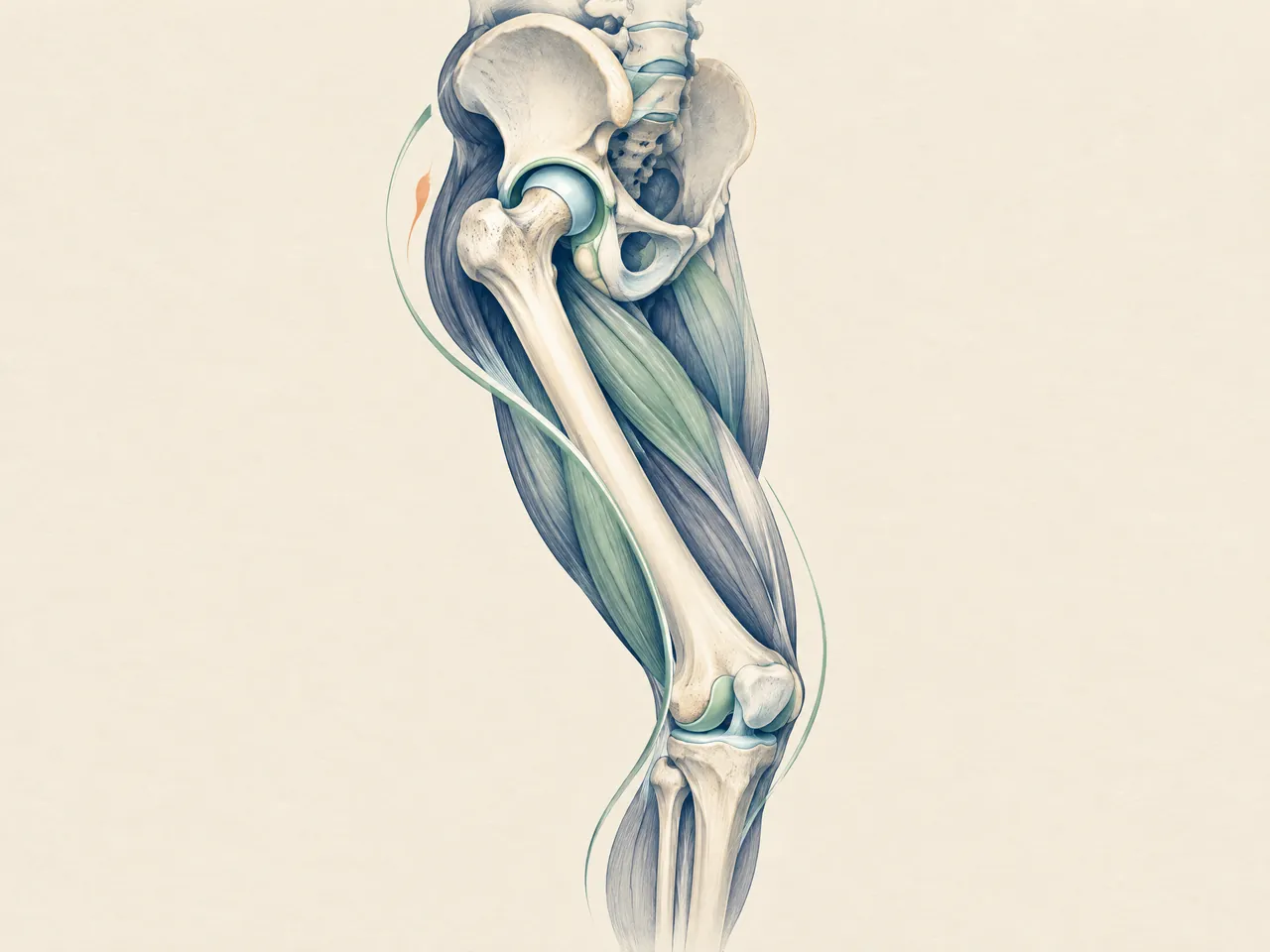
The short answer
Acupuncture may be discussed as conservative support for pain or limited movement associated with a meniscus injury, after the knee has been assessed. It cannot heal or repair a torn meniscus. A knee that locks, cannot fully bend or straighten, cannot take weight, becomes rapidly swollen or hot, or is severely painful after an injury needs prompt medical assessment. Management may also involve activity modification, rehabilitation, imaging, or orthopaedic care depending on the findings.
Transparent pricing
See the fees.
Choose your care.
Explore our complete official price list, including first-trial prices, regular prices, packages and branch-specific options.
Opening WhatsApp prepares an enquiry; it does not send a message, take payment or confirm an appointment. Suitability and individual arrangements are confirmed during consultation.
Pain care
All prices in HKDExtracorporeal shockwave treatment
Shockwave treatment for deep-tissue and fascial care. The Kwun Tong clinic offers the multi-area options shown below.
Priced by branch
Branch-specific pricing
Prince Edward: HK$250 per area
Kwun Tong: HK$250 for 1 area / HK$450 for 2 areas / HK$600 for 3 areas
Pain care (manual therapy)
Includes Chinese medicine musculoskeletal assessment, manual joint techniques and tui na.
HK$580 (single session)
Chinese medicine musculoskeletal assessment
Pain care (acupuncture and manual therapy)
Combines acupuncture and manual therapy.
HK$680 (single session)
Combined care
Hair and scalp
All prices in HKDScalp health and hair-loss management
Includes AI scalp analysis, deep scalp and follicle cleansing, and scalp oil-control care.
HK$380 (first trial)
Regular price: HK$680
- 6 sessions: HK$3,480 (HK$580 per session)
- 12 sessions: HK$5,760 (HK$480 per session)
- 20 sessions: HK$8,600 (HK$430 per session)
- 30 sessions: HK$11,400 (HK$380 per session)
Hair acupuncture and Chinese herbal medicine package
Includes scalp acupuncture and 3 days of Chinese herbal medicine that does not require decoction.
HK$580 (single session)
Registered Chinese Medicine Practitioner consultation
- 6 sessions: HK$3,180 (HK$530 per session)
- 12 sessions: HK$5,760 (HK$480 per session)
- 20 sessions: HK$8,600 (HK$430 per session)
- 30 sessions: HK$11,400 (HK$380 per session)
Combined hair and scalp treatment
Combines acupuncture and Chinese herbal medicine with salon-level scalp and follicle care. Packages include complimentary hair-care shampoo and serum.
HK$1,260 (single session)
Combined treatment
- 8 sessions: HK$8,640 (HK$1,080 per session)
- 16 sessions: HK$15,680 (HK$980 per session)
- 20 sessions: HK$18,600 (HK$930 per session)
- 30 sessions: HK$26,400 (HK$880 per session)
Weight management
All prices in HKDFull-body acupoint embedding for weight management
Includes full-body acupoint embedding. Packages include complimentary Chinese herbal medicine for weight management, with the number of included days scaled to the package. Embedding material and the individual treatment arrangement are confirmed during consultation; this is not a cosmetic thread lift.
HK$980 (single session)
No trial session
- 10 sessions: HK$7,800 (HK$780 per session)
- 20 sessions: HK$14,600 (HK$730 per session)
- 30 sessions: HK$20,400 (HK$680 per session)
Facial acupuncture
All prices in HKDFacial acupuncture (basic)
Includes facial acupuncture and meridian-based facial care, including care for facial puffiness.
HK$480 (first trial)
Regular price: HK$680
- 10 sessions: HK$5,200 (HK$520 per session)
- 20 sessions: HK$9,600 (HK$480 per session)
- 30 sessions: HK$13,500 (HK$450 per session)
Facial acupuncture (advanced)
Includes enhanced facial acupuncture with a specially formulated moisturising mask and serum.
HK$780 (first trial)
Regular price: HK$1,180
- 10 sessions: HK$9,000 (HK$900 per session)
- 20 sessions: HK$16,600 (HK$830 per session)
- 30 sessions: HK$23,400 (HK$780 per session)
Chinese medicine
All prices in HKDAcupuncture and Chinese herbal medicine package
Includes a Chinese medicine consultation with pulse assessment, body acupuncture and 3 days of Chinese herbal granules that do not require decoction.
HK$580 (single session)
Chinese medicine consultation with pulse assessment
Understanding meniscus tear symptoms — Can acupuncture help a meniscus tear? Can acupuncture heal a torn meniscus?
The menisci are two pieces of cartilage that sit between the thighbone and shinbone in each knee. They help distribute load as the joint moves. A tear is not always obvious at the moment it happens: someone may finish a game, commute home, or complete a work shift before swelling and stiffness become more noticeable. The NHS lists pain or tenderness, stiffness or swelling, difficulty moving the knee, giving way, and clicking or crunching among possible symptoms [1]. Those signs can also overlap with sprains and other knee problems, so symptoms alone cannot confirm a tear.
It is useful to separate a symptom from the structure that might be causing it. A click without pain may not carry the same meaning as a newly locked knee after a twist. Likewise, an ache after long stair climbing may call for a different discussion from an abrupt painful pivot with immediate loss of motion. The practical question is not simply whether a person can tolerate discomfort today; it is whether the knee can move, take load, and settle safely while the cause is clarified. For a related everyday concern, see Can you walk with a torn meniscus?

Common signs and daily impact of meniscus tear symptoms — Can acupuncture help a meniscus tear? Can acupuncture heal a torn meniscus?
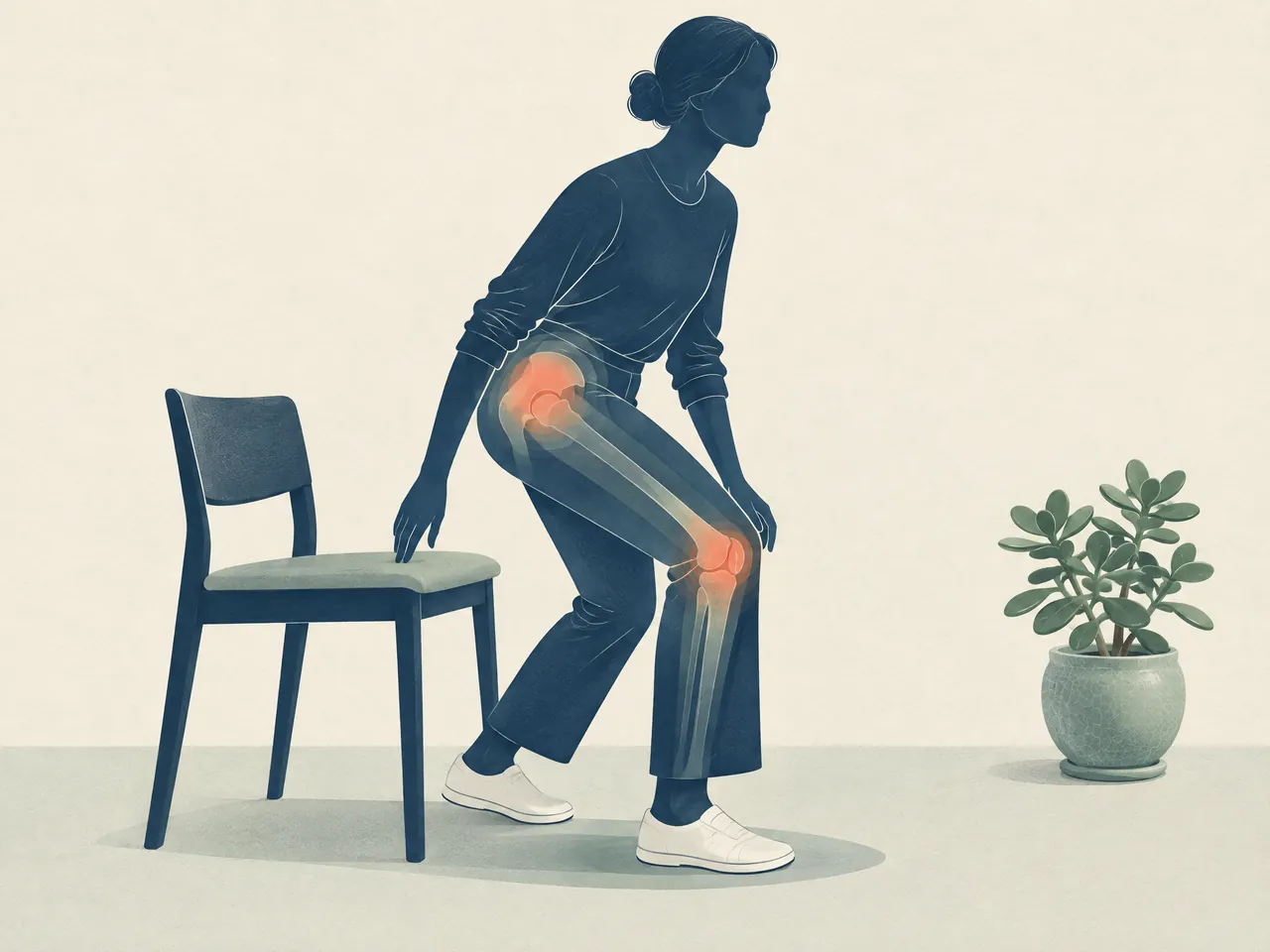
Meniscus tear symptoms are often most apparent during ordinary movements that load and rotate the knee. Turning around in a narrow kitchen, stepping off a bus, squatting to reach a shelf, or changing direction on a court may trigger pain, catching, or uncertainty about the next step. Some people notice tenderness along one side of the joint. Others mainly report stiffness after sitting, swelling that appears later, or a knee that seems unreliable when standing. The ability to walk does not rule out an injury, and the presence of a sound does not by itself establish how serious it is.
Daily impact is a helpful part of the history. Consider whether the knee can reach a comfortable straight position, whether it repeatedly catches in one part of the movement, and whether sleep, stairs, work duties, or normal exercise are affected. Record what changed from usual activity and whether symptoms are improving, stable, or worsening. This information is more useful than trying to self-grade a tear from an online description. Readers focusing on pain as the leading concern can also explore meniscus tear knee pain for a symptom-centred discussion.
Twisting injuries and gradual onset in meniscus tear symptoms — Can acupuncture help a meniscus tear? Can acupuncture heal a torn meniscus?
A sudden twist with the foot planted is a familiar route to an acute meniscal injury. The NHS notes that tears usually occur with knee twisting in sport, but may also follow a smaller twist such as turning while standing up [1]. The American Academy of Orthopaedic Surgeons describes rotation and flexion of the knee or direct impact as common contexts for acute isolated tears [2]. Details such as the direction of the turn, a fall, a collision, a pop, or immediate inability to continue can help a clinician judge the next step.
Not every presentation begins with a clear incident. Wear-related changes and repeated loading can be associated with a more gradual onset of symptoms, particularly when knee discomfort has been building rather than starting on one identifiable day. That distinction matters because age, activity demands, examination findings, and the tear pattern may all influence management. It is best not to assume that a gradual onset is harmless or that every sporting twist requires surgery. An assessment connects the story, physical function, and, when appropriate, further testing rather than relying on one feature alone.
Compare your options
| Situation or goal | Useful focus | Why the distinction matters |
|---|---|---|
| New pain after a twist, but the knee is moving and weight-bearing is possible | Reduce aggravating activity, note the symptom pattern, and arrange assessment if symptoms persist or limit function | Symptoms can resemble other knee injuries; function and change over time help guide review |
| Pain or restricted movement while an assessment or rehabilitation plan is in place | Discuss symptom support, including whether acupuncture is suitable alongside the plan | Acupuncture may be considered for comfort but does not repair torn cartilage |
| Knee catches, locks, or cannot fully bend or straighten | Seek prompt medical or orthopaedic assessment | Restricted range may need timely evaluation for a displaced or other significant injury |
| Severe pain after injury, inability to bear weight, hot swelling, or feverish symptoms | Obtain urgent medical care rather than waiting for a routine treatment appointment | These features can signal a problem that needs prompt clinical assessment |
On smaller screens, scroll the table sideways to compare all columns.
Assessment and conservative options for meniscus tear symptoms — Can acupuncture help a meniscus tear? Can acupuncture heal a torn meniscus?
A careful assessment starts with the circumstances of the problem and the current function of the knee. It may cover the location and behaviour of pain, swelling, range of movement, ability to take weight, catching or locking, previous knee problems, and the activities the person needs to return to. For suspected acute isolated meniscal tears, AAOS states that physical examination can be effective and that MRI is the preferred imaging method when imaging is needed because of its accuracy [2]. These are decisions for the assessing clinician, not a reason to delay care while trying a comfort measure.
Conservative care is not one fixed package. It can mean temporarily reducing movements that provoke pain, using sensible symptom measures, and following an individual rehabilitation plan. NHS guidance advises stopping aggravating activity and resting in the first few days, while avoiding complete immobility after that period; it also notes that physiotherapy may be recommended to improve knee movement and strength [1]. The aim is not to push through a locked or acutely unstable knee. It is to match activity to the stage of assessment and recovery, and to revise the plan if function deteriorates.
What an assessment may include for meniscus tear symptoms — Can acupuncture help a meniscus tear? Can acupuncture heal a torn meniscus?
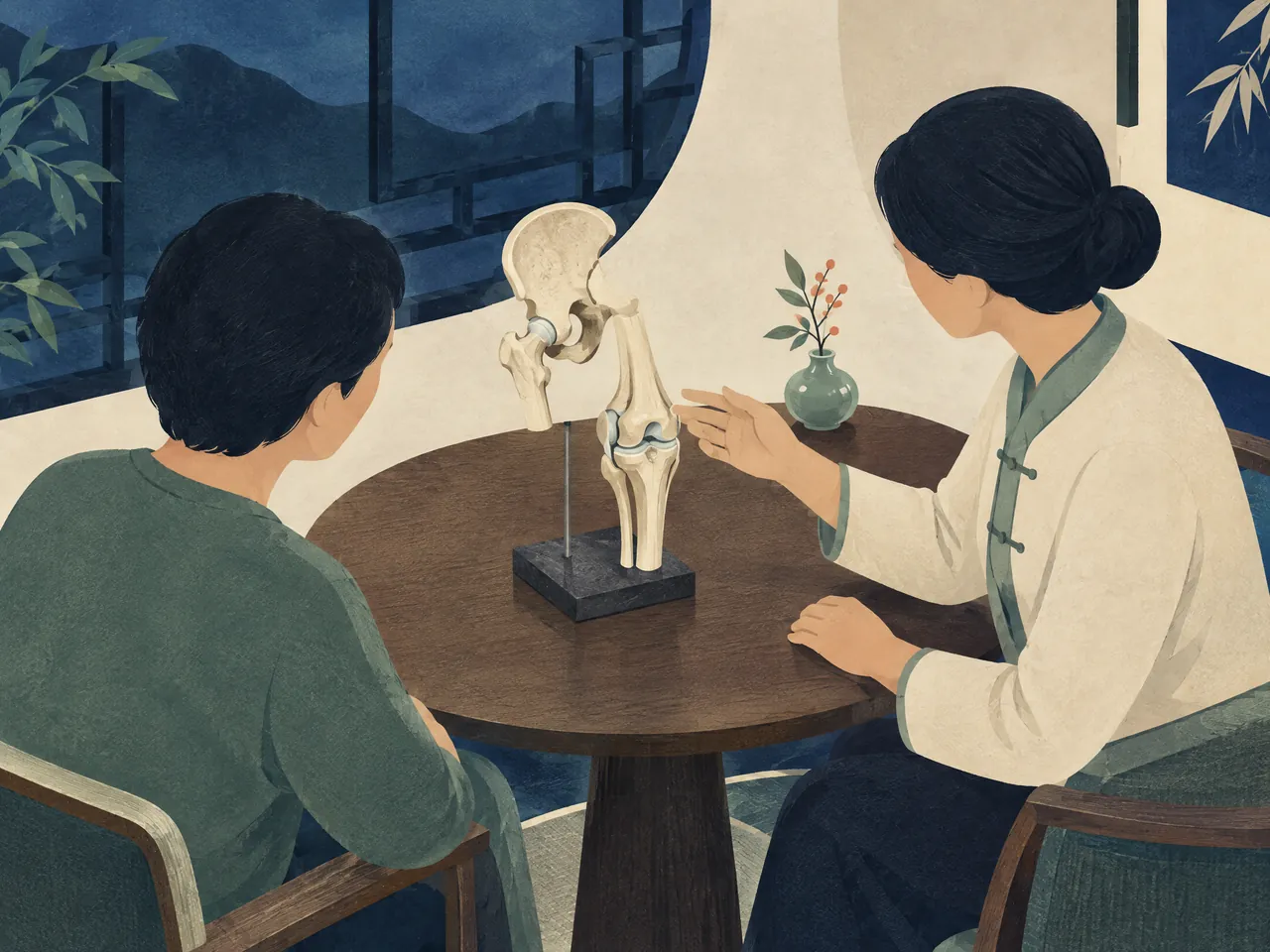
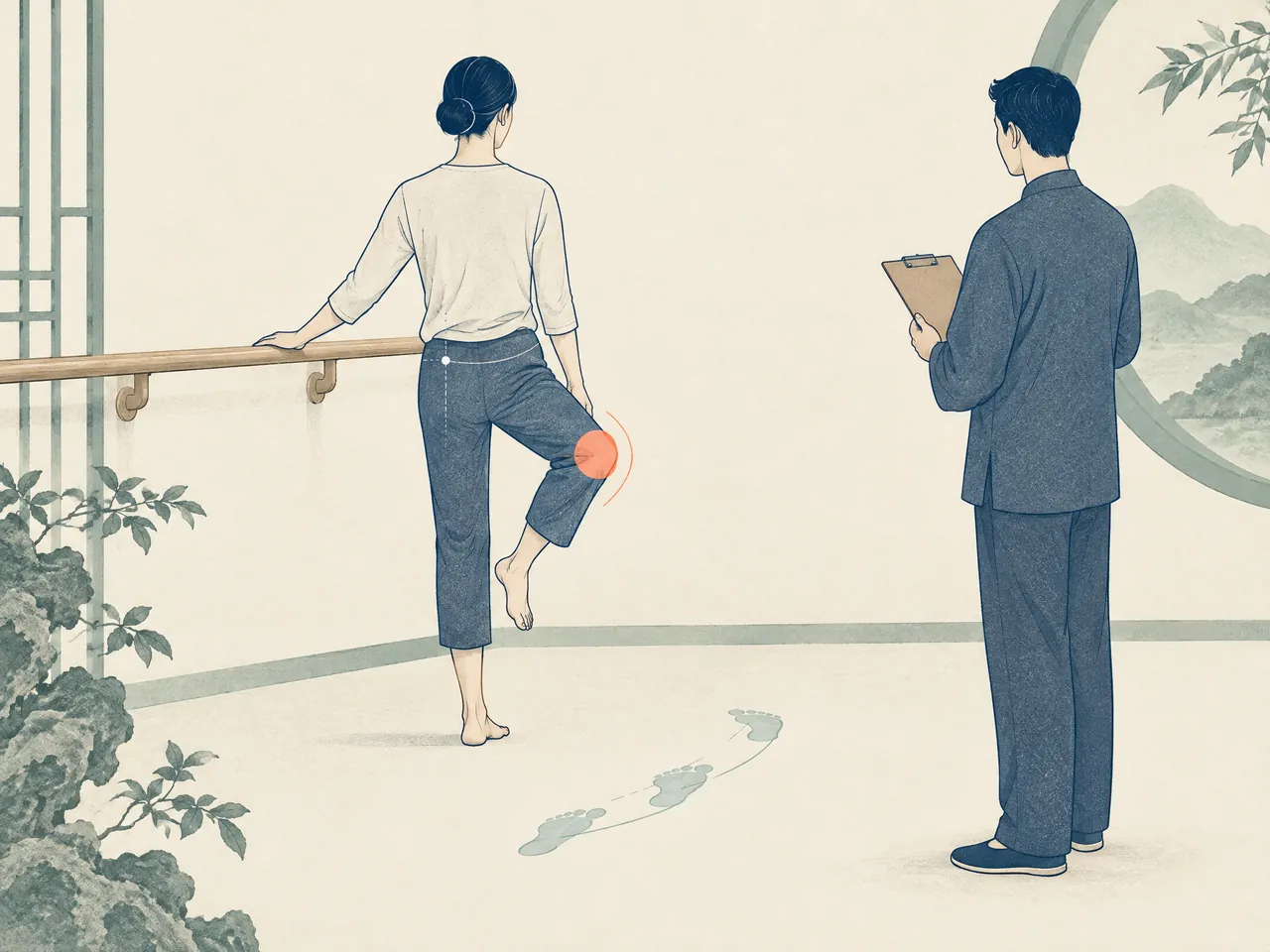
At an appointment, a practitioner may ask for a simple timeline: what you were doing at the onset, whether the knee swelled straight away or later, whether it has locked, and what movements are now difficult. They may observe walking, compare comfortable movement with the other knee, and check for features that need medical referral. Bring any previous scan reports, discharge letters, medicine list, and a note of treatments already tried. These details help avoid repeating the same guesswork and make it easier to coordinate Chinese medicine, physiotherapy, and medical advice where appropriate.
Assessment is also where expectations should be made clear. A person can ask whether the goal is symptom support while waiting for a medical review, help with comfort during a rehabilitation programme, or support alongside post-operative care. The answer should not be framed as a promise that needles can fix cartilage. If a displaced tear is restricting range of motion, AAOS says acute surgical intervention may be beneficial; it also notes a possible rehabilitation role for some non-displaced isolated tears [2]. The individual diagnosis, not a generic label, decides the pathway.
Pain relief and movement support for meniscus tear symptoms — Can acupuncture help a meniscus tear? Can acupuncture heal a torn meniscus?
Can acupuncture help a meniscus tear? It may be discussed as one supportive option when the immediate clinical concern has been addressed and the purpose is relief of pain or help with restricted movement. During a Chinese medicine consultation, the practitioner can take a symptom history and consider whether treatment fits the current plan. Sessions should be based on the person's presentation rather than a standard claim that every tear responds the same way. Learn more about the treatment question at acupuncture for a meniscus tear.
Can acupuncture heal a torn meniscus? No. A needle treatment cannot stitch a torn meniscus or replace assessment of a structural injury. Research described by the U.S. National Center for Complementary and Integrative Health suggests acupuncture may help several pain conditions, but it does not establish that acupuncture repairs a torn meniscus [3]. Keep the distinction practical: symptom relief, if it occurs, does not prove the cartilage has healed. Continuing rehabilitation exercises or attending medical follow-up remains important when these have been advised. For a broader related topic, see acupuncture for meniscus injury.
Safety, red flags, and next steps for meniscus tear symptoms — Can acupuncture help a meniscus tear? Can acupuncture heal a torn meniscus?
The safest next step depends on what the knee is doing now. An injury that is improving and allows comfortable, controlled movement can be discussed differently from one that is worsening, hot, markedly swollen, or mechanically blocked. It is reasonable to ask how a complementary treatment would fit alongside medical advice, not in place of it. NCCIH advises people not to use acupuncture to postpone seeing a health-care provider about a health problem [3]. This is especially relevant when meniscus tear symptoms suggest a time-sensitive assessment may be needed.
If acupuncture is considered, share the full picture: recent injury, surgery plans or recovery, medical conditions, medications, allergies, and any skin problem around the knee. Ask how the practitioner will respond if symptoms worsen or a medical review is indicated. NCCIH reports that complications are relatively uncommon but can result from nonsterile needles or improper treatment; sterile, single-use needles are an important safety expectation [3]. Clear communication allows the session to remain an informed choice rather than a detour from necessary care.

When urgent review is wise for meniscus tear symptoms — Can acupuncture help a meniscus tear? Can acupuncture heal a torn meniscus?
Arrange urgent medical help after a fall or injury if knee pain is very severe, if you cannot walk or put weight through the knee, if the skin is swollen and hot, or if knee pain occurs with feverish, hot, cold, or shivery feelings. Urgent review is also appropriate when you cannot bend or straighten the leg [1]. A knee that looks deformed, has changed shape, or is accompanied by tingling or loss of feeling requires emergency attention [1]. These are not situations to test with a treatment session first.
Less urgent symptoms can still deserve timely review. The NHS advises consulting a clinician if knee pain disrupts normal activities or sleep, becomes worse or recurrent, fails to improve with home care, or if morning stiffness lasts longer than 30 minutes [1]. Until advice is obtained, avoid pivoting, deep loaded squats, running, or carrying heavy loads if they trigger pain. Gentle movement may be preferable to complete stillness after the very early rest period, but do not force a blocked joint through its range.

Questions to ask about meniscus tear symptoms — Can acupuncture help a meniscus tear? Can acupuncture heal a torn meniscus?
Useful questions make a plan more concrete. Ask what may be causing the symptoms, whether the pattern calls for medical or orthopaedic assessment, what activities should pause, and what changes would mean you should seek help sooner. If imaging or rehabilitation is already being discussed, ask what decision it is intended to inform and how treatment choices may change with the result. It is also sensible to ask what realistic improvement would look like in day-to-day function, such as sleeping more comfortably, using stairs with less difficulty, or gradually returning to a specific activity.
If choosing Chinese medicine support, ask what symptoms the proposed acupuncture is intended to address, how it will sit alongside physiotherapy or medical care, and when reassessment is needed. Ask about needle hygiene and possible minor local effects such as soreness or bruising. TCM Lab can discuss an appointment at its Kwun Tong Chinese medicine clinic or Chinese medicine clinic Prince Edward. For an initial conversation, explain the injury, current ability to bear weight, and any referral or scan result so that appropriate next steps can be considered.
Care and health guide
Health service information
This directory brings together services, reading, and visit information related to health services, to help you prepare questions for a consultation.
If you are organising health questions, Chinese medicine clinic Hong Kong is a starting point for learning about related services and preparing for a consultation.
People have different needs; acupuncture Hong Kong provides further reading to help you understand options in your own context.


Your questions, answered
Frequently asked questions
What are common meniscus tear symptoms?
Common symptoms include knee pain or tenderness, stiffness, swelling, difficulty bending or straightening the knee, clicking or crunching, and a feeling that the knee may give way. A clinician should assess symptoms that are severe, persistent, or limiting normal activity because these features are not unique to a meniscus tear.
Can acupuncture help a meniscus tear?
Following an appropriate assessment, acupuncture may be discussed as supportive care for pain or restricted movement. It should be integrated with any recommended medical review, imaging, physiotherapy, or rehabilitation rather than used to delay them. The likely purpose should be clearly stated as symptom support, not cartilage repair.
Can acupuncture heal a torn meniscus?
No. Acupuncture cannot stitch together, regrow, or otherwise restore torn meniscus tissue. Whether a tear may settle with conservative management or needs orthopaedic input depends on the injury pattern, symptoms, knee function, examination, and sometimes imaging.
Should I stop all activity if I suspect a meniscus tear?
Avoid activities that aggravate the pain, especially twisting, pivoting, or heavy loaded movements, and seek individual advice. Complete immobility is not automatically appropriate; NHS guidance advises gentle movement after the first few days of rest. Do not force a knee that is locked or cannot move normally.
Sources and further information
- [1] NHS: Meniscus tear (knee cartilage damage)
Referenced for: Supports symptom descriptions, self-care principles, medical red flags, and general physiotherapy or surgical treatment context.
- [2] American Academy of Orthopaedic Surgeons: Acute isolated meniscal pathology guidance
Referenced for: Supports assessment, MRI, physical examination, rehabilitation, and selected acute surgical-management statements for isolated acute meniscal tears.
- [3] NCCIH: Acupuncture—Effectiveness and Safety
Referenced for: Supports general acupuncture safety, sterile single-use needle expectations, and the need not to delay health-care assessment; it does not establish repair of torn meniscus tissue.