
TCM Lab · Explore a health topic
Knee Pain, Knee Pain Relief and Knee Pain and Swelling: A Practical Guide
Published Updated
Knee pain can make a familiar route, a flight of stairs or the simple act of standing from a chair feel uncertain. The useful first question is not whether every ache is ‘wear and tear’, but what the knee is doing: where it hurts, whether it is swollen or warm, whether you can bear weight, and whether it catches, locks or gives way. This guide helps you sort those observations, choose cautious knee pain relief while you arrange appropriate care, and understand where a Chinese medicine or acupuncture conversation may fit alongside—not instead of—medical assessment.
Appointments are confirmed through WhatsApp. If you have language requirements, please mention them in your enquiry.
The short answer
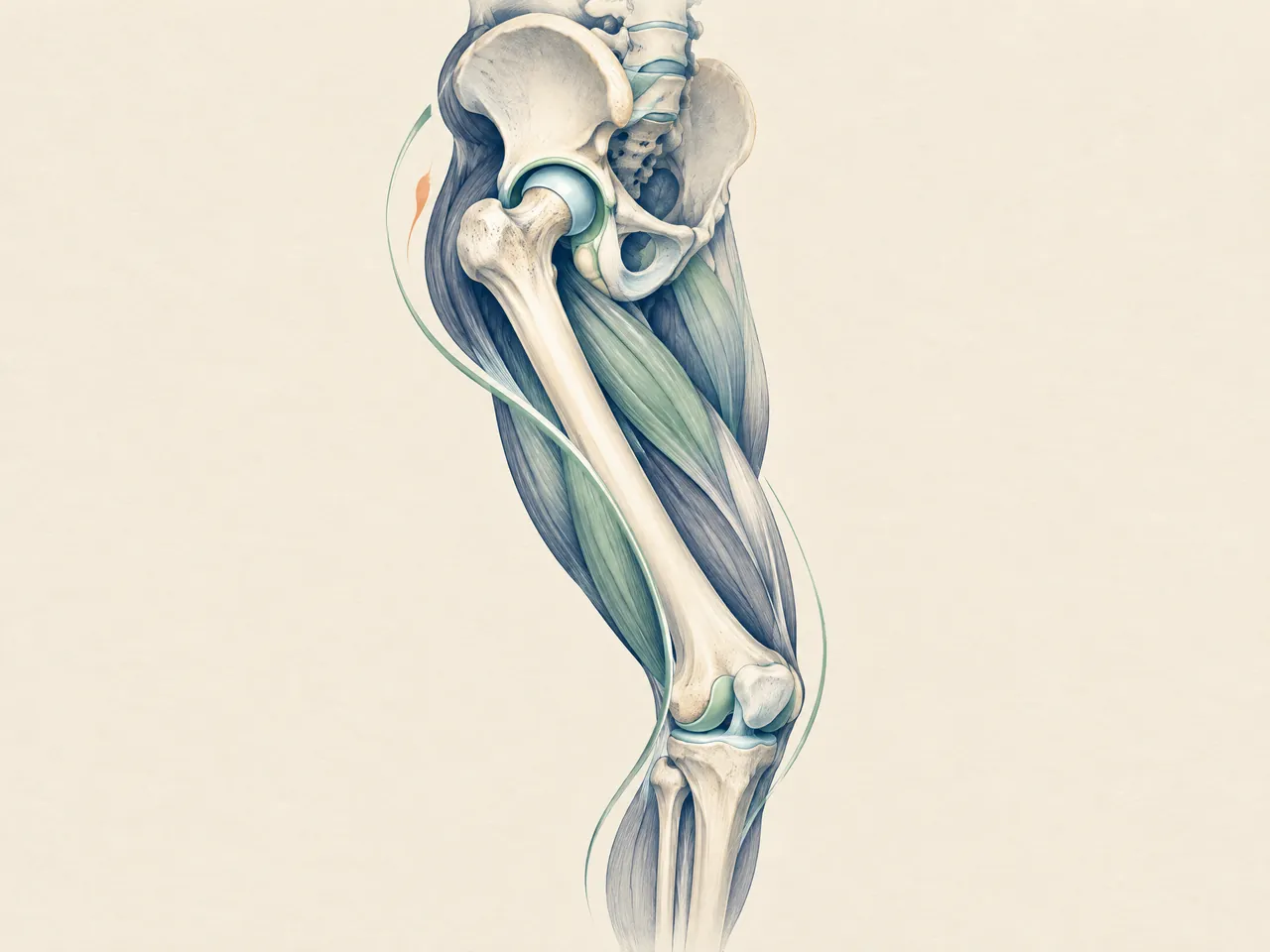
For knee pain and swelling, first check whether you can bear weight, move the knee and continue basic daily tasks. Reduce aggravating load and consider a wrapped cold pack for recent swelling if it is comfortable. A knee that is badly swollen, deformed, locked, giving way, hot and red with fever, or unable to bear weight needs urgent medical assessment. Once urgent causes are excluded, an assessment can guide activity changes, rehabilitation and any complementary care discussion.
Transparent pricing
See the fees.
Choose your care.
Explore our complete official price list, including first-trial prices, regular prices, packages and branch-specific options.
Opening WhatsApp prepares an enquiry; it does not send a message, take payment or confirm an appointment. Suitability and individual arrangements are confirmed during consultation.
Pain care
All prices in HKDExtracorporeal shockwave treatment
Shockwave treatment for deep-tissue and fascial care. The Kwun Tong clinic offers the multi-area options shown below.
Priced by branch
Branch-specific pricing
Prince Edward: HK$250 per area
Kwun Tong: HK$250 for 1 area / HK$450 for 2 areas / HK$600 for 3 areas
Pain care (manual therapy)
Includes Chinese medicine musculoskeletal assessment, manual joint techniques and tui na.
HK$580 (single session)
Chinese medicine musculoskeletal assessment
Pain care (acupuncture and manual therapy)
Combines acupuncture and manual therapy.
HK$680 (single session)
Combined care
Hair and scalp
All prices in HKDScalp health and hair-loss management
Includes AI scalp analysis, deep scalp and follicle cleansing, and scalp oil-control care.
HK$380 (first trial)
Regular price: HK$680
- 6 sessions: HK$3,480 (HK$580 per session)
- 12 sessions: HK$5,760 (HK$480 per session)
- 20 sessions: HK$8,600 (HK$430 per session)
- 30 sessions: HK$11,400 (HK$380 per session)
Hair acupuncture and Chinese herbal medicine package
Includes scalp acupuncture and 3 days of Chinese herbal medicine that does not require decoction.
HK$580 (single session)
Registered Chinese Medicine Practitioner consultation
- 6 sessions: HK$3,180 (HK$530 per session)
- 12 sessions: HK$5,760 (HK$480 per session)
- 20 sessions: HK$8,600 (HK$430 per session)
- 30 sessions: HK$11,400 (HK$380 per session)
Combined hair and scalp treatment
Combines acupuncture and Chinese herbal medicine with salon-level scalp and follicle care. Packages include complimentary hair-care shampoo and serum.
HK$1,260 (single session)
Combined treatment
- 8 sessions: HK$8,640 (HK$1,080 per session)
- 16 sessions: HK$15,680 (HK$980 per session)
- 20 sessions: HK$18,600 (HK$930 per session)
- 30 sessions: HK$26,400 (HK$880 per session)
Weight management
All prices in HKDFull-body acupoint embedding for weight management
Includes full-body acupoint embedding. Packages include complimentary Chinese herbal medicine for weight management, with the number of included days scaled to the package. Embedding material and the individual treatment arrangement are confirmed during consultation; this is not a cosmetic thread lift.
HK$980 (single session)
No trial session
- 10 sessions: HK$7,800 (HK$780 per session)
- 20 sessions: HK$14,600 (HK$730 per session)
- 30 sessions: HK$20,400 (HK$680 per session)
Facial acupuncture
All prices in HKDFacial acupuncture (basic)
Includes facial acupuncture and meridian-based facial care, including care for facial puffiness.
HK$480 (first trial)
Regular price: HK$680
- 10 sessions: HK$5,200 (HK$520 per session)
- 20 sessions: HK$9,600 (HK$480 per session)
- 30 sessions: HK$13,500 (HK$450 per session)
Facial acupuncture (advanced)
Includes enhanced facial acupuncture with a specially formulated moisturising mask and serum.
HK$780 (first trial)
Regular price: HK$1,180
- 10 sessions: HK$9,000 (HK$900 per session)
- 20 sessions: HK$16,600 (HK$830 per session)
- 30 sessions: HK$23,400 (HK$780 per session)
Chinese medicine
All prices in HKDAcupuncture and Chinese herbal medicine package
Includes a Chinese medicine consultation with pulse assessment, body acupuncture and 3 days of Chinese herbal granules that do not require decoction.
HK$580 (single session)
Chinese medicine consultation with pulse assessment
Explore this topic
Knee Pain, Knee Pain Relief and Knee Pain and Swelling: What to Notice
Knee pain is a symptom, not a diagnosis. It may come from the joint itself or from surrounding structures such as tendons, ligaments and bursae. The same word can describe a mild ache after a long walk, a sharp pain on a turn, or a painful swollen knee after an injury. Start with a short, factual record: the day it began, the exact spot, whether it came on suddenly or gradually, and what you were doing when it changed. Note what happens after sitting, walking, stairs, squatting, kneeling or getting out of a car. This gives a clinician a better account than trying to decide the cause from one feature alone. The range of possible causes is broad, and official guidance specifically cautions against self-diagnosis [1].
Swelling is worth describing rather than simply calling it ‘puffiness’. Did it appear soon after a fall, twist or sporting movement? Is it confined around the kneecap, felt behind the knee, or does the whole knee look different from the other side? Say whether the skin feels hot, looks red or is bruised, and whether you can fully straighten and bend the knee. A change in function matters too: limping, avoiding a step, using the banister differently or waking because the knee hurts are all practical observations. Keep track of medicines, topical products, braces, injections, rehabilitation or exercises already tried. This record supports a focused appointment and prevents a knee pain relief plan from overlooking care that is already in progress.
Knee Pain, Knee Pain Relief and Knee Pain and Swelling During Walking and Stairs
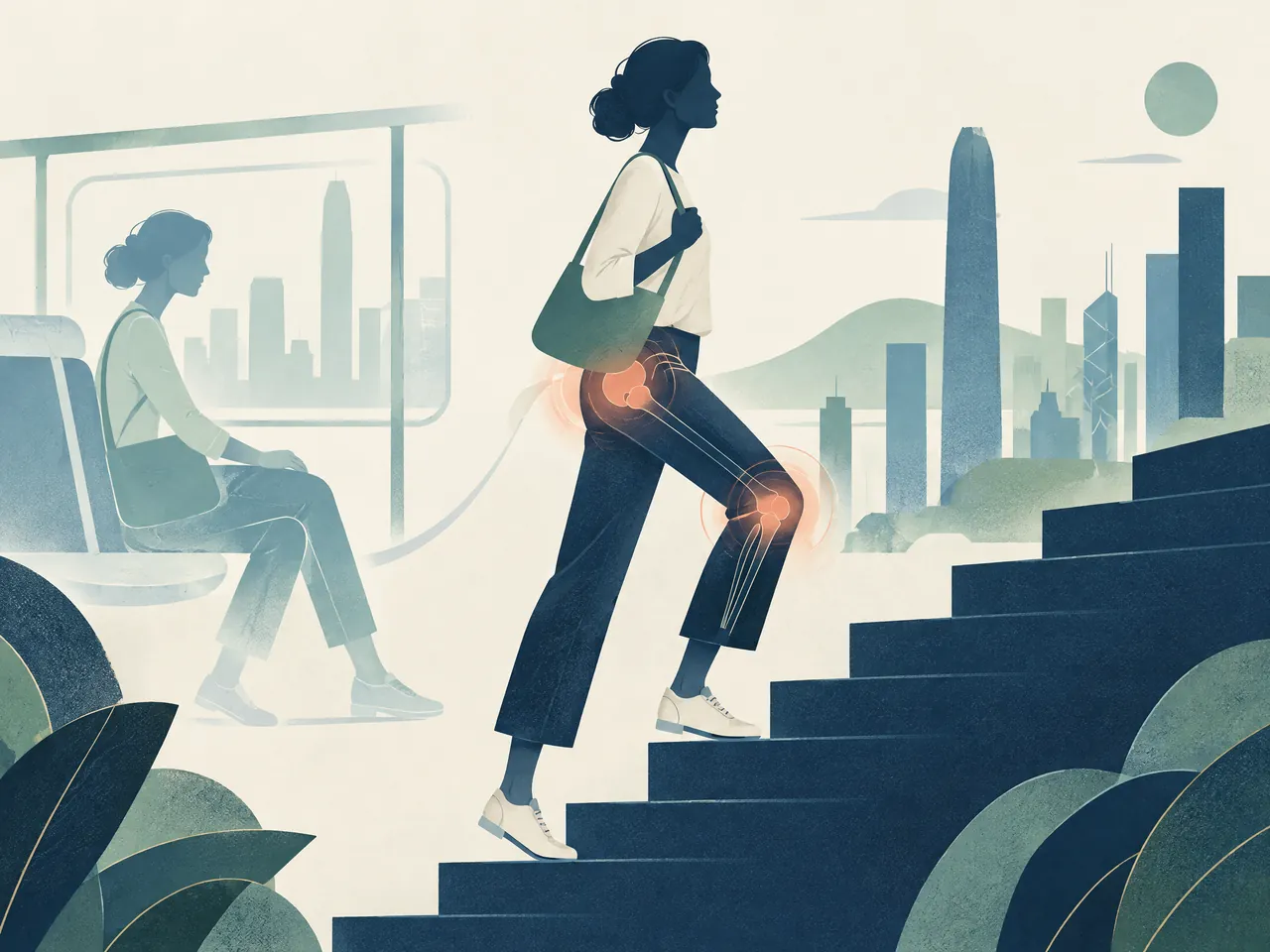
Walking and stairs test the knee in different ways. Notice whether pain begins on the first few steps after sitting, builds only after a certain distance, occurs going up, or is more noticeable coming down. Also notice whether the knee feels stiff, weak, unstable or simply sore. The answer does not identify a condition by itself, but it helps separate a general activity-related problem from a sudden mechanical event. If hip discomfort is also changing your stride, the practical ideas in walking with hip pain may help you describe the whole movement pattern. Do not force a normal pace just to test yourself; repeated sharp pain, buckling or a worsening limp are reasons to pause and seek advice.
For a non-urgent, gradually developing ache, change one load factor at a time. You might shorten a route, choose a flatter surface, break errands into smaller trips, use a lift temporarily, or sit for tasks that normally involve prolonged standing. This is not an instruction to become inactive. It is a way to see whether a more manageable amount of walking can be maintained without a marked next-day flare. Low-impact movement may be considered after a clinician has ruled out an urgent injury and advised what is suitable for the individual. Avoid treating a brace, sleeve or walking aid as proof that the knee is safe for every activity. If it masks increasing pain or instability, reassessment is more useful than simply adding support.
Knee Pain, Knee Pain Relief and Knee Pain and Swelling After Injury or Activity
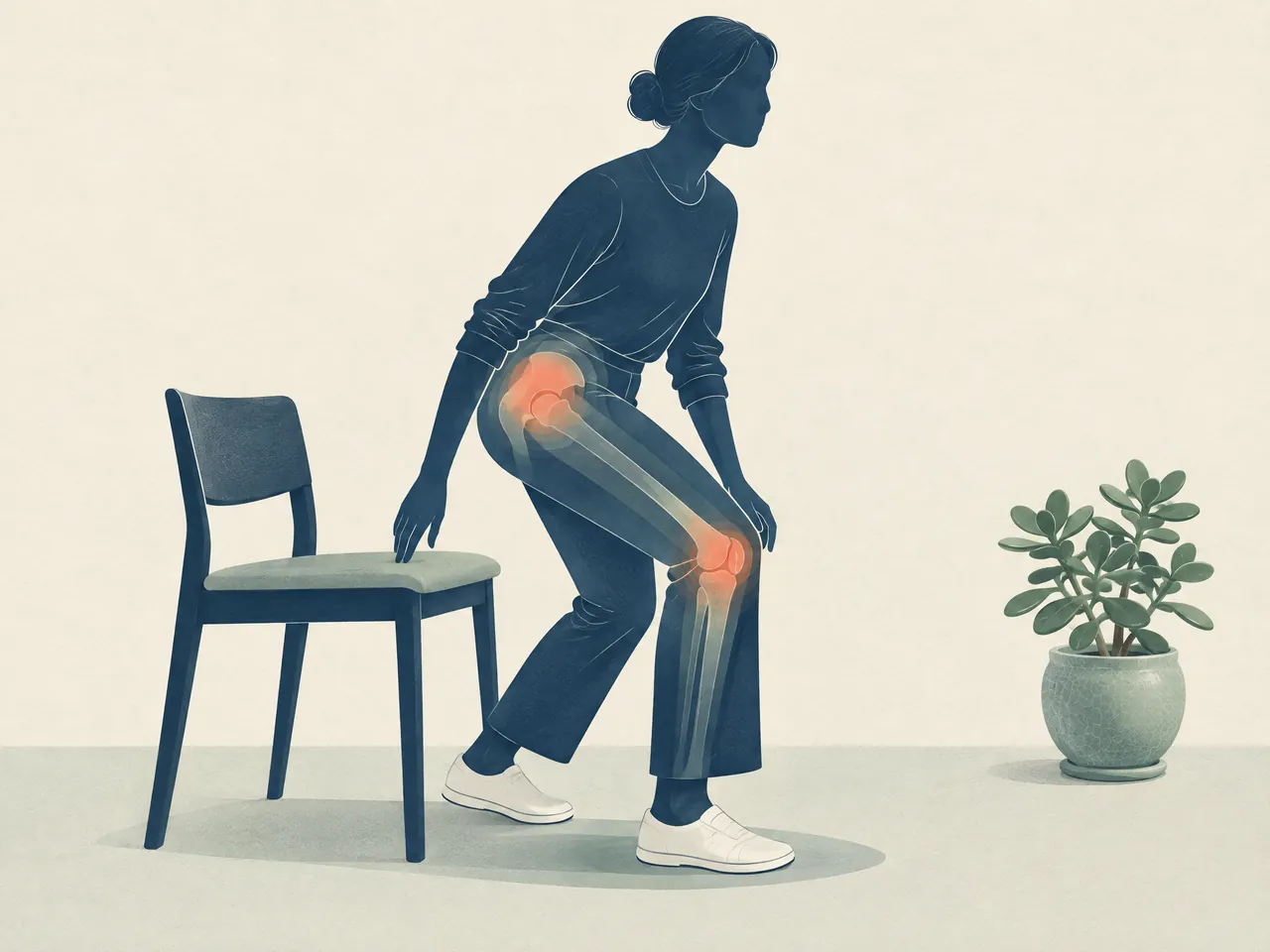
A clear injury changes the order of decisions. After a twist, collision, fall, sudden change of direction or an audible pop, record what happened and whether swelling appeared quickly. Do not keep testing the knee by deep squatting, pivoting or returning to the same sport that triggered the problem. If you cannot put weight on the leg, cannot move the knee normally, see a changed shape, have intense pain or rapidly developing swelling, urgent assessment is appropriate. Mayo Clinic also lists major injury, deformity, inability to bear weight and sudden swelling among reasons to seek urgent medical attention [2].
After a hard session without a distinct injury, distinguish ordinary muscle tiredness from a knee symptom that is altering how you move. A discomfort that settles with sensible adjustment is different from swelling, a blocked feeling, repeated giving way or loss of motion. Recent swelling may feel more comfortable with a cold pack wrapped in cloth; NHS advice describes applying one for up to 20 minutes at a time, with breaks between applications [1]. Protect the skin and stop if the cold is painful or uncomfortable. If you are weighing warmth against cold after a minor flare, read knee pain heat or ice for a practical discussion, but do not use either approach to delay assessment of a hot, red or severely swollen joint.
Compare your options
| What you notice | What to record or do now | Why the next step matters |
|---|---|---|
| Gradual pain during walking or stairs, with no red flags | Record the trigger, distance or number of steps, swelling and next-day response; reduce the aggravating load temporarily. | The pattern helps a clinician plan assessment and a realistic return to activity. |
| Recent twist, fall or impact with pain or swelling | Stop the provoking sport or movement; note the injury mechanism and whether you heard a pop or could bear weight afterwards. | A significant injury may need prompt examination rather than self-treatment. |
| Knee locks, repeatedly gives way, cannot straighten, or cannot bear weight | Avoid stairs and pivoting where possible; arrange urgent medical assessment. | Mechanical symptoms or loss of function can require time-sensitive evaluation. |
| Hot, red, very painful knee with fever, chills or feeling unwell | Seek urgent medical help rather than using massage, heat, acupuncture or online remedies. | Infection and other acute causes need medical assessment. |
| Persistent knee symptoms after urgent problems have been excluded | Bring your timeline, current medicines, diagnoses and rehabilitation plan to any consultation. | This supports coordinated discussion of rehabilitation, medical care and possible complementary options. |
On smaller screens, scroll the table sideways to compare all columns.
Knee Pain, Knee Pain Relief and Knee Pain and Swelling: Possible Patterns
A pattern can guide the next question, but it cannot replace examination. Pain after overuse or twisting may be linked to a sprain or strain; pain below the kneecap after repetitive running or jumping may have a different context; and pain with stiffness in both knees has another set of possibilities. Tendon, ligament or meniscus injury, osteoarthritis, bursitis, gout and infection are among the causes listed by the NHS [1]. The overlap is important. For example, warmth and swelling are not a reliable reason to label a knee problem with a single Chinese medicine term, and an older person can still have an injury unrelated to age-related joint change. A consultation should start with the actual history and function, not a predetermined label.
Pain location can be described accurately without pretending it confirms the source. Is it at the front near the kneecap, along the inner or outer line, in the back of the knee, or more diffuse? Is it there at rest, only on bending, or after several minutes of activity? Include whether the other knee, hip, ankle or low back has been affecting the way you walk. A practitioner may decide that an assessment by a doctor, physiotherapist or another clinician should come first or should continue alongside a Chinese medicine consultation. For a clear explanation of common questions that arise at the start, see What causes knee pain?. It is a starting point for discussion, not a way to diagnose from a symptom checklist.
Knee Pain, Knee Pain Relief and Knee Pain and Swelling Beyond Wear and Tear
It is understandable to call a persistent knee ache ‘wear and tear’, especially when it has developed slowly. Yet that phrase can become unhelpful if it ends the conversation. Ask what changed around the time symptoms started: a new walking commute, a return to badminton, more time on stairs, a different workstation routine, an old injury, or a change in body weight or general health. Describe both the activity that provokes pain and what you can still do comfortably. This information can support a gradual plan rather than an all-or-nothing choice between complete rest and normal training. It also helps identify when a symptom is no longer behaving like a manageable activity problem.
When an underlying medical condition is possible, it deserves medical input rather than a self-selected remedy. Sudden attacks of severe pain with heat and redness, for example, need assessment because official knee-pain guidance includes gout and septic arthritis among possible causes of a hot red knee [1]. Fever, feeling unwell, a spreading red area or marked tenderness add urgency. Do not massage, needle or repeatedly heat a knee with these features while waiting to see whether it settles. Similarly, calf or whole-leg swelling, chest pain or breathlessness needs urgent medical attention rather than being managed as an ordinary knee complaint.
Knee Pain, Knee Pain Relief and Knee Pain and Swelling With Locking or Instability
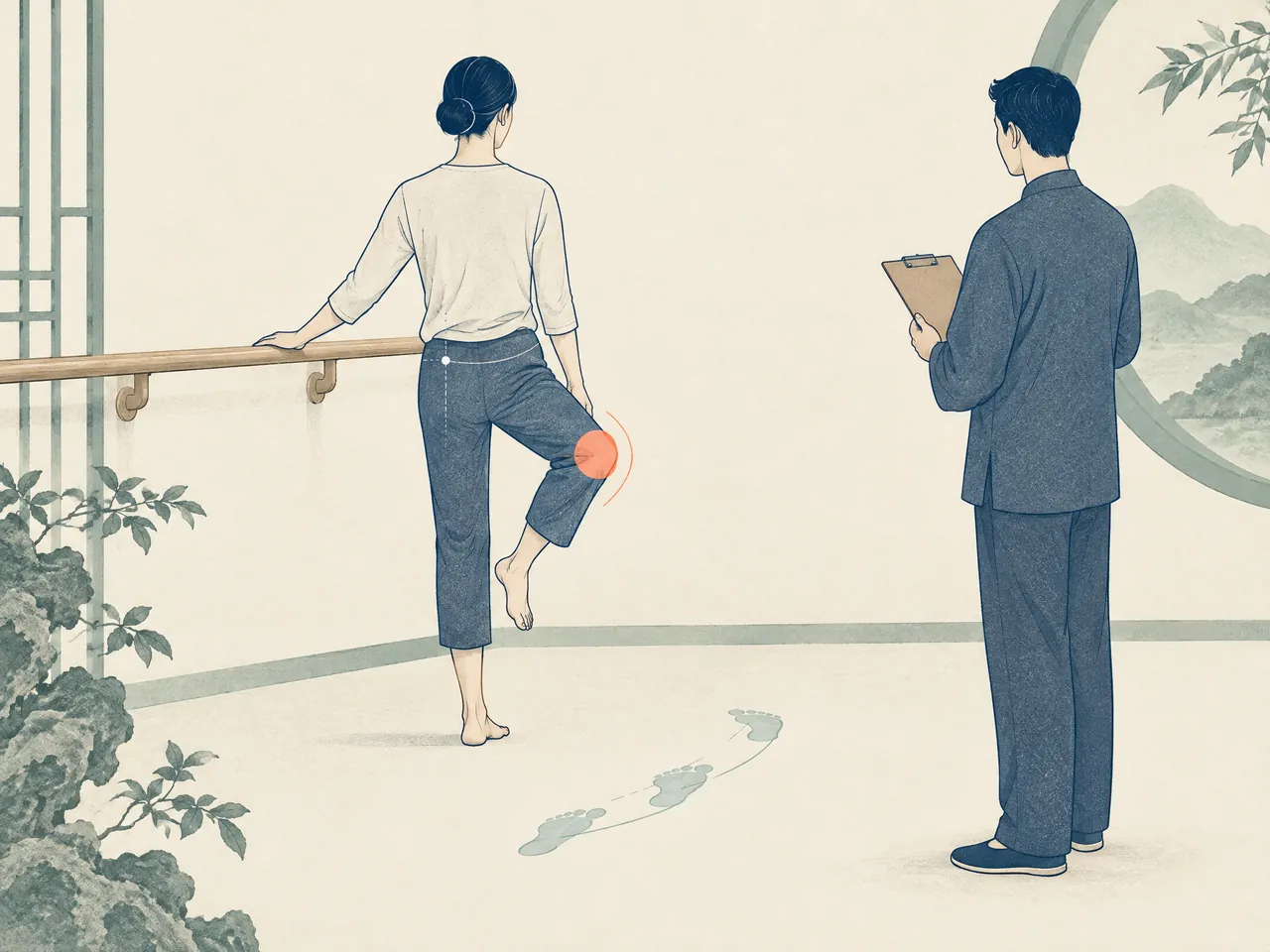
People use ‘locking’ in different ways. It can mean a brief hesitant sensation, or it can mean that the knee genuinely cannot straighten or bend through its usual range. ‘Giving way’ may describe pain-related hesitation, a sense of weakness or an actual collapse. Explain exactly what occurs, how long it lasts, whether there was an injury and whether it has happened more than once. A true locked knee, recurrent collapse, inability to straighten, or instability after a twist should not be managed by pushing through stairs, deep bends or an online exercise routine. NHS urgent advice includes a knee that locks or gives way, particularly with painful clicking [1].
While you are arranging assessment, lower the immediate fall risk. Use a handrail, avoid carrying heavy bags on stairs, take corners slowly and ask for help with tasks that require kneeling or rapid turns. These are temporary safety changes, not treatment for the cause. A clinician can assess movement, swelling, injury mechanism and relevant medical history, then advise whether imaging, rehabilitation, medication or specialist input is needed. If an exercise programme is recommended after assessment, progress is usually easier to judge by function—such as smoother sitting-to-standing or a more comfortable short walk—than by forcing a painful range. Exercises aimed at the hip can sometimes be relevant to movement planning, but hip pain exercises should not be substituted for an assessment of knee locking or instability.
Knee Pain, Knee Pain Relief and Knee Pain and Swelling: Safer Next Steps
The safest next step depends on urgency. Seek prompt medical assessment for a knee that is badly swollen, changed in shape, cannot bear weight, locks or gives way; seek urgent help for fever or feeling unwell together with a red, hot knee. These are not symptoms to explain away as a temporary flare. When no such warning sign is present, use a practical record and pace aggravating activity while you arrange a routine assessment if pain persists, worsens or disrupts sleep, work or ordinary mobility. NHS guidance notes that knee pain that does not improve within a few weeks warrants medical advice [1]. A clinician can determine the appropriate path rather than relying on a generic knee pain relief method.
If you are considering Chinese medicine or acupuncture, present it as one part of the conversation. Bring any diagnosis, scan report, medication list and rehabilitation advice you already have, and say what outcome you hope to improve: stairs, walking, sleep, confidence in movement or another daily function. Do not stop prescribed medicine, abandon a rehabilitation plan or postpone evaluation of a new problem solely to try a complementary approach. The U.S. National Center for Complementary and Integrative Health says acupuncture may be helpful for knee pain associated with osteoarthritis, but the research is condition-specific and safe delivery matters [3]. It is therefore reasonable to ask what role, if any, it may have after your condition has been assessed.
Knee Pain, Knee Pain Relief and Knee Pain and Swelling: Self-Care and Load Management
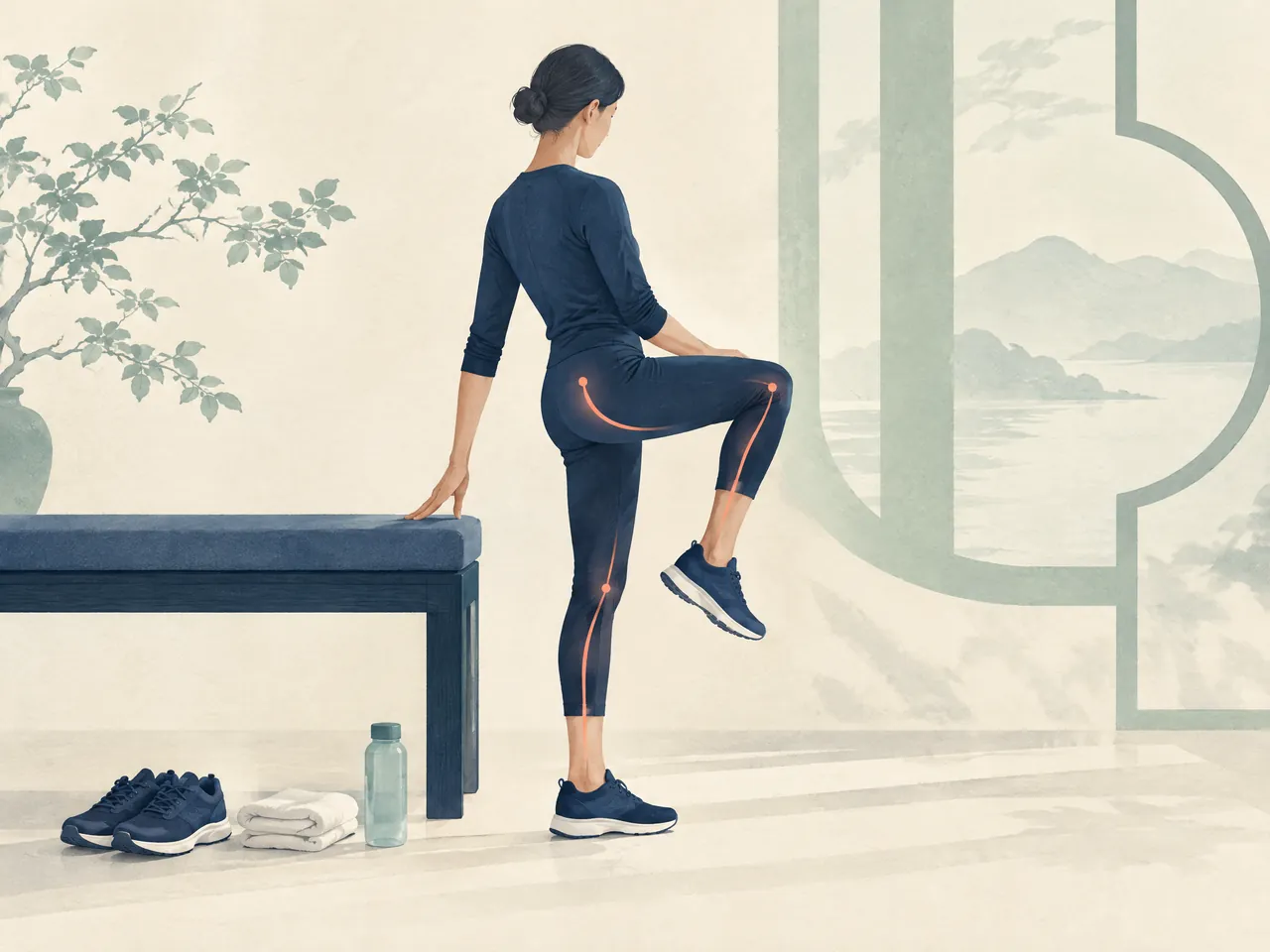
For a mild, non-urgent knee problem, make daily tasks easier before adding more activity. Reduce long periods of standing, take shorter walking routes, plan breaks, and keep frequently used items within easy reach. On a painful day, choose a route with fewer stairs if possible and delay kneeling, deep squats or repeated turning. If a cold pack is comfortable after recent swelling, keep a cloth barrier between it and the skin. A note of what you did, how the knee responded during the activity and how it felt the next morning can reveal whether the load was tolerable. This is more useful than trying several new remedies at once and not knowing what changed.
As symptoms settle and assessment permits, increase only one demand at a time: duration, distance, stair climbing, resistance or speed. A manageable programme leaves room to notice a meaningful reaction rather than treating a flare as failure. A physiotherapist or other clinician may tailor strengthening, mobility and balance work to the diagnosis and your goals. If you use a brace or walking support, ask whether it is appropriate and how it fits into the wider plan. Avoid self-prescribing anti-inflammatory medicines if you have not checked whether they are safe with your health conditions or other medicines. The aim is steady function and safety, not a promise of immediate pain-free movement.

Knee Pain, Knee Pain Relief and Knee Pain and Swelling: When to Seek Medical Assessment
Arrange medical assessment without delay after a significant injury, rapid swelling, visible deformity, inability to put weight on the knee, or a knee that will not move normally. Seek urgent help if the knee is hot, red and painful with fever or chills, or if you feel generally unwell. These symptoms can need time-sensitive assessment. Make a routine appointment for knee pain that persists, recurs, interferes with sleep or routine tasks, or has led you to repeatedly change the way you walk. Take your symptom timeline, medication list and details of prior treatment. The clearer the record, the easier it is for the clinician to decide whether examination, rehabilitation, tests or a referral is appropriate.
For a non-urgent Chinese medicine consultation after those priorities are addressed, TCM Lab can discuss an appointment at a Kwun Tong Chinese medicine clinic or a Chinese medicine clinic Prince Edward. Describe the knee problem, any confirmed diagnosis, current care and warning signs already assessed so the enquiry is properly framed. You can also review the Chinese medicine clinic price list Hong Kong before asking practical questions about a visit. An enquiry does not replace triage or guarantee that acupuncture, herbal medicine or any other approach is suitable; an individual discussion with a Registered Chinese Medicine Practitioner is needed.
Care and health guide
Knee discomfort: care information
This directory brings together services, reading, and visit information related to knee discomfort, to help you prepare questions for a consultation.
When knee discomfort affects your day, noting when it occurs, its relation to activity, and what you have already tried can help prepare a consultation; Chinese medicine pain management Hong Kong is a relevant service or reading entry point.
Individual circumstances differ, and acupuncture Hong Kong offers related information to help you understand options and prepare questions.


Your questions, answered
Frequently asked questions
Is knee pain always caused by osteoarthritis?
No. Sprains, tendon, ligament or meniscus injuries, bursitis, gout, infection and other problems can be relevant. A healthcare professional considers the history, examination and functional changes rather than using age or pain location alone to establish osteoarthritis.
Can acupuncture be considered for knee pain and swelling?
It may be discussed as a complementary option after the cause and urgency of the knee problem have been considered. Evidence discussed by NCCIH includes knee pain associated with osteoarthritis, but that does not make acupuncture appropriate for every type of knee pain. Injury, a locked knee, major swelling or a hot red knee needs medical assessment first.
Should I use heat or ice for knee pain?
For recent swelling, wrapped cold may feel more comfortable for some people. NHS guidance describes a cloth-wrapped ice pack for short applications. Avoid direct skin contact and stop if it is uncomfortable. Heat or cold should not be used to delay assessment of severe swelling, marked redness and warmth, fever, inability to bear weight, locking or deformity.
When should I seek urgent help for knee pain and swelling?
Seek urgent assessment if you cannot put weight on the knee or move it, the knee is badly swollen or changed shape, it locks or gives way, or there is severe pain after injury. Fever, chills or feeling unwell with a hot, red knee also needs urgent medical attention.
Sources and further information
- [1] NHS — Knee pain
Referenced for: Official public-health guidance on common knee-pain patterns, wrapped ice, activity adjustment and urgent warning signs including inability to bear weight, locking, instability, major swelling and a hot red knee with fever.
- [2] Mayo Clinic — Knee pain: Symptom
Referenced for: Medical information on possible joint and surrounding soft-tissue causes, self-care context and reasons for urgent evaluation after major injury, deformity, inability to bear weight or sudden swelling.
- [3] NCCIH — Acupuncture: Effectiveness and Safety
Referenced for: U.S. National Institutes of Health information on condition-specific acupuncture evidence, including knee osteoarthritis, and the importance of safe delivery.