
TCM Lab · Health reading
Chinese medicine for IBS, low FODMAP diet for IBS and Chinese herbal medicine for IBS: an evidence-aware guide
Published Updated
IBS can make ordinary routines feel unpredictable: a meeting, a commute or a shared meal may be planned around cramps, bloating, urgency or constipation. Chinese medicine for IBS may be worth discussing as supportive care only after suitable medical assessment has considered other causes of these symptoms. A low FODMAP diet for IBS can be a structured way to explore food triggers, not a lifelong list of forbidden foods. Chinese herbal medicine for IBS also needs an individual consultation, particularly when prescribed medicines, supplements, pregnancy plans or other health conditions are part of the picture.
Appointments are confirmed through WhatsApp. If you have language requirements, please mention them in your enquiry.
The short answer
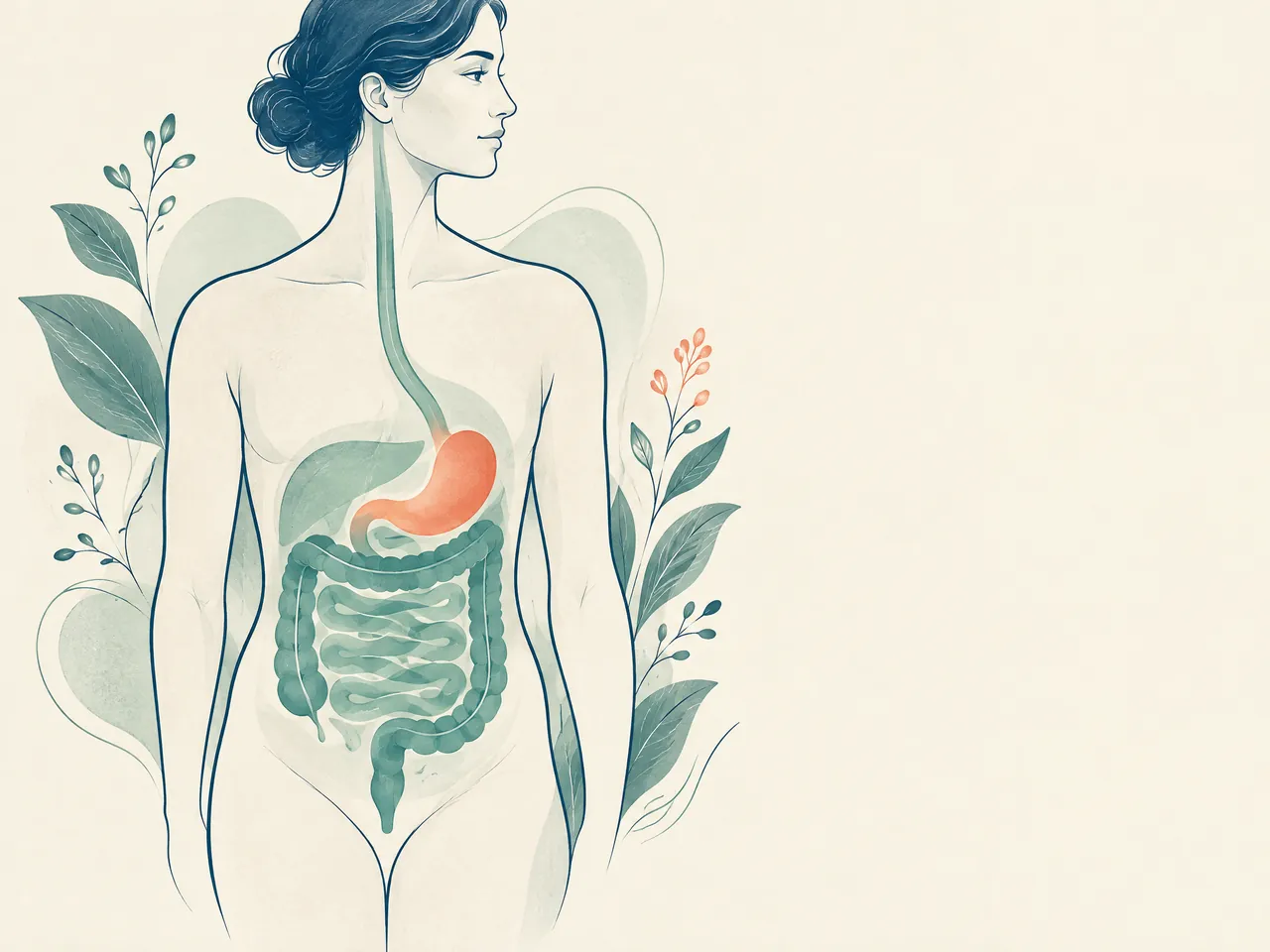
Chinese medicine for IBS can sit alongside medical assessment, symptom tracking, diet and daily-routine changes; it should not replace investigation of new or concerning symptoms. A low FODMAP diet for IBS is usually a short, structured trial followed by reintroduction, ideally with dietetic support. Chinese herbal medicine for IBS is not a standard online formula: a practitioner needs to review your symptom pattern, health history and every medicine or supplement you take.
Transparent pricing
See the fees.
Choose your care.
Explore our complete official price list, including first-trial prices, regular prices, packages and branch-specific options.
Opening WhatsApp prepares an enquiry; it does not send a message, take payment or confirm an appointment. Suitability and individual arrangements are confirmed during consultation.
Chinese medicine
All prices in HKDAcupuncture and Chinese herbal medicine package
Includes a Chinese medicine consultation with pulse assessment, body acupuncture and 3 days of Chinese herbal granules that do not require decoction.
HK$580 (single session)
Chinese medicine consultation with pulse assessment
Hair and scalp
All prices in HKDScalp health and hair-loss management
Includes AI scalp analysis, deep scalp and follicle cleansing, and scalp oil-control care.
HK$380 (first trial)
Regular price: HK$680
- 6 sessions: HK$3,480 (HK$580 per session)
- 12 sessions: HK$5,760 (HK$480 per session)
- 20 sessions: HK$8,600 (HK$430 per session)
- 30 sessions: HK$11,400 (HK$380 per session)
Hair acupuncture and Chinese herbal medicine package
Includes scalp acupuncture and 3 days of Chinese herbal medicine that does not require decoction.
HK$580 (single session)
Registered Chinese Medicine Practitioner consultation
- 6 sessions: HK$3,180 (HK$530 per session)
- 12 sessions: HK$5,760 (HK$480 per session)
- 20 sessions: HK$8,600 (HK$430 per session)
- 30 sessions: HK$11,400 (HK$380 per session)
Combined hair and scalp treatment
Combines acupuncture and Chinese herbal medicine with salon-level scalp and follicle care. Packages include complimentary hair-care shampoo and serum.
HK$1,260 (single session)
Combined treatment
- 8 sessions: HK$8,640 (HK$1,080 per session)
- 16 sessions: HK$15,680 (HK$980 per session)
- 20 sessions: HK$18,600 (HK$930 per session)
- 30 sessions: HK$26,400 (HK$880 per session)
Weight management
All prices in HKDFull-body acupoint embedding for weight management
Includes full-body acupoint embedding. Packages include complimentary Chinese herbal medicine for weight management, with the number of included days scaled to the package. Embedding material and the individual treatment arrangement are confirmed during consultation; this is not a cosmetic thread lift.
HK$980 (single session)
No trial session
- 10 sessions: HK$7,800 (HK$780 per session)
- 20 sessions: HK$14,600 (HK$730 per session)
- 30 sessions: HK$20,400 (HK$680 per session)
Facial acupuncture
All prices in HKDFacial acupuncture (basic)
Includes facial acupuncture and meridian-based facial care, including care for facial puffiness.
HK$480 (first trial)
Regular price: HK$680
- 10 sessions: HK$5,200 (HK$520 per session)
- 20 sessions: HK$9,600 (HK$480 per session)
- 30 sessions: HK$13,500 (HK$450 per session)
Facial acupuncture (advanced)
Includes enhanced facial acupuncture with a specially formulated moisturising mask and serum.
HK$780 (first trial)
Regular price: HK$1,180
- 10 sessions: HK$9,000 (HK$900 per session)
- 20 sessions: HK$16,600 (HK$830 per session)
- 30 sessions: HK$23,400 (HK$780 per session)
Pain care
All prices in HKDExtracorporeal shockwave treatment
Shockwave treatment for deep-tissue and fascial care. The Kwun Tong clinic offers the multi-area options shown below.
Priced by branch
Branch-specific pricing
Prince Edward: HK$250 per area
Kwun Tong: HK$250 for 1 area / HK$450 for 2 areas / HK$600 for 3 areas
Pain care (manual therapy)
Includes Chinese medicine musculoskeletal assessment, manual joint techniques and tui na.
HK$580 (single session)
Chinese medicine musculoskeletal assessment
Pain care (acupuncture and manual therapy)
Combines acupuncture and manual therapy.
HK$680 (single session)
Combined care
Chinese medicine for IBS, low FODMAP diet for IBS and Chinese herbal medicine for IBS: understand symptoms first
IBS describes a pattern rather than one single feeling in the abdomen. Cramps or pain may occur with bloating, diarrhoea, constipation, or a change between the two. For some people, pain is more noticeable after eating and eases after a bowel movement; for others, urgency or incomplete emptying is the disruptive part. A clinician considers the pattern, medical and family history, physical examination and, where appropriate, tests to rule out other problems. That is why a food reaction, a stressful week or an online symptom checker cannot confirm IBS on its own [3]. If you are comparing routes of care, our guide to IBS treatment options Hong Kong can help you prepare questions for a medical appointment.
Do not wait for a traditional-medicine consultation if there is rectal bleeding or bloody diarrhoea, unexplained substantial weight loss, a hard abdominal lump or swelling, or symptoms such as breathlessness, palpitations and unusual paleness. These can need urgent assessment [5]. Arrange a medical review as well when symptoms are new, persistent, waking you repeatedly, or significantly changing your usual life. Reflux can overlap with upper-digestive discomfort, but it is not the same as IBS; read about heartburn and acid reflux if burning behind the breastbone or acid coming up is the main issue. Clear description is more useful than assuming every digestive symptom has one cause.
Chinese medicine for IBS, low FODMAP diet for IBS and Chinese herbal medicine for IBS: track pain, bloating and bowel changes
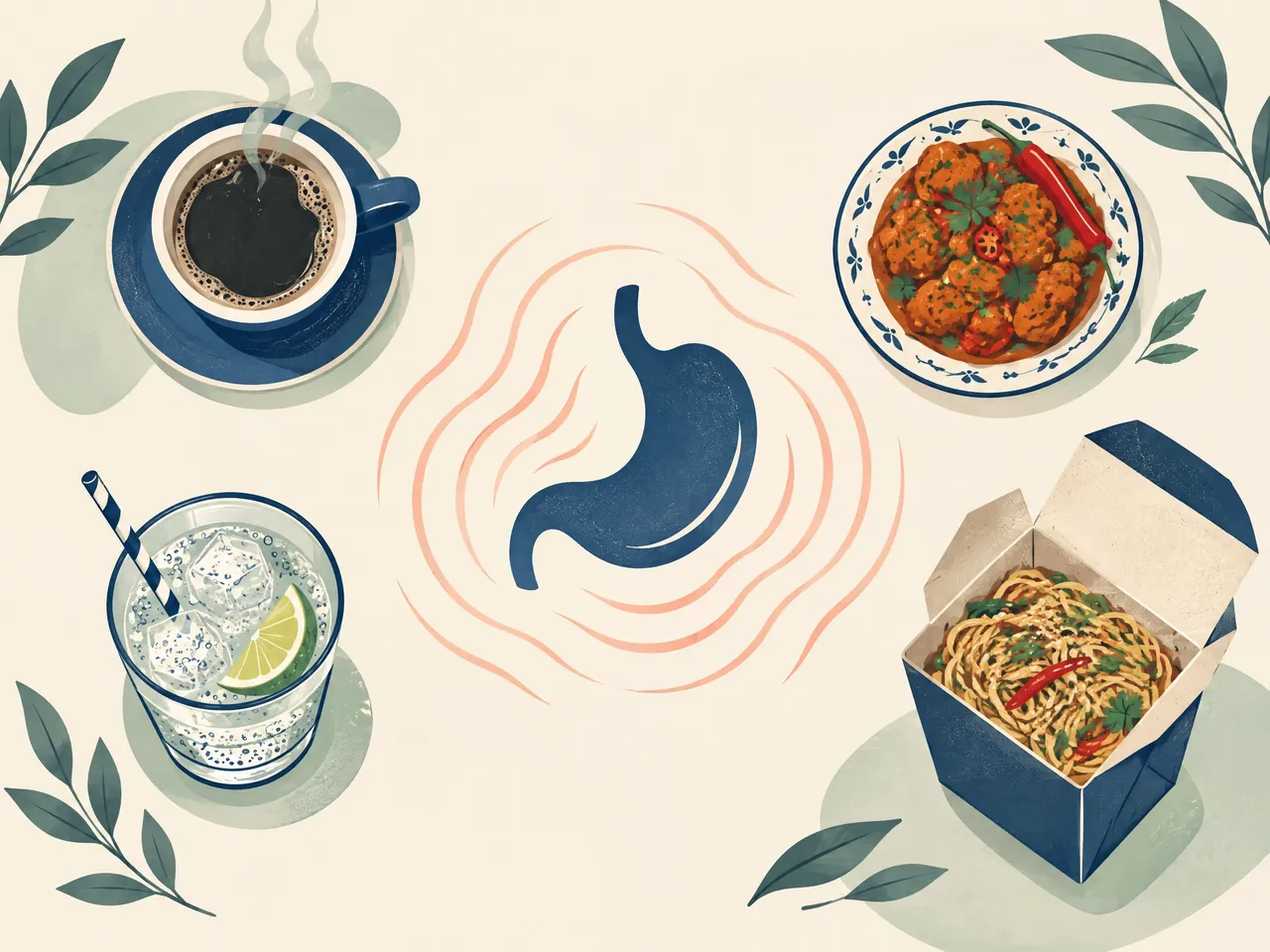
A short, usable diary is more helpful than trying to remember every meal at the end of the month. Note the time and location of pain, how long it lasts, whether it changes after a bowel movement, the sense of bloating, and the frequency and appearance of stools. Add meals, drinks, alcohol, caffeine, exercise, sleep, recent antibiotics, stressful events and any new medicine or supplement. The aim is not to prove that one food is guilty after one bad day. It is to spot repeatable patterns and to give your clinician enough context to decide what should be assessed. A diary can also show the difference between a flare linked to irregular meals and symptoms that continue despite routine changes.
Bring the diary, your current medication list and any previous test results to the appointment. In a Chinese-medicine consultation, questions may also cover appetite, energy, sleep, temperature preference and emotional strain. These observations are used within a traditional pattern-based approach; they are not a modern medical diagnosis. The useful shared task is to turn a broad complaint such as “my stomach is bad” into details that can guide safe next steps. Keep the language plain: say what happens, when it began, what makes it better or worse, and whether your bowel habit has truly changed.
Chinese medicine for IBS, low FODMAP diet for IBS and Chinese herbal medicine for IBS: when assessment matters
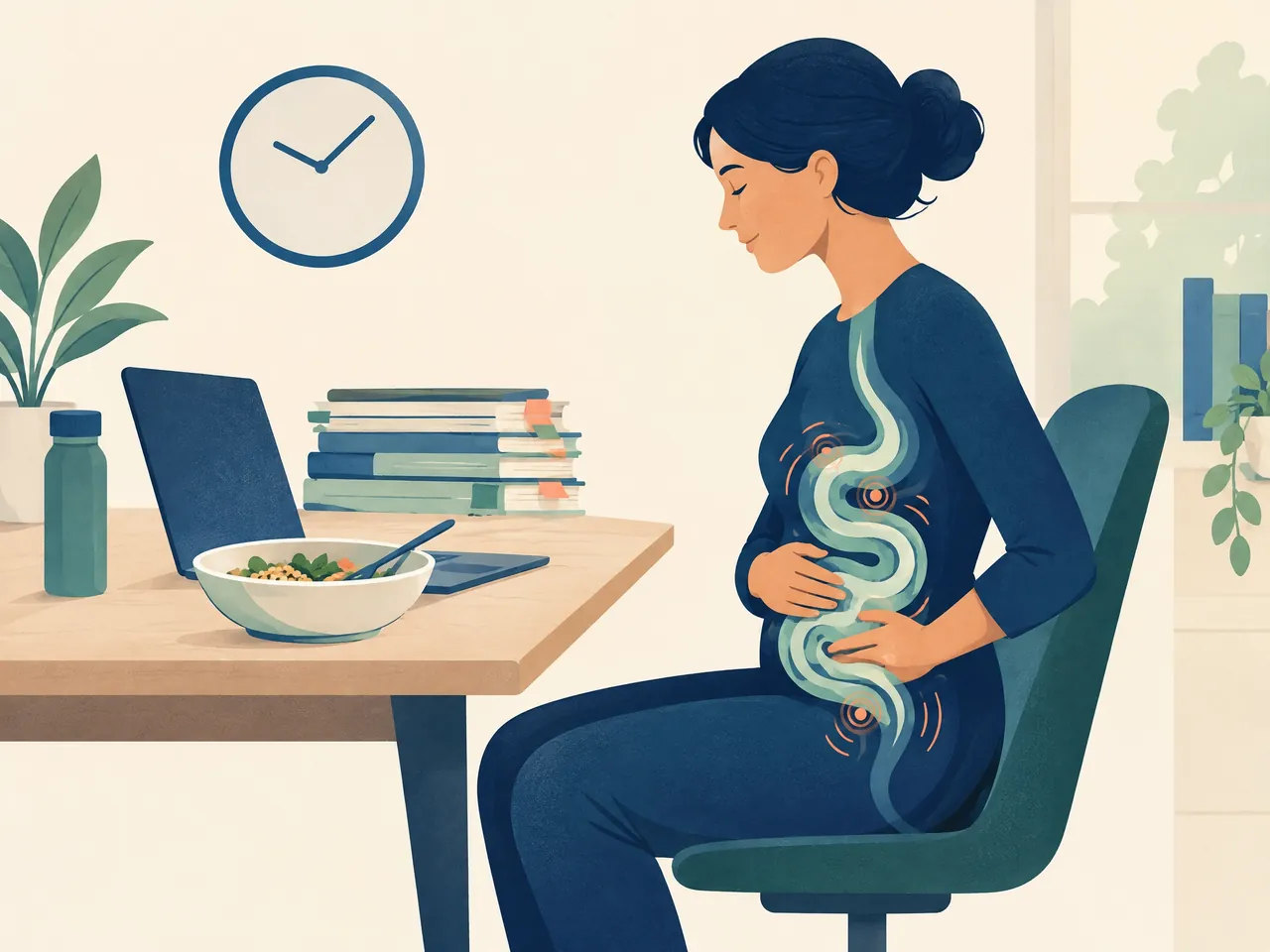
Assessment matters before any diet becomes narrow or any supportive treatment begins because abdominal symptoms can resemble those of other conditions. Medical review normally starts with the symptom pattern and history. Depending on that picture, clinicians may use blood or stool tests, and sometimes other investigations, to look for causes that need different care [3]. Tell the clinician about a family history of digestive disease, a recent infection, travel, and medicines that may affect the bowel. If you have been treating yourself with laxatives, anti-diarrhoeals, pain relievers or herbal products, say so rather than assuming they are irrelevant. That information can change the interpretation of symptoms and the safety discussion.
An IBS diagnosis does not mean that the symptoms are imaginary or that you have failed to cope with stress. The gut and nervous system influence one another, and symptoms can intensify during periods of poor sleep, anxiety or disruption without being “all in the mind”. Hong Kong consensus guidance places dietary and psychological aspects early in management after relevant serious conditions have been excluded [1]. This creates room for several approaches: dietary adjustment, regular routines, medical treatment where indicated, and psychological support when stress or anxiety is a major burden. It also helps prevent a false choice between conventional care and supportive care.
Compare your options
| If your main question is | Useful preparation | Who to discuss it with |
|---|---|---|
| Could this be something other than IBS? | Note symptom onset, bowel changes, family history, medicines and any red flags. | A doctor or appropriate medical clinician. |
| Which foods seem to worsen bloating or bowel changes? | Keep a short meal-and-symptom record before removing multiple food groups. | A doctor and, where appropriate, a dietitian. |
| Would a low FODMAP diet suit my routine? | Consider existing restrictions, nutrition needs and how reintroduction could work. | A dietitian or clinician familiar with IBS dietary care. |
| Can Chinese herbal medicine or acupuncture be part of my plan? | Bring the diagnosis history and a complete medicine and supplement list. | A registered Chinese medicine practitioner, with your prescribing clinician informed. |
On smaller screens, scroll the table sideways to compare all columns.
Chinese medicine for IBS, low FODMAP diet for IBS and Chinese herbal medicine for IBS: connect food with daily habits
Food can be a useful place to investigate, but the most restrictive plan is not automatically the best plan. Some people notice symptoms after large or fatty meals, spicy food, alcohol, caffeine, particular dairy foods, or rushed eating; another person may not. Start with regular meals, adequate fluids and the diary rather than removing many food groups at once. If constipation is prominent, discuss fibre changes with a clinician or dietitian. NIDDK notes that fibre can be increased gradually, because a sudden increase may cause gas and bloating, and that different dietary changes help different people [2]. The question is not “Which IBS diet is perfect?” but “Which small, safe change can I assess clearly?”
Hong Kong meals often include shared dishes, sauces and mixed ingredients, so a practical plan needs to work outside the kitchen as well as inside it. Choose one meal at a time to observe, ask what is in a sauce, and avoid skipping food all day before a late large dinner. A broad list of dietary changes can become stressful and socially isolating, especially if it removes familiar foods without a clear reason. If you suspect a different upper-digestive problem, seek assessment rather than assuming it is IBS; this guide asks When should I see a doctor for acid reflux? and explains symptoms that warrant attention.

Chinese medicine for IBS, low FODMAP diet for IBS and Chinese herbal medicine for IBS: approach a low FODMAP plan carefully
FODMAP is a name for certain carbohydrates that can be difficult to digest. A low FODMAP diet for IBS commonly begins with a short period of reducing selected high-FODMAP foods, then moves to gradual reintroduction so that personal tolerance can be identified. NIDDK describes the diet as something a doctor may suggest for a few weeks, with foods containing FODMAPs added back slowly if symptoms improve [2]. It is therefore different from permanently avoiding every fruit, vegetable, dairy product, wheat product or sweetener on an internet list. The purpose is to learn what you tolerate in a normal life while protecting nutritional variety and enjoyment of food.
Professional input is especially helpful if you have lost weight unintentionally, already avoid many foods, follow a vegetarian or other structured diet, have a history of disordered eating, or are managing another condition. A dietitian can help translate the approach into local shopping, work lunches and family meals. The Hong Kong consensus cautions against excessively restrictive diets because of potential nutritional, quality-of-life and psychological effects, and notes that dietitian involvement may improve accuracy and adherence [1]. Do not use a low FODMAP trial to postpone assessment of red-flag symptoms, and do not judge it solely by one uncomfortable meal.
Chinese medicine for IBS, low FODMAP diet for IBS and Chinese herbal medicine for IBS: include sleep, movement and stress care
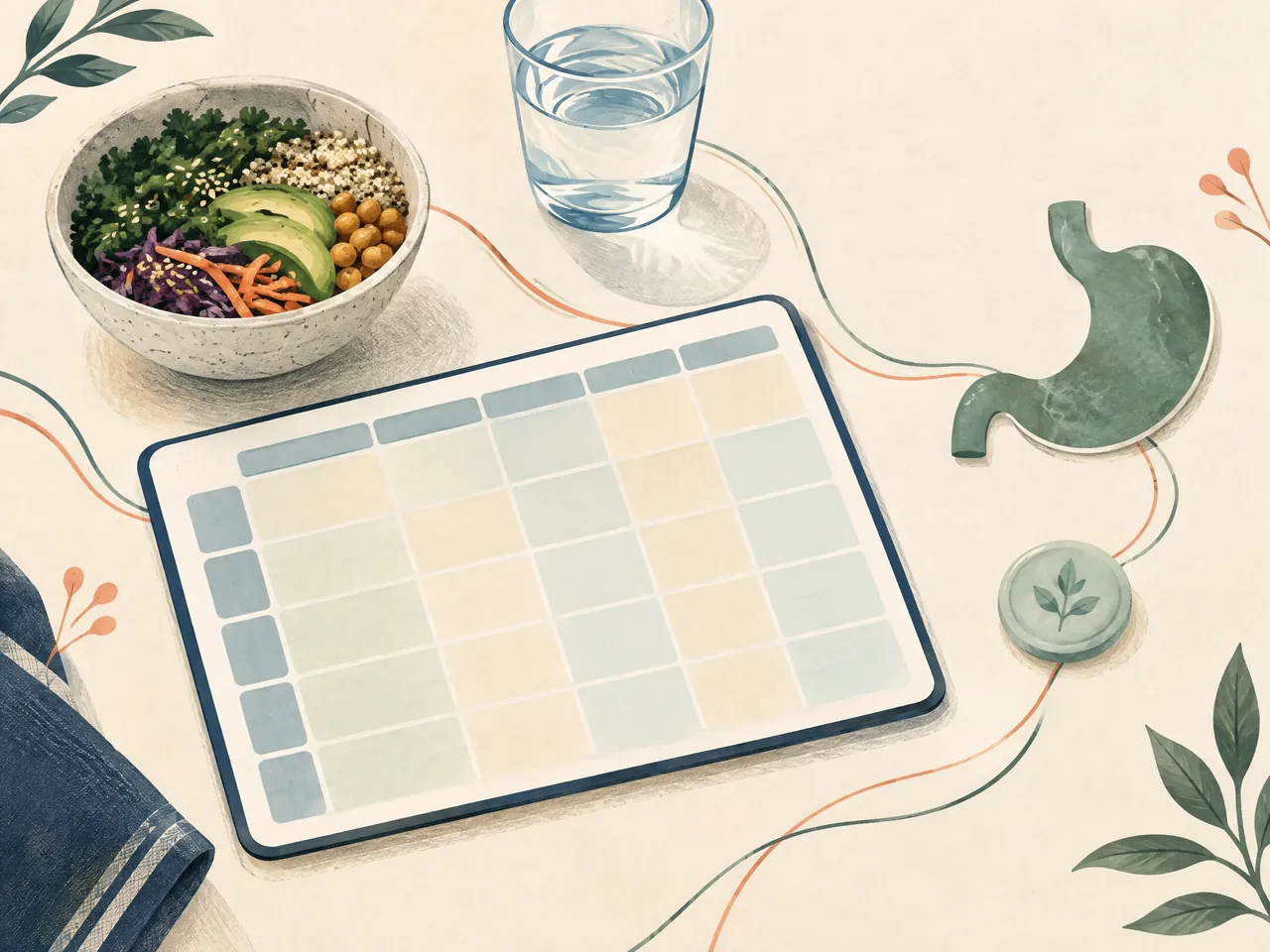
Daily habits do not erase IBS, but they can make patterns easier to see and some days easier to manage. Aim for meals at roughly predictable times, leave enough time to eat, and notice whether long gaps, very late meals or eating quickly precede symptoms. Gentle movement that suits your health and a consistent wind-down routine may be more realistic than a demanding new exercise programme. When a flare begins, use your diary to compare the previous day’s sleep, meals, workload and bowel pattern instead of immediately cutting another food. This turns lifestyle care into observation rather than self-blame.
Stress care is part of practical digestive care, not a suggestion that symptoms are imagined. A short breathing practice before eating, a regular walk, counselling or a conversation with a mental-health professional may be appropriate depending on what is driving the strain. Hong Kong guidance highlights mental health in IBS management and discusses psychological interventions for people who need them [1]. If anxiety, low mood or food fear is taking over daily decisions, tell a clinician directly. The next helpful support may be psychological care, medical review or dietetic input rather than another supplement.
Chinese medicine for IBS, low FODMAP diet for IBS and Chinese herbal medicine for IBS: discuss supportive options responsibly
After suitable assessment, some people want to discuss Chinese medicine for IBS because they prefer an individual conversation about symptoms, food, sleep and daily strain. A registered Chinese medicine practitioner may take a traditional pattern-based history and discuss supportive options. That conversation should include what has already been investigated, your main symptom goal, past reactions to treatments and the full list of medicines and supplements. It should not promise that one approach will cure IBS or replace care for another condition. For a focused introduction to the subject, see Can Chinese medicine help IBS?; use it to build questions, not to self-prescribe.
The phrase Chinese herbal medicine for IBS can sound like one fixed product, but responsible use is not a catalogue choice. Hong Kong consensus statements say any consideration of herbal medicine should be individualised and require assessment by a Chinese medicine practitioner [1]. A consultation is the place to discuss symptom pattern, allergies, liver or kidney conditions, pregnancy or breastfeeding, planned surgery, and every prescribed or over-the-counter product. Keep the prescribing clinician informed too. Do not stop antispasmodics, laxatives, anti-diarrhoeals, antidepressants or other prescribed medicines on your own because you are trying a supportive option.

Chinese medicine for IBS, low FODMAP diet for IBS and Chinese herbal medicine for IBS: what evidence says about acupuncture
It is reasonable to ask what research can and cannot show about acupuncture for IBS. A Cochrane review found that the better-designed trials comparing acupuncture with sham acupuncture did not show a benefit over sham for IBS symptom severity or IBS-related quality of life [4]. Some unblinded comparisons with medicines reported more improvement with acupuncture, but the review explains that expectations and preference may affect these results. Hong Kong consensus guidance likewise states that current evidence does not support acupuncture as an effective IBS treatment [1]. This does not require a dismissive conversation; it means acupuncture should be framed as a possible supportive choice, with uncertainty made clear, rather than as a proven replacement for assessment, dietetic care or prescribed treatment.
If you are considering acupuncture, ask what the practitioner hopes it may support, how progress would be reviewed and when you should return to your medical clinician. Agree in advance that new bleeding, black stools, weight loss or worsening pain calls for medical attention rather than more sessions. This approach respects personal preference without converting preference into a guarantee. A short symptom record is again useful: it can show whether your daily function, bowel pattern or pain is actually changing, while also keeping a clear route back to medical care if the picture shifts.
Chinese medicine for IBS, low FODMAP diet for IBS and Chinese herbal medicine for IBS: review medicines and safety together
Before a consultation, photograph or list each product you use: prescription medicines, over-the-counter remedies, pain medication, laxatives, anti-diarrhoeals, antacids, vitamins, protein powders, teas and herbal products. Include the dose, how often you use it and why. This protects against omissions when a product is marketed as natural or is only taken during a flare. It also helps separate a possible medication effect from an IBS pattern. Bring any recent blood or stool test results if they are available, but do not delay urgent assessment to collect paperwork. Shared information lets different clinicians give advice that is less likely to conflict.
For an in-person discussion, TCM Lab has a Kwun Tong Chinese medicine clinic and a Chinese medicine clinic Prince Edward; appointment timing is arranged directly. You can also review the Chinese medicine clinic price list Hong Kong before asking about consultation arrangements. Contact the clinic on WhatsApp at +852 6940 5663 with your main symptoms, known diagnosis and current medicines. That makes it easier to decide whether a Chinese-medicine consultation is an appropriate supportive next conversation, or whether a medical or dietetic review should come first.
Care and health guide
Health service information
This directory brings together services, reading, and visit information related to health services, to help you prepare questions for a consultation.
If you are organising health questions, Chinese medicine clinic Hong Kong is a starting point for learning about related services and preparing for a consultation.
People have different needs; acupuncture Hong Kong provides further reading to help you understand options in your own context.


Your questions, answered
Frequently asked questions
Can Chinese medicine for IBS replace a medical diagnosis?
No. Abdominal pain and bowel changes can overlap with other conditions. Medical assessment is particularly important for new, persistent or concerning symptoms. Chinese medicine can be discussed as supportive care once appropriate assessment has considered other causes.
How long should a low FODMAP diet for IBS last?
It is usually approached as a short trial followed by gradual reintroduction, rather than a permanent elimination diet. The exact approach should be tailored to your symptoms, nutrition needs and ability to maintain a varied diet.
Can I take Chinese herbal medicine for IBS with prescribed medicine?
Tell both the Chinese medicine practitioner and prescribing clinician about every medicine, supplement and herbal product you use. Do not stop or alter prescribed medicine yourself; an individual safety review is needed before adding an herbal product.
Is acupuncture proven to treat IBS?
The better-designed sham-controlled trials in the Cochrane review did not show acupuncture outperforming sham acupuncture for IBS symptoms or quality of life. If you choose to discuss acupuncture, treat it as a supportive option with uncertain benefit, not a guaranteed treatment.
Sources and further information
- [1] Hong Kong Medical Journal — The current treatment landscape of irritable bowel syndrome in adults in Hong Kong: consensus statements
Referenced for: Supports Hong Kong consensus guidance on assessment, dietary restriction, individualised herbal medicine and the limits of acupuncture evidence.
- [2] NIDDK — Eating, Diet, & Nutrition for Irritable Bowel Syndrome
Referenced for: Supports the description of gradual fibre changes and the low FODMAP trial and reintroduction approach.
- [3] NIDDK — Diagnosis of Irritable Bowel Syndrome
Referenced for: Supports the description of clinical assessment and possible tests to rule out other health problems.
- [4] Cochrane — Acupuncture for irritable bowel syndrome
Referenced for: Supports the statement that sham-controlled trials did not show acupuncture better than sham for IBS symptom severity or quality of life.
- [5] NHS — Symptoms of IBS
Referenced for: Supports the symptom overview and urgent warning signs that warrant medical assessment.