
TCM Lab · Health reading
De Quervain’s Tenosynovitis: Symptoms, Diagnosis and Acupuncture: De Quervain's tenosynovitis symptoms; How is De Quervain's tenosynovitis diagnosed?; Can acupuncture help De Quervain's tenosynovitis?
Published Updated
Pain at the thumb side of the wrist can turn ordinary movements—lifting a child, opening a jar, scrolling on a phone or wringing a cloth—into guarded, awkward tasks. De Quervain’s tenosynovitis is one possible reason for this pattern. It involves irritation around thumb-moving tendons as they pass through a narrow wrist tunnel, so pain can flare when the thumb grips while the wrist moves. This page explains the symptom pattern, how a clinician usually works out whether it fits, and where acupuncture may sit alongside practical care. It is not a way to repair a narrowed tendon sheath or to replace assessment when another hand or wrist problem is possible.
Appointments are confirmed through WhatsApp. If you have language requirements, please mention them in your enquiry.
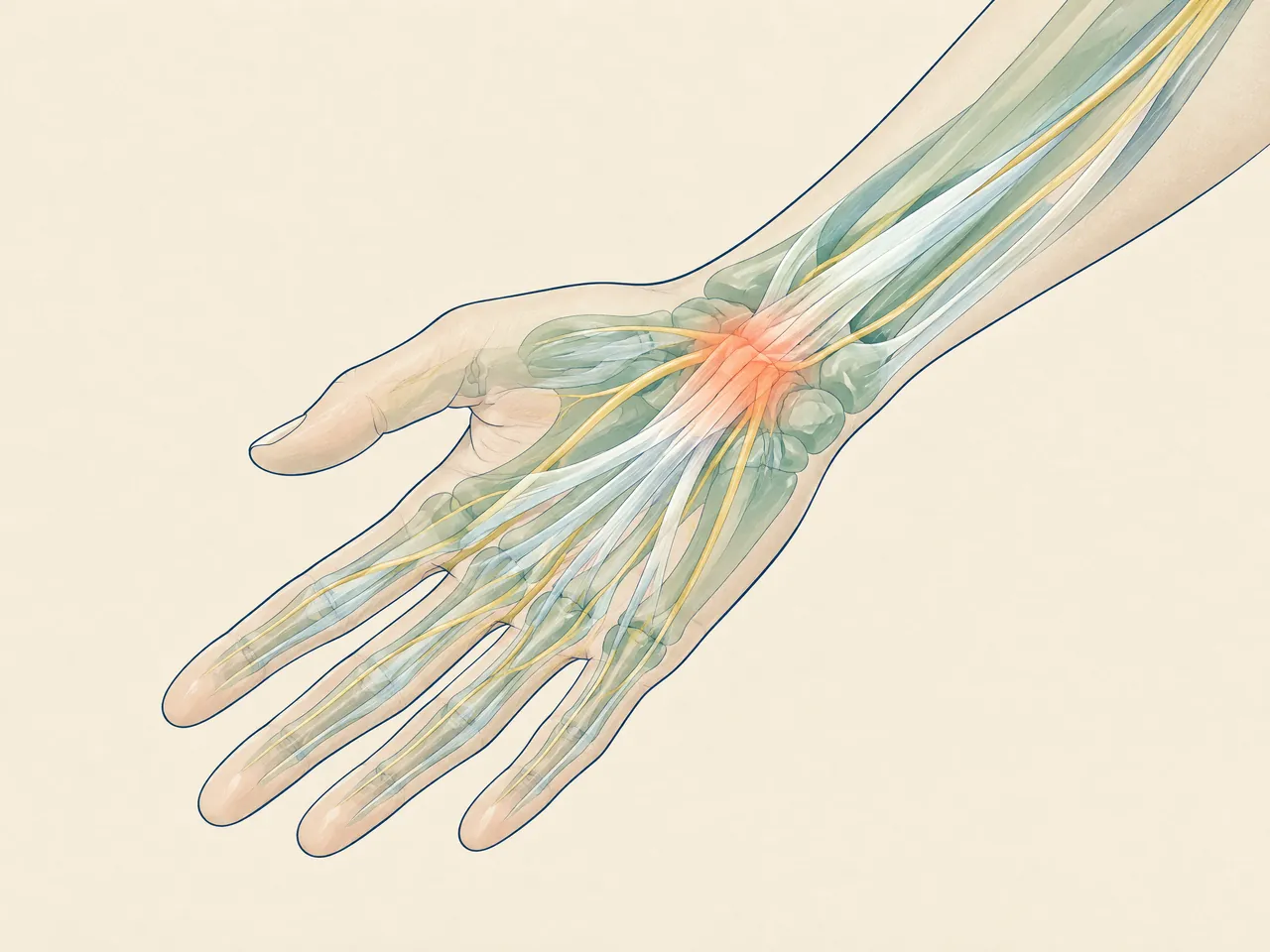
The short answer
De Quervain’s tenosynovitis often causes pain, tenderness or swelling at the thumb side of the wrist, especially with gripping, pinching, twisting or lifting. A clinician commonly diagnoses it from the history and an examination, sometimes using a Finkelstein manoeuvre; scans are not always required. Acupuncture can be discussed as a conservative option for symptom management, but it does not repair structural narrowing or replace medical assessment when symptoms are severe, unusual or persistent.
Transparent pricing
See the fees.
Choose your care.
Explore our complete official price list, including first-trial prices, regular prices, packages and branch-specific options.
Opening WhatsApp prepares an enquiry; it does not send a message, take payment or confirm an appointment. Suitability and individual arrangements are confirmed during consultation.
Pain care
All prices in HKDExtracorporeal shockwave treatment
Shockwave treatment for deep-tissue and fascial care. The Kwun Tong clinic offers the multi-area options shown below.
Priced by branch
Branch-specific pricing
Prince Edward: HK$250 per area
Kwun Tong: HK$250 for 1 area / HK$450 for 2 areas / HK$600 for 3 areas
Pain care (manual therapy)
Includes Chinese medicine musculoskeletal assessment, manual joint techniques and tui na.
HK$580 (single session)
Chinese medicine musculoskeletal assessment
Pain care (acupuncture and manual therapy)
Combines acupuncture and manual therapy.
HK$680 (single session)
Combined care
Hair and scalp
All prices in HKDScalp health and hair-loss management
Includes AI scalp analysis, deep scalp and follicle cleansing, and scalp oil-control care.
HK$380 (first trial)
Regular price: HK$680
- 6 sessions: HK$3,480 (HK$580 per session)
- 12 sessions: HK$5,760 (HK$480 per session)
- 20 sessions: HK$8,600 (HK$430 per session)
- 30 sessions: HK$11,400 (HK$380 per session)
Hair acupuncture and Chinese herbal medicine package
Includes scalp acupuncture and 3 days of Chinese herbal medicine that does not require decoction.
HK$580 (single session)
Registered Chinese Medicine Practitioner consultation
- 6 sessions: HK$3,180 (HK$530 per session)
- 12 sessions: HK$5,760 (HK$480 per session)
- 20 sessions: HK$8,600 (HK$430 per session)
- 30 sessions: HK$11,400 (HK$380 per session)
Combined hair and scalp treatment
Combines acupuncture and Chinese herbal medicine with salon-level scalp and follicle care. Packages include complimentary hair-care shampoo and serum.
HK$1,260 (single session)
Combined treatment
- 8 sessions: HK$8,640 (HK$1,080 per session)
- 16 sessions: HK$15,680 (HK$980 per session)
- 20 sessions: HK$18,600 (HK$930 per session)
- 30 sessions: HK$26,400 (HK$880 per session)
Weight management
All prices in HKDFull-body acupoint embedding for weight management
Includes full-body acupoint embedding. Packages include complimentary Chinese herbal medicine for weight management, with the number of included days scaled to the package. Embedding material and the individual treatment arrangement are confirmed during consultation; this is not a cosmetic thread lift.
HK$980 (single session)
No trial session
- 10 sessions: HK$7,800 (HK$780 per session)
- 20 sessions: HK$14,600 (HK$730 per session)
- 30 sessions: HK$20,400 (HK$680 per session)
Facial acupuncture
All prices in HKDFacial acupuncture (basic)
Includes facial acupuncture and meridian-based facial care, including care for facial puffiness.
HK$480 (first trial)
Regular price: HK$680
- 10 sessions: HK$5,200 (HK$520 per session)
- 20 sessions: HK$9,600 (HK$480 per session)
- 30 sessions: HK$13,500 (HK$450 per session)
Facial acupuncture (advanced)
Includes enhanced facial acupuncture with a specially formulated moisturising mask and serum.
HK$780 (first trial)
Regular price: HK$1,180
- 10 sessions: HK$9,000 (HK$900 per session)
- 20 sessions: HK$16,600 (HK$830 per session)
- 30 sessions: HK$23,400 (HK$780 per session)
Chinese medicine
All prices in HKDAcupuncture and Chinese herbal medicine package
Includes a Chinese medicine consultation with pulse assessment, body acupuncture and 3 days of Chinese herbal granules that do not require decoction.
HK$580 (single session)
Chinese medicine consultation with pulse assessment
Recognising the condition and its symptoms: De Quervain's tenosynovitis symptoms; How is De Quervain's tenosynovitis diagnosed?; Can acupuncture help De Quervain's tenosynovitis?
De Quervain’s tenosynovitis is also called De Quervain disease or, in everyday Hong Kong conversation, ‘mommy’s wrist’. The names describe a painful problem on the radial, or thumb, side of the wrist rather than every kind of thumb pain. Two tendons that help move the thumb travel through the first extensor compartment near the wrist. When the tendon-and-sheath space becomes irritated and tight, the tendons may not glide comfortably. The Hong Kong College of Orthopaedic Surgeons describes pain at the dorsolateral wrist that can radiate towards the thumb or lateral forearm, with swelling, weakness or difficulty moving the thumb and wrist also possible [1]. The intensity can vary from a mild ache after use to pain that makes a secure grip feel unreliable.
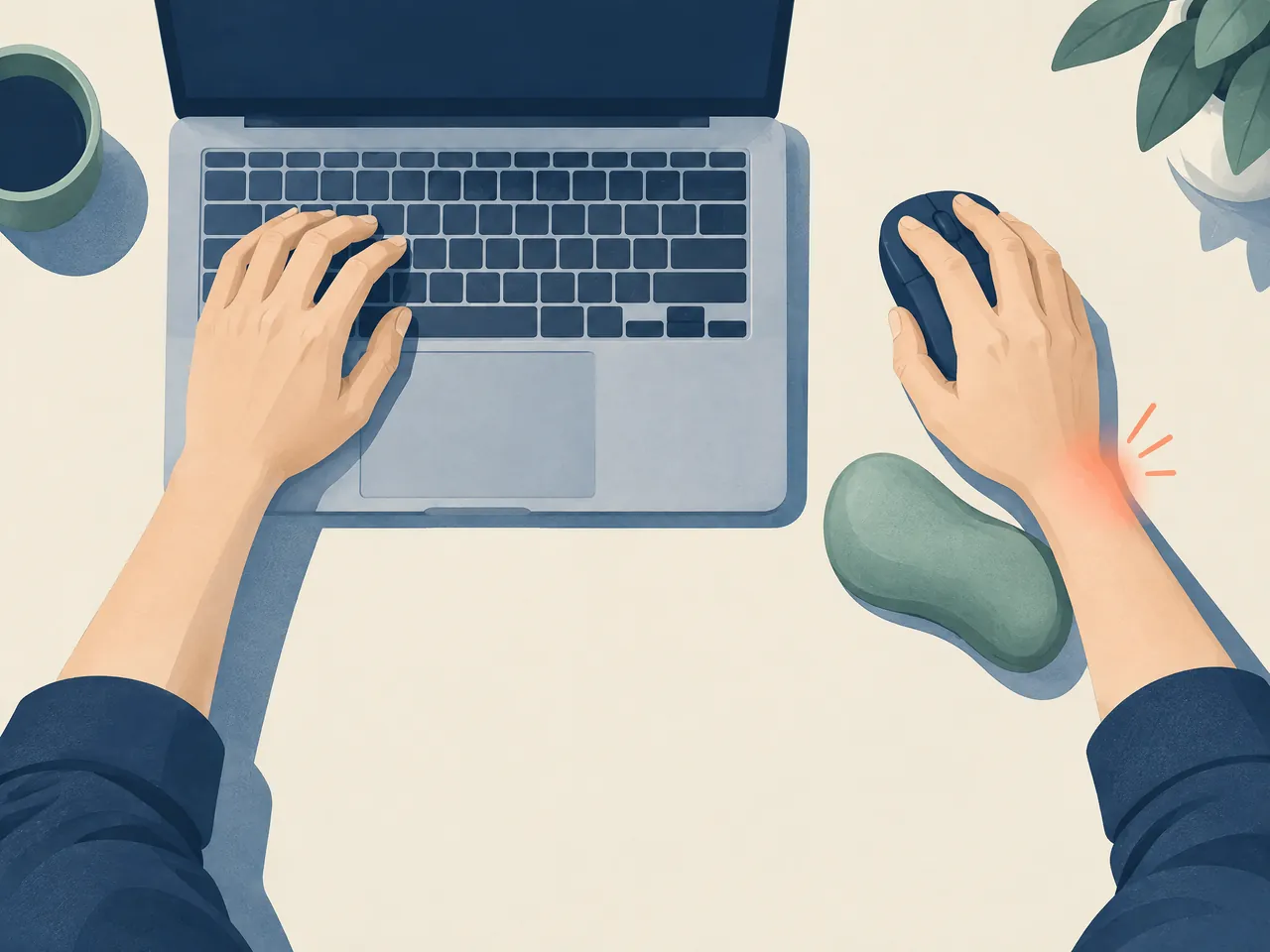
What thumb-side wrist pain and swelling may mean: De Quervain's tenosynovitis symptoms; How is De Quervain's tenosynovitis diagnosed?; Can acupuncture help De Quervain's tenosynovitis?
The location and trigger matter more than the label. De Quervain’s pain is commonly close to the bony prominence at the thumb-side wrist and is often sharper when the thumb works against resistance. Making a fist, forcefully grasping, turning a key, carrying shopping bags, lifting a child under the arms, or twisting a wet towel can bring it out. Some people notice local puffiness, tenderness when they press the area, or a catching or snapping feeling when the thumb moves. Others mainly notice that opening containers or holding a phone has become uncomfortable. These are useful observations to report, but they are not a self-diagnosis: thumb-base arthritis, a sprain, fracture after a fall, a nerve problem and other tendon conditions can overlap. Symptoms that spread, change rapidly or are linked to a specific injury deserve an examination rather than a guess. AAOS likewise notes that thumb-side wrist pain is typically aggravated by thumb use, grasping, wrist turning and lifting [2].
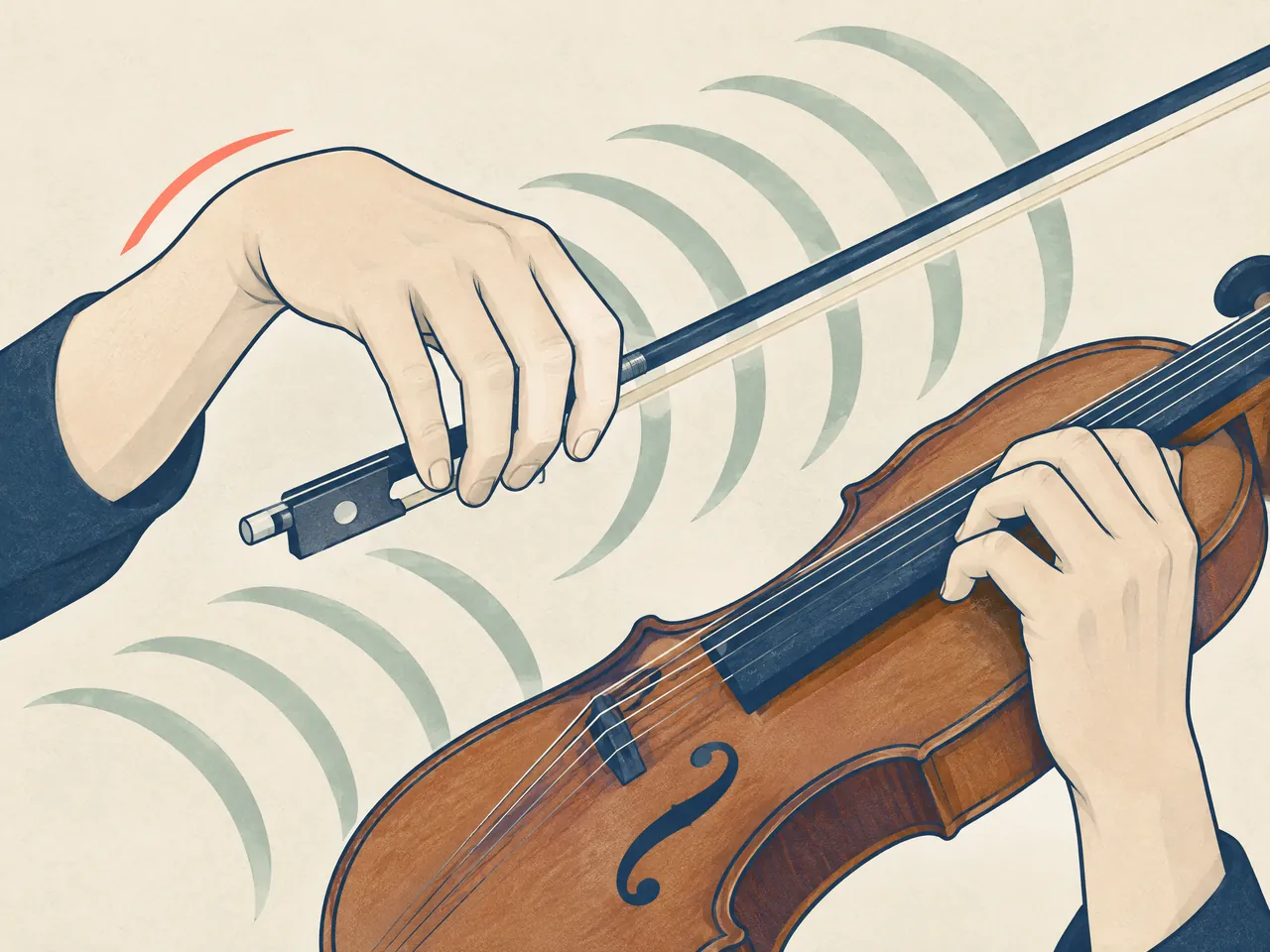
How repetitive thumb use and postpartum activity can contribute: De Quervain's tenosynovitis symptoms; How is De Quervain's tenosynovitis diagnosed?; Can acupuncture help De Quervain's tenosynovitis?
A single cause is not always identifiable. Repeated or unfamiliar thumb-and-wrist loading can be relevant: think prolonged texting with the thumb, gaming, handcraft work, gardening, racket sports, food preparation, or a job that combines gripping with wrist deviation. The issue is not that one ordinary movement is forbidden; it is the repeated pattern, force and recovery time that can keep an irritated area busy. Pregnancy and the postpartum period are also commonly discussed contexts. Repeated lifting or carrying of a newborn is specifically noted by the Hong Kong College of Orthopaedic Surgeons [1]. A parent may notice pain when scooping a baby from a cot with thumbs held out, fastening clothing or holding a bottle. Rather than blaming a necessary task, identify the exact movement that hurts. Changing hand position, sharing lifts, using both hands where safe, or pausing a painful repetition can give a clinician clearer information and may reduce provocation while assessment is arranged. For a focused discussion of postpartum symptoms, see mommy's wrist acupuncture.
Compare your options
| Option or action | Main purpose | When it may be discussed | Important limit or question |
|---|---|---|---|
| Clinical assessment | Identify whether the pattern fits De Quervain’s or another thumb and wrist problem. | At first presentation, after injury, or when the symptom pattern is unclear. | An examination guides whether tests or referral are needed; do not rely on a self-test alone. |
| Activity modification and a thumb-supporting splint | Reduce repeated painful loading and allow the thumb and wrist to rest in a supported position. | For pain provoked by gripping, pinching, lifting or side-to-side wrist movement. | The specific task and splint choice should suit the person; avoidance without a plan may not address the cause. |
| Hand therapy or rehabilitation | Review how work, caring tasks or hobbies load the wrist and support a return to function. | When task technique, strength or a staged return to activity needs attention. | Exercises and timing should be individual, particularly if pain is acute or diagnosis is uncertain. |
| Acupuncture | Consider symptom management as one conservative option after individual assessment. | When appropriate alongside a plan for diagnosis, load management and follow-up. | It does not repair tendon structure or substitute for urgent medical care. |
| Medical treatment or referral | Discuss medication, injection, imaging or surgery when clinically indicated. | For severe, persistent, progressive, traumatic or diagnostically uncertain symptoms. | The most suitable option depends on the examination, health history and response to conservative care. |
On smaller screens, scroll the table sideways to compare all columns.
Assessment, diagnosis and treatment choices: De Quervain's tenosynovitis symptoms; How is De Quervain's tenosynovitis diagnosed?; Can acupuncture help De Quervain's tenosynovitis?
A useful assessment starts with the story behind the pain. A clinician may ask when it began, whether it followed a fall or another injury, which movement reproduces it, whether rest changes it, and whether there is numbness, locking, heat or weakness. They then examine the thumb and wrist, including where tenderness and swelling are located and how movement affects symptoms. De Quervain disease is usually diagnosed clinically; the Hong Kong College of Orthopaedic Surgeons notes that an X-ray may sometimes be used to exclude problems such as fracture or thumb-base osteoarthritis, while MRI is rarely needed for diagnosis [1]. Imaging is therefore not a routine badge of seriousness. It is a tool a clinician may select when the story or examination points to another explanation, not a substitute for examining the hand.
Preparing a few details before a consultation can make the examination more useful. Note whether the pain began gradually or after one event; point to the single most tender spot; and describe what happens when you grip, lift, pinch or turn the wrist. Mention hand-intensive work, childcare, sports, hobbies and any earlier treatment or splint that you tried. If a movement is painful only after a longer task, say how the task is done rather than simply naming it. For example, carrying a baby, chopping vegetables and computer work each load the thumb and wrist differently. Also report night pain, clicking, reduced grip confidence, altered sensation, medicines and medical conditions. A clinician can then decide whether the pattern fits a tendon-sheath problem, whether a thumb support or therapy discussion is sensible, and whether another cause needs to be excluded. Mayo Clinic similarly advises recording activities that stress the hand or wrist, recent injuries and questions before the appointment [3].
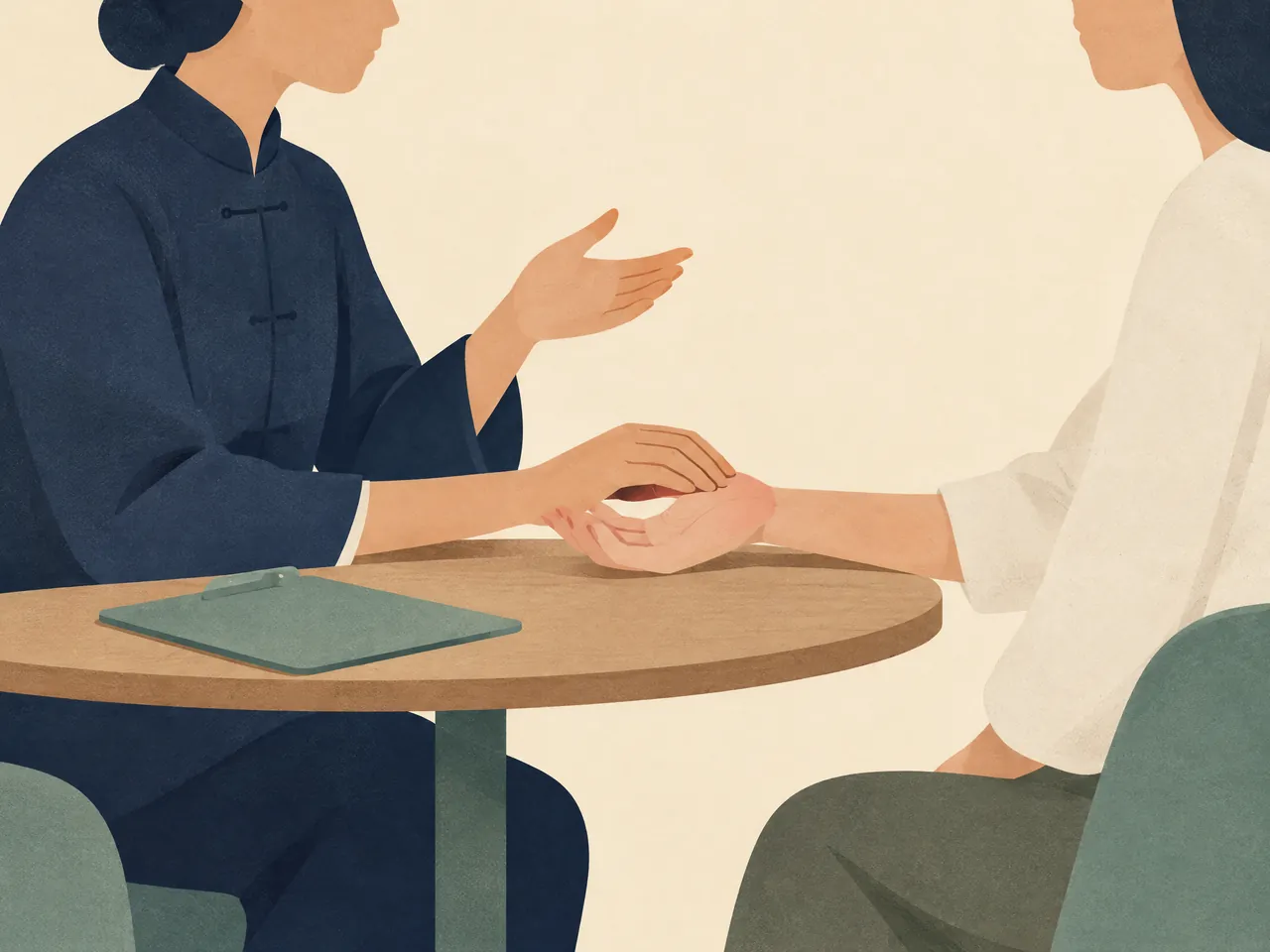
What a clinical examination may assess, including the Finkelstein test: De Quervain's tenosynovitis symptoms; How is De Quervain's tenosynovitis diagnosed?; Can acupuncture help De Quervain's tenosynovitis?
During a Finkelstein-type test, the thumb is brought across the palm, the fingers close over it, and the wrist is moved towards the little-finger side. Pain felt on the thumb side of the wrist can support a suspected diagnosis in the right clinical context [3]. The manoeuvre should not be used as a home challenge or forced through severe pain. A positive result is not a complete diagnosis, because tests can irritate nearby structures and different conditions may cause hand pain. Examination also helps distinguish pain centred at the thumb base from pain over the wrist tunnel, and it may check sensation, circulation, strength and other movements. Bring a short note of which tasks provoke the pain—such as lifting a pan, holding an infant, mouse work or a sport—and whether the problem is one-sided or both-sided. This makes the visit more specific than simply saying the wrist hurts. If you are deciding whether the pattern warrants conventional assessment first, read When should I see a doctor for thumb-side wrist pain?.
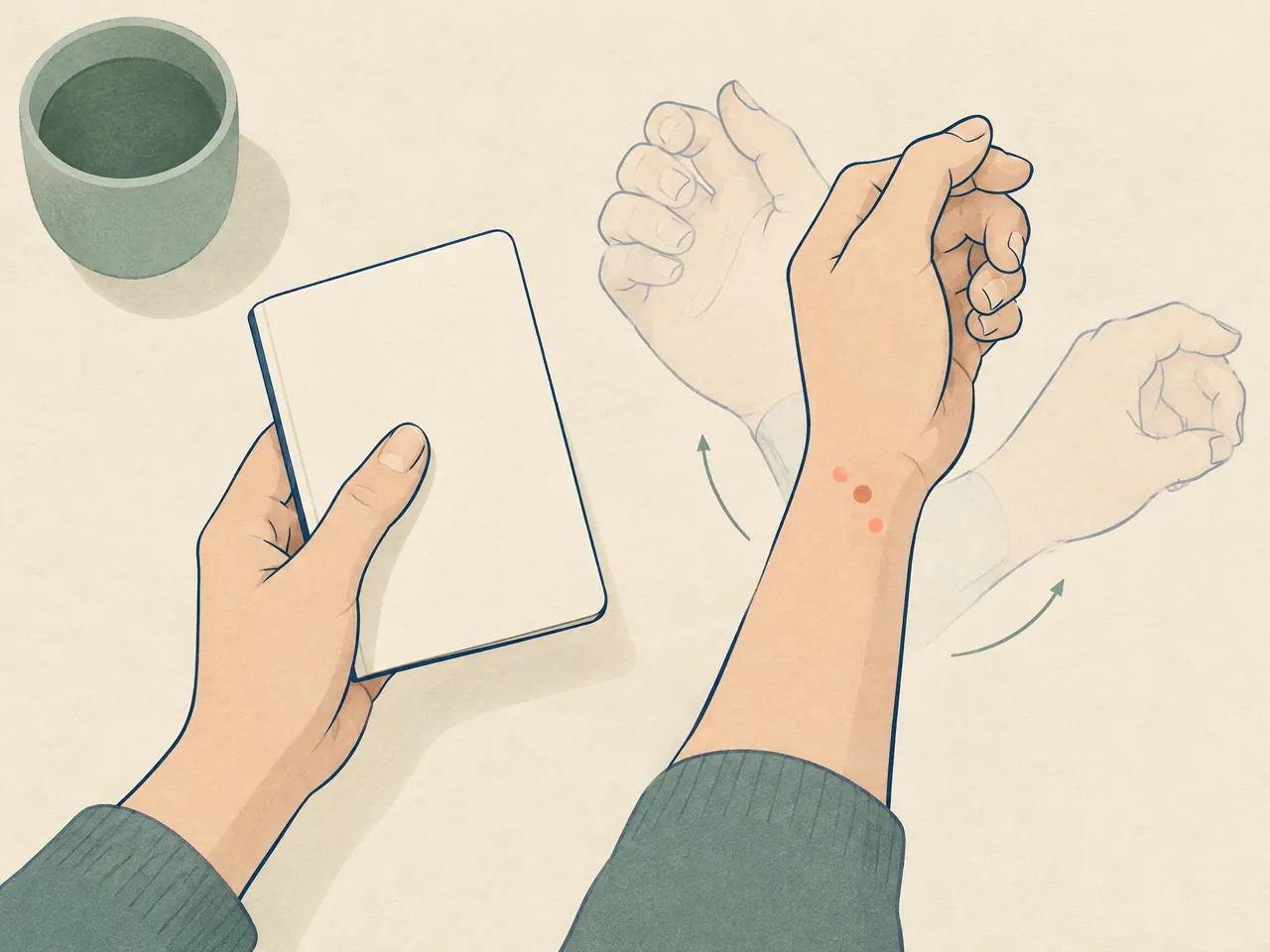
When splinting, activity changes or medical review may be appropriate: De Quervain's tenosynovitis symptoms; How is De Quervain's tenosynovitis diagnosed?; Can acupuncture help De Quervain's tenosynovitis?
Care is chosen according to the diagnosis, severity, work and caring demands, and what has already been tried. A thumb-and-wrist splint or brace may be recommended to keep the thumb still in a comfortable position. Activity changes aim to stop repeatedly provoking the same painful pinch, grip or wrist motion; an occupational or physical therapist can look at how a task is done and suggest less straining alternatives. Other options a medical clinician may discuss include pain-relieving medicine, local injection or, in persistent resistant cases, surgical release [1] [2]. The table below is not a treatment plan, but it helps separate the purpose of common options. Seek prompt medical care after a significant injury, or for marked redness or heat, fever, rapidly increasing swelling, severe pain, new numbness, obvious weakness or loss of hand function. Those features should not be managed by simply booking an acupuncture session. For a wider overview of conservative choices, our page on acupuncture for De Quervain's tenosynovitis may help you prepare questions.
Considering acupuncture safely and realistically: De Quervain's tenosynovitis symptoms; How is De Quervain's tenosynovitis diagnosed?; Can acupuncture help De Quervain's tenosynovitis?
Acupuncture is best considered after the painful pattern has been discussed and the limits are clear. A registered Chinese medicine practitioner can take a history, observe the affected area and decide whether acupuncture is an appropriate conservative option or whether a medical or imaging assessment should take priority. A session may use sterile, single-use needles at selected local and distant points, based on the individual assessment. People can feel a brief prick on insertion or an aching, heavy, tingling or spreading sensation during treatment; the experience and point selection are not identical for everyone. Tell the practitioner about pregnancy, bleeding disorders, implanted devices if electroacupuncture is being considered, medications and any prior reaction to needling. The purpose is thoughtful symptom management, not a promise to restore tendon gliding or reverse structural narrowing.
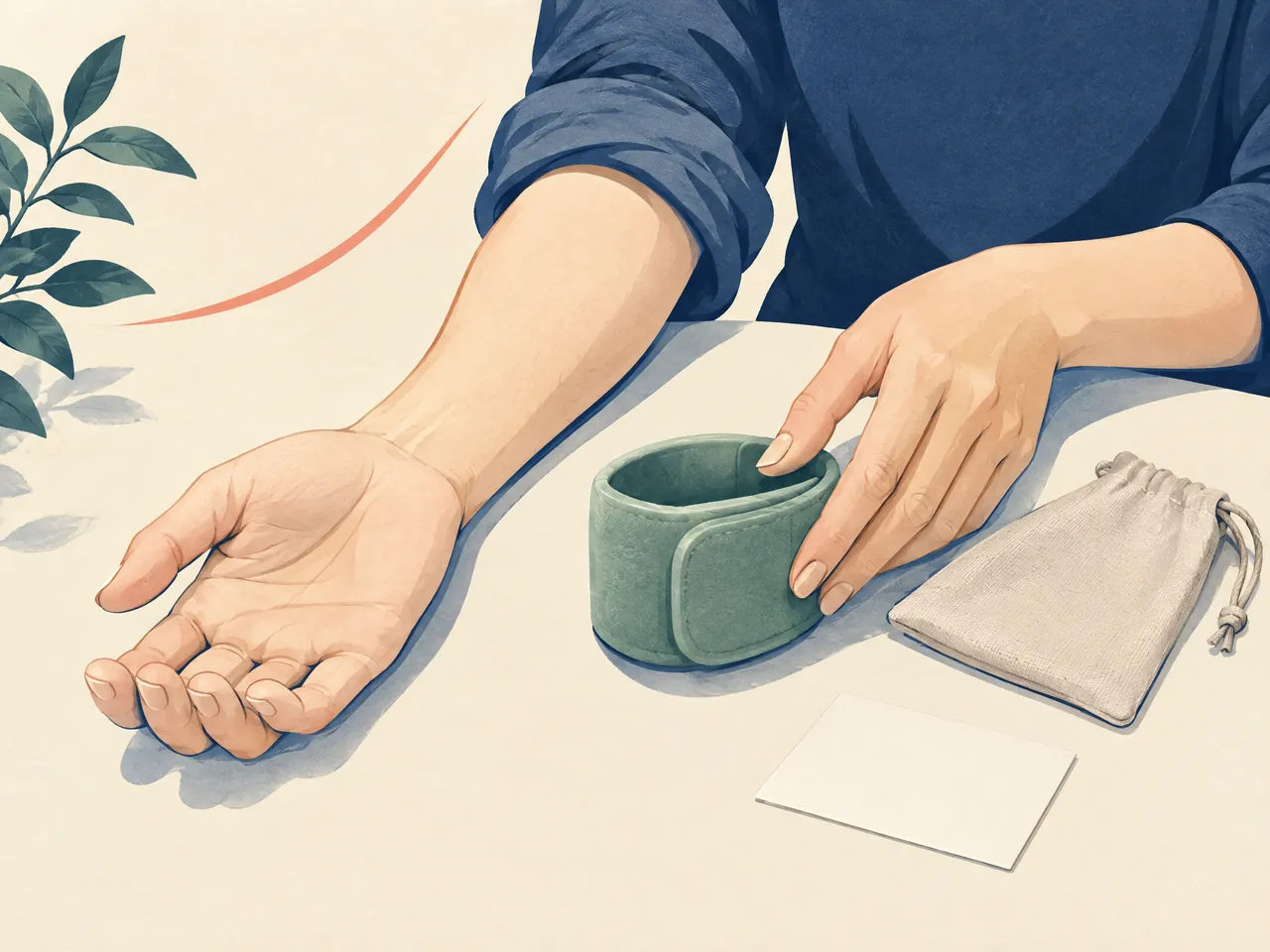
Can acupuncture help symptoms without repairing structural damage: De Quervain's tenosynovitis symptoms; How is De Quervain's tenosynovitis diagnosed?; Can acupuncture help De Quervain's tenosynovitis?
The concise answer is that acupuncture may be discussed for pain or symptom management, but it cannot repair a damaged tendon, widen a constricted tunnel or replace treatment directed at structural problems. Evidence specific to De Quervain’s remains limited. A 2024 systematic review and meta-analysis reported a promising trend for pain relief, but concluded that the number and quality of included studies meant that further research was needed [4]. That finding does not justify an outcome guarantee, a fixed course or a claim that acupuncture is equivalent to every medical option. It does support a sensible conversation about whether a trial fits your circumstances, alongside load modification, splinting, rehabilitation or medical care when indicated. The wider evidence base for acupuncture also varies by condition, and the mechanism is not fully understood [5]. If symptoms ease, it is still worth reviewing the movement or workload that likely keeps re-irritating the wrist. Explore the same topic from another angle in De Quervain disease acupuncture.
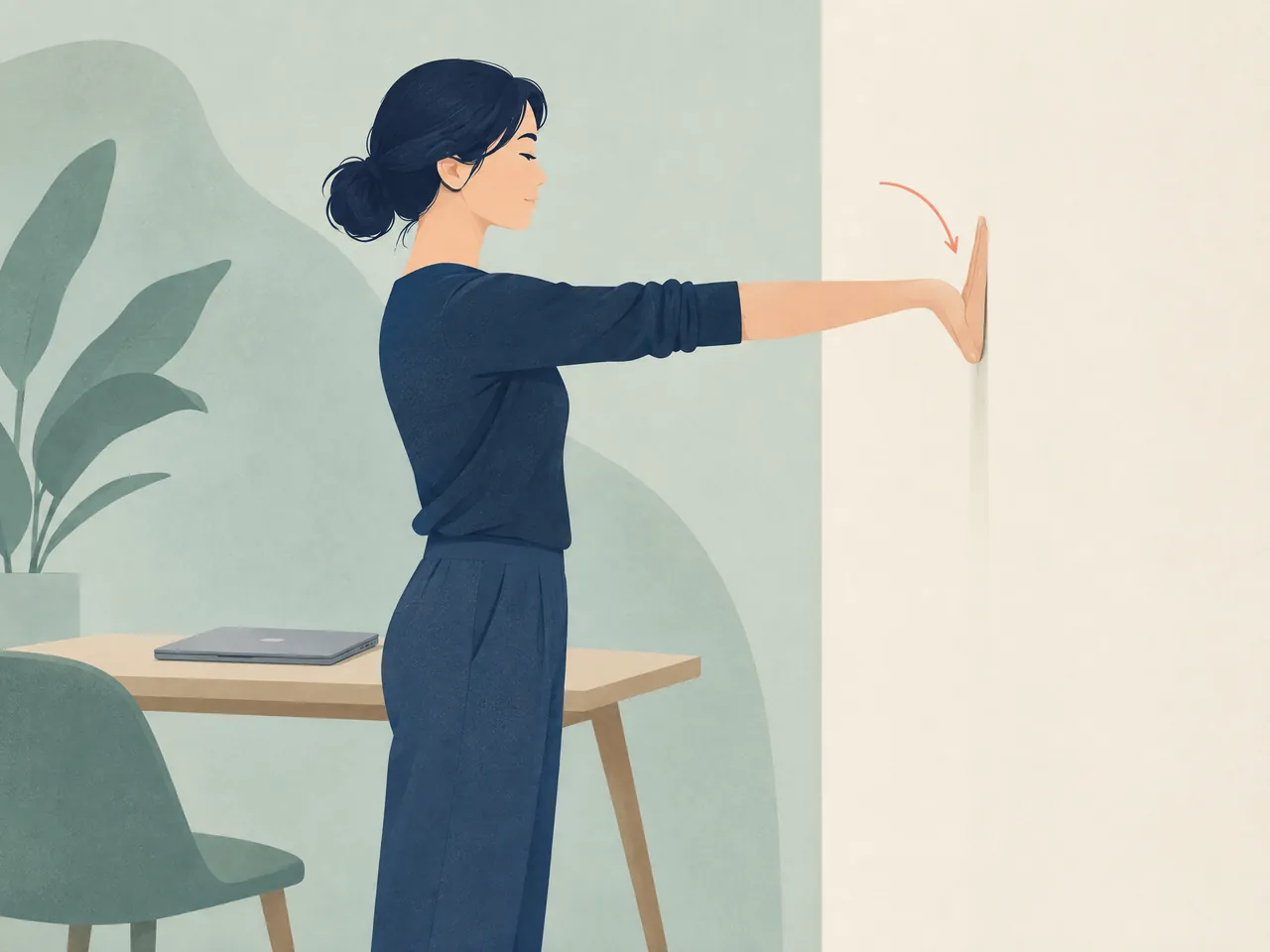
Questions to ask before acupuncture and signs requiring prompt care: De Quervain's tenosynovitis symptoms; How is De Quervain's tenosynovitis diagnosed?; Can acupuncture help De Quervain's tenosynovitis?
Before proceeding, ask what diagnosis is being considered, why acupuncture is or is not suitable now, what the proposed aim is, and what other assessment or care should happen alongside it. Ask what you may feel during and after treatment, how the painful activity will be modified, and what change would mean you should stop and seek medical review. A practitioner should use sterile, single-use needles; improper delivery and nonsterile needles can cause serious complications, although reported complications are relatively few [5]. Do not wait for a routine appointment if the wrist becomes hot, very red or suddenly swollen, if you develop fever, severe or escalating pain, numbness, new weakness, a colour change in the hand, or symptoms after trauma. These are not features to explain away as a normal treatment response. For a TCM Lab appointment enquiry, you can ask about a Kwun Tong Chinese medicine clinic or Chinese medicine clinic Prince Edward; availability is confirmed by appointment.
Care and health guide
Health service information
This directory brings together services, reading, and visit information related to health services, to help you prepare questions for a consultation.
If you are organising health questions, Chinese medicine clinic Hong Kong is a starting point for learning about related services and preparing for a consultation.
People have different needs; acupuncture Hong Kong provides further reading to help you understand options in your own context.


Your questions, answered
Frequently asked questions
What are common signs of De Quervain’s tenosynovitis?
Pain or tenderness on the thumb side of the wrist is the key symptom. It may be accompanied by swelling, difficulty moving the thumb or wrist, weakness, or a catching sensation. Gripping, pinching, twisting the wrist and lifting can make it more noticeable. Similar symptoms can have other causes, particularly after an injury, so an examination is useful when the pattern is new, severe or persistent.
How is De Quervain’s tenosynovitis diagnosed?
Diagnosis is usually clinical: a healthcare professional asks about symptoms, activities and any injury, then examines the thumb-side wrist for pain, swelling and movement-related symptoms. A Finkelstein manoeuvre may reproduce the characteristic pain. X-rays or other imaging are not routinely necessary, but may be selected to rule out another problem when the history or examination makes that appropriate.
Can acupuncture help De Quervain’s tenosynovitis?
Acupuncture may be considered as a conservative way to manage symptoms for some people after an individual assessment. The research specific to De Quervain’s is still limited, and treatment response varies. Acupuncture cannot repair structural damage, widen a narrowed tendon sheath or replace medical assessment for severe, traumatic, progressive or unusual symptoms.
What should I ask before an acupuncture appointment for thumb-side wrist pain?
Ask whether the symptom pattern needs medical or imaging assessment first, what the proposed treatment is intended to address, what sensations and aftercare to expect, and how you should modify the task that aggravates pain. Also disclose relevant health conditions, medicines, pregnancy and prior reactions to needling. Confirm when you should seek further medical review rather than continue conservative treatment.
Sources and further information
- [1] Hong Kong College of Orthopaedic Surgeons — De Quervain Disease
Referenced for: Local orthopaedic guidance for symptom pattern, clinical diagnosis, Finkelstein testing and conservative or medical treatment pathways.
- [2] American Academy of Orthopaedic Surgeons — De Quervain's Tenosynovitis
Referenced for: Orthopaedic patient information on thumb-side wrist symptoms, assessment and nonsurgical or surgical options.
- [3] Mayo Clinic — De Quervain tenosynovitis: Diagnosis and treatment
Referenced for: Explanation of the Finkelstein test, typical examination and conservative care considerations.
- [4] PubMed — Systematic review and meta-analysis of acupuncture for De Quervain's tenosynovitis treatment
Referenced for: 2024 evidence review reporting promising findings but noting limitations in the number and quality of studies.
- [5] National Center for Complementary and Integrative Health — Acupuncture: Effectiveness and Safety
Referenced for: US National Institutes of Health information on acupuncture safety, sterile single-use needles and variation in evidence by condition.