
TCM Lab · Health reading
How Much Hair Loss Is Normal? Understanding Unusual Hair Loss
Published Updated
Seeing more strands in the shower or on a pillow can be unsettling, but some shedding is a normal part of the hair cycle. The useful question is not only how many hairs have fallen, but whether the change is new, persistent, visible in your overall density, or accompanied by scalp or health symptoms. This guide helps you distinguish ordinary everyday shedding from patterns worth discussing with a doctor, and explains what observations can make that conversation more productive.
Appointments are confirmed through WhatsApp. If you have language requirements, please mention them in your enquiry.
The short answer
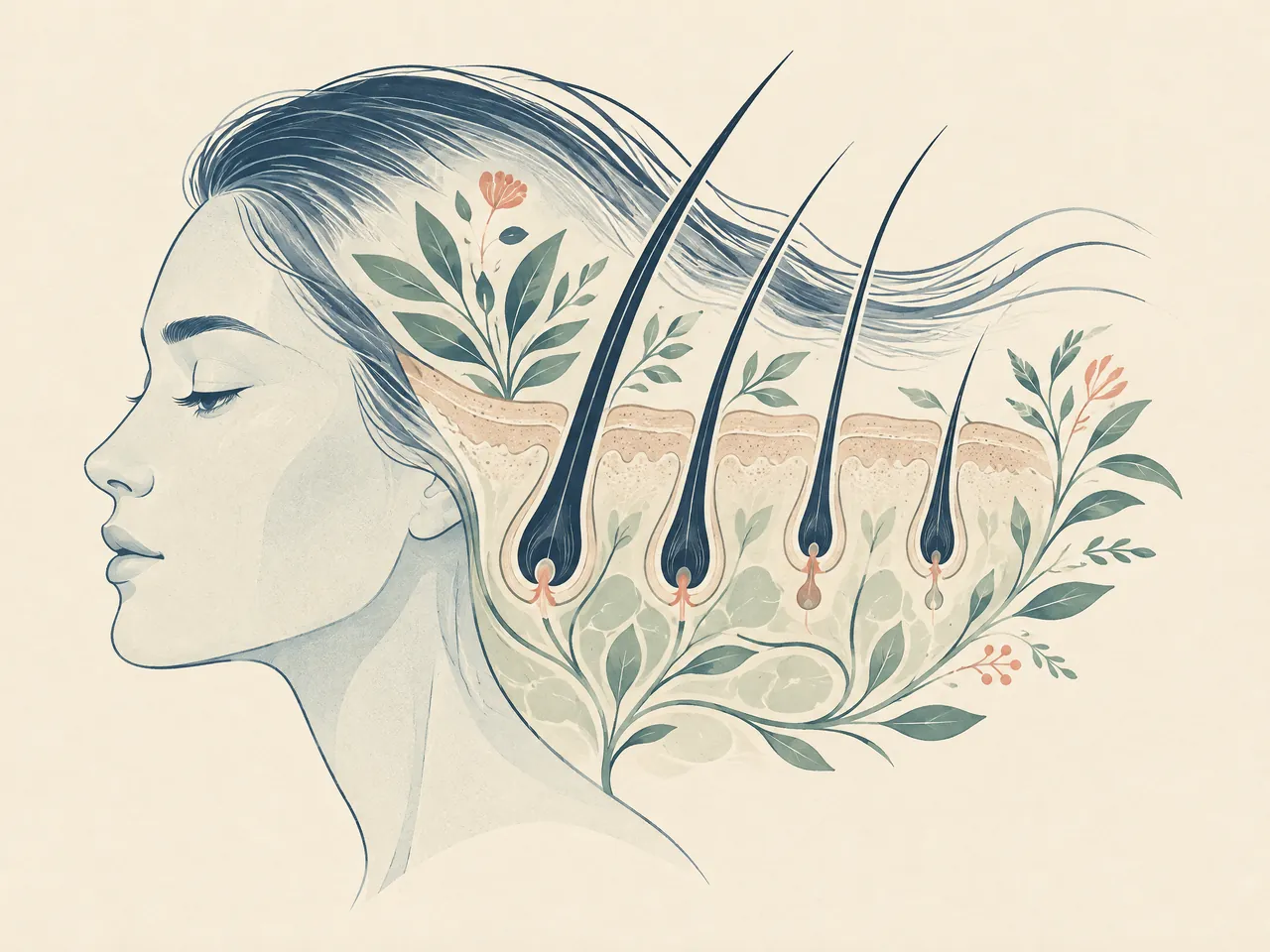
How much hair loss is normal? Around 50 to 100 hairs a day can be normal, and the total is often hard to judge outside a clinical setting. Pay more attention to a clear change from your usual shedding, widening part, receding hairline, bald patches, scalp discomfort or symptoms such as unusual fatigue. Sudden, patchy or distressing loss deserves medical advice so the possible cause can be assessed.
Transparent pricing
See the fees.
Choose your care.
Explore our complete official price list, including first-trial prices, regular prices, packages and branch-specific options.
Opening WhatsApp prepares an enquiry; it does not send a message, take payment or confirm an appointment. Suitability and individual arrangements are confirmed during consultation.
Hair and scalp
All prices in HKDScalp health and hair-loss management
Includes AI scalp analysis, deep scalp and follicle cleansing, and scalp oil-control care.
HK$380 (first trial)
Regular price: HK$680
- 6 sessions: HK$3,480 (HK$580 per session)
- 12 sessions: HK$5,760 (HK$480 per session)
- 20 sessions: HK$8,600 (HK$430 per session)
- 30 sessions: HK$11,400 (HK$380 per session)
Hair acupuncture and Chinese herbal medicine package
Includes scalp acupuncture and 3 days of Chinese herbal medicine that does not require decoction.
HK$580 (single session)
Registered Chinese Medicine Practitioner consultation
- 6 sessions: HK$3,180 (HK$530 per session)
- 12 sessions: HK$5,760 (HK$480 per session)
- 20 sessions: HK$8,600 (HK$430 per session)
- 30 sessions: HK$11,400 (HK$380 per session)
Combined hair and scalp treatment
Combines acupuncture and Chinese herbal medicine with salon-level scalp and follicle care. Packages include complimentary hair-care shampoo and serum.
HK$1,260 (single session)
Combined treatment
- 8 sessions: HK$8,640 (HK$1,080 per session)
- 16 sessions: HK$15,680 (HK$980 per session)
- 20 sessions: HK$18,600 (HK$930 per session)
- 30 sessions: HK$26,400 (HK$880 per session)
Weight management
All prices in HKDFull-body acupoint embedding for weight management
Includes full-body acupoint embedding. Packages include complimentary Chinese herbal medicine for weight management, with the number of included days scaled to the package. Embedding material and the individual treatment arrangement are confirmed during consultation; this is not a cosmetic thread lift.
HK$980 (single session)
No trial session
- 10 sessions: HK$7,800 (HK$780 per session)
- 20 sessions: HK$14,600 (HK$730 per session)
- 30 sessions: HK$20,400 (HK$680 per session)
Facial acupuncture
All prices in HKDFacial acupuncture (basic)
Includes facial acupuncture and meridian-based facial care, including care for facial puffiness.
HK$480 (first trial)
Regular price: HK$680
- 10 sessions: HK$5,200 (HK$520 per session)
- 20 sessions: HK$9,600 (HK$480 per session)
- 30 sessions: HK$13,500 (HK$450 per session)
Facial acupuncture (advanced)
Includes enhanced facial acupuncture with a specially formulated moisturising mask and serum.
HK$780 (first trial)
Regular price: HK$1,180
- 10 sessions: HK$9,000 (HK$900 per session)
- 20 sessions: HK$16,600 (HK$830 per session)
- 30 sessions: HK$23,400 (HK$780 per session)
Pain care
All prices in HKDExtracorporeal shockwave treatment
Shockwave treatment for deep-tissue and fascial care. The Kwun Tong clinic offers the multi-area options shown below.
Priced by branch
Branch-specific pricing
Prince Edward: HK$250 per area
Kwun Tong: HK$250 for 1 area / HK$450 for 2 areas / HK$600 for 3 areas
Pain care (manual therapy)
Includes Chinese medicine musculoskeletal assessment, manual joint techniques and tui na.
HK$580 (single session)
Chinese medicine musculoskeletal assessment
Pain care (acupuncture and manual therapy)
Combines acupuncture and manual therapy.
HK$680 (single session)
Combined care
Chinese medicine
All prices in HKDAcupuncture and Chinese herbal medicine package
Includes a Chinese medicine consultation with pulse assessment, body acupuncture and 3 days of Chinese herbal granules that do not require decoction.
HK$580 (single session)
Chinese medicine consultation with pulse assessment
How Much Hair Loss Is Normal in Everyday Shedding?
Hair follicles do not all release hairs at once. Hair moves through phases of growth, transition and rest, so individual strands naturally come away as part of ongoing renewal. The NHS states that losing between 50 and 100 hairs a day is normal and often goes unnoticed [1]. That figure is a general guide, not a scorecard. It cannot tell you from one count whether your own shedding is healthy, because hair length, washing routine and what is already caught in a brush can change what you see.
A more practical baseline is your own usual pattern. If you have always seen a few hairs on your towel, that observation alone is less concerning than a recent, sustained change in the amount coming away or the way your hair looks when dry. Notice whether your ponytail feels smaller, a part is easier to see, or styling no longer gives the same coverage. The difference between ordinary replacement and a problem is often not a dramatic daily number; it is a change in shedding, regrowth or density over time.
Hair shedding can also feel emotionally significant before it is medically urgent. It is reasonable to seek advice if it is worrying you, even when you cannot count hairs accurately. For a broader guide to warning signs and consultation timing, see when to see a doctor for hair loss. Seeking an explanation is different from assuming one cause or committing to a treatment; the first aim is to describe the pattern clearly.

How Much Hair Loss Is Normal During Washing and Brushing?
Washing and brushing gather together hairs that were already ready to shed, which can make one session look more alarming than the rest of the day. Check what happens across several weeks rather than reacting to a single wash. Are you seeing roughly the same amount each time, or are handfuls appearing after gentle combing? Are short broken pieces predominating, suggesting breakage, or are full-length strands coming from the scalp? These are useful observations, but they do not establish a diagnosis on their own.
Handle wet hair gently: it is easier to stretch and tug when wet. Use your fingers or a wide-toothed comb to ease out tangles, avoid tight styles that pull at the roots, and consider whether recent bleaching, heat styling, extensions or vigorous brushing coincide with breakage. This is not a substitute for assessment if the loss is increasing. If sudden general shedding followed illness, surgery, major stress, childbirth, rapid weight change or another physical strain, the topic of telogen effluvium may help you frame the history for a clinician.
How Much Hair Loss Is Normal Before It Suggests Thinning?
Shedding and thinning are related but not identical observations. You may lose a normal-looking number of hairs and still be concerned because new growth is finer or the scalp shows more readily. Conversely, a temporary shedding episode can look dramatic in a brush while overall coverage remains stable. Compare photographs taken at the same part, angle and lighting every few weeks rather than repeatedly checking under different bathroom lights. Look at the hairline, centre part and crown, not only the hairs that have fallen.
Gradual thinning often develops quietly. Mayo Clinic describes predictable hereditary patterns: a receding hairline and bald spots are common patterns in men, while women may notice a broadening part or thinning around the crown [2]. Family history can be relevant, but it does not answer every individual case. Record which area changed first and whether the change is progressing; this gives a doctor more to work with than an uncertain hair count.
Compare your options
| What you notice | What to record | Why medical advice may help |
|---|---|---|
| A few hairs on the pillow, brush or shower floor with stable coverage | Your usual wash and brushing routine; whether density and hairline look unchanged | This may fit ordinary shedding, but seek advice if the change worries you or becomes persistent. |
| More hair than usual over several washes or gentle combing | Start date; recent illness, fever, stress, childbirth, weight change, diet and medicine changes | A clinician can assess whether increased shedding has a temporary trigger or another contributor. |
| Wider part, thinning crown or receding hairline | Consistent photos; which area changed first; family pattern and hair-care practices | Gradual thinning can have a recognisable pattern but still benefits from an individual assessment. |
| Round patch, broken hairs, redness, scaling, pain or oozing | Location, spread, itch or pain, eyebrow or body-hair changes, and clear photos | Patchy loss or scalp inflammation is not typical everyday shedding and should be evaluated. |
| Hair change with fatigue, weight change or other new symptoms | Symptom timeline, medicines, supplements, dietary restrictions and previous test results | The wider health picture may guide examination and whether tests are appropriate. |
On smaller screens, scroll the table sideways to compare all columns.
How Much Hair Loss Is Normal When Warning Signs Appear?
Normal shedding should not be used to dismiss a pattern that is sudden, patchy or accompanied by skin changes. A noticeable increase in loss, a new bald area or pain and inflammation on the scalp calls for a different response than a few strands on the pillow. Mayo Clinic advises speaking with a doctor about sudden or patchy loss, or more loss than usual during washing or combing, because it can signal an underlying condition that needs treatment [2].

Try not to self-diagnose from the pattern alone. The same visible change can have more than one explanation, and online images cannot examine the scalp or your wider health history. Instead, note the start date, whether the loss is everywhere or concentrated in one spot, and any trigger in the preceding months. Bring a list of medicines, vitamins and supplements rather than stopping a prescribed medicine on your own. This turns a worrying visual change into information a clinician can assess.
How Much Hair Loss Is Normal When Shedding Suddenly Increases?
A sudden increase means more than simply noticing hair for the first time. You may find substantially more strands in the shower, see hair come away with gentle handling, or notice an overall reduction in fullness within a short period. Physical or emotional stress can be relevant, and the NHS lists illness, stress, weight loss and iron deficiency among possible causes of temporary hair loss [1]. Recent fever, an operation, childbirth, restrictive eating, a major life event and medication changes are all worth mentioning without presuming they are the reason.
The American Academy of Dermatology distinguishes excessive shedding, often called telogen effluvium, from hair loss in which something interrupts hair growth; it notes that a dermatologist can help tell whether one or both are present [4]. That distinction matters because the next steps depend on the cause. If shedding is distressing, persistent or worsening, arrange medical advice rather than waiting for an arbitrary number of hairs to decide for you.
How Much Hair Loss Is Normal With Patches, Itching or Scalp Changes?
A coin-sized bare patch, uneven area of loss, or a cluster of broken hairs is not the usual pattern of everyday diffuse shedding. Round patches can occur with alopecia areata, but shape alone cannot confirm that diagnosis. New areas should be assessed, especially when hair loss also affects eyebrows or beard hair. The focused guide to patchy hair loss can help you organise observations, but it should not replace an examination.
The scalp itself provides important clues. Itch, soreness, scaling, redness, swelling, crusting or oozing changes the urgency of the conversation because infections and inflammatory skin conditions can involve the scalp. Mayo Clinic notes that spreading scaling patches can be a sign of ringworm and may occur with broken hair, redness, swelling and sometimes oozing [2]. Avoid scratching, picking or sharing combs while you seek advice. For a symptom-specific reading path, visit hair loss with flaky scalp.
How Much Hair Loss Is Normal Before You Seek Medical Advice?
There is no need to wait until hair loss looks severe before asking a doctor about it. Seek medical advice when loss is sudden, patchy, persistent, visibly progressive or upsetting, and when scalp symptoms or other changes in health accompany it. This is particularly important if you notice a new receding hairline, widening part, thinning crown or loss elsewhere on the body. The purpose of assessment is to establish what may be contributing, not to promise that every type of hair change can be reversed.
A prepared appointment is usually more useful than a perfect strand count. Mayo Clinic explains that assessment may include questions about diet, hair care, medical and family history, a physical examination and, where appropriate, tests such as a blood test, pull test or scalp sampling [3]. Bring dated photos, a timeline and any recent results. If tests are discussed, the article on a hair loss blood test explains why blood work may be considered as part of investigating possible contributors rather than as a stand-alone answer.
How Much Hair Loss Is Normal When Hairlines Recede or Crowns Thin?
A gradual shift at the temples, a thinning crown or a wider central part deserves attention when it is new or advancing. These patterns are often associated with androgenetic, or hereditary, hair loss. However, a pattern that resembles a family member’s does not rule out another factor, and it cannot be confirmed from an online description. Give the clinician a simple timeline: when you first saw the change, whether it began at the hairline, part or crown, and whether relatives have had a similar pattern.
Avoid concealing the pattern so completely that you cannot observe it. Styling products, hair fibres or a new haircut may help confidence, but a few consistent photographs let you see whether density is actually changing. Tell the clinician about tight braids, extensions, repeated heat or chemical processing if these affect the area. That context helps separate possible traction or breakage from a change that appears to start at the follicle.

How Much Hair Loss Is Normal With Fatigue or Other Symptoms?
Hair change alongside marked fatigue, unexpected weight change, palpitations, menstrual changes, feeling unusually cold or hot, or other new symptoms is a reason to arrange medical assessment rather than treating the hair in isolation. Those symptoms do not identify one condition by themselves, but they may help a doctor decide what questions or tests are relevant. Be specific about when each symptom started, whether it preceded the shedding, and any diagnosis, dietary restriction or medicine change that occurred around the same time.
Before the visit, write down prescribed and non-prescribed products, including vitamins and supplements. Do not assume that a supplement is harmless or that it explains the change simply because it is marketed for hair. Ask what may be causing the pattern, what alternatives are being considered, whether investigation is needed and what change should prompt earlier review. If you would like to discuss supportive hair and scalp concerns with a Registered Chinese Medicine Practitioner after appropriate medical assessment, TCM Lab can be contacted to ask about consultation arrangements at the Kwun Tong Chinese medicine clinic or Chinese medicine clinic Prince Edward.
Care and health guide
Hair and scalp care information
This directory brings together services, reading, and visit information related to hair and scalp care, to help you prepare questions for a consultation.
For questions about hair or scalp care, noting the everyday concerns and service questions you want to discuss can help prepare a consultation; Chinese medicine for hair loss is a relevant service or reading entry point.
People may have different priorities, and acupuncture Hong Kong offers related information to help you understand options and prepare questions.

Your questions, answered
Frequently asked questions
How much hair loss is normal if I lose 50 to 100 hairs a day?
Around 50 to 100 hairs a day can be normal, but a count alone cannot diagnose a hair problem. Consider whether there is a clear change from your usual shedding, a fall in visible density, finer regrowth, a widening part, scalp symptoms or other changes in health. Seek medical advice if the pattern is sudden, progressive or distressing.
How much hair loss is normal when a round bald patch appears?
A round or irregular bald patch is not ordinary daily shedding. It may have several causes, including alopecia areata, but appearance alone cannot confirm one. Arrange a medical assessment and note when the patch began, whether it is enlarging, any itch or pain, and changes affecting eyebrows, beard or other body hair.
How much hair loss is normal when the hairline recedes or the crown thins?
A receding hairline or thinning at the crown can develop gradually and is commonly seen in hereditary pattern hair loss. It is still worth discussing if it is new or progressing, because family history does not explain every case. Consistent photos, a timeline and a list of medicines and hair-care practices can help the assessment.
What should I do if hair loss comes with an itchy, red or flaky scalp?
Book medical advice rather than treating it as normal shedding. Scaling, redness, swelling, pain, crusting or oozing may point to a scalp condition that needs examination. Avoid scratching or picking the area and do not share combs or brushes while you wait for advice, particularly if there are spreading scaly patches or broken hairs.
Sources and further information
- [1] NHS — Hair loss
Referenced for: Official NHS guidance supporting the normal 50-to-100-hairs-per-day context, common temporary contributors and advice to seek medical input about hair loss.
- [2] Mayo Clinic — Hair loss: Symptoms and causes
Referenced for: Clinical information supporting descriptions of sudden shedding, gradual thinning, patchy loss, scalp scaling and reasons to speak with a doctor.
- [3] Mayo Clinic — Hair loss: Diagnosis and treatment
Referenced for: Clinical information supporting consultation preparation, medical history, examination and possible hair-loss tests.
- [4] American Academy of Dermatology — Do you have hair loss or hair shedding?
Referenced for: Professional dermatology guidance distinguishing excessive shedding from hair loss and explaining the value of clinical assessment.