
TCM Lab · Health reading
Plantar Fasciitis Acupuncture: Acupuncture for Plantar Fasciitis and Acupuncture for Pain on the Bottom of the Foot
Published Updated
Bottom-of-foot pain is frustrating because the first few steps can hurt sharply, then feel more manageable, only to return after a long day of standing, walking or running. That pattern can fit plantar fasciitis, but it is not enough to diagnose it on its own. Plantar fasciitis acupuncture may be considered after an individual assessment as one adjunct for symptom management; it is not a promised cure or a replacement for checking the cause of pain. For many people, the useful starting point is to identify the painful area and activity pattern, then combine sensible load changes, targeted stretching and supportive footwear. If symptoms are severe, worsening, recurrent or paired with numbness, medical assessment should come first.
Appointments are confirmed through WhatsApp. If you have language requirements, please mention them in your enquiry.
The short answer
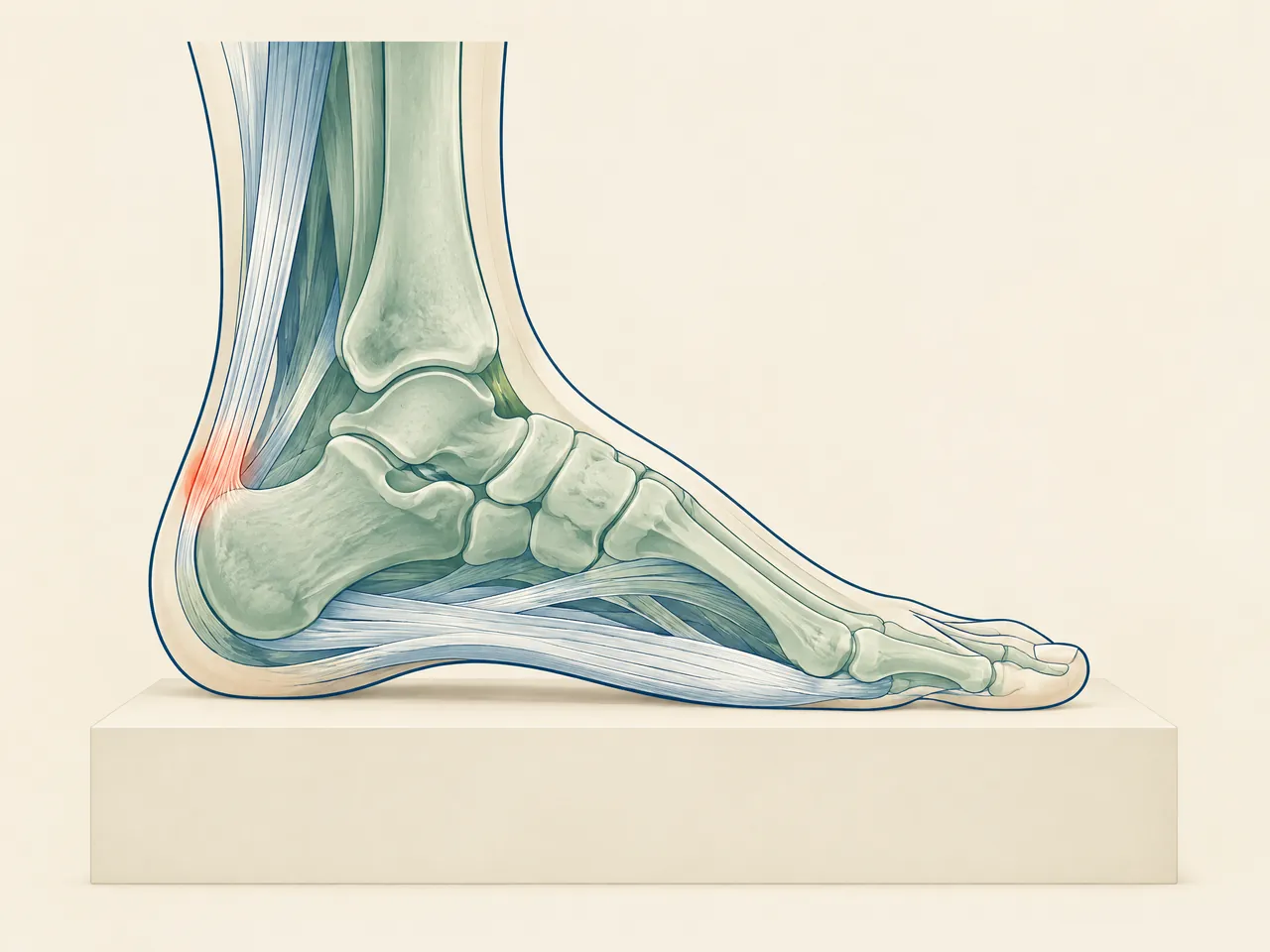
Acupuncture for plantar fasciitis can be discussed as an adjunct after a clinician has assessed where and when the pain occurs. It should not be presented as a guaranteed cure, and it works best as part of a wider plan that may include plantar-fascia and calf stretching, changes to standing or exercise load, and supportive footwear. Pain that is severe, persistent, worsening, associated with numbness, or occurring with diabetes needs timely medical assessment.
Transparent pricing
See the fees.
Choose your care.
Explore our complete official price list, including first-trial prices, regular prices, packages and branch-specific options.
Opening WhatsApp prepares an enquiry; it does not send a message, take payment or confirm an appointment. Suitability and individual arrangements are confirmed during consultation.
Pain care
All prices in HKDExtracorporeal shockwave treatment
Shockwave treatment for deep-tissue and fascial care. The Kwun Tong clinic offers the multi-area options shown below.
Priced by branch
Branch-specific pricing
Prince Edward: HK$250 per area
Kwun Tong: HK$250 for 1 area / HK$450 for 2 areas / HK$600 for 3 areas
Pain care (manual therapy)
Includes Chinese medicine musculoskeletal assessment, manual joint techniques and tui na.
HK$580 (single session)
Chinese medicine musculoskeletal assessment
Pain care (acupuncture and manual therapy)
Combines acupuncture and manual therapy.
HK$680 (single session)
Combined care
Hair and scalp
All prices in HKDScalp health and hair-loss management
Includes AI scalp analysis, deep scalp and follicle cleansing, and scalp oil-control care.
HK$380 (first trial)
Regular price: HK$680
- 6 sessions: HK$3,480 (HK$580 per session)
- 12 sessions: HK$5,760 (HK$480 per session)
- 20 sessions: HK$8,600 (HK$430 per session)
- 30 sessions: HK$11,400 (HK$380 per session)
Hair acupuncture and Chinese herbal medicine package
Includes scalp acupuncture and 3 days of Chinese herbal medicine that does not require decoction.
HK$580 (single session)
Registered Chinese Medicine Practitioner consultation
- 6 sessions: HK$3,180 (HK$530 per session)
- 12 sessions: HK$5,760 (HK$480 per session)
- 20 sessions: HK$8,600 (HK$430 per session)
- 30 sessions: HK$11,400 (HK$380 per session)
Combined hair and scalp treatment
Combines acupuncture and Chinese herbal medicine with salon-level scalp and follicle care. Packages include complimentary hair-care shampoo and serum.
HK$1,260 (single session)
Combined treatment
- 8 sessions: HK$8,640 (HK$1,080 per session)
- 16 sessions: HK$15,680 (HK$980 per session)
- 20 sessions: HK$18,600 (HK$930 per session)
- 30 sessions: HK$26,400 (HK$880 per session)
Weight management
All prices in HKDFull-body acupoint embedding for weight management
Includes full-body acupoint embedding. Packages include complimentary Chinese herbal medicine for weight management, with the number of included days scaled to the package. Embedding material and the individual treatment arrangement are confirmed during consultation; this is not a cosmetic thread lift.
HK$980 (single session)
No trial session
- 10 sessions: HK$7,800 (HK$780 per session)
- 20 sessions: HK$14,600 (HK$730 per session)
- 30 sessions: HK$20,400 (HK$680 per session)
Facial acupuncture
All prices in HKDFacial acupuncture (basic)
Includes facial acupuncture and meridian-based facial care, including care for facial puffiness.
HK$480 (first trial)
Regular price: HK$680
- 10 sessions: HK$5,200 (HK$520 per session)
- 20 sessions: HK$9,600 (HK$480 per session)
- 30 sessions: HK$13,500 (HK$450 per session)
Facial acupuncture (advanced)
Includes enhanced facial acupuncture with a specially formulated moisturising mask and serum.
HK$780 (first trial)
Regular price: HK$1,180
- 10 sessions: HK$9,000 (HK$900 per session)
- 20 sessions: HK$16,600 (HK$830 per session)
- 30 sessions: HK$23,400 (HK$780 per session)
Chinese medicine
All prices in HKDAcupuncture and Chinese herbal medicine package
Includes a Chinese medicine consultation with pulse assessment, body acupuncture and 3 days of Chinese herbal granules that do not require decoction.
HK$580 (single session)
Chinese medicine consultation with pulse assessment
Plantar Fasciitis Acupuncture, Acupuncture for Plantar Fasciitis and Acupuncture for Pain on the Bottom of the Foot: What the Symptoms May Mean
The label ‘plantar fasciitis’ is often used for any sore sole, yet the bottom of the foot contains several structures and not every painful spot has the same explanation. Plantar fasciitis commonly causes pain on the sole around the heel and arch. A familiar account is pain when taking the first steps after sleeping or sitting, some easing once moving, and renewed soreness after prolonged weight-bearing. That is a useful clue, not a self-diagnosis. The NHS also notes this relationship between rest, early walking and longer standing, walking or running. [1] A clear description helps a clinician decide whether acupuncture for pain on the bottom of the foot is reasonable to discuss and whether another assessment is more urgent.
Keep a brief symptom record rather than trying to name the condition. Mark whether pain is at the inner heel, centre of the heel, through the arch, or nearer the ball of the foot. Describe it in ordinary words: sharp on the first step, dull after a shift, burning, tingling, or tender under pressure. Note the previous day’s load, such as a new running route, more stair climbing, or a return to exercise after a break. This makes an appointment more focused and helps show whether a self-care change is genuinely helping.

If the question is broader foot discomfort rather than a known plantar-fascia problem, our overview of acupuncture for foot pain explains why a precise location matters. Pain centred through the arch can deserve a different conversation; see acupuncture for arch pain for that narrower symptom pattern. These related pages do not replace an in-person assessment, particularly when the pain is changing quickly or makes normal walking difficult.
Plantar Fasciitis Acupuncture, Acupuncture for Plantar Fasciitis and Acupuncture for Pain on the Bottom of the Foot: Location and First-Step Pain
First-step pain is most informative when it is linked to an exact place. Someone may notice a tender point near the heel on getting out of bed, then walk more comfortably, while another person has arch soreness only after a long commute. Ask whether raising the toes, climbing stairs, going barefoot on a hard floor or pressing the heel changes the pain. The NHS describes pain around the heel and arch, pain on first walking after rest, and discomfort with stretching the sole as features that can occur with plantar fasciitis. [1] These observations are useful to bring to a practitioner, but should not rule out other problems at home.
Separate a morning pattern from a workload pattern. Soreness after an extended shift, pain after a sudden mileage increase, and pain on every first step may each need different daily changes. Record what improves the pain, how long the improvement lasts, and what reliably brings it back. This can prevent doing too much on a better day and judging every option only by the following morning’s discomfort.
Plantar Fasciitis Acupuncture, Acupuncture for Plantar Fasciitis and Acupuncture for Pain on the Bottom of the Foot: Other Possible Causes
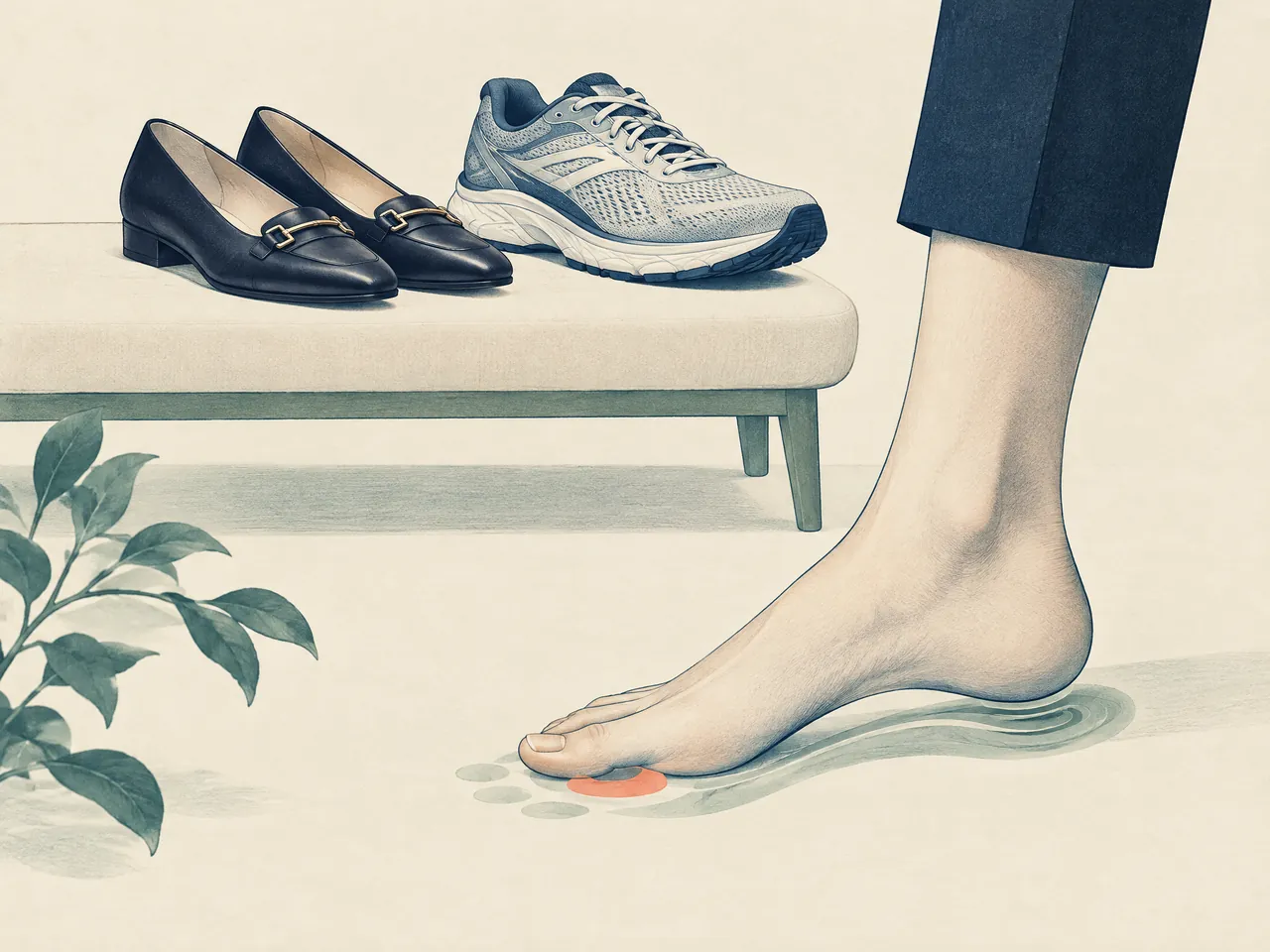
A heel or sole symptom can have other explanations. Pain directly under the centre of the heel, especially on hard ground or barefoot, may call for a different clinical consideration from pain near the inner heel and arch. Burning, pins and needles, or reduced feeling raises concern about nerve involvement. A very localised painful area with swelling, or pain that becomes more pronounced with weight bearing after a training change, also deserves medical review rather than an assumption that it is plantar fasciitis. An acute twist or fall can introduce a separate injury pathway; our information on ankle sprain is relevant when an ankle injury and foot symptoms occur together.
Seek timely conventional medical assessment when pain is severe or prevents usual activities, becomes worse or repeatedly returns, or does not improve with initial self-care. Tingling or loss of feeling is another reason to be checked, and people with diabetes and foot pain should seek advice promptly because foot problems may be more serious. [1] Do not use acupuncture to delay evaluation of those warning signs. The purpose of an assessment is not to dismiss your pain; it is to make sure that a symptom-management option is being considered in the right setting.
Compare your options
| What you notice | Why it is useful to report | Practical next step |
|---|---|---|
| Pain around the heel or arch on the first steps after rest | This pattern can occur with plantar fasciitis but is not diagnostic by itself. | Record the time of day, exact spot and whether walking changes it. |
| Pain returns after prolonged standing, walking or running | The relationship to load can help shape activity changes and rehabilitation. | List the activity, footwear and duration before symptoms increased. |
| Burning, tingling or loss of feeling | Sensation changes may point beyond a straightforward plantar-fascia problem. | Seek medical assessment rather than relying only on self-care or acupuncture. |
| Marked swelling, inability to bear weight, hot/red skin or a wound | These can signal an injury or condition needing prompt clinical review. | Arrange urgent assessment; do not wait to test a complementary treatment. |
| Diabetes and new foot pain | Foot problems can be more serious with diabetes. | Seek timely medical advice and inspect the foot rather than ignoring symptoms. |
On smaller screens, scroll the table sideways to compare all columns.
Plantar Fasciitis Acupuncture, Acupuncture for Plantar Fasciitis and Acupuncture for Pain on the Bottom of the Foot: What Assessment Involves
A useful appointment begins with functional questions. When did pain begin? Was there a recent increase in walking, standing, running or work demands? Which shoes are used for commuting, work and exercise? Does pain wake you, change your gait, or make stairs difficult? A clinician may also ask about previous injury, general health, medicines, sensation changes and care already tried. Bring any imaging report or physiotherapy plan if you have one, especially if you are considering acupuncture alongside other care.
Assessment should turn the story into a manageable next step. It may clarify where pain is reproduced, review calf and foot flexibility, and identify the daily activity hardest to modify. The outcome might be a short period of reducing a provoking activity, a consistent stretching habit, advice to review shoes, a referral, or discussion of acupuncture as an adjunct. Ask what change should prompt reassessment rather than waiting indefinitely.
Plantar Fasciitis Acupuncture, Acupuncture for Plantar Fasciitis and Acupuncture for Pain on the Bottom of the Foot: Traditional Chinese Medicine Assessment
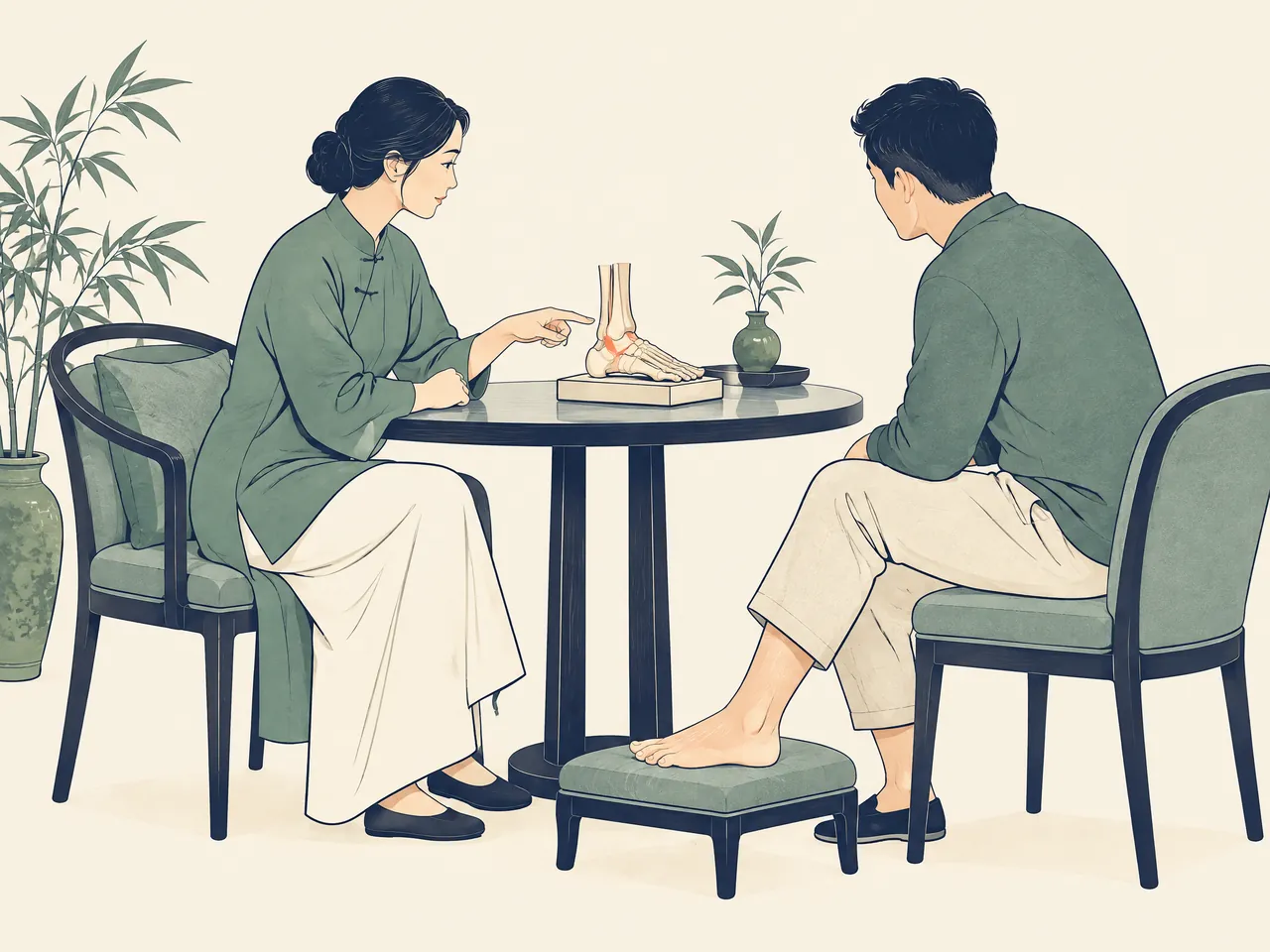
In a Traditional Chinese Medicine consultation, a Registered Chinese Medicine Practitioner may ask about the painful location and timing alongside sleep, appetite, temperature preference, bowel habits, stress and broader health history. Observation and palpation can form part of that consultation. Within the traditional approach, the practitioner may discuss patterns such as impaired movement of qi and blood or cold-damp obstruction. These are traditional assessment concepts, not modern medical diagnoses. They should sit alongside, not replace, attention to structural injury, neurological symptoms, infection risk or other conditions requiring conventional assessment.
If acupuncture is discussed, say openly if you are pregnant, have a bleeding disorder, take medicines that affect bleeding, have a pacemaker or implanted electrical device, have a skin infection near a proposed treatment area, or have reacted poorly to needling before. Share physiotherapy exercises, insoles, injections and supplements. Fine needles are inserted through the skin; NCCIH notes that complications are relatively uncommon but can be serious when needles are nonsterile or treatment is improperly delivered. [4] A safe discussion includes consent and a plan for changed symptoms.
Plantar Fasciitis Acupuncture, Acupuncture for Plantar Fasciitis and Acupuncture for Pain on the Bottom of the Foot: Evidence and Limitations
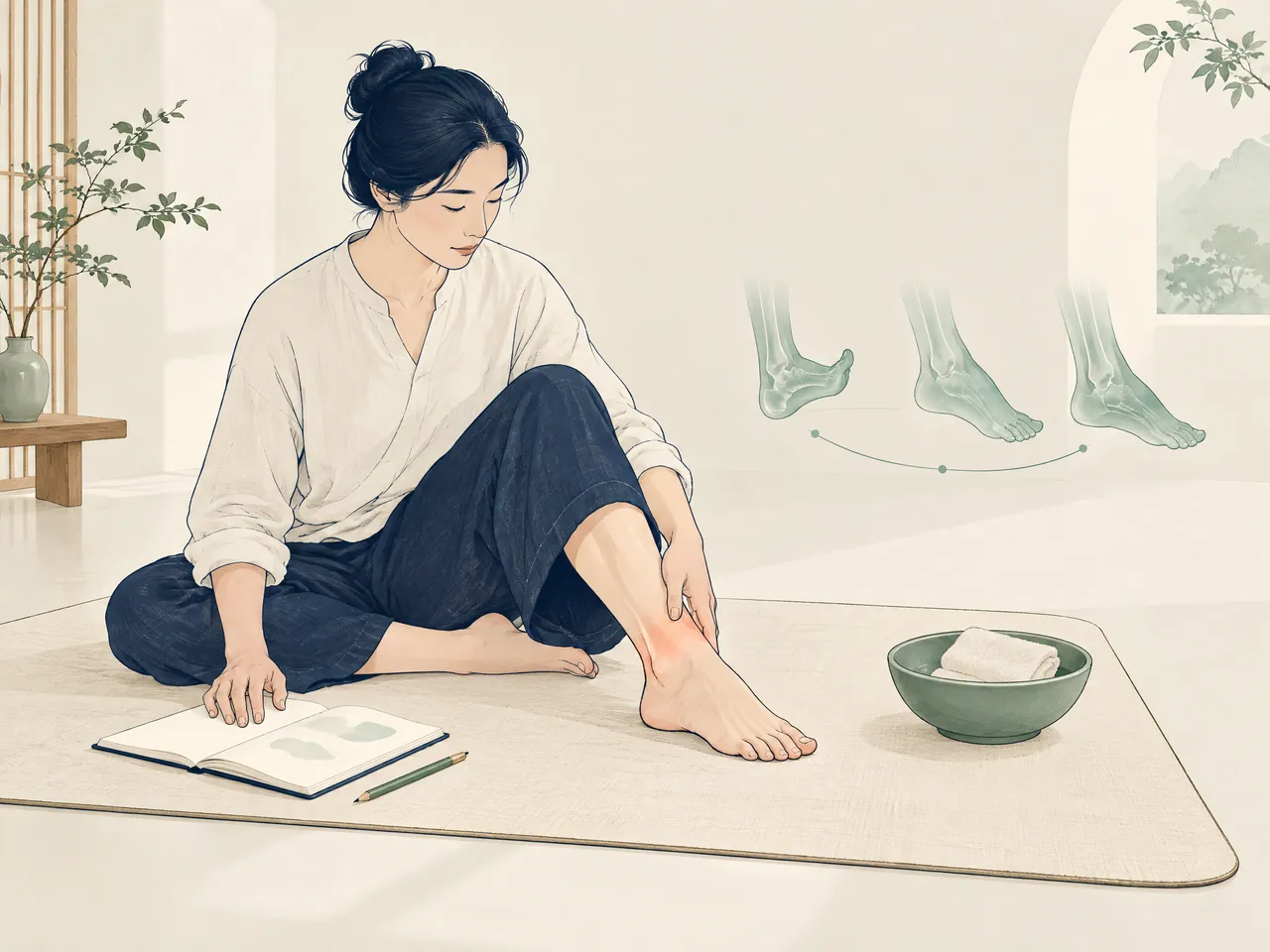
Evidence does not support promising that acupuncture will cure plantar fasciitis or work for every cause of sole pain. A systematic review in the Singapore Medical Journal identified four relevant studies and concluded that acupuncture may reduce pain in the short term, while heterogeneity in the studies meant that a definite conclusion about longer-term effectiveness could not be made. [3] This is why it is more accurate to discuss acupuncture as a possible adjunct after assessment, not as a stand-alone answer or a fixed package of sessions. Your response, diagnosis, activity demands and other care all affect the decision.
If someone chooses acupuncture, pair it with a clear objective, such as whether ordinary walking, first-step pain or adherence to a rehabilitation routine changes over time. Continue to address factors that load the foot rather than treating one less-painful day as proof that the issue has resolved. For a fuller heel-pain discussion, read is acupuncture effective for heel pain. If pain deteriorates, numbness develops or weight bearing becomes difficult, return to medical assessment rather than extending an adjunctive approach.
Plantar Fasciitis Acupuncture, Acupuncture for Plantar Fasciitis and Acupuncture for Pain on the Bottom of the Foot: Everyday Management
Everyday management is not about total inactivity. Reduce the load that repeatedly provokes symptoms while preserving movement that is tolerable. Look for repeatable exposures: long standing on hard flooring, walking in worn shoes, a weekend hike after a sedentary week, or repeated barefoot trips across tiled floors. Change one or two drivers at a time. For example, shorten a walk, add breaks during a standing task and avoid the most painful surface while beginning a regular stretch routine. The NHS advises avoiding long periods of standing or walking when painful and avoiding barefoot walking on hard surfaces. [1]
A combined plan is more realistic than searching for one perfect intervention. The 2023 heel-pain guideline recommends plantar fascia-specific and gastrocnemius/soleus stretching, and states that foot orthoses may be used with other treatments rather than as an isolated treatment. [2] This does not mean everyone needs the same insert or exercise. It means that footwear, mobility, education and activity changes can work together. Keep a simple baseline, such as comfort on the first few steps and after a usual workday, so that decisions are guided by function rather than a single pain score.
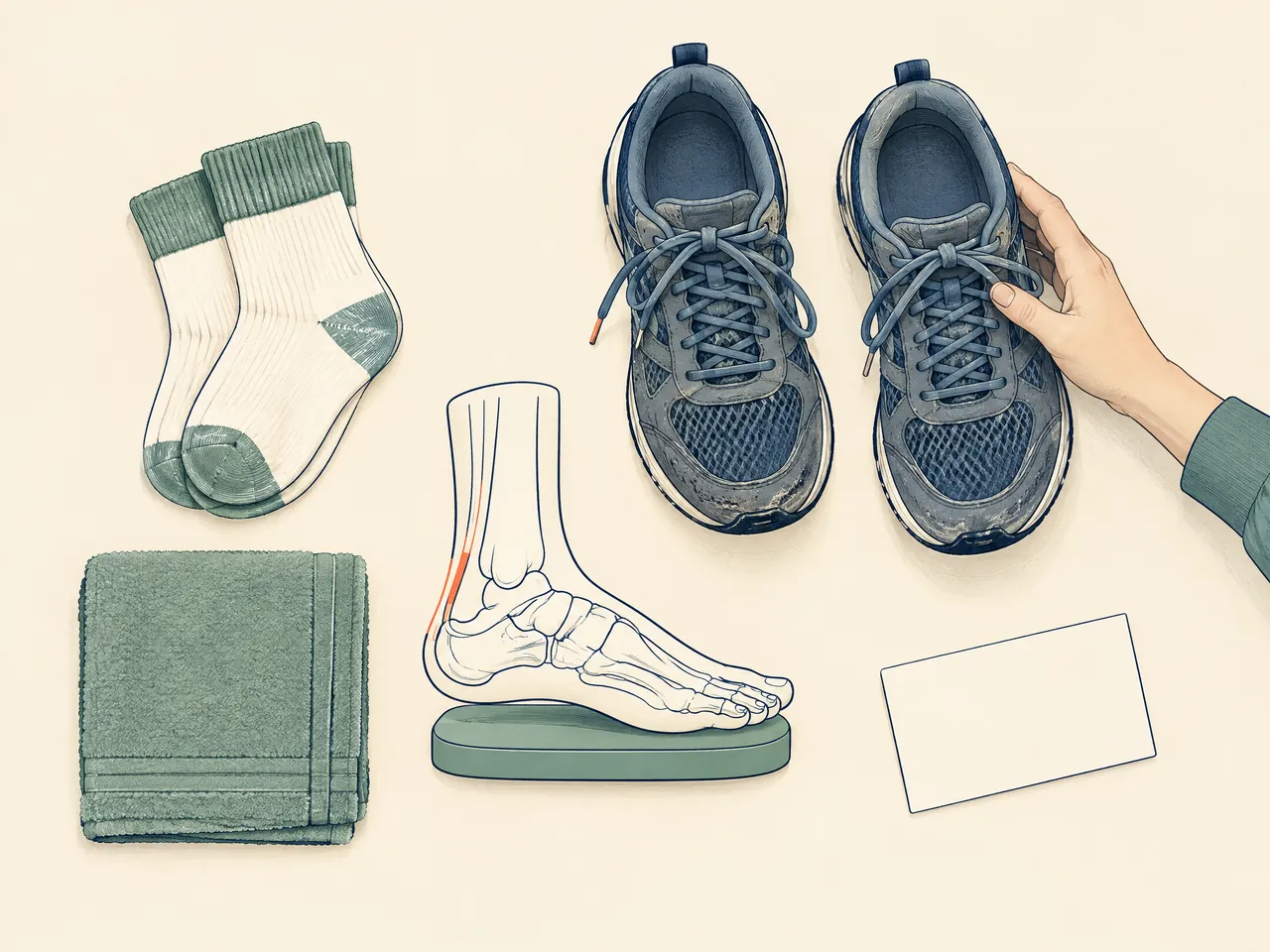
Plantar Fasciitis Acupuncture, Acupuncture for Plantar Fasciitis and Acupuncture for Pain on the Bottom of the Foot: Stretching and Load Changes
Consistency usually matters more than an aggressive stretch. A plantar-fascia stretch may involve gently drawing the toes back until the sole feels a mild stretch; a calf stretch can be done with the heel supported and the knee position adjusted according to professional instruction. The guideline supports both plantar fascia-specific and gastrocnemius/soleus stretching for pain and function in people with plantar heel pain. [2] The NHS likewise recommends regular gentle exercise that stretches the sole and heel. [1] Stop and seek advice if a movement sharply increases pain, produces new numbness, or leaves the foot substantially worse rather than briefly worked.
A runner may temporarily replace some impact sessions with a lower-impact option and reintroduce running according to professional advice. Someone whose job requires standing may use planned sit-down breaks and avoid adding an extra long walk on the same day. The aim is not to avoid all use of the foot; it is to make total demand more predictable while symptoms settle. Acupuncture, if chosen, does not remove the need for this day-to-day work.

Plantar Fasciitis Acupuncture, Acupuncture for Plantar Fasciitis and Acupuncture for Pain on the Bottom of the Foot: Footwear and Safety Signs
Review footwear in the context in which pain happens. A work shoe that is comfortable for a short journey may not suit a full day on hard flooring. Check whether the sole is worn, stable, and has enough cushioning and support. The NHS suggests cushioned heels, good arch support and considering insoles or heel pads, while advising against flip-flops, backless slippers and tight, pointy shoes when managing plantar fasciitis. [1] An insole can be part of a plan, not a cure or an excuse to push through escalating pain.
Safety signs deserve more attention than footwear experimentation. Arrange medical review for severe pain that limits normal activity, worsening or recurrent symptoms, persistent pain despite self-care, tingling or loss of sensation. Diabetes with foot pain also warrants prompt advice. [1] An injury with obvious deformity, inability to bear weight, marked swelling, a hot or red foot, fever, or a wound calls for urgent clinical assessment. If an ankle twist began the problem, What should I do for an ankle sprain? may help you understand initial steps, but it is not a substitute for urgent care when a serious injury is possible.
Care and health guide
Foot discomfort: care information
This directory brings together services, reading, and visit information related to foot discomfort, to help you prepare questions for a consultation.
When foot discomfort affects your day, noting when it occurs, its relation to activity, and what you have already tried can help prepare a consultation; acupuncture for foot pain is a relevant service or reading entry point.
Individual circumstances differ, and acupuncture Hong Kong offers related information to help you understand options and prepare questions.


Your questions, answered
Frequently asked questions
How long does acupuncture for plantar fasciitis take to work?
There is no reliable fixed timetable or guaranteed number of sessions. The available review found possible short-term pain reduction but insufficient evidence for a definite conclusion on longer-term effectiveness. [3] A practitioner should discuss your symptoms, goals and other care rather than promise a schedule.
Can acupuncture cure plantar fasciitis?
It should not be described as a cure. Acupuncture may be discussed as an adjunct for symptom management after assessment, while stretching, load changes, footwear and any indicated conventional care remain important.
Can I have acupuncture while I am seeing a physiotherapist?
It may be possible, but tell both practitioners about every treatment and exercise you are using. Coordinated care helps avoid contradictory activity advice and keeps the focus on function, safety and reassessment if symptoms worsen.
When should I seek medical assessment instead of waiting?
Seek prompt advice for severe, worsening or recurrent foot pain, pain that does not improve with initial self-care, tingling or loss of feeling, or any foot pain if you have diabetes. [1] Inability to bear weight, major swelling, redness, fever or a wound needs urgent clinical assessment.
Sources and further information
- [1] NHS: Plantar fasciitis
Referenced for: Symptoms around the heel and arch, first-step and load-related patterns, self-care, footwear advice and reasons to seek assessment.
- [2] Academy of Orthopaedic Physical Therapy: Heel Pain – Plantar Fasciitis Revision 2023
Referenced for: Clinical-practice guideline recommendations on plantar fascia and calf stretching and using orthoses as part of combined care.
- [3] Singapore Medical Journal: How effective is acupuncture for reducing pain due to plantar fasciitis?
Referenced for: Systematic-review findings and limits of evidence for acupuncture in plantar fasciitis.
- [4] NCCIH: Acupuncture—What You Need To Know
Referenced for: What acupuncture involves, safety considerations and the importance of discussing complementary care with health providers.