
TCM Lab · Health reading
Acupuncture for Rounded Shoulders, Acupuncture for Rounded Back and Acupuncture for Upper Back Posture
Published Updated
A forward head, inward-turning shoulders and a rounded-looking upper back often travel together after long periods at a laptop, phone or desk. For people searching for acupuncture for rounded shoulders, the practical question is usually whether it can ease the tight, tired feeling across the chest, neck and upper back. Acupuncture may be considered as one part of symptom management after an individual assessment, but it does not straighten a structural spinal curve or replace a diagnosis. Looking at posture, daily load, muscle tenderness and warning signs helps set a more useful next step.
Appointments are confirmed through WhatsApp. If you have language requirements, please mention them in your enquiry.
The short answer
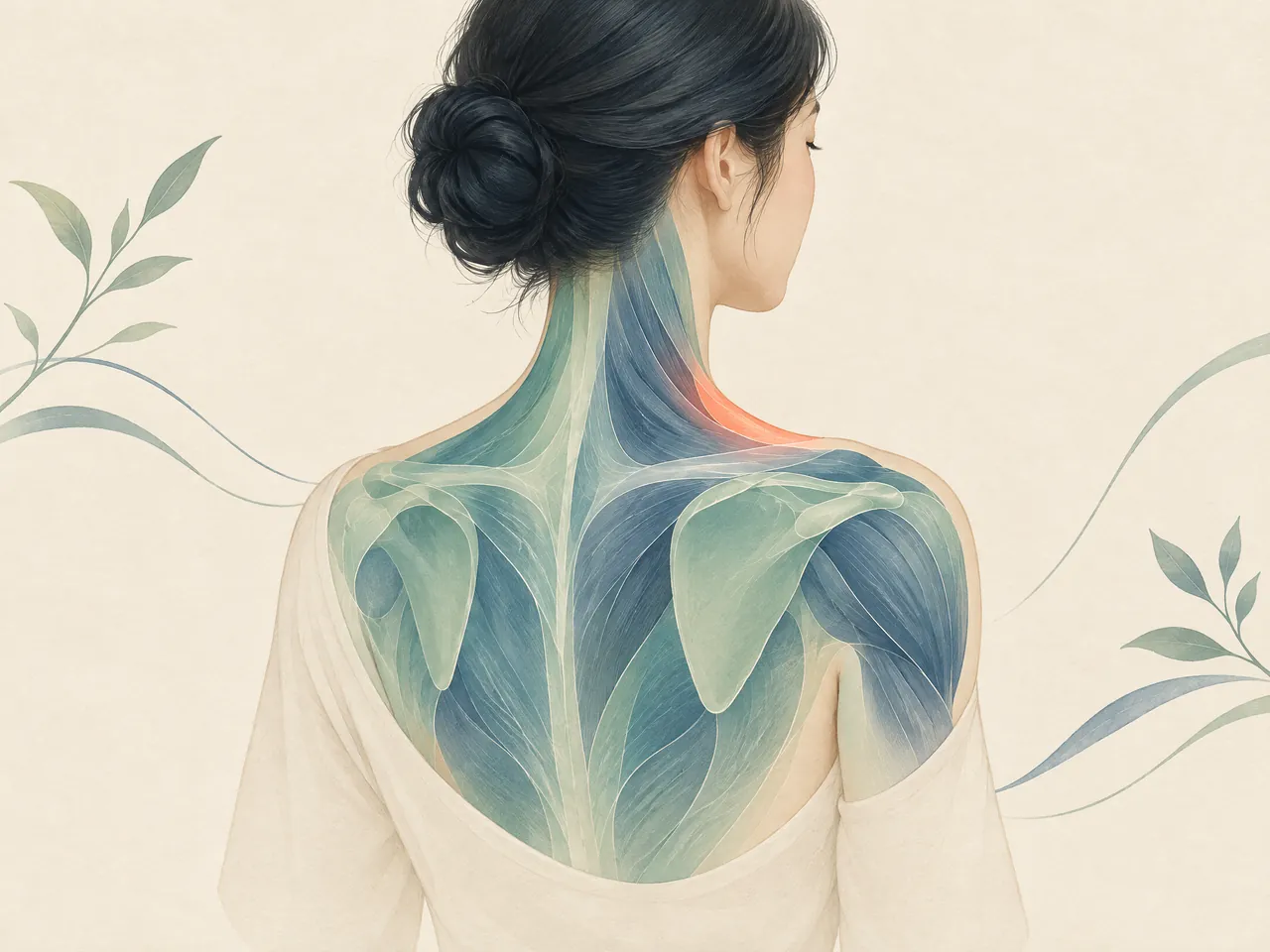
Acupuncture for rounded shoulders may be discussed when posture-related muscle tension, upper-back stiffness or local tenderness is troubling you. It is not a way to rebuild bones, guarantee a posture change or correct structural kyphosis. A consultation should distinguish a flexible everyday posture pattern from symptoms that need medical or physiotherapy assessment, while also considering work habits, movement, health history and whether needle treatment is appropriate for you.
Transparent pricing
See the fees.
Choose your care.
Explore our complete official price list, including first-trial prices, regular prices, packages and branch-specific options.
Opening WhatsApp prepares an enquiry; it does not send a message, take payment or confirm an appointment. Suitability and individual arrangements are confirmed during consultation.
Pain care
All prices in HKDExtracorporeal shockwave treatment
Shockwave treatment for deep-tissue and fascial care. The Kwun Tong clinic offers the multi-area options shown below.
Priced by branch
Branch-specific pricing
Prince Edward: HK$250 per area
Kwun Tong: HK$250 for 1 area / HK$450 for 2 areas / HK$600 for 3 areas
Pain care (manual therapy)
Includes Chinese medicine musculoskeletal assessment, manual joint techniques and tui na.
HK$580 (single session)
Chinese medicine musculoskeletal assessment
Pain care (acupuncture and manual therapy)
Combines acupuncture and manual therapy.
HK$680 (single session)
Combined care
Hair and scalp
All prices in HKDScalp health and hair-loss management
Includes AI scalp analysis, deep scalp and follicle cleansing, and scalp oil-control care.
HK$380 (first trial)
Regular price: HK$680
- 6 sessions: HK$3,480 (HK$580 per session)
- 12 sessions: HK$5,760 (HK$480 per session)
- 20 sessions: HK$8,600 (HK$430 per session)
- 30 sessions: HK$11,400 (HK$380 per session)
Hair acupuncture and Chinese herbal medicine package
Includes scalp acupuncture and 3 days of Chinese herbal medicine that does not require decoction.
HK$580 (single session)
Registered Chinese Medicine Practitioner consultation
- 6 sessions: HK$3,180 (HK$530 per session)
- 12 sessions: HK$5,760 (HK$480 per session)
- 20 sessions: HK$8,600 (HK$430 per session)
- 30 sessions: HK$11,400 (HK$380 per session)
Combined hair and scalp treatment
Combines acupuncture and Chinese herbal medicine with salon-level scalp and follicle care. Packages include complimentary hair-care shampoo and serum.
HK$1,260 (single session)
Combined treatment
- 8 sessions: HK$8,640 (HK$1,080 per session)
- 16 sessions: HK$15,680 (HK$980 per session)
- 20 sessions: HK$18,600 (HK$930 per session)
- 30 sessions: HK$26,400 (HK$880 per session)
Weight management
All prices in HKDFull-body acupoint embedding for weight management
Includes full-body acupoint embedding. Packages include complimentary Chinese herbal medicine for weight management, with the number of included days scaled to the package. Embedding material and the individual treatment arrangement are confirmed during consultation; this is not a cosmetic thread lift.
HK$980 (single session)
No trial session
- 10 sessions: HK$7,800 (HK$780 per session)
- 20 sessions: HK$14,600 (HK$730 per session)
- 30 sessions: HK$20,400 (HK$680 per session)
Facial acupuncture
All prices in HKDFacial acupuncture (basic)
Includes facial acupuncture and meridian-based facial care, including care for facial puffiness.
HK$480 (first trial)
Regular price: HK$680
- 10 sessions: HK$5,200 (HK$520 per session)
- 20 sessions: HK$9,600 (HK$480 per session)
- 30 sessions: HK$13,500 (HK$450 per session)
Facial acupuncture (advanced)
Includes enhanced facial acupuncture with a specially formulated moisturising mask and serum.
HK$780 (first trial)
Regular price: HK$1,180
- 10 sessions: HK$9,000 (HK$900 per session)
- 20 sessions: HK$16,600 (HK$830 per session)
- 30 sessions: HK$23,400 (HK$780 per session)
Chinese medicine
All prices in HKDAcupuncture and Chinese herbal medicine package
Includes a Chinese medicine consultation with pulse assessment, body acupuncture and 3 days of Chinese herbal granules that do not require decoction.
HK$580 (single session)
Chinese medicine consultation with pulse assessment
Acupuncture for Rounded Shoulders, Acupuncture for Rounded Back and Acupuncture for Upper Back Posture: What These Terms Describe
These search terms overlap, but they do not all mean the same thing. Rounded shoulders usually describes shoulders resting forward or inward. A rounded back describes the visible outline of the upper back, while upper-back posture is a broader phrase for how the head, ribcage, shoulders and thoracic spine are held during sitting, standing and movement. The pattern may be most obvious at a workstation, while scrolling on a phone, or late in the day when fatigue makes it harder to reset position. It is reasonable to discuss local tension in this context; it is not reasonable to assume that every rounded appearance is caused by the same muscle problem.
Kyphosis is the clinical word used for a spinal curve that can make the upper back look hunched or rounded. The NHS notes that shoulders may look rounded too, and distinguishes postural kyphosis from structural forms such as Scheuermann’s and congenital kyphosis [1]. A posture habit can coexist with a structural curve, so the visual impression alone cannot answer the question. This matters before any treatment choice: symptom relief for a tight upper back and correction of a spinal curve are different aims. If your main concern is pain rather than appearance, our overview of upper back pain treatment options may help you frame the conversation with an appropriate healthcare professional.

Acupuncture for Rounded Shoulders, Acupuncture for Rounded Back and Acupuncture for Upper Back Posture: Postural Patterns
A common everyday pattern is the head drifting in front of the torso, the chest feeling shortened and the shoulders rolling forward while the muscles between the shoulder blades work at a long length. Repeated mouse use, a low screen, driving, carrying a bag on one side or guarding after pain can add to the load. That description is useful for noticing habits, but it is not a self-diagnosis. Some people have a flexible position that changes when they lie down or stand taller; others have a curve, pain condition or injury that deserves formal assessment.
It also helps to separate posture from blame. A demanding task, poor sleep, stress, training load or previous pain may change how a person moves. Trying to hold the shoulders back rigidly all day can create another source of tension. A more practical aim is variety: adjust the task, change position, take movement breaks and use an exercise plan that fits the person’s ability and diagnosis. The treatment conversation should include what happens before symptoms appear, not only where the ache is felt.
Acupuncture for Rounded Shoulders, Acupuncture for Rounded Back and Acupuncture for Upper Back Posture: Common Symptoms
The complaint that brings someone in is often not simply “bad posture.” It may be a pulling sensation at the front of the shoulders, neck and upper-back stiffness after computer work, tenderness beside the shoulder blade, a tired feeling when sitting upright, or a headache pattern that seems linked to a tense neck. Symptoms can fluctuate with workload and may settle after walking, changing position or resting. They can also have causes unrelated to posture. Location, timing, severity and what eases or worsens the problem are therefore more useful than deciding that a rounded shoulder position explains everything.
A more noticeable or worsening upper-back curve can be associated with pain and stiffness; a severe curve can be linked with breathing difficulty [1]. Seek medical attention rather than booking routine posture treatment if pain begins suddenly and is severe or quickly worsening, follows significant trauma, or occurs with chest pain. Back pain accompanied by weakness, numbness or tingling in both legs, loss of sensation around the genitals or anus, or bladder or bowel changes is an emergency pattern described by the NHS [3]. A new change in spinal shape, unexplained weight loss, feverish illness or persistent night pain also warrants medical review.
Compare your options
| What you notice | Useful next discussion | Why it matters before acupuncture |
|---|---|---|
| Upper-back tightness after a long laptop or phone session that eases when you change position | Review workstation height, task breaks, movement and local muscle symptoms | This may fit a symptom-management conversation, while still avoiding claims that posture is the only cause. |
| A rounded appearance that seems more obvious over time or does not change with position | Arrange medical or physiotherapy assessment for the curve and its cause | Visual appearance alone cannot distinguish flexible postural habits from structural kyphosis. |
| Pain after a clear training or lifting episode, with focal upper-back tenderness | Discuss loading, recovery and whether a strain assessment is needed | The treatment goal may be short-term comfort and return to activity, not changing spinal shape. |
| Severe or rapidly worsening pain, chest pain, breathing difficulty, trauma, or neurological symptoms | Seek urgent medical care or emergency help as appropriate | These features should not be managed as a routine rounded-shoulder complaint. |
On smaller screens, scroll the table sideways to compare all columns.
Acupuncture for Rounded Shoulders, Acupuncture for Rounded Back and Acupuncture for Upper Back Posture: TCM Assessment
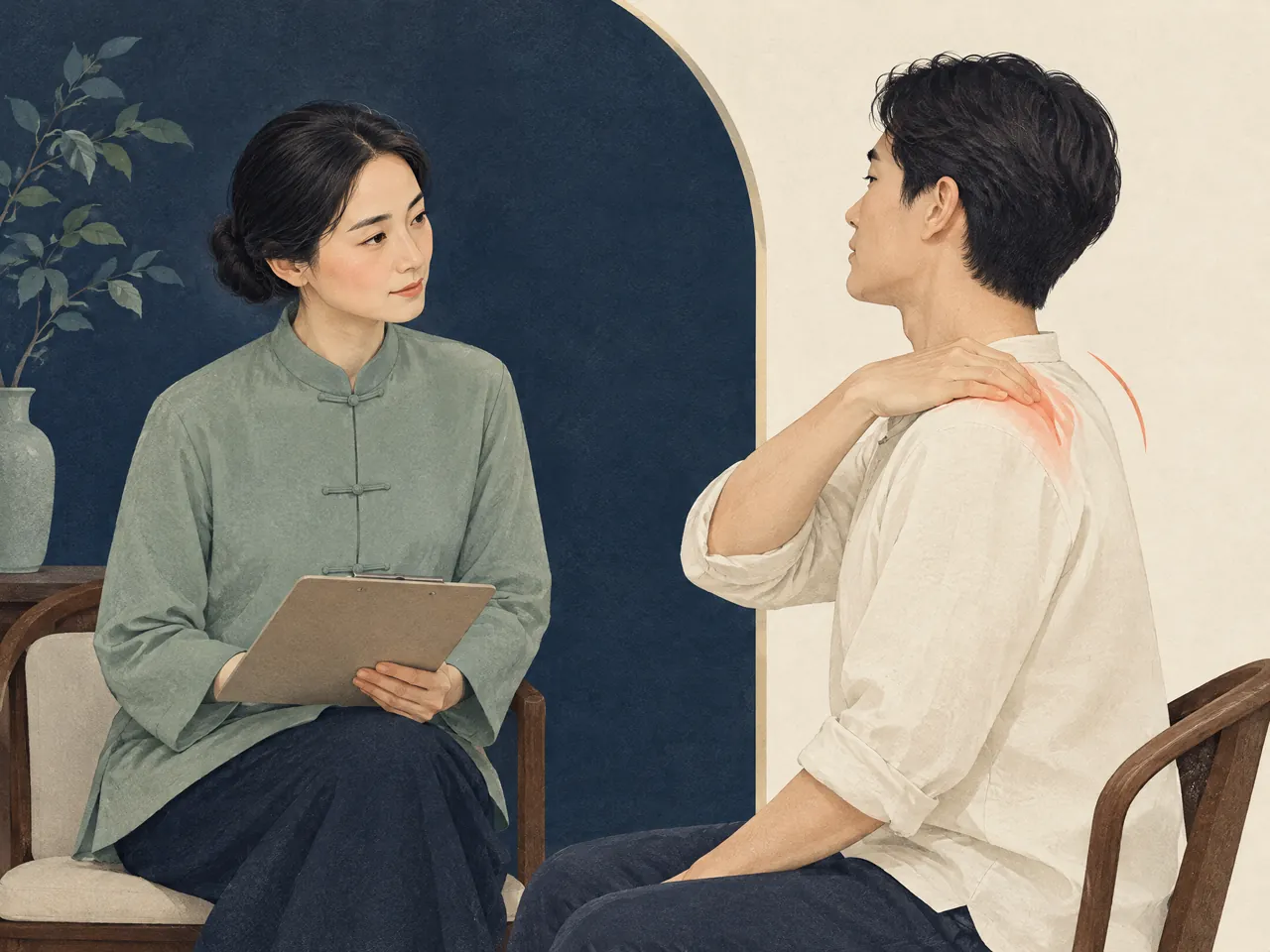
A useful initial assessment does not start by promising that needles will “fix” a posture. It starts with the person’s goal: less tightness after desk work, easier neck movement, better tolerance of training, or advice on whether symptoms need another type of care. The practitioner may ask when the pattern began, whether there was an injury, how symptoms behave through the day, what work or exercise involves, and what treatment has been tried. Medical conditions, medication, pregnancy and bleeding-related concerns should be disclosed so appropriateness and safety can be considered.

TCM assessment may include observation of sitting and standing, palpation of the neck, shoulder and upper-back tissues, and discussion of sleep, activity and general health. Traditional terms such as qi and blood flow or meridian blockage are part of TCM pattern discussion; they are not modern structural diagnoses and do not show whether vertebrae are shaped normally. Where symptoms, examination findings or history raise concern, referral for medical or physiotherapy assessment comes first. The NHS describes specialist assessment of kyphosis as potentially including an examination of the back while bending forward, checks of the arms and legs, and imaging when needed [1].
Acupuncture for Rounded Shoulders, Acupuncture for Rounded Back and Acupuncture for Upper Back Posture: What Is Observed
Observation is best understood as a map of current loading, not a verdict on someone’s body. The practitioner may note whether one shoulder sits differently, whether neck or shoulder movement is limited by discomfort, and whether areas are tender or guarded. They may ask about screen height, breaks, commute, exercise routine and the positions in which symptoms are better or worse. A description of a typical workday or workstation can make the discussion more concrete than a general instruction to “improve posture.”
The findings guide questions rather than establish a guaranteed treatment result. For example, local tenderness after an unfamiliar workout may call for a different discussion from a gradually worsening round-back appearance. A person whose main issue is soreness after loading may want to read about acupuncture for muscle strain in the upper back, whereas recurring pins and needles, objective weakness or a recent accident needs conventional assessment. The consultation should leave space to say that acupuncture is not the right first step or that another provider needs to evaluate the cause.

Acupuncture for Rounded Shoulders, Acupuncture for Rounded Back and Acupuncture for Upper Back Posture: How a Session Is Considered
If acupuncture is considered suitable, point selection is individual rather than a fixed “rounded shoulder” prescription. Attention may be paid to areas around the neck, shoulder girdle and upper back in the context of the assessment. The person may be positioned face down or on their side, depending on comfort and the areas being addressed. During needling, communicate promptly about anxiety, dizziness, pain or any sensation that feels wrong. A short-term response in tension or comfort can inform further discussion, but it does not prove that the underlying posture pattern or spinal curve has changed.
Needle treatment should sit alongside, not compete with, medical care and active rehabilitation when those are indicated. NCCIH notes that complications are relatively uncommon but that nonsterile needles or improper treatment can cause serious harm; acupuncture needles should be sterile and for single use [2]. It also advises against using acupuncture to delay seeing a healthcare provider [2]. For a focused discussion of symptom management rather than structural correction, see Can acupuncture help rounded shoulders?. Ask how any proposed approach relates to your goal, what to do if symptoms flare, and when a reassessment or referral would be sensible.
Acupuncture for Rounded Shoulders, Acupuncture for Rounded Back and Acupuncture for Upper Back Posture: Limits and Daily Support
Acupuncture cannot reshape a structural spinal problem, repair vertebral deformity or promise permanently “open” shoulders. It may be considered for muscle tension, pain or stiffness, but cannot substitute for examination of a pronounced, changing or concerning curve. Evidence on acupuncture for pain does not show that it corrects a rounded back. A specific goal, such as easing discomfort during a task, makes usefulness easier to judge.
Daily support works best when it is specific enough to use. A laptop user might raise the screen, use an external keyboard when practical and stand up between tasks. Someone who carries equipment may review how the load is shared. A gym-goer may need technique or programming advice rather than more stretching alone. Physiotherapy can help improve posture and relieve pain and stiffness, while NHS guidance says exercises may reduce pain and stiffness but will not improve a spinal curve or stop it worsening [1]. In other words, movement has value even when it is not a structural cure.

Acupuncture for Rounded Shoulders, Acupuncture for Rounded Back and Acupuncture for Upper Back Posture: Movement and Habits
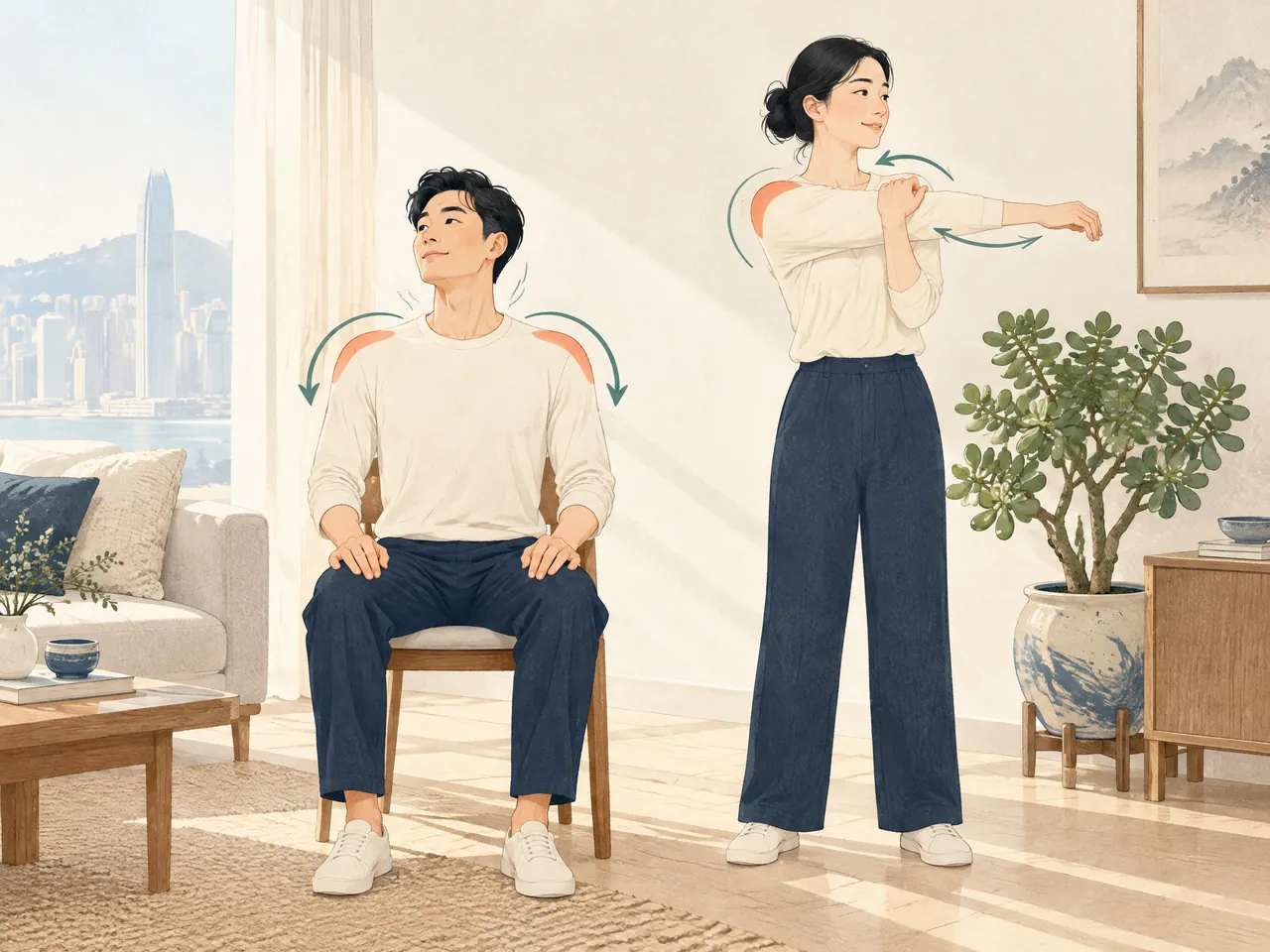
Choose small changes that match the trigger. If symptoms build after uninterrupted screen work, use regular position changes rather than waiting for a long stretch at the end of the day. If the chest feels tight after cycling or lifting, a clinician or physiotherapist can help decide whether mobility, progressive strength, technique changes or recovery are more relevant. The aim is not to force an identical posture in every activity. It is to help the upper back, shoulders and neck tolerate daily demands with less persistent discomfort.
A plan may combine comfortable mobility work, progressive strength work and a review of the work setup, but exercises should be adapted if they reproduce sharp pain, radiating symptoms or dizziness. Write down what you tried, how long the task lasted and the response later that day or next morning; that makes follow-up more informative. If stiffness and upper-back pain are the central concern, acupuncture for upper back pain and stiffness offers a related symptom-focused discussion. It is still important to obtain individual advice for a known spinal condition, recent injury or symptoms that are changing.
Acupuncture for Rounded Shoulders, Acupuncture for Rounded Back and Acupuncture for Upper Back Posture: When to Seek Further Care
Arrange medical assessment if you notice a new or progressively more obvious curve, persistent symptoms that interfere with everyday activity, pain that is not improving, upper-back pain between the shoulder blades that worries you, or pain that is worse at night. The NHS specifically advises assessment for suspected kyphosis rather than self-diagnosis [1]. A clinician can decide whether examination, physiotherapy or imaging is appropriate. This is particularly important after spinal trauma, with osteoporosis risk, or when the problem began without a clear activity-related explanation.
Urgent care takes priority over acupuncture for severe sudden or rapidly worsening pain, chest pain, breathing difficulty, feverish illness, significant trauma, or neurological changes. If both legs are weak, numb or tingly, or there are changes in bladder, bowel or genital sensation, use emergency services [3]. For non-urgent posture-related discomfort, you can ask TCM Lab about an assessment at the Kwun Tong Chinese medicine clinic or Chinese medicine clinic Prince Edward. Tell the team about diagnoses, medicines, pregnancy, recent tests and any warning signs so the enquiry is directed appropriately.
Care and health guide
Shoulder discomfort: care information
This directory brings together services, reading, and visit information related to shoulder discomfort, to help you prepare questions for a consultation.
When shoulder discomfort affects your day, noting when it occurs, its relation to activity, and what you have already tried can help prepare a consultation; acupuncture for shoulder pain is a relevant service or reading entry point.
Individual circumstances differ, and acupuncture Hong Kong offers related information to help you understand options and prepare questions.


Your questions, answered
Frequently asked questions
How is rounded-shoulder posture assessed before acupuncture?
The discussion may cover your sitting and standing habits, where and when symptoms appear, neck and upper-back movement, local tension or tenderness, daily tasks, exercise, past injuries and relevant health history. Traditional TCM pattern assessment can be part of the consultation, but it is not a substitute for assessing a suspected structural spinal condition.
Where might acupuncture be applied for upper-back posture discomfort?
If appropriate after assessment, treatment may focus on relevant areas around the neck, shoulders and upper back. Point selection and body position are individual, not a fixed map for every person with rounded shoulders. Let the practitioner know immediately if you feel unwell, dizzy or uncomfortable during a session.
Can acupuncture alone correct a rounded back?
No. Acupuncture cannot repair a structural bone or spinal problem and cannot guarantee correction of a rounded back. It may be discussed for muscle tension, stiffness or pain as one part of a broader plan that can include medical assessment, physiotherapy, activity changes or tailored exercise.
Should I stop exercise if my upper back feels tight?
Not necessarily, but the right response depends on the cause and severity. Gentle movement may be suitable for some people, while a new injury, severe pain, radiating symptoms, weakness, numbness or a known spinal condition calls for individual professional advice. Stop an activity that makes symptoms clearly worse and seek assessment when needed.
Sources and further information
- [1] [1] NHS — Kyphosis
Referenced for: Definition of kyphosis; rounded upper back and shoulder appearance; postural and structural types; assessment; symptom, exercise and physiotherapy limits.
- [2] [2] National Center for Complementary and Integrative Health — Acupuncture: What You Need To Know
Referenced for: Safety, sterile single-use needle information, and advice not to delay evaluation by a healthcare provider.
- [3] [3] NHS — Back pain
Referenced for: Urgent and emergency warning signs relevant to back pain, including severe worsening pain, chest pain, trauma and neurological symptoms.