
TCM Lab · Health reading
First-Step Pain: What Does Plantar Fasciitis First-Step Pain Feel Like with Heel Pain After Rest?
Published Updated
First-step pain is the sharp, tight, or bruised feeling under the heel that can greet you when your feet touch the floor after sleep or a long sit. It often points people toward plantar fasciitis because the discomfort may soften after several minutes of walking, then return when a day involves a lot of standing or walking. That familiar heel pain after rest is useful information, but it is not a diagnosis by itself. The exact spot, the type of sensation, a recent change in activity, footwear, and any tingling or swelling all help distinguish one cause of foot pain from another.
Appointments are confirmed through WhatsApp. If you have language requirements, please mention them in your enquiry.
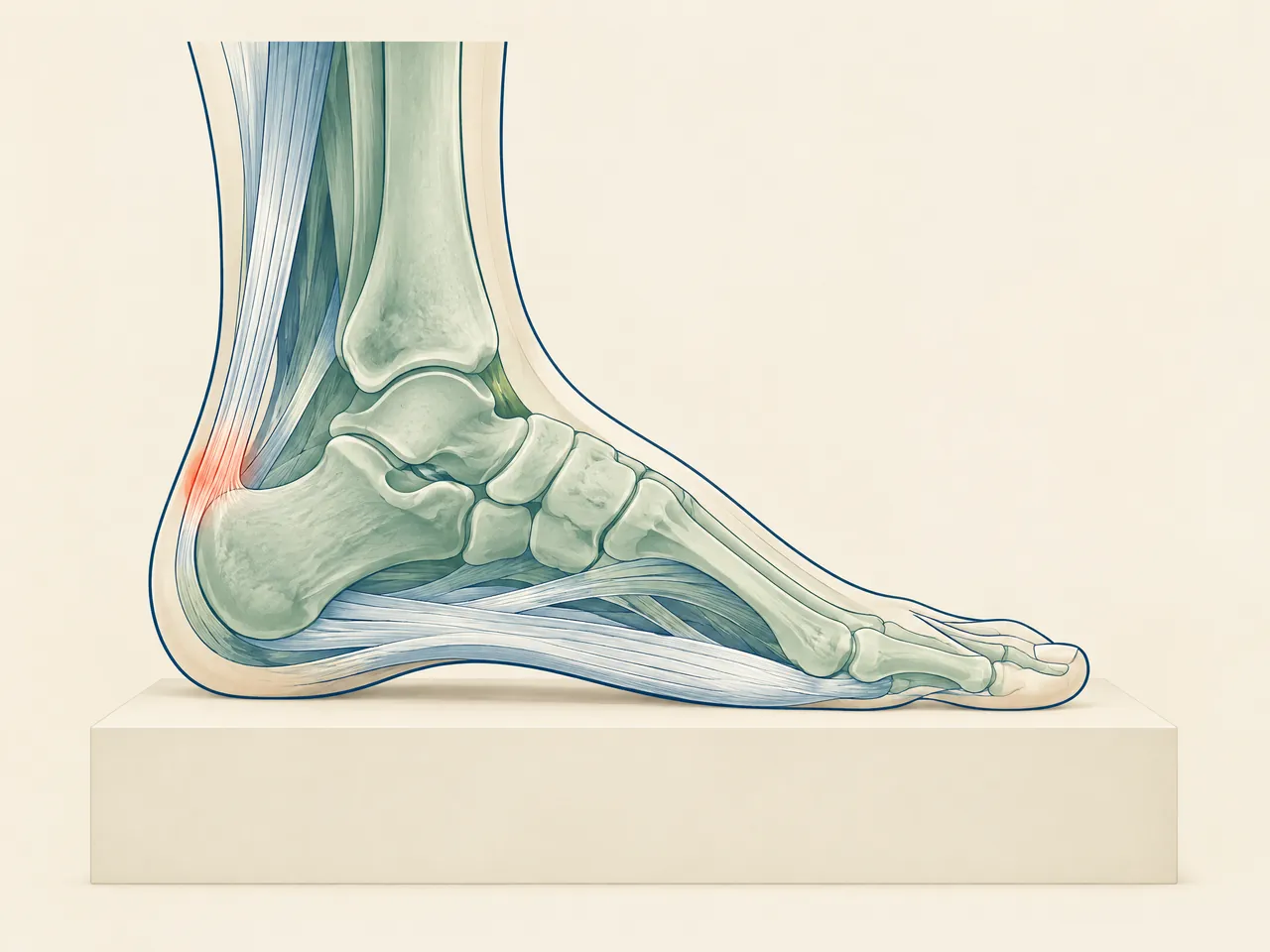
The short answer
What does plantar fasciitis first-step pain feel like? It is commonly pain under the heel or into the arch that is worst on the first steps after sleep or sitting, then may ease as the foot warms up. Heel pain after rest can fit this pattern, but it can also have other causes. Gentle stretching, supportive footwear, and reducing aggravating load may be sensible starting points; persistent, severe, numb, or swollen feet need clinical assessment.
Transparent pricing
See the fees.
Choose your care.
Explore our complete official price list, including first-trial prices, regular prices, packages and branch-specific options.
Opening WhatsApp prepares an enquiry; it does not send a message, take payment or confirm an appointment. Suitability and individual arrangements are confirmed during consultation.
Pain care
All prices in HKDExtracorporeal shockwave treatment
Shockwave treatment for deep-tissue and fascial care. The Kwun Tong clinic offers the multi-area options shown below.
Priced by branch
Branch-specific pricing
Prince Edward: HK$250 per area
Kwun Tong: HK$250 for 1 area / HK$450 for 2 areas / HK$600 for 3 areas
Pain care (manual therapy)
Includes Chinese medicine musculoskeletal assessment, manual joint techniques and tui na.
HK$580 (single session)
Chinese medicine musculoskeletal assessment
Pain care (acupuncture and manual therapy)
Combines acupuncture and manual therapy.
HK$680 (single session)
Combined care
Hair and scalp
All prices in HKDScalp health and hair-loss management
Includes AI scalp analysis, deep scalp and follicle cleansing, and scalp oil-control care.
HK$380 (first trial)
Regular price: HK$680
- 6 sessions: HK$3,480 (HK$580 per session)
- 12 sessions: HK$5,760 (HK$480 per session)
- 20 sessions: HK$8,600 (HK$430 per session)
- 30 sessions: HK$11,400 (HK$380 per session)
Hair acupuncture and Chinese herbal medicine package
Includes scalp acupuncture and 3 days of Chinese herbal medicine that does not require decoction.
HK$580 (single session)
Registered Chinese Medicine Practitioner consultation
- 6 sessions: HK$3,180 (HK$530 per session)
- 12 sessions: HK$5,760 (HK$480 per session)
- 20 sessions: HK$8,600 (HK$430 per session)
- 30 sessions: HK$11,400 (HK$380 per session)
Combined hair and scalp treatment
Combines acupuncture and Chinese herbal medicine with salon-level scalp and follicle care. Packages include complimentary hair-care shampoo and serum.
HK$1,260 (single session)
Combined treatment
- 8 sessions: HK$8,640 (HK$1,080 per session)
- 16 sessions: HK$15,680 (HK$980 per session)
- 20 sessions: HK$18,600 (HK$930 per session)
- 30 sessions: HK$26,400 (HK$880 per session)
Weight management
All prices in HKDFull-body acupoint embedding for weight management
Includes full-body acupoint embedding. Packages include complimentary Chinese herbal medicine for weight management, with the number of included days scaled to the package. Embedding material and the individual treatment arrangement are confirmed during consultation; this is not a cosmetic thread lift.
HK$980 (single session)
No trial session
- 10 sessions: HK$7,800 (HK$780 per session)
- 20 sessions: HK$14,600 (HK$730 per session)
- 30 sessions: HK$20,400 (HK$680 per session)
Facial acupuncture
All prices in HKDFacial acupuncture (basic)
Includes facial acupuncture and meridian-based facial care, including care for facial puffiness.
HK$480 (first trial)
Regular price: HK$680
- 10 sessions: HK$5,200 (HK$520 per session)
- 20 sessions: HK$9,600 (HK$480 per session)
- 30 sessions: HK$13,500 (HK$450 per session)
Facial acupuncture (advanced)
Includes enhanced facial acupuncture with a specially formulated moisturising mask and serum.
HK$780 (first trial)
Regular price: HK$1,180
- 10 sessions: HK$9,000 (HK$900 per session)
- 20 sessions: HK$16,600 (HK$830 per session)
- 30 sessions: HK$23,400 (HK$780 per session)
Chinese medicine
All prices in HKDAcupuncture and Chinese herbal medicine package
Includes a Chinese medicine consultation with pulse assessment, body acupuncture and 3 days of Chinese herbal granules that do not require decoction.
HK$580 (single session)
Chinese medicine consultation with pulse assessment
First-Step Pain and What Does Plantar Fasciitis First-Step Pain Feel Like with Heel Pain After Rest in Daily Routines
The phrase first-step pain describes timing as much as intensity. Someone may be comfortable while seated, then feel a sharp point under the heel when rising from bed. Plantar fasciitis commonly causes pain around the heel and arch, and the National Health Service notes that pain is more likely to fit that condition when it is worse on first walking after sleeping or resting, improves as movement begins, and later worsens with lengthy standing, walking, or running [1]. The Hong Kong College of Orthopaedic Surgeons describes a similar sequence: pain under the plantar heel on initial morning weight-bearing or after prolonged sitting, often improving with walking before returning with prolonged load [2].
Daily detail matters because it turns a vague complaint into a useful history. Notice whether the painful first step happens after a night, a train ride, a lunch break, or only after a busy shift. Note the exact area with one finger, whether both feet are involved, and whether a change in running, standing work, or shoes came first. A short phone note for several days can help guide assessment. If discomfort extends farther into the middle of the foot, this guide to pain in the arch of the foot can help you describe the location accurately without assuming the cause.

First-Step Pain: What Does Plantar Fasciitis First-Step Pain Feel Like during Heel Pain After Rest in the Morning
Morning pain is memorable because it interrupts a simple routine: getting to the bathroom, making breakfast, or walking across a hard floor. The heel may feel as if it has a tender spot that objects to pressure, or as if the sole needs a few careful steps before it can lengthen. Some people limp briefly or put weight toward the outside of the foot. The experience varies; not everyone gets a stabbing sensation. What is most informative is the repeatable contrast between the first loaded steps and later movement.
Rather than rushing through that first minute, give the foot a quiet transition. Sit at the edge of the bed, move the ankle gently, and use a stable surface or supportive slipper if it makes walking more comfortable. This is not a substitute for assessment, and forcing a painful stretch is not a goal. Consider whether the floor is hard, whether you walk barefoot at home, or whether worn-out work shoes leave the heel unsupported. These observations help identify repeatable triggers and whether a modest adjustment changes heel pain after rest.
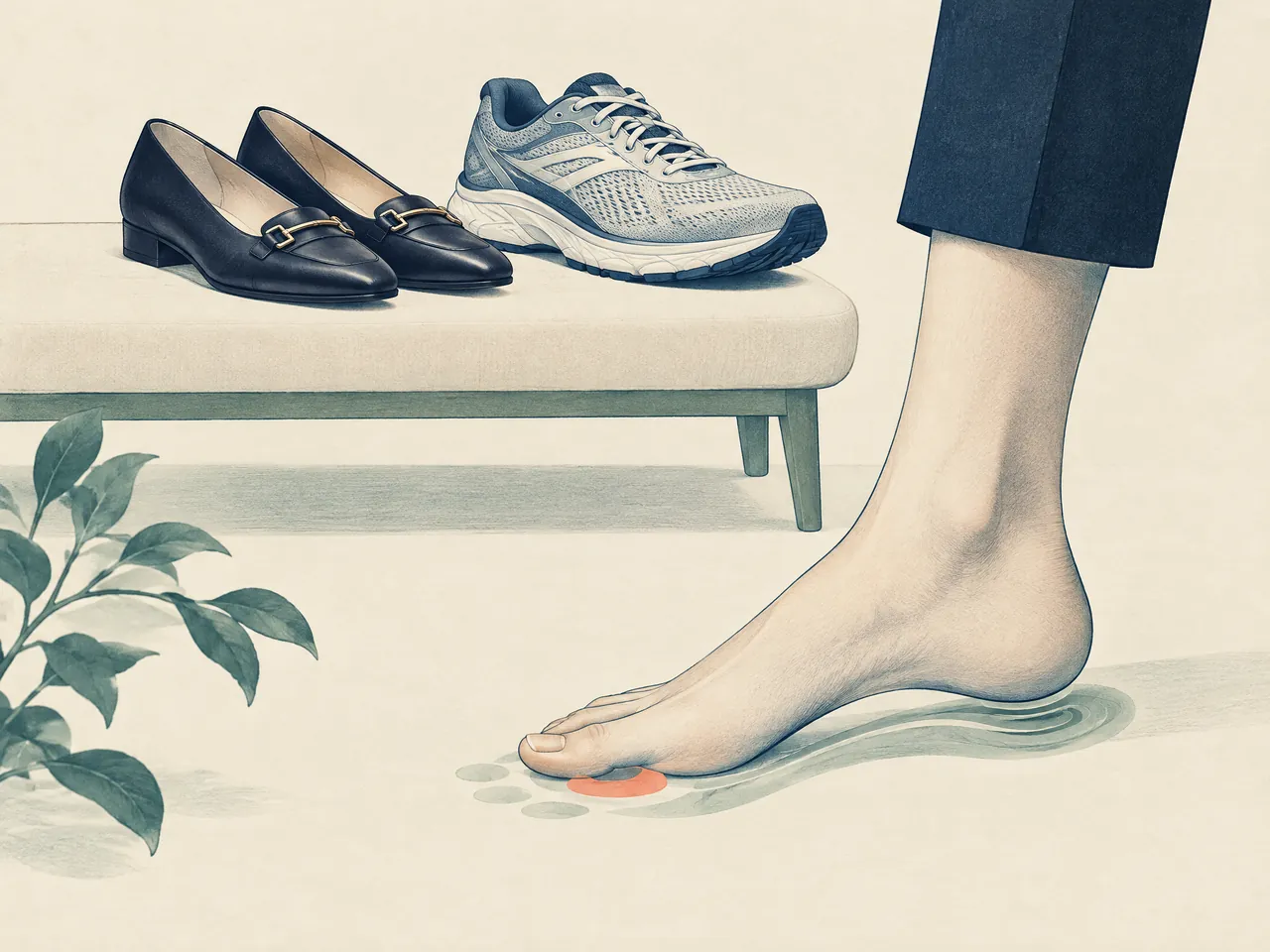
First-Step Pain: What Does Plantar Fasciitis First-Step Pain Feel Like when Heel Pain After Rest follows Sitting or Time in a Chair
The first painful step does not have to happen at dawn. It can arrive after a desk session, taxi journey, film, or appointment. When a person rises, the sole may feel stiff and the heel sore for several steps, then become more tolerable as walking continues. That timing can confuse people whose job alternates between sitting and standing: the foot feels manageable while still, yet complains whenever weight is reapplied. Write down how long you were seated and whether a short walk or a full shift changes the pain.
A different story needs a different level of caution. Heel pain that began immediately after a fall, twist, or sporting incident should not be casually labelled plantar fasciitis just because standing hurts. Swelling, bruising, instability, or pain around the ankle point to questions beyond a sole-of-foot pattern; the guide Can I walk on a sprained ankle? is relevant if an ankle injury is part of the picture. Likewise, a sudden inability to bear weight merits prompt medical evaluation rather than an experiment with more walking.
Compare your options
| What you notice | What to record or check | A sensible next step |
|---|---|---|
| Pain under the heel on first steps after sleep | Exact spot, sharpness, and whether it eases after a few minutes | Use supportive footwear and gentle movement; monitor the pattern |
| Pain after leaving a chair or long journey | How long you sat, foot position, and whether each rise triggers it | Break up prolonged sitting and discuss a recurring pattern at assessment |
| Pain returns after a long shift, walk, or run | Standing time, surface, shoes, and recent increase in activity | Reduce the provoking load temporarily and return gradually |
| Numbness, marked swelling, inability to bear weight, or worsening pain | When it began, injury details, and other symptoms | Seek timely medical assessment rather than treating it as routine first-step pain |
On smaller screens, scroll the table sideways to compare all columns.
First-Step Pain, What Does Plantar Fasciitis First-Step Pain Feel Like, and Heel Pain After Rest: Patterns and Possible Causes
The plantar fascia is a strong band of tissue on the underside of the foot that runs from the heel toward the toes and helps support the arch. When that area is irritated or overloaded, pressure through the heel can hurt, particularly after rest. Risk can be shaped by more standing, walking, or running, hard surfaces, tight calves, or shoes with poor cushioning or support; the NHS lists several of these as factors associated with plantar fasciitis [1]. They are not a checklist that proves the condition. A runner with a training increase and a shop worker on hard floors can share the same first-step symptom while needing different adjustments.
Location and associated sensations prevent a too-neat conclusion. A broad, bruised feeling in the middle of the heel after hours on the feet may not behave like pain focused at the inner heel on the first steps. Tingling, numbness, or burning may suggest that nerve symptoms need consideration. Pain that becomes steadily more local and worse with every loaded step after a marked activity increase should also be assessed. A clinician can use the symptom history, examination, and, when needed, tests to look for another explanation. Cleveland Clinic likewise notes that assessment includes where pain is felt and when it is worst in the daily routine [3].
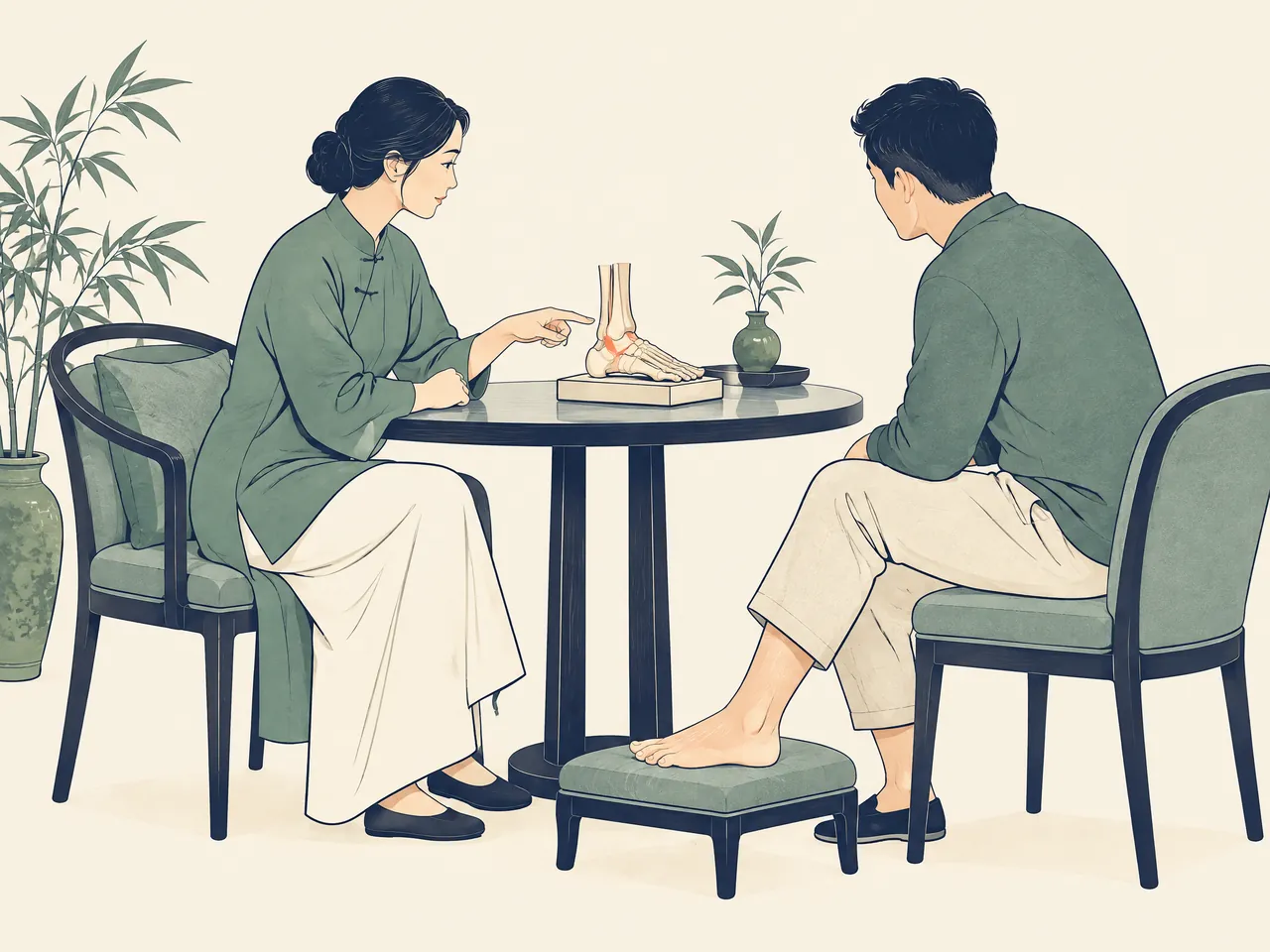
First-Step Pain: What Does Plantar Fasciitis First-Step Pain Feel Like when Heel Pain After Rest Eases with the First Few Steps
Relief after the first few steps is one reason people delay discussing the problem. It can feel as though the foot simply needed to wake up. Yet the later part of the day supplies the other half of the story. If heel discomfort returns after a long queue, hill walk, run, or standing shift, the cycle of rest, early pain, short-term easing, and load-related return is worth reporting. The NHS describes this progression for plantar fasciitis [1]. It is more useful than a single description such as “my heel hurts,” because it records what the foot does across a normal day.
Do not deliberately walk farther to see whether pain disappears. A better test is to keep ordinary, necessary walking within a tolerable range and observe the next morning or the next rise from a chair. If a gradual reduction in impact activities and a change to better-supported footwear settle the pattern, keep the change consistent rather than adding several new remedies at once. If you are wondering is my foot pain plantar fasciitis, compare your own timing, location, and activity history with recognised features, then seek an assessment if uncertainty remains.
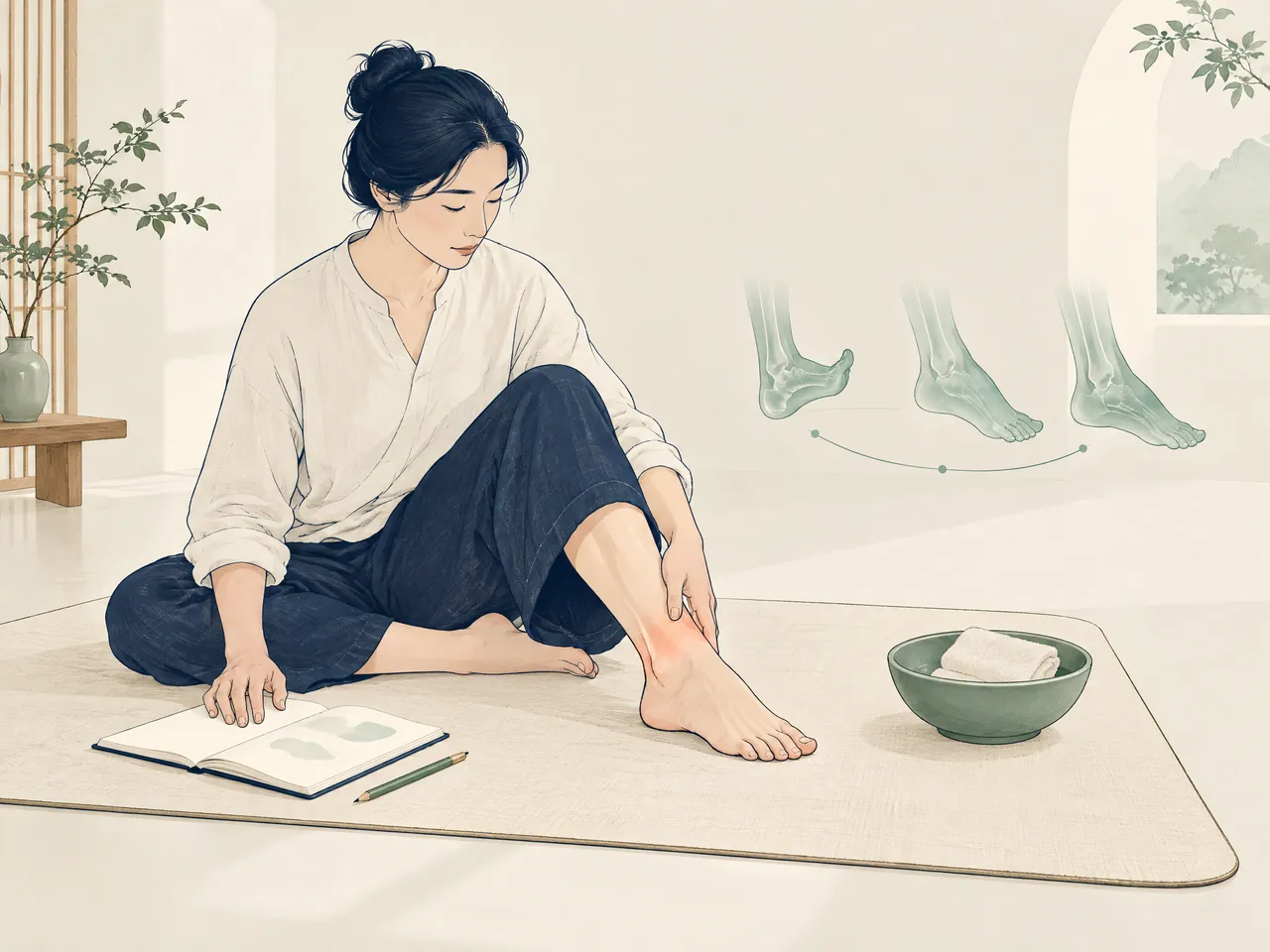
First-Step Pain: What Does Plantar Fasciitis First-Step Pain Feel Like when Heel Pain After Rest Persists Through the Day
Pain that does not ease after the first few careful steps deserves a wider view. Constant tenderness, a new lump, marked swelling, heat, a spreading rash, or pain that disrupts sleep is not the simple first-step pattern described above. Nor is numbness something to stretch through. People with diabetes should take new foot pain seriously, as the NHS advises seeking medical help for foot pain in the context of diabetes [1]. A foot can also hurt for more than one reason, so a pattern that began as mild heel pain may change and need re-evaluation.
Be specific when asking for help: say whether pain is under the heel, in the arch, behind the heel, or around the ankle; whether it follows rest or impact; and whether you can manage ordinary walking. Tell the clinician about recent travel, a new job, sport changes, previous injury, medicines, and any known circulation or nerve problems. If an old ankle injury remains relevant, reviewing ankle sprain recovery time may help you set out the timeline. This information supports a safer decision than selecting a treatment based solely on the phrase plantar fasciitis.
First-Step Pain, What Does Plantar Fasciitis First-Step Pain Feel Like, and Heel Pain After Rest: Practical Care and When to Seek Help
For a mild, familiar heel pain after rest pattern, begin with choices that reduce avoidable strain rather than trying to “push through.” The NHS suggests regular gentle exercises that stretch the sole and heel, shoes with cushioned heels and good arch support, and avoiding long standing, flimsy backless footwear, or barefoot walking on hard surfaces [1]. Choose one or two changes you can maintain: swap a hard flat shoe for a supportive one, break up a long standing task, or replace a run with a lower-impact activity while symptoms are active.
A Chinese medicine consultation is an opportunity to discuss the pattern in person with a Registered Chinese Medicine Practitioner, including the timing of pain, sleep, workload, footwear, activity, and relevant health history. Assessment in a traditional Chinese medicine setting is not the same as a modern medical diagnosis, and acupuncture should not be presented as a guaranteed cure or a fixed number of sessions. It may be discussed as a supportive option after individual assessment, alongside practical load management and appropriate referral when needed. Bring your symptom note and ask what signs would change the plan or call for medical assessment.
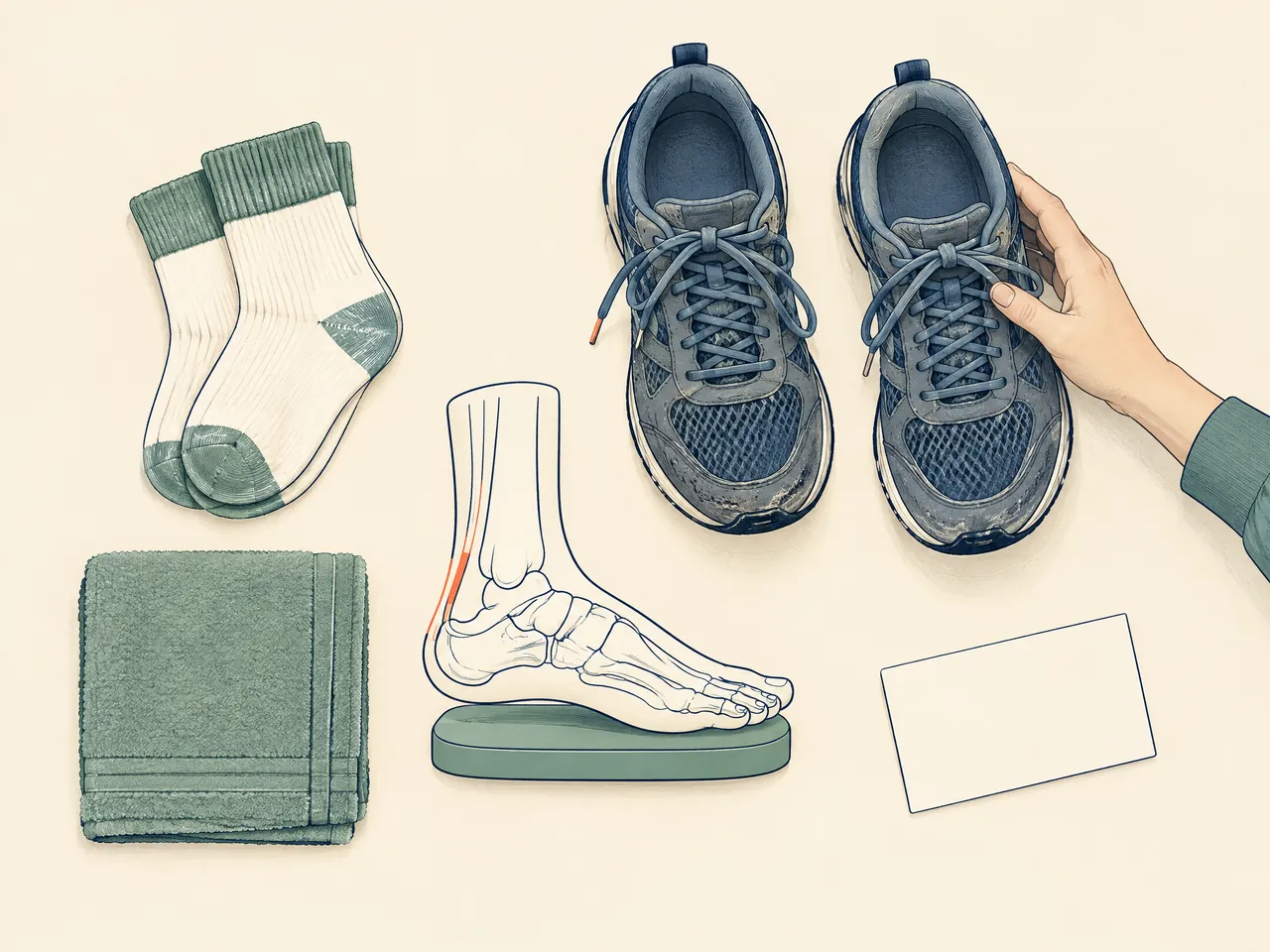
First-Step Pain: What Does Plantar Fasciitis First-Step Pain Feel Like during Gentle Stretching when Heel Pain After Rest Feels Stiff
Gentle means controlled and repeatable, not intense. Before the first morning steps, you might slowly move the ankle up and down while seated. Later, a calf stretch at a wall and a gentle sole stretch with the toes drawn back can be considered if they do not create sharp pain. The NHS recommends regular gentle stretching of the sole and heel [1]. Keep the heel and foot supported, breathe normally, and stop if pain becomes sharp, spreads, or lingers worse afterward. If you are unsure how to perform a movement, a physiotherapist or other qualified clinician can show an exercise matched to your symptoms.
Stretching works best as one piece of a wider response. It cannot offset a sudden doubling of running distance, hours of standing in unsupportive shoes, or repeated jumping when the heel is already sore. Reduce the activity that clearly provokes symptoms, then return gradually as the foot tolerates ordinary movement. Swimming or cycling may be options for some people who need a lower-impact way to stay active, but choose an activity that does not aggravate the individual problem. Avoid making a painful exercise a daily test of willpower; progression should be guided by how the foot responds during and after activity.

First-Step Pain: What Does Plantar Fasciitis First-Step Pain Feel Like when Heel Pain After Rest Signals the Need for Assessment
Arrange medical assessment when foot pain is severe, is stopping normal activity, keeps recurring, worsens, or has not improved with sensible self-care. Tingling or loss of feeling are also reasons to seek advice, and diabetes plus foot pain needs prompt attention [1]. Urgent evaluation is appropriate for inability to bear weight after an injury, obvious deformity, rapidly increasing swelling, fever with a hot red foot, or a wound that is not healing. These signs cannot be sorted safely by a symptom pattern alone. Seeking help early does not mean something serious is certain; it means the cause can be examined properly.
To discuss a non-urgent pattern with TCM Lab, contact +852 6940 5663 on WhatsApp and describe where pain occurs, what happens after rest, and any warning signs. Appointments can be arranged at the Kwun Tong Chinese medicine clinic or the Chinese medicine clinic Prince Edward; for other areas, ask about a home-visit enquiry rather than assuming a local branch. Mention language needs when you contact the clinic so arrangements can be confirmed. If symptoms point to urgent or specialist care, use the appropriate medical service rather than waiting for a routine consultation.
Care and health guide
Foot discomfort: care information
This directory brings together services, reading, and visit information related to foot discomfort, to help you prepare questions for a consultation.
When foot discomfort affects your day, noting when it occurs, its relation to activity, and what you have already tried can help prepare a consultation; acupuncture for foot pain is a relevant service or reading entry point.
Individual circumstances differ, and acupuncture Hong Kong offers related information to help you understand options and prepare questions.


Your questions, answered
Frequently asked questions
Does first-step pain mean I have plantar fasciitis?
Not necessarily. Pain under the heel that is worse after sleep or sitting is a recognised plantar fasciitis pattern, but it is not diagnostic on its own. Pain location, recent activity, footwear, injury history, swelling, numbness, and how symptoms behave through the day all matter. Persistent or unclear pain should be assessed rather than self-diagnosed.
What does plantar fasciitis first-step pain feel like?
It is often an intense ache, tenderness, or sharp pain on the underside of the heel, sometimes reaching toward the arch, when standing after sleep or a prolonged rest. It may become less noticeable after several minutes of walking and return after prolonged standing, walking, or running. Individual sensations vary.
What should I do about heel pain after rest?
Avoid suddenly increasing running, jumping, or long standing. Try regular gentle sole and calf stretches if they do not provoke sharp pain, and use supportive, cushioned shoes instead of thin, worn, or backless footwear. Seek assessment if pain is severe, recurrent, worsening, limiting everyday activity, or accompanied by tingling, loss of feeling, swelling, or inability to bear weight.
Can acupuncture cure plantar fasciitis?
Acupuncture may be discussed as a supportive option after an individual assessment, but it should not be described as a guaranteed cure or tied to a promised number of sessions. It does not replace attention to symptoms that need medical assessment, activity adjustment, footwear, or other appropriate care.
Sources and further information
- [1] NHS: Plantar fasciitis
Referenced for: Supports the first-step symptom pattern, self-care measures, footwear and activity advice, and indicators for medical assessment.
- [2] The Hong Kong College of Orthopaedic Surgeons: Plantar Fasciitis
Referenced for: Supports the Hong Kong clinical description of plantar heel pain after morning or prolonged sitting and its change with walking and prolonged load.
- [3] Cleveland Clinic: Plantar Fasciitis
Referenced for: Supports discussion of symptom location, daily-pattern history, and the role of clinical evaluation when another cause is possible.