
TCM Lab · Health reading
Hives, Psoriasis and TCM Dermatology: Understanding Skin Patterns
Published Updated
Hives and psoriasis are both skin concerns, but they do not look, behave, or need to be investigated in the same way. Hives often present as itchy, raised areas that can appear in different shapes, while psoriasis is a long-lasting immune-mediated condition that can cause inflamed, scaly patches. TCM dermatology takes the visible change seriously while also asking about timing, itch, sleep, digestion, medicines, stress, work routines, and the products touching the skin. That wider conversation can help organise a personalised Chinese medicine consultation, but it is not a substitute for diagnosing a new rash or for urgent medical care. If breathing becomes difficult or the lips, mouth, throat, or tongue swell, seek emergency help immediately. [1]
Appointments are confirmed through WhatsApp. If you have language requirements, please mention them in your enquiry.
The short answer
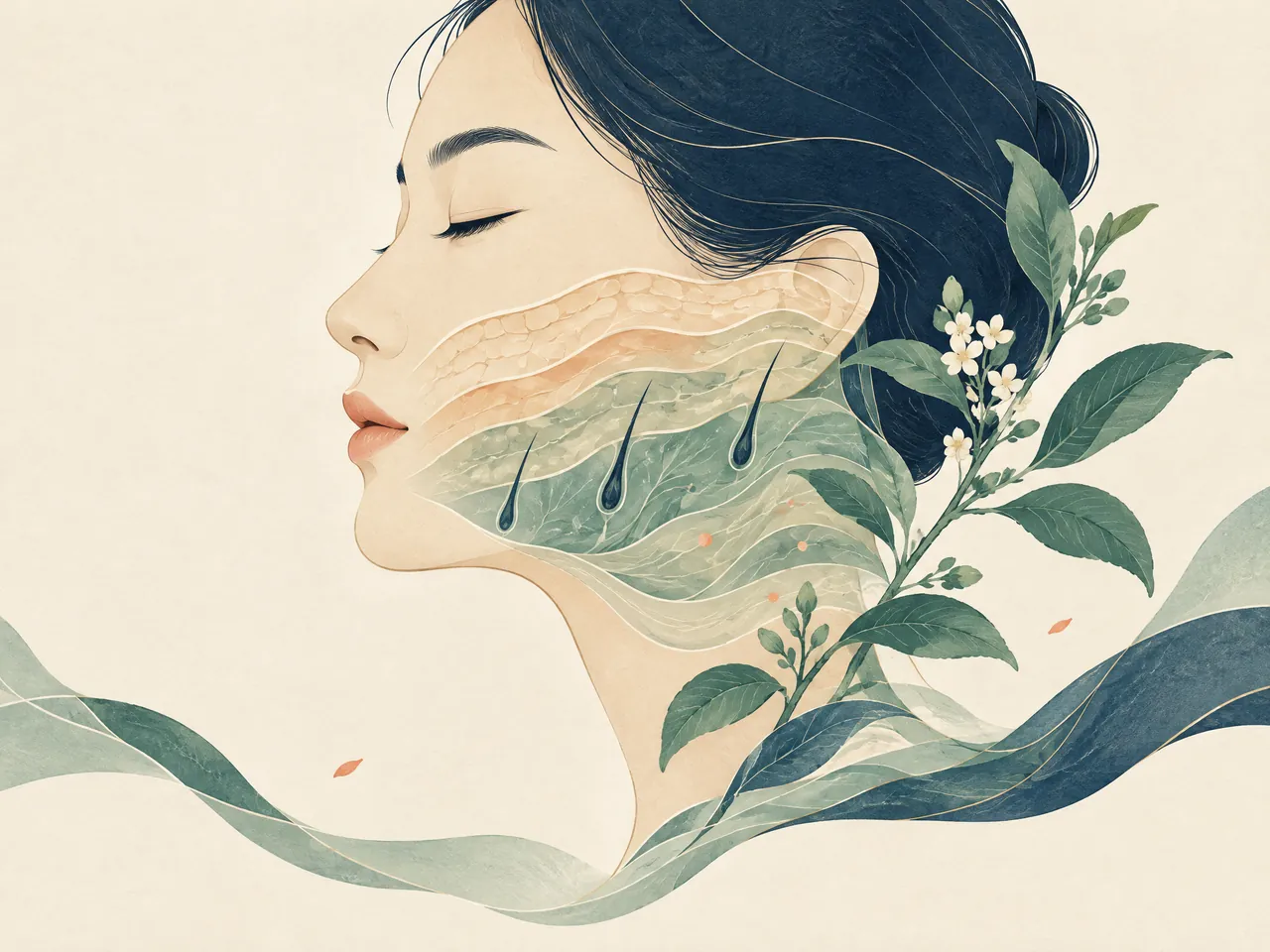
TCM dermatology can provide a whole-person consultation for people concerned about hives or psoriasis. It considers the skin pattern alongside your symptom timeline, known triggers, sleep, digestion, stress, medical history, and current treatment. Chinese herbs, external preparations, or acupuncture may be discussed only after an individual assessment. This is not a guaranteed treatment route, and sudden severe allergy symptoms, infection concerns, or rapidly worsening skin need prompt conventional medical assessment.
Transparent pricing
See the fees.
Choose your care.
Explore our complete official price list, including first-trial prices, regular prices, packages and branch-specific options.
Opening WhatsApp prepares an enquiry; it does not send a message, take payment or confirm an appointment. Suitability and individual arrangements are confirmed during consultation.
Chinese medicine
All prices in HKDAcupuncture and Chinese herbal medicine package
Includes a Chinese medicine consultation with pulse assessment, body acupuncture and 3 days of Chinese herbal granules that do not require decoction.
HK$580 (single session)
Chinese medicine consultation with pulse assessment
Hair and scalp
All prices in HKDScalp health and hair-loss management
Includes AI scalp analysis, deep scalp and follicle cleansing, and scalp oil-control care.
HK$380 (first trial)
Regular price: HK$680
- 6 sessions: HK$3,480 (HK$580 per session)
- 12 sessions: HK$5,760 (HK$480 per session)
- 20 sessions: HK$8,600 (HK$430 per session)
- 30 sessions: HK$11,400 (HK$380 per session)
Hair acupuncture and Chinese herbal medicine package
Includes scalp acupuncture and 3 days of Chinese herbal medicine that does not require decoction.
HK$580 (single session)
Registered Chinese Medicine Practitioner consultation
- 6 sessions: HK$3,180 (HK$530 per session)
- 12 sessions: HK$5,760 (HK$480 per session)
- 20 sessions: HK$8,600 (HK$430 per session)
- 30 sessions: HK$11,400 (HK$380 per session)
Combined hair and scalp treatment
Combines acupuncture and Chinese herbal medicine with salon-level scalp and follicle care. Packages include complimentary hair-care shampoo and serum.
HK$1,260 (single session)
Combined treatment
- 8 sessions: HK$8,640 (HK$1,080 per session)
- 16 sessions: HK$15,680 (HK$980 per session)
- 20 sessions: HK$18,600 (HK$930 per session)
- 30 sessions: HK$26,400 (HK$880 per session)
Weight management
All prices in HKDFull-body acupoint embedding for weight management
Includes full-body acupoint embedding. Packages include complimentary Chinese herbal medicine for weight management, with the number of included days scaled to the package. Embedding material and the individual treatment arrangement are confirmed during consultation; this is not a cosmetic thread lift.
HK$980 (single session)
No trial session
- 10 sessions: HK$7,800 (HK$780 per session)
- 20 sessions: HK$14,600 (HK$730 per session)
- 30 sessions: HK$20,400 (HK$680 per session)
Facial acupuncture
All prices in HKDFacial acupuncture (basic)
Includes facial acupuncture and meridian-based facial care, including care for facial puffiness.
HK$480 (first trial)
Regular price: HK$680
- 10 sessions: HK$5,200 (HK$520 per session)
- 20 sessions: HK$9,600 (HK$480 per session)
- 30 sessions: HK$13,500 (HK$450 per session)
Facial acupuncture (advanced)
Includes enhanced facial acupuncture with a specially formulated moisturising mask and serum.
HK$780 (first trial)
Regular price: HK$1,180
- 10 sessions: HK$9,000 (HK$900 per session)
- 20 sessions: HK$16,600 (HK$830 per session)
- 30 sessions: HK$23,400 (HK$780 per session)
Pain care
All prices in HKDExtracorporeal shockwave treatment
Shockwave treatment for deep-tissue and fascial care. The Kwun Tong clinic offers the multi-area options shown below.
Priced by branch
Branch-specific pricing
Prince Edward: HK$250 per area
Kwun Tong: HK$250 for 1 area / HK$450 for 2 areas / HK$600 for 3 areas
Pain care (manual therapy)
Includes Chinese medicine musculoskeletal assessment, manual joint techniques and tui na.
HK$580 (single session)
Chinese medicine musculoskeletal assessment
Pain care (acupuncture and manual therapy)
Combines acupuncture and manual therapy.
HK$680 (single session)
Combined care
Hives, Psoriasis and TCM Dermatology: A Whole-Person View
A whole-person view begins by separating the question, "What is on the skin today?" from the question, "What else has been happening around it?" Hives are commonly itchy, raised bumps or patches that may sting or burn and can occur anywhere on the body. [1] Psoriasis is different: it is a chronic immune-mediated disease in which skin can become inflamed and scaly, often affecting areas such as the scalp, elbows, or knees. [2] Colour can be harder to judge on darker skin, and dryness, scale, scratch marks, or changes in sleep may be more noticeable than redness alone. This is why a label found online is a starting point for a conversation, not a diagnosis. A page on Chinese medicine for skin conditions can help place skin concerns in a wider service context, but new, persistent, or uncertain rashes still deserve appropriate clinical assessment.
In TCM dermatology, the practitioner may ask about constitution and use traditional pattern language alongside ordinary clinical details. The purpose is not to declare that one internal cause explains every flare. It is to notice connections a person may want to discuss: itching that disrupts sleep, a rash that follows heat and sweating, plaques that feel worse during a stressful work period, or a skin routine that has become difficult to sustain. The Chinese Medicine Hospital of Hong Kong also lists psoriasis among common chronic skin conditions in a Chinese medicine service setting. [4] A useful consultation makes room for both perspectives: the person's lived experience and the need to identify conditions that require medical diagnosis, prescription treatment, testing, or specialist care. It should not ask someone to abandon established care merely because the problem has a TCM description.
Hives, Psoriasis and TCM Dermatology: Looking Beyond the Surface
Visible features are still important. For hives, note whether raised areas are localised or widespread, whether they itch, sting, or burn, and whether swelling occurs beneath the skin. A person might remember that the eruption followed a hot commute, a new medicine, a meal, an infection, tight clothing, exercise, or no obvious event at all. Those observations are not proof of a cause; they are useful history. The NHS lists a range of possible hives triggers, including foods, contact exposures, cold, hot or sweaty skin, medicines, infections, and pressure on the skin. [1] For psoriasis, a clinician may need to distinguish scale, cracking, scalp involvement, nail changes, and joint symptoms from other skin problems. Writing down plain observations is more useful than trying to decide in advance which traditional pattern applies.

Hives, Psoriasis and TCM Dermatology: Why Personal Context Matters
Personal context changes the questions worth asking. Someone whose itch is keeping them awake may need to describe sleep loss and the effect on concentration. Someone with psoriasis may want to record where plaques appear, whether clothing rubs, how bathing products feel, and whether hand involvement affects work or household tasks. If joints are stiff, swollen, or painful, that should be raised with a doctor promptly because psoriasis can be associated with psoriatic arthritis. [2] Current diagnoses, pregnancy or breastfeeding, allergies, recent infections, planned procedures, and every medicine or supplement are also relevant. Before a visit, a dated photo diary can make a fluctuating problem easier to explain. It can support a more focused skin condition assessment without asking the photo itself to settle the diagnosis.
Compare your options
| What to note | Useful detail | Why it helps the conversation |
|---|---|---|
| Timeline | First episode, recent flare dates, duration, and whether the rash moves or stays in one place | Separates a new concern from a changing long-term pattern |
| Skin features | Body areas, itch, burning, pain, scale, cracking, swelling, or fluid; include photos if useful | Gives a clearer starting description without self-diagnosing |
| Possible exposures | New medicine, food, skin product, heat, cold, exercise, pressure, infection, or work exposure | Helps identify questions for medical assessment and avoids guesswork |
| Health and treatment history | Diagnoses, tests, all medicines and supplements, allergies, pregnancy or breastfeeding, and previous reactions | Supports safer discussion of Chinese herbs, topical preparations, or acupuncture |
On smaller screens, scroll the table sideways to compare all columns.
Hives, Psoriasis and TCM Dermatology: What an Assessment Covers
An assessment works best when the account is specific enough to guide safe next steps. Start with the first appearance of the skin change and separate it from the date of a formal diagnosis, if there is one. Describe the place on the body, the feeling, the pace of change, and whether the skin is dry, hot, painful, weeping, cracked, or scaled. Bring photos taken in ordinary light if the rash comes and goes before an appointment. Note medical consultations, tests, prescribed creams or tablets, non-prescription products, past reactions, and what happened after each change. This avoids the common problem of discussing a recurring rash as though it has always behaved in exactly the same way. It also lets the practitioner recognise when a conventional review should be prioritised rather than treating the consultation as a stand-alone answer.
Daily habits belong in the history because they shape exposure and burden, not because they prove blame. Consider work heat, exercise, laundry products, bathing routines, cosmetic products, alcohol, smoking, travel, sleep disruption, and stress in the weeks around a flare. Keep the record modest and factual: a short timeline is more reliable than a long list of suspected causes added after the fact. There is no need to impose a broad restrictive diet without advice from the clinician managing the condition. A person seeking eczema Chinese medicine information can use the same preparation habits, yet should not assume that eczema, hives, and psoriasis are interchangeable. Each can have different medical explanations, examination findings, and treatment decisions.
Hives, Psoriasis and TCM Dermatology: Symptoms, Timing and Triggers
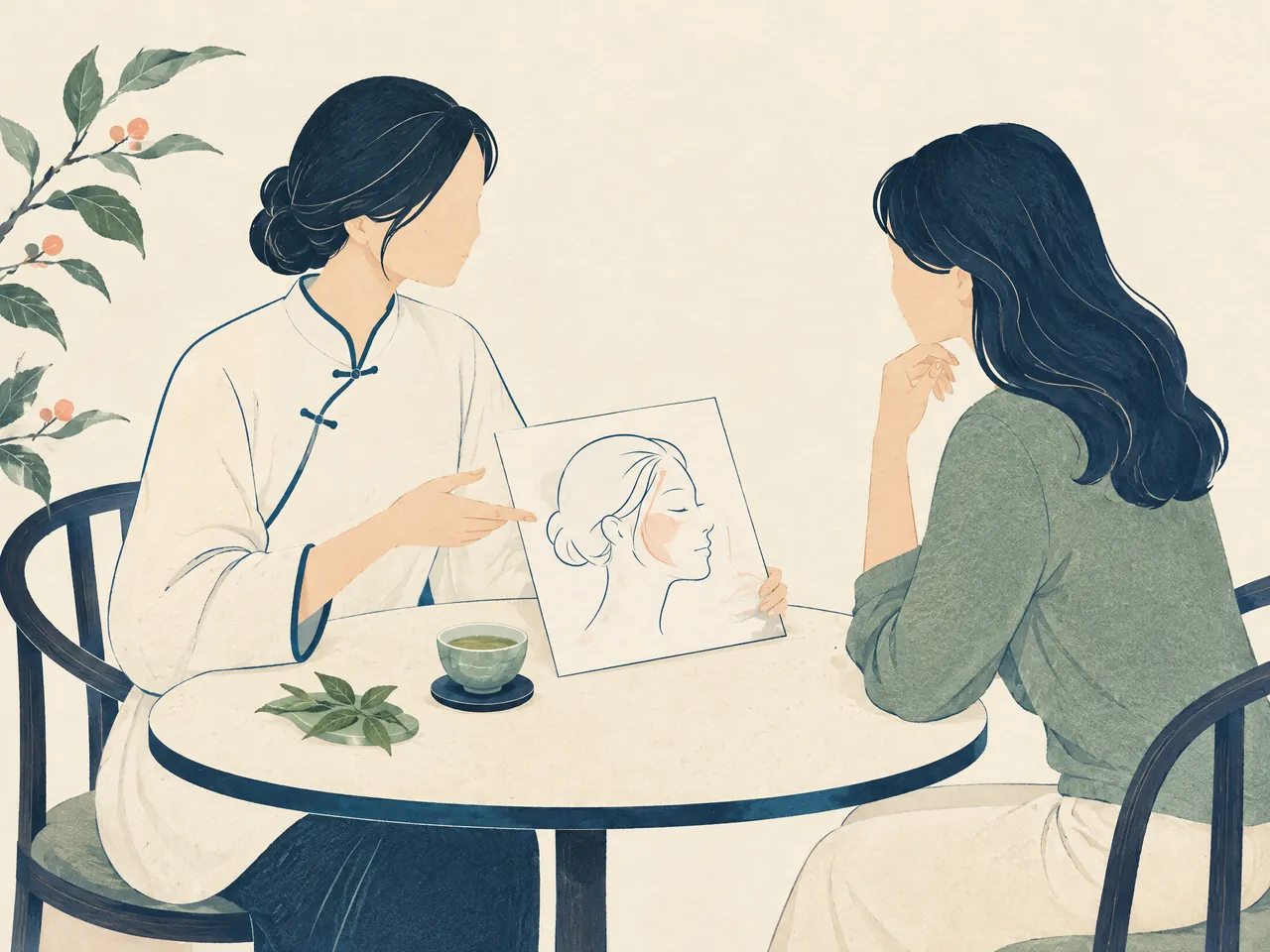
At the visit, a practitioner may use the traditional four examinations: observing, listening or smelling, asking, and palpating. In practical terms, that means listening to the history as well as looking at the skin and asking about general wellbeing. The result may be a discussion of pattern-based Chinese medicine care, lifestyle adjustments that are realistic for the individual, or a recommendation to obtain medical review first. It is reasonable to ask what the proposed approach is intended to address, how it fits alongside a dermatologist's plan, and what change would mean the plan should be reconsidered. For hives that keep returning, spread, occur with fever or feeling unwell, or include swelling under the skin, the NHS advises urgent assessment rather than simply waiting. [1] The person should say whether symptoms occur after a medicine, food, insect sting, heat, cold, exertion, or pressure, while remembering that a temporal link alone does not confirm a trigger.
Hives, Psoriasis and TCM Dermatology: Discussing Herbs and Acupuncture
Chinese herbal medicine, external preparations, and acupuncture are not automatic parts of every skin consultation. Their appropriateness depends on the working assessment, skin integrity, known allergies, infection risk, pregnancy status, and the medicines already in use. A transparent discussion names the exact product or procedure being considered, what information is still missing, and who should coordinate care. Tell both the Chinese medicine practitioner and other clinicians about all herbs, supplements, creams, injections, tablets, and previous reactions. NCCIH notes that Chinese herbal products can raise safety concerns, including contamination or undeclared substances, and advises discussing TCM with health-care providers rather than using it to replace or delay conventional care. [3] Acupuncture should not be placed through broken or infected skin. Related information on acupuncture for eczema may help frame questions about the procedure, but it is not evidence that it will treat hives or psoriasis.
Hives, Psoriasis and TCM Dermatology: Practical Limits and Safety
The most useful expectation is not a promise that a particular remedy will make every flare disappear. Hives may settle quickly or recur, while psoriasis often has periods when symptoms worsen and periods when they improve. [1] [2] Skin symptoms can also change with season, friction, treatment adherence, infection, stress, and many other factors. A consultation can help someone state goals that are concrete and reviewable, such as understanding the problem better, reducing the disruption of itch, checking whether a product is suitable, or coordinating the next medical step. It cannot safely guarantee a cure, a fixed number of visits, permanent clearance, or a response to herbs or acupuncture. If a proposed plan feels vague, ask how progress and adverse effects will be monitored and when the plan will be stopped or referred onward.
Safety is active, not an afterthought. Keep prescribed treatment and medical follow-up visible in the conversation. Do not stop, start, or combine medicines and herbal products on your own just because the skin has improved for a few days. Contact the clinician who manages your skin condition if the diagnosis is uncertain, the current plan is failing, or side effects appear. Severe or extensive psoriasis needs medical management tailored to its type and severity; standard options can include topical medicines, light treatment, or systemic treatment. [2] A complementary consultation can sit alongside appropriate care only when information is shared clearly. For a face-to-face discussion in the area, an enquiry to a Chinese medicine clinic Prince Edward can be made through TCM Lab; appointment arrangements and suitability still need confirmation.

Hives, Psoriasis and TCM Dermatology: Setting Realistic Expectations
Set a baseline before changing several things at once. Record the date, body areas involved, itch or discomfort, sleep interruption, products used, medicines taken, and photos when helpful. Then agree with the practitioner which outcomes matter and which warning signs override the plan. A fair review looks at the whole course rather than one unusually good or bad day. It also recognises that keeping skin care manageable is important: a regimen that is too complicated may be hard to follow during a busy Hong Kong week. Avoid judging success from online testimonials, a single image, or another person's prescription. The aim of TCM dermatology is an individual discussion of options and limits, not a universal formula for a skin label. If the diagnosis or severity changes, the plan should change with it.

Hives, Psoriasis and TCM Dermatology: When to Seek Prompt Medical Care
Do not wait for a routine consultation if there is sudden swelling of the lips, mouth, throat, or tongue; fast or difficult breathing; a tight throat; trouble swallowing; fainting; or marked drowsiness or confusion. These can be signs of a serious allergic reaction and need emergency help. [1] Prompt medical assessment is also important when a rash spreads quickly, is accompanied by fever or feeling very unwell, becomes very painful or hot, or has pus, leaking fluid, or a bad smell. For psoriasis, seek medical advice promptly for painful, swollen, or stiff joints, as untreated psoriatic arthritis can cause lasting damage. [2] Pause any new topical, herbal, or complementary approach that seems to cause a reaction and tell the relevant clinician what was used. Safety comes before preserving a planned appointment or trying one more home remedy.
Care and health guide
Health service information
This directory brings together services, reading, and visit information related to health services, to help you prepare questions for a consultation.
If you are organising health questions, Chinese medicine clinic Hong Kong is a starting point for learning about related services and preparing for a consultation.
People have different needs; acupuncture Hong Kong provides further reading to help you understand options in your own context.


Your questions, answered
Frequently asked questions
Are hives and psoriasis suitable for a Chinese medicine consultation?
They can be discussed, but suitability depends on the appearance and course of the skin problem, your medical history, current medicines, allergies, and any warning signs. A consultation should not assume that every itchy or scaly area is hives or psoriasis. New, severe, infected-looking, or uncertain rashes may need conventional medical assessment first.
What should I prepare before discussing a recurring skin problem?
Bring a brief symptom timeline, photographs if useful, diagnoses and test results, a list of all medicines and supplements, allergies, and notes on suspected exposures. Include changes in itch, sleep, pain, digestion, daily activity, and any joint symptoms. Record facts rather than trying to identify your own trigger or TCM pattern in advance.
Can Chinese herbs or acupuncture replace psoriasis treatment or emergency allergy care?
No. Do not use Chinese medicine to replace or delay medical care, especially when symptoms are severe, rapidly changing, or potentially allergic. Discuss complementary approaches with the clinicians involved in your care and disclose every product and treatment. Chinese herbs and acupuncture may have safety considerations that require an individual assessment. [3]
When should I seek urgent help for hives or a skin flare?
Seek emergency help for swelling of the lips, mouth, tongue, or throat, breathing difficulty, a tight throat, trouble swallowing, fainting, or sudden confusion. Seek prompt medical advice for a rapidly spreading rash, fever or feeling very unwell, severe pain or heat, pus or leaking fluid, or new painful swollen joints with psoriasis. [1] [2]
Sources and further information
- [1] [1] NHS: Hives
Referenced for: Supports the description of hives symptoms, possible triggers, urgent review advice, and emergency allergy warning signs.
- [2] [2] National Institute of Arthritis and Musculoskeletal and Skin Diseases: Psoriasis
Referenced for: Supports the description of psoriasis as a chronic immune-mediated condition, common features, flares, treatment context, and psoriatic arthritis warning signs.
- [3] [3] National Center for Complementary and Integrative Health: Traditional Chinese Medicine: What You Need To Know
Referenced for: Supports cautions on Chinese herbal product safety, acupuncture safety, and coordination with conventional health care.
- [4] [4] Chinese Medicine Hospital of Hong Kong: Chronic Skin Diseases
Referenced for: Supports the local service-context statement that psoriasis is listed among common chronic skin conditions; it is not used as evidence of outcomes for TCM Lab.