
TCM Lab · Health reading
Hip pain in the buttock: can hip pain be treated with acupuncture, and can I walk or exercise with hip pain?
Published Updated
Pain felt deep in one buttock, near the outside of the hip, or across the back of the pelvis can make ordinary decisions unexpectedly difficult: should you keep walking to the MTR, stop your gym session, stretch, or book care? Hip pain in the buttock is a location, not a diagnosis. It can involve tissues around the hip, but it can also be referred from the lower back or arise with another problem. Start by noticing the onset, any fall or twist, what loading does to it, and whether there are warning signs. Acupuncture may be discussed as an adjunct after assessment; it is not a way to confirm the source or to bypass rehabilitation and medical care.
Appointments are confirmed through WhatsApp. If you have language requirements, please mention them in your enquiry.
The short answer
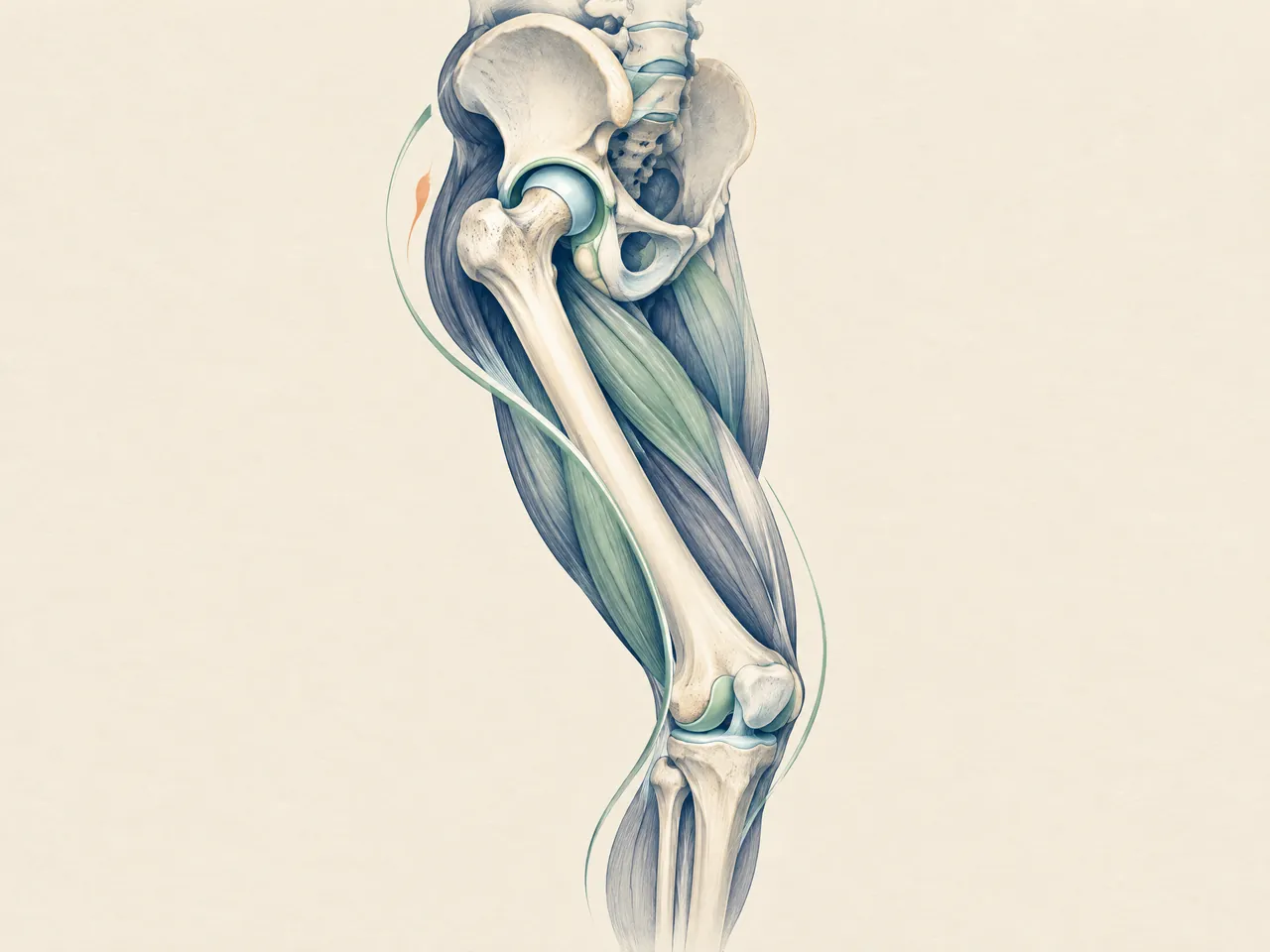
Hip pain in the buttock may relate to the hip, nearby tendons or bursae, or referred pain from the lower back, so the painful spot alone cannot identify the cause. Without warning signs, short bouts of tolerable walking or gentle movement are usually more useful than complete bed rest, provided symptoms do not clearly escalate. Acupuncture can be discussed as an adjunct after an assessment, but it cannot diagnose the problem, guarantee relief, or replace rehabilitation or urgent medical care.
Transparent pricing
See the fees.
Choose your care.
Explore our complete official price list, including first-trial prices, regular prices, packages and branch-specific options.
Opening WhatsApp prepares an enquiry; it does not send a message, take payment or confirm an appointment. Suitability and individual arrangements are confirmed during consultation.
Pain care
All prices in HKDExtracorporeal shockwave treatment
Shockwave treatment for deep-tissue and fascial care. The Kwun Tong clinic offers the multi-area options shown below.
Priced by branch
Branch-specific pricing
Prince Edward: HK$250 per area
Kwun Tong: HK$250 for 1 area / HK$450 for 2 areas / HK$600 for 3 areas
Pain care (manual therapy)
Includes Chinese medicine musculoskeletal assessment, manual joint techniques and tui na.
HK$580 (single session)
Chinese medicine musculoskeletal assessment
Pain care (acupuncture and manual therapy)
Combines acupuncture and manual therapy.
HK$680 (single session)
Combined care
Hair and scalp
All prices in HKDScalp health and hair-loss management
Includes AI scalp analysis, deep scalp and follicle cleansing, and scalp oil-control care.
HK$380 (first trial)
Regular price: HK$680
- 6 sessions: HK$3,480 (HK$580 per session)
- 12 sessions: HK$5,760 (HK$480 per session)
- 20 sessions: HK$8,600 (HK$430 per session)
- 30 sessions: HK$11,400 (HK$380 per session)
Hair acupuncture and Chinese herbal medicine package
Includes scalp acupuncture and 3 days of Chinese herbal medicine that does not require decoction.
HK$580 (single session)
Registered Chinese Medicine Practitioner consultation
- 6 sessions: HK$3,180 (HK$530 per session)
- 12 sessions: HK$5,760 (HK$480 per session)
- 20 sessions: HK$8,600 (HK$430 per session)
- 30 sessions: HK$11,400 (HK$380 per session)
Combined hair and scalp treatment
Combines acupuncture and Chinese herbal medicine with salon-level scalp and follicle care. Packages include complimentary hair-care shampoo and serum.
HK$1,260 (single session)
Combined treatment
- 8 sessions: HK$8,640 (HK$1,080 per session)
- 16 sessions: HK$15,680 (HK$980 per session)
- 20 sessions: HK$18,600 (HK$930 per session)
- 30 sessions: HK$26,400 (HK$880 per session)
Weight management
All prices in HKDFull-body acupoint embedding for weight management
Includes full-body acupoint embedding. Packages include complimentary Chinese herbal medicine for weight management, with the number of included days scaled to the package. Embedding material and the individual treatment arrangement are confirmed during consultation; this is not a cosmetic thread lift.
HK$980 (single session)
No trial session
- 10 sessions: HK$7,800 (HK$780 per session)
- 20 sessions: HK$14,600 (HK$730 per session)
- 30 sessions: HK$20,400 (HK$680 per session)
Facial acupuncture
All prices in HKDFacial acupuncture (basic)
Includes facial acupuncture and meridian-based facial care, including care for facial puffiness.
HK$480 (first trial)
Regular price: HK$680
- 10 sessions: HK$5,200 (HK$520 per session)
- 20 sessions: HK$9,600 (HK$480 per session)
- 30 sessions: HK$13,500 (HK$450 per session)
Facial acupuncture (advanced)
Includes enhanced facial acupuncture with a specially formulated moisturising mask and serum.
HK$780 (first trial)
Regular price: HK$1,180
- 10 sessions: HK$9,000 (HK$900 per session)
- 20 sessions: HK$16,600 (HK$830 per session)
- 30 sessions: HK$23,400 (HK$780 per session)
Chinese medicine
All prices in HKDAcupuncture and Chinese herbal medicine package
Includes a Chinese medicine consultation with pulse assessment, body acupuncture and 3 days of Chinese herbal granules that do not require decoction.
HK$580 (single session)
Chinese medicine consultation with pulse assessment
Hip pain in the buttock overview: can hip pain be treated with acupuncture, and can I walk or exercise with hip pain safely?
The phrase hip pain in the buttock covers more than one pattern. Pain on the outer buttock or outer hip can be related to muscles, tendons, ligaments or bursae around the joint, while pain that seems to travel from the low back can be referred pain. Groin pain may point more toward the joint itself, but none of these locations proves a cause on its own. A careful history and examination put the map of pain alongside movement, strength, sensation and function. Mayo Clinic similarly notes that location offers clues but that lower-back conditions can refer pain to the hip region [2].
Before choosing a treatment, describe the pattern in usable detail. Did it begin after a fall, a long walk, a new running route, repeated stairs, lifting, or simply on waking? Is the pain sharp on a particular step, a deep ache after sitting, or an ache that wakes you when lying on one side? Can you put on socks, rise from a chair, get into a taxi and climb stairs as usual? These details make a conversation about hip pain more useful than relying on one painful point.
It is also worth separating a temporary response from a trend. A mildly sore area after unfamiliar activity may settle as the load is reduced, yet pain that repeatedly returns after the same distance, spreads down the leg, disrupts sleep or changes the way you walk needs more attention. For a fuller description of patterns that affect everyday function, see hip pain symptoms. The next step depends on the person and the findings.

After sudden onset of hip pain in the buttock, can hip pain be treated with acupuncture, and can I walk or exercise with hip pain today?
Sudden pain changes the first question from “what will loosen it?” to “is it safe to load this leg?” After a fall, collision or awkward turn, do not use a stretch, deep massage or a needle treatment as a test of whether the problem is minor. Severe pain, an inability to walk or bear weight, a visibly altered hip or leg, or tingling or loss of feeling after an injury need urgent medical attention. These are the emergency features highlighted in NHS guidance [1].
If there was no injury and you can move and bear weight, choose a low-demand check rather than a workout. Walk a short, level indoor route at a comfortable pace, pause, and notice whether pain becomes sharp, your limp increases, or symptoms remain clearly worse later that day or the following morning. Stop if that happens. “Can I walk?” is not a test to pass by pushing through; it is a question about what amount is currently tolerable while the cause is being clarified.
When symptoms recur with hip pain in the buttock, can hip pain be treated with acupuncture, and can I walk or exercise with hip pain without setbacks?
With a recurring pattern, acupuncture can be a topic for an individual consultation, especially when discomfort is limiting participation in a wider plan. Evidence needs to be described accurately. A Cochrane review of acupuncture for hip osteoarthritis found little or no difference in pain or function versus sham acupuncture at short-term follow-up, and uncertainty in several other comparisons [3]. That evidence concerns hip osteoarthritis, not every form of buttock pain, so it does not predict an outcome for an individual.
This does not mean a person must choose between acupuncture and rehabilitation. It means the goals should be explicit: review the pain pattern, identify movement or load that currently aggravates it, and decide whether an adjunct session is appropriate alongside gradual activity and any medical assessment. Needle insertion can cause minor bruising, bleeding or soreness, and unsafe practice carries more serious risks; sterile single-use needles and a properly qualified practitioner matter [4]. Do not delay assessment of a worsening or unexplained problem in the hope that passive care alone will settle it.
Compare your options
| What you notice | Most sensible next step | Walking, exercise and acupuncture decision |
|---|---|---|
| Mild, familiar soreness after an increase in activity; you can walk normally | Reduce the provoking load and monitor the response to comfortable movement | Try a smaller, level walking dose or gentle movement; discuss acupuncture only as an adjunct if symptoms persist |
| Pain returns with distance, stairs, sitting or a specific movement | Record the trigger, timing and next-day response; arrange assessment if it keeps recurring | Modify one activity variable at a time; do not use a treatment session to justify an immediate return to full training |
| Pain affects sleep, normal tasks or walking pattern, or is getting worse | Seek a non-emergency clinical assessment | Avoid forcing exercise; acupuncture can be considered after the presentation and care plan are reviewed |
| Severe pain after injury, inability to bear weight, deformity, persistent numbness, or a hot swollen hip with fever | Seek urgent or emergency medical care | Do not exercise or rely on acupuncture, stretching or massage before urgent assessment |
On smaller screens, scroll the table sideways to compare all columns.
Activity guidance for hip pain in the buttock: can hip pain be treated with acupuncture, and can I walk or exercise with hip pain during recovery?
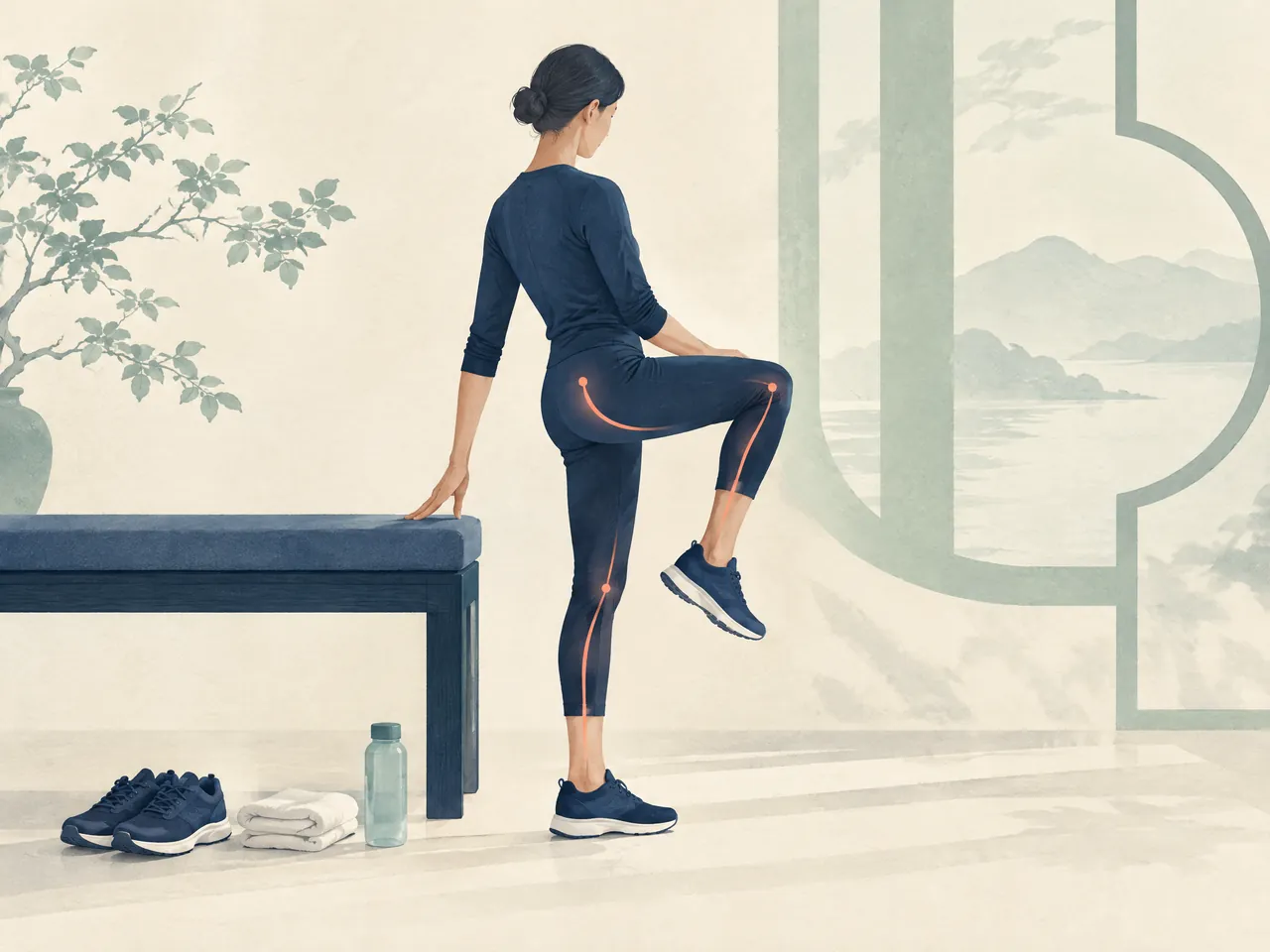
When there are no urgent features, the aim is usually to keep some comfortable movement while changing the dose of the activity that irritates the area. Complete bed rest can make daily tasks feel harder when you restart. NHS advice for adult hip pain is to keep moving if possible without overdoing it, while avoiding excessive strain [1]. In practice, this may mean a shorter flatter walk, fewer flights of stairs for a few days, a break from deep squats, or getting up regularly rather than sitting in one low chair for a long time.
Use a simple response check instead of a rigid rule. Choose an activity you can control, such as a five- to ten-minute level walk, gentle range-of-motion work, or a lighter version of a usual exercise. During the session, pain should not become sharp, unstable-feeling or progressively more intense. Afterwards, note whether your usual walking, sleep and next-day function are broadly similar. If they are clearly worse, reduce duration, pace, resistance, range or frequency next time rather than adding more effort.
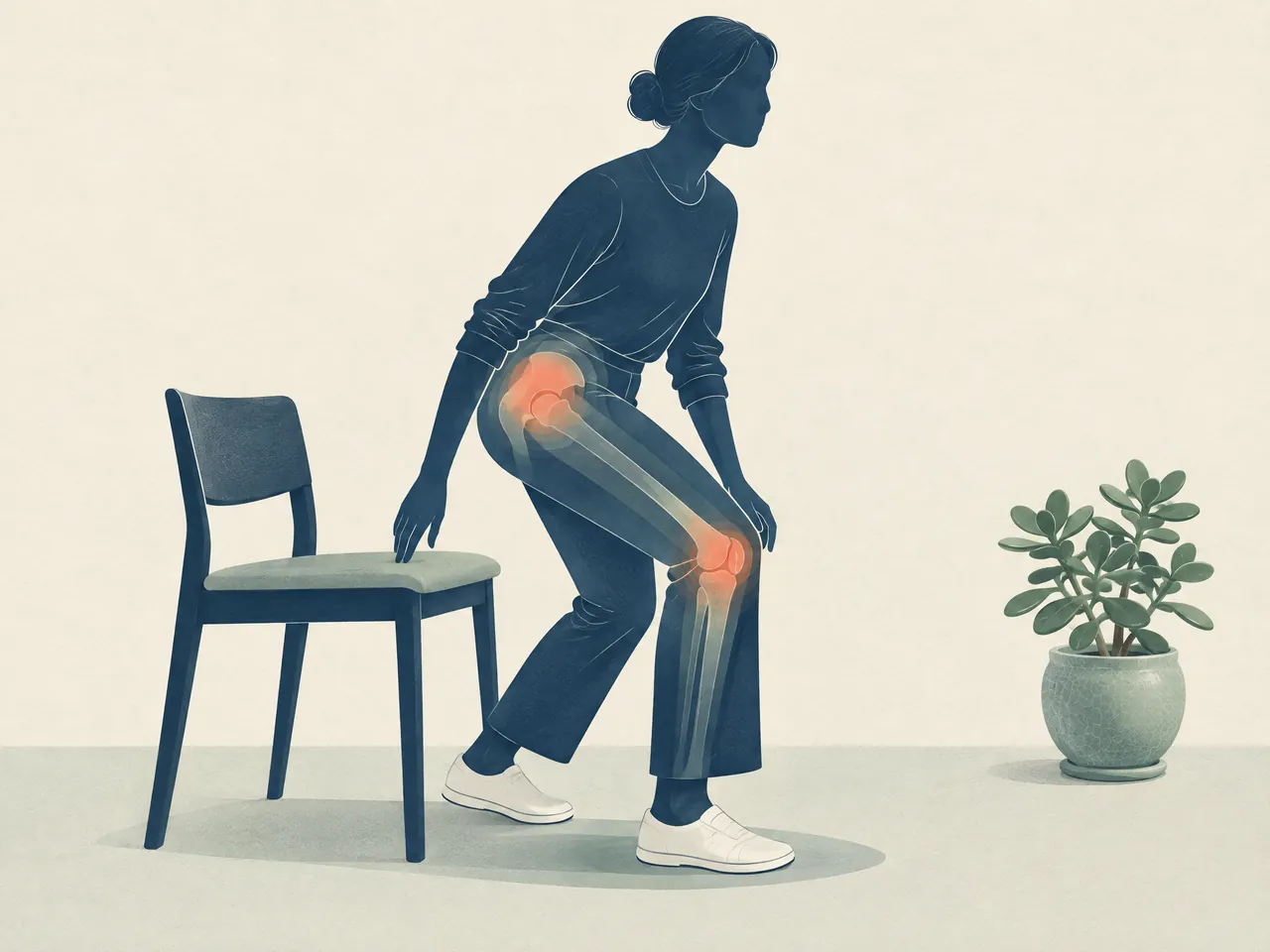
Walking is not the only load on the hip region. Commuting seated, repeated sit-to-stand movements, carrying shopping on one side and lying directly on the sore side may also matter. The key question is whether the current version changes symptoms in a manageable way. If your main problem occurs during steps, hills or distance, the guide to hip pain when walking can help you describe that pattern before seeking advice.
To avoid flare-ups in hip pain in the buttock, can hip pain be treated with acupuncture, and can I walk or exercise with hip pain without worsening it?
Avoid the common swing between doing nothing for several days and then attempting a full hike, class or gym session because the pain is quieter. Symptoms can settle temporarily without the area being ready for the previous load. Keep one variable small when you return: add a little time, a little distance or a little resistance, not all three at once. A diary with the activity, duration, surface, shoes, immediate response and next-day response can reveal a pattern that memory misses.
Comfort measures may help you manage a short-term flare, but they do not establish the cause. A wrapped cold pack can be considered for a recently aggravated area, and warmth may feel soothing before gentle movement for some people. Protect the skin and avoid using either to numb the area before testing a demanding session. For a balanced discussion of timing and precautions, read should I use heat or ice for hip pain. New swelling, colour change, fever or feeling generally unwell is not a self-care situation.
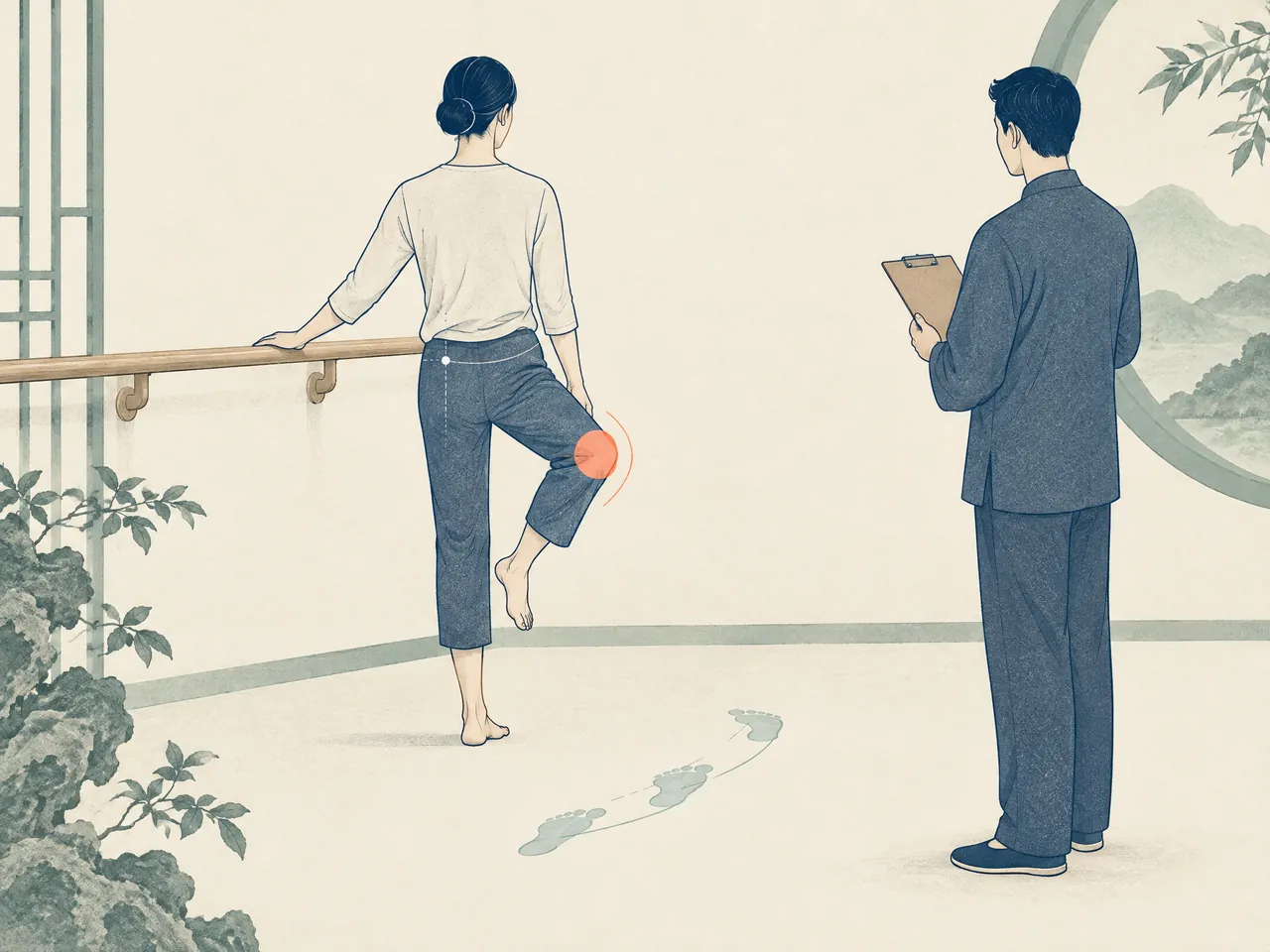
For gradual rehabilitation of hip pain in the buttock, can hip pain be treated with acupuncture, and can I walk or exercise with hip pain alongside guided rehab?
Guided rehabilitation makes activity more specific. A clinician may look at how you stand from a chair, step, balance, rotate the hip or use the lower back, then select a starting level that matches your ability. The programme might include mobility, strength, balance or walking tolerance, but the contents and pace depend on the assessment. An adjunct treatment should not become the entire plan if a movement pattern or load problem still needs to be addressed.
Acupuncture, if chosen after discussion, is best approached with a review point rather than a promise of a fixed cure. Agree on the function you are trying to improve, such as sleeping more comfortably, walking a short route with less interruption, or tolerating a prescribed exercise. Track that function alongside symptoms and adverse effects. If the pattern deteriorates, new neurological symptoms appear, or the plan is not helping, reassess instead of simply adding sessions. This respects both the limited hip-specific evidence and the importance of active recovery.
When to seek care for hip pain in the buttock: can hip pain be treated with acupuncture, and can I walk or exercise with hip pain meanwhile?
Some combinations of hip or buttock pain need medical assessment before you decide about exercise or acupuncture. After a fall or injury, severe pain with inability to walk or put weight through the leg is an emergency feature. A hip that is hot, swollen or changing colour, particularly with fever, chills or feeling unwell, also needs urgent attention. NHS lists these patterns because causes can be more serious than a simple overuse flare [1]. If in doubt about how urgent a symptom is, use local emergency or urgent-care services rather than waiting for a routine complementary-therapy appointment.
Arrange a non-emergency clinical review when pain keeps returning, progressively limits normal activities, disturbs sleep, or has not improved despite sensible load adjustment. Stiffness, weakness, numbness, back pain with leg symptoms, a new limp, medication concerns and relevant medical history all change the assessment. A useful appointment starts with a precise story: where the pain is felt, what began it, what movements bring it on, what eases it, and which daily tasks you have stopped doing.
This is also the point to ask the question behind “can hip pain be treated with acupuncture?” A responsible answer depends on whether urgent conditions have been excluded, what diagnosis or working pattern is being considered, what other care you are receiving and what you hope to achieve. Complementary care should support informed choices, not postpone diagnosis. NCCIH likewise advises people not to use acupuncture to delay seeing a health-care provider about a health problem [4].
Warning signs with hip pain in the buttock: can hip pain be treated with acupuncture, and can I walk or exercise with hip pain if red flags appear?
Do not attempt a walk to “warm it up” if you have severe pain after an injury and cannot bear weight, or if the hip or leg looks deformed. Do not exercise through new persistent tingling, loss of sensation or an inability to move the leg normally after injury. These signs are not proof of one diagnosis, but they are reasons for prompt medical assessment. Likewise, a suddenly painful hot swollen hip with fever or systemic illness should be treated as urgent rather than as a strain [1].
Until urgent help is arranged, avoid driving if pain or function makes that unsafe, and avoid forceful stretching, manipulation or deep pressure. Do not use pain relief to judge whether an injured hip can take full weight. Bring a brief account of the event, time of onset, medications and any sensory change.

Assessment priorities for hip pain in the buttock: can hip pain be treated with acupuncture, and can I walk or exercise with hip pain during evaluation?
During a non-urgent evaluation, be ready to explain what “exercise” means for you. It could be walking between stations, standing at work, caring for a child, football, Pilates, squats or a long weekend hike. Say whether symptoms occur at the start, during the activity, later that night or the following morning. Mention a fall, a rapid training change, pain below the knee, numbness, weakness, fever, unexplained weight loss or a history of conditions that may matter. Clear detail is more helpful than trying to name the cause yourself.
TCM Lab can discuss an assessment and whether acupuncture is an appropriate adjunct for the presentation, rather than assuming that every buttock-pain pattern should receive the same treatment. To ask about an appointment, contact the Kwun Tong Chinese medicine clinic or Chinese medicine clinic Prince Edward through WhatsApp at +852 6940 5663. If you are comparing consultation options, the Chinese medicine clinic price list Hong Kong explains the published fees; appointment suitability and practitioner availability still need confirmation.
Care and health guide
Pain-care information
This directory brings together services, reading, and visit information related to pain care, to help you prepare questions for a consultation.
When pain care affects your day, noting when it occurs, its relation to activity, and what you have already tried can help prepare a consultation; Chinese medicine pain management Hong Kong is a relevant service or reading entry point.
Individual circumstances differ, and acupuncture Hong Kong offers related information to help you understand options and prepare questions.


Your questions, answered
Frequently asked questions
Can hip pain in the buttock come from the lower back?
Yes. Lower-back conditions can refer pain to the hip or buttock area. Pain location is a useful clue, but an assessment considers the history, movement, neurological symptoms and functional changes before attributing it to the hip or the back [2].
Can hip pain be treated with acupuncture?
Acupuncture may be discussed as an adjunct after assessment, not as a stand-alone diagnosis or guaranteed fix. Hip-specific research has focused mainly on osteoarthritis. A Cochrane review found little or no difference in pain or function compared with sham acupuncture at short-term follow-up, with uncertainty in several other comparisons [3].
Can I walk or exercise with hip pain?
If there are no urgent warning signs, comfortable movement and a reduced version of the provoking activity may be reasonable. Keep the dose small enough that symptoms do not become sharply worse during activity or clearly impair your usual function later or the next day. Avoid forcing through a limp, instability or escalating pain.
When should hip pain in the buttock be assessed urgently?
Seek urgent or emergency care after injury if you cannot walk or bear weight, if the hip or leg looks deformed, or if there is persistent tingling or loss of feeling. A suddenly painful hot or swollen hip with fever or feeling unwell also needs urgent assessment [1].
Sources and further information
- [1] NHS: Hip pain in adults
Referenced for: Adult hip-pain triage, self-care and activity guidance.
- [2] Mayo Clinic: Hip pain
Referenced for: Pain-location clues, referred pain and urgent symptoms.
- [3] Cochrane: Acupuncture for hip osteoarthritis
Referenced for: Systematic-review evidence on acupuncture for hip osteoarthritis.
- [4] NCCIH: Acupuncture effectiveness and safety
Referenced for: Acupuncture safety, evidence context and advice not to delay health-care evaluation.