
Prince Edward & Kwun Tong clinics · Home-visit enquiries elsewhere

TCM Lab

TCM Lab · Beauty & lifestyle / Men’s appearance choices

Removable or bonded hair systems: compare everyday commitments

Content updated

A convincing hairstyle is only part of the decision. Compare the getting-ready routine, careful release, skin checks and upkeep you would actually be willing to manage before choosing an attachment method.

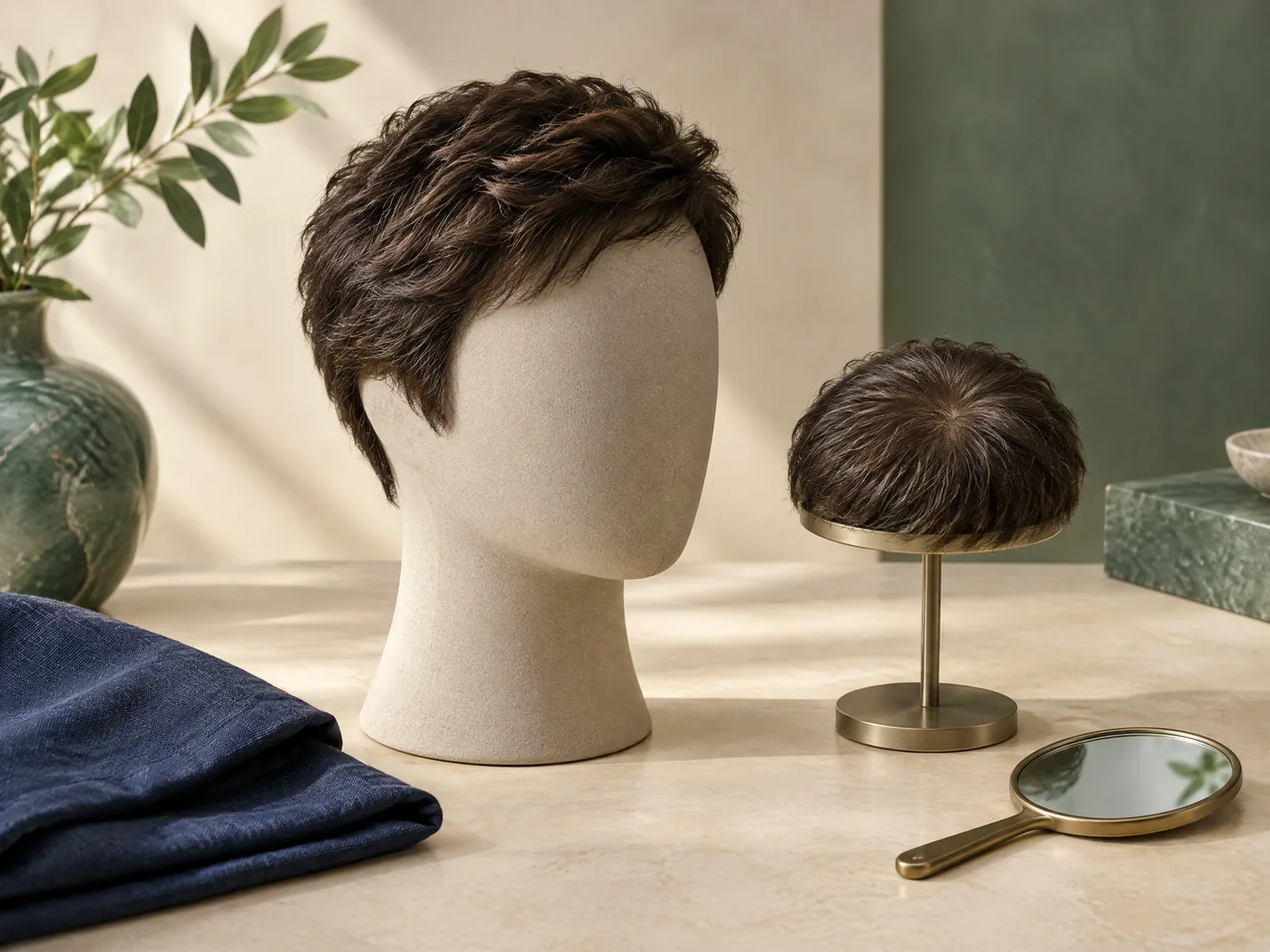
Illustrative men’s wig and partial hairpiece
Illustrative wig-lifestyle concept; not an OWNSTRAND product photograph or a client record.

The short answer

Choose by the complete wearing routine, not by assuming clips are easy or bonding is permanent. A removable design must support its intended fastening; a bonded design needs compatible attachment and release products. Ask for a demonstration, written care instructions and a clear explanation of who handles maintenance. Neither label guarantees comfort, wear time or an installation service.

OWNSTRAND is an external wig and hairpiece website under the same ownership as TCM Lab. These appearance and everyday wearing guides are separate from Chinese medicine care, not diagnosis, treatment or a promise of hair growth.

Start with the part of your week you want to simplify

Before comparing fastening methods, describe an ordinary weekday. Perhaps you want to take a piece off when you get home, or prefer not to reposition it each morning. Those are different priorities. Write down what you want to control yourself, what you would rather have help with, and when you can realistically make time for upkeep. A hairstyle photograph cannot answer those questions.

For readers exploring non-surgical hair replacement Hong Kong, the starting point is cosmetic coverage, not regrowth. Decide whether you want a defined area covered or need to compare a full wig; the actual shape and dimensions matter more than a category name. OWNSTRAND's guide treats these as product enquiries, with construction and wearing details to confirm for the particular piece.[1]

TCM Lab and OWNSTRAND share ownership; the links here provide related shopping information, not an independent endorsement. Keep the first enquiry practical: bring your desired look, but also describe your grooming habits. Choosing appearance support does not diagnose hair loss or treat its cause. If understanding a change in your hair is your priority, keep that healthcare conversation separate from the purchase.

Rehearse both putting it on and taking it off

With a removable design, ask to see the intended fasteners and practise the permitted steps under guidance. If clips are involved, confirm that the base supports them and where they should grip; do not assume they can be added to any piece. Notice whether you can reach the fastening points and check placement in your usual mirror. A small bathroom and limited morning time are worth mentioning.

A removable vs bonded hair system for men comparison should include bedtime, not just the first fitting. Ask whether the exact piece is intended to come off before sleep and what its removal sequence requires. Then consider whether that suits you after a late shift. For a bonded design, ask how planned release works and whether you need assistance rather than assuming you can detach it whenever you wish.

The categories overlap more than the names suggest: Walker Tape separates its tapes into different wearing ranges, including daily-wear products.[2] Tape therefore does not automatically mean an extended attachment. Compare the documented routine of two actual options, not an imagined clip-on piece against an imagined permanent bond. The useful distinction is which tasks recur, how they are done and whether you are comfortable doing them.

Count the cleanup, not only the application

For a bonded option, ask for an explanation of release before discussing how quickly it can be applied. Walker Tape's removal guidance separates lifting the system from the scalp, removing residue from skin and cleaning residue from the removed piece.[3] These are distinct jobs. Ask which you can do yourself, what supplies each requires and where you should stop if the attachment does not release as instructed.

Check every bottle's intended use. The manufacturer's guidance warns that some solvents used to soak a removed system are not skin-safe.[3] A cleaner for an off-head base is not automatically a scalp remover. Request the exact compatible product names and labels; do not substitute a household solvent or tug against a resisting bond. If compatibility is unclear, resolve it before wearing the piece, not midway through removal.

For a removable piece, include releasing fasteners, handling the base and storing it between wears in the rehearsal. For either route, ask separately about fibre care and attachment-area cleaning. Make a realistic space for the approved supplies and drying or storage arrangement. When comparing expense, include replenishment and any paid maintenance, not merely the initial hairpiece price; request itemised estimates rather than assuming one routine costs less.

Treat skin comfort as a separate decision

Do not judge skin suitability by hold strength or a reassuring product name. Walker Tape's current Ultra Hold directions call for a small-area test before use and say not to apply it to broken, cut or irritated skin.[4] That is guidance for a named adhesive, not confirmation that it suits you or your chosen base. Obtain the testing and safety instructions for every proposed skin-contact product, including the remover.

Tell the person helping you about previous reactions to adhesive products or an existing scalp condition before application. A manufacturer's preliminary skin test is not a diagnosis. The American Academy of Dermatology explains that contact dermatitis can result from irritation or allergy; itching may precede a rash, and allergic rashes can appear later rather than immediately.[5] An initially comfortable fitting is therefore not a reason to ignore subsequent symptoms.

If itching, a rash or pain develops, do not cover it with more adhesive to complete your planned wear period. Seek advice on safe removal and medical assessment rather than experimenting with extra products. Note what touched the skin and when symptoms began, and keep the packaging. With a clip-supported option, report pulling or local discomfort too: avoiding glue does not make the fit or fastening automatically comfortable.

Fit exercise and travel around the actual instructions

Describe your next week rather than asking whether a piece is simply 'sport-proof'. Will you exercise immediately after fitting, wash your hair before work or be away when maintenance is due? Some adhesives have a waiting period before swimming, workouts or shampooing; Ultra Hold's directions are one example.[4] Read the timing for the actual product and arrange a fitting accordingly, without extending that example to every tape or adhesive.

Ask what checks and actions the supplier recommends after your usual activities, and what to do if an edge lifts while you are out. Do not infer permission to sleep, swim or exercise in a particular piece merely because it is described as bonded. Equally, do not assume a removable design must be taken off for every activity. Get the permitted wearing conditions in writing for the exact combination of piece and fastening.

Before a trip, rehearse your routine using the supplies you plan to pack. Check container labels and carrier rules if you intend to take adhesive or remover, and decide whom to contact if you cannot manage a removal safely. Schedule any necessary appointment before leaving. It is easier to compare options honestly when your plan includes an inconvenient day, not only a carefully arranged first outing.

Leave the enquiry with a clear division of responsibilities

When enquiring about a hair system, identify the particular item or proposed specification. Ask for its coverage, base, intended fastening and care instructions, then clarify who would measure, cut, attach and maintain it. OWNSTRAND's category page does not confirm hair-system installation.[1] A discussion about handmade human-hair wigs should not be read as a promise that every men's attachment arrangement is supplied or fitted.

Request a written summary that distinguishes the piece from optional work and consumables. Ask what the quotation includes, whether the requested option is available and what happens if the fit or upkeep is unsuitable before committing to alterations. If you plan to visit OWNSTRAND, confirm the appointment arrangements for its sole Kwun Tong shop. Bringing questions does not oblige you to select a style that day.

Finally, compare the two routines against the priorities you wrote down at the start. Can you perform the permitted steps, allow the necessary time and recognise when to ask for help? If you cannot yet explain removal in your own words, request another demonstration before deciding. A manageable commitment is one whose ordinary tasks you understand, not one presented as effortless by its name.

Take it into everyday life

A practical checklist

  • Write down your morning, bedtime, exercise and travel habits before the enquiry.
  • Identify the exact piece and confirm whether its base supports the proposed fastening.
  • Ask to see attachment and removal demonstrated, including what to do if release is difficult.
  • Obtain compatible adhesive, remover and care-product names with their safety instructions.
  • Discuss past skin reactions and clarify any preliminary testing before application.
  • Separate the piece price from cutting, attachment, maintenance and replenishment costs.
  • Confirm who performs each service, whether it is actually offered and when help is available.
  • Check the permitted wearing conditions and upkeep plan against your next ordinary week.

Questions & answers

Can I buy a bonded design and add clips for evenings when I want to remove it?

Do not assume the base can support a different attachment method. Ask the maker or supplier whether that exact design permits clips and how they would be fitted. If you want frequent removal, compare options designed for that routine instead of modifying a piece on your own.

Does using tape mean I have to keep the system attached overnight?

No universal rule follows from the word tape. Walker Tape's range includes different wearing categories, including daily wear.[2] Your schedule must come from the instructions for the specific tape and compatible piece. Ask about sleep, removal and reapplication rather than using a marketing category as a timetable.

Should I buy the strongest adhesive if I go to the gym?

Strength alone cannot establish compatibility, skin suitability or permission to exercise immediately after application. Check your exact product's waiting period and activity instructions, and discuss your gym schedule before fitting. Ultra Hold, for example, specifies restrictions after application; these are not instructions for other products.[4]

What if the remover cleans the base but its label does not mention skin?

Do not use it on your scalp until its intended use is confirmed. Some off-head cleaning solvents in Walker Tape's guidance are explicitly not skin-safe.[3] Ask for a compatible scalp-release product and its instructions. If the piece is already attached and you cannot release it safely, seek help instead of trying another solvent.

Does an OWNSTRAND enquiry include attachment and future maintenance?

Not automatically. The men's category page does not confirm installation.[1] Ask which services apply to the specific piece, who performs them, what they cost and what follow-up is available. Confirm supply and arrangements before treating sample viewing or a custom-wig discussion as a complete hair-system service package.

Sources & further context

Numbered references follow the source order below. Product and service websites provide appearance-related context, not medical evidence.

  1. [1] OWNSTRAND — Hair System Guide for Men in Hong Kong
  2. [2] Walker Tape — Tapes Overview
  3. [3] Walker Tape — How to Remove Hair System Liquid Adhesives
  4. [4] Walker Tape — Ultra Hold Liquid Adhesive directions
  5. [5] American Academy of Dermatology — Contact dermatitis overview

Keep a separate comparison record for each piece

Make two notes headed with the exact items you are considering, rather than simply 'removable' and 'bonded'. Under each, record the confirmed coverage outline and base description. Then write down the intended fastening and the steps you would perform at home. Leave unanswered details marked as questions. This prevents an appealing feature demonstrated on one sample from becoming an assumed feature of the other.[1]

A full empty cap and a smaller topper can illustrate different coverage shapes, while clips and bands illustrate fastening components. Neither display tells you whether a particular component is compatible with your chosen piece. Ask the supplier to identify which sample represents your proposed option. Record any alteration needed and who would perform it before treating the two routines as comparable.
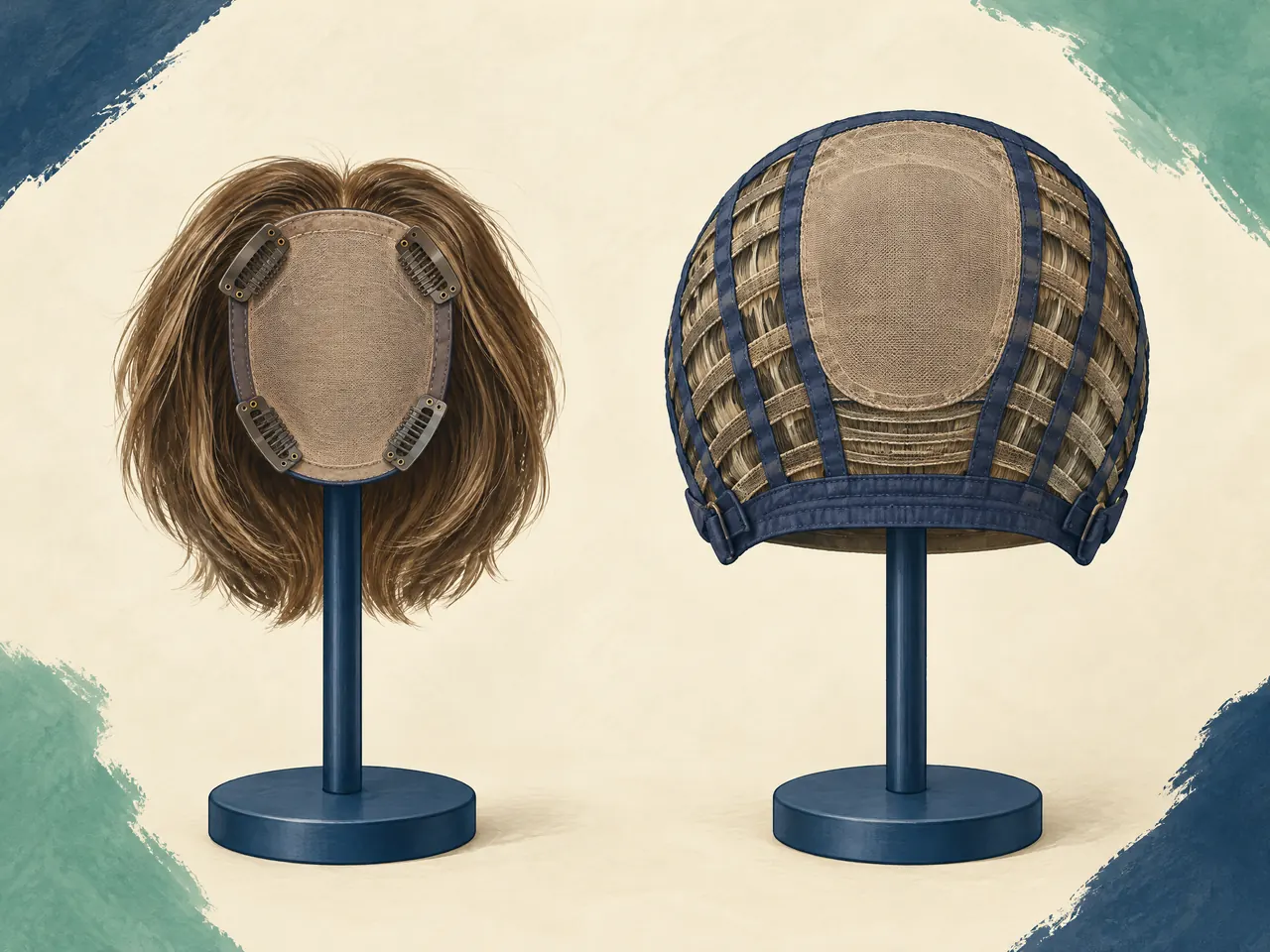
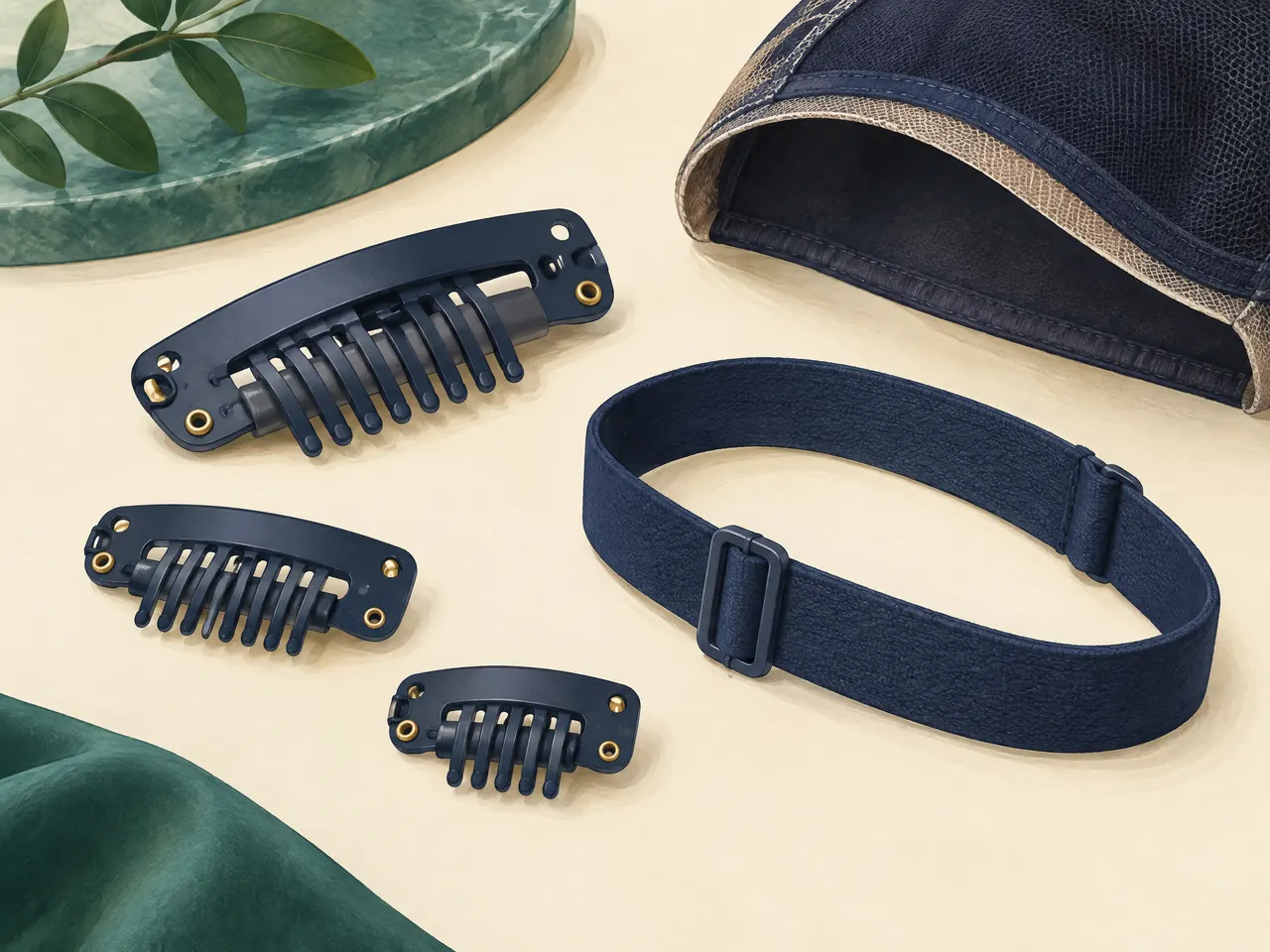
Illustration of a small removable topper and a full empty wig cap on separate stands, with their underside construction visible
Compare coverage shapes before discussing the fastening; these generic illustrated objects are not OWNSTRAND product photographs.Generated illustrative image
Illustrative tabletop study of generic hairpiece clips, a soft adjustable band and an empty sample cap edge
Clips and a band prompt compatibility questions, not permission to modify or attach a particular hairpiece.Generated illustrative image

Ask for two clearly identified care routines

Put the hair material on your comparison record separately from the base and adhesive. Ask which washing, detangling and styling instructions apply to the fibres, and which apply to the attachment area. Anonymous fibre samples can prompt those questions, but their appearance cannot confirm the material of the item being quoted. Have the supplier identify the specification in writing and explain any heat restrictions for that piece.[1]

During a care demonstration, ask the person helping you to identify what each bottle is for and whether the piece is on or off the head at that stage. Walker Tape's guidance distinguishes scalp release, skin-residue cleanup and cleaning the removed system.[3] Keep those instructions separate from ordinary hair washing. A basin and comb illustrate a care setup, not a recommendation to use an unspecified cleanser or soak a base.
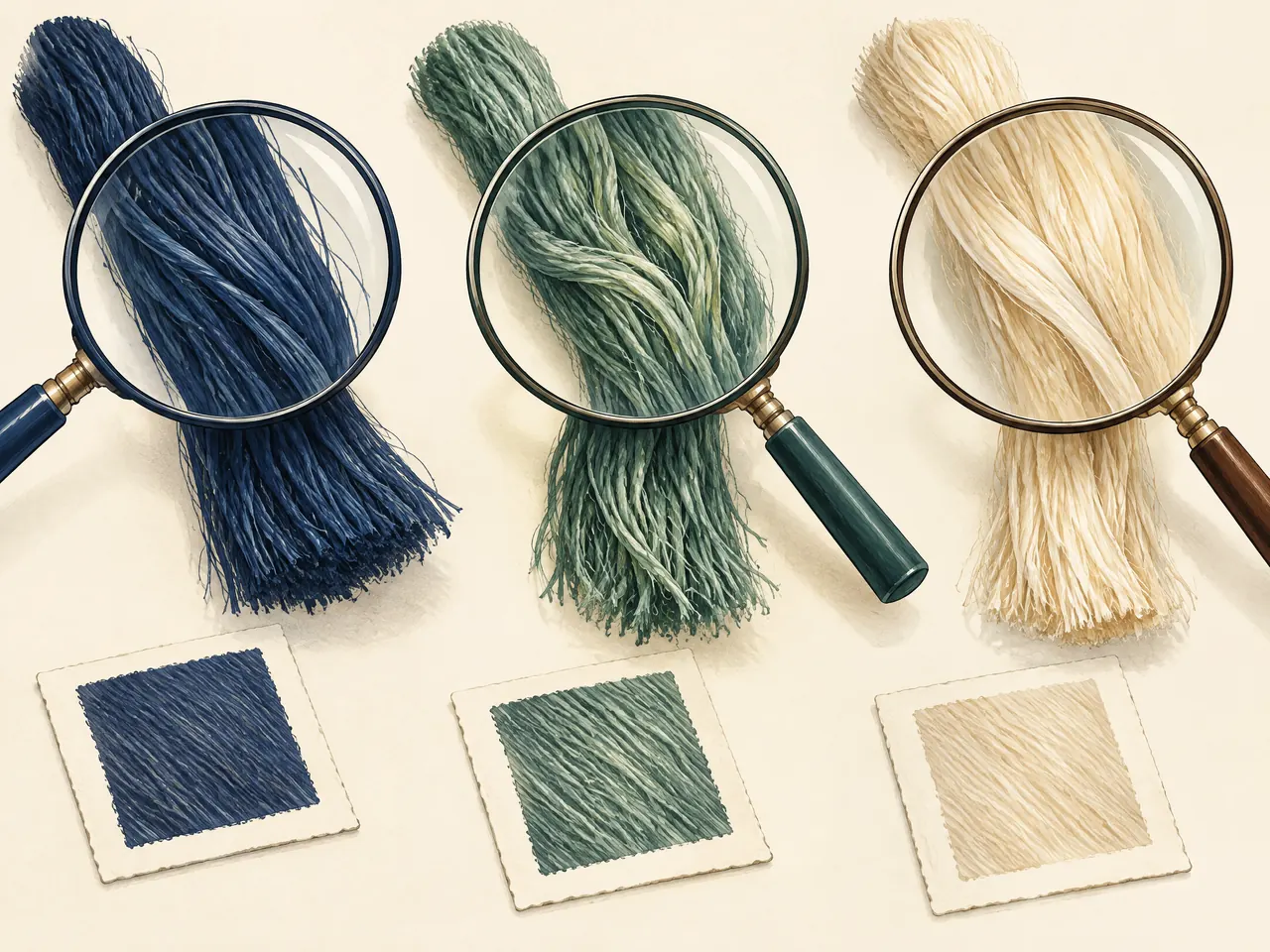
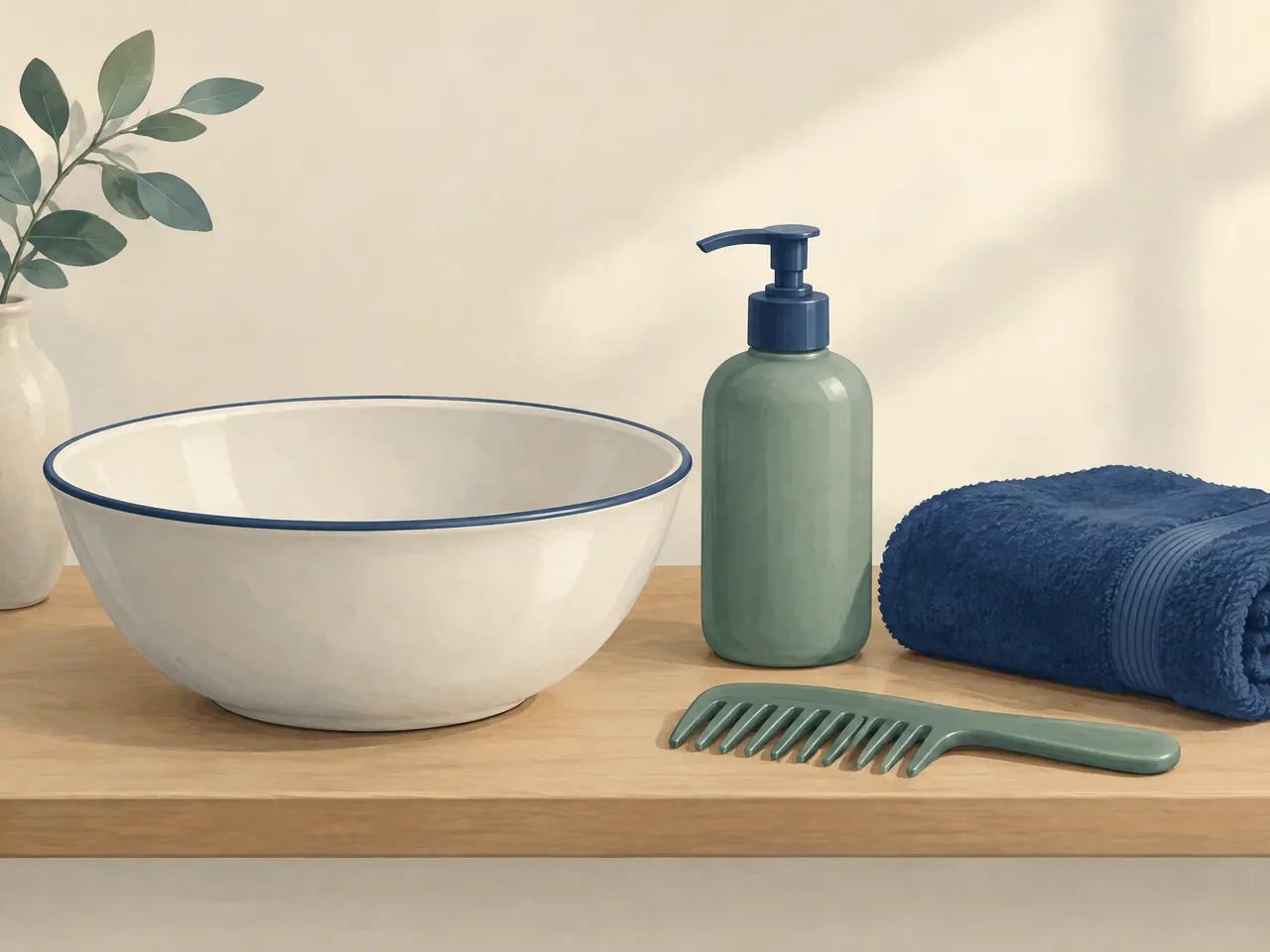
Illustration of three separate anonymous hair-like fibre bundles beneath a magnifying lens, beside unlabelled material sample cards
Use sample comparisons to ask about the confirmed fibre specification; an illustration cannot identify a product's material.Generated illustrative image
Illustration of a plain wash basin, unbranded pump bottle, folded towel and wide-tooth comb on a cream shelf
Confirm fibre-care instructions separately from scalp release and base cleaning; the illustrated bottle does not represent an approved product.Generated illustrative image

Include time when the piece is off your head

If the permitted routine involves off-head washing or drying, ask when the piece can be worn again and what support or storage arrangement it needs. Include that interval in your plan, not only the time spent actively cleaning. For example, if you need to leave home soon after washing, check whether the instructed routine fits that morning. A ventilated stand is an illustration of equipment to discuss, not a universal drying instruction.[1]

For travel, separate the supplies you need during the journey from the space needed for care at your destination. Ask whether the proposed pouch or sleeve is suitable for the exact piece, and how each care product should be transported according to its label and the carrier's rules. Keep the product names and written instructions accessible. If suitable storage or safe removal help is uncertain, resolve that before making the trip part of your wearing plan.
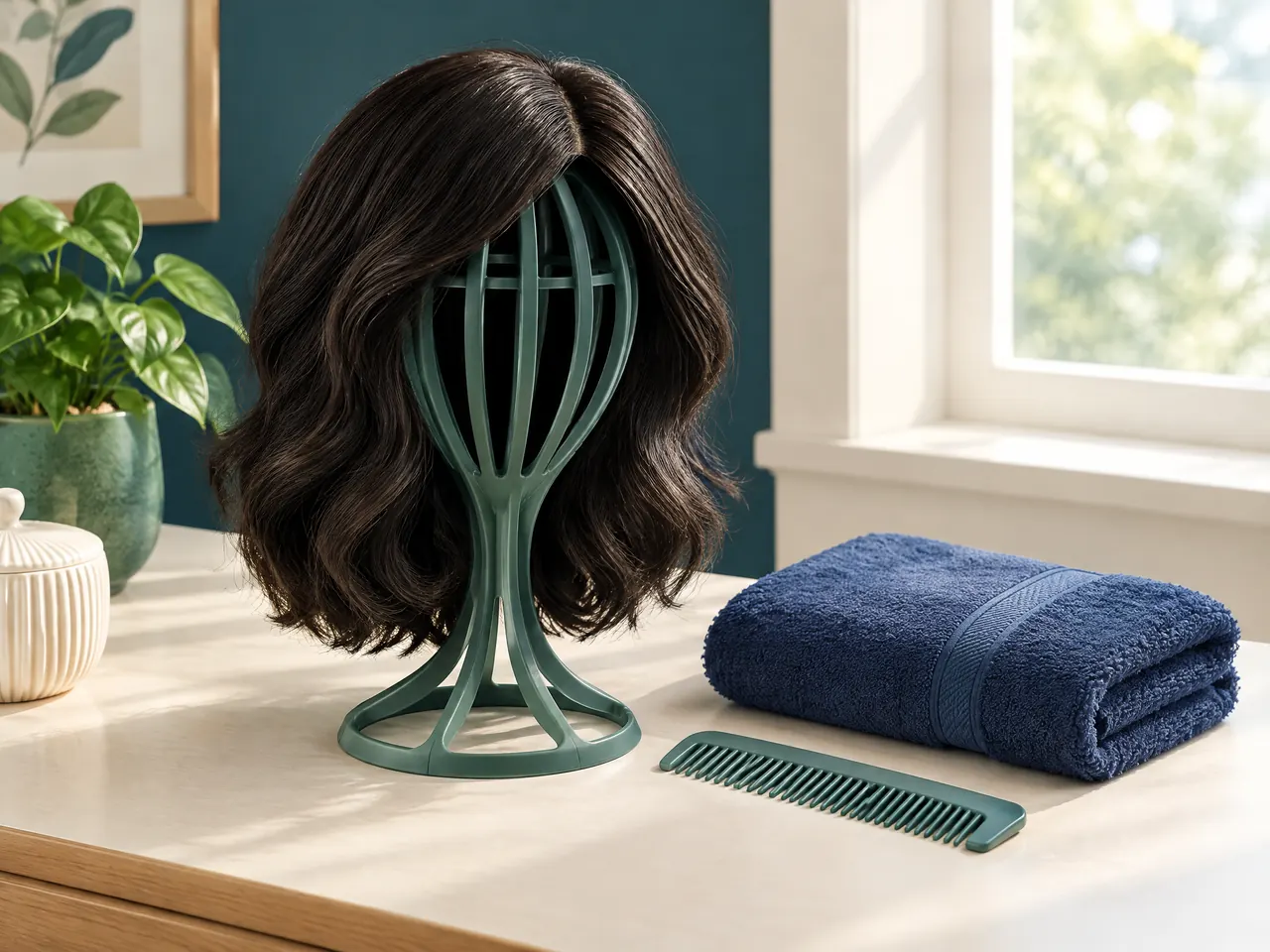
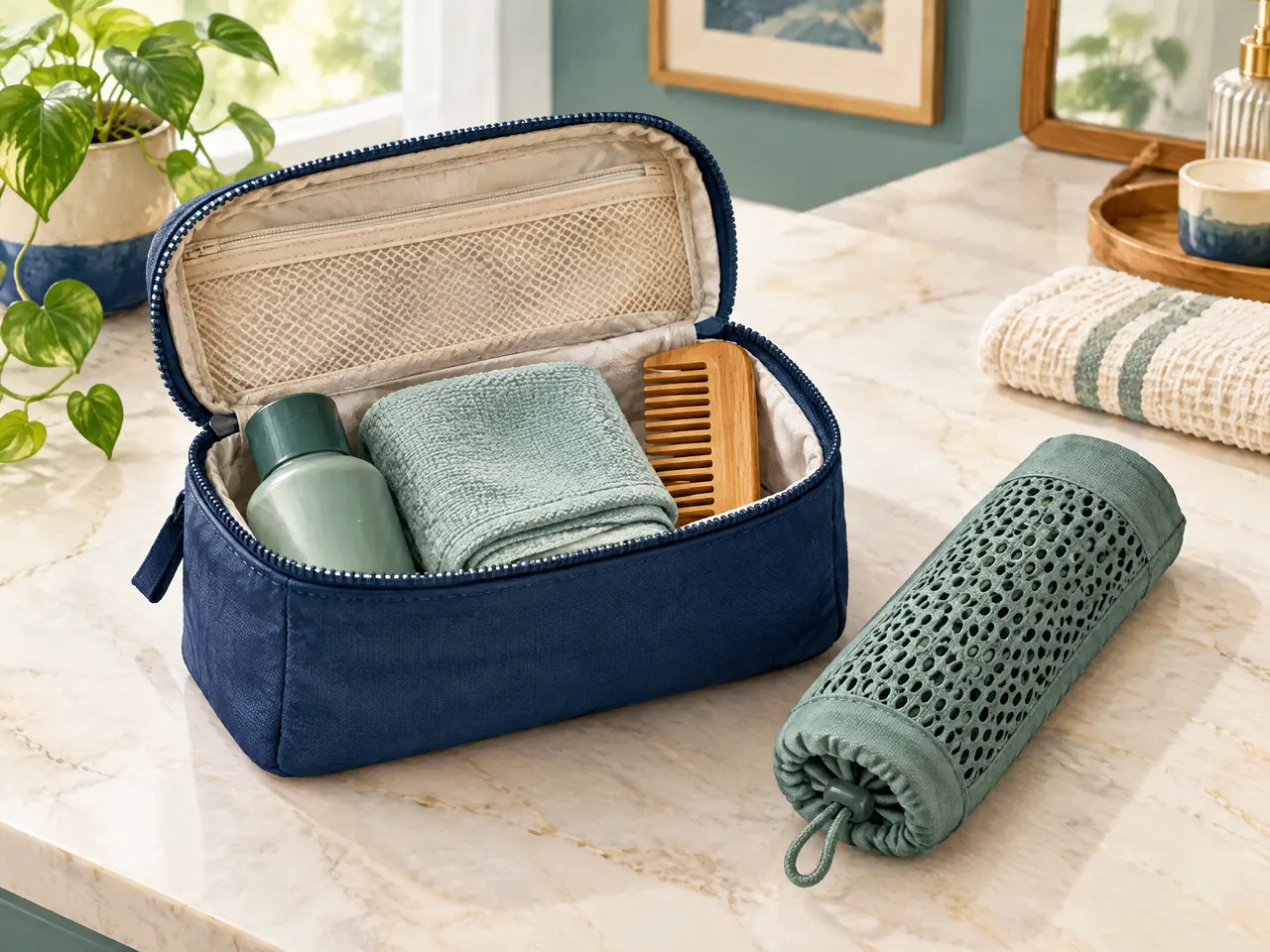
Illustration of an anonymous wig on an open ventilated stand beside a folded towel and unbranded comb in indirect daylight
Ask about the piece's approved drying support and when it can be worn again; this is not a product-specific care demonstration.Generated illustrative image
Illustration of an open unbranded travel pouch with a capped bottle, folded cloth and comb, beside a separate ventilated storage sleeve
Plan both packing and destination care space; the generic illustrated pouch and sleeve do not establish compatibility or transport permission.Generated illustrative image

Clinic enquiries

Contact and appointment arrangements

Clinics
Prince Edward and Kwun Tong
Opening hours
11:00–21:00
WhatsApp and telephone
+852 6940 5663

Appointments, practitioner availability and service arrangements are confirmed via WhatsApp.

Please mention any consultation language needs in your WhatsApp enquiry so that arrangements can be confirmed.

Enquire via WhatsApp
Food, gifts and floral lifeWhatsApp enquiry