
TCM Lab · Health reading
Can acupuncture help acid reflux? Can Chinese medicine help acid reflux? What should I eat if I have acid reflux?
Published Updated
Burning behind the breastbone, a sour taste after a late meal, or fluid that seems to come back up when you bend down can all prompt the same question: is this acid reflux, and what should happen next? Acupuncture and Chinese medicine can be discussed as complementary options after an individual assessment, but they should not replace medical assessment, prescribed reflux treatment, or investigation when it is needed. The most useful starting point is to notice the pattern: timing, meals, posture, sleep and medicines. That record can guide practical food and routine changes and makes a consultation more informative.
Appointments are confirmed through WhatsApp. If you have language requirements, please mention them in your enquiry.
The short answer
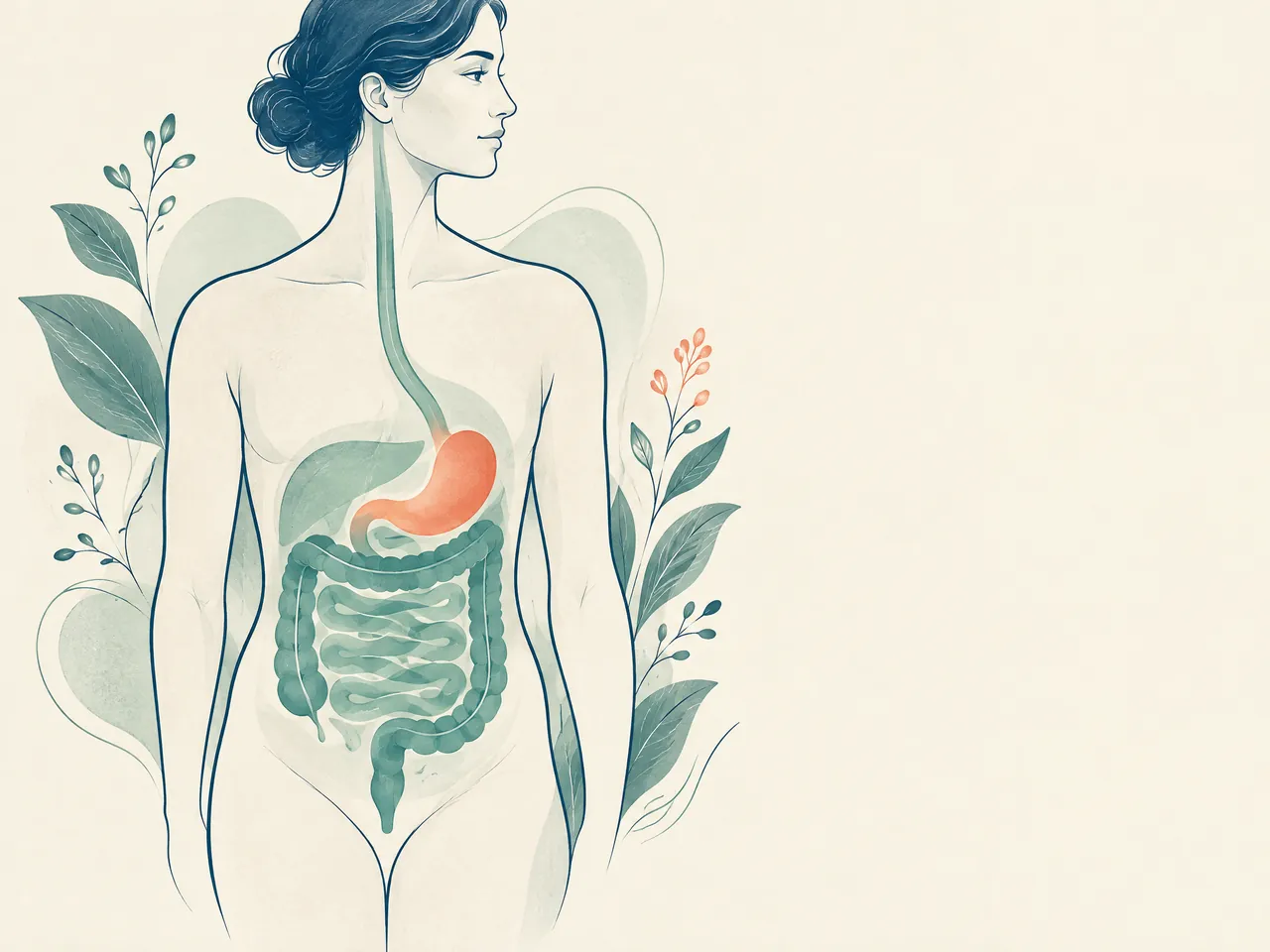
Acupuncture or Chinese medicine may be discussed as complementary care for acid reflux after an individual assessment, but they do not replace medical diagnosis, prescribed medicine or urgent care. Research on acupuncture for reflux is limited by small, low-quality trials. Start with a symptom and food diary, smaller meals, personal trigger tracking and an upright period after eating. Seek medical assessment for frequent or disruptive symptoms; difficulty swallowing, recurring vomiting or unexplained weight loss need prompt review.
Transparent pricing
See the fees.
Choose your care.
Explore our complete official price list, including first-trial prices, regular prices, packages and branch-specific options.
Opening WhatsApp prepares an enquiry; it does not send a message, take payment or confirm an appointment. Suitability and individual arrangements are confirmed during consultation.
Chinese medicine
All prices in HKDAcupuncture and Chinese herbal medicine package
Includes a Chinese medicine consultation with pulse assessment, body acupuncture and 3 days of Chinese herbal granules that do not require decoction.
HK$580 (single session)
Chinese medicine consultation with pulse assessment
Hair and scalp
All prices in HKDScalp health and hair-loss management
Includes AI scalp analysis, deep scalp and follicle cleansing, and scalp oil-control care.
HK$380 (first trial)
Regular price: HK$680
- 6 sessions: HK$3,480 (HK$580 per session)
- 12 sessions: HK$5,760 (HK$480 per session)
- 20 sessions: HK$8,600 (HK$430 per session)
- 30 sessions: HK$11,400 (HK$380 per session)
Hair acupuncture and Chinese herbal medicine package
Includes scalp acupuncture and 3 days of Chinese herbal medicine that does not require decoction.
HK$580 (single session)
Registered Chinese Medicine Practitioner consultation
- 6 sessions: HK$3,180 (HK$530 per session)
- 12 sessions: HK$5,760 (HK$480 per session)
- 20 sessions: HK$8,600 (HK$430 per session)
- 30 sessions: HK$11,400 (HK$380 per session)
Combined hair and scalp treatment
Combines acupuncture and Chinese herbal medicine with salon-level scalp and follicle care. Packages include complimentary hair-care shampoo and serum.
HK$1,260 (single session)
Combined treatment
- 8 sessions: HK$8,640 (HK$1,080 per session)
- 16 sessions: HK$15,680 (HK$980 per session)
- 20 sessions: HK$18,600 (HK$930 per session)
- 30 sessions: HK$26,400 (HK$880 per session)
Weight management
All prices in HKDFull-body acupoint embedding for weight management
Includes full-body acupoint embedding. Packages include complimentary Chinese herbal medicine for weight management, with the number of included days scaled to the package. Embedding material and the individual treatment arrangement are confirmed during consultation; this is not a cosmetic thread lift.
HK$980 (single session)
No trial session
- 10 sessions: HK$7,800 (HK$780 per session)
- 20 sessions: HK$14,600 (HK$730 per session)
- 30 sessions: HK$20,400 (HK$680 per session)
Facial acupuncture
All prices in HKDFacial acupuncture (basic)
Includes facial acupuncture and meridian-based facial care, including care for facial puffiness.
HK$480 (first trial)
Regular price: HK$680
- 10 sessions: HK$5,200 (HK$520 per session)
- 20 sessions: HK$9,600 (HK$480 per session)
- 30 sessions: HK$13,500 (HK$450 per session)
Facial acupuncture (advanced)
Includes enhanced facial acupuncture with a specially formulated moisturising mask and serum.
HK$780 (first trial)
Regular price: HK$1,180
- 10 sessions: HK$9,000 (HK$900 per session)
- 20 sessions: HK$16,600 (HK$830 per session)
- 30 sessions: HK$23,400 (HK$780 per session)
Pain care
All prices in HKDExtracorporeal shockwave treatment
Shockwave treatment for deep-tissue and fascial care. The Kwun Tong clinic offers the multi-area options shown below.
Priced by branch
Branch-specific pricing
Prince Edward: HK$250 per area
Kwun Tong: HK$250 for 1 area / HK$450 for 2 areas / HK$600 for 3 areas
Pain care (manual therapy)
Includes Chinese medicine musculoskeletal assessment, manual joint techniques and tui na.
HK$580 (single session)
Chinese medicine musculoskeletal assessment
Pain care (acupuncture and manual therapy)
Combines acupuncture and manual therapy.
HK$680 (single session)
Combined care
Can acupuncture help acid reflux? Can Chinese medicine help acid reflux? What should I eat if I have acid reflux? — Start with the symptoms
Acid reflux happens when stomach contents travel back towards the oesophagus. The familiar symptoms are heartburn and regurgitation; people may describe a burning central chest sensation, a sour or bitter taste, or food and fluid coming back up. Cough, hoarseness, hiccups, nausea, bloating and bad breath can occur too, but these symptoms have other possible causes. Symptoms that recur, affect sleep, or interfere with daily life deserve a proper medical conversation rather than repeated self-treatment. The National Institute of Diabetes and Digestive and Kidney Diseases explains that clinicians assess symptoms and medical history and may use tests when symptoms do not improve with lifestyle changes and medicines [1].
The timing matters. Notice whether symptoms follow a large meal, arrive after a particular drink, worsen while working bent over, or wake you soon after lying down. The NHS notes that reflux is often worse after eating, lying down and bending over [2]. That does not diagnose GERD by itself, but it gives you useful information to take to a doctor or practitioner. If you are uncertain what counts as a warning sign, read acid reflux red flags alongside arranging appropriate medical advice.
Can acupuncture help acid reflux? Can Chinese medicine help acid reflux? What should I eat if I have acid reflux? — Recognising common patterns
A daytime pattern may differ from a night-time pattern. Burning after a rushed, heavy lunch and a forward-leaning afternoon may call for a different routine from symptoms after dinner and lying down. Record the actual pattern: not every upper-abdominal discomfort is reflux, persistent symptoms can overlap with other digestive or throat concerns, and chest symptoms should not be casually labelled as heartburn.
Ask for medical assessment if heartburn happens most days, lifestyle changes and pharmacy medicines are not helping, food seems to stick in the throat, vomiting is frequent, or weight is falling without explanation. These are situations the NHS identifies for clinical review [2]. Sudden chest pain or discomfort that does not go away, especially with breathlessness, sweating, sickness or light-headedness, needs immediate medical help because it can have a cause other than reflux [6].
It is also worth checking the wider context. Recent weight change, pregnancy, smoking, alcohol, stress, a hiatus hernia and some medicines can be relevant to reflux symptoms. Do not change a prescribed medicine on the basis of a food diary or an online article. Bring the medicine names, doses and reason for use to the clinician who prescribed them. For a focused guide to deciding when a conventional assessment should come first, see When should I see a doctor for acid reflux?.

Can acupuncture help acid reflux? Can Chinese medicine help acid reflux? What should I eat if I have acid reflux? — Keeping a useful symptom diary
Keep the diary simple enough to use. For each episode, write the time, what and roughly how much you ate or drank, when you last ate before bed, your position or activity, and what the sensation felt like. Include whether you had heartburn, sour fluid, nausea, cough, throat irritation or a sleep interruption. Add any medicine or antacid you took, but do not use the diary to experiment with stopping a prescribed treatment.
Look for repeated associations, not a single guilty food. Coffee may be fine on one quiet morning but troublesome when it follows a late, fatty meal; tomatoes may never bother you. The point is not to impose a harsh universal diet. It is to make a testable, individual plan: adjust one likely trigger or one routine, observe the result, and retain foods that do not seem to cause problems. The NIDDK similarly advises avoiding foods and drinks that worsen a person’s symptoms, rather than naming one compulsory diet for everyone [1].
Take this record to both medical and complementary-care discussions. A Chinese medicine consultation may ask about appetite, bowel habits, sleep, stress and the timing of symptoms as part of its traditional assessment. Traditional descriptions such as digestion or pattern imbalance are not modern medical diagnoses, and they should not be used to rule out conditions that need medical tests. The longer overview of Chinese medicine for acid reflux explains how complementary discussions can sit alongside conventional evaluation.
Compare your options
| Pattern to record | A sensible first adjustment | When not to self-manage alone |
|---|---|---|
| Burning or sour taste after a large, high-fat or spicy meal | Try a smaller portion, eat more slowly and note whether the same meal pattern repeats the symptom. | Arrange review if symptoms are frequent, disruptive or not improving with sensible changes. |
| Symptoms after coffee, milk tea, alcohol, tomato, chocolate or citrus | Test one possible trigger at a time; change amount or timing rather than removing every food at once. | Seek tailored nutrition advice if you are avoiding many foods or losing weight unintentionally. |
| Reflux after dinner or when lying down | Finish eating early enough to stay upright before bed and record the meal-to-bed interval. | Discuss persistent night symptoms with a clinician, especially if sleep is regularly affected. |
| Food feels stuck, swallowing hurts, vomiting recurs or weight drops without trying | Do not test more food rules or complementary treatments first. | Arrange prompt medical assessment. |
| New chest discomfort with breathlessness, sweating, nausea or light-headedness | Do not assume it is heartburn. | Seek immediate medical help. |
On smaller screens, scroll the table sideways to compare all columns.
Can acupuncture help acid reflux? Can Chinese medicine help acid reflux? What should I eat if I have acid reflux? — Care and safety
For occasional mild symptoms, a pharmacist or doctor may advise short-term symptom relief and assess whether further treatment is appropriate. For ongoing reflux, clinicians may recommend lifestyle changes, medicines, further testing, or a combination, depending on the individual situation [1]. In Hong Kong, hospital information also describes medical assessment routes that can include a PPI trial, endoscopy or pH monitoring when clinically indicated [5]. Those decisions belong with the clinician assessing you, not a checklist online.
Chinese medicine and acupuncture are questions to discuss, not replacements promised in advance. Ask what the proposed aim is, what information the practitioner needs, what you should continue from existing care, and what would mean you need medical review. Tell every clinician about medicines, over-the-counter products, supplements and herbs. The guide to acid reflux treatment Hong Kong can help you prepare questions for that medical conversation.

Can acupuncture help acid reflux? Can Chinese medicine help acid reflux? What should I eat if I have acid reflux? — Where acupuncture may be discussed
An acupuncture discussion starts with assessment, not a fixed treatment promise. A practitioner may ask whether burning, regurgitation, appetite change or nausea is the main concern; how symptoms relate to meals and sleep; which treatments have already been tried; and whether there are health issues relevant to needling. Say if you are pregnant, have a bleeding condition, take medicines that affect bleeding, have a skin infection, or have fainted with needles before.
There is research on acupuncture for gastro-oesophageal reflux, but it should be read carefully. A systematic review found studies suggesting a possible role for acupuncture, including alongside Western medicine, yet its authors said the included trials were small and of poor methodological quality and called for further studies [3]. That uncertainty is why acupuncture should be framed as a complementary option to discuss, rather than a proven cure for reflux or an alternative to needed investigation.
If acupuncture is considered, ask about the purpose in your situation, practical safety, what sensations to report and what follow-up makes sense. Do not delay evaluation of difficulty swallowing, vomiting, weight loss, persistent symptoms or troubling chest symptoms while waiting to try it. The question is not whether a single method is universally good or bad; it is whether it is appropriate alongside your current care after the relevant risks and symptoms have been reviewed.

Can acupuncture help acid reflux? Can Chinese medicine help acid reflux? What should I eat if I have acid reflux? — When conventional assessment comes first
Conventional assessment comes first when warning symptoms are present, when symptoms are frequent or progressing, and whenever the diagnosis is uncertain. Difficulty or pain on swallowing, food getting stuck, repeated vomiting, unexplained weight loss and symptoms that persist despite sensible changes need medical review. A severe or new chest symptom is not something to assess by taste, posture or a treatment response. The immediate priority is to exclude a serious cause, particularly if pain is prolonged or comes with shortness of breath, sweating, nausea or dizziness [6].
Do not stop a proton pump inhibitor or another prescribed reflux medicine because symptoms briefly feel better, because you want to use acupuncture, or because you intend to take herbs. The NHS specifically advises people not to stop prescribed medicine without speaking to a doctor [2]. If a prescriber is considering a dose change, bring your diary and tell them honestly about all complementary treatments. That allows them to interpret the pattern and make a safer plan.
Herbal products also require an individual safety conversation. The U.S. National Center for Complementary and Integrative Health notes that evidence on Chinese herbal products for many conditions is mixed and advises people to discuss TCM with their healthcare providers rather than use it to replace or delay conventional care [4]. A website cannot select herbs, doses or combinations safely for a specific person.
Can acupuncture help acid reflux? Can Chinese medicine help acid reflux? What should I eat if I have acid reflux? — Food and daily routines
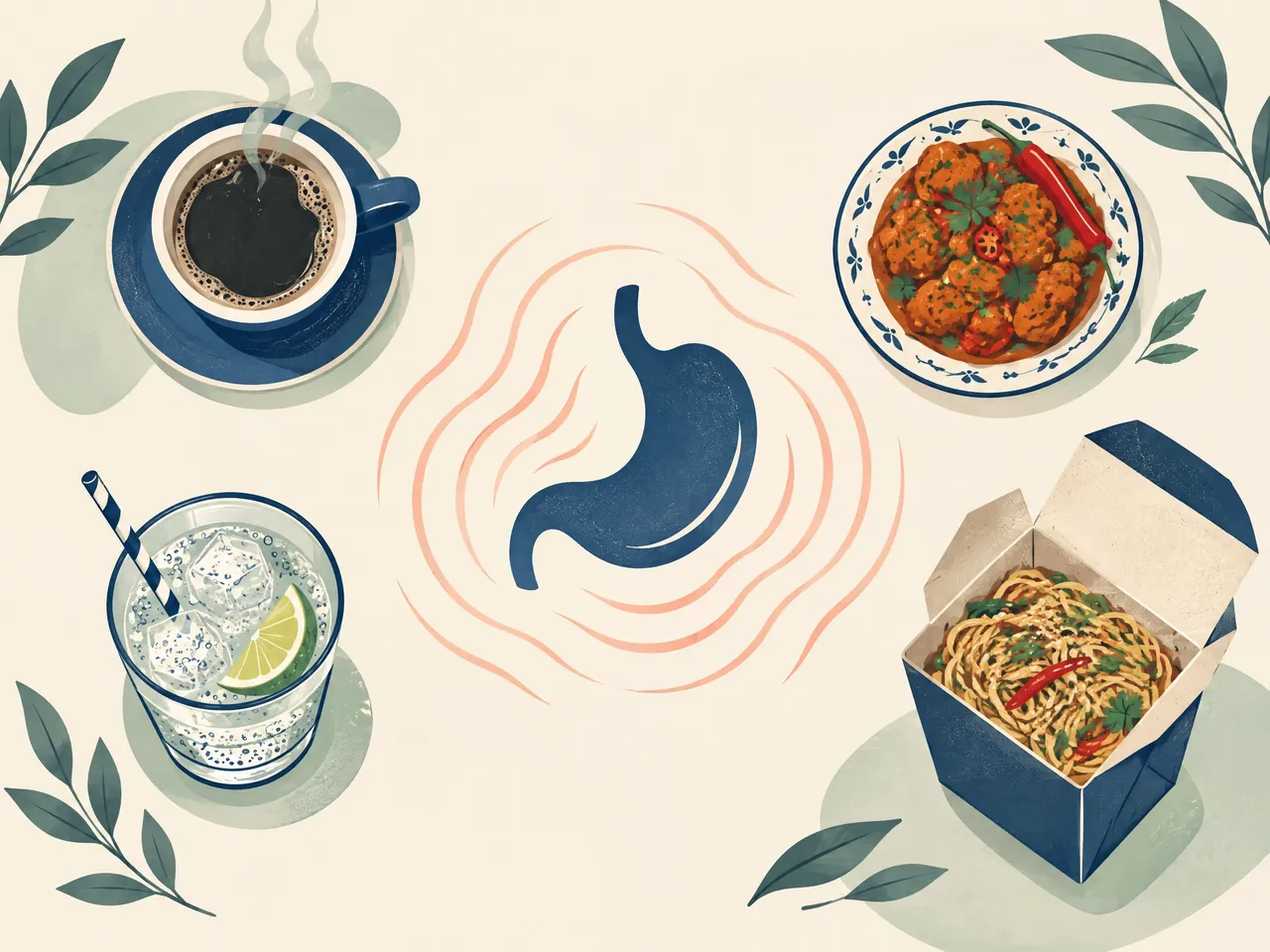
Food changes work best when they reduce predictable triggers without making eating unnecessarily restrictive. Start with meal size and timing before creating a long avoidance list. Smaller, more frequent meals may be easier for some people than one very large meal. The NHS lists coffee, tomatoes, alcohol, chocolate, fatty foods and spicy foods among things that can cause or worsen symptoms for some people [2].
A practical home experiment is to keep familiar, nourishing foods and change one variable at a time. For example, reduce the portion of a greasy takeaway, choose a non-caffeinated drink for several days, or move a snack earlier rather than abandoning social meals altogether. Record the result. If reflux is severe, constant or accompanied by warning symptoms, diet adjustment is not enough on its own; seek clinical advice. Food is a useful part of symptom management, not a substitute for diagnosing persistent or complicated reflux.

Can acupuncture help acid reflux? Can Chinese medicine help acid reflux? What should I eat if I have acid reflux? — Practical meal choices
Build meals from foods you tolerate: modest portions of staples, vegetables, fruit that does not trigger you, and protein with less added fat can be a useful starting point. No one food heals reflux. If you need to avoid several food groups or are losing weight unintentionally, ask a doctor or dietitian for individual advice rather than improvising a narrow diet.
Use the table below as a planning prompt. It separates a pattern worth recording from a practical change and a reason to seek help. If milk tea, coffee, citrus or chilli appears in your diary, you can test the timing or portion before deciding it must be excluded forever. The useful answer to “What should I eat if I have acid reflux?” is therefore personal: food that sustains you and does not repeatedly aggravate your recorded symptoms.

Can acupuncture help acid reflux? Can Chinese medicine help acid reflux? What should I eat if I have acid reflux? — Night-time and lifestyle habits
Make the evening routine as important as the menu. The NIDDK advises eating meals two to three hours before lying down, while the NHS advises avoiding food or drink within three to four hours of bed [1] [2]. Choose the timing that gives you enough upright time and works with your symptoms. Gentle activity after a meal may feel more comfortable than going straight to the sofa or bed; avoid a strenuous workout or repeated bending if either reliably triggers you.
For symptoms that occur after lying down, discuss practical positioning with a clinician. The NHS says raising the head of the bed by around 10 to 20 cm may help some people, whereas piling up extra pillows can raise abdominal pressure [2]. Loose clothing around the waist, not smoking, limiting alcohol if it is a trigger, and working towards a weight that is healthy for you are other common lifestyle points to discuss. These changes are gradual tools, not tests of willpower or guarantees of a cure.
If you would like to discuss a Chinese medicine assessment alongside medical care, TCM Lab has consultation locations at Kwun Tong Chinese medicine clinic and Chinese medicine clinic Prince Edward. You can also review the Chinese medicine clinic price list Hong Kong before sending an enquiry. Describe your main reflux pattern, current medicines, prior diagnoses and preferred location so the appointment discussion can begin with the right context.
Care and health guide
Health service information
This directory brings together services, reading, and visit information related to health services, to help you prepare questions for a consultation.
If you are organising health questions, Chinese medicine clinic Hong Kong is a starting point for learning about related services and preparing for a consultation.
People have different needs; acupuncture Hong Kong provides further reading to help you understand options in your own context.


Your questions, answered
Frequently asked questions
Can acupuncture cure acid reflux?
No cure or fixed outcome can be promised. Acupuncture may be discussed as complementary care after assessment, but the available reflux studies have important limitations. It should not replace medical evaluation, prescribed treatment or investigation of persistent symptoms.
Can I use Chinese herbal medicine while taking a PPI for reflux?
Do not make this decision alone. Tell the prescribing doctor and the Chinese medicine practitioner about your PPI, all medicines, supplements and herbal products. Do not stop or alter prescribed reflux medicine unless the clinician managing it advises you to do so.
What foods should I avoid with acid reflux?
Potential triggers include fatty or spicy foods, coffee, tomatoes, alcohol and chocolate, but they vary by person. Keep a meal-and-symptom record and test one change at a time. A broad, restrictive diet is not automatically necessary or helpful.
When is acid reflux an urgent problem?
Get prompt medical assessment for difficulty or pain when swallowing, food getting stuck, frequent vomiting or unexplained weight loss. Seek immediate help for sudden chest pain or discomfort that does not go away, particularly with shortness of breath, sweating, nausea or light-headedness.
Sources and further information
- [1] NIDDK — Acid Reflux (GER & GERD) in Adults
Referenced for: U.S. National Institutes of Health information on reflux definition, symptoms, clinical assessment, lifestyle measures and treatment pathways.
- [2] NHS — Heartburn and acid reflux
Referenced for: UK public-health guidance on symptom patterns, potential triggers, meal timing, bed positioning, prescribed medicines and indications for clinical review.
- [3] Zhu et al. — Acupuncture for the Treatment of Gastro-Oesophageal Reflux Disease: A Systematic Review and Meta-Analysis
Referenced for: Peer-reviewed systematic review whose conclusion notes small sample sizes and poor methodological quality in the included reflux trials.
- [4] NCCIH — Traditional Chinese Medicine: What You Need To Know
Referenced for: NIH centre guidance on evidence limitations, herbal-product safety and coordination of complementary and conventional care.
- [5] Hong Kong Adventist Hospital — Acid Reflux
Referenced for: Hong Kong hospital overview of acid reflux symptoms, diagnostic approaches and conventional management context.
- [6] NHS — Chest pain
Referenced for: UK public-health emergency guidance for chest pain with potentially serious accompanying symptoms.