
TCM Lab · Health reading
Elbow pain after exercise: Can stretching help elbow pain? Should I exercise if my elbow hurts?
Published Updated
An elbow can feel sore after a weights session, racquet sport, climbing, gardening or a long day of gripping and lifting. That does not automatically mean it needs a harder stretch. Can stretching help elbow pain? A gentle, unloaded bend-and-return may help you keep comfortable movement when there has been no significant injury and no warning signs. Should I exercise if my elbow hurts? Keep any movement easy, controlled and within a comfortable range, then use the response later that day and the following morning to decide whether to reduce it, stop it or seek advice.
Appointments are confirmed through WhatsApp. If you have language requirements, please mention them in your enquiry.
The short answer
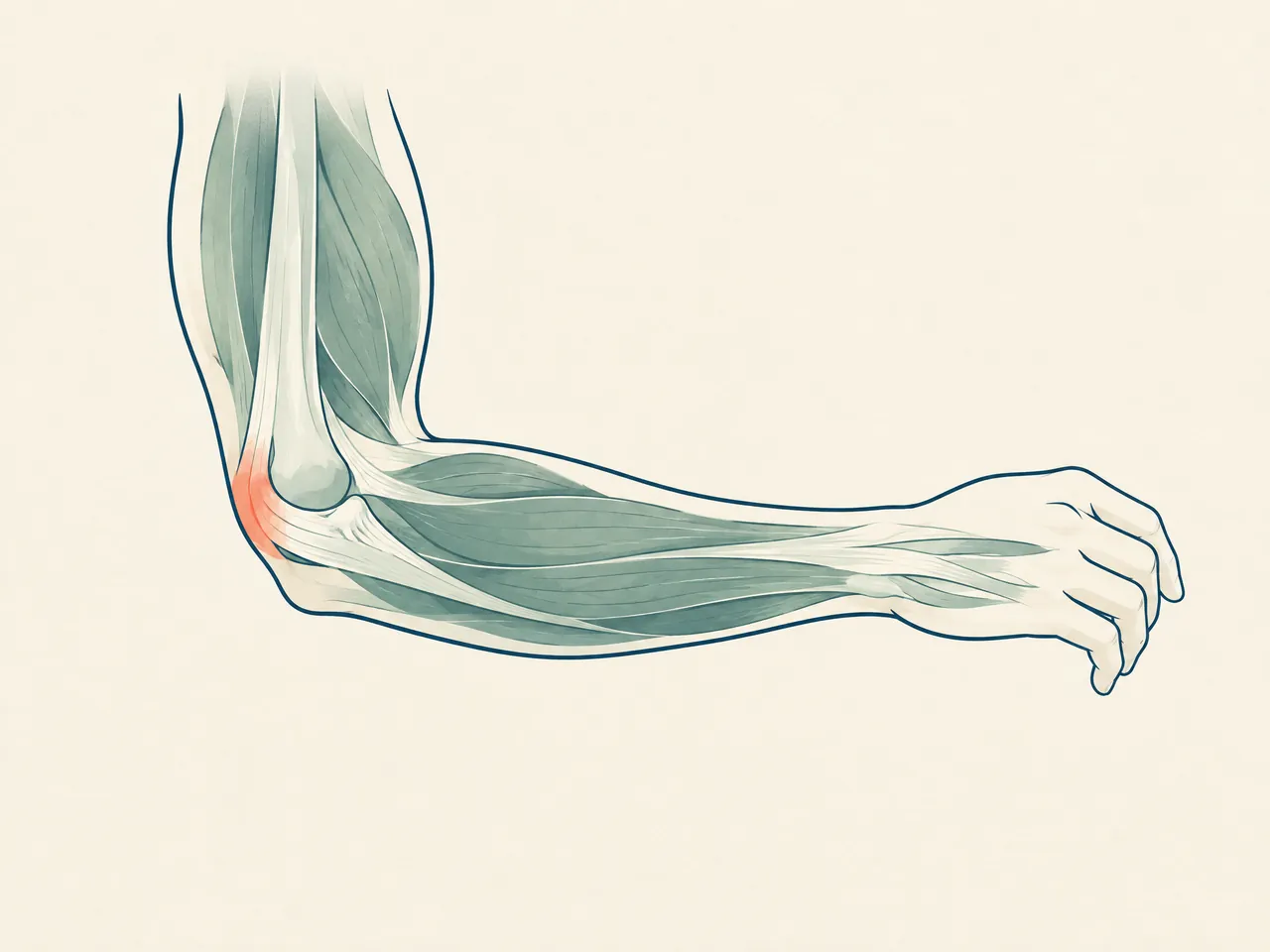
Gentle movement can be a reasonable starting point for some elbow pain after exercise, but it is not a test of whether the elbow can be pushed through pain. Start without a weight, use only a comfortable range and keep the motion slow. Stop if it creates new pain or symptoms worsen. A severe injury, altered shape, marked difficulty moving, tingling or numbness, or a hot swollen arm with fever needs medical assessment rather than stretching. [1] [2]
Transparent pricing
See the fees.
Choose your care.
Explore our complete official price list, including first-trial prices, regular prices, packages and branch-specific options.
Opening WhatsApp prepares an enquiry; it does not send a message, take payment or confirm an appointment. Suitability and individual arrangements are confirmed during consultation.
Pain care
All prices in HKDExtracorporeal shockwave treatment
Shockwave treatment for deep-tissue and fascial care. The Kwun Tong clinic offers the multi-area options shown below.
Priced by branch
Branch-specific pricing
Prince Edward: HK$250 per area
Kwun Tong: HK$250 for 1 area / HK$450 for 2 areas / HK$600 for 3 areas
Pain care (manual therapy)
Includes Chinese medicine musculoskeletal assessment, manual joint techniques and tui na.
HK$580 (single session)
Chinese medicine musculoskeletal assessment
Pain care (acupuncture and manual therapy)
Combines acupuncture and manual therapy.
HK$680 (single session)
Combined care
Hair and scalp
All prices in HKDScalp health and hair-loss management
Includes AI scalp analysis, deep scalp and follicle cleansing, and scalp oil-control care.
HK$380 (first trial)
Regular price: HK$680
- 6 sessions: HK$3,480 (HK$580 per session)
- 12 sessions: HK$5,760 (HK$480 per session)
- 20 sessions: HK$8,600 (HK$430 per session)
- 30 sessions: HK$11,400 (HK$380 per session)
Hair acupuncture and Chinese herbal medicine package
Includes scalp acupuncture and 3 days of Chinese herbal medicine that does not require decoction.
HK$580 (single session)
Registered Chinese Medicine Practitioner consultation
- 6 sessions: HK$3,180 (HK$530 per session)
- 12 sessions: HK$5,760 (HK$480 per session)
- 20 sessions: HK$8,600 (HK$430 per session)
- 30 sessions: HK$11,400 (HK$380 per session)
Combined hair and scalp treatment
Combines acupuncture and Chinese herbal medicine with salon-level scalp and follicle care. Packages include complimentary hair-care shampoo and serum.
HK$1,260 (single session)
Combined treatment
- 8 sessions: HK$8,640 (HK$1,080 per session)
- 16 sessions: HK$15,680 (HK$980 per session)
- 20 sessions: HK$18,600 (HK$930 per session)
- 30 sessions: HK$26,400 (HK$880 per session)
Weight management
All prices in HKDFull-body acupoint embedding for weight management
Includes full-body acupoint embedding. Packages include complimentary Chinese herbal medicine for weight management, with the number of included days scaled to the package. Embedding material and the individual treatment arrangement are confirmed during consultation; this is not a cosmetic thread lift.
HK$980 (single session)
No trial session
- 10 sessions: HK$7,800 (HK$780 per session)
- 20 sessions: HK$14,600 (HK$730 per session)
- 30 sessions: HK$20,400 (HK$680 per session)
Facial acupuncture
All prices in HKDFacial acupuncture (basic)
Includes facial acupuncture and meridian-based facial care, including care for facial puffiness.
HK$480 (first trial)
Regular price: HK$680
- 10 sessions: HK$5,200 (HK$520 per session)
- 20 sessions: HK$9,600 (HK$480 per session)
- 30 sessions: HK$13,500 (HK$450 per session)
Facial acupuncture (advanced)
Includes enhanced facial acupuncture with a specially formulated moisturising mask and serum.
HK$780 (first trial)
Regular price: HK$1,180
- 10 sessions: HK$9,000 (HK$900 per session)
- 20 sessions: HK$16,600 (HK$830 per session)
- 30 sessions: HK$23,400 (HK$780 per session)
Chinese medicine
All prices in HKDAcupuncture and Chinese herbal medicine package
Includes a Chinese medicine consultation with pulse assessment, body acupuncture and 3 days of Chinese herbal granules that do not require decoction.
HK$580 (single session)
Chinese medicine consultation with pulse assessment
Elbow pain after exercise: Can stretching help elbow pain? Should I exercise if my elbow hurts? — Check first
Before choosing a stretch, pause and describe what changed. Was there a fall, a sudden pull, a snap, or a direct blow? Is the discomfort mainly on the outer or inner elbow, behind it, in the forearm, or travelling to the hand? Pain after exercise can follow a temporary increase in activity, but elbow and arm symptoms also have several possible causes. Outer-elbow pain with gripping or wrist use is sometimes associated with tennis elbow; that label is not a conclusion to make from one sore workout. The NHS advises against self-diagnosing arm and elbow pain. [2]
The practical first question is not “Can I stretch this out?” but “Is gentle movement safe to try today?” If you have a known elbow condition, recent surgery, a splint or a clinician-set restriction, follow that plan rather than a general webpage. If this is a new, uncomplicated ache, the overview of elbow pain exercises can help frame movement as a gradual return, not an attempt to prove strength or flexibility in a single session.
Elbow pain after exercise: Can stretching help elbow pain? Should I exercise if my elbow hurts? — When gentle movement may be reasonable
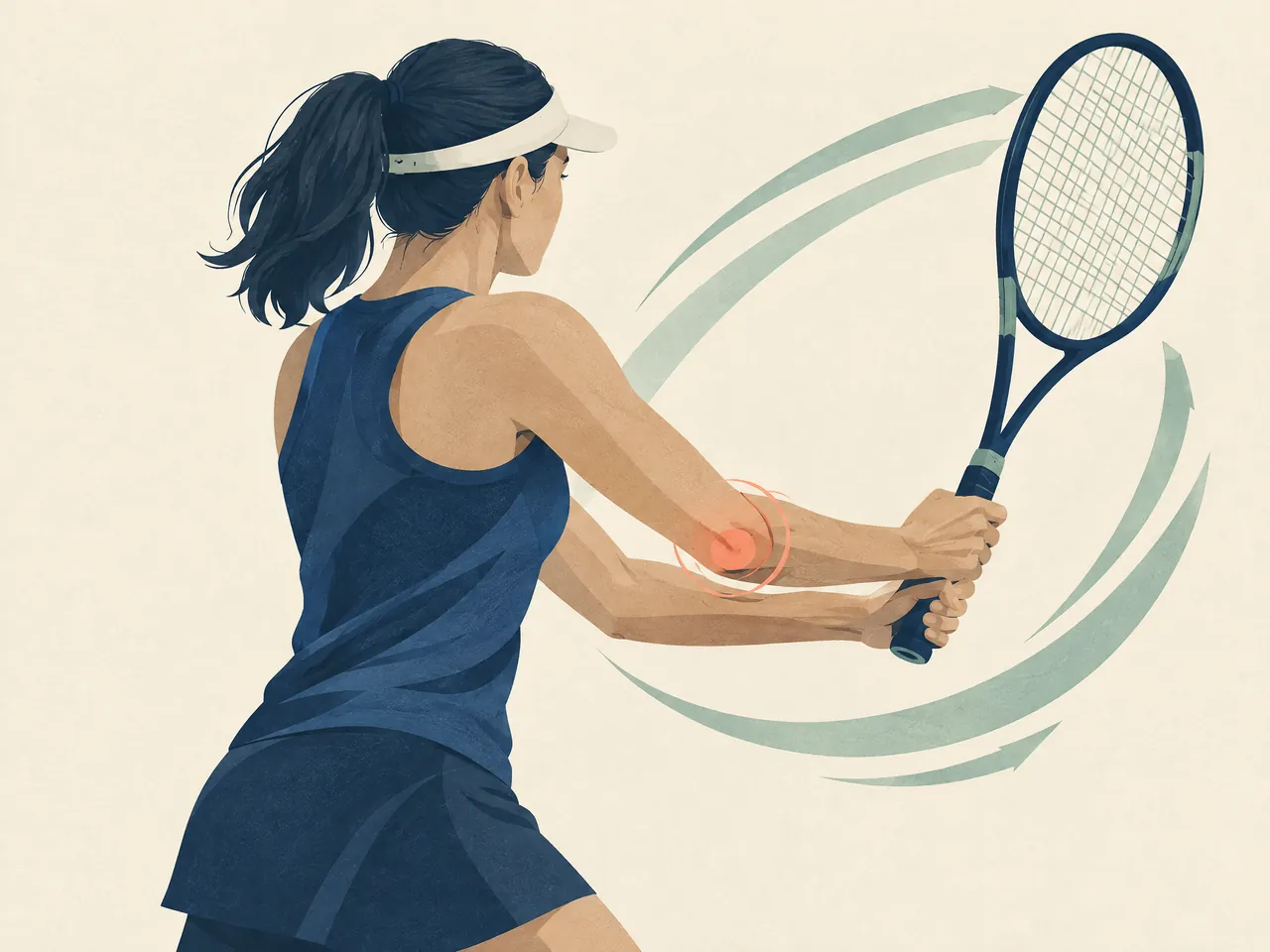
Gentle movement may be reasonable when the elbow feels mildly stiff or achy after a familiar activity, there was no notable trauma, and you can move the arm without sharp pain, pins and needles or loss of control. Think of it as a low-load check-in, not a treatment for every painful elbow. The aim is to notice how the joint and surrounding muscles tolerate a small, relaxed movement. There is no need to hold a weight, pull with the other hand or reach the greatest possible bend.
Stretching and exercise are not interchangeable. A sustained pull at the end of range asks something different of the tissues than a slow bend and return through an easy range. If the question is whether to resume gym work, racquet play or repeated lifting, start with ordinary movement before resistance. The NHS Inform exercise guidance describes regaining movement and strength gradually after an elbow problem, with symptoms used to guide the level. [1] For related examples, see exercises for elbow problems.
Elbow pain after exercise: Can stretching help elbow pain? Should I exercise if my elbow hurts? — Red flags that need assessment
Do not use a stretch to test a painful elbow after a significant injury. Urgent assessment is appropriate when severe pain makes the arm difficult to move, when an injury was accompanied by a snap or a changed shape, or when the arm tingles or feels numb. Swelling with a very high temperature or feeling hot, cold or shivery also needs prompt help. Sudden arm pain with chest pressure, heaviness or squeezing is an emergency symptom. [2]
A less dramatic pattern can still deserve a clinical discussion. Arrange advice when pain is not settling over the next few weeks, when grip feels unexpectedly weak, when symptoms wake you or when ordinary work keeps provoking them. Repetitive forearm, hand and wrist activity can be relevant to some outer-elbow tendon problems, but a clinician considers the symptom pattern, activity history and examination rather than relying on the name of a sport. [3] Continuing to force a stretch can hide useful information about what is aggravating the area.
Compare your options
| What you notice | Low-load response | What to avoid for now | Next decision |
|---|---|---|---|
| Mild familiar ache, no injury and comfortable basic movement | Try a relaxed, unloaded bend and return in a small range | Forcing the hand to the shoulder, locking straight or adding weight | Compare how it feels later and the next morning |
| Discomfort rises as the range gets larger | Use a smaller range, slower pace or more rest | Bouncing, pushing through the end range or adding wrist resistance | Keep the easier version only if symptoms do not worsen overall |
| Pain after repeated gripping, turning or lifting | Break up the provoking task and reduce the grip demand temporarily | Testing the elbow repeatedly with the same painful task | Record the activity and discuss persistent patterns with a clinician |
| Severe pain, deformity, snap, numbness, marked movement difficulty, or fever with swelling | Stop self-testing and get medical assessment | Stretching, loading or waiting for the next workout | Use urgent or emergency care as appropriate [2] |
On smaller screens, scroll the table sideways to compare all columns.
Elbow pain after exercise: Can stretching help elbow pain? Should I exercise if my elbow hurts? — A low-load movement approach
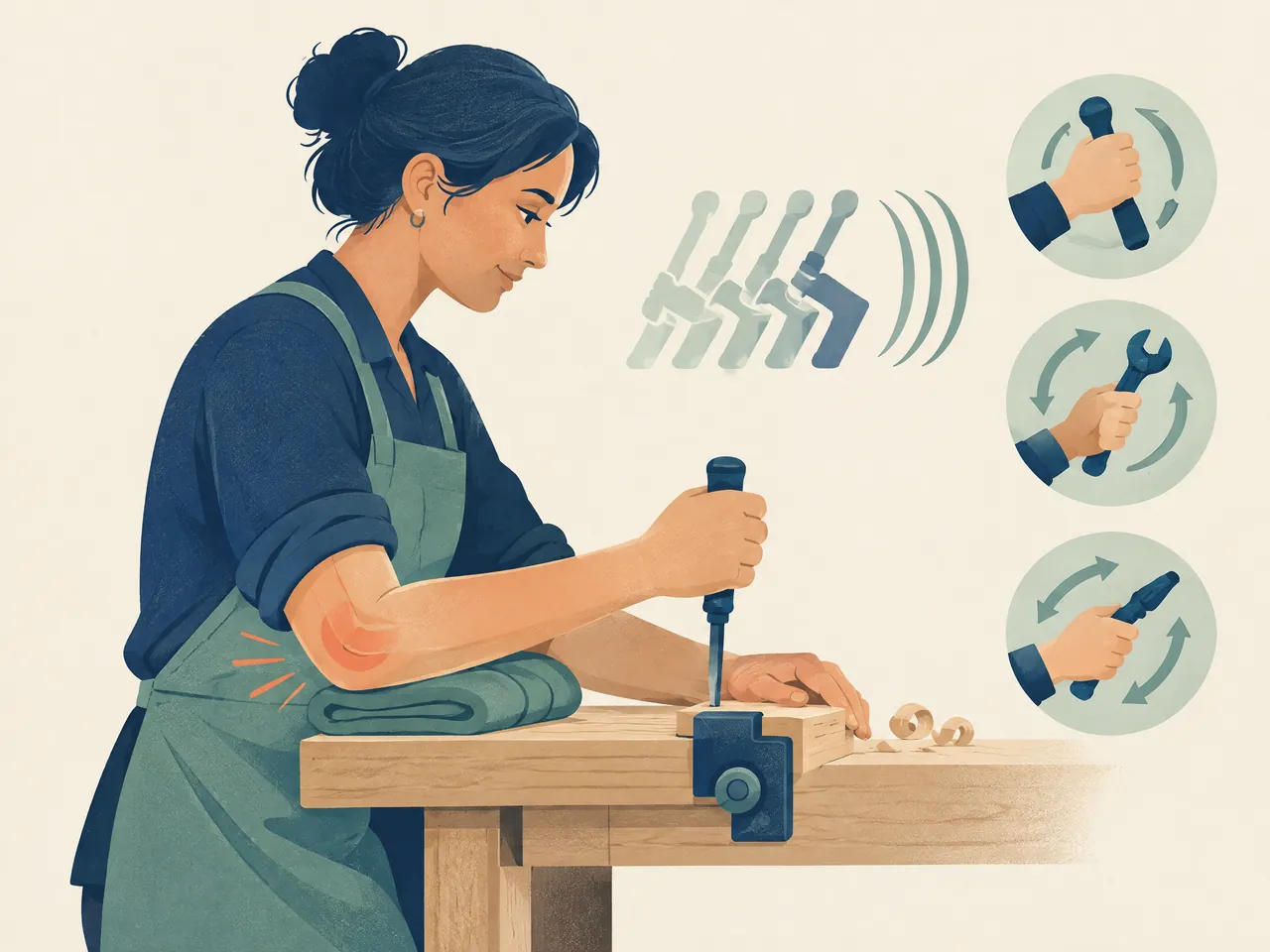
If the initial check does not raise a concern, choose a stable position. Sit with both feet supported, or stand where you will not need to catch yourself. Let the affected arm hang naturally by your side and remove weights, resistance bands and a tight grip from the task. This makes it easier to distinguish a comfortable elbow bend from discomfort created by gripping a dumbbell, twisting a bottle lid or bracing through the wrist.
Use the movement as feedback, not as a challenge. A calm breath and an easy pace make it more likely that you notice a pinch, pull, catching sensation or spreading symptom early. If a small range is comfortable but the end of the movement is not, remain in the smaller range. Avoid bouncing, having someone push the elbow straight, or adding a wrist stretch simply because the elbow is sore. Specific strengthening or wrist work belongs to a plan that fits the diagnosis and function.
Elbow pain after exercise: Can stretching help elbow pain? Should I exercise if my elbow hurts? — Try a relaxed bend and return
Begin with both arms by your sides. Slowly bend the affected elbow so that the hand travels in the direction of the same-side shoulder, stopping well before any forced position. Then slowly lower the arm back to its starting point. You do not need to touch the shoulder, straighten to a locked position, or hold the end point. This is the basic elbow flex-and-extend movement described in NHS Inform guidance for people who are well enough to exercise safely. [1]
Notice the quality of the response rather than chasing a number of repetitions. A mild sense of stiffness that eases as you move is different from a sharp pain, a sudden catch, a burn that increases each time or tingling into the hand. If the movement is easy, you may use it as a short break from prolonged desk work or after a gentle warm-up. If it is not easy, stop that movement; do not replace it with a deeper stretch or heavier exercise to “loosen” the elbow.
Elbow pain after exercise: Can stretching help elbow pain? Should I exercise if my elbow hurts? — Adjust range, pace and rest
Change one variable at a time. First make the bend smaller. If that is still uncomfortable, slow the pace, allow more rest, or leave the exercise for another time. NHS Inform advises reducing the number of movements, reducing speed or increasing rest if pain is too high during exercise. [1] This gives you options between doing a full workout and keeping the arm completely still. It also avoids mistaking determination for a useful training signal.
Reduce the provoking load away from the exercise as well. For a few days, break up tasks involving a firm grip, repeated screwdriver-like turning, carrying bags with the palm down, racquet drills or high-repetition pulling. Use the other hand where sensible and keep objects closer to the body when lifting. That is not a diagnosis or a permanent ban on activity; it is a way to observe whether less repeated forearm demand changes the elbow’s response. For a clearer stop-or-adjust decision, read When should I stop elbow exercises?.
Elbow pain after exercise: Can stretching help elbow pain? Should I exercise if my elbow hurts? — Monitor and decide what comes next
The next-morning check is often more useful than trying to judge everything mid-workout. Official NHS Inform guidance says exercise should not make existing elbow pain worse overall and that pain should be no worse the morning after exercising. [1] If the elbow is generally calmer or unchanged after a low-load trial, keep the next session similarly modest. If it is clearly more painful, stiffer, more swollen or harder to use, do not progress the movement. Return to ordinary comfortable activity and seek individual advice if the pattern continues.

This approach protects against an all-or-nothing cycle: a hard session followed by complete avoidance, then another hard test. It allows decisions to be based on function. Can you hold a mug, use a keyboard, turn a key, sleep comfortably and carry a light item without a meaningful escalation? Those observations are more useful to a healthcare professional than calling every symptom “tightness.” For additional everyday considerations, visit elbow pain self care.

Elbow pain after exercise: Can stretching help elbow pain? Should I exercise if my elbow hurts? — Record symptoms and activity
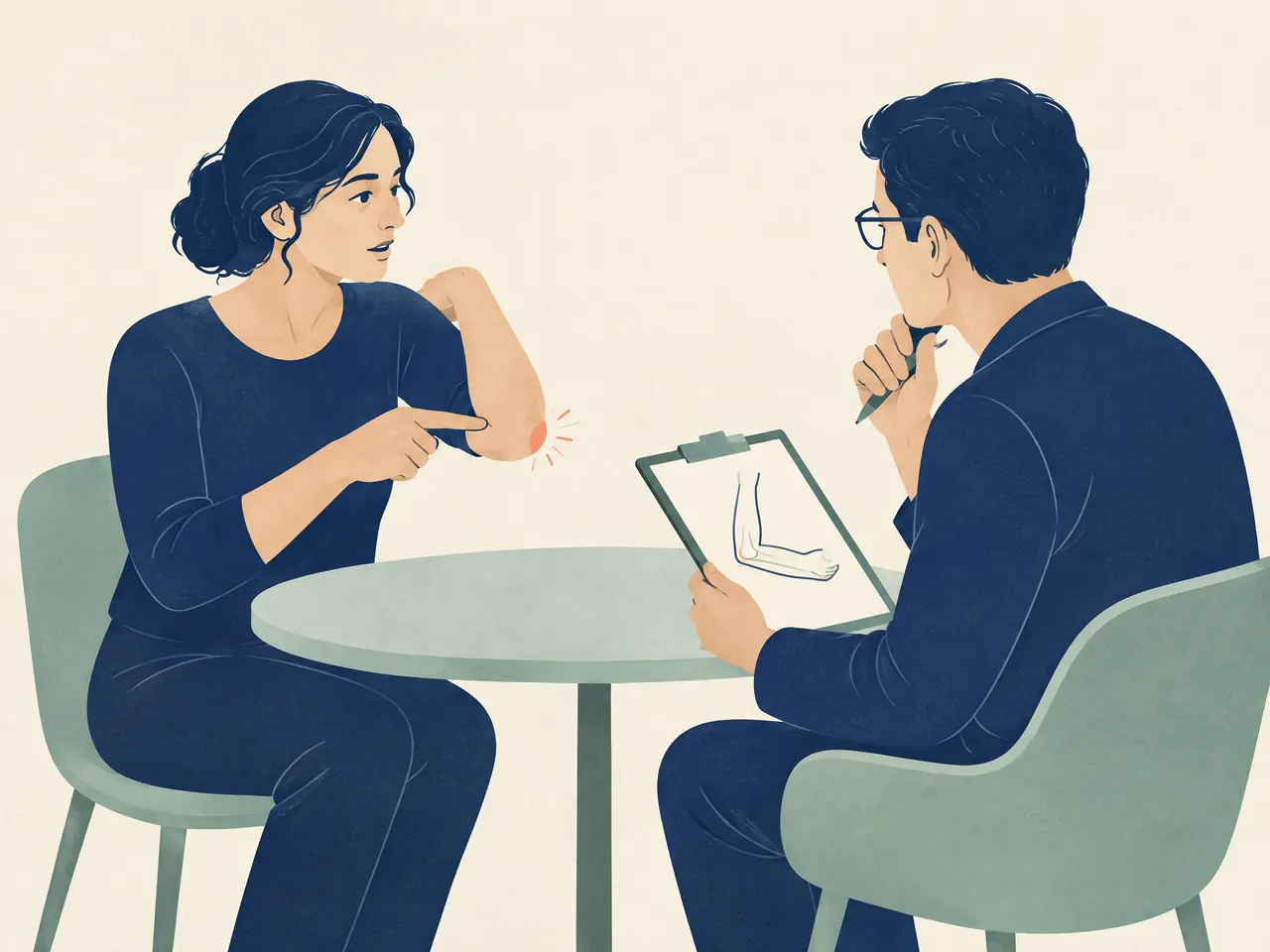
A brief record can make an unclear pattern easier to explain. Note when the pain began, the exercise or job done beforehand, the exact location, what the sensation felt like and whether it travelled. Add the load or grip involved, any swelling or warmth, what you changed, and how the elbow felt later that day and the next morning. Record function too: for example, difficulty with a kettle, mouse, hairbrush, chopsticks, door handle or a shopping bag.
Keep the record descriptive rather than diagnostic. “Outer elbow hurt while turning a pan handle” is more useful than deciding it must be tennis elbow. A clinician can combine that history with an examination and decide whether further assessment is needed. AAOS notes that activity factors and symptom location are part of an elbow evaluation, while other sources of arm pain may need to be considered. [3] A concise record can also show whether reducing a specific exercise actually changes the pattern.

Elbow pain after exercise: Can stretching help elbow pain? Should I exercise if my elbow hurts? — Know when to seek help
Seek urgent medical help for the warning signs described above rather than waiting to see whether stretching works. For non-urgent but persistent symptoms, arrange an assessment if elbow pain is not improving over a few weeks, if range of movement is becoming more limited, or if the pain repeatedly returns when you resume normal tasks. Bring your activity notes and mention any neck, shoulder, hand or nerve-like symptoms, because elbow-area pain is not always generated at the elbow itself. [2]
If you would like to discuss a non-urgent elbow-pain concern with TCM Lab, use WhatsApp at +852 6940 5663 to describe the symptom and any language needs before arranging a visit. In Hong Kong, enquiries can be directed to the Kwun Tong Chinese medicine clinic or the Chinese medicine clinic Prince Edward. For current fee information before an appointment discussion, consult the Chinese medicine clinic price list Hong Kong.
Care and health guide
Pain-care information
This directory brings together services, reading, and visit information related to pain care, to help you prepare questions for a consultation.
When pain care affects your day, noting when it occurs, its relation to activity, and what you have already tried can help prepare a consultation; Chinese medicine pain management Hong Kong is a relevant service or reading entry point.
Individual circumstances differ, and acupuncture Hong Kong offers related information to help you understand options and prepare questions.


Your questions, answered
Frequently asked questions
Can stretching help elbow pain after exercise?
Sometimes an easy movement can help you maintain comfortable motion, but it is not suitable for every painful elbow. Begin with an unloaded bend and return rather than a forceful end-range stretch. Stop if it creates new pain or the elbow becomes worse overall or the next morning. [1]
Should I exercise if my elbow hurts after a workout?
Only consider gentle, controlled movement when there has been no significant injury and there are no warning signs. Make the range smaller, slow down or rest more if discomfort rises. Do not resume heavy gripping, resistance or sport simply because one easy movement is possible.
How do I do a gentle elbow bend and return?
Sit or stand safely with the arm relaxed at your side and nothing in your hand. Slowly bend the elbow toward the same-side shoulder, stopping at a comfortable point, then lower it slowly. Do not force contact with the shoulder or press the elbow straight. [1]
When should I stop stretching an elbow that hurts?
Sources and further information
- [1] NHS Inform — Exercises for elbow problems
Referenced for: Supports the gentle elbow flex-and-extend description, gradual progression, symptom monitoring, next-morning check and stop-if-worse guidance.
- [2] NHS — Elbow and arm pain
Referenced for: Supports the non-diagnostic framing, urgent warning signs, emergency chest-symptom advice and advice to seek care when pain does not settle.
- [3] American Academy of Orthopaedic Surgeons — Tennis Elbow (Lateral Epicondylitis)
Referenced for: Supports the discussion of repetitive forearm activity, outer-elbow symptom patterns and the role of history and examination rather than self-diagnosis.