
TCM Lab · Health reading
TCM for elbow pain; elbow pain TCM assessment Hong Kong; elbow pain acupuncture Hong Kong: A Practical Guide to Assessment and Supportive Care
Published Updated
Elbow pain can turn ordinary movements—lifting a kettle, holding a phone, using a mouse or opening a heavy door—into something to plan around. It is tempting to call every ache tennis elbow, but pain around this small joint can follow a sudden injury, repetitive loading, irritation around a tendon, joint stiffness or a problem referred from elsewhere. TCM for elbow pain starts with that uncertainty rather than a promise of a single fix. An elbow pain TCM assessment in Hong Kong can map where the pain sits, how it began and what movement brings it on before elbow pain acupuncture in Hong Kong is discussed as supportive care. The practical question is not simply whether a needle may help; it is whether the current symptoms first need protection, medical assessment, rehabilitation, or a carefully paced combination of approaches.
Appointments are confirmed through WhatsApp. If you have language requirements, please mention them in your enquiry.
The short answer
Acupuncture may be discussed as supportive symptom care for some elbow-pain presentations after an assessment of onset, swelling, movement and daily load. It is not a way to repair a fracture, torn ligament or other serious structural injury. Severe pain with difficulty moving the arm, a changed shape after injury, numbness or tingling, or swelling with feverish symptoms should be medically assessed urgently rather than managed as a routine acupuncture visit [1].
Transparent pricing
See the fees.
Choose your care.
Explore our complete official price list, including first-trial prices, regular prices, packages and branch-specific options.
Opening WhatsApp prepares an enquiry; it does not send a message, take payment or confirm an appointment. Suitability and individual arrangements are confirmed during consultation.
Pain care
All prices in HKDExtracorporeal shockwave treatment
Shockwave treatment for deep-tissue and fascial care. The Kwun Tong clinic offers the multi-area options shown below.
Priced by branch
Branch-specific pricing
Prince Edward: HK$250 per area
Kwun Tong: HK$250 for 1 area / HK$450 for 2 areas / HK$600 for 3 areas
Pain care (manual therapy)
Includes Chinese medicine musculoskeletal assessment, manual joint techniques and tui na.
HK$580 (single session)
Chinese medicine musculoskeletal assessment
Pain care (acupuncture and manual therapy)
Combines acupuncture and manual therapy.
HK$680 (single session)
Combined care
Hair and scalp
All prices in HKDScalp health and hair-loss management
Includes AI scalp analysis, deep scalp and follicle cleansing, and scalp oil-control care.
HK$380 (first trial)
Regular price: HK$680
- 6 sessions: HK$3,480 (HK$580 per session)
- 12 sessions: HK$5,760 (HK$480 per session)
- 20 sessions: HK$8,600 (HK$430 per session)
- 30 sessions: HK$11,400 (HK$380 per session)
Hair acupuncture and Chinese herbal medicine package
Includes scalp acupuncture and 3 days of Chinese herbal medicine that does not require decoction.
HK$580 (single session)
Registered Chinese Medicine Practitioner consultation
- 6 sessions: HK$3,180 (HK$530 per session)
- 12 sessions: HK$5,760 (HK$480 per session)
- 20 sessions: HK$8,600 (HK$430 per session)
- 30 sessions: HK$11,400 (HK$380 per session)
Combined hair and scalp treatment
Combines acupuncture and Chinese herbal medicine with salon-level scalp and follicle care. Packages include complimentary hair-care shampoo and serum.
HK$1,260 (single session)
Combined treatment
- 8 sessions: HK$8,640 (HK$1,080 per session)
- 16 sessions: HK$15,680 (HK$980 per session)
- 20 sessions: HK$18,600 (HK$930 per session)
- 30 sessions: HK$26,400 (HK$880 per session)
Weight management
All prices in HKDFull-body acupoint embedding for weight management
Includes full-body acupoint embedding. Packages include complimentary Chinese herbal medicine for weight management, with the number of included days scaled to the package. Embedding material and the individual treatment arrangement are confirmed during consultation; this is not a cosmetic thread lift.
HK$980 (single session)
No trial session
- 10 sessions: HK$7,800 (HK$780 per session)
- 20 sessions: HK$14,600 (HK$730 per session)
- 30 sessions: HK$20,400 (HK$680 per session)
Facial acupuncture
All prices in HKDFacial acupuncture (basic)
Includes facial acupuncture and meridian-based facial care, including care for facial puffiness.
HK$480 (first trial)
Regular price: HK$680
- 10 sessions: HK$5,200 (HK$520 per session)
- 20 sessions: HK$9,600 (HK$480 per session)
- 30 sessions: HK$13,500 (HK$450 per session)
Facial acupuncture (advanced)
Includes enhanced facial acupuncture with a specially formulated moisturising mask and serum.
HK$780 (first trial)
Regular price: HK$1,180
- 10 sessions: HK$9,000 (HK$900 per session)
- 20 sessions: HK$16,600 (HK$830 per session)
- 30 sessions: HK$23,400 (HK$780 per session)
Chinese medicine
All prices in HKDAcupuncture and Chinese herbal medicine package
Includes a Chinese medicine consultation with pulse assessment, body acupuncture and 3 days of Chinese herbal granules that do not require decoction.
HK$580 (single session)
Chinese medicine consultation with pulse assessment
TCM for elbow pain; elbow pain TCM assessment Hong Kong; elbow pain acupuncture Hong Kong: What Elbow Symptoms May Mean
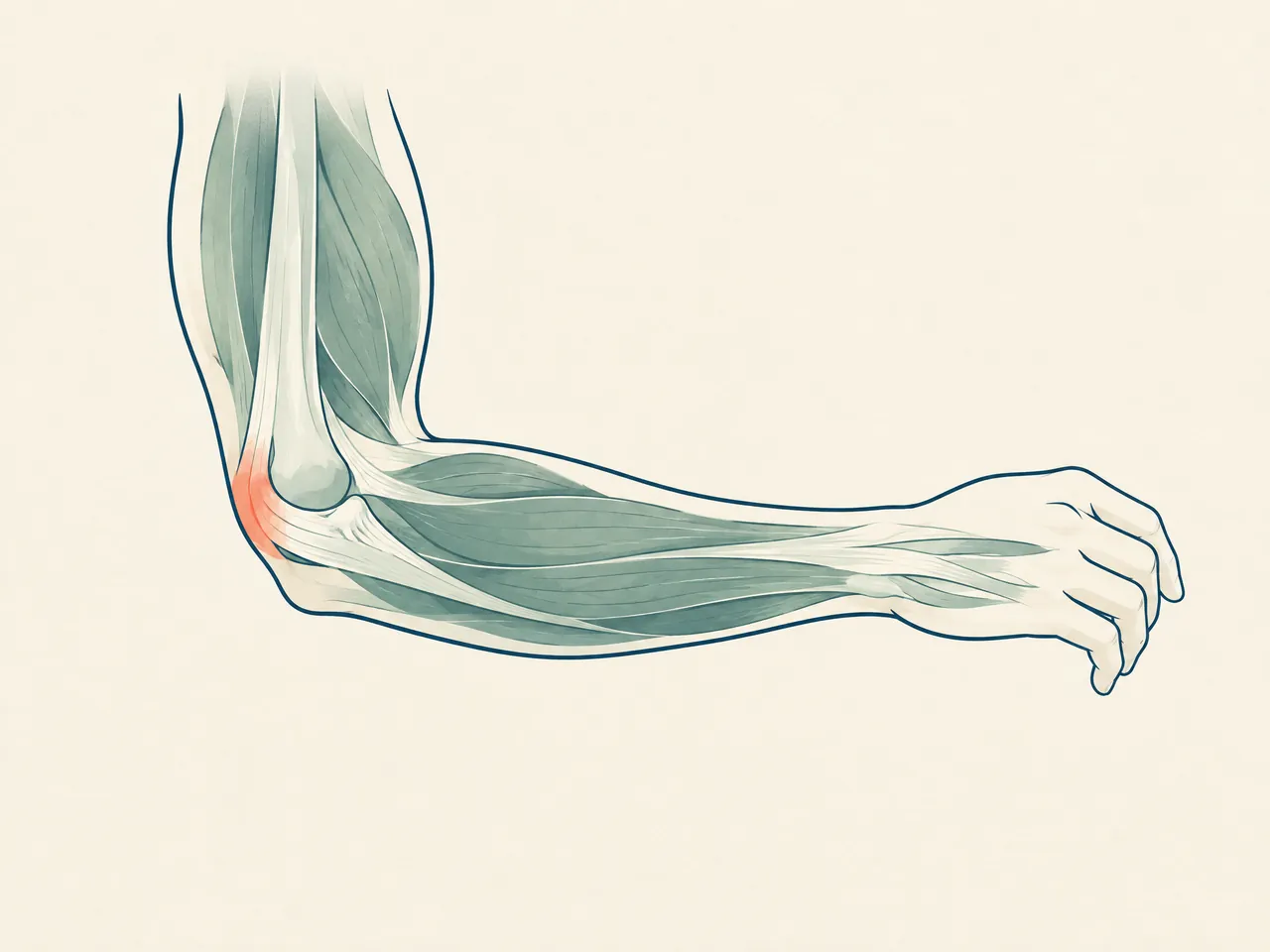
The elbow is involved whenever the hand grips, twists, carries or pushes. Pain on the outer side may be noticed when lifting a pan palm-down, using a screwdriver or shaking hands; pain on the inner side may be more obvious with repeated gripping or throwing. Stiffness, tenderness, bruising, swelling and a reduced ability to straighten the arm add useful detail, but they do not identify the cause by themselves. NHS guidance similarly lists several possible explanations for elbow and arm symptoms, including tendon problems, bursitis, sprains and strains, arthritis, and joint infection [1].
That is why a thoughtful TCM for elbow pain conversation does not begin by treating a familiar name. In traditional Chinese medicine, a practitioner may use terms such as local blockage or sinew injury to describe a pain pattern, while also asking how workload, posture, sleep and general health shape the person’s experience. Those ideas are not a substitute for a medical diagnosis. They are a way to organise the consultation and decide whether supportive care is sensible now, or whether a different assessment should take precedence.
TCM for elbow pain; elbow pain TCM assessment Hong Kong; elbow pain acupuncture Hong Kong: Overuse, Tendon and Joint-Related Patterns
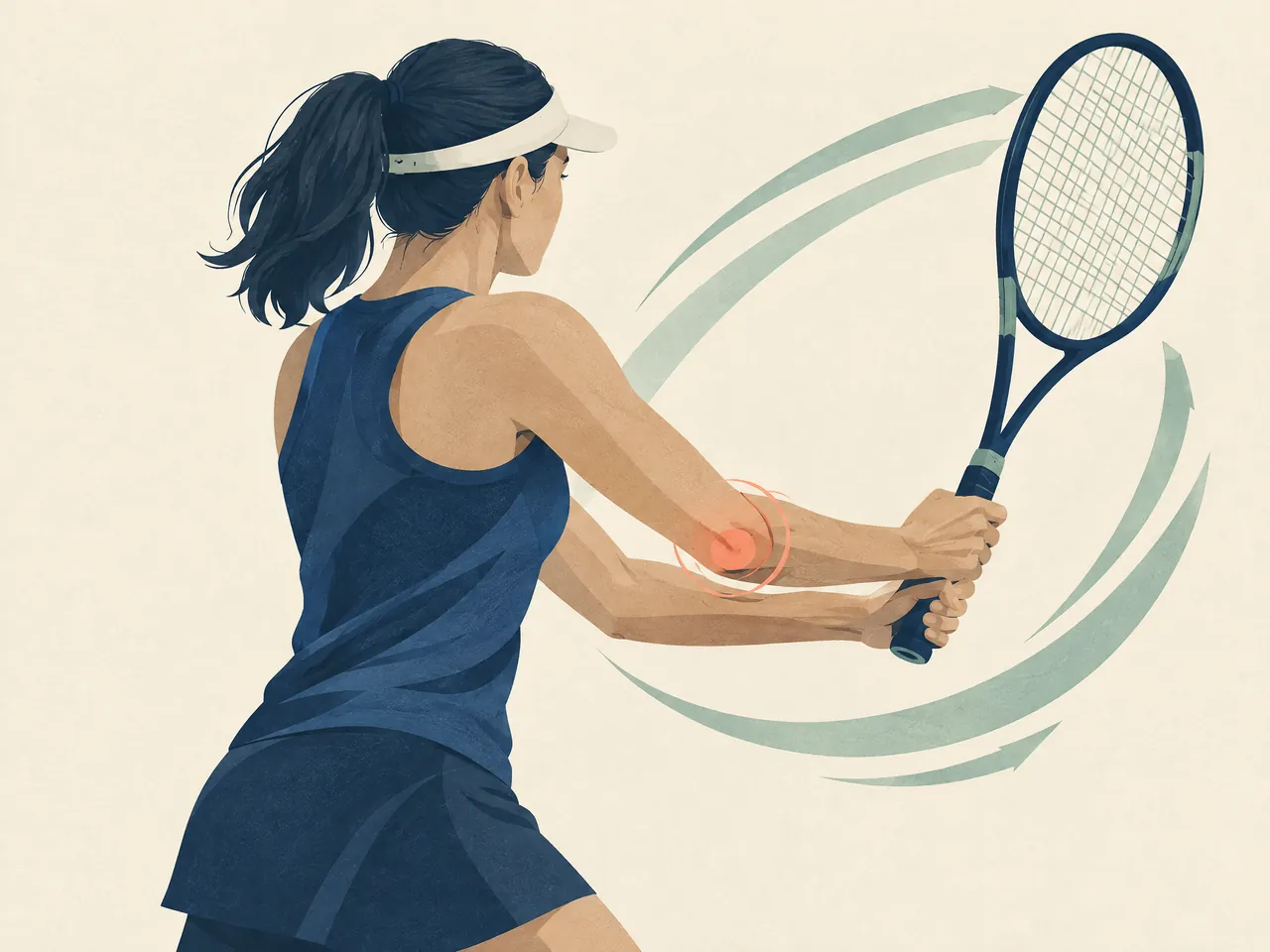
A gradual ache after a new gym programme, long hours of mouse work, repeated stock handling or a weekend of DIY often prompts questions about overuse. The useful history is specific: what changed, how quickly did pain appear, and does it settle between tasks? A tendon-related pattern may be felt around the bony point of the elbow and be aggravated by gripping, lifting or turning the forearm. Joint-related symptoms can feel more like stiffness, swelling or a blocked range of motion. A strain can follow a clear pull or twist. These are working possibilities, not diagnoses to make from an online description. For a focused walkthrough of the movements a clinician may use, see elbow pain physical examination.
TCM for elbow pain; elbow pain TCM assessment Hong Kong; elbow pain acupuncture Hong Kong: Why Location and Movement Matter
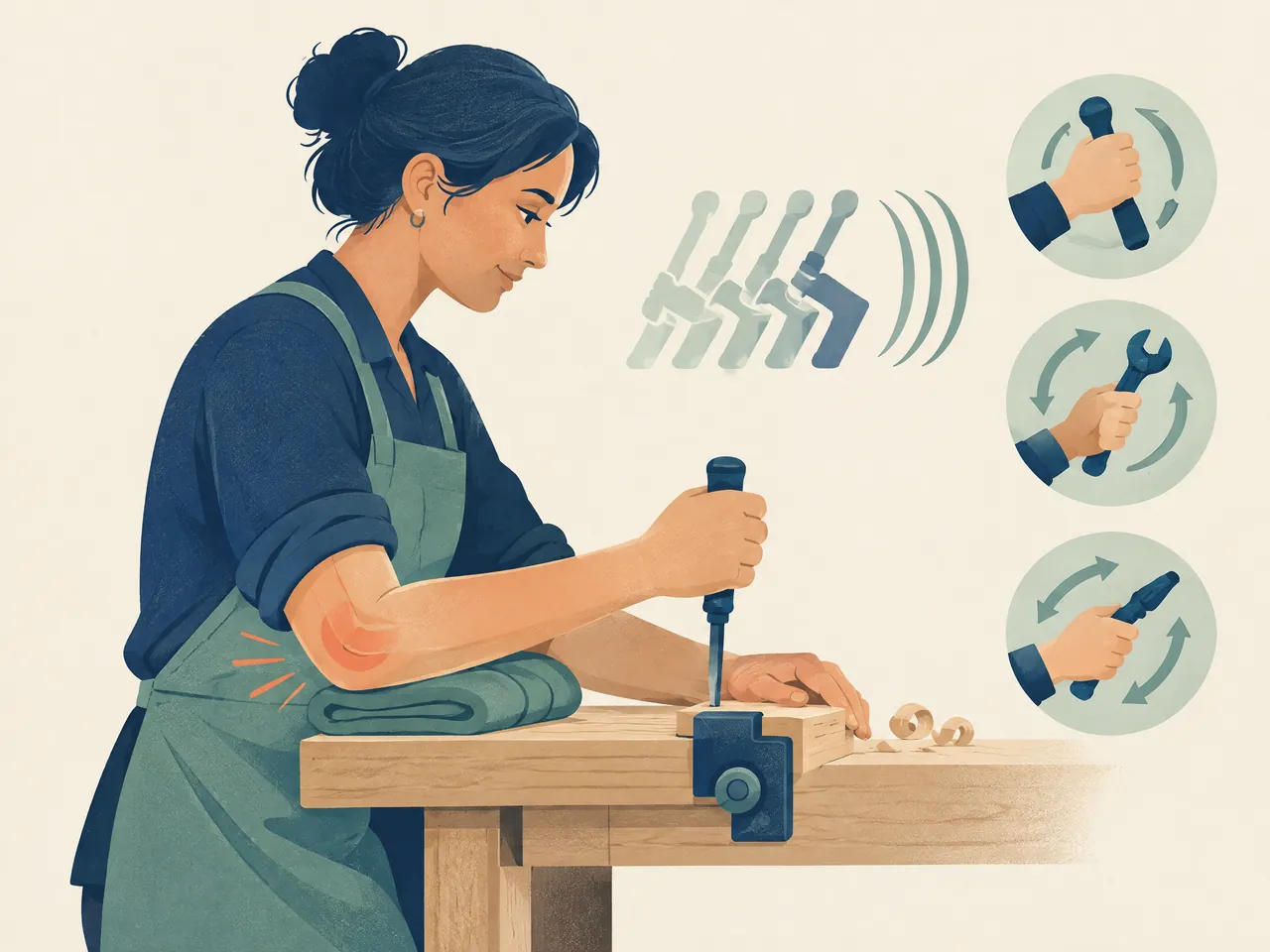
Where the discomfort appears during a movement can be more informative than a pain score alone. Note whether it occurs while the elbow bends, straightens, turns palm-up or palm-down, or simply when the wrist resists a load. Also notice whether the pain stays at the elbow or travels into the forearm, hand, shoulder or neck. Numbness, tingling, obvious weakness or a hand that feels clumsy deserve particular attention rather than being explained away as tightness. A short activity log for a few days—task, movement, symptom and recovery—can make an elbow pain TCM assessment in Hong Kong more concrete and can reveal a modifiable work or exercise trigger.
Compare your options
| What you notice | What an assessment needs to clarify | A sensible next step | How acupuncture fits, if appropriate |
|---|---|---|---|
| Gradual pain during gripping, lifting or repeated wrist use | Which movement, task and elbow location reproduce the symptom; how daily load has changed | Discuss load modification and a targeted assessment; consider rehabilitation advice | May be discussed as supportive symptom care after assessment |
| Stiffness, swelling or difficulty fully bending or straightening | Whether a joint process, bursitis, injury or another cause may be involved | Clinical review may be needed before local treatment | Not a substitute for clarifying the cause |
| Pain after a fall, direct blow, snap or visible change in shape | Whether fracture, dislocation or substantial soft-tissue injury is possible | Seek urgent medical assessment | Do not use as a way to manage a suspected structural injury |
| Tingling, numbness, feverish symptoms with swelling, or severe pain that limits movement | Whether nerve, infection or another urgent problem is present | Seek urgent medical help as indicated [1] | Defer routine acupuncture discussion until urgent causes are addressed |
| Persistent symptoms despite changing the provoking task | Whether the working explanation and plan need review | Reassess with an appropriate clinician; bring prior reports if available | Consider only as part of a revised, coordinated plan |
On smaller screens, scroll the table sideways to compare all columns.
TCM for elbow pain; elbow pain TCM assessment Hong Kong; elbow pain acupuncture Hong Kong: Assessment Before an Acupuncture Discussion
Before considering elbow pain acupuncture in Hong Kong, the first discussion should cover the onset, side, exact location, daily demands and previous care. A practitioner may ask whether there was a fall, direct blow, snap, recent infection, past surgery, arthritis, neck symptoms, diabetes, pregnancy, bleeding problems or medicines that affect bleeding. Bring any scan report or referral letter that is already available, rather than trying to translate its conclusion from memory. The purpose is not to turn every sore elbow into a complex case; it is to identify details that materially change the safe and useful next step.
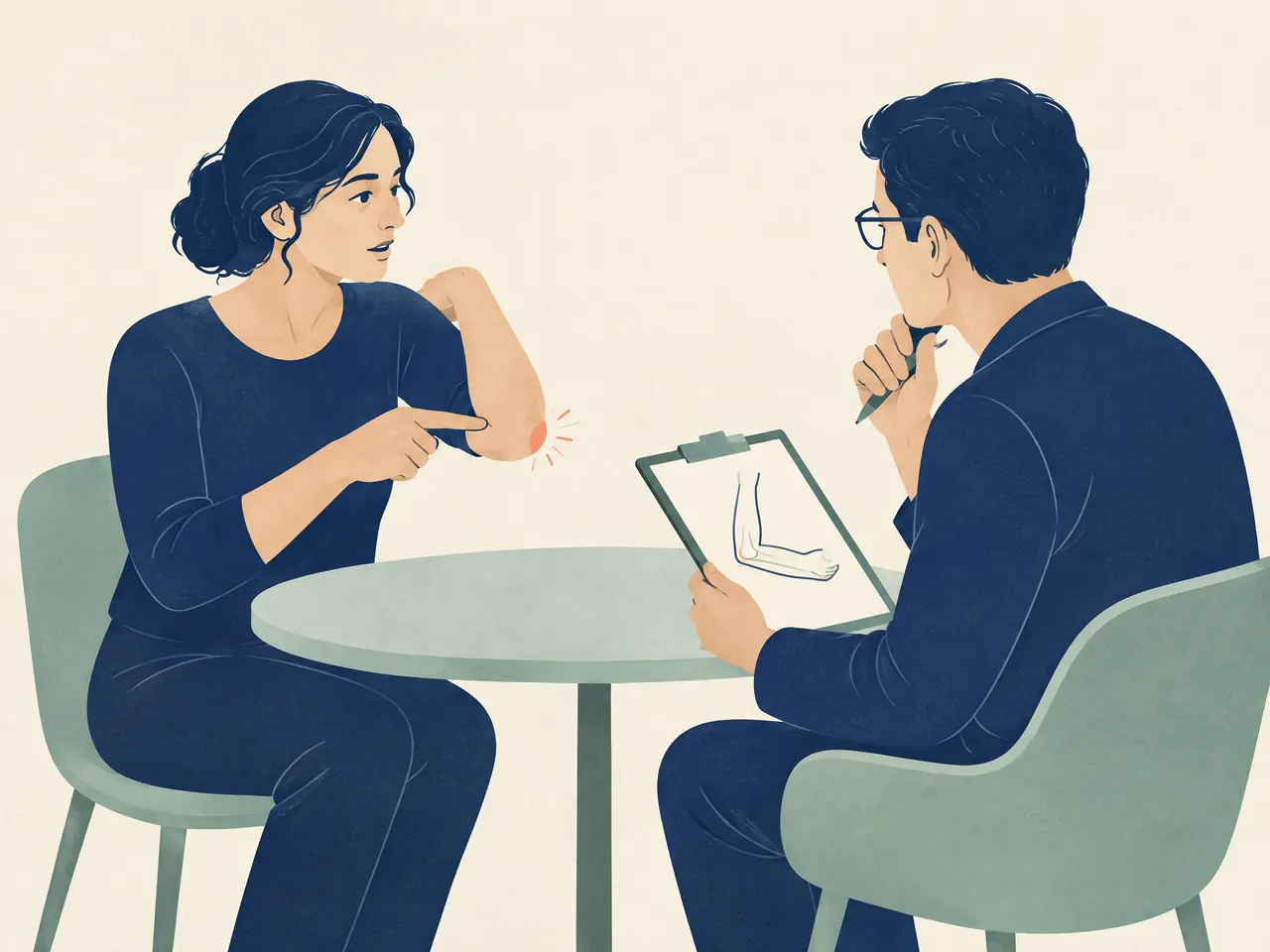
Observation and simple movement checks can then provide a baseline. The elbow may be compared side to side for visible swelling, bruising, skin changes, guarding and ability to bend, straighten and rotate. Gentle resisted movements may help identify which task reproduces the familiar symptom. This does not prove that one tissue is responsible, and it should not be forced through sharp pain. It creates a shared picture of what is limited today and what would count as a meaningful change in daily function. A planned assessment also gives the patient room to ask about alternatives rather than feeling committed to acupuncture before the problem has been understood.
TCM for elbow pain; elbow pain TCM assessment Hong Kong; elbow pain acupuncture Hong Kong: Checking Movement, Swelling and Pain Triggers
Prepare for the consultation by describing the trigger in ordinary terms: “I can type for an hour, but lifting a frying pan hurts,” is more useful than “my elbow is bad.” Mention night pain, a hot or red joint, bruising, grip weakness, clicking, locking, and whether a brace, rest or a change of task helped. A clinician can combine that account with visual inspection and movement testing to decide whether local care can be considered. If the pain is linked to a sport, it is sensible to discuss the actual stroke, racquet, tool or load rather than treating every activity as equivalent. Our related guide, When should I stop exercising with tennis elbow?, helps frame a paced return rather than an all-or-nothing response.

TCM for elbow pain; elbow pain TCM assessment Hong Kong; elbow pain acupuncture Hong Kong: When Imaging or Medical Review Comes First
A routine supportive-care discussion should pause when the symptoms suggest a more urgent problem. Seek prompt medical help for severe pain with marked difficulty moving the arm, a changed shape or snapping sound after an injury, or tingling or numbness. Swelling together with a very high temperature or feeling hot, cold or shivery also warrants urgent review [1]. Sudden arm pain with chest pressure, heaviness or squeezing is an emergency symptom, not an elbow-treatment question [1]. Imaging or a medical assessment may also be appropriate when a clinician suspects fracture, major ligament injury, infection, a significant joint condition or another cause that cannot be clarified safely in a consultation.
TCM for elbow pain; elbow pain TCM assessment Hong Kong; elbow pain acupuncture Hong Kong: What a Supportive Care Plan Can Include
When assessment does not point to urgent medical care, a supportive plan should be tied to a practical goal: pour tea with less guarding, tolerate a keyboard session with planned breaks, return gradually to a recreational activity, or understand which load needs changing first. Acupuncture, if chosen, belongs alongside those goals rather than being presented as an isolated cure. Depending on the presentation and other clinicians’ advice, a plan may include reducing the most provocative task for a period, changing grip or workstation habits, graded exercise or physiotherapy, a support or brace, and follow-up if symptoms change. The exact mix should reflect the person’s examination, work demands and medical history.
Evidence should not be overstated. In a UCLA Health discussion of tennis elbow, the research described was mixed, and acupuncture was framed as one of several modalities, alongside measures such as physical therapy, rather than a stand-alone answer [2]. That is a useful expectation for a TCM for elbow pain visit: discuss possible symptom support, monitor function, and keep reassessing whether the plan makes sense. If the goal is a structured explanation of the modality itself, read does acupuncture help elbow pain before deciding what to ask at a consultation.

Load management does not mean doing nothing forever. For a cook, it may mean using two hands for a heavy pan and changing the sequence of chopping, lifting and washing; for an office worker, it may mean arranging the mouse closer, pausing before the forearm becomes sore and varying the grip used to carry a laptop. For a gym-goer, it may mean discussing which pull, press or curl is provoking symptoms and how a return can be graded. These examples are starting points for a conversation, not a universal exercise prescription. The useful plan is the smallest change that lowers repeated irritation without making work and daily life impossible. At follow-up, compare the same task under similar conditions, including the next-day response, rather than judging progress only by how the elbow feels while resting.
TCM for elbow pain; elbow pain TCM assessment Hong Kong; elbow pain acupuncture Hong Kong: What to Expect During a Session
A session normally begins with the history and examination already described, followed by a discussion of the proposed role of treatment. If acupuncture is agreed, the practitioner explains positioning, exposes only the necessary area, cleans the selected skin sites and uses sterile single-use needles. Sensations vary: some people notice a brief prick, dull ache, heaviness, tingling or warmth, while others feel little. Tell the practitioner immediately if a sensation is sharp, distressing or travels in an unexpected way. A person should also disclose medicines, bleeding risk, pregnancy, needle anxiety, fainting history, skin problems and any change in symptoms since the assessment. NCCIH notes that complications have occurred with nonsterile needles or improper delivery and advises people not to delay conventional care for a health problem [3].

TCM for elbow pain; elbow pain TCM assessment Hong Kong; elbow pain acupuncture Hong Kong: Limits, Questions and Everyday Follow-Up
Acupuncture cannot knit a fracture, reattach a torn ligament or replace care for infection. It may also be unsuitable or need modification for individual reasons, which is why honest disclosure and reassessment matter. Ask what observation led to the proposed plan, what changes should prompt a medical review, whether exercise or physiotherapy is advisable, and what result would show that the approach is not helping. At home, avoid repeatedly testing the painful movement just to see whether it still hurts. Instead, make small, measured adjustments to the task that provokes it and track whether daily use becomes easier. For people whose symptoms match a lateral tendon pattern, lateral epicondylitis acupuncture and tennis elbow stretches offer useful follow-on reading to discuss with an appropriate professional.
Care and health guide
Pain-care information
This directory brings together services, reading, and visit information related to pain care, to help you prepare questions for a consultation.
When pain care affects your day, noting when it occurs, its relation to activity, and what you have already tried can help prepare a consultation; Chinese medicine pain management Hong Kong is a relevant service or reading entry point.
Individual circumstances differ, and acupuncture Hong Kong offers related information to help you understand options and prepare questions.


Your questions, answered
Frequently asked questions
How is elbow pain assessed before acupuncture is considered?
The consultation should cover how and when the pain began, its precise location, the movements and tasks that bring it on, prior injuries and treatment, medicines and relevant health conditions. Observation for swelling or bruising and gentle checks of bending, straightening and forearm rotation can help decide whether a supportive-care discussion is appropriate or whether medical assessment should come first.
Can acupuncture repair a structural elbow injury?
No. Acupuncture is not a repair for a fracture, torn ligament or other major structural injury. If a significant injury is suspected, medical assessment, and sometimes imaging or rehabilitation, should guide care. Acupuncture can only be considered later as a supportive option if it is appropriate to the person’s situation.
What should I tell a practitioner about my elbow pain?
Describe the onset, whether there was an injury, the exact painful area, work or sport demands, movements that trigger symptoms, any swelling or bruising, and any numbness or weakness. Share existing reports, previous treatments, medicines, bleeding concerns, pregnancy and other relevant health conditions so the discussion can be properly tailored.
When should I seek medical help rather than wait for an acupuncture consultation?
Seek urgent help for severe pain with difficulty moving the arm, a snapping sound or changed shape after an injury, or tingling or numbness. Swelling with a very high temperature or feeling hot, cold or shivery also needs urgent review. Sudden arm pain with chest pressure, heaviness or squeezing is an emergency [1].
Sources and further information
- [1] [1] NHS — Elbow and arm pain
Referenced for: Supports the broad non-diagnostic framing, possible causes, and urgent escalation symptoms described in the article.
- [2] [2] UCLA Health — Can acupuncture ease the pain of tennis elbow?
Referenced for: Supports the statement that evidence discussed for acupuncture in tennis elbow is mixed and that it is one modality among several; it does not support a cure claim.
- [3] [3] National Center for Complementary and Integrative Health — Acupuncture: Effectiveness and Safety
Referenced for: Supports the safety statement about sterile single-use needles, improper delivery risks, and not postponing health-care assessment.