
TCM Lab · Health reading
Guidance on knee pain ice or heat: Should I use ice or heat for knee pain? What can I do for knee pain at home?
Published Updated
If you are wondering whether to use ice or heat for knee pain, begin with what the knee is doing now rather than with a diagnosis you make at home. For a recent twist, knock, or flare with swelling, a wrapped cold pack is usually the more sensible first comfort measure. For stiffness without swelling and not linked to a recent injury, gentle warmth may feel better. Both are temporary symptom measures, not a way to rule out a serious injury or infection. Reduce painful loading, keep the knee moving within comfort, and get prompt assessment for the warning signs below. [1] [2]
Appointments are confirmed through WhatsApp. If you have language requirements, please mention them in your enquiry.
The short answer
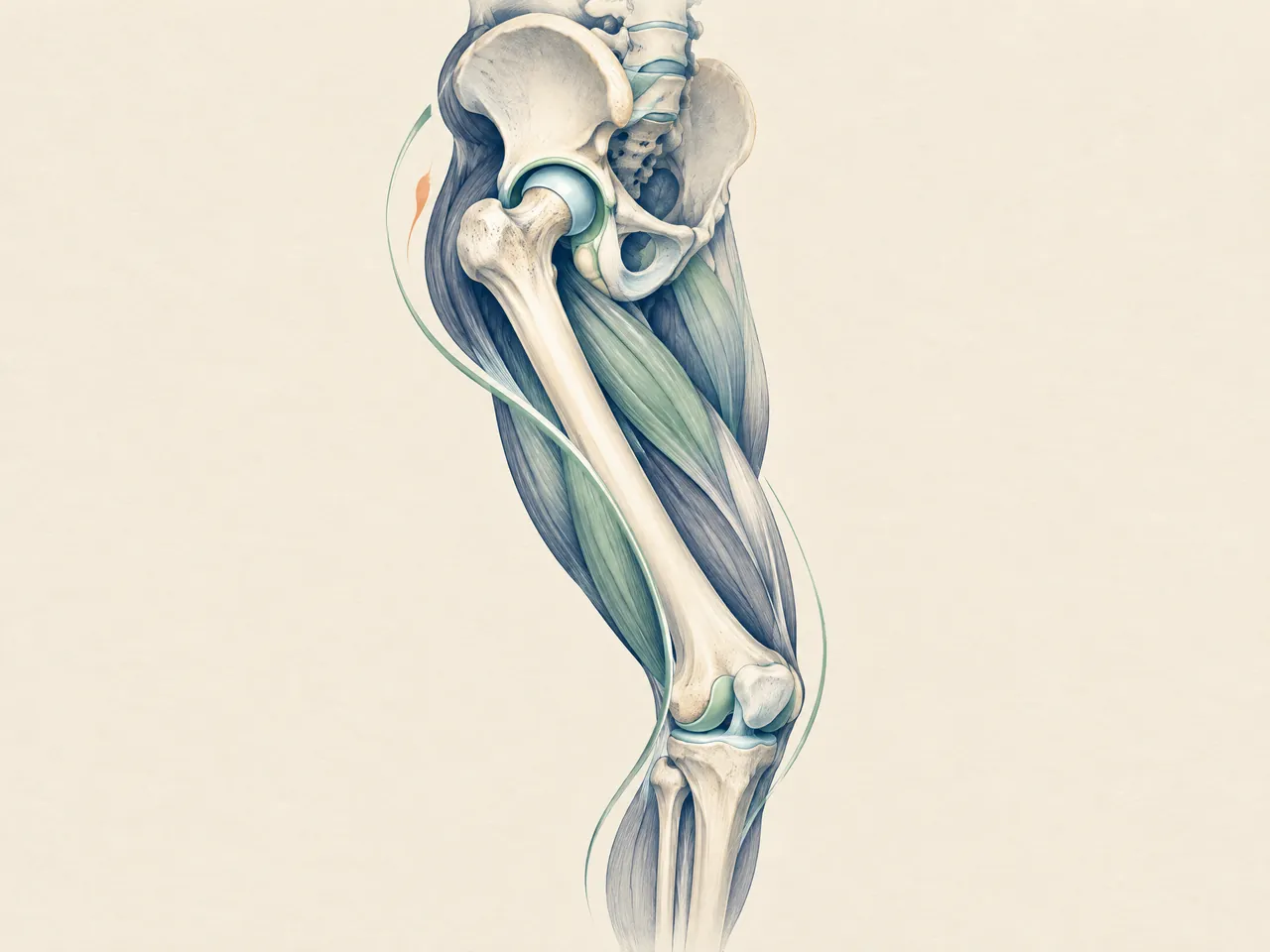
Use a wrapped cold pack for a recent knee injury or swelling; try gentle warmth for stiffness when there is no swelling and no recent injury. Keep either pack off bare skin, use it for up to 15 minutes, and leave a few hours before another session. At home, scale back painful activity and move gently within comfort. Seek prompt medical assessment for locking, giving way, major swelling or deformity, inability to bear weight, or a hot red knee with fever or chills. [1] [2]
Transparent pricing
See the fees.
Choose your care.
Explore our complete official price list, including first-trial prices, regular prices, packages and branch-specific options.
Opening WhatsApp prepares an enquiry; it does not send a message, take payment or confirm an appointment. Suitability and individual arrangements are confirmed during consultation.
Pain care
All prices in HKDExtracorporeal shockwave treatment
Shockwave treatment for deep-tissue and fascial care. The Kwun Tong clinic offers the multi-area options shown below.
Priced by branch
Branch-specific pricing
Prince Edward: HK$250 per area
Kwun Tong: HK$250 for 1 area / HK$450 for 2 areas / HK$600 for 3 areas
Pain care (manual therapy)
Includes Chinese medicine musculoskeletal assessment, manual joint techniques and tui na.
HK$580 (single session)
Chinese medicine musculoskeletal assessment
Pain care (acupuncture and manual therapy)
Combines acupuncture and manual therapy.
HK$680 (single session)
Combined care
Hair and scalp
All prices in HKDScalp health and hair-loss management
Includes AI scalp analysis, deep scalp and follicle cleansing, and scalp oil-control care.
HK$380 (first trial)
Regular price: HK$680
- 6 sessions: HK$3,480 (HK$580 per session)
- 12 sessions: HK$5,760 (HK$480 per session)
- 20 sessions: HK$8,600 (HK$430 per session)
- 30 sessions: HK$11,400 (HK$380 per session)
Hair acupuncture and Chinese herbal medicine package
Includes scalp acupuncture and 3 days of Chinese herbal medicine that does not require decoction.
HK$580 (single session)
Registered Chinese Medicine Practitioner consultation
- 6 sessions: HK$3,180 (HK$530 per session)
- 12 sessions: HK$5,760 (HK$480 per session)
- 20 sessions: HK$8,600 (HK$430 per session)
- 30 sessions: HK$11,400 (HK$380 per session)
Combined hair and scalp treatment
Combines acupuncture and Chinese herbal medicine with salon-level scalp and follicle care. Packages include complimentary hair-care shampoo and serum.
HK$1,260 (single session)
Combined treatment
- 8 sessions: HK$8,640 (HK$1,080 per session)
- 16 sessions: HK$15,680 (HK$980 per session)
- 20 sessions: HK$18,600 (HK$930 per session)
- 30 sessions: HK$26,400 (HK$880 per session)
Weight management
All prices in HKDFull-body acupoint embedding for weight management
Includes full-body acupoint embedding. Packages include complimentary Chinese herbal medicine for weight management, with the number of included days scaled to the package. Embedding material and the individual treatment arrangement are confirmed during consultation; this is not a cosmetic thread lift.
HK$980 (single session)
No trial session
- 10 sessions: HK$7,800 (HK$780 per session)
- 20 sessions: HK$14,600 (HK$730 per session)
- 30 sessions: HK$20,400 (HK$680 per session)
Facial acupuncture
All prices in HKDFacial acupuncture (basic)
Includes facial acupuncture and meridian-based facial care, including care for facial puffiness.
HK$480 (first trial)
Regular price: HK$680
- 10 sessions: HK$5,200 (HK$520 per session)
- 20 sessions: HK$9,600 (HK$480 per session)
- 30 sessions: HK$13,500 (HK$450 per session)
Facial acupuncture (advanced)
Includes enhanced facial acupuncture with a specially formulated moisturising mask and serum.
HK$780 (first trial)
Regular price: HK$1,180
- 10 sessions: HK$9,000 (HK$900 per session)
- 20 sessions: HK$16,600 (HK$830 per session)
- 30 sessions: HK$23,400 (HK$780 per session)
Chinese medicine
All prices in HKDAcupuncture and Chinese herbal medicine package
Includes a Chinese medicine consultation with pulse assessment, body acupuncture and 3 days of Chinese herbal granules that do not require decoction.
HK$580 (single session)
Chinese medicine consultation with pulse assessment
After an injury or swelling — knee pain ice or heat: Should I use ice or heat for knee pain? What can I do for knee pain at home?
The useful distinction is not simply whether pain feels sharp or dull. Ask whether there has been a recent injury, whether the knee is visibly or noticeably swollen, and whether there are warning signs. After a new knock, fall, twist, or exercise-related flare with swelling, cold is commonly used as a short-term comfort measure. If the main problem is stiffness and there is no swelling or recent injury, warmth can be a reasonable alternative. NHS Inform makes this same distinction, while NHS guidance also advises reducing weight through a painful knee and avoiding long periods of standing. [1] [2]
Use the response as information, not as a test of what is damaged. A knee may be painful after overuse, a sprain, tendon trouble, arthritis, bursitis, gout, or another problem; similar symptoms can have different causes. Do not decide that a ligament or meniscus is injured—or that nothing serious is wrong—solely from where it hurts or whether a pack feels soothing. For a broader starting point on practical decisions between appointments, read knee pain self-care. If cold or warmth clearly makes the pain, swelling, skin colour, or discomfort worse, stop rather than pushing through it. [1] [2]
Wrapped cold packs and brief sessions for swelling — knee pain ice or heat: Should I use ice or heat for knee pain? What can I do for knee pain at home?
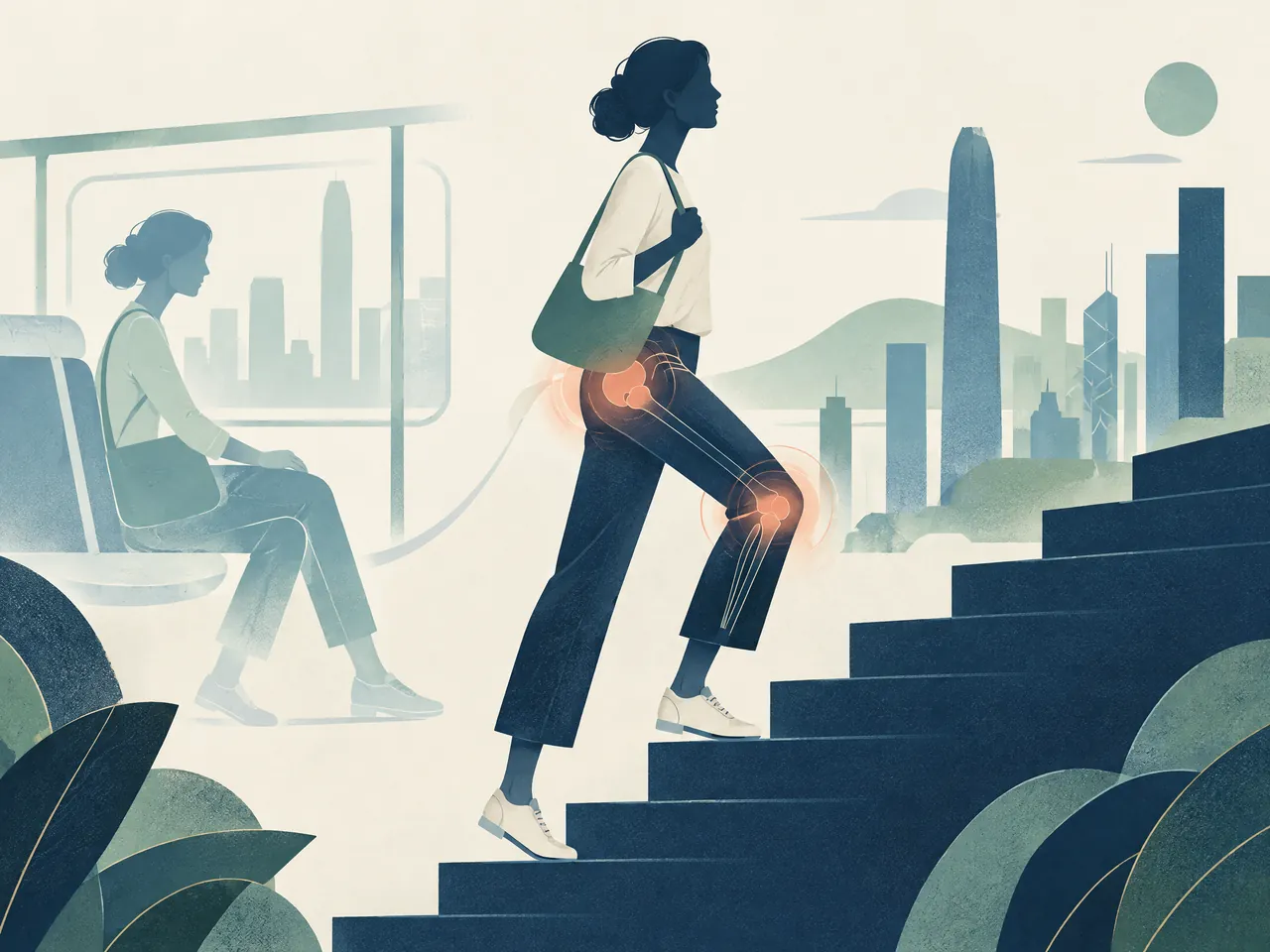
For a recent injury or a knee that has become swollen after activity, put a cold pack or bag of frozen peas inside a towel before applying it. Do not put ice directly on the skin. NHS Inform advises up to 15 minutes at a time and a few hours between treatments; NHS also describes an ice pack wrapped in a tea towel for up to 20 minutes every 2 to 3 hours. These are general public-health instructions, so follow the more cautious approach if you are unsure and do not fall asleep with a pack on. [1] [2]
Cold does not make it safe to resume the same run, hike, squats, or stair climbing that triggered the flare. While the knee settles, reduce the activity that is reliably provoking it and consider whether a shorter route, a handrail, a lift, or more seated breaks can reduce repeated loading. Avoid ice or heat unless a clinician says it is suitable if you have problems with circulation or reduced sensation, because you may not notice a skin injury normally. Seek advice if there is new redness, discolouration, blistering, or an unexpected increase in symptoms. [2]
Stiffness without swelling and gentle warmth — knee pain ice or heat: Should I use ice or heat for knee pain? What can I do for knee pain at home?
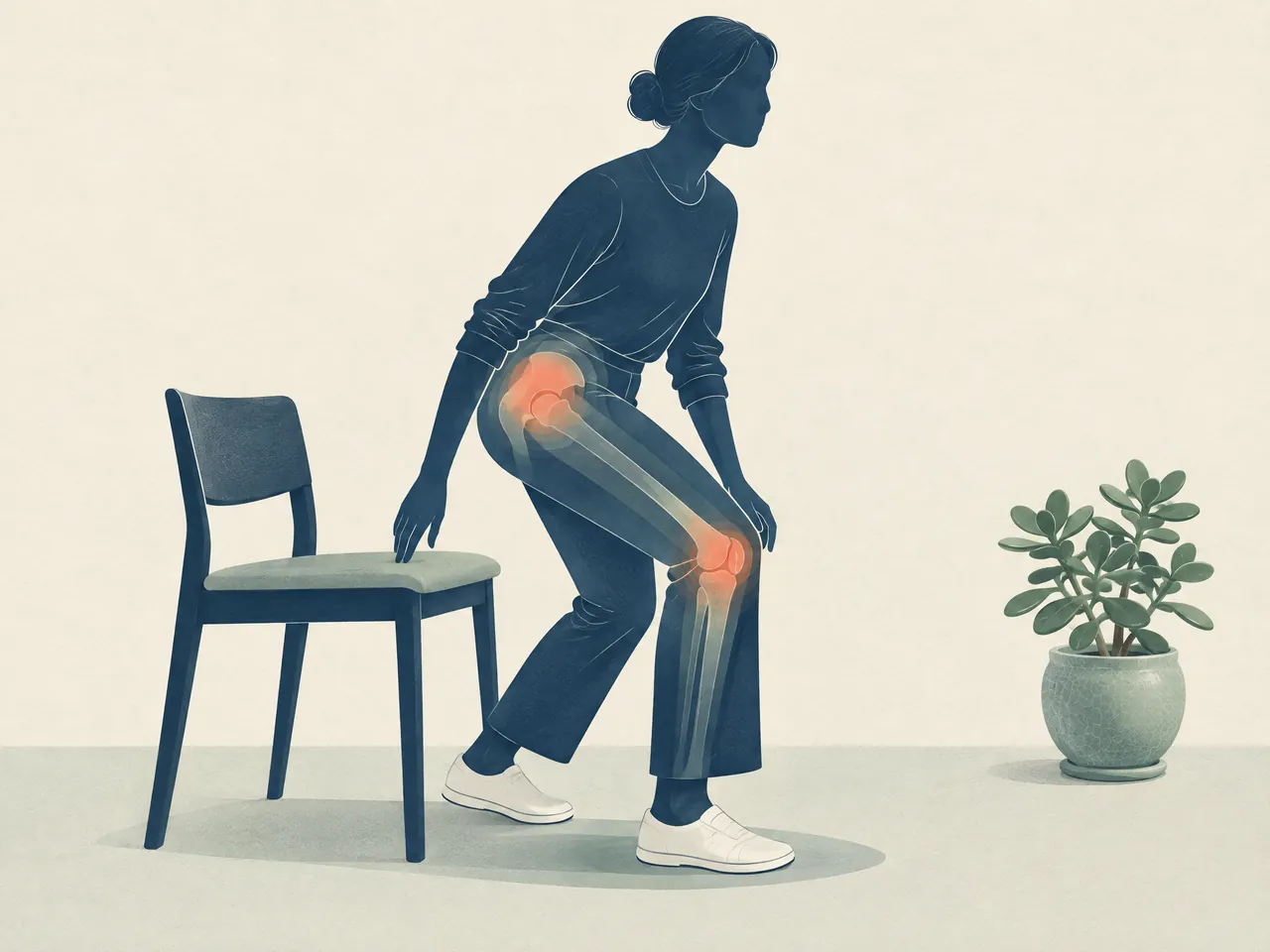
A warm pack is not the default for a newly swollen knee. It is more relevant when the knee feels stiff, there has not been a recent injury, and swelling is absent. Use a towel barrier and keep the temperature comfortably warm rather than very hot. The aim is a short period of comfort before light movement, not a prolonged attempt to heat away the cause. Check the skin when the pack comes off, especially if you have diabetes, altered sensation, or any reason you may not feel excessive heat clearly. [2]
Some people notice stiffness after sitting through a commute, working at a desk, or getting out of bed. In that situation, warmth followed by a few easy bends and straightens may be preferable to forcing the knee from a cold, still position into a deep squat. If the knee is hot, red, increasingly swollen, or the stiffness is accompanied by fever or chills, do not treat it as ordinary stiffness with a heat pack. Those features need urgent medical advice because infection is one possible concern. [1]
Compare your options
| What you notice | Reasonable first response | What to avoid | When to move beyond home care |
|---|---|---|---|
| Recent twist, knock, or activity flare with swelling | Wrapped cold pack for up to 15 minutes; reduce the provoking activity | Ice directly on skin or a rapid return to sport | Urgent advice if swelling is severe, immediate after a twist, or weight bearing is not possible |
| Stiffness without swelling and no recent injury | Comfortably warm pack with a towel barrier, then gentle motion | Very hot packs, forced bends, or using heat on a hot red knee | Seek advice if stiffness is worsening, function is falling, or the cause is unclear |
| Mild pain during standing, chores, or stairs | Shorten standing periods, pace tasks, use a rail, and move within comfort | Long unbroken standing, repeated deep squats, or complete bed rest by default | Arrange assessment if pain does not improve or daily activities stay limited |
| Locking, giving way, deformity, inability to bear weight, or fever with redness and heat | Stop self-treatment and obtain urgent medical advice | Testing the knee, vigorous exercise, or trying to force it straight | Prompt assessment is needed rather than waiting to see if a pack helps |
On smaller screens, scroll the table sideways to compare all columns.
Safe movement and activity pacing — knee pain ice or heat: Should I use ice or heat for knee pain? What can I do for knee pain at home?
What can you do for knee pain at home besides using a pack? Start by changing the dose of activity, not by choosing complete rest or a demanding workout. During the first day or two of a new knee problem, NHS Inform advises reducing activities while moving as much as symptoms allow, avoiding long spells on your feet, and moving the knee gently. This lets you protect an irritable knee without treating normal movement as harmful. Recent surgery, a diagnosed knee condition, or instructions to limit movement are exceptions: follow the plan already given by your healthcare professional. [2]
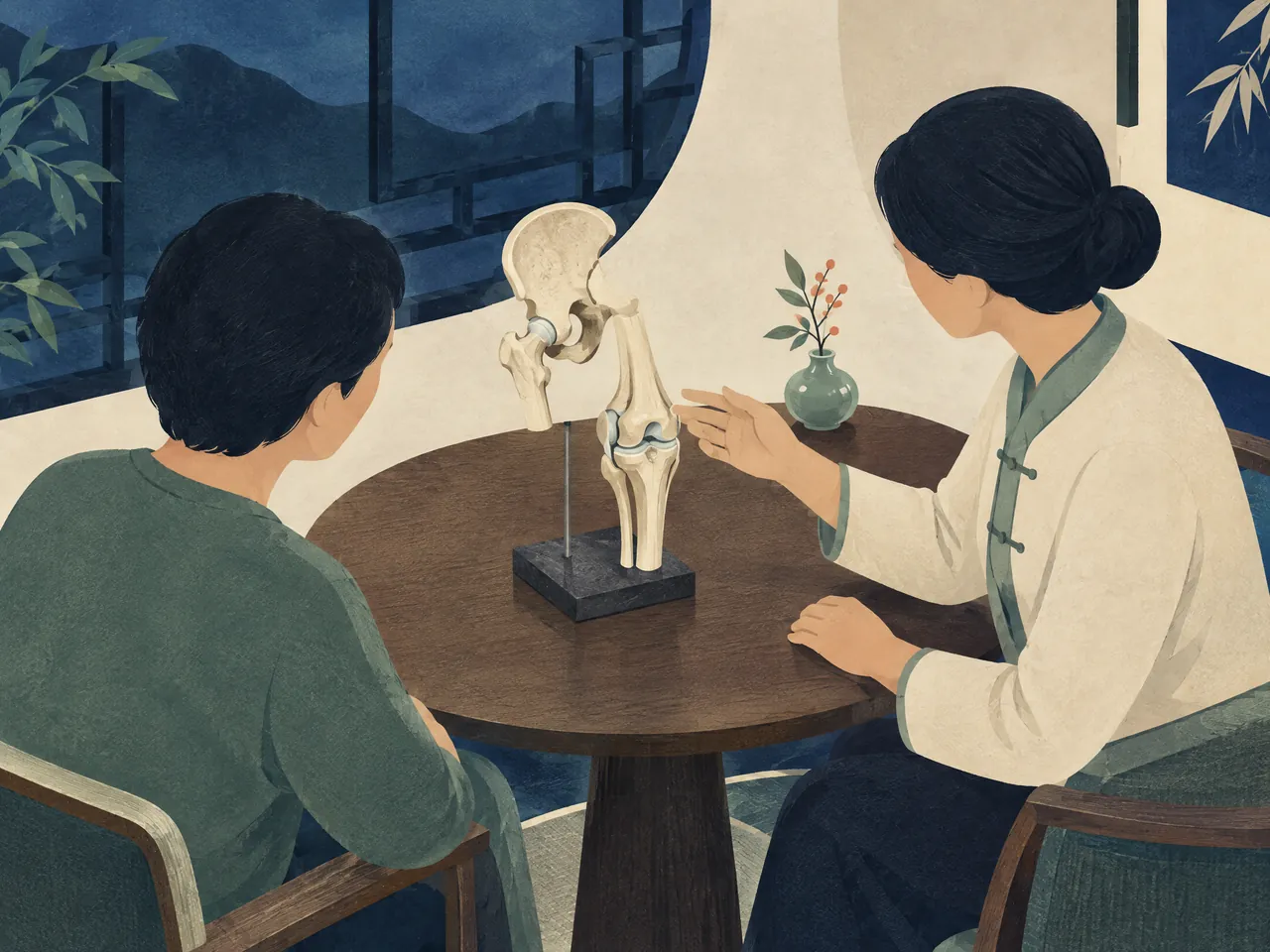
Pacing means separating a movement that is tolerable from one that repeatedly sets the knee off. For example, a person whose knee aches after a long retail shift may try more seated tasks or brief breaks; someone bothered on stairs can use a handrail and take one step at a time. It can help to note which activity caused symptoms, how long they lasted, whether swelling appeared, and whether the knee was generally worse the next morning. This record is more useful to a clinician than an attempt to label the problem from one painful spot. Explore knee pain location for a focused discussion of location as a clue rather than a self-diagnosis.
Gentle range of motion within comfort — knee pain ice or heat: Should I use ice or heat for knee pain? What can I do for knee pain at home?
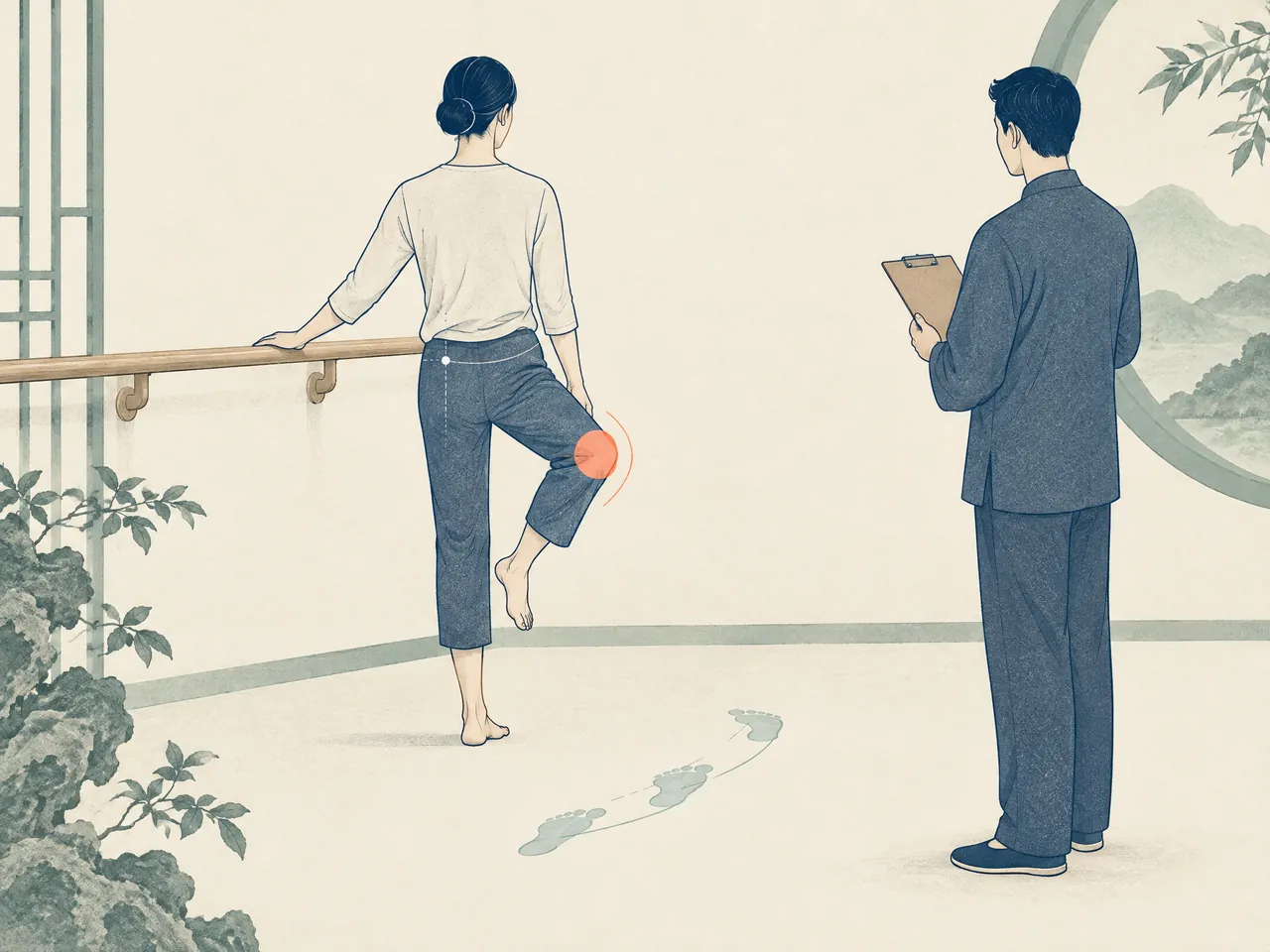
If there are no urgent warning signs and you can control the movement, an easy bed-based knee bend can be a low-load way to see what range is comfortable. Lie on a stable bed or safe flat surface with both legs comfortably straight. Slide the heel of the sore side slowly towards you to bend the knee only as far as feels comfortable, pause briefly if comfortable, then slide the heel back out. Do not use your hands to force a bend and do not press the knee hard into a locked or painful end position. This is general movement information, not a personalised rehabilitation prescription. [2]
Start with a small range and a small amount rather than trying to match the other leg. The useful limit is the response during and after movement: stop if there is new pain, steadily increasing pain, giving way, catching, or a marked increase in swelling. A knee can be a little sensitive while it is recovering, but do not automatically add repetitions when the whole knee is more painful later or the next morning. If you need a more specific progression for a confirmed problem, ask a qualified clinician what is appropriate; this page on What exercises are safe for knee pain? explains why the starting exercise should match the situation.
Reduce aggravating tasks and avoid long standing — knee pain ice or heat: Should I use ice or heat for knee pain? What can I do for knee pain at home?
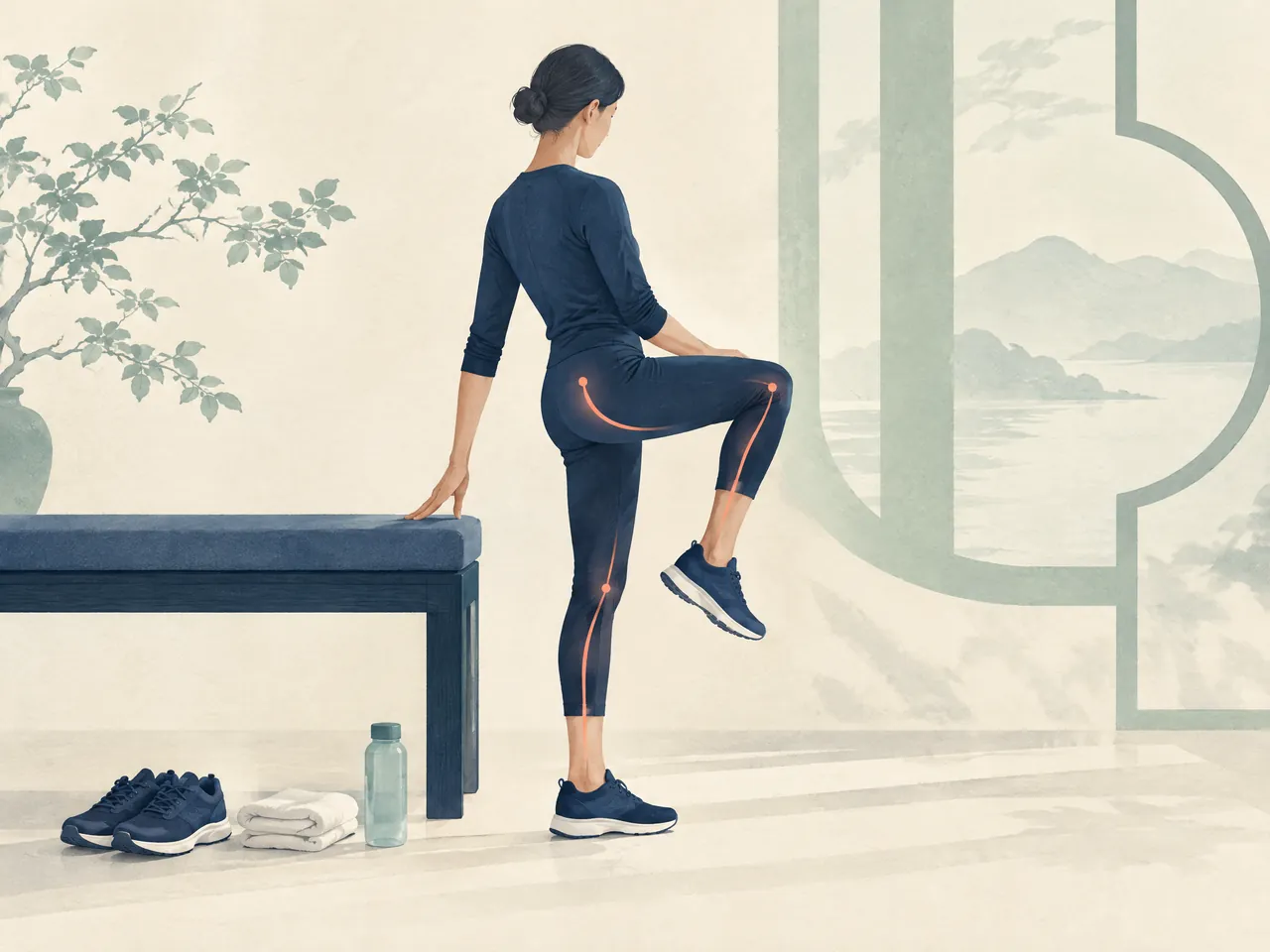
For the next few days, make daily tasks easier where you can. Break standing chores into shorter blocks, keep frequently used items within reach, and postpone deep kneeling, heavy lifting, running, jumping, or repeated deep squats until pain and movement are improving. On stairs, a handrail can add stability; NHS Inform suggests leading with the good leg going up and the problem leg going down to reduce strain. These are ways to reduce a provoking load, not rules that diagnose the source of pain. [2]
If you have diagnosed knee osteoarthritis, the long-term plan is different from an acute-injury plan. NICE describes therapeutic exercise tailored to the person as a core treatment, with weight management when appropriate for people living with overweight or obesity. That does not mean every person with knee pain should try to lose weight, and it does not make heat, ice, or one home exercise a substitute for assessment. Use knee pain self management to organise questions for a consultation and to consider how symptoms affect work, stairs, sleep, and walking. [3]
Warning signs and when to get help — knee pain ice or heat: Should I use ice or heat for knee pain? What can I do for knee pain at home?
Home care has a clear boundary. It may be reasonable for a mild, improving problem without serious trauma or red flags, but it should not delay assessment when function is suddenly poor. NHS advises urgent help if you cannot move the knee or put weight through it, it is badly swollen or changed shape, or pain is very severe. A fall from height, a direct major blow, or immediate major swelling after a twisting injury also deserve prompt attention. Put the packs and exercises aside until you have been assessed. [1] [2]
Arrange clinical advice when the picture is not improving rather than repeatedly changing self-care techniques. NHS says to seek assessment if knee pain does not improve within a few weeks, while NHS Inform advises speaking to a healthcare professional if a new knee problem has not improved after six weeks of its self-help approach. The right timing for an individual can be earlier when symptoms are escalating, work or walking is becoming difficult, or there is uncertainty about safe activity. Bring a concise history: how it started, whether there was a twist or impact, swelling, loss of motion, and what helps or aggravates it. [1] [2]

Locking or giving way — knee pain ice or heat: Should I use ice or heat for knee pain? What can I do for knee pain at home?
A knee that truly locks, gives way, or cannot be straightened normally is not a situation to work through with stronger stretching. NHS lists locking or giving way among reasons to obtain urgent advice, and notes that instability after an injury can occur with ligament, tendon, or meniscus problems. The terms are often used loosely, so describe exactly what happened: did the knee become stuck, buckle while standing, catch painfully, or feel unreliable on stairs? A clinician can combine that history with an examination rather than relying on an internet label. [1]
Until you have advice, avoid testing the knee with pivots, deep bends, sports, or repeated stairs simply to see if it will lock again. Choose a safer route, use a rail if you must manage stairs, and ask someone to help if balance is uncertain. A painless click by itself is not the same as a locked or unstable knee, but pain, swelling, reduced movement, or giving way changes the urgency. Cold may be used for comfort only if it is otherwise safe; it does not correct a mechanical problem. [1]
Fever, redness, deformity, or inability to bear weight — knee pain ice or heat: Should I use ice or heat for knee pain? What can I do for knee pain at home?
Seek urgent medical advice for a knee that is hot or red with a high temperature, or when you feel hot, cold, or shivery; NHS warns that this combination can signal infection. Urgent assessment is also appropriate if the knee has changed shape, is very swollen, or you cannot bear weight. Do not cover these signs with a heat pack, vigorous massage, or an attempt to exercise through them. Tell the clinician about any recent injury, wound, medical condition, or new symptoms, and seek emergency help according to local services if you are severely unwell. [1] [2]
For knee pain that is not urgent but remains troublesome, assessment can clarify the cause and the safest next step. A Registered Chinese Medicine Practitioner may discuss traditional Chinese medicine as part of a broader conversation after appropriate assessment, but it should not replace urgent evaluation and should not be presented as a guaranteed cure. For confirmed osteoarthritis, NICE specifically says not to offer acupuncture or dry needling to manage the condition, while recommending tailored therapeutic exercise and weight management where appropriate. If you would like to ask about an appointment after non-urgent assessment, contact a Kwun Tong Chinese medicine clinic or a Chinese medicine clinic Prince Edward to discuss availability. [3]
Care and health guide
Knee discomfort: care information
This directory brings together services, reading, and visit information related to knee discomfort, to help you prepare questions for a consultation.
When knee discomfort affects your day, noting when it occurs, its relation to activity, and what you have already tried can help prepare a consultation; Chinese medicine pain management Hong Kong is a relevant service or reading entry point.
Individual circumstances differ, and acupuncture Hong Kong offers related information to help you understand options and prepare questions.


Your questions, answered
Frequently asked questions
Should I use ice or heat for knee pain after an injury?
When the injury is recent or swelling is present, use a wrapped cold pack rather than heat as a first comfort measure. Keep a towel between the pack and skin, use a brief session, and leave a few hours before repeating it. If the knee is misshapen, severely swollen, cannot bear weight, locks, or gives way, seek prompt medical advice instead of relying on self-care. [1] [2]
What can I do for knee pain at home if it is mild?
Reduce the activity that clearly aggravates the knee, avoid long periods standing, and keep the knee moving gently within comfort if you have no warning signs. A small heel-slide movement on a bed can be a low-load option; do not force the bend. Keep track of swelling, movement, and whether the overall knee is worse later or the next morning. [2]
How long should I use an ice or heat pack on my knee?
NHS Inform says that heat or ice is generally used for up to 15 minutes with a few hours between treatments. Never apply either directly to skin. Stop and seek advice if the skin becomes more red, discoloured, or blistered, or if symptoms worsen. People with circulation or sensation problems should not use packs without clinical advice. [2]
When should I stop home care for knee pain and seek help?
Get urgent medical advice for severe pain, inability to move or bear weight, a badly swollen or deformed knee, locking or giving way, or fever or chills with redness and heat around the knee. For a non-urgent but persistent problem, arrange assessment rather than continuing to experiment with heat, ice, or exercise. [1]
Sources and further information
- [1] NHS: Knee pain
Referenced for: Official guidance on knee-pain self-care, cold-pack use, causes, and urgent warning signs.
- [2] NHS Inform: Knee problems
Referenced for: Official guidance on cold versus warmth, towel barriers, up-to-15-minute sessions, activity pacing, movement, and when to seek help.
- [3] NICE: Osteoarthritis in over 16s—diagnosis and management
Referenced for: Guideline recommendations for therapeutic exercise, weight management where appropriate, and acupuncture or dry needling in osteoarthritis.