
TCM Lab · Health reading
Can acupuncture help with hair loss? Can Chinese medicine help with hair loss? How does Chinese medicine explain hair loss?
Published Updated
Hair shedding can be frustrating: more hair in the shower, a wider parting, a receding hairline, or a visible patch. So, can acupuncture help with hair loss? It may be discussed as a complementary option after a consultation, but it is not a proven or guaranteed way to regrow hair. Chinese medicine uses a pattern-based view of qi, blood, and organ systems to discuss hair and scalp concerns. That view should sit alongside, not replace, an assessment of possible causes. Hair loss can be temporary after illness, stress, weight loss, or iron deficiency, while pattern baldness often runs in families; the NHS advises seeking medical advice if hair loss is worrying you [1].
Appointments are confirmed through WhatsApp. If you have language requirements, please mention them in your enquiry.
The short answer
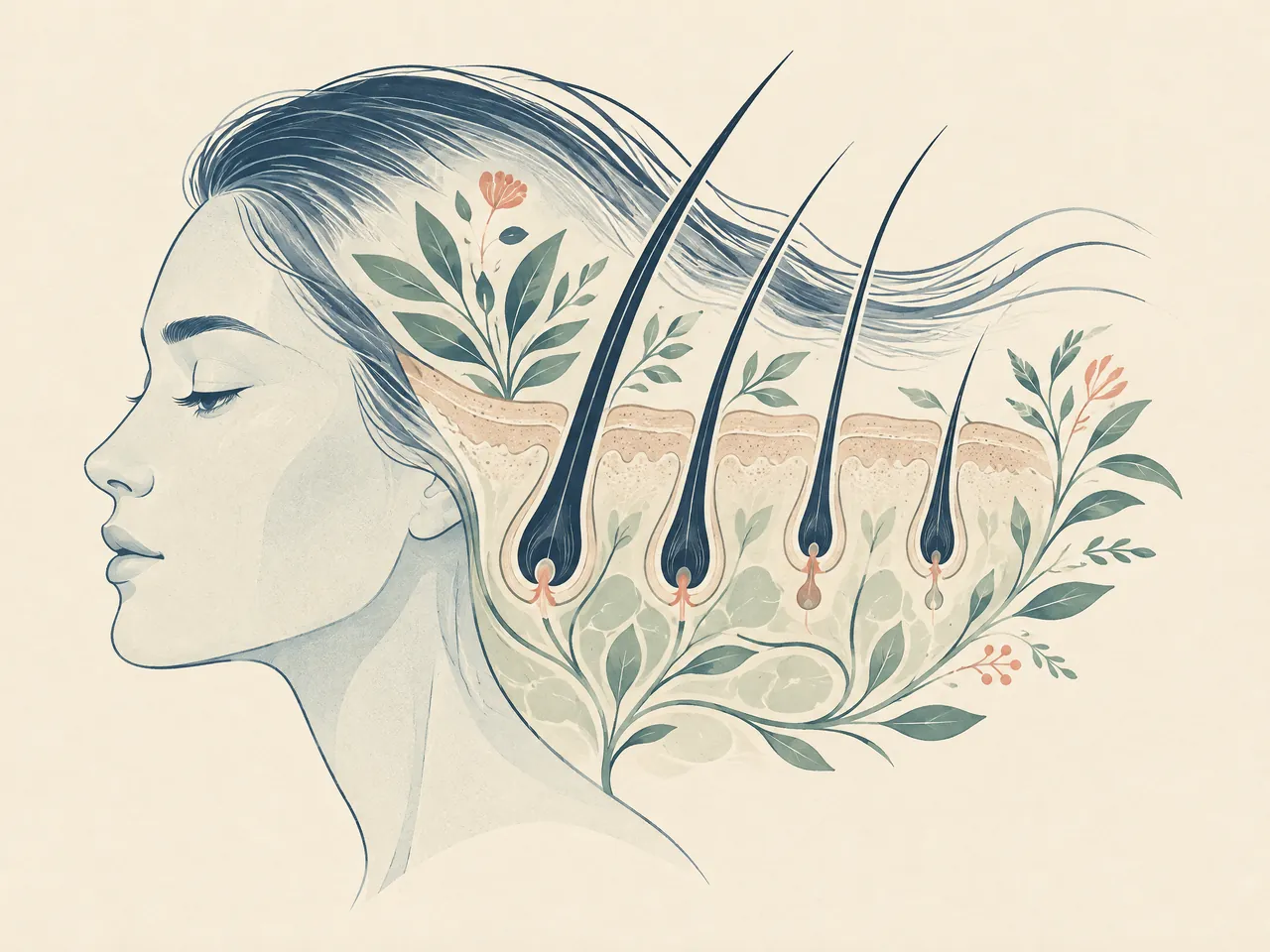
Acupuncture and Chinese medicine may be considered as complementary, individualised options for hair-loss concerns, but current research does not establish a guaranteed regrowth result. In traditional Chinese medicine, hair is discussed in relation to qi, blood, and Liver, Kidney, and digestive patterns. These are traditional concepts rather than confirmed biological explanations. A changing, persistent, or distressing pattern of hair loss deserves appropriate medical assessment while you consider any complementary care.
Transparent pricing
See the fees.
Choose your care.
Explore our complete official price list, including first-trial prices, regular prices, packages and branch-specific options.
Opening WhatsApp prepares an enquiry; it does not send a message, take payment or confirm an appointment. Suitability and individual arrangements are confirmed during consultation.
Hair and scalp
All prices in HKDScalp health and hair-loss management
Includes AI scalp analysis, deep scalp and follicle cleansing, and scalp oil-control care.
HK$380 (first trial)
Regular price: HK$680
- 6 sessions: HK$3,480 (HK$580 per session)
- 12 sessions: HK$5,760 (HK$480 per session)
- 20 sessions: HK$8,600 (HK$430 per session)
- 30 sessions: HK$11,400 (HK$380 per session)
Hair acupuncture and Chinese herbal medicine package
Includes scalp acupuncture and 3 days of Chinese herbal medicine that does not require decoction.
HK$580 (single session)
Registered Chinese Medicine Practitioner consultation
- 6 sessions: HK$3,180 (HK$530 per session)
- 12 sessions: HK$5,760 (HK$480 per session)
- 20 sessions: HK$8,600 (HK$430 per session)
- 30 sessions: HK$11,400 (HK$380 per session)
Combined hair and scalp treatment
Combines acupuncture and Chinese herbal medicine with salon-level scalp and follicle care. Packages include complimentary hair-care shampoo and serum.
HK$1,260 (single session)
Combined treatment
- 8 sessions: HK$8,640 (HK$1,080 per session)
- 16 sessions: HK$15,680 (HK$980 per session)
- 20 sessions: HK$18,600 (HK$930 per session)
- 30 sessions: HK$26,400 (HK$880 per session)
Weight management
All prices in HKDFull-body acupoint embedding for weight management
Includes full-body acupoint embedding. Packages include complimentary Chinese herbal medicine for weight management, with the number of included days scaled to the package. Embedding material and the individual treatment arrangement are confirmed during consultation; this is not a cosmetic thread lift.
HK$980 (single session)
No trial session
- 10 sessions: HK$7,800 (HK$780 per session)
- 20 sessions: HK$14,600 (HK$730 per session)
- 30 sessions: HK$20,400 (HK$680 per session)
Facial acupuncture
All prices in HKDFacial acupuncture (basic)
Includes facial acupuncture and meridian-based facial care, including care for facial puffiness.
HK$480 (first trial)
Regular price: HK$680
- 10 sessions: HK$5,200 (HK$520 per session)
- 20 sessions: HK$9,600 (HK$480 per session)
- 30 sessions: HK$13,500 (HK$450 per session)
Facial acupuncture (advanced)
Includes enhanced facial acupuncture with a specially formulated moisturising mask and serum.
HK$780 (first trial)
Regular price: HK$1,180
- 10 sessions: HK$9,000 (HK$900 per session)
- 20 sessions: HK$16,600 (HK$830 per session)
- 30 sessions: HK$23,400 (HK$780 per session)
Pain care
All prices in HKDExtracorporeal shockwave treatment
Shockwave treatment for deep-tissue and fascial care. The Kwun Tong clinic offers the multi-area options shown below.
Priced by branch
Branch-specific pricing
Prince Edward: HK$250 per area
Kwun Tong: HK$250 for 1 area / HK$450 for 2 areas / HK$600 for 3 areas
Pain care (manual therapy)
Includes Chinese medicine musculoskeletal assessment, manual joint techniques and tui na.
HK$580 (single session)
Chinese medicine musculoskeletal assessment
Pain care (acupuncture and manual therapy)
Combines acupuncture and manual therapy.
HK$680 (single session)
Combined care
Chinese medicine
All prices in HKDAcupuncture and Chinese herbal medicine package
Includes a Chinese medicine consultation with pulse assessment, body acupuncture and 3 days of Chinese herbal granules that do not require decoction.
HK$580 (single session)
Chinese medicine consultation with pulse assessment
Can acupuncture help with hair loss? Can Chinese medicine help with hair loss? How does Chinese medicine explain hair loss? — Understanding the traditional perspective
The first useful distinction is between a traditional explanation and a biomedical diagnosis. Chinese medicine does not treat every loose hair as the same problem. A consultation commonly starts by listening for the timeline: gradual thinning over years is different from shedding that began after a stressful period, an illness, a major dietary change, or a new medication. The distribution matters too. Diffuse shedding, a widening part, breakage along the hair shaft, and isolated bald areas can lead to different questions. This history helps describe the concern clearly to medical and Chinese medicine practitioners.
In traditional language, practitioners may relate hair quality to the movement and nourishment of qi and blood, then consider the Liver, Kidney, and Spleen or digestive function. These terms belong to a longstanding Chinese medical vocabulary; they do not prove that an organ is damaged or identify a hair-follicle mechanism. Readers looking for a fuller introduction can see our Chinese medicine perspective on hair loss. This distinction prevents a traditional interpretation becoming a promise about hormones, circulation, or follicle activation.
Can acupuncture help with hair loss? Can Chinese medicine help with hair loss? How does Chinese medicine explain hair loss? — Hair, qi and blood in traditional theory
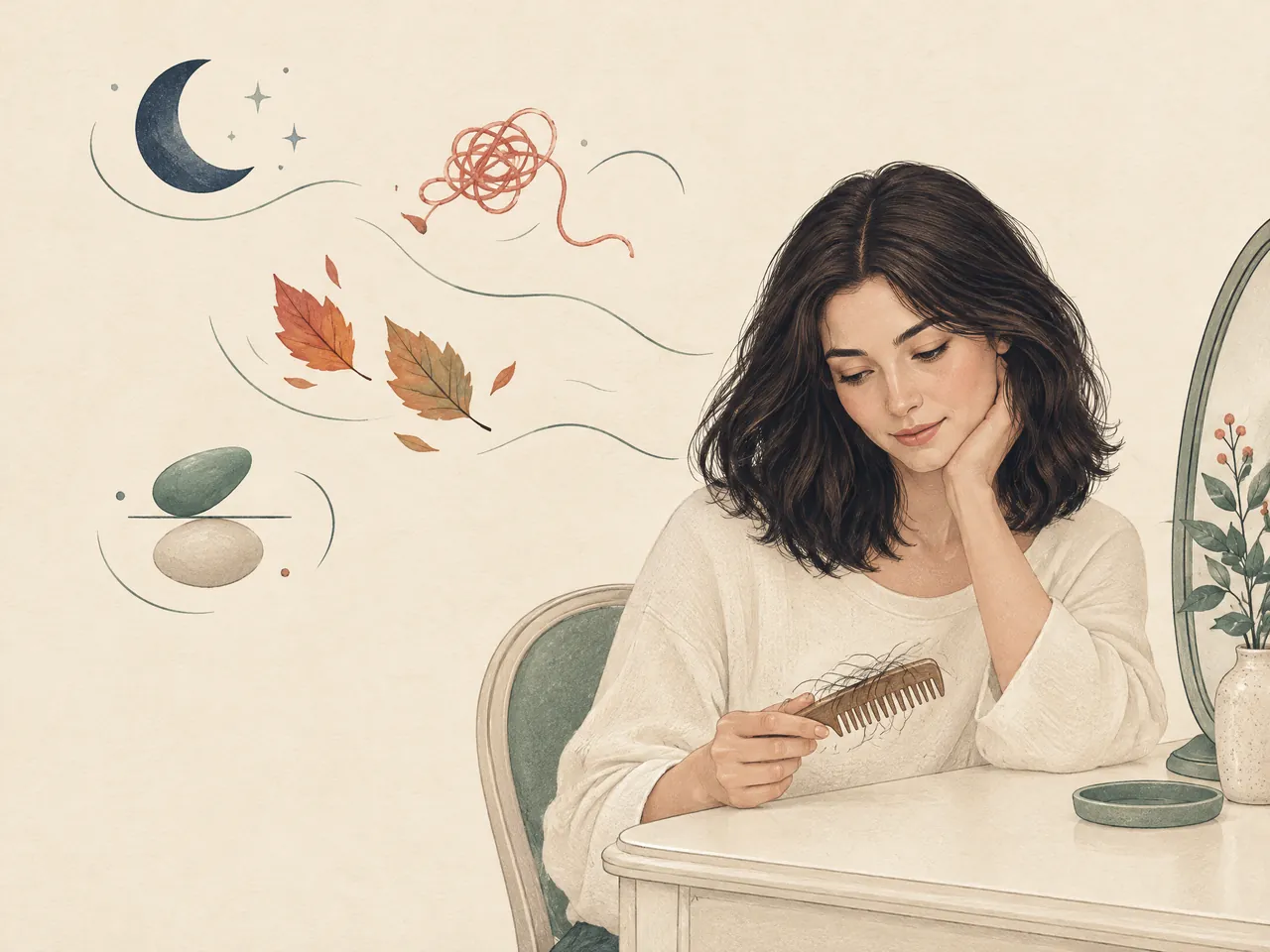
Traditional Chinese medicine often describes the hair as being nourished by blood and supported by the body’s broader vitality. When someone reports dull, dry, fine, or easily broken hair together with tiredness, poor sleep, or a demanding routine, a practitioner may use terms such as qi and blood insufficiency to organise the conversation. That is not the same as diagnosing anaemia, nutritional deficiency, or reduced blood flow to the scalp. Those possibilities require appropriate medical consideration. The value of the traditional account is that it encourages attention to the whole person rather than treating a scalp concern in isolation.
This lens can also help explain why two people with apparently similar thinning may be asked different questions. One may have noticed increased shedding during an intense work period; another may have a long family history of patterned thinning. The NHS notes that stress can be associated with temporary hair loss and that male and female pattern baldness often runs in families [1]. Traditional discussion of qi and blood does not settle which cause applies. Instead, it can shape questions about recovery, daily load, sleep, appetite, and scalp care while the person seeks clarity about the underlying pattern.
Can acupuncture help with hair loss? Can Chinese medicine help with hair loss? How does Chinese medicine explain hair loss? — Liver, kidney and digestive patterns
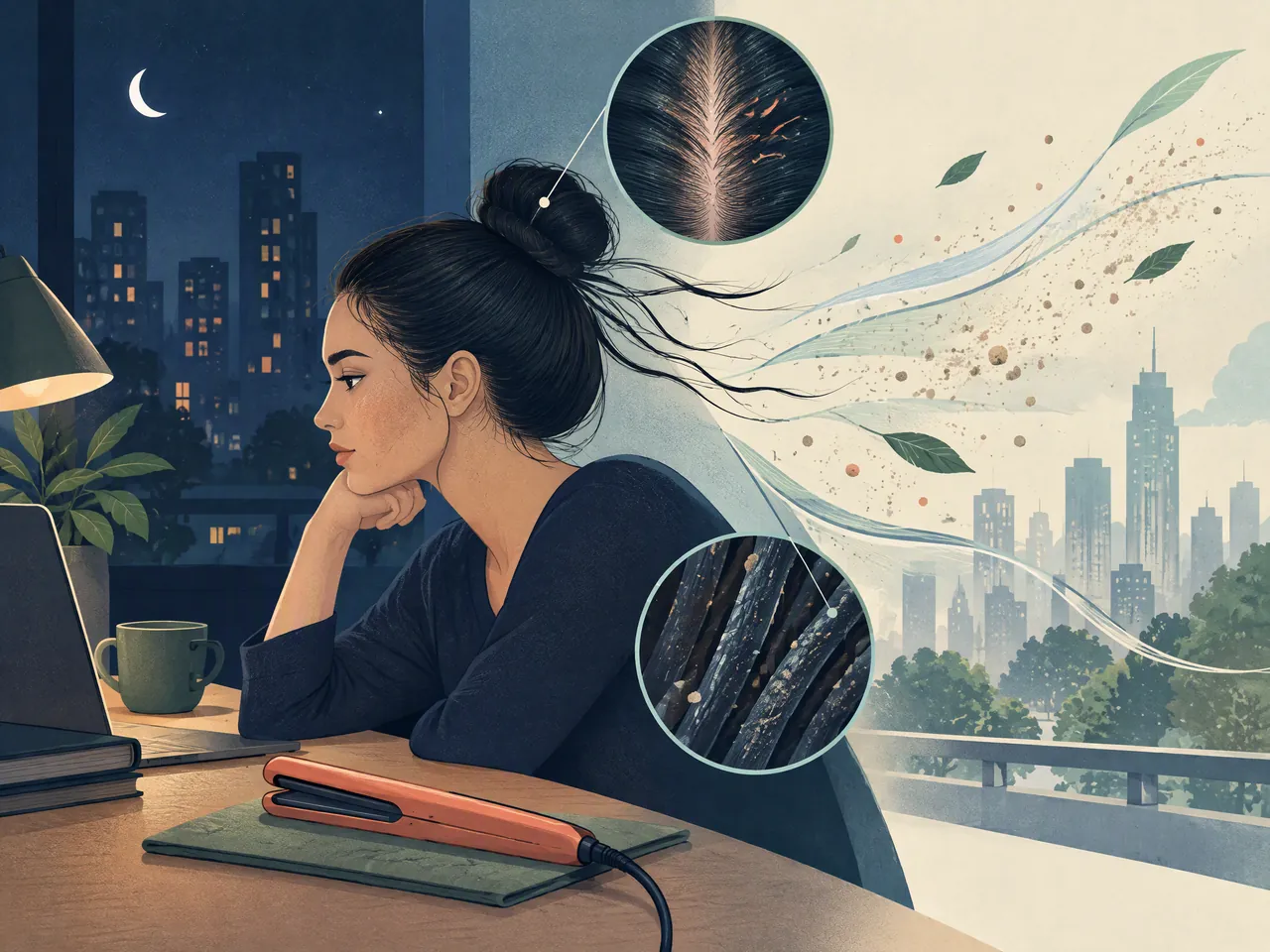
In Chinese medicine, the Liver and Kidney are often mentioned when hair becomes sparse, dry, or changes gradually with age, while digestive function may be discussed when eating patterns, energy, or scalp oiliness are part of the story. A practitioner may also ask whether there is itching, flaking, tenderness, or frequent use of harsh styling products. These observations can guide a traditional pattern discussion, but they do not confirm that a named internal organ is the cause. It is more accurate to describe them as a way of linking a person’s reported symptoms than as a laboratory finding.
People sometimes search for hair thinning and TCM because they want one explanation for every change in density. In reality, hair and scalp changes can overlap with several ordinary life circumstances and medical causes. A helpful consultation makes room for uncertainty: what changed first, how fast did it change, are there other health changes, and what professional assessment has already taken place? That approach is more useful than assigning a label from a photo or assuming that an oily scalp, dry ends, or a family history points to only one cause.
Compare your options
| What you notice or want to know | Useful information to prepare | How it can guide the next conversation |
|---|---|---|
| More hair shedding after a life change | When it began; recent illness, stress, weight change, medicines, or dietary changes | Supports a clear medical history and a traditional discussion of daily load; it does not confirm one cause. |
| Slow thinning or a changing parting | Family history, pace of change, photographs only if you already have them, and current treatments | Helps distinguish a gradual pattern from a sudden change and keeps expectations for complementary care realistic. |
| Itchy, flaky, sore, or irritated scalp | Where it occurs, what products you use, and whether the skin is broken or inflamed | Signals that scalp symptoms need appropriate assessment rather than forceful massage or self-treatment. |
| Considering acupuncture or herbs | All medicines, supplements, allergies, diagnoses, and medical advice already received | Allows a practitioner to discuss suitability, safety, and coordination instead of making a blanket regrowth claim. |
On smaller screens, scroll the table sideways to compare all columns.
Can acupuncture help with hair loss? Can Chinese medicine help with hair loss? How does Chinese medicine explain hair loss? — Approaches discussed after assessment
After the history has been considered, the next question is not simply which treatment is strongest. It is what can reasonably be added without obscuring the cause of hair loss or interrupting needed care. Some people want support for scalp comfort or for the stress that accompanies visible shedding. Others are already following a medical plan and want to ask whether acupuncture or Chinese herbal medicine is appropriate alongside it. In either situation, bring a list of medicines, supplements, allergies, recent diagnoses, and any scalp products used. Clear information helps practitioners spot possible reasons to pause, refer, or coordinate care.
The evidence picture requires care. A narrative review of acupuncture and moxibustion for alopecia described the evidence as limited and heterogeneous in both protocols and outcome measures, and called for randomised studies against current first-line treatments [3]. That means encouraging anecdotes or a short-lived change in shedding cannot show that acupuncture has regrown hair. An honest discussion can still cover what a session involves, what is known and unknown, and how a person would decide whether continuing feels worthwhile—without setting a fixed course, claiming hormonal regulation, or guaranteeing an outcome.
Can acupuncture help with hair loss? Can Chinese medicine help with hair loss? How does Chinese medicine explain hair loss? — Acupuncture and scalp-focused care
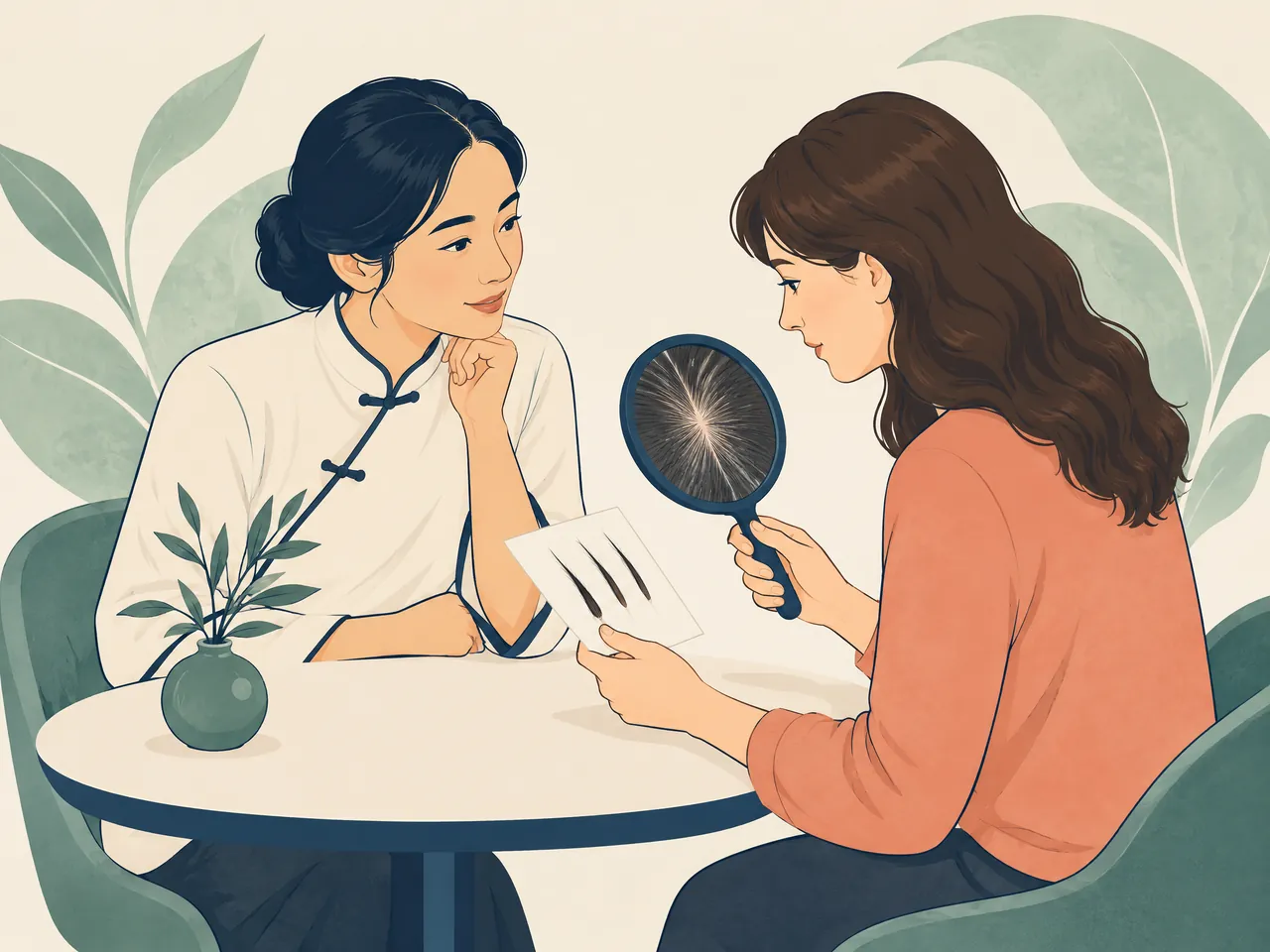
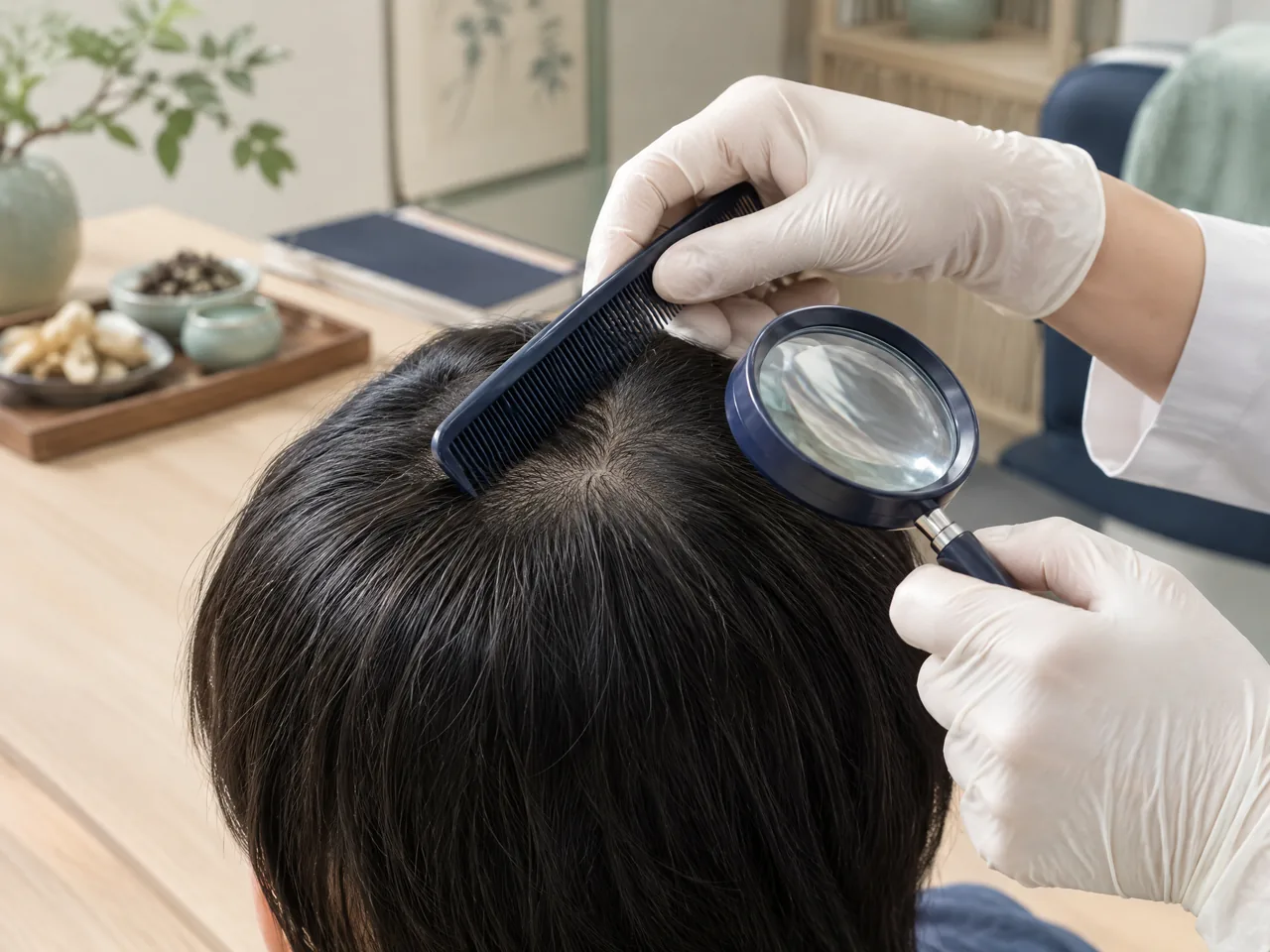
Acupuncture involves inserting fine needles into the skin. For a hair-loss consultation, a practitioner may discuss points on the body and, where appropriate, areas near the scalp within a traditional treatment plan. Some traditional approaches also refer to light scalp tapping with a multi-needle tool. It is important not to translate these practices into claims that dormant follicles will be switched on, that blood supply has been measured as improved, or that hair loss has been cured. The experience, suitability, and response can differ substantially between people, and a scalp with an active rash, infection, wound, or marked tenderness needs appropriate attention rather than vigorous self-treatment.
Safety is a practical reason to choose qualified care and to share your health information. The U.S. National Center for Complementary and Integrative Health notes that complications are relatively uncommon but that nonsterile needles and improper treatment can cause serious adverse effects; it also advises people not to postpone seeing a healthcare provider about a health problem [2]. Ask about hygiene, explain if you use medicines that affect bleeding or have a relevant health condition, and say if the scalp feels sore during care. For readers considering a visit, Chinese medicine clinic Prince Edward gives the location information for one TCM Lab practice setting.
Can acupuncture help with hair loss? Can Chinese medicine help with hair loss? How does Chinese medicine explain hair loss? — Herbal medicine and individual prescribing
Chinese herbal medicine is sometimes discussed after a traditional assessment, but a hair-loss search should not become a shopping list. A formula is selected, if it is selected at all, in the context of the individual’s symptoms, health history, current medicines, and traditional presentation. Two people with thinning hair may not be offered the same approach, and no herb can be assumed to be suitable just because it is associated online with hair. Self-prescribing concentrated products or combining multiple remedies makes it harder to identify interactions, unwanted effects, or the real cause of a new symptom.
If herbal care is being considered, prepare a current list of prescribed medicines, over-the-counter products, supplements, and relevant diagnoses, then ask what the proposed formula is intended to address in traditional terms. Ask how to report new symptoms and whether other clinicians should be informed. This makes room for a cautious, individual conversation rather than an unverified claim of regrowth. Our article Can Chinese herbal medicine help hair regrowth? explores the same question with the necessary limits: traditional use does not establish a guaranteed biological effect.
Can acupuncture help with hair loss? Can Chinese medicine help with hair loss? How does Chinese medicine explain hair loss? — Practical next steps and safety
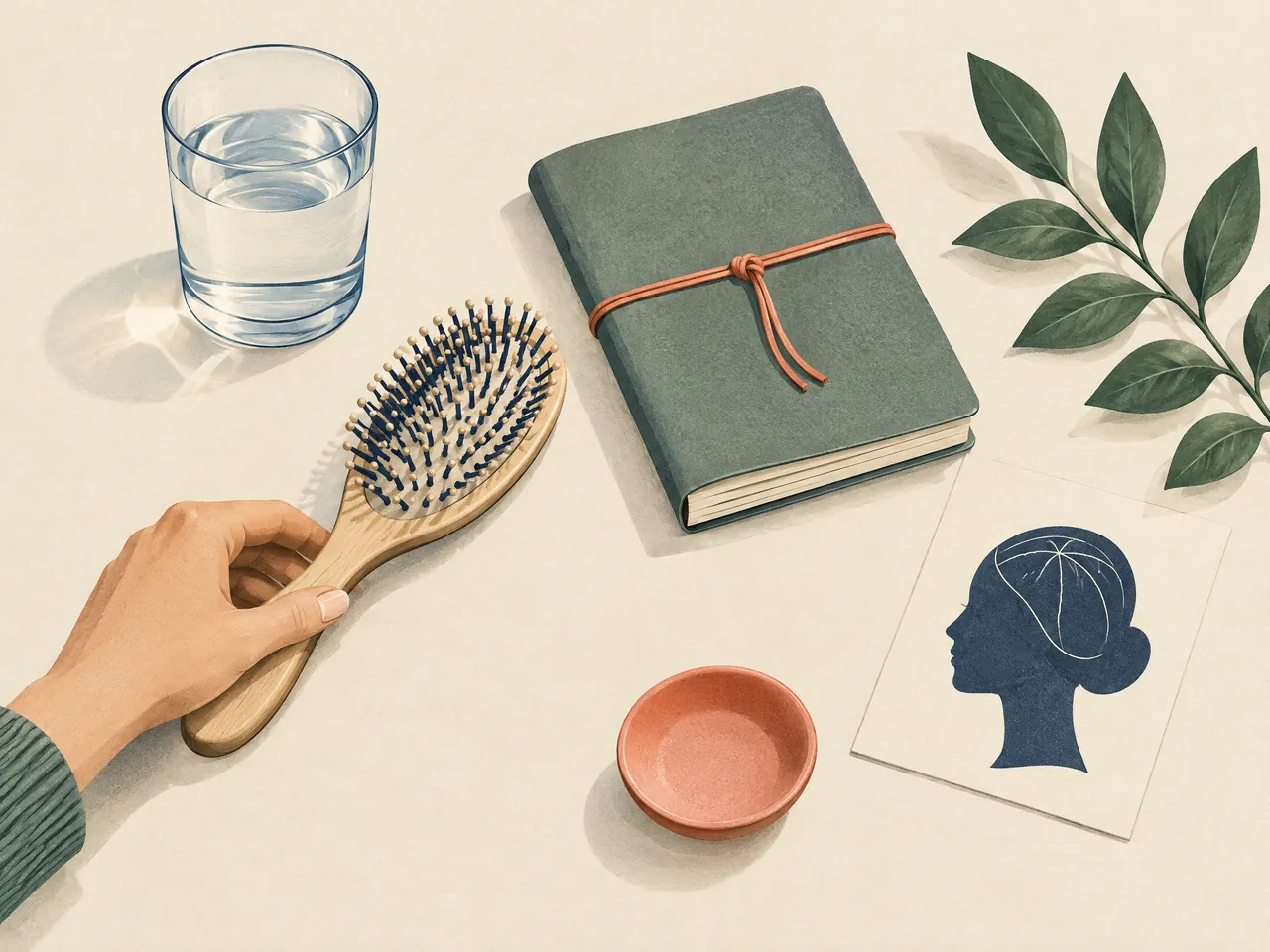
A practical next step is to record the pattern before trying to solve it. Note when you first noticed the change, whether it is shedding, breakage, thinning, or patches, and whether the scalp is itchy, flaky, sore, or otherwise uncomfortable. Include recent illness, major stress, weight change, family history, and any changes in medicines, diet, hairstyles, or hair products. A few clear observations are more useful at a consultation than counting every hair. This record does not diagnose the cause, but it makes it easier to explain what is happening and to notice whether the pattern is changing.
Medical assessment should remain part of the plan when hair loss is persistent, worsening, sudden, patchy, accompanied by scalp symptoms, or affecting wellbeing. The NHS advises seeing a GP if you are worried about hair loss and recommends clarifying the cause before going to a commercial hair clinic [1]. That principle applies before relying on any complementary service as well. If you choose Chinese medicine, tell the practitioner what medical advice or treatment you are receiving. Complementary care is safest when it is not used to delay assessment or replace a treatment that is important for a diagnosed condition.
Can acupuncture help with hair loss? Can Chinese medicine help with hair loss? How does Chinese medicine explain hair loss? — Daily care, stress and nutrition
Daily care is best treated as supportive rather than as a cure. Aim for regular meals with a range of foods, adequate sleep where possible, gentle cleansing suited to your scalp, and a styling routine that does not repeatedly pull or irritate the hair. Avoid assuming that a single food, supplement, oil, or massage technique will prevent shedding. A steady routine can be worthwhile because it reduces avoidable strain and helps you notice genuine changes, but it cannot tell you why follicles are behaving differently. If changes followed a particularly stressful period, our page on hair loss from stress provides a focused discussion to take into a wider assessment.
Scalp massage and acupressure are often presented as low-effort ways to support hair. Use a light touch if it feels comfortable, and do not scratch, rub aggressively, or massage over broken or inflamed skin. It is reasonable to stop if it increases discomfort. Equally, stress support is not a test of personal discipline: visible hair changes can be upsetting, and the NHS recognises that hair loss may affect wellbeing [1]. Choose practical forms of support that fit your routine—rest, talking to someone, or seeking professional help—rather than treating stress as the sole explanation for every case.

Can acupuncture help with hair loss? Can Chinese medicine help with hair loss? How does Chinese medicine explain hair loss? — When to seek medical advice
Do not wait for a complementary appointment if the change is rapid, there are distinct bald areas, the scalp is painful or visibly inflamed, or you have other new symptoms that concern you. These details are worth sharing with an appropriate healthcare professional promptly. The same is true if shedding is causing significant distress or you are unsure whether a medicine, supplement, illness, or nutritional change could be involved. The point is not to assume the worst; it is to make sure the cause is assessed before time and money go into approaches that may not fit the problem.
Once you have decided what you want to ask, a consultation can be more focused: describe the hair pattern, bring your relevant health information, state your goals, and ask what is realistic to expect. TCM Lab enquiries can be directed to the Kwun Tong Chinese medicine clinic or the Prince Edward location, with appointment details confirmed directly. Before arranging a visit, review the Chinese medicine clinic price list Hong Kong and use WhatsApp +852 6940 5663 to ask about availability and any language needs. No consultation should be sold as a guaranteed route to regrowth.
Care and health guide
Hair and scalp care information
This directory brings together services, reading, and visit information related to hair and scalp care, to help you prepare questions for a consultation.
For questions about hair or scalp care, noting the everyday concerns and service questions you want to discuss can help prepare a consultation; Chinese medicine for hair loss is a relevant service or reading entry point.
People may have different priorities, and acupuncture Hong Kong offers related information to help you understand options and prepare questions.

Your questions, answered
Frequently asked questions
Can acupuncture help with hair loss?
Acupuncture may be discussed as a complementary option after an individual assessment, but it is not a proven or guaranteed way to regrow hair. A review of acupuncture and moxibustion studies in alopecia found the evidence limited and varied in methods and outcomes [3]. Clarify the cause of hair loss and discuss any complementary treatment with relevant healthcare practitioners.
Can Chinese medicine help with hair loss?
Chinese medicine may offer a pattern-based consultation that considers hair changes alongside sleep, stress, diet, scalp symptoms, health history, and current medicines. Acupuncture or individually prescribed herbal medicine may be discussed, but the potential benefit is uncertain and person-specific. It should not replace assessment of a possible medical cause.
How does Chinese medicine explain hair loss?
Traditional Chinese medicine commonly relates hair to qi, blood, and the Liver, Kidney, and digestive systems. Those terms are traditional concepts used to organise a pattern-based discussion; they are not confirmed biological explanations of follicle growth, hormone levels, or a particular diagnosis.
Can I buy Chinese herbs for hair loss without a consultation?
It is better not to self-prescribe. Herbal choices depend on the person’s health history, symptoms, current medicines, and traditional presentation. Bring a full list of medicines and supplements to a registered Chinese medicine practitioner, and do not use complementary care to delay medical advice about a concerning hair-loss pattern.
When should I seek medical advice about shedding or thinning?
Seek appropriate medical advice if you are worried about hair loss, especially if it is sudden, patchy, worsening, associated with scalp symptoms, or affecting your wellbeing. The NHS advises seeing a GP when hair loss is worrying and clarifying the cause before using a commercial hair clinic [1].
Sources and further information
- [1] [1] NHS: Hair loss
Referenced for: Causes and context of hair loss, advice to seek medical assessment, and impact on wellbeing.
- [2] [2] National Center for Complementary and Integrative Health: Acupuncture: Effectiveness and Safety
Referenced for: General acupuncture safety considerations and advice not to postpone healthcare assessment.
- [3] [3] PubMed Central: Efficacy of Acupuncture and Moxibustion in Alopecia: A Narrative Review
Referenced for: The review's conclusion that the alopecia evidence is limited and heterogeneous and needs further controlled research.