
TCM Lab · Health reading
Arch Pain, Heel Pain and Foot Pain from Standing: How to Understand Your Symptoms
Published Updated
A sore foot after a long shift, a queue, or a day of sightseeing is not automatically one condition. Pain directly under the heel, along the arch, at the ball of the foot, or at the back of the heel can point the conversation in different directions. Before deciding that it is plantar fascia trouble—or trying a treatment—notice the exact spot, the timing, the shoes worn, and what your workload looked like in the preceding days. That simple map makes an assessment safer and more useful.
Appointments are confirmed through WhatsApp. If you have language requirements, please mention them in your enquiry.
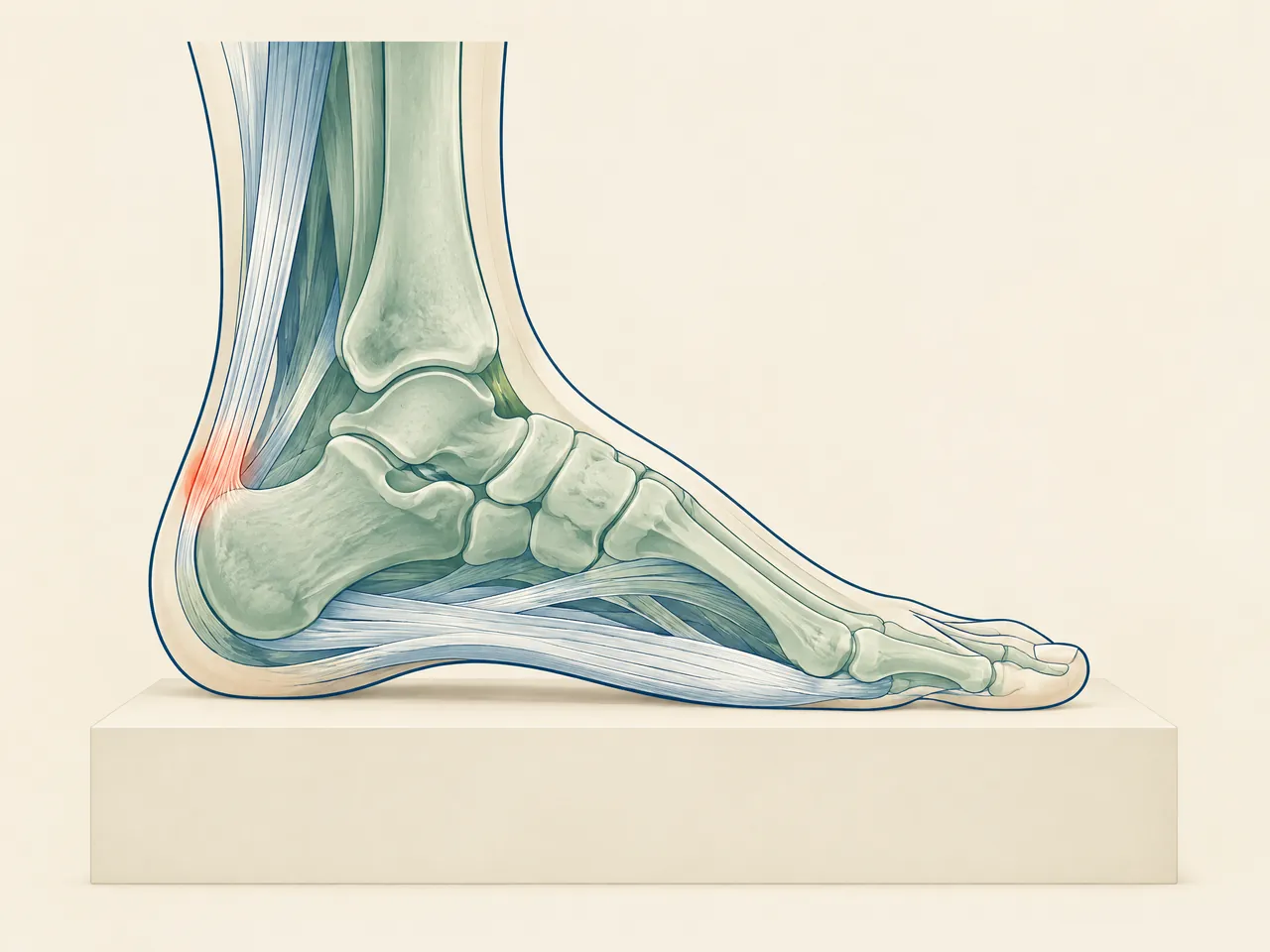
The short answer
Arch pain, heel pain and foot pain from standing are symptom patterns rather than diagnoses. First-step pain and pain under the inner heel can fit plantar fascia-related pain, while burning, numbness, a sudden injury, swelling, or pain in another area needs a different level of attention. Record location, timing, footwear and recent load. Adjusting standing and walking load, using suitable shoes, and seeking an assessment when symptoms persist or show warning signs are sensible next steps.
Transparent pricing
See the fees.
Choose your care.
Explore our complete official price list, including first-trial prices, regular prices, packages and branch-specific options.
Opening WhatsApp prepares an enquiry; it does not send a message, take payment or confirm an appointment. Suitability and individual arrangements are confirmed during consultation.
Pain care
All prices in HKDExtracorporeal shockwave treatment
Shockwave treatment for deep-tissue and fascial care. The Kwun Tong clinic offers the multi-area options shown below.
Priced by branch
Branch-specific pricing
Prince Edward: HK$250 per area
Kwun Tong: HK$250 for 1 area / HK$450 for 2 areas / HK$600 for 3 areas
Pain care (manual therapy)
Includes Chinese medicine musculoskeletal assessment, manual joint techniques and tui na.
HK$580 (single session)
Chinese medicine musculoskeletal assessment
Pain care (acupuncture and manual therapy)
Combines acupuncture and manual therapy.
HK$680 (single session)
Combined care
Hair and scalp
All prices in HKDScalp health and hair-loss management
Includes AI scalp analysis, deep scalp and follicle cleansing, and scalp oil-control care.
HK$380 (first trial)
Regular price: HK$680
- 6 sessions: HK$3,480 (HK$580 per session)
- 12 sessions: HK$5,760 (HK$480 per session)
- 20 sessions: HK$8,600 (HK$430 per session)
- 30 sessions: HK$11,400 (HK$380 per session)
Hair acupuncture and Chinese herbal medicine package
Includes scalp acupuncture and 3 days of Chinese herbal medicine that does not require decoction.
HK$580 (single session)
Registered Chinese Medicine Practitioner consultation
- 6 sessions: HK$3,180 (HK$530 per session)
- 12 sessions: HK$5,760 (HK$480 per session)
- 20 sessions: HK$8,600 (HK$430 per session)
- 30 sessions: HK$11,400 (HK$380 per session)
Combined hair and scalp treatment
Combines acupuncture and Chinese herbal medicine with salon-level scalp and follicle care. Packages include complimentary hair-care shampoo and serum.
HK$1,260 (single session)
Combined treatment
- 8 sessions: HK$8,640 (HK$1,080 per session)
- 16 sessions: HK$15,680 (HK$980 per session)
- 20 sessions: HK$18,600 (HK$930 per session)
- 30 sessions: HK$26,400 (HK$880 per session)
Weight management
All prices in HKDFull-body acupoint embedding for weight management
Includes full-body acupoint embedding. Packages include complimentary Chinese herbal medicine for weight management, with the number of included days scaled to the package. Embedding material and the individual treatment arrangement are confirmed during consultation; this is not a cosmetic thread lift.
HK$980 (single session)
No trial session
- 10 sessions: HK$7,800 (HK$780 per session)
- 20 sessions: HK$14,600 (HK$730 per session)
- 30 sessions: HK$20,400 (HK$680 per session)
Facial acupuncture
All prices in HKDFacial acupuncture (basic)
Includes facial acupuncture and meridian-based facial care, including care for facial puffiness.
HK$480 (first trial)
Regular price: HK$680
- 10 sessions: HK$5,200 (HK$520 per session)
- 20 sessions: HK$9,600 (HK$480 per session)
- 30 sessions: HK$13,500 (HK$450 per session)
Facial acupuncture (advanced)
Includes enhanced facial acupuncture with a specially formulated moisturising mask and serum.
HK$780 (first trial)
Regular price: HK$1,180
- 10 sessions: HK$9,000 (HK$900 per session)
- 20 sessions: HK$16,600 (HK$830 per session)
- 30 sessions: HK$23,400 (HK$780 per session)
Chinese medicine
All prices in HKDAcupuncture and Chinese herbal medicine package
Includes a Chinese medicine consultation with pulse assessment, body acupuncture and 3 days of Chinese herbal granules that do not require decoction.
HK$580 (single session)
Chinese medicine consultation with pulse assessment
Arch Pain, Heel Pain and Foot Pain from Standing: Map the Pattern
Start with a location rather than a label. Put one finger on the most painful place: under the inner heel, through the arch, at the ball of the foot, on the outer border, or behind the heel. Foot pain can occur throughout the foot, and prolonged standing, overuse, injury and poorly fitting shoes are all possible contributors. [1] A location-and-timing record is more useful at assessment than simply saying that the sole hurts. Our guide to foot pain provides a wider overview.
Next, add the clock. Was the first step after getting out of bed the sharpest moment? Does discomfort build only after hours on a hard floor, start during a run, or remain when you are sitting? Record when it began, what changed in that week, whether one foot or both are affected, and whether a lighter day changes the symptoms. A pain score cannot show these differences by itself.

Watch for features that do not fit an ordinary load-related ache. Burning, tingling, electric-shock sensations or numbness can suggest nerve involvement. A wound, redness, heat or fever needs medical attention. New pain after a fall, twist or impact should not be explained away as standing fatigue. For someone with diabetes or a condition affecting blood flow, new foot pain, colour change or broken skin also warrants timely clinical advice. [1]
Arch Pain, Heel Pain and Foot Pain from Standing: Where and When It Hurts
Pain at the bottom of the inner heel or where the heel meets the arch is a common reason to look up plantar fascia information. Some people report uncomfortable first steps after rest, a temporary easing after moving, then a return of symptoms after extended time on their feet. This is a pattern to record, not a diagnosis to make at home. Bottom-of-foot pain can include the arch and ball of the foot, and it has more than one possible cause. [1] Arch pain may feel like a pulling line, a bruised patch or fatigue after standing. Notice whether it is central, close to the inner ankle, or spreads into the heel or forefoot. Heel pain also needs a front-versus-back distinction: pain on the underside is not the same pattern as tenderness behind the heel. Mayo Clinic identifies plantar fasciitis among common causes of pain at the bottom of the heel and Achilles tendinitis among common causes at the back, while noting other possible causes. [2]
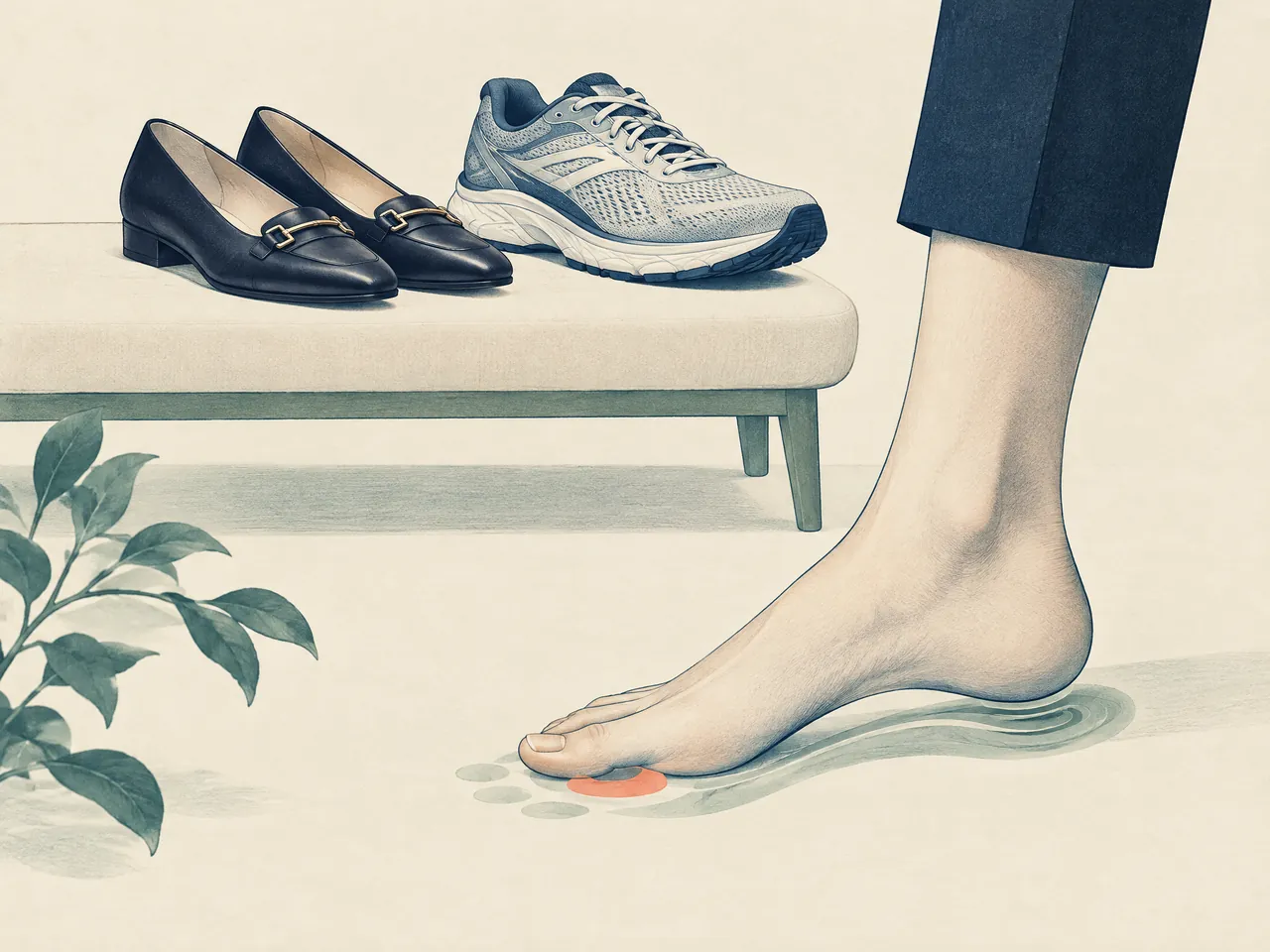
Arch Pain, Heel Pain and Foot Pain from Standing: What Your Daily Load Shows
Daily load is more than sport. It can mean a retail shift with few chances to sit, a longer commute, caring for children, a holiday with much more walking, or a change from trainers to formal shoes. Keep a short diary that names the activity, surface, shoe and symptom response: “ache under right heel after a shift in flat loafers” is clearer than “bad foot today.” Look for changes rather than blaming one day. Did you start a new role, add hill walking, carry heavier bags, or return to exercise after a break? The related guide, What should I do for foot pain after standing or walking?, helps you think through manageable adjustments. Bring the shoes you use most often if practical. Their fit, toe space, sole wear and comfort are useful discussion points. Footwear advice and foot exercise therapy are among the condition-specific approaches described by Queen Mary Hospital’s podiatry service. [3]
Compare your options
| Pattern to record | Why it changes the conversation | Sensible next step |
|---|---|---|
| Pain under the inner heel or into the arch, especially with first steps | This can be consistent with a plantar fascia-related pattern, but it is not diagnostic on its own. | Record first-step, standing and rest symptoms; arrange assessment if it persists or worsens. |
| Pain at the back of the heel or after a sudden push-off | The location differs from sole-of-foot pain and may require a different examination. | Reduce the provoking activity and seek prompt assessment if walking or rising onto toes is difficult. |
| Burning, tingling, numbness or electric-shock sensations | These symptoms may indicate nerve involvement rather than a simple overuse ache. | Do not stretch aggressively; arrange medical assessment, especially if symptoms persist. |
| Pain with marked swelling, redness, wound, fever, injury or inability to bear weight | These are warning signs that should not be managed as routine standing-related soreness. | Seek timely medical care before massage, acupuncture, inserts or exercise changes. |
On smaller screens, scroll the table sideways to compare all columns.
Arch Pain, Heel Pain and Foot Pain from Standing: Possible Causes
It is understandable to search “plantar fasciitis” when the heel or arch hurts after standing, but a symptom is not a diagnosis. Possible explanations include plantar fascia-related pain, soft-tissue strain, a heel-pad issue, tendon or joint problems, nerve symptoms, or an injury involving bone. The appropriate next step depends on the history and examination, particularly after trauma, a marked activity increase, or a change in sensation. [1] [2]
The aim is not to memorise a list of conditions. It is to notice what changes the decision. A familiar dull ache after a long day may support a cautious review of footwear and load. Pain that worsens despite reducing the provoking activity, occurs at rest, or appears with swelling needs earlier clinical input. Repeatedly pressing hard on a painful area can aggravate a problem that has not yet been identified.
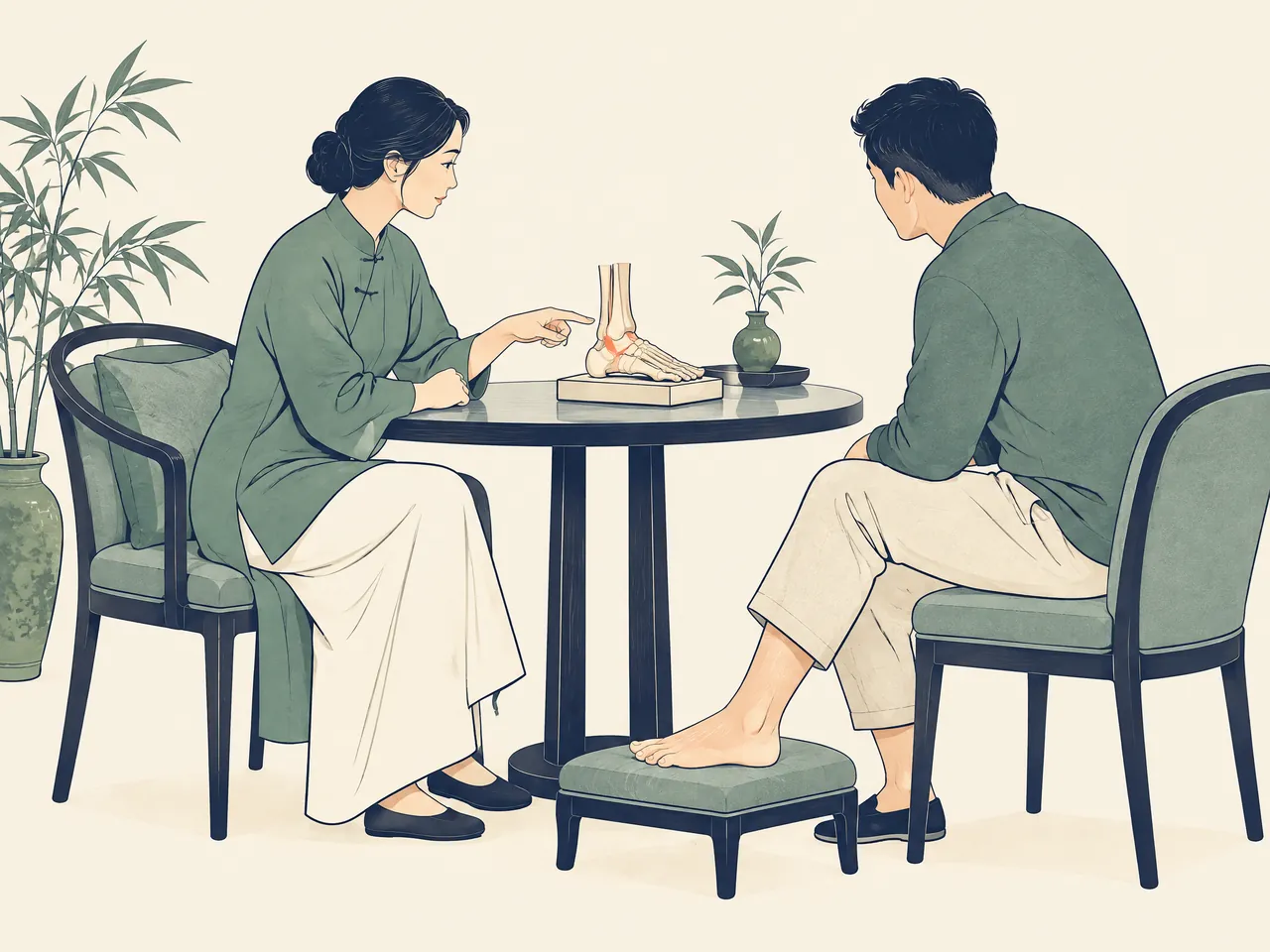
If you are considering Chinese medicine or acupuncture, the same practical information still matters: exact location, onset, provoking activity, footwear, visible changes, and neurological or skin symptoms. Acupuncture should not postpone evaluation of a possible injury, infection or diabetes-related foot problem. It can be discussed only as an adjunct after the situation and its limits are understood, alongside appropriate load management, shoes, exercise or medical care.
Arch Pain, Heel Pain and Foot Pain from Standing: Plantar Fascia and Other Possibilities
The plantar fascia is a band of tissue on the sole. Plantar fascia-related pain is often discussed when discomfort is near the bottom of the heel and may extend toward the arch, particularly when first steps after rest are uncomfortable. Those details are useful clues, but they are not a test. A clinician may need to ask about activity, inspect the foot and ankle, and examine movement and tenderness before deciding whether this is the likely explanation. Read plantar fasciitis for a fuller explanation of that named condition. Other patterns need different questions: heel bruising after impact, local pain after a substantial training change, pain at the back of the heel, and burning or tingling should not all be treated as the same problem. Mayo Clinic lists stress fractures, peripheral neuropathy and tarsal tunnel syndrome among conditions associated with heel pain. [2] This is not a self-diagnosis checklist; it is a reason to avoid assuming that every sore arch has one cause.
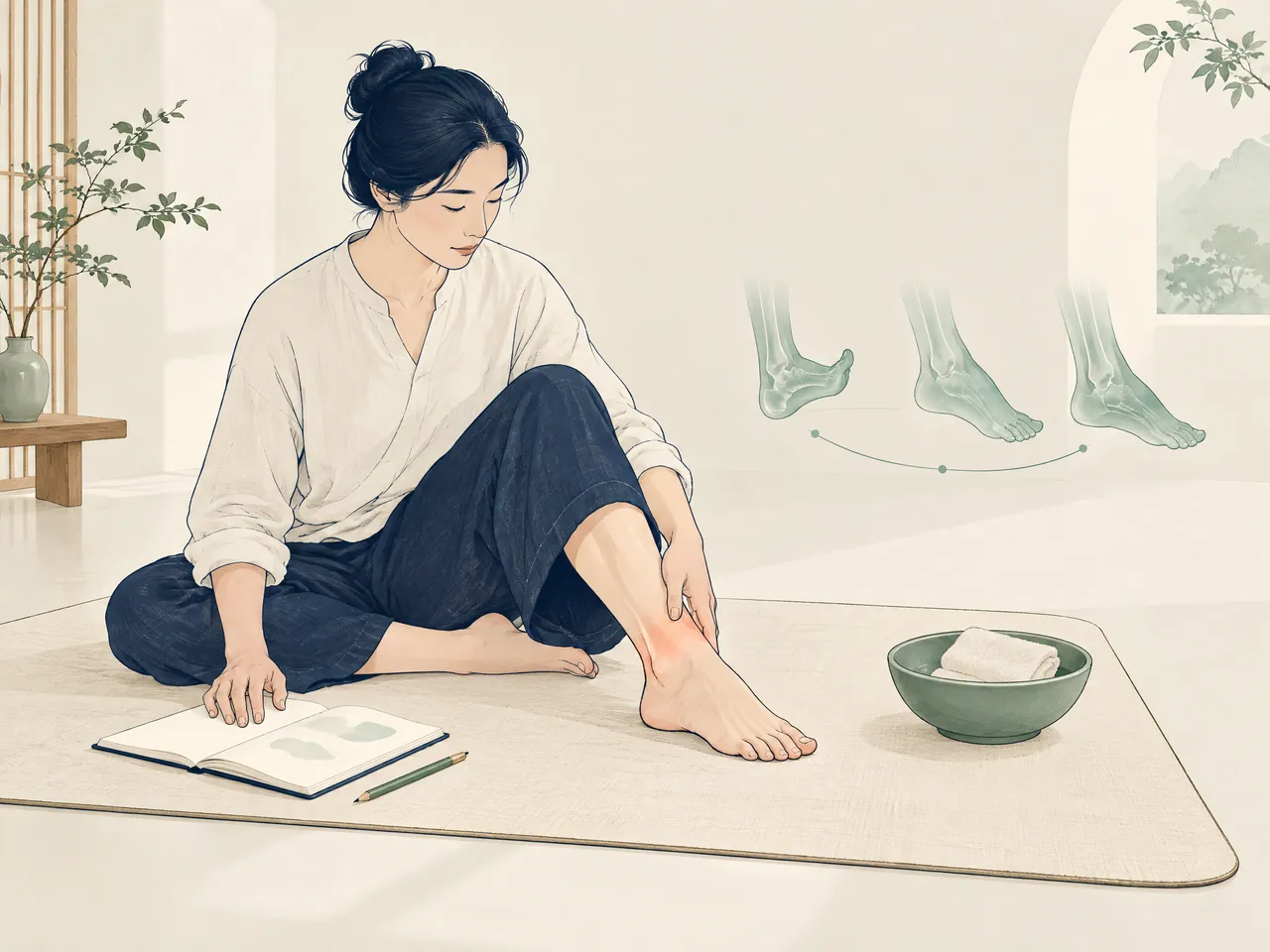
Arch Pain, Heel Pain and Foot Pain from Standing: Why It Is Not One Diagnosis
“Foot pain from standing” describes when symptoms become noticeable, not which tissue is responsible. Standing increases time on the feet but cannot identify whether the source is the heel, arch, forefoot, nerve, joint, skin or another structure. It also does not show whether the amount of standing is new for you. Two people may both hurt at the end of a shift while needing different assessment because one has first-step heel pain and the other has numbness under the forefoot. A careful consultation works from the story outward: when symptoms began, what changed, where pain is strongest, what aggravates or eases it, and whether there is injury, swelling, altered sensation or a medical condition that increases risk. Cleveland Clinic similarly describes questions about location, duration, activity and timing in a foot-pain evaluation. [1] Online material can help you prepare answers, but it cannot replace an individual examination. The comparison table below is a preparation tool, not a diagnosis chart.
Arch Pain, Heel Pain and Foot Pain from Standing: Practical Next Steps
Begin with one small change you can observe. If standing all day aggravates symptoms, build in brief opportunities to sit or change position where work permits, and do not add a new running or hill-walking challenge at the same time. Wear shoes that fit the activity and do not squeeze painful toes or feel unstable. This is not an instruction to buy the most expensive shoe or insert; it is a way to test comfort, fit and symptom response clearly.
Gentle movement and stretching may suit some patterns, but discomfort is not a target. A stretch should not create sharp pain, burning, numbness or a lasting flare. Work gradually instead of starting an intense online routine after a week of doing nothing. If a movement reliably worsens symptoms, stop it and bring that observation to assessment. Persistent, severe or unclear pain needs an individual examination rather than a generic exercise sequence.
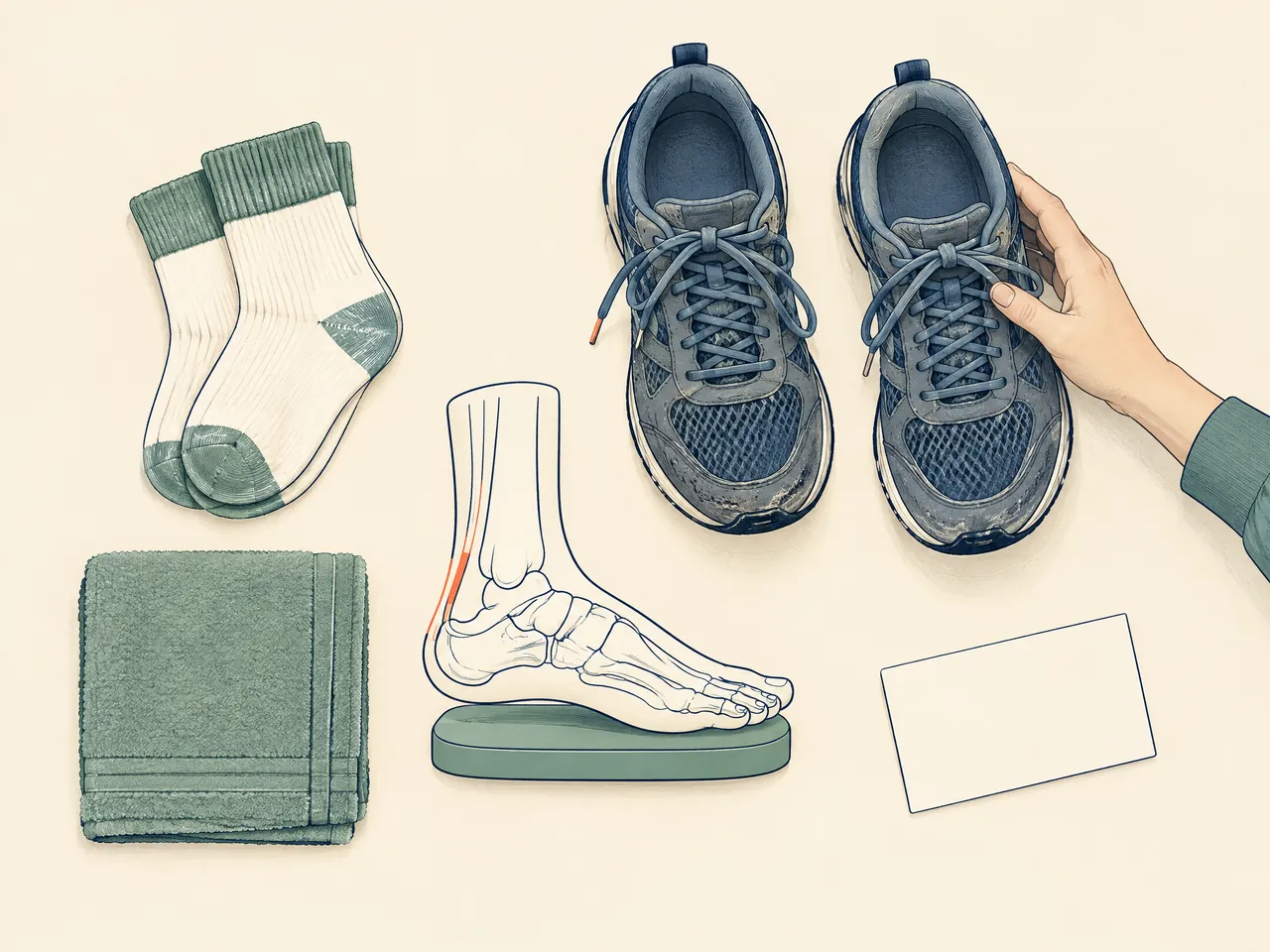
Know where self-care ends. Seek prompt medical help after significant injury with severe heel pain or swelling, when you cannot walk normally or rise onto the toes, or when fever, numbness or tingling accompanies heel pain. [2] Arrange an assessment when pain continues despite sensible adjustments, occurs even while resting, or comes with redness, a wound or other signs of infection. Those steps help avoid missing a problem that requires more than footwear or stretching.
Arch Pain, Heel Pain and Foot Pain from Standing: Footwear, Stretching and Activity
Use current shoes as information. Are they comfortable from the first step, or only painful after several hours? Is there space at the toes? Does one shoe twist easily or feel worn down on one side? Does another pair make a shift more tolerable? These observations can guide a footwear conversation without assuming that an arch support is always the answer. Queen Mary Hospital’s podiatry information includes footwear advice, functional orthoses and foot exercise therapy among approaches selected for different conditions. [3] When symptoms are mild and there are no warning signs, simplify the week instead of stopping all movement indefinitely. Reduce the specific exposure that repeatedly provokes pain, such as an extra-long walk on hard surfaces, and keep comfortable activity within tolerance. Review the result before increasing again. A strong stretch that reproduces sharp heel pain does not prove benefit. Keep any stretch controlled, avoid bouncing, and stop if neurological symptoms or a clear lasting worsening occurs. A clinician can match exercises to findings when the pattern is persistent or unclear.

Arch Pain, Heel Pain and Foot Pain from Standing: When to Seek Medical Assessment
Medical assessment comes first when you cannot bear weight, the foot is visibly deformed after injury, pain and swelling are marked, or numbness, burning or weakness persists. Red, hot skin, an open wound, discharge or fever also needs timely care. New pain or skin change in a person with diabetes requires professional attention. [1] For ongoing but less dramatic pain, book an assessment when it repeatedly limits work, sleep, walking or exercise, or does not improve after reasonable load and footwear changes. Take your location-and-load notes with you. If you want to ask whether acupuncture has a place in a plan, first read Can acupuncture help with foot pain?. A systematic review of four studies found possible short-term pain reduction for plantar fasciitis but insufficient evidence for a definitive long-term conclusion. [4] You can also read about acupuncture for foot pain, or enquire at the Kwun Tong Chinese medicine clinic or Chinese medicine clinic Prince Edward. Urgent symptoms should go to appropriate medical care first.
Care and health guide
Foot discomfort: care information
This directory brings together services, reading, and visit information related to foot discomfort, to help you prepare questions for a consultation.
When foot discomfort affects your day, noting when it occurs, its relation to activity, and what you have already tried can help prepare a consultation; acupuncture for foot pain is a relevant service or reading entry point.
Individual circumstances differ, and acupuncture Hong Kong offers related information to help you understand options and prepare questions.


Your questions, answered
Frequently asked questions
Is arch pain from standing always plantar fasciitis?
No. Plantar fascia-related pain is one possibility, particularly with bottom-of-heel or arch symptoms and uncomfortable first steps after rest. Foot pain can also involve the heel pad, tendons, joints, nerves, bone, skin or other soft tissues. The pattern guides assessment; it does not confirm a diagnosis by itself.
What should I write down before an appointment for heel pain?
Record the exact spot, which foot is affected, onset, first-step symptoms, time standing or walking before pain starts, recent activity or footwear changes, and what improves or aggravates it. Include swelling, numbness, burning, skin changes, an injury, diabetes or other relevant health conditions.
Should I stretch my foot when heel pain is sharp?
Do not push through sharp pain, burning, tingling or a lasting flare after stretching. Gentle, gradual movement may suit some people when there are no warning signs, but persistent or unclear pain should be assessed so that exercise can be matched to the likely problem.
Can acupuncture cure plantar fasciitis or foot pain from standing?
No cure or universal result should be promised. Acupuncture may be discussed as an adjunct after assessment, while footwear, activity load, exercise and any required medical care remain important. A published review found limited evidence suggesting possible short-term pain reduction for plantar fasciitis, but insufficient evidence for a definitive long-term conclusion. [4]
Sources and further information
- [1] [1] Cleveland Clinic — Foot Pain
Referenced for: Foot-pain locations, contributors, possible causes, assessment questions and warning signs.
- [2] [2] Mayo Clinic — Heel pain
Referenced for: Heel-pain locations, possible causes, self-care context and indicators for immediate or office assessment.
- [3] [3] Queen Mary Hospital — Podiatry
Referenced for: Hong Kong Hospital Authority terminology for podiatry, footwear advice, foot exercise therapy and functional orthoses.
- [4] [4] Singapore Medical Journal — How effective is acupuncture for reducing pain due to plantar fasciitis?
Referenced for: Systematic-review finding that short-term pain reduction may be possible, with insufficient evidence for a definitive longer-term conclusion.