
Prince Edward & Kwun Tong clinics · Home-visit enquiries elsewhere

TCM Lab

TCM Lab · Beauty & lifestyle / Men’s appearance choices

Crown or receding hairline: a men’s hairpiece must cover the right area

Content updated

A sparse crown and a receding front can call for quite different coverage. Before choosing a hairstyle, work out where the piece would sit, what hair you want to keep, and how the two would meet.

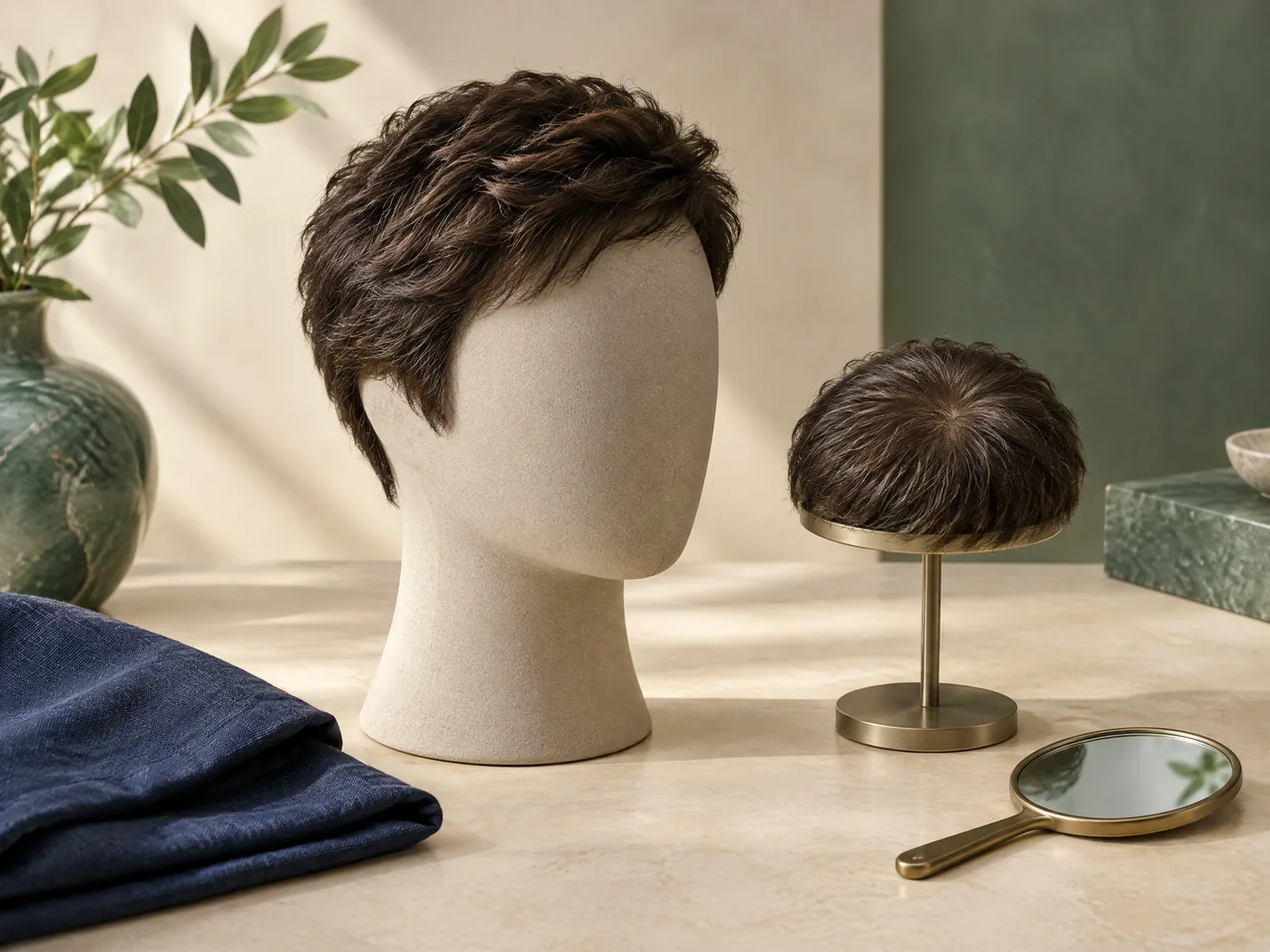
Illustrative men’s wig and partial hairpiece
Illustrative wig-lifestyle concept; not an OWNSTRAND product photograph or a client record.

The short answer

Map the crown and front separately. A crown piece needs to cover the intended top-back area and blend into nearby hair; a frontal piece needs a considered hairline and temple outline. If both areas need coverage, compare a larger top system, while broader loss may warrant a full-wig discussion. Confirm the actual base shape, attachment and haircut plan before ordering or removing any natural hair.

OWNSTRAND is an external wig and hairpiece website under the same ownership as TCM Lab. These appearance and everyday wearing guides are separate from Chinese medicine care, not diagnosis, treatment or a promise of hair growth.

Map what you want covered, not just what the mirror shows

Start with your everyday hairstyle, without combing extra hair across the area you want to inspect. Take a front photograph, one from each side and a view looking down at the crown. Ask someone you trust to help with the back view. Keep a second set showing your usual finished style: together, these explain both the coverage problem and the appearance you want to preserve. Existing-hair photographs are also useful when matching a wig's style and colour. [1]

Mark the front and crown as separate areas on a copy of the photographs. Is there hair you want to keep between them? Does the thinner area extend towards one side more than the other? For preliminary notes, record the desired coverage length and widest width with a flexible tape following the scalp. A supplier's measuring guide also records shape and position, which two dimensions alone cannot describe. [2] Treat these notes as a fitting brief, not instructions to cut a base. Ask the fitter to confirm the outline and any allowance required by the actual construction.

At the crown, inspect the join all the way round

If your front still gives you the outline you like, ask whether it can remain untouched while coverage is added further back. When browsing a men's hairpiece for thinning crown, describe where that area begins and ends rather than asking only for more volume. Bring the overhead view and show the surrounding hair you intend to retain. A crown category is a starting point for that conversation; it does not establish that a particular size or design is available.

The crown check should include the rear edge, not just the patch visible from above. During a fitting, ask to see where the base would finish and how the hair would lie across that join. Compare the proposed direction with the way your nearby hair falls. Then use a second mirror, or request photographs, to inspect the back while sitting and looking down. Ask what happens at the join when the surrounding hair is due for a haircut. The coverage boundary and hair direction belong in the specification, rather than being left for the final styling appointment. [2]

At the front, agree the outline before the hairstyle

A front piece has a different brief: it helps create the outline people see across your forehead and towards the temples. For a men's hair system for receding hairline, bring a current straight-on photograph and an older one if there is a previous shape you want to discuss. Do not assume the old outline must be copied exactly. Ask to compare a restrained change with a fuller front, and judge both against your present side hair and preferred haircut.

Explain whether you normally brush the front back, part it to one side or wear it forward. Ask to see the proposed edge with the hair moved into that position, rather than judging only a display style that conceals it. Check both temple corners from the side as well as straight ahead. A small frontal piece and a system extending over the top are different coverage options; the available design needs to be assessed against your mapped area. [3] Avoid deciding hairline placement from a standard finger-width rule. Have the fitter explain where the particular piece would sit and how its outline meets your own hair.

Use your side hair as the reference for the blend

Once the coverage is right, compare the hairpiece with the hair beside it. Look at colour, visible fullness, texture and the amount of grey, if any. Manufacturer selection guidance recommends matching density and colour to the sides and back, including checking colour samples in daylight. [3] This is a reason to view a sample next to your hair, not a promise of an exact match. If your temples are greyer than the back, point that out; one photograph of the top will not communicate the difference.

Bring a photograph of your usual haircut as well as any style inspiration. If you like closely cropped sides, ask how that specific cut would meet the proposed piece and whether a different transition would be needed. If you prefer longer sides, ask which hair would be trimmed during the cut-in. There is no useful universal side-hair length to adopt without seeing the design. Request front, side and rear views before approving the haircut, and clarify who will cut the piece and your natural hair together. A good-looking sample on its own cannot answer those questions.

Decide what natural hair you are willing to keep or change

Write down your boundaries before the consultation: perhaps you want to keep the front, avoid shaving, or remove the piece at home. Coverage and attachment are separate decisions. Clips, tape and adhesive should not be selected from the coverage label alone; ask what the actual piece requires and where it would attach. Manufacturer guidance discusses different arrangements for retaining natural hair, but that does not make every method suitable for every person or product. [3] Ask about preparation, removal and upkeep before agreeing to alter your hair.

When the front and crown both need coverage, compare whether one larger top piece would address the whole intended area. If the sides and back are also sparse, or you prefer an option that covers them, include men's wigs in the discussion. A full wig covers the head, whereas a topper adds coverage on top. [1] That is a change of coverage category, not simply a larger crown patch. Ask for the relevant full-cap measurements and a separate fit assessment; measurements taken for a partial system should not be assumed to specify a full wig.

Leave with a clear coverage brief and a wearing plan

Take your marked photographs and a short statement such as: ‘Keep my current front; cover the crown; blend with these sides.’ For readers exploring non-surgical hair replacement Hong Kong, OWNSTRAND offers product information to frame an enquiry, not evidence of regrowth. TCM Lab and OWNSTRAND share ownership, so these links are provided as related-brand information rather than an independent recommendation. A hairpiece changes appearance; it does not treat hair loss. OWNSTRAND's guide describes enquiries in Kwun Tong and leaves specific supply and attachment arrangements to confirmation. [4]

Before committing, ask for the proposed coverage outline, material and base description, wearing method, and haircut responsibilities in writing. Confirm whether you will view a sample, try the relevant piece, or only review reference images; these are not the same experience. Ask who handles removal and maintenance and what the quotation includes. Follow the instructions for the selected item rather than applying another brand's routine. [1] If no suitable piece has been confirmed, keep the brief and continue comparing. You do not need to approve a change to your natural hair merely to complete a first enquiry.

Take it into everyday life

A practical checklist

  • Prepare current front, side and overhead photographs, plus pictures of your usual finished hairstyle.
  • Mark crown and front coverage separately and identify natural hair you want to retain between them.
  • Record preliminary length, widest width and shape; have the fitter confirm the final outline.
  • Explain whether you expose the front edge by brushing back or normally wear the hair forward.
  • Compare samples against side and back hair in daylight, including texture and grey distribution.
  • State any boundaries about shaving, clipping, attachment and at-home removal before selecting a piece.
  • Confirm who will cut the piece and surrounding hair, and agree how future haircuts will maintain the join.
  • Request written confirmation of the exact item, fitting or attachment arrangements, care instructions and quotation inclusions.

Questions & answers

Can I cover a thinning crown without changing my front hairline?

That is a reasonable coverage goal to discuss, but it depends on the crown outline, surrounding hair and available piece. Show the fitter which front hair you want to keep and where the proposed base would end. Ask to inspect the back and sides of the join, not only the overhead view. A crown-related category page does not confirm that a suitable partial piece is stocked or can be made.

Do a receding front and a thinning crown always need two hairpieces?

No fixed number follows from those descriptions. Map both areas and show any hair you want to retain between them. Ask whether a larger top system could address the intended coverage, and how its boundary would meet your remaining hair. Separate pieces are not automatically simpler, while one larger piece is not automatically better. Compare the actual fitting and wearing plans before deciding.

Should I grow out my short sides before arranging a fitting?

Ask the fitter before changing your haircut. Send clear side and rear photographs and explain the cut you want to maintain. The relevant question is whether your present length can blend with the particular piece and attachment arrangement, not whether it meets a generic minimum. If more length is requested, ask where it is needed and how the eventual transition will be cut.

Can I keep my remaining top hair and avoid adhesive?

Make both preferences explicit at the start. Ask which available designs, if any, could accommodate them and where any clips or other attachment would sit. A removable label does not establish that the piece needs no preparation or adhesive. Do not shave or cut your remaining hair in anticipation of a product that has not been selected. Ask to have the preparation and removal process explained for the exact item.

What should I confirm before paying for a men's hairpiece?

Confirm the coverage shape and dimensions, colour and fullness discussion, base and material, and intended wearing method. Establish whether sample viewing, fitting, a haircut or attachment is included, and who provides each service. Obtain the price inclusions, expected ordering arrangements and applicable cancellation or return terms in writing. For an OWNSTRAND enquiry, do not assume a product guide confirms stock or hair-system installation; ask what is offered for your specific request.

Sources & further context

Numbered references follow the source order below. Product and service websites provide appearance-related context, not medical evidence.

  1. [1] American Cancer Society — Wigs for Hair Loss
  2. [2] Superhairpieces — How To Measure Your Bald Spot For A Men's Hair System
  3. [3] Superhairpieces — How to Buy Your First Hair System
  4. [4] OWNSTRAND — Hair System Guide for Men in Hong Kong

Compare the sample’s base with your coverage map

At the comparison stage, ask which part of the sample corresponds to each edge on your marked photographs. For a crown-only brief, identify its front boundary as well as its rear edge; for front coverage, trace where it reaches towards each temple. Keep the outline of the base separate from the outline made by the styled hair. Hair swept across an area can make the hairstyle look broader without showing where the piece itself ends. Ask to inspect the underside and have the fitter explain that difference for the actual item.

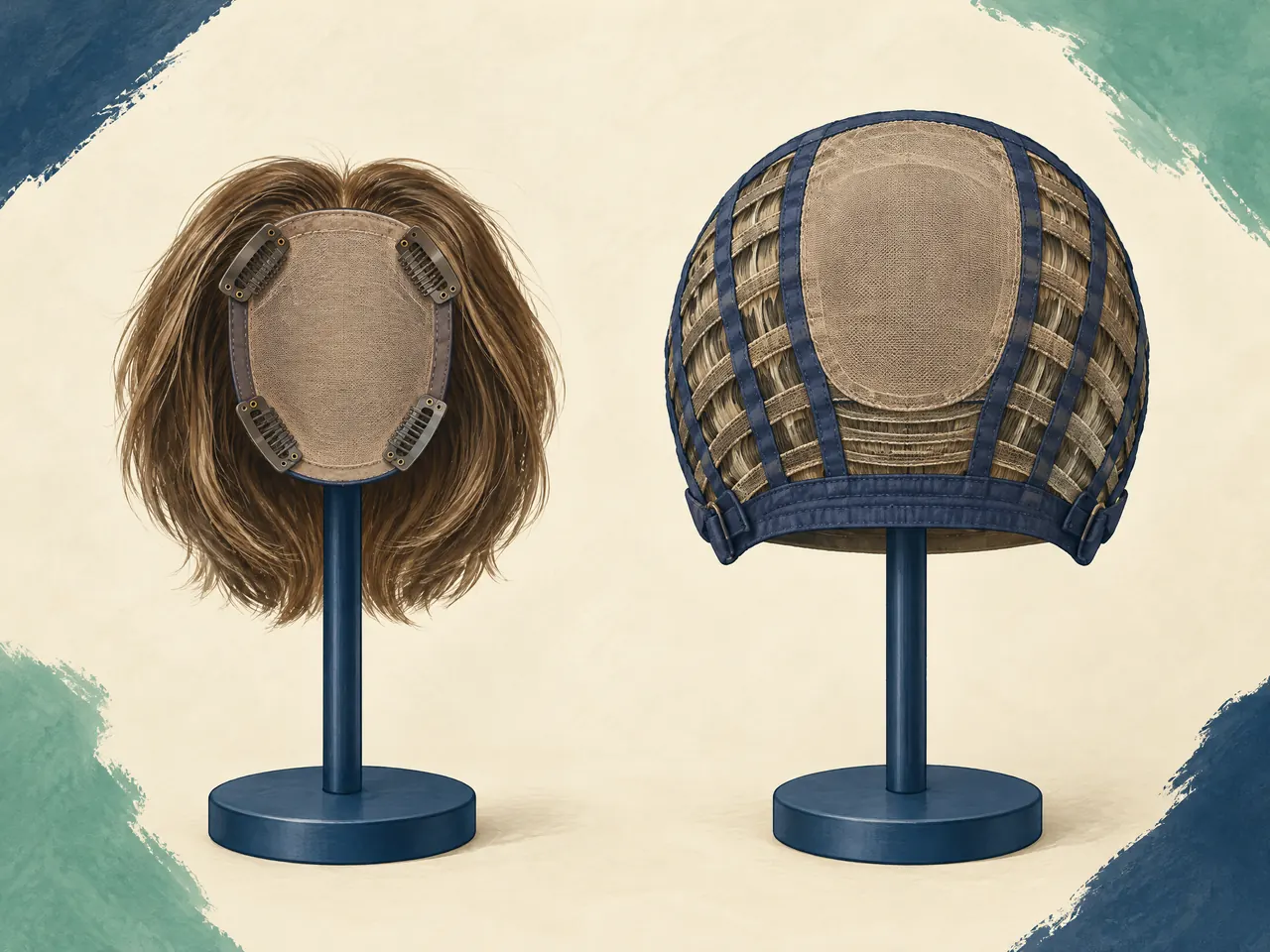
Record whether you are looking at a full-cap sample, a partial piece or a reference image. A topper and a full wig are different coverage categories. [1] If the sample is not the proposed item, ask which dimensions and construction details are still unconfirmed. For an uneven crown outline, ask whether the supplier needs a shape record or template as well as length and width. The measuring guide includes shape and position, not just two numbers. [2] Do not treat a generic mannequin demonstration as approval to cut the base or remove your natural hair.

Fabric measuring tape around a blank mannequin dome beside an empty fit-note card and a mirror
Concept illustration of measurement notes; the selected piece still needs its own confirmed coverage outline.Generated illustrative image
Generic partial topper and empty full wig cap on separate plain stands with their undersides visible
Concept comparison of partial and full-cap objects, not OWNSTRAND product photographs or proof of available designs.Generated illustrative image

Change one appearance detail at a time

When comparing two front outlines, keep the styling position as similar as possible. First view both with the fringe forward, then ask to see the position you would normally wear. Note whether your concern is the temple shape, fringe length or the amount of exposed forehead. A longer fringe can obscure the outline you are trying to assess, so ask which part of the difference comes from the cut and which comes from the proposed placement. This gives the fitter a specific question rather than an instruction to copy a mannequin hairstyle.

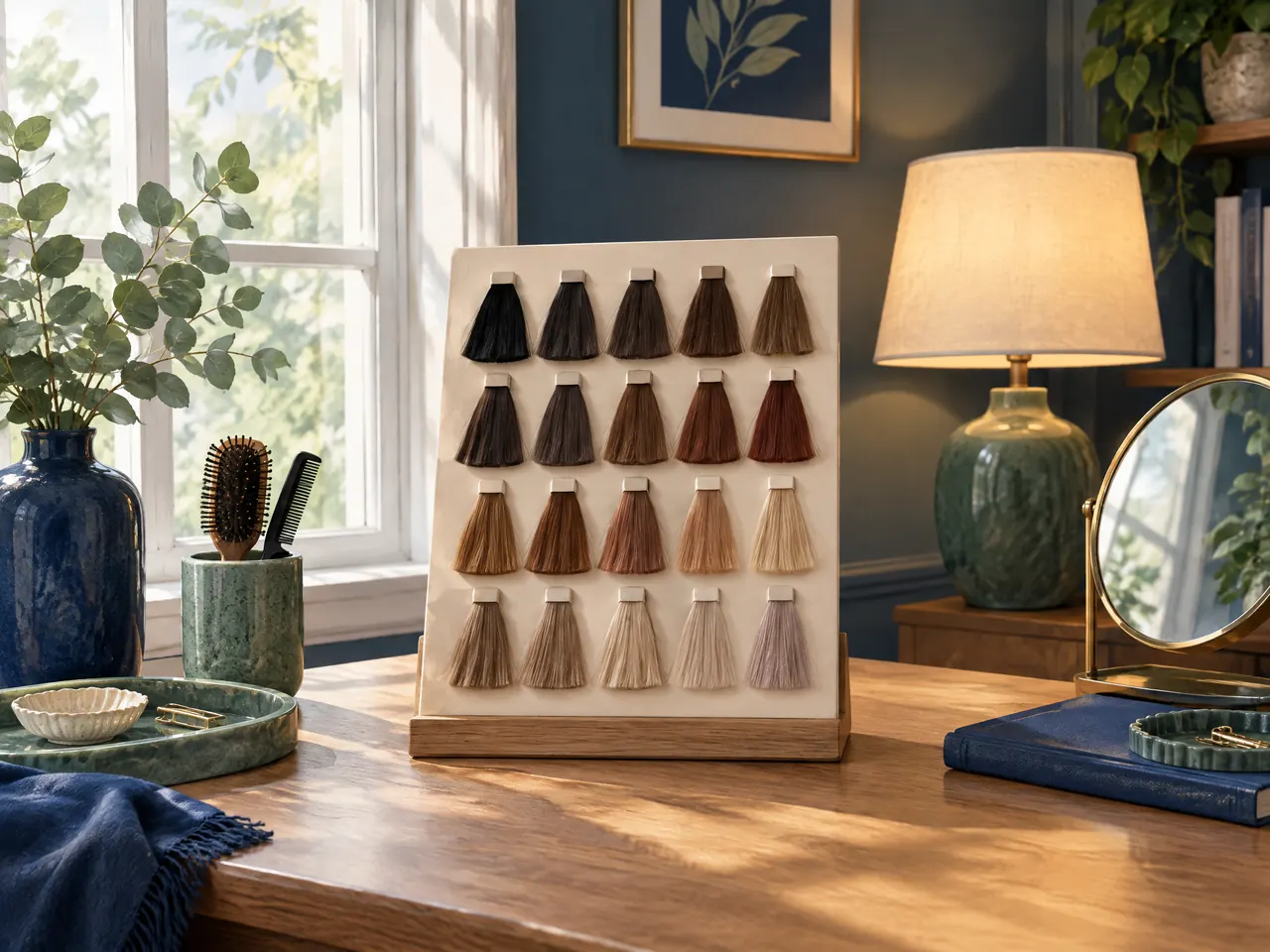
Use the same approach for a crown colour comparison. Manufacturer guidance recommends comparing colour samples in daylight against side and back hair. [3] Keep the sample beside the same area of your own hair when changing the lighting, then check the greyer temple separately if that matters to your blend. Record what you prefer and what still looks uncertain. If you take photographs, ask whether the fitter can confirm the colour from a physical sample rather than treating the camera image as the final specification.
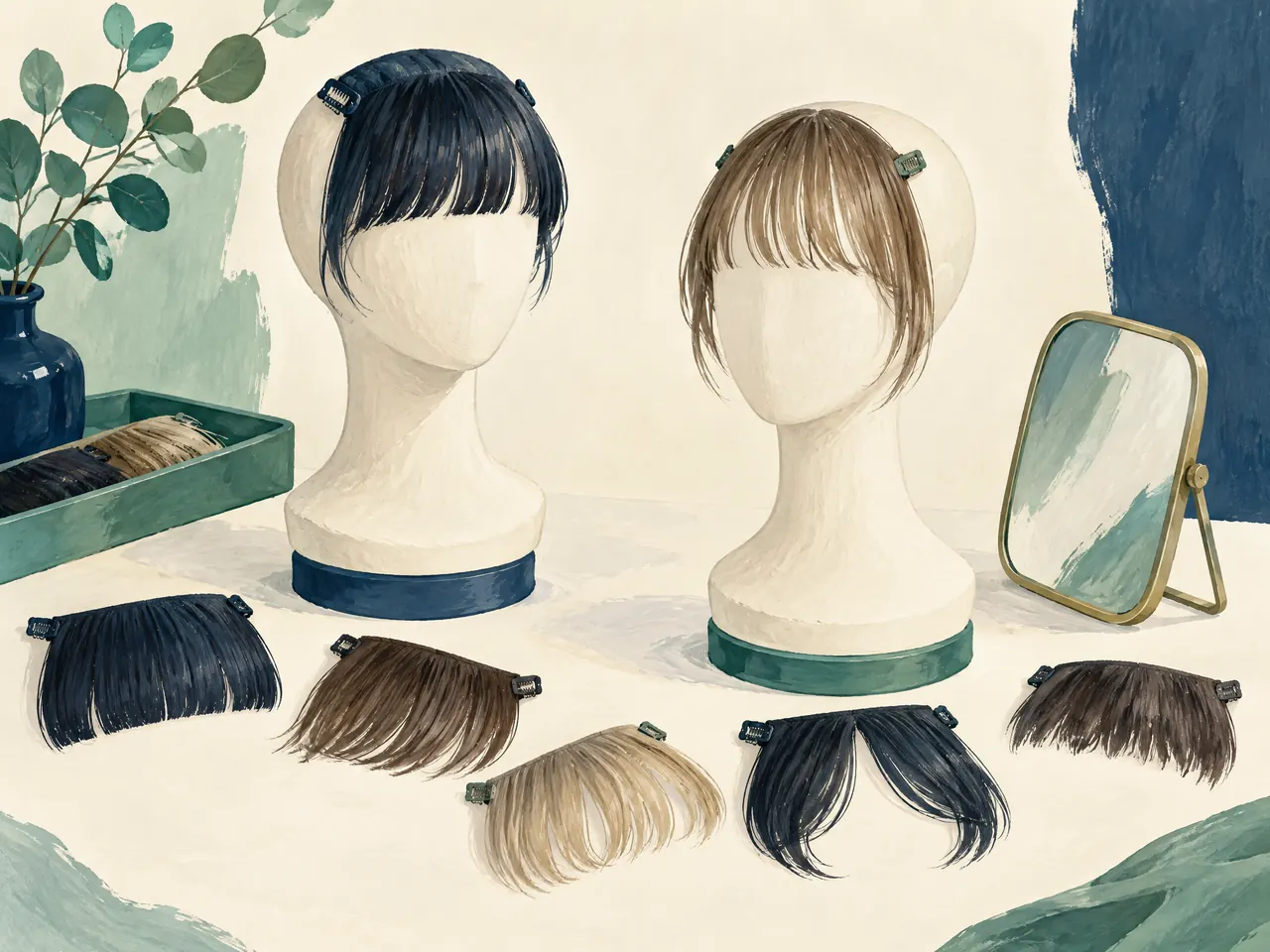
Two featureless mannequin forms with detachable practice fringe pieces and a small mirror
Practice-fringe design study for discussing length and outline, not a customer haircut or fitting result.Generated illustrative image
Neutral hair sample board between window daylight and a shaded interior lamp beside a mirror
Illustrative lighting comparison for a sample discussion; it does not establish an exact colour match.Generated illustrative image

Ask what happens after you take the piece off

If keeping your current front is part of the brief, ask what it will look like when the crown piece is removed. Which hair stays untouched, and which hair would be trimmed or prepared for the proposed attachment? For a front piece, ask the same question about the remaining fringe and temple hair. Have the supplier explain removal using the exact item or an appropriate demonstration, including where you would hold it and what assistance might be needed. The related-brand guide leaves removability, attachment and any installation service to specific confirmation. [4] A generic clip or band illustration cannot show that a suitable method is available for you.

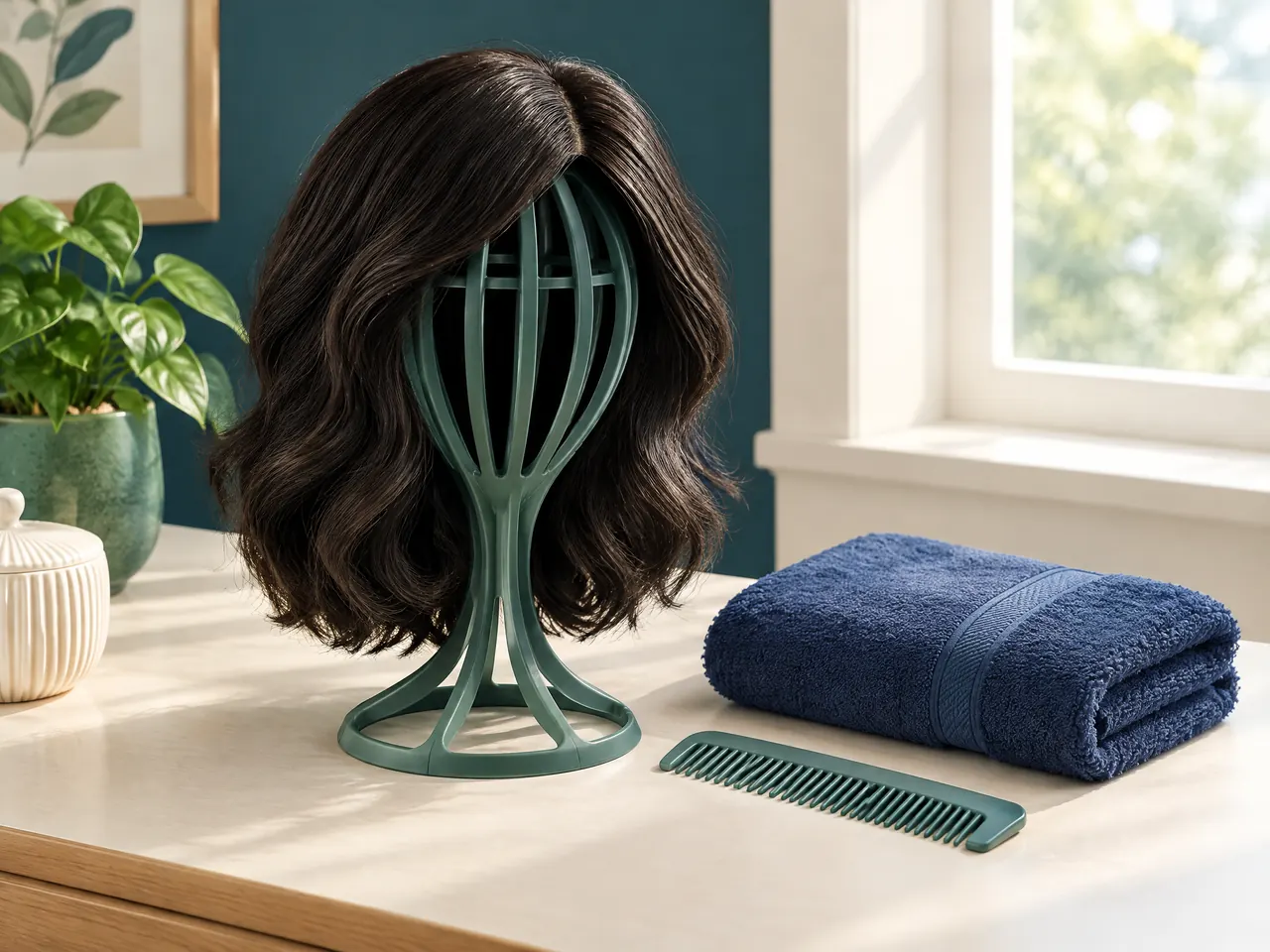
Then discuss the next wearing occasion. Ask how you would recognise the correct front and back, restore the agreed position and arrange your retained hair at the join. Include drying and storage in that conversation: where should the removed piece rest, and how will you know it is ready to wear again? The general wig guide discusses stand storage and following the supplied directions. [1] Ask for the selected item’s routine rather than assuming the same care applies to every crown piece, frontal piece and full wig.
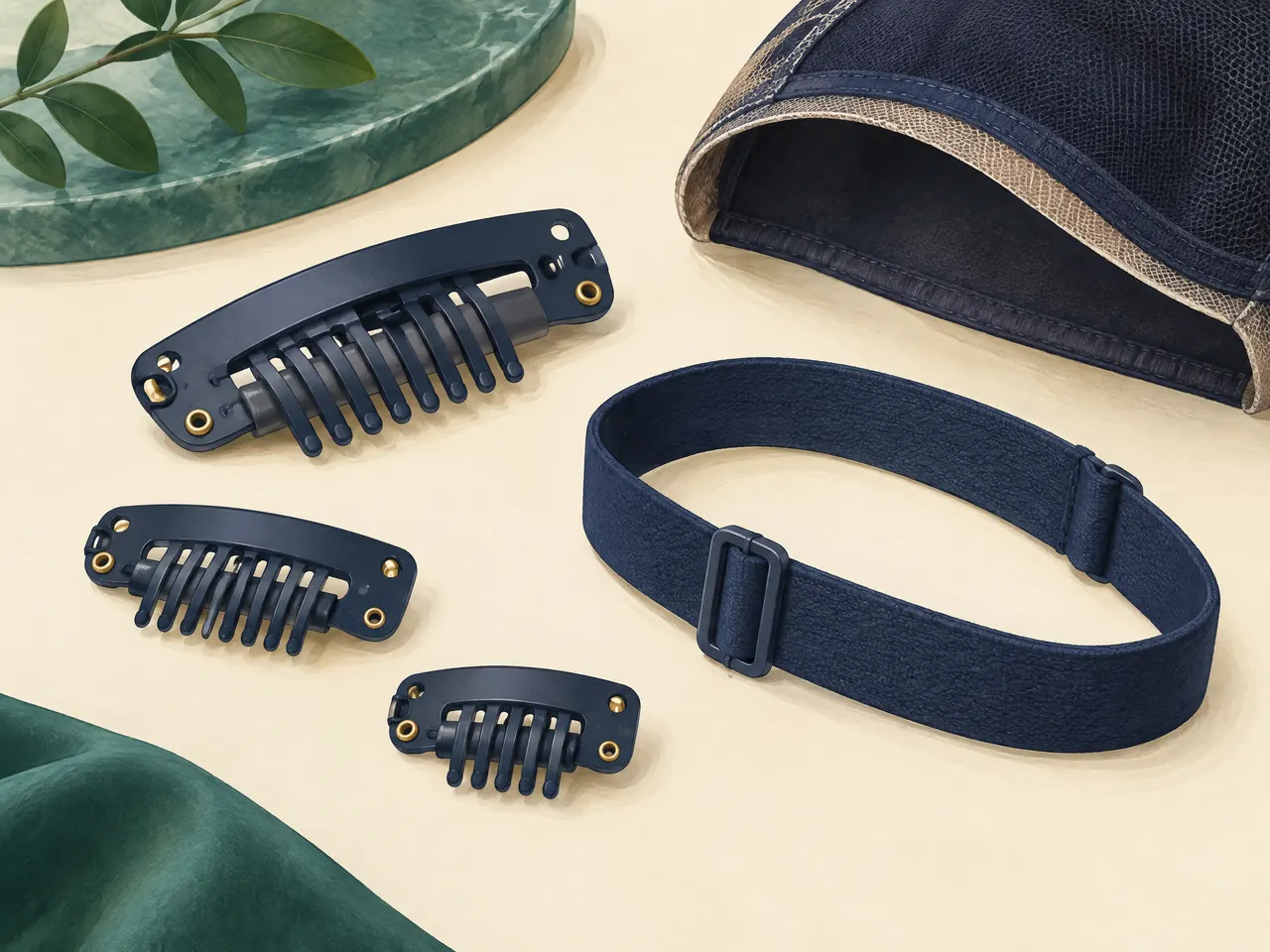
Generic hairpiece clips, a soft adjustable band and an empty sample cap edge arranged on a tabletop
Illustrative attachment objects for supplier questions, not a recommendation or confirmation of compatibility.Generated illustrative image
Anonymous wig on an open ventilated stand beside a folded towel and unbranded comb near indirect daylight
Concept illustration of a stand and care equipment; follow the chosen item’s drying and storage instructions.Generated illustrative image

Clinic enquiries

Contact and appointment arrangements

Clinics
Prince Edward and Kwun Tong
Opening hours
11:00–21:00
WhatsApp and telephone
+852 6940 5663

Appointments, practitioner availability and service arrangements are confirmed via WhatsApp.

Please mention any consultation language needs in your WhatsApp enquiry so that arrangements can be confirmed.

Enquire via WhatsApp
Food, gifts and floral lifeWhatsApp enquiry