
TCM Lab · Services and individual assessment
Chinese medicine for skin conditions: understanding TCM skin conditions and chronic skin conditions
Published Updated
Skin concerns are rarely only about what can be seen in a mirror. Chinese medicine for skin conditions approaches a persistent rash, itch, breakouts or recurrent flare-up by discussing the visible change alongside its timing, comfort, sleep, digestion, stress, daily products and medical history. That is a consultation approach, not a diagnosis or a promise of improvement. For TCM skin conditions, the useful first step is to describe what is happening accurately and decide whether a Chinese medicine discussion is appropriate, should complement existing care, or needs to wait for prompt medical assessment.
Appointments are confirmed through WhatsApp. If you have language requirements, please mention them in your enquiry.
The short answer
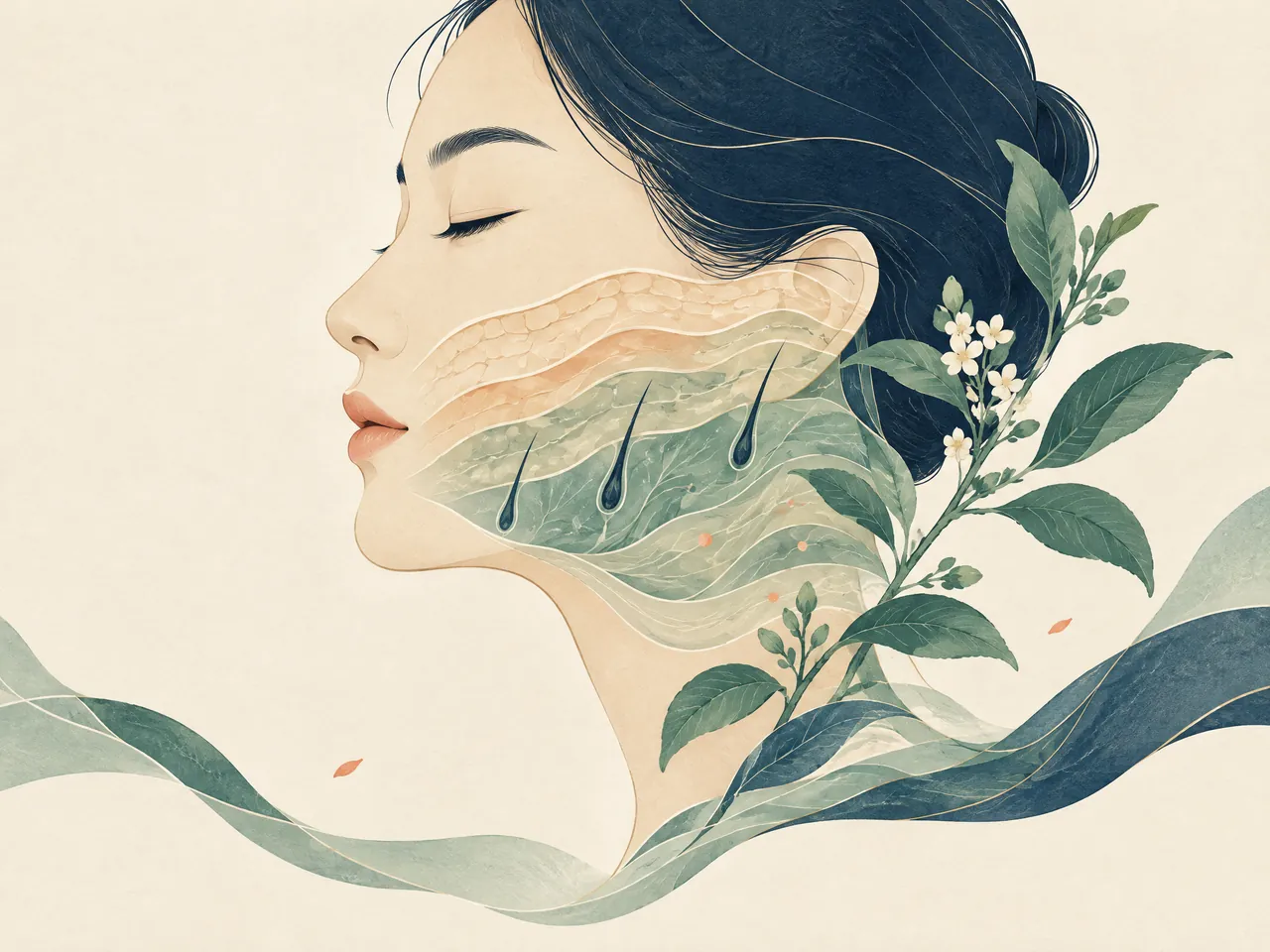
Chinese medicine for skin conditions usually begins with an individual assessment of the skin concern, its course, general health and daily context. For TCM skin conditions and chronic skin conditions, a practitioner may discuss Chinese medicine approaches such as herbs, external preparations or acupuncture only after considering suitability and treatment boundaries. Results and timing vary, and urgent or infected-looking symptoms need qualified medical care rather than a routine consultation.
Transparent pricing
See the fees.
Choose your care.
Explore our complete official price list, including first-trial prices, regular prices, packages and branch-specific options.
Opening WhatsApp prepares an enquiry; it does not send a message, take payment or confirm an appointment. Suitability and individual arrangements are confirmed during consultation.
Chinese medicine
All prices in HKDAcupuncture and Chinese herbal medicine package
Includes a Chinese medicine consultation with pulse assessment, body acupuncture and 3 days of Chinese herbal granules that do not require decoction.
HK$580 (single session)
Chinese medicine consultation with pulse assessment
Hair and scalp
All prices in HKDScalp health and hair-loss management
Includes AI scalp analysis, deep scalp and follicle cleansing, and scalp oil-control care.
HK$380 (first trial)
Regular price: HK$680
- 6 sessions: HK$3,480 (HK$580 per session)
- 12 sessions: HK$5,760 (HK$480 per session)
- 20 sessions: HK$8,600 (HK$430 per session)
- 30 sessions: HK$11,400 (HK$380 per session)
Hair acupuncture and Chinese herbal medicine package
Includes scalp acupuncture and 3 days of Chinese herbal medicine that does not require decoction.
HK$580 (single session)
Registered Chinese Medicine Practitioner consultation
- 6 sessions: HK$3,180 (HK$530 per session)
- 12 sessions: HK$5,760 (HK$480 per session)
- 20 sessions: HK$8,600 (HK$430 per session)
- 30 sessions: HK$11,400 (HK$380 per session)
Combined hair and scalp treatment
Combines acupuncture and Chinese herbal medicine with salon-level scalp and follicle care. Packages include complimentary hair-care shampoo and serum.
HK$1,260 (single session)
Combined treatment
- 8 sessions: HK$8,640 (HK$1,080 per session)
- 16 sessions: HK$15,680 (HK$980 per session)
- 20 sessions: HK$18,600 (HK$930 per session)
- 30 sessions: HK$26,400 (HK$880 per session)
Weight management
All prices in HKDFull-body acupoint embedding for weight management
Includes full-body acupoint embedding. Packages include complimentary Chinese herbal medicine for weight management, with the number of included days scaled to the package. Embedding material and the individual treatment arrangement are confirmed during consultation; this is not a cosmetic thread lift.
HK$980 (single session)
No trial session
- 10 sessions: HK$7,800 (HK$780 per session)
- 20 sessions: HK$14,600 (HK$730 per session)
- 30 sessions: HK$20,400 (HK$680 per session)
Facial acupuncture
All prices in HKDFacial acupuncture (basic)
Includes facial acupuncture and meridian-based facial care, including care for facial puffiness.
HK$480 (first trial)
Regular price: HK$680
- 10 sessions: HK$5,200 (HK$520 per session)
- 20 sessions: HK$9,600 (HK$480 per session)
- 30 sessions: HK$13,500 (HK$450 per session)
Facial acupuncture (advanced)
Includes enhanced facial acupuncture with a specially formulated moisturising mask and serum.
HK$780 (first trial)
Regular price: HK$1,180
- 10 sessions: HK$9,000 (HK$900 per session)
- 20 sessions: HK$16,600 (HK$830 per session)
- 30 sessions: HK$23,400 (HK$780 per session)
Pain care
All prices in HKDExtracorporeal shockwave treatment
Shockwave treatment for deep-tissue and fascial care. The Kwun Tong clinic offers the multi-area options shown below.
Priced by branch
Branch-specific pricing
Prince Edward: HK$250 per area
Kwun Tong: HK$250 for 1 area / HK$450 for 2 areas / HK$600 for 3 areas
Pain care (manual therapy)
Includes Chinese medicine musculoskeletal assessment, manual joint techniques and tui na.
HK$580 (single session)
Chinese medicine musculoskeletal assessment
Pain care (acupuncture and manual therapy)
Combines acupuncture and manual therapy.
HK$680 (single session)
Combined care
From enquiry to individual assessment
Start with an enquiry
Tell us your main concern, preferred clinic and possible times. Ask about fees and any language requirements.
Discuss your assessment
Bring your medical history, current medicines and questions. The practitioner assesses which options may be suitable.
Agree on the next step
Discuss the proposed care, fees, risks and follow-up. Arrangements depend on the assessment and appointment confirmation.
Chinese medicine for skin conditions: how TCM skin conditions are viewed and chronic skin conditions are understood
People searching for Chinese medicine for skin conditions often want a way to make sense of a problem that keeps returning: a dry, itchy area that disturbs sleep, acne that changes with routine or stress, hives that seem unpredictable, or a scalp or body eruption that has not settled. A Chinese medicine consultation can take those observations seriously while avoiding a shortcut from appearance to diagnosis. The same visible redness can occur in many settings, and skin tone can change how redness, darkening or lightening is noticed. Bringing a timeline and photographs taken in consistent light can therefore be more useful than trying to name the problem alone.
In traditional Chinese medicine language, practitioners may discuss constitution, qi, blood, dampness, heat, wind or organ-system patterns. These are traditional assessment concepts, not laboratory results or replacements for a biomedical diagnosis. The practical value for a patient is the structured conversation: what came first, what relieves or aggravates the problem, where it appears, whether it is dry or weeping, and whether sleep, appetite or bowel habits changed at the same time. The Chinese Medicine Hospital of Hong Kong lists eczema, psoriasis, alopecia areata and acne among examples of chronic skin diseases in its service information [3]. That does not mean these conditions are interchangeable or that one approach suits everyone.

Chinese medicine for skin conditions and the whole-person view of TCM skin conditions in chronic skin conditions
A whole-person view starts with the person’s experience rather than an assumption that the skin is separate from daily life. Itch can lead to scratching, broken sleep and fatigue; fatigue can make routines harder to maintain; and a visible flare can affect confidence at work or school. Discussing that cycle gives a practitioner context, especially when a concern has been present for months or returns in a familiar season. It should not be used to suggest that stress is the sole cause. If needling is being considered, can acupuncture be used for eczema sets out useful questions rather than assuming it suits every eczema-like complaint.
Daily exposures deserve the same attention as internal symptoms. Note new skincare, hair products, detergents, occupational contact, masks, athletic clothing, swimming, travel, pets and changes in weather. For eczema, the NHS advises avoiding things that make symptoms worse, such as soap, washing detergent, some fabrics or pets, and advises against changing diet unless told to by a doctor [1]. A record of what was used and when helps distinguish a possible pattern from a coincidence. Do not stop prescribed treatments or restrict major food groups because of a diary alone.
Chinese medicine for skin conditions: what TCM skin conditions and chronic skin conditions may involve
Chinese medicine discussions may include oral Chinese medicine, external preparations or acupuncture, depending on the person, skin integrity, history and clinical judgement. Some people want to discuss one option; others mainly want help organising a broader care plan. Ask what is being proposed, why it is being considered, how it fits with current medicines, how the response will be reviewed and what would make the practitioner recommend another healthcare route. For eczema-specific questions, acupuncture for eczema can help frame an informed conversation; it does not replace an examination or medical diagnosis.
External products require particular care because damaged, inflamed or infected skin can react unpredictably. Bring the product names or photographs of labels, especially if you have had a prior allergy, are pregnant or breastfeeding, have a long-term condition, or use several prescribed medicines. A practitioner should know if the area is cracked, bleeding, blistered, oozing or painful before considering any local method. Needling is not appropriate through a skin area that is broken or suspected of infection simply because it is described as an acupuncture point.
Compare your options
| Prepare | Why it helps the discussion | When to prioritise medical assessment |
|---|---|---|
| Symptom timeline and unfiltered photographs | Shows onset, location, change between flare-ups and what has already been observed. | A sudden spread, marked pain, warmth, swelling, pus or fever needs prompt qualified assessment. |
| Full medicines, supplements and topical-product list | Allows a discussion of current care, potential compatibility questions and prior reactions. | Seek advice promptly after a new widespread rash or suspected reaction to a medicine. |
| Known diagnoses, tests and referral letters | Keeps the consultation grounded in existing medical information rather than assumptions. | Continue follow-up for diagnosed conditions and do not stop prescribed treatment without appropriate advice. |
| Your main goal and practical constraints | Clarifies whether you seek an individual opinion, symptom tracking or a discussion of treatment options. | Emergency symptoms, breathing difficulty or facial and throat swelling take priority over appointment planning. |
On smaller screens, scroll the table sideways to compare all columns.
Chinese medicine for skin conditions: assessing TCM skin conditions and chronic skin conditions carefully
A careful assessment is more than a quick look at one patch of skin. It considers onset, distribution, change over time and severity, then places those details beside medical history and everyday exposures. For example, a person may describe an itch that wakes them, while another mainly notices painful inflamed spots after a new product. Those are different starting points for questions. Existing diagnoses, examination findings, test results and referral letters are useful information, not competing viewpoints. They can prevent the consultation from repeating work or overlooking a known risk.

A skin consultation should make room for a medication and allergy check. List prescription medicines, non-prescription treatments, vitamins, herbs and supplements with doses if known. Mention kidney or liver disease, bleeding disorders, immune conditions, pregnancy or breastfeeding, and any past reaction to a medicine, herb, adhesive, topical preparation or needle. These are not details to hide out of concern that a treatment will be ruled out; they help a practitioner assess whether Chinese medicine for skin conditions is sensible to discuss at all.
Chinese medicine for skin conditions and symptom patterns in TCM skin conditions and chronic skin conditions
For the patient, a useful symptom description is concrete. Say whether an area is dry, scaly, thickened, cracked, raised, blistered, crusted, weeping, painful or warm. State whether the itch is mild, sleep-disrupting or absent; whether the problem is fixed or migratory; and whether it leaves colour change after a flare. The NHS describes atopic eczema as potentially itchy, dry, cracked, crusty, scaly or thickened, and notes that symptoms can look different across skin tones [1]. These words describe features, not a self-diagnosis. If discharge is present, the guide to eczema with pus explains why a possibly infected-looking flare needs prompt attention.
Traditional pattern language may be used after the practitioner brings together the skin description with other features. It is not a checklist that patients need to complete beforehand, and one label should not override medical red flags. The aim is to identify an individual discussion and monitoring plan, not to declare that every breakout comes from a single internal imbalance. Ask the practitioner to explain terms in everyday language and to say what observations would make that interpretation less likely.
Chinese medicine for skin conditions: questions to discuss about TCM skin conditions and chronic skin conditions
Before the visit, write down the main question in one sentence: ‘What should I check before adding a Chinese medicine approach?’ or ‘How can I discuss this recurring itch without abandoning current care?’ Then add the dates of important changes, a medicines list and two or three photographs if relevant. This keeps the appointment focused. It also makes it easier to tell a practitioner if your main priority is comfort, understanding possible triggers, reviewing treatment compatibility or deciding whether another clinician should see you first.
Practical arrangements also matter. Ask about the clinic location, the likely length of the first discussion, whether to bring products and reports, and how follow-up is arranged. TCM Lab has a Kwun Tong Chinese medicine clinic and a Chinese medicine clinic Prince Edward; appointment availability is confirmed individually. If cost is part of the decision, review the Chinese medicine clinic price list Hong Kong before messaging rather than assuming what a consultation includes.
Chinese medicine for skin conditions: planning care for TCM skin conditions and chronic skin conditions
A sensible plan begins with a shared purpose and clear boundaries. It may be to obtain an individual Chinese medicine opinion, to organise observations around recurrent symptoms, or to ask whether a proposed approach can sit alongside existing care. It should also state what it is not: an automatic replacement for a diagnosis, a guaranteed cure, or a reason to delay treatment for a worsening infection or severe reaction. The first plan can be modest and still useful when it specifies what information is needed and when to seek further care.
Monitoring should be practical enough to maintain. Choose a small set of observations, such as new body areas, itch that disrupts sleep, amount of oozing, product changes, missed work or school, and any effect after starting or stopping a treatment under clinical advice. Bring the record to follow-up rather than relying on a vague memory of ‘better’ or ‘worse’. If several changes occur at once, say so; that uncertainty helps prevent an unwarranted claim that one element caused the change.

Chinese medicine for skin conditions, TCM skin conditions and treatment boundaries for chronic skin conditions
Treatment boundaries protect patients from overpromising. Chinese medicine can be discussed as an individual care option, but the response, number of visits and suitability cannot be predicted from a webpage or a single symptom. A practitioner may advise against a particular option, suggest consultation with a doctor or dermatologist first, or recommend that existing prescribed treatment remain the priority. That is not a failure of the consultation; it is an appropriate response to incomplete information or an elevated risk.
If herbs or a topical preparation are considered, disclose everything you take or apply, including products bought online and treatments that feel ‘natural’. Natural does not automatically mean compatible with every medicine or safe for damaged skin. Ask how a reaction would be recognised, whether new items should be introduced one at a time, and what contact route to use if symptoms change. Never use another person’s prescription or share a product that was chosen for someone else’s skin history.

Chinese medicine for skin conditions: when TCM skin conditions and chronic skin conditions need medical attention
Do not wait for a routine Chinese medicine appointment if skin becomes painful, swollen, hot, suddenly worse or larger, or if it is blistered, crusted, leaking fluid or has pus-filled spots, especially with fever or feeling generally unwell. The NHS identifies these as signs that eczema may be infected or that a more serious condition may be present [1]. Seek prompt qualified medical assessment. The guide on when to seek medical help for eczema is a useful reminder, but urgent symptoms need action rather than online reading.
Breathing difficulty, wheezing, throat tightness, trouble swallowing, sudden swelling of the lips, mouth, throat or tongue, faintness or collapse can signal a severe allergic reaction. The NHS describes anaphylaxis as life-threatening and advises emergency help for these symptoms [4]. Call emergency services in Hong Kong or seek emergency care immediately. Do not test a suspected trigger again, take an unprescribed herbal remedy or wait to see whether a rash settles when breathing or swelling symptoms are present.
Care and health guide
Health service information
This directory brings together services, reading, and visit information related to health services, to help you prepare questions for a consultation.
If you are organising health questions, Chinese medicine clinic Hong Kong is a starting point for learning about related services and preparing for a consultation.
People have different needs; acupuncture Hong Kong provides further reading to help you understand options in your own context.


Your questions, answered
Frequently asked questions
What may a Chinese medicine consultation for chronic skin conditions discuss?
It may cover the symptom timeline, affected areas, itch or pain, sleep, digestion, stress, daily exposures, past diagnoses, medicines and products already tried. The purpose is to assess whether a Chinese medicine discussion is appropriate and what information or medical review is needed, not to assume a diagnosis from a description alone.
Can Chinese medicine replace medical care for an urgent skin problem?
No. Painful, hot, swollen or rapidly spreading skin, blisters, leaking fluid, pus, fever, feeling unwell, breathing difficulty, throat tightness or facial swelling require prompt qualified medical or emergency care. Do not wait for a routine consultation when symptoms suggest infection or a severe allergic reaction.
What should I prepare before discussing TCM skin conditions?
Prepare a symptom timeline, photographs if helpful, a list of prescriptions, supplements and topical products, known allergies, relevant diagnoses and test results. Note possible exposures or triggers without assuming they are proven causes. State whether the main problem is itch, pain, sleep loss, recurrence or concern about treatment compatibility.
Can a skin consultation guarantee a fixed outcome or number of visits?
No. Chronic skin conditions can change over time and responses vary between individuals. Suitability, follow-up and any treatment option should be decided after an individual assessment. A responsible plan sets monitoring points and clear reasons to seek another form of medical care rather than promising a cure or a fixed timetable.
Sources and further information
- [1] [1] NHS: Atopic eczema
Referenced for: Supports descriptions of atopic eczema, flare-up factors, self-care cautions and urgent signs that may suggest infection or a serious condition.
- [2] [2] Chinese Medicine Council of Hong Kong: Regulation of Chinese Medicines Practitioners
Referenced for: Supports the description of the Council as a statutory body responsible for regulatory measures for Chinese medicine in Hong Kong.
- [3] [3] Chinese Medicine Hospital of Hong Kong: Chronic Skin Diseases
Referenced for: Supports local terminology that lists eczema, psoriasis, alopecia areata and acne among chronic skin conditions; it is not evidence of outcome for TCM Lab.
- [4] [4] NHS: Anaphylaxis
Referenced for: Supports urgent symptoms and emergency-care advice for suspected severe allergic reactions.