
TCM Lab · Health reading
Persistent Nasal Congestion Causes: How Allergic and Non-Allergic Rhinitis Differ
Published Updated
A blocked nose that keeps returning is frustrating, especially when it disrupts sleep, exercise, meetings or a child’s school day. Persistent nasal congestion causes are not all the same. Repeated sneezing, itching, clear discharge and itchy or watery eyes often point towards allergic rhinitis, while congestion brought on by cold air, humidity, perfume or smoke can fit a non-allergic pattern. A cold, sinus problem, nasal polyps, a deviated septum and overuse of decongestant sprays can also be relevant. The useful question is not simply ‘what am I allergic to?’ but when the blockage starts, what comes with it, whether both sides are affected, and what makes it ease or worsen. That record can make a clinical conversation more focused and can prevent every episode from being labelled as an allergy.
Appointments are confirmed through WhatsApp. If you have language requirements, please mention them in your enquiry.
The short answer
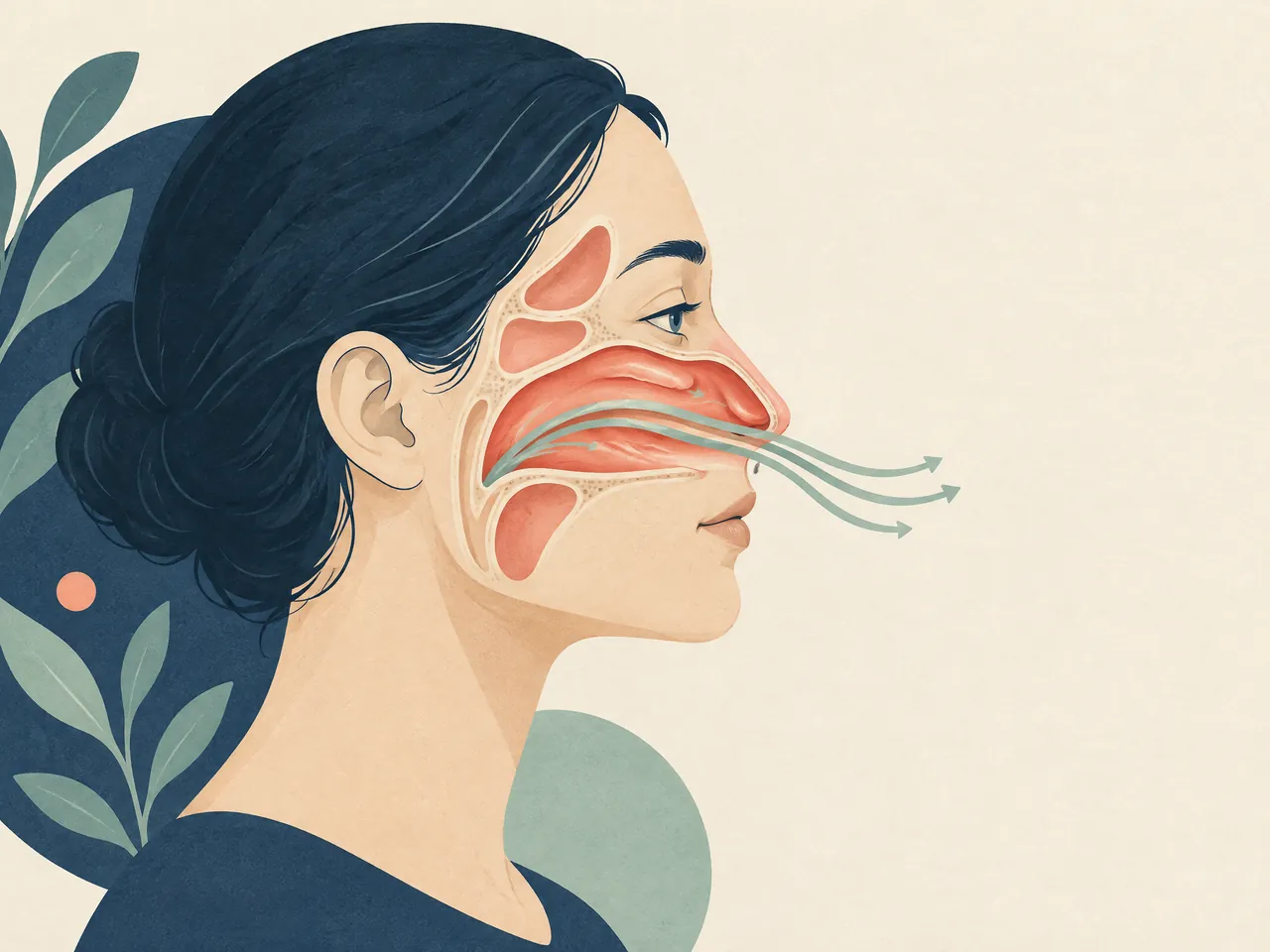
Persistent nasal congestion causes include allergic rhinitis, non-allergic rhinitis, viral colds, sinus conditions, nasal polyps, structural narrowing and rebound congestion from prolonged decongestant-spray use. Sneezing, itch and clear discharge after exposure to an allergen favour an allergy pattern. Blockage linked to temperature, humidity, smoke or fragrance may be non-allergic. Ongoing one-sided symptoms, repeated bleeding, facial pain, a lasting smell change, breathing difficulty or symptoms that disturb daily life should be medically assessed.
Transparent pricing
See the fees.
Choose your care.
Explore our complete official price list, including first-trial prices, regular prices, packages and branch-specific options.
Opening WhatsApp prepares an enquiry; it does not send a message, take payment or confirm an appointment. Suitability and individual arrangements are confirmed during consultation.
Chinese medicine
All prices in HKDAcupuncture and Chinese herbal medicine package
Includes a Chinese medicine consultation with pulse assessment, body acupuncture and 3 days of Chinese herbal granules that do not require decoction.
HK$580 (single session)
Chinese medicine consultation with pulse assessment
Hair and scalp
All prices in HKDScalp health and hair-loss management
Includes AI scalp analysis, deep scalp and follicle cleansing, and scalp oil-control care.
HK$380 (first trial)
Regular price: HK$680
- 6 sessions: HK$3,480 (HK$580 per session)
- 12 sessions: HK$5,760 (HK$480 per session)
- 20 sessions: HK$8,600 (HK$430 per session)
- 30 sessions: HK$11,400 (HK$380 per session)
Hair acupuncture and Chinese herbal medicine package
Includes scalp acupuncture and 3 days of Chinese herbal medicine that does not require decoction.
HK$580 (single session)
Registered Chinese Medicine Practitioner consultation
- 6 sessions: HK$3,180 (HK$530 per session)
- 12 sessions: HK$5,760 (HK$480 per session)
- 20 sessions: HK$8,600 (HK$430 per session)
- 30 sessions: HK$11,400 (HK$380 per session)
Combined hair and scalp treatment
Combines acupuncture and Chinese herbal medicine with salon-level scalp and follicle care. Packages include complimentary hair-care shampoo and serum.
HK$1,260 (single session)
Combined treatment
- 8 sessions: HK$8,640 (HK$1,080 per session)
- 16 sessions: HK$15,680 (HK$980 per session)
- 20 sessions: HK$18,600 (HK$930 per session)
- 30 sessions: HK$26,400 (HK$880 per session)
Weight management
All prices in HKDFull-body acupoint embedding for weight management
Includes full-body acupoint embedding. Packages include complimentary Chinese herbal medicine for weight management, with the number of included days scaled to the package. Embedding material and the individual treatment arrangement are confirmed during consultation; this is not a cosmetic thread lift.
HK$980 (single session)
No trial session
- 10 sessions: HK$7,800 (HK$780 per session)
- 20 sessions: HK$14,600 (HK$730 per session)
- 30 sessions: HK$20,400 (HK$680 per session)
Facial acupuncture
All prices in HKDFacial acupuncture (basic)
Includes facial acupuncture and meridian-based facial care, including care for facial puffiness.
HK$480 (first trial)
Regular price: HK$680
- 10 sessions: HK$5,200 (HK$520 per session)
- 20 sessions: HK$9,600 (HK$480 per session)
- 30 sessions: HK$13,500 (HK$450 per session)
Facial acupuncture (advanced)
Includes enhanced facial acupuncture with a specially formulated moisturising mask and serum.
HK$780 (first trial)
Regular price: HK$1,180
- 10 sessions: HK$9,000 (HK$900 per session)
- 20 sessions: HK$16,600 (HK$830 per session)
- 30 sessions: HK$23,400 (HK$780 per session)
Pain care
All prices in HKDExtracorporeal shockwave treatment
Shockwave treatment for deep-tissue and fascial care. The Kwun Tong clinic offers the multi-area options shown below.
Priced by branch
Branch-specific pricing
Prince Edward: HK$250 per area
Kwun Tong: HK$250 for 1 area / HK$450 for 2 areas / HK$600 for 3 areas
Pain care (manual therapy)
Includes Chinese medicine musculoskeletal assessment, manual joint techniques and tui na.
HK$580 (single session)
Chinese medicine musculoskeletal assessment
Pain care (acupuncture and manual therapy)
Combines acupuncture and manual therapy.
HK$680 (single session)
Combined care
Persistent Nasal Congestion Causes: Allergic Rhinitis Patterns
Allergic rhinitis happens when the nose reacts to something a person is allergic to. The pattern is often recognisable because blockage arrives with repeated sneezing, an itchy nose, a clear runny nose, or itchy, red or watery eyes. Those symptoms may begin soon after exposure, but a person does not need to guess the cause from one difficult morning. Look for repetition: does it happen during home cleaning, after time with a pet, in a particular season, or after waking in the same bedroom? The NHS distinguishes this pattern from non-allergic rhinitis and lists pollen, house dust mites, animal dander and mould among common triggers. [1]
Congestion itself is not a reliable test for allergy. A stuffy nose without itch or eye symptoms may still occur in allergic rhinitis, and a person can have more than one nasal problem over time. Start with observations that can be checked. Record the date, place, activity, symptoms, whether discharge was clear or coloured, and how the night went. Include new household products, window-open days, air-conditioning use and pet contact where relevant. This is more practical than avoiding every food, fabric or cleaning product after a single episode. For a fuller comparison of symptoms and triggers, see allergic rhinitis or non-allergic rhinitis.

Persistent Nasal Congestion Causes and Typical Allergy Symptoms
The cluster matters more than any one symptom. Allergy-related blockage commonly sits alongside nasal itch, bouts of sneezing, watery discharge and eye irritation. In contrast, a viral upper-respiratory infection may bring sore throat, cough, fever or feeling generally unwell. The difference is not always sharp on day one, so it is reasonable to watch how symptoms develop while taking sensible precautions. The practical guide allergic rhinitis vs a cold can help organise those observations, but it cannot diagnose the reason for persistent symptoms. If a child has night cough, wheeze, breathlessness with exercise or worsening asthma alongside nasal symptoms, discuss this with a doctor rather than treating the nose in isolation. [1]

Persistent Nasal Congestion Causes Linked to Dust, Mould and Dander
Dust mites, mould and animal dander are plausible indoor triggers for some people, but an exposure diary is more useful than blame. For example, symptoms that consistently worsen while making the bed, after sitting on a fabric sofa used by a pet, or in a damp-smelling room are worth noting. Hong Kong Adventist Hospital also lists dust, mould, animal hair or dander, polluted air and sudden changes in temperature or humidity as possible triggers or irritants in its patient information. [3] When a pattern is clear, targeted changes may be easier to maintain: keep bedding clean, deal with damp and condensation, ventilate appropriately, and keep a pet out of the bedroom if that exposure appears important. These steps do not prove the diagnosis, and they should not turn daily life into an attempt to eliminate every particle of dust.
Compare your options
| Pattern or clue | What may accompany it | Useful next step |
|---|---|---|
| Repeated episodes after dust, mould, pollen or animal exposure | Sneezing, nasal itch, clear discharge, itchy or watery eyes | Record the exposure and symptoms; discuss whether allergy assessment or treatment advice is appropriate. |
| Episodes after temperature or humidity shifts, smoke, perfume or exercise | Blocked or runny nose, sneezing, post-nasal drip; itch may be less prominent | Identify the repeat trigger where possible and discuss non-allergic rhinitis or other causes. |
| Short illness with sore throat, cough, fever or feeling unwell | Cold-like symptoms that change over days | Use appropriate self-care and seek advice if symptoms are severe, prolonged or worrying. |
| Persistent one-sided symptoms, bleeding, facial pain or ongoing smell change | May occur with other nasal or sinus symptoms | Arrange medical assessment; seek prompt help for breathing difficulty or worsening asthma. |
On smaller screens, scroll the table sideways to compare all columns.
Persistent Nasal Congestion Causes: Non-Allergic Triggers and Other Patterns
Non-allergic rhinitis means the inside of the nose is irritated without an allergy being the explanation. It can cause a blocked or runny nose, sneezing, throat irritation or post-nasal drip. The timing often tells a different story from classic allergy: symptoms may appear when moving between strong air-conditioning and humid outdoor air, after breathing smoke or fragrance, during exercise, or with very hot or cold conditions. The NHS also notes alcohol, spicy food, hormonal changes and some medicines as possible contributors. [2] This does not mean every reaction to a smell is dangerous or that every weather-related episode needs a label. It means the trigger pattern should be described clearly before deciding what to do next.
Other persistent nasal congestion causes deserve to stay in the picture. A cold usually settles, but repeated infections or longer-lasting symptoms may need a different assessment. Sinus conditions can occur with facial pain or tenderness and thicker or discoloured discharge. Nasal polyps or a structural difference such as a deviated septum may contribute to obstruction. A decongestant spray can give short-term relief, yet regular use beyond the stated limit can lead to rebound congestion; Merck Manual describes this as congestion that recurs as the medication wears off. [4] Bring the spray or a photo of its ingredients to a pharmacist or consultation instead of repeatedly changing products.

Persistent Nasal Congestion Causes After Weather or Temperature Changes
A clear weather pattern can be useful even when allergy tests have not been discussed. Note whether symptoms start on rainy, humid days, on cold mornings, after a sharp shift between indoor and outdoor temperatures, or around air-conditioning. Also note whether there is itch and eye irritation, because these features can point the conversation in a different direction. For non-allergic rhinitis, the aim is often to reduce exposure to a recognised irritant where feasible and to seek advice on suitable symptom management, rather than assuming an antihistamine will address every blocked nose. The page on nonallergic rhinitis offers a more focused explanation of this pattern. Avoid making major dietary or household restrictions solely on the basis of a single congested day.

Persistent Nasal Congestion Causes That May Need Further Assessment
Book medical assessment when the cause is unclear, symptoms are worsening, pharmacy treatment is not helping, or congestion is affecting sleep and everyday life. [1] A persistent pattern that is mainly on one side, repeated nosebleeds, facial pain, ongoing change in smell, or recurrent sinus or ear problems also needs proper attention rather than self-diagnosis. Merck Manual identifies unilateral purulent or bloody discharge and facial pain or tenderness as concerning findings in nasal congestion. [4] Seek urgent help for wheeze, breathing difficulty, blue lips or clearly worsening asthma. In children, a one-sided foul-smelling discharge can have causes that require examination. These features do not identify a diagnosis by themselves; they explain why an in-person clinician or ENT assessment may be needed.
Persistent Nasal Congestion Causes: Practical Next Steps for Daily Life
Begin with a short, usable plan. Keep a symptom record for one or two weeks if symptoms are recurring: morning or evening timing, one or both nostrils, sneeze and itch, eye symptoms, discharge, known exposure, sleep quality and any medicine used. Photograph labels for nasal sprays rather than relying on memory. If dust, mould, dander or a fragrance is a consistent trigger, focus on that observation first. If weather shifts are more convincing, plan for transitions such as a cold office or outdoor exercise. A pharmacist can advise on appropriate over-the-counter choices, and a doctor can assess symptoms that persist or impair daily activities. This approach makes room for both conventional care and an informed discussion about supportive options without replacing prescribed asthma inhalers or nasal treatment.
At TCM Lab, a Chinese medicine consultation can start by reviewing the nasal pattern, daily triggers, sleep impact and current treatment. It should be clear that this is not a substitute for assessment of warning symptoms or for prescribed treatment. Anyone who is interested in a complementary discussion can read about Chinese medicine ENT and bring their symptom record and a list of medicines to the appointment. If location is relevant, enquiries can be directed to the Kwun Tong Chinese medicine clinic or the Chinese medicine clinic Prince Edward. Clear records allow the practitioner to understand the concern without assuming congestion has one universal cause.

Persistent Nasal Congestion Causes, Sleep and Daytime Concentration
A blocked nose can become most noticeable at night, when mouth breathing, frequent waking or a dry throat can leave a person tired the next day. For children, family members may notice restless sleep, reduced concentration or irritability before the child can describe nasal symptoms clearly. These effects are reasons to arrange assessment when the pattern continues; the NHS specifically advises review when rhinitis affects sleep or everyday life. [1] Record the impact in concrete terms: waking because of blockage, avoiding sport, struggling through meetings, or a child’s night cough and daytime tiredness. That information helps distinguish a minor occasional symptom from a problem that is changing daily function. Do not change asthma medicines, prescribed nasal sprays or other treatment plans solely because the symptom diary suggests an environmental trigger.

Persistent Nasal Congestion Causes and Questions to Discuss at a Consultation
Useful questions are specific: Could this pattern fit allergic or non-allergic rhinitis? Are the medicines or sprays I use contributing to it? Do my one-sided symptoms, bleeding, pain or smell change call for an ENT assessment? Is allergy testing useful given the repeated timing and exposures? Mention pregnancy, long-term health conditions and all prescribed, pharmacy and herbal products, because these details can influence advice. A consultation is also the right place to ask how a complementary approach would sit alongside existing care, rather than assuming it can replace it. For practical planning, see the Chinese medicine clinic price list Hong Kong before making an enquiry. The immediate priority remains identifying and safely managing symptoms that may need medical investigation.
Care and health guide
Health service information
This directory brings together services, reading, and visit information related to health services, to help you prepare questions for a consultation.
If you are organising health questions, Chinese medicine clinic Hong Kong is a starting point for learning about related services and preparing for a consultation.
People have different needs; acupuncture Hong Kong provides further reading to help you understand options in your own context.


Your questions, answered
Frequently asked questions
What are the most common persistent nasal congestion causes?
Common causes include allergic rhinitis, non-allergic rhinitis, viral infections, sinus conditions, nasal polyps, structural narrowing and rebound congestion after prolonged use of a decongestant spray. The associated symptoms, timing, exposures and whether the blockage is one-sided help guide the next step.
How do I know if congestion is caused by an allergy?
Allergy becomes more likely when blockage repeatedly comes with sneezing, an itchy nose, clear runny discharge and itchy or watery eyes after a consistent exposure such as pollen, dust mites, mould or dander. A diary can show a pattern, but it does not confirm an allergy by itself.
Can air-conditioning or a change in weather cause a blocked nose?
They can be triggers for non-allergic rhinitis in some people. Sudden changes in temperature or humidity are listed by NHS and Hong Kong Adventist Hospital as possible contributors. Track whether symptoms follow a repeat transition rather than assuming the weather is the sole cause.
When should persistent nasal congestion be checked by a doctor?
Arrange assessment when symptoms worsen, affect sleep or daily life, do not respond to pharmacy advice, or have no clear cause. Persistent one-sided symptoms, repeated bleeding, facial pain, an ongoing smell change, wheeze or breathing difficulty warrant particular attention; urgent breathing symptoms need prompt help.
Sources and further information
- [1] [1] NHS: Allergic rhinitis
Referenced for: Symptoms, common allergens, distinction from non-allergic rhinitis, management framing and when symptoms merit clinical review.
- [2] [2] NHS: Non-allergic rhinitis
Referenced for: Non-allergic symptoms, trigger examples, medication considerations and review when symptoms affect daily life.
- [3] [3] Hong Kong Adventist Hospital: Allergic Rhinitis
Referenced for: Hong Kong-relevant examples of symptoms, environmental triggers and household measures.
- [4] [4] Merck Manual Professional: Nasal Congestion and Rhinorrhea
Referenced for: Alternative causes, rebound congestion from topical decongestants and findings that require clinical evaluation.