
TCM Lab · Health reading
Ankle Sprain Self-Care: Ankle Sprain Rest Ice Compression Elevation and Should I Ice or Heat an Ankle Sprain?
Published Updated
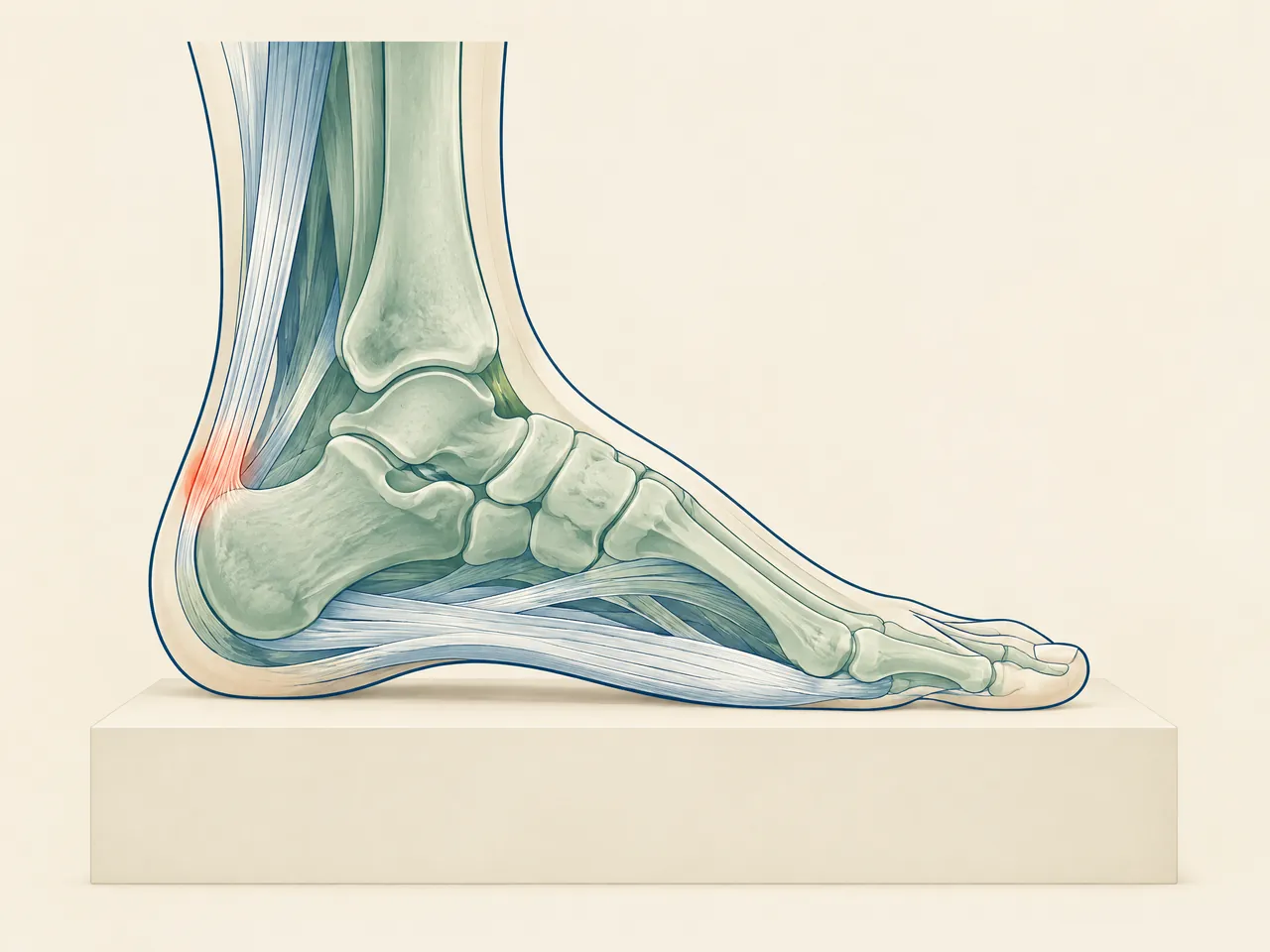
A turned ankle after a missed step, a run, or a game can swell straight away or become more painful later in the day. For a mild injury with no obvious deformity and no major difficulty putting weight through the foot, ankle sprain self-care starts with protecting the joint, relative rest, a wrapped cold pack, comfortable compression and elevation. The immediate question, “Should I ice or heat an ankle sprain?”, has a practical answer: cold is usually the early comfort measure, while heat, alcohol and massage are best avoided in the first couple of days. This guide explains how to observe the injury, avoid overdoing rest, and recognise when home care is no longer the safe choice.
Appointments are confirmed through WhatsApp. If you have language requirements, please mention them in your enquiry.
The short answer
For a mild ankle sprain without deformity or marked trouble bearing weight, protect the ankle, pause the activity, use a wrapped cold pack, apply comfortable compression and elevate it. Avoid early heat, alcohol and massage, which can aggravate swelling. Keep a note of pain, swelling and walking ability. Seek urgent assessment for a crack, altered shape, numbness, tingling, blue or grey skin, cold skin, worsening pain or inability to walk more than a few steps.
Transparent pricing
See the fees.
Choose your care.
Explore our complete official price list, including first-trial prices, regular prices, packages and branch-specific options.
Opening WhatsApp prepares an enquiry; it does not send a message, take payment or confirm an appointment. Suitability and individual arrangements are confirmed during consultation.
Pain care
All prices in HKDExtracorporeal shockwave treatment
Shockwave treatment for deep-tissue and fascial care. The Kwun Tong clinic offers the multi-area options shown below.
Priced by branch
Branch-specific pricing
Prince Edward: HK$250 per area
Kwun Tong: HK$250 for 1 area / HK$450 for 2 areas / HK$600 for 3 areas
Pain care (manual therapy)
Includes Chinese medicine musculoskeletal assessment, manual joint techniques and tui na.
HK$580 (single session)
Chinese medicine musculoskeletal assessment
Pain care (acupuncture and manual therapy)
Combines acupuncture and manual therapy.
HK$680 (single session)
Combined care
Hair and scalp
All prices in HKDScalp health and hair-loss management
Includes AI scalp analysis, deep scalp and follicle cleansing, and scalp oil-control care.
HK$380 (first trial)
Regular price: HK$680
- 6 sessions: HK$3,480 (HK$580 per session)
- 12 sessions: HK$5,760 (HK$480 per session)
- 20 sessions: HK$8,600 (HK$430 per session)
- 30 sessions: HK$11,400 (HK$380 per session)
Hair acupuncture and Chinese herbal medicine package
Includes scalp acupuncture and 3 days of Chinese herbal medicine that does not require decoction.
HK$580 (single session)
Registered Chinese Medicine Practitioner consultation
- 6 sessions: HK$3,180 (HK$530 per session)
- 12 sessions: HK$5,760 (HK$480 per session)
- 20 sessions: HK$8,600 (HK$430 per session)
- 30 sessions: HK$11,400 (HK$380 per session)
Combined hair and scalp treatment
Combines acupuncture and Chinese herbal medicine with salon-level scalp and follicle care. Packages include complimentary hair-care shampoo and serum.
HK$1,260 (single session)
Combined treatment
- 8 sessions: HK$8,640 (HK$1,080 per session)
- 16 sessions: HK$15,680 (HK$980 per session)
- 20 sessions: HK$18,600 (HK$930 per session)
- 30 sessions: HK$26,400 (HK$880 per session)
Weight management
All prices in HKDFull-body acupoint embedding for weight management
Includes full-body acupoint embedding. Packages include complimentary Chinese herbal medicine for weight management, with the number of included days scaled to the package. Embedding material and the individual treatment arrangement are confirmed during consultation; this is not a cosmetic thread lift.
HK$980 (single session)
No trial session
- 10 sessions: HK$7,800 (HK$780 per session)
- 20 sessions: HK$14,600 (HK$730 per session)
- 30 sessions: HK$20,400 (HK$680 per session)
Facial acupuncture
All prices in HKDFacial acupuncture (basic)
Includes facial acupuncture and meridian-based facial care, including care for facial puffiness.
HK$480 (first trial)
Regular price: HK$680
- 10 sessions: HK$5,200 (HK$520 per session)
- 20 sessions: HK$9,600 (HK$480 per session)
- 30 sessions: HK$13,500 (HK$450 per session)
Facial acupuncture (advanced)
Includes enhanced facial acupuncture with a specially formulated moisturising mask and serum.
HK$780 (first trial)
Regular price: HK$1,180
- 10 sessions: HK$9,000 (HK$900 per session)
- 20 sessions: HK$16,600 (HK$830 per session)
- 30 sessions: HK$23,400 (HK$780 per session)
Chinese medicine
All prices in HKDAcupuncture and Chinese herbal medicine package
Includes a Chinese medicine consultation with pulse assessment, body acupuncture and 3 days of Chinese herbal granules that do not require decoction.
HK$580 (single session)
Chinese medicine consultation with pulse assessment
Ankle Sprain Self-Care: Ankle Sprain Rest Ice Compression Elevation and Should I Ice or Heat an Ankle Sprain? — Start Safely
An ankle sprain involves injury to ligaments that help stabilise the joint. It often follows an inward roll or a sideways twist, but an uneven pavement, a loose step, a fall or landing from a jump can also be the setting. Pain, swelling, bruising, stiffness and difficulty walking are common, yet their presence does not tell you exactly how severe the injury is. A fracture or a more substantial ligament injury can resemble a sprain early on. The Hong Kong College of Orthopaedic Surgeons notes that clinical examination and, when needed, imaging help determine severity [1]. Begin by making the ankle safer, rather than trying to test it repeatedly or decide its grade at home. For a broader description of patterns that can accompany a twist, see ankle sprain symptoms.
Ankle Sprain Self-Care: Ankle Sprain Rest Ice Compression Elevation and Should I Ice or Heat an Ankle Sprain? — Record Symptoms
A short injury record is more useful than guessing from memory if symptoms change overnight or you later speak with a clinician. Write down when the twist happened, the surface or activity involved, whether the foot rolled in or out, and whether you felt or heard a pop or crack. Note the most tender spot: over the outer ankle, inner ankle, foot, shin or bone. Then record whether swelling or bruising appeared immediately or developed later, and whether you could walk at the time and can walk now. Also include numbness, pins and needles, coldness, colour change, a sense of giving way, or pain that is increasing.
Use ordinary, functional observations as well as a pain description. Can you get from a chair to the bathroom? Can you manage a few careful steps indoors? Does placing the foot down produce a sharp jolt, or is discomfort mainly an ache at rest? Is swelling making footwear feel tight? These details do not diagnose the ankle, but they give a clearer picture than a single pain score. Take a photograph only if bruising or swelling may be useful to compare later; do not keep removing a supportive wrap just to inspect the skin. If you have had prior sprains, record whether this episode feels different or whether the ankle had already felt unreliable.

Ankle Sprain Self-Care: Ankle Sprain Rest Ice Compression Elevation and Should I Ice or Heat an Ankle Sprain? — Protect the Joint
Protection means reducing the chance of another roll while the ankle is painful and reactive. Stop the sport, run, hike or task that triggered the injury. Choose a stable shoe or, if advised after assessment, a brace or other support rather than soft slippers or footwear that lets the foot slide. Relative rest is different from complete bed rest: it means temporarily avoiding movements that bring on pain, swelling or a feeling that the ankle will give way. The Hong Kong Department of Health advises stopping exercise, elevating the area, using an ice pack and gently wrapping with an elastic bandage for an ankle sprain [2].
If you use an elastic wrap, it should feel supportive, not restrictive. Loosen it if toes become numb, tingly, pale, blue, cold, unusually painful or more swollen. Elevation is simplest when the lower leg is supported on pillows while you rest, rather than hanging down for long periods. Do not use a wrap to prove that the ankle is ready for a long commute, shopping trip or training session. Nor should you test it with sudden turns, hopping or forceful stretching. If you are considering a support or treatment pathway after a previous injury, the guide on ankle sprain home treatment can help frame questions for an assessment.
Compare your options
| Step | A practical way to use it | Stop self-care and seek assessment when |
|---|---|---|
| Protection and relative rest | Stop the triggering activity and avoid twisting, jumping or long unnecessary walks; use stable footwear or a support as advised. | The ankle gives way, walking is not possible, or pain sharply increases with a few steps. |
| Wrapped cold pack | Use cold through a towel for comfort in the early period and watch the skin; do not place ice directly on skin. | Skin becomes very numb, irritated or discoloured, or symptoms are worsening. |
| Comfortable compression | Use a gentle elastic wrap for support and swelling, checking that toes stay warm, normally coloured and comfortable. | Toes become cold, pale, blue, numb, tingly or increasingly painful. |
| Elevation and gradual movement | Raise the ankle while resting, then return to gentle movement and weight-bearing only as pain allows. | Pain, swelling or instability rise as activity resumes, or function does not steadily improve. |
On smaller screens, scroll the table sideways to compare all columns.
Ankle Sprain Self-Care: Ankle Sprain Rest Ice Compression Elevation and Should I Ice or Heat an Ankle Sprain? — Ice, Heat and Swelling
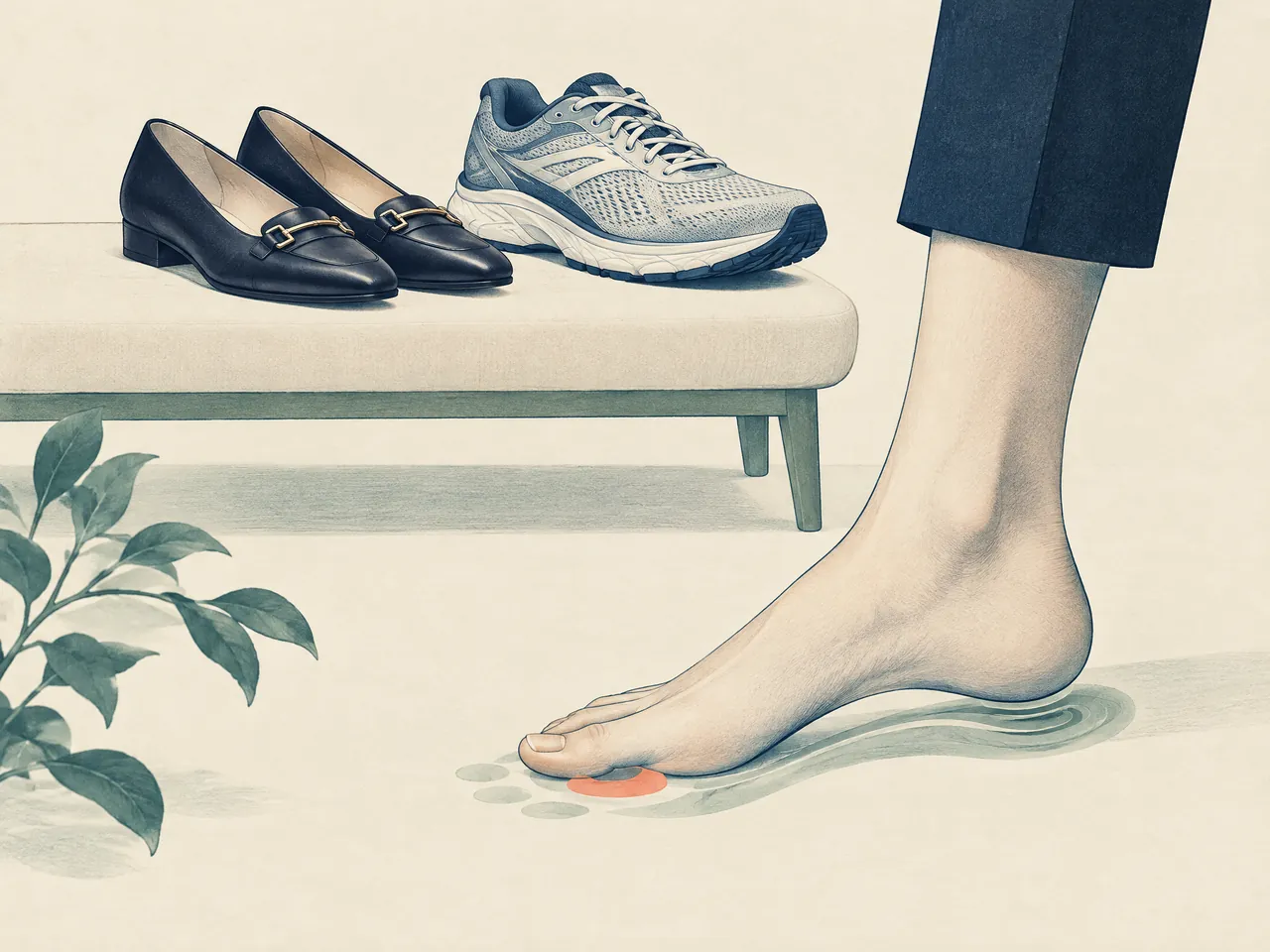
Ice and heat are often treated as rivals, but they serve different comfort purposes and timing matters. In the early period after a fresh sprain, swelling and pain are the practical concerns. A wrapped cold pack may be soothing and can support the rest, ice, compression and elevation approach. It does not mend a torn ligament, confirm that an injury is mild or make it safe to return to sport. Heat may feel pleasant for muscle stiffness in other situations, but a new swollen ankle is not the time for a hot bath or heat pack. The NHS recommends protection, rest, ice, compression and elevation for the first two to three days of a sprain or strain, and advises avoiding heat, alcohol and massage in the first couple of days [3].
Ankle Sprain Self-Care: Ankle Sprain Rest Ice Compression Elevation and Should I Ice or Heat an Ankle Sprain? — When Cold May Help
Use cold as a comfort measure, not an endurance test. Place the cold pack in a towel or use a commercially made pack according to its instructions; do not place ice directly on bare skin. The NHS describes using an ice pack for up to 20 minutes every two to three hours during the early period [3]. Stay aware of how the skin feels and looks. Remove the pack if the area becomes excessively uncomfortable, very numb, irritated or discoloured. People with reduced sensation or circulation concerns should ask a healthcare professional what is suitable rather than using a cold pack routinely.
Cold is most useful when paired with a sensible reduction in load. A person who ices for twenty minutes and then stands for an hour on a crowded train may still find swelling and pain build up. Plan the first day around shorter, necessary journeys, a place to sit and elevate when possible, and help with carrying heavy items. Keep the ankle in a neutral, comfortable position rather than pressing it into a painful stretch. If a cold pack consistently makes symptoms worse, stop using it. Reassess the injury rather than switching immediately to aggressive heat or massage. Comfort measures should never conceal a red flag that needs medical attention.
Ankle Sprain Self-Care: Ankle Sprain Rest Ice Compression Elevation and Should I Ice or Heat an Ankle Sprain? — What to Avoid Early On
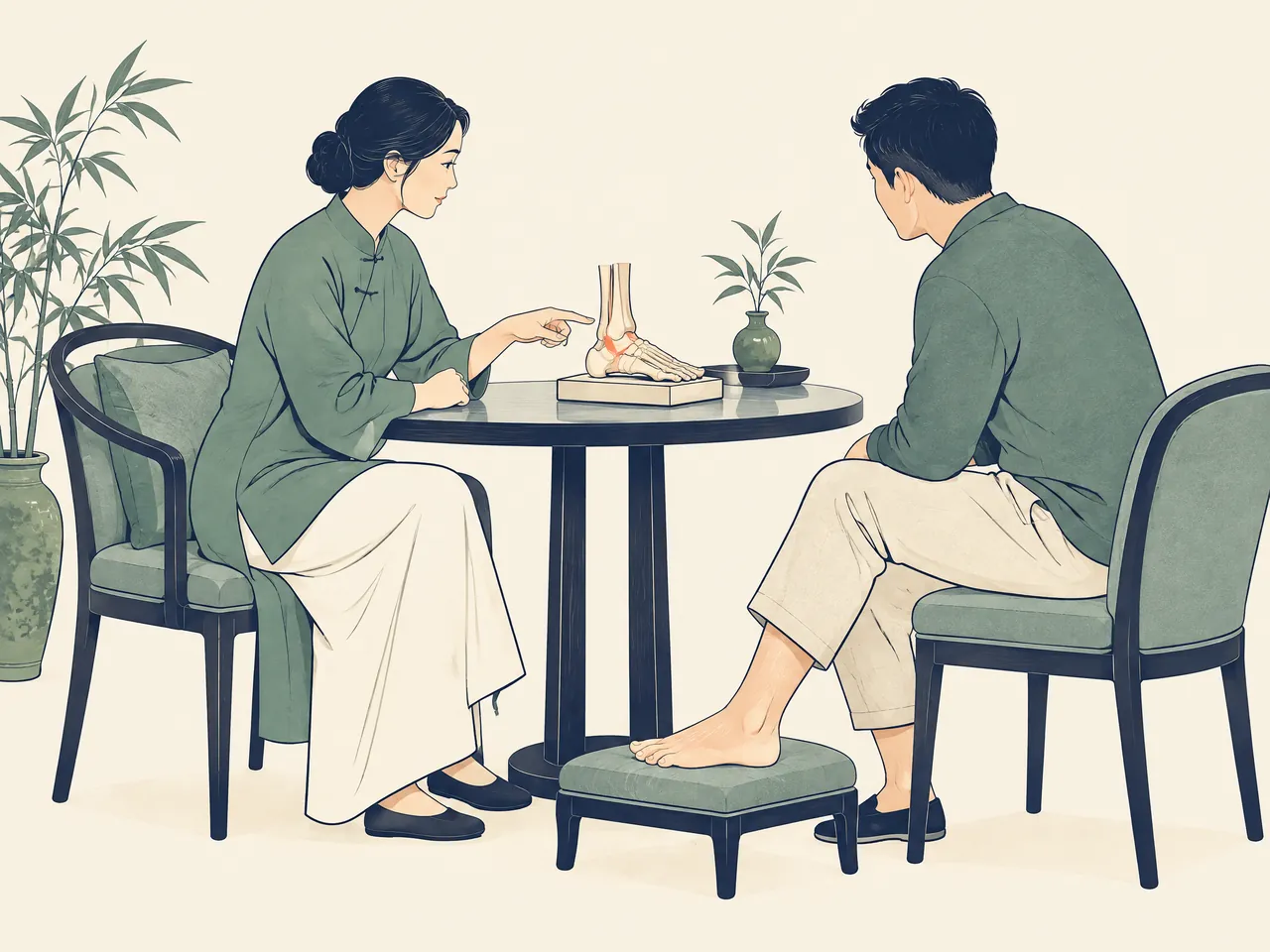
Early mistakes often come from trying to get back to normal quickly. Avoid hot baths, saunas, heating pads, alcohol and deep massage for the first couple of days, especially while the ankle is newly swollen or bruised. Avoid running, jumping, court sports, trail walking and repeated twisting to “see if it is better.” Do not apply a very tight bandage, sleep with a device that makes the toes cold or numb, or use a pain-free moment after cooling as a reason to resume a full workout. Pain may be less noticeable for a while even though the injury has not been assessed or recovered.
It is also wise to avoid self-directed forceful manipulation. Pulling, cracking or heavily rubbing a freshly injured ankle can increase discomfort and may distract from signs that need examination. If you use pain medicine, a pharmacist or clinician can help with an option that fits your health history and current medicines; do not assume that a medicine that helped someone else is right for you. Keep the focus on safe function: protecting the joint, observing change and arranging assessment when progress is not straightforward. Persistent instability after repeated twists deserves more than another cycle of short-term home care; read about recurrent ankle sprains before assuming each new episode is routine.
Ankle Sprain Self-Care: Ankle Sprain Rest Ice Compression Elevation and Should I Ice or Heat an Ankle Sprain? — Movement and Professional Assessment
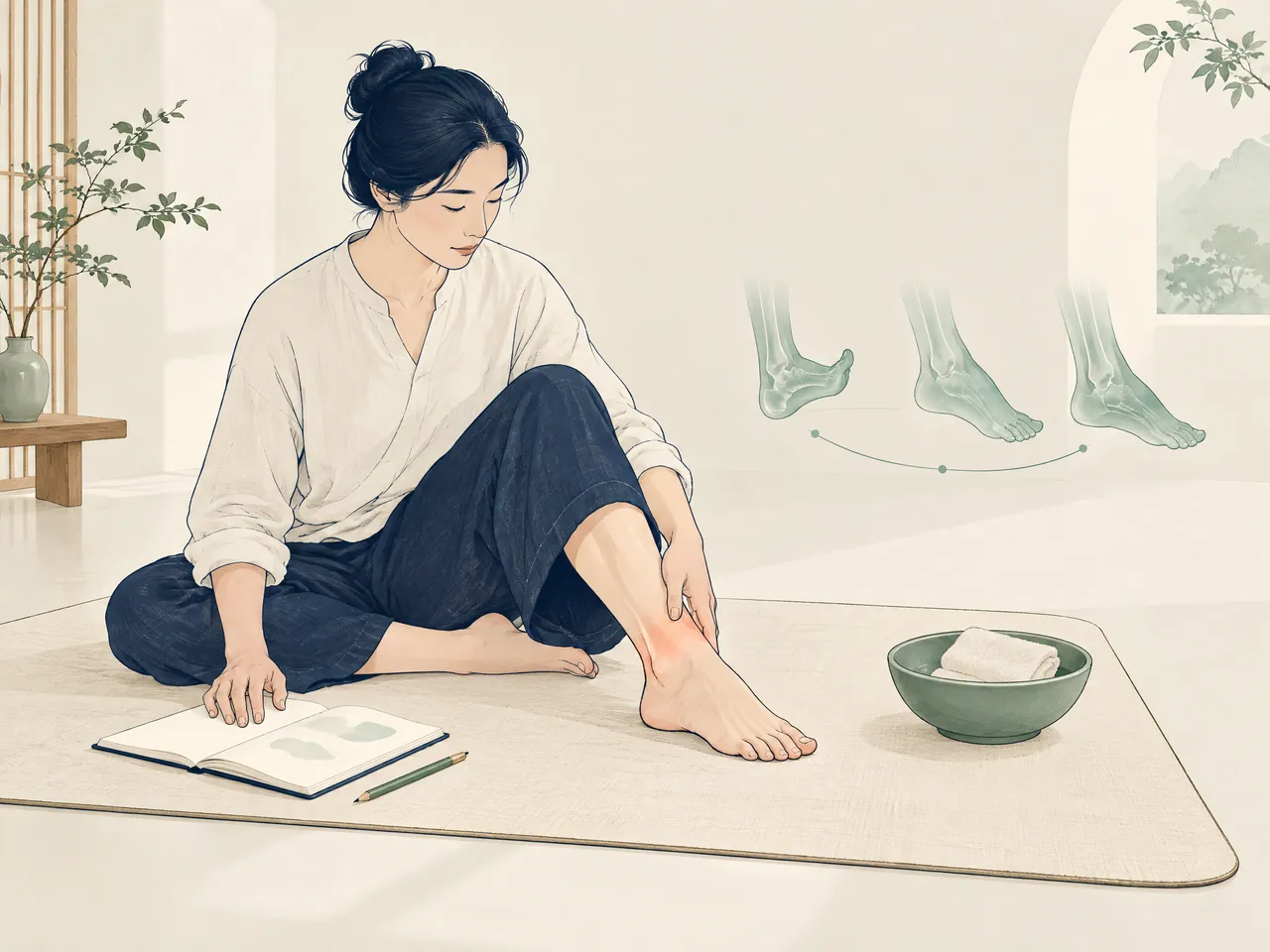
Ankle sprain self-care should change as comfort and function change. There is a middle ground between forcing a painful walk and keeping the joint completely still for too long. Once movement is no longer stopped by pain, gentle ankle motion and careful walking within tolerance can help avoid stiffness. The exact pace depends on the injury and any support or weight-bearing advice you have received. The Hong Kong College of Orthopaedic Surgeons describes rehabilitation as progressing from rest and swelling control to restoring motion, strength, flexibility, stamina and proprioception, which is the body’s sense of joint position [1]. That is why an ankle that can just about walk may not yet be ready for cutting, turning or uneven ground.
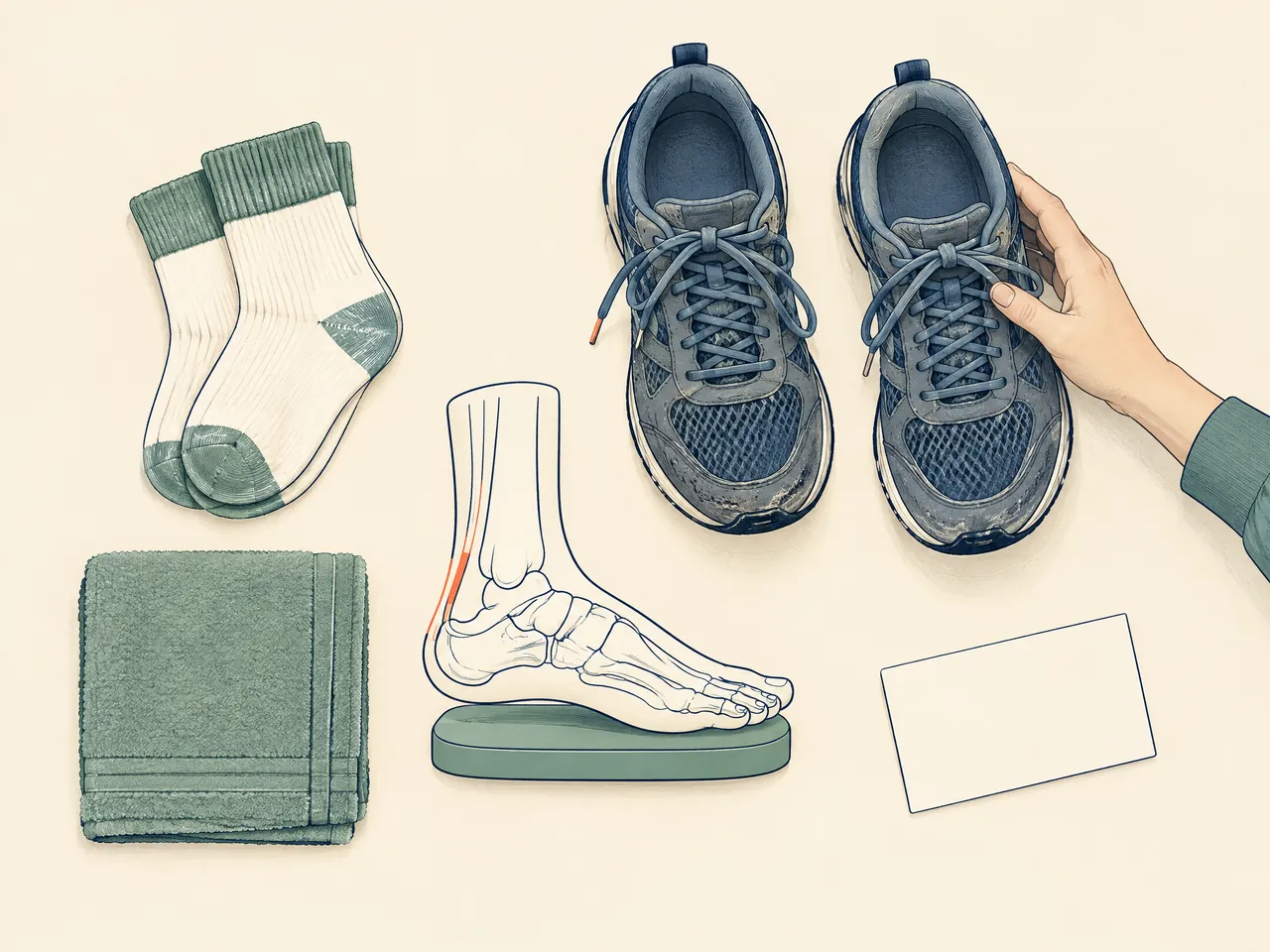
Ankle Sprain Self-Care: Ankle Sprain Rest Ice Compression Elevation and Should I Ice or Heat an Ankle Sprain? — Progressing Weight-Bearing
Let function guide the next small step. Start with essential indoor movement rather than a long outing. If a short walk produces a clear increase in pain, a new limp, increased swelling later that day or a sense of instability, reduce the load and seek advice if that pattern continues. Avoid sudden direction changes early on. As symptoms settle, an assessment may lead to a staged plan that includes range-of-motion work, strength and balance training. The American Academy of Orthopaedic Surgeons describes early weight-bearing as tolerated in many cases, followed by motion, balance and progressive return to activity; it also notes that more serious injuries may require a different level of support [4].
Returning to work and sport are separate decisions. A desk-based day may be possible before a job requiring ladders, deliveries, prolonged standing or rapid turns. Likewise, walking on level ground is not the same as playing football, badminton or basketball. Build back from the demands you actually need to meet, and do not use another person’s recovery time as your target. If you have already had several sprains or you keep rolling the same ankle, structured rehabilitation and a professional review are particularly important. Earlier attention may help clarify whether the ongoing problem is weakness, balance, instability or another injury that needs different care.

Ankle Sprain Self-Care: Ankle Sprain Rest Ice Compression Elevation and Should I Ice or Heat an Ankle Sprain? — Recognising Red Flags
Urgent medical assessment is more appropriate than continued home care if you heard a crack at the time of injury, the ankle or foot looks deformed or points at an unusual angle, or the skin is blue, grey or cold. Numbness, tingling or pins and needles also need prompt attention. Seek help if you cannot put weight through the foot or cannot walk more than a few steps, or if severe pain, swelling or bruising is getting worse. These features can occur with injuries that need examination or imaging, and it is not safe to rule out a fracture from a webpage. The NHS lists these signs among reasons to seek urgent care after a sprain or strain [3].
Arrange a non-urgent clinical review when symptoms are not improving with sensible self-care, when the ankle remains painful or swollen for weeks, or when it repeatedly feels as though it will give way. The AAOS advises professional review when swelling or pain persists despite conservative care or weight-bearing remains difficult [4]. If you wish to discuss Chinese medicine or acupuncture as an adjunct after appropriate assessment, share the injury history, any scan results, medicines and current rehabilitation plan with the practitioner. Research on acupuncture for acute ankle sprain has reported limitations including small samples and differing interventions, so it should be discussed as an individual complementary option, not a guaranteed replacement for assessment or rehabilitation [5]. For a practical decision guide, visit ankle sprain when to see a doctor.
Care and health guide
Health service information
This directory brings together services, reading, and visit information related to health services, to help you prepare questions for a consultation.
If you are organising health questions, Chinese medicine clinic Hong Kong is a starting point for learning about related services and preparing for a consultation.
People have different needs; acupuncture Hong Kong provides further reading to help you understand options in your own context.


Your questions, answered
Frequently asked questions
What does ankle sprain self-care usually involve?
For a mild injury, ankle sprain self-care can include protecting the joint, relative rest, a wrapped cold pack, comfortable compression and elevation. These measures can support comfort and swelling control, but they do not determine whether a ligament injury is mild or exclude a fracture. Record changes in pain, swelling and walking ability, and seek assessment if progress is not straightforward.
Should I ice or heat an ankle sprain?
Cold through a cloth is the usual early option for a fresh sprain. Avoid heat packs, hot baths, alcohol and massage in the first couple of days because they may worsen swelling. Never apply ice directly to skin. Stop if the skin becomes irritated, very numb or discoloured, and seek advice if you have reduced sensation, circulation concerns or worsening symptoms.
How tight should an ankle compression bandage be?
It should feel gently supportive, not painful or constricting. Check the toes regularly. Loosen or remove the wrap if they become numb, tingly, cold, pale, blue, increasingly painful or more swollen. A bandage does not make an ankle safe for sport or rule out a serious injury, so do not use it to push through instability or marked pain.
When should I seek help instead of continuing ankle sprain self-care?
Seek urgent care for a crack, deformity, numbness, tingling, blue or grey skin, cold skin, severe or worsening pain and swelling, or inability to put weight through the foot or walk more than a few steps. Arrange a review if symptoms fail to improve, remain troublesome for weeks, or the ankle repeatedly gives way.
Sources and further information
- [1] The Hong Kong College of Orthopaedic Surgeons — Ankle Sprain
Referenced for: Hong Kong orthopaedic information on ankle-sprain symptoms, examination, RICE, rehabilitation and staged recovery.
- [2] Centre for Health Protection, Department of Health Hong Kong — Sports Injuries
Referenced for: Hong Kong public-health advice on ankle sprains, rest, elevation, ice packs and gentle elastic-bandage wrapping.
- [3] NHS — Sprains and strains
Referenced for: Public-health guidance on early PRICE care, avoiding heat, alcohol and massage, and symptoms requiring urgent assessment.
- [4] American Academy of Orthopaedic Surgeons — Sprained Ankle
Referenced for: Orthopaedic information on diagnosis, weight-bearing, rehabilitation stages, persistent symptoms and recurrent instability.
- [5] Liu et al. — Acupuncture Therapy for Acute Ankle Sprain: Systematic Review and Meta-analysis
Referenced for: Systematic-review evidence and limitations concerning acupuncture as a possible adjunct for acute ankle sprain.