
TCM Lab · Health reading
Allergic rhinitis vs a cold, non-allergic rhinitis symptoms, and is blocked nose always allergic rhinitis — a practical comparison
Published Updated
A blocked nose can resemble a cold, an allergy or an environmental reaction. The useful question is not simply whether you are congested, but what arrives with it, when it happens and whether the pattern repeats. An itchy nose, bursts of sneezing, clear discharge and itchy eyes point more towards allergy; sore throat, cough, aches or feeling generally unwell fit a viral cold more comfortably. Congestion after perfume, smoke, a sudden temperature change or air-conditioning may have no clear allergen behind it. Looking at the whole pattern helps you choose sensible next steps without assuming every blocked nose is allergic rhinitis.
Appointments are confirmed through WhatsApp. If you have language requirements, please mention them in your enquiry.
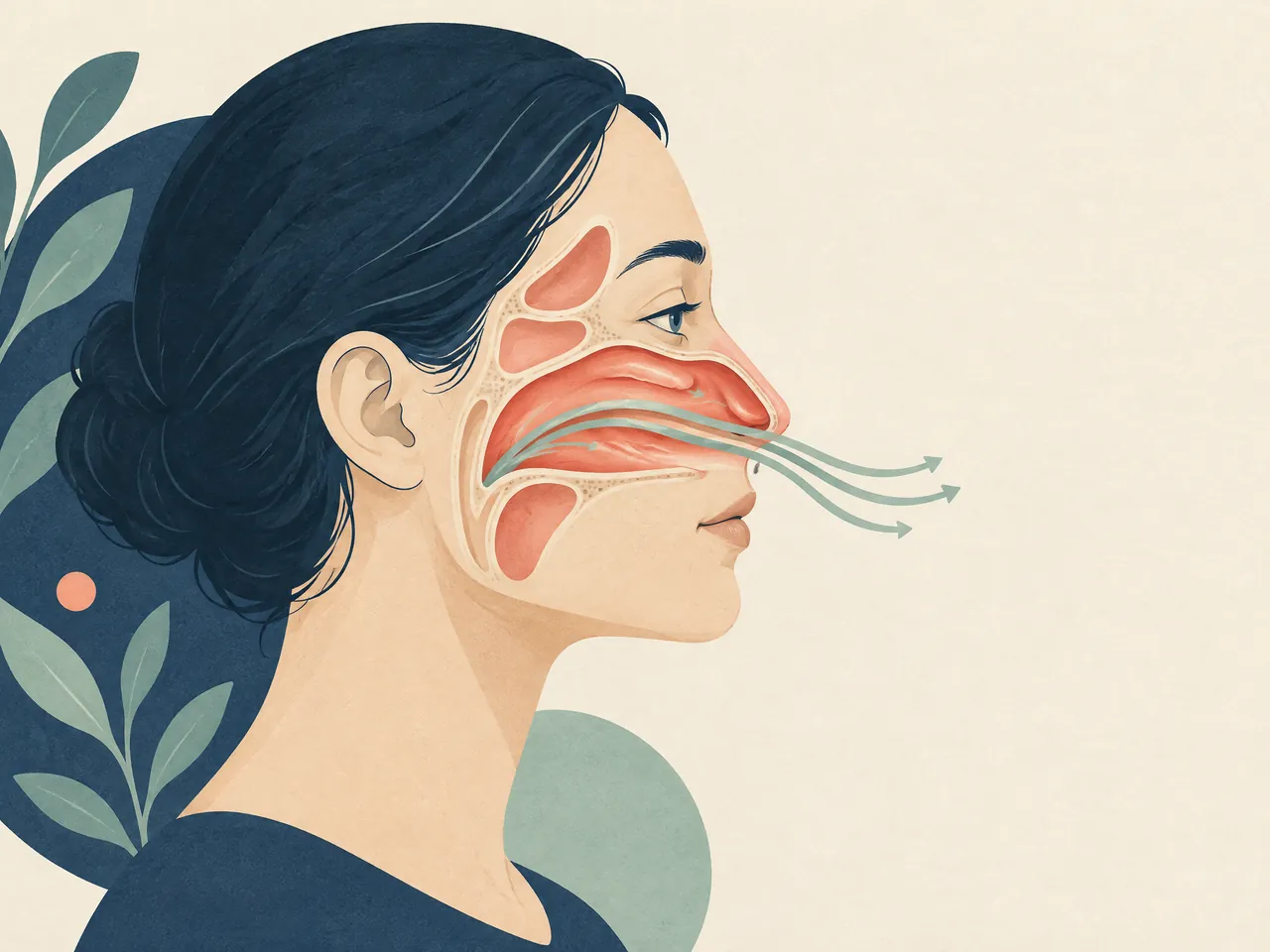
The short answer
No. A blocked nose is not always allergic rhinitis. Allergy is more likely when repeated sneezing, itch, clear runny mucus and itchy or watery eyes recur around a particular exposure. A cold more often develops with sore throat, cough, headache, mild body aches or fever, while non-allergic rhinitis can be set off by temperature changes, humidity, smoke or strong smells. Persistent one-sided blockage, nosebleeds, facial pain, altered smell, wheeze or breathing difficulty needs medical assessment.
Transparent pricing
See the fees.
Choose your care.
Explore our complete official price list, including first-trial prices, regular prices, packages and branch-specific options.
Opening WhatsApp prepares an enquiry; it does not send a message, take payment or confirm an appointment. Suitability and individual arrangements are confirmed during consultation.
Chinese medicine
All prices in HKDAcupuncture and Chinese herbal medicine package
Includes a Chinese medicine consultation with pulse assessment, body acupuncture and 3 days of Chinese herbal granules that do not require decoction.
HK$580 (single session)
Chinese medicine consultation with pulse assessment
Hair and scalp
All prices in HKDScalp health and hair-loss management
Includes AI scalp analysis, deep scalp and follicle cleansing, and scalp oil-control care.
HK$380 (first trial)
Regular price: HK$680
- 6 sessions: HK$3,480 (HK$580 per session)
- 12 sessions: HK$5,760 (HK$480 per session)
- 20 sessions: HK$8,600 (HK$430 per session)
- 30 sessions: HK$11,400 (HK$380 per session)
Hair acupuncture and Chinese herbal medicine package
Includes scalp acupuncture and 3 days of Chinese herbal medicine that does not require decoction.
HK$580 (single session)
Registered Chinese Medicine Practitioner consultation
- 6 sessions: HK$3,180 (HK$530 per session)
- 12 sessions: HK$5,760 (HK$480 per session)
- 20 sessions: HK$8,600 (HK$430 per session)
- 30 sessions: HK$11,400 (HK$380 per session)
Combined hair and scalp treatment
Combines acupuncture and Chinese herbal medicine with salon-level scalp and follicle care. Packages include complimentary hair-care shampoo and serum.
HK$1,260 (single session)
Combined treatment
- 8 sessions: HK$8,640 (HK$1,080 per session)
- 16 sessions: HK$15,680 (HK$980 per session)
- 20 sessions: HK$18,600 (HK$930 per session)
- 30 sessions: HK$26,400 (HK$880 per session)
Weight management
All prices in HKDFull-body acupoint embedding for weight management
Includes full-body acupoint embedding. Packages include complimentary Chinese herbal medicine for weight management, with the number of included days scaled to the package. Embedding material and the individual treatment arrangement are confirmed during consultation; this is not a cosmetic thread lift.
HK$980 (single session)
No trial session
- 10 sessions: HK$7,800 (HK$780 per session)
- 20 sessions: HK$14,600 (HK$730 per session)
- 30 sessions: HK$20,400 (HK$680 per session)
Facial acupuncture
All prices in HKDFacial acupuncture (basic)
Includes facial acupuncture and meridian-based facial care, including care for facial puffiness.
HK$480 (first trial)
Regular price: HK$680
- 10 sessions: HK$5,200 (HK$520 per session)
- 20 sessions: HK$9,600 (HK$480 per session)
- 30 sessions: HK$13,500 (HK$450 per session)
Facial acupuncture (advanced)
Includes enhanced facial acupuncture with a specially formulated moisturising mask and serum.
HK$780 (first trial)
Regular price: HK$1,180
- 10 sessions: HK$9,000 (HK$900 per session)
- 20 sessions: HK$16,600 (HK$830 per session)
- 30 sessions: HK$23,400 (HK$780 per session)
Pain care
All prices in HKDExtracorporeal shockwave treatment
Shockwave treatment for deep-tissue and fascial care. The Kwun Tong clinic offers the multi-area options shown below.
Priced by branch
Branch-specific pricing
Prince Edward: HK$250 per area
Kwun Tong: HK$250 for 1 area / HK$450 for 2 areas / HK$600 for 3 areas
Pain care (manual therapy)
Includes Chinese medicine musculoskeletal assessment, manual joint techniques and tui na.
HK$580 (single session)
Chinese medicine musculoskeletal assessment
Pain care (acupuncture and manual therapy)
Combines acupuncture and manual therapy.
HK$680 (single session)
Combined care
Allergic rhinitis vs a cold with non-allergic rhinitis symptoms — is blocked nose always allergic rhinitis in everyday patterns
The direct answer to “is blocked nose always allergic rhinitis?” is no. Congestion can occur with a viral infection, irritation, sinus or structural problems, andtypes of rhinitis. It becomes more meaningful when placed beside discharge, eye symptoms, throat or body symptoms, timing and recovery. A person who wakes blocked after an air-conditioned night may need a different conversation from someone whose eyes itch whenever they clean a dusty room.
Allergic rhinitis is an allergic reaction in the nose. The NHS lists sneezing, an itchy nose, a runny or blocked nose, and itchy, red and watery eyes among its common symptoms; these may occur within minutes of contact with an allergen such as pollen, house-dust mites, animal dander or mould [1]. Look instead for a recognisable pattern: similar symptoms on repeated exposure, improvement away from that exposure, and a tendency for itch and eye symptoms to travel with the nose symptoms. For a wider explanation of the distinction, see allergic rhinitis or non-allergic rhinitis.
A common cold is a viral upper-respiratory infection rather than an allergy. Nasal congestion, a runny nose and sneezing can occur in a cold too, but cough, sore throat, headache, mild body aches and fever may join the picture [2]. A cold commonly changes over a few days and then settles; the CDC says colds usually last less than a week, although an individual course can vary [2]. The contrast is not a home test. It helps you decide whether to observe a short illness, reduce a repeatable exposure, speak to a pharmacist or arrange assessment when the pattern does not make sense.

Allergic rhinitis vs a cold: non-allergic rhinitis symptoms and is blocked nose always allergic rhinitis — common signs to compare
Think in clusters rather than trying to diagnose from mucus colour or one sneeze. In an allergic cluster, itch is often prominent: the nose or palate may itch, and the eyes may water or redden. The discharge is often clear and sneezing may come in bursts. A cold can also begin with clear discharge, so this is not proof of allergy. Consider whether a sore throat, cough, malaise, aches or fever is present, and whether the episode follows a familiar infection-like course. Children and adults can have overlapping symptoms, and more than one issue can occur at the same time.
Non-allergic rhinitis symptoms can include a blocked or runny nose and sneezing, but may lack the consistent itchy-eye and itch pattern of allergy. The NHS distinguishes it from allergic rhinitis and notes cold temperatures and humidity among possible triggers [1]. Hong Kong Adventist Hospital also lists polluted air, sudden changes in temperature or humidity, cosmetics, perfumes and other chemicals among possible triggers or irritants [3]. These lists are prompts for observation, not a reason to blame every exposure. If a strong scent reliably blocks your nose in a certain setting but dust exposure does not, bring that detail to a clinician rather than assuming a dust allergy.
Allergic rhinitis vs a cold: non-allergic rhinitis symptoms and is blocked nose always allergic rhinitis — when patterns diverge
The comparison becomes less reassuring when the pattern is unusual, persistent or focused on one side. A cold should not become an automatic explanation for weeks of the same blocked nostril. Ongoing one-sided blockage, repeated nosebleeds, facial pain, a sustained change in smell or symptoms that markedly disturb sleep deserve medical review. These features do not identify one cause, but they move the question beyond self-sorting allergy from cold. The related guide to persistent nasal congestion causes can help you prepare a clearer history for that conversation.
Breathing symptoms also change the priority. Wheeze, shortness of breath, blue lips, an obvious asthma flare or a child who is struggling to breathe require urgent medical attention rather than a prolonged experiment with household changes. If allergy symptoms coexist with asthma that is getting worse, the NHS advises speaking to a clinician [1]. Even without an emergency, daytime fatigue, mouth breathing, snoring, poor concentration or recurrent ear or sinus concerns are useful functional details to report. The aim is not to attach a label quickly; it is to avoid overlooking a problem that needs a different kind of care.
Compare your options
| Pattern to compare | Features that may fit | Useful next step |
|---|---|---|
| Allergic rhinitis pattern | Repeated sneezing, itchy nose, clear runny or blocked nose, and itchy or watery eyes around a repeatable exposure. | Record the exposure and impact; discuss allergy-focused management with a pharmacist or clinician. |
| Common cold pattern | Runny or blocked nose with sore throat, cough, headache, mild aches or fever; symptoms often evolve over a short illness. | Rest, follow infection guidance and seek advice if you are very unwell, at higher risk, or the course is concerning. |
| Non-allergic rhinitis pattern | Congestion, runny nose or sneezing after temperature or humidity shifts, smoke, pollution, perfume or another irritant; itch may be less central. | Identify concrete exposures and discuss persistent symptoms rather than assuming an allergen. |
| Needs assessment | One-sided persistent blockage, recurrent nosebleeds, facial pain, sustained smell change, sleep disruption, wheeze or breathing difficulty. | Arrange medical review; seek urgent help for significant breathing problems or worsening asthma. |
On smaller screens, scroll the table sideways to compare all columns.
Allergic rhinitis vs a cold and non-allergic rhinitis symptoms — is blocked nose always allergic rhinitis when tracking triggers
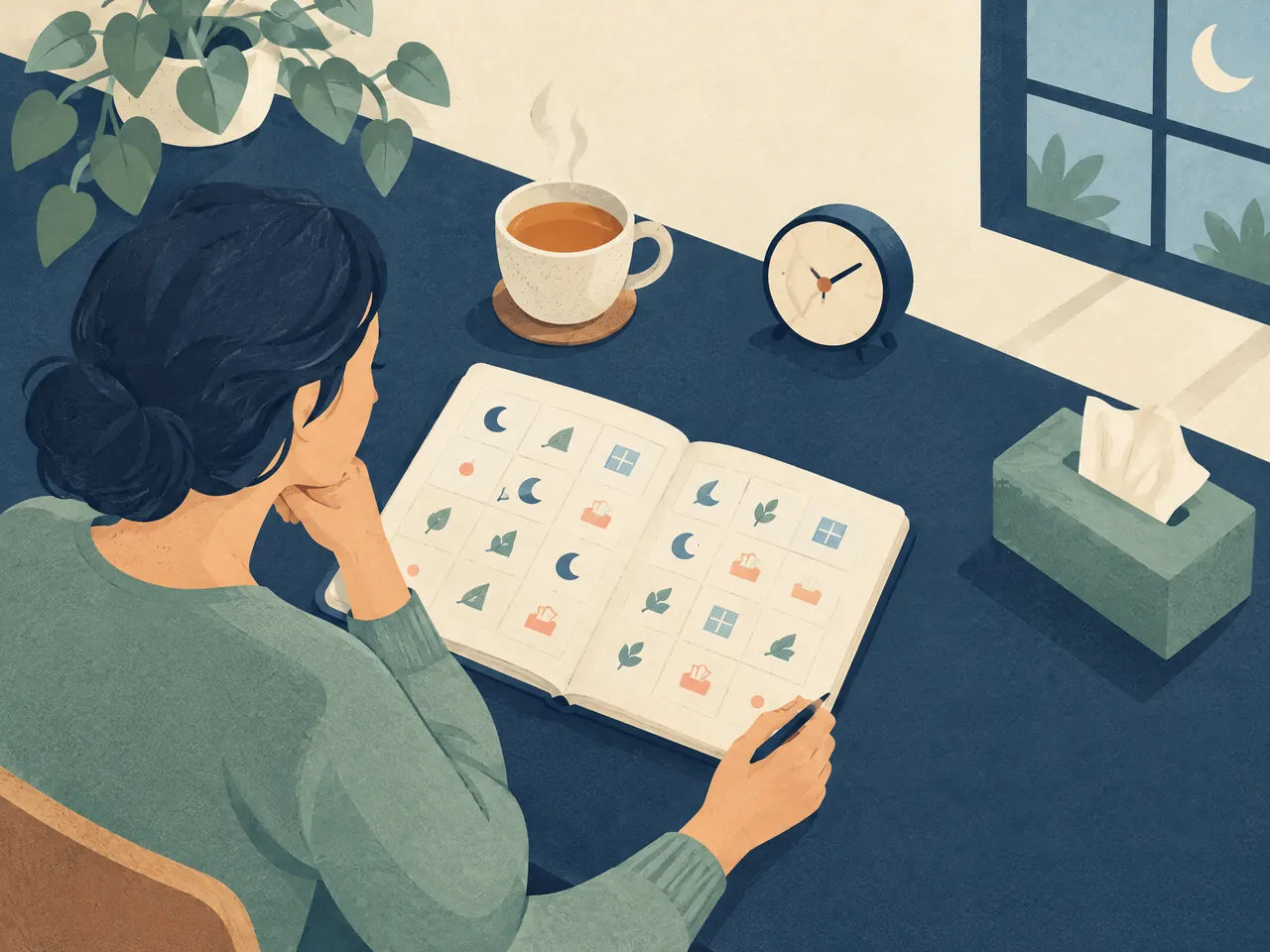
A brief record can turn vague congestion into a useful pattern. For one or two weeks, note the date and time, whether symptoms began indoors or outdoors, the main symptom that came first, eye or throat symptoms, and the effect on sleep. Add concrete exposures: cleaning a bedroom, visiting a home with a pet, turning on an air-conditioner, using a fragranced product, commuting beside traffic or moving between hot outdoor air and a cold office. Record what happened when you left the setting.

Use the record to ask measured questions. Does congestion return after the same bedroom routine? Do symptoms arrive within minutes of fragrance but not with dust? Does a sore throat and cough precede the blocked nose, suggesting an infection pattern? Are symptoms worse after an outside walk during a particular season? The answers are not diagnoses, and formal allergy testing is not automatically needed for every blocked nose. They do help a pharmacist or clinician judge whether the next step is environmental adjustment, symptom management, review of medicines or further assessment.

Dust, weather and air quality — allergic rhinitis vs a cold, non-allergic rhinitis symptoms, is blocked nose always allergic rhinitis
In Hong Kong, household dust, dampness, mould, animal dander, outdoor pollen, traffic-related air and abrupt changes between hot, humid streets and cooled indoor spaces can all be part of someone’s story. Allergic rhinitis involves sensitivity to an allergen; non-allergic symptoms may instead follow irritation or temperature and humidity shifts. The same person can have both tendencies. A diary should describe the exposure and response without claiming certainty: “sneezing and itchy eyes after handling bedding” is more useful than “definitely dust-mite allergy.” A clinician can decide whether that history supports allergy-focused assessment.
Choose proportionate household steps that match a known or suspected pattern. Regular bedding washing, reducing damp and condensation, keeping rooms ventilated, damp-dusting and cleaning appliances that accumulate dust can be sensible measures when they fit the home situation [1] [3]. Avoid turning a trigger record into an exhausting elimination project. Expensive devices, extensive dietary restriction or replacing many possessions may not answer the question if the real issue is a viral illness, medication effect, structural nasal problem or fragrance exposure. Reassess what actually changes symptoms.
Sleep, routine and exposure windows — allergic rhinitis vs a cold, non-allergic rhinitis symptoms, is blocked nose always allergic rhinitis
Sleep is a useful outcome to track because nasal blockage often feels worse when lying down, yet the reason may differ. Note whether you wake with a dry mouth, whether one side blocks more than the other, whether you sleep better away from home, and whether sneezing or eye itch interrupts the evening. For children, include morning tiredness, attention at school, night cough, wheeze and exercise-related breathing discomfort. These details describe the impact without assuming nasal allergy is the sole explanation. They also explain why “mild” congestion needs attention when it is no longer mild in daily life.
Routine can create false impressions. A person may blame a rainy day when the relevant change was spending more hours in a closed room, using a new cleaning product or catching a virus from a family member. Another may notice symptoms only at work because the commute, office fragrance or air-conditioning is relevant. Mark start and stop times, weekends, travel and medication changes. If symptoms persist beyond a short infection-like episode or repeatedly interfere with sleep and ordinary activities, the NHS recommends clinical advice [1]. Identify a pattern that can be checked; do not become certain from a calendar alone.
Choosing care for allergic rhinitis vs a cold and non-allergic rhinitis symptoms — is blocked nose always allergic rhinitis considerations
Care choices should follow the pattern and impact. Someone with a brief cold-like illness may mainly need rest, fluids and sensible infection precautions, while someone with recurrent itch, sneezing and eye symptoms can discuss allergy-directed options with a pharmacist or clinician. The NHS lists antihistamines, steroid nasal sprays and salt-water nasal sprays or rinses among options that may be discussed for allergic rhinitis [1]. Nasal decongestant sprays should not be used longer than product advice allows; the NHS cautions that using them for more than five days can worsen blockage [1]. Ask about a product appropriate for your age, pregnancy status, other conditions and current medicines.
Some people also wish to discuss traditional Chinese medicine as part of a broader plan for recurrent nasal symptoms. A consultation can begin with the symptom timeline, likely exposures, sleep, current medicines and any asthma or ENT history. It should not replace prescribed inhalers, nasal treatment or assessment of red-flag symptoms. If you are exploring that supportive route, Chinese medicine ENT explains the ENT-related consultation context. Keeping usual medical care visible is especially important when symptoms are persistent, when a child is affected or when breathing symptoms occur.

When to seek assessment — allergic rhinitis vs a cold, non-allergic rhinitis symptoms, is blocked nose always allergic rhinitis
Arrange a medical assessment when you cannot tell what is causing recurrent symptoms, pharmacy treatment is not helping, symptoms are severe, or congestion disrupts sleep, work, study or daily activities. The NHS specifically advises clinical review for worsening allergic rhinitis, symptoms affecting sleep or everyday life, uncertainty about the cause, or asthma that is getting worse [1]. Discuss a lasting change in smell, facial pain, repeated sinus or ear problems, ongoing one-sided blockage or recurrent nosebleeds rather than repeatedly treating them as simple allergy. For a specialist-focused overview, this introduction to what is otorhinolaryngology may clarify why ear, nose and throat assessment is sometimes suggested.
Seek urgent help for difficulty breathing, significant wheeze, blue lips, confusion or a rapidly worsening asthma attack. Cold-like symptoms can also be caused by respiratory viruses other than a common cold; the CDC notes that COVID-19, influenza and RSV can produce cold-like symptoms and may be more serious for some people [2]. Testing and early advice may matter, particularly for people at higher risk of severe illness. Let breathing, general illness and warning signs—not the assumption that it is “just rhinitis”—lead the decision to seek help.

Supportive options to discuss — allergic rhinitis vs a cold, non-allergic rhinitis symptoms, is blocked nose always allergic rhinitis
Bring a short record, a list of all medicines and nasal products, photographs of any relevant environmental issue such as visible damp, and a note of what you have already tried. Ask what pattern is most likely, whether an examination or allergy assessment is useful, how to use any recommended nasal treatment, and how long to try it before reviewing. Clarify which symptoms should prompt earlier contact. This also helps prevent duplicate treatment or prolonged use of a decongestant spray without advice.
If you would like to ask TCM Lab about an in-person Chinese medicine consultation, contact the team first with the symptom pattern and your language needs. You can enquire through the Kwun Tong Chinese medicine clinic or the Chinese medicine clinic Prince Edward. For current consultation and treatment charges, consult the Chinese medicine clinic price list Hong Kong. The practical purpose of an enquiry is to confirm a suitable arrangement, not to assume that one type of care fits every cause of nasal blockage.
Care and health guide
Health service information
This directory brings together services, reading, and visit information related to health services, to help you prepare questions for a consultation.
If you are organising health questions, Chinese medicine clinic Hong Kong is a starting point for learning about related services and preparing for a consultation.
People have different needs; acupuncture Hong Kong provides further reading to help you understand options in your own context.


Your questions, answered
Frequently asked questions
How can I compare allergic rhinitis vs a cold when both cause sneezing and a blocked nose?
Start with the accompanying symptoms and timing. Allergy more often includes itch in the nose or eyes, watery eyes and recurrence around the same exposure. A cold more often brings sore throat, cough, headache, mild aches, fever or a general feeling of being unwell. Because symptoms overlap, use the pattern as a prompt for care rather than a self-diagnosis.
What are common non-allergic rhinitis symptoms?
A blocked nose, runny discharge and sneezing can occur without a consistent allergy pattern. Some people notice symptoms after cold or hot air, humidity changes, smoke, pollution, perfume or other irritants. Itch and watery eyes may be less prominent than in an allergic pattern, but no single feature confirms the cause.
Is blocked nose always allergic rhinitis if it happens at night?
No. Night-time blockage can occur with allergy, non-allergic irritation, a recent infection or other nasal causes. Note the bedroom setting, bedding, pets, dampness, air-conditioning, position, snoring and whether symptoms improve away from home. Persistent one-sided blockage or sleep disruption should be assessed rather than attributed automatically to allergy.
When should I seek help rather than keep trying nasal products?
Seek clinical advice if symptoms affect sleep or everyday life, worsen despite treatment, the cause is unclear, or asthma is worsening. Arrange assessment for recurrent nosebleeds, facial pain, persistent one-sided blockage or a lasting change in smell. Difficulty breathing, marked wheeze, blue lips or a severe asthma flare needs urgent help.
Sources and further information
- [1] [1] NHS — Allergic rhinitis
Referenced for: Symptoms, allergic and non-allergic rhinitis distinction, triggers, pharmacy options, decongestant caution and care-seeking advice.
- [2] [2] Centers for Disease Control and Prevention — About Common Cold
Referenced for: Common cold symptoms, typical duration, respiratory-virus context and complications.
- [3] [3] Hong Kong Adventist Hospital — Allergic Rhinitis
Referenced for: Hong Kong-facing information on rhinitis symptoms, environmental and chemical triggers, and household measures.